REVIEW · MATOSINHOS
From Leixões: Private Porto Historic Center Tuk Tuk Tour
Book on GetYourGuide →Operated by Portuk Porto · Bookable on GetYourGuide
Porto clicks into place fast. This private tuk-tuk tour pairs quick rides with short walks, so you get the 360-degree payoff from Torre dos Clérigos and a calm end at Ribeira with a glass of Port wine. The trade-off: the 3-wheeler can feel bumpy on cobbled streets, so go easy if you have back or neck issues.
I like that you’re not stuck with a long bus stop-and-go plan; your guide keeps things moving and can add quick photo breaks that people often love. In 3.5 hours, you hit viewpoints, churches, and local markets without turning the day into a workout.
Because the start is right at Leixões Port, it’s especially handy for cruise days, and it kicks off in Matosinhos with beach air before you switch to Porto’s older lanes.
In This Review
- Key highlights to look forward to
- From Leixões Port to Porto’s Old Center: How the route makes sense
- Matosinhos coast first, then the Douro switch
- Cordoaria’s Garden and the university-side viewpoints
- Torre dos Clérigos: the 225-step city panorama
- Livraria Lello and the churches-and-alleys Porto vibe
- Sé do Porto Cathedral and the historic center’s key religious sights
- Bolhão market area and Rua de Santa Catarina: the day’s food and shopping contrast
- Praça do Infante to Ribeira: the Douro riverfront payoff
- Port wine by the river: finishing with the right kind of slow
- Tuk-tuk comfort and cobblestone reality (what I’d plan around)
- Price and value: does $104 make sense?
- The guides: friendliness, timing, and flexibility you’ll notice
- Who should book this tuk-tuk tour (and who should skip)
- Should you book this Leixões to Porto Historic Center tuk-tuk tour?
- FAQ
- How long is the Leixões to Porto historic center tuk-tuk tour?
- Where do I meet the guide?
- What’s included in the price?
- Which languages are available for the live guide?
- Is this a private tour?
- Can I cancel for a full refund?
Key highlights to look forward to
- Private tuk-tuk flexibility: quick rides between sights plus short walks where you actually get the details
- Torre dos Clérigos climb (225 steps): a real, high view over the city center
- Livraria Lello + Praça dos Leões: classic Porto landmarks followed by older neighborhoods like Miragaia and Vitória
- Bolhão market area + Rua de Santa Catarina: everyday food stalls mixed with the city’s most famous shopping street
- Ribeira + Serra do Pilar + Port wine: Douro river views that feel like the final scene in a movie
From Leixões Port to Porto’s Old Center: How the route makes sense
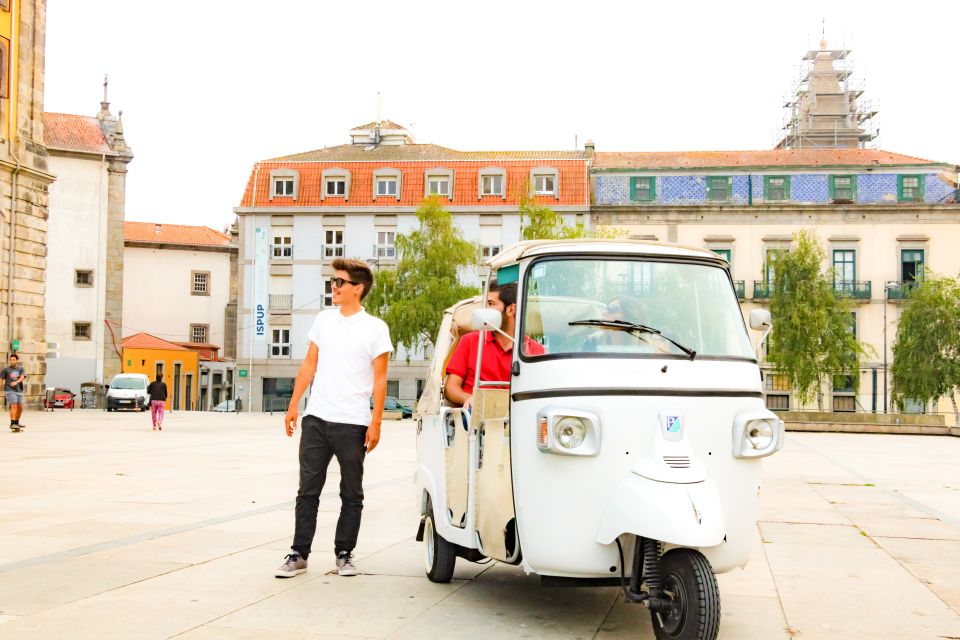
This is built like a smart “greatest-hits” loop, with a key advantage: the tuk-tuk gets you close to places that are slow or awkward by bus or car. You’re also not stuck doing one long stretch of walking. Instead, you get a rhythm of ride, hop out, walk a short block or two, then ride again.
What makes that work in Porto is the geography. The historic center sits in tight, winding streets, and a lot of the best scenery is reached by foot. This tour gives you enough walking to feel the place, without swallowing your entire time budget.
The route also balances scenery with “stuff you can recognize.” You get big-name Porto stops like Livraria Lello and the Clérigos tower, but you also spend time around Bolhão and Ribeira—where Porto feels like Porto, not just a backdrop for photos.
You can also read our reviews of more tours and experiences in Matosinhos.



Matosinhos coast first, then the Douro switch
You start in Matosinhos at Leixões Port, which is a working fishing and port area. It’s a good way to begin because it sets a local tone right away, rather than jumping straight into the tourist center.
Before you reach Porto, you’ll ride along the coast. The scenery shifts from beach life toward the river corridor, with a stop-by feel for highlights along the way. You’ll also pass Parque da Cidade, described as the largest urban park in Portugal—so you get a breather of greenery before the city starts stacking up in front of you.
Then the big visual payoff: you travel along the right bank of the Douro River and pass under Arrábida Bridge. That under-bridge moment matters more than it sounds. It’s the visual handoff from the wider, airy coastline into Porto’s steep, layered downtown.
If you’re short on time, this “out-to-in” sequence is exactly what you want. It gives you a sense of distance and direction, so Porto doesn’t just feel like random streets.
Cordoaria’s Garden and the university-side viewpoints
Once you reach the central side of Porto, you start walking at Cordoaria’s Garden, a green space behind Porto University. In a city known for stone and slopes, getting a garden pause helps your brain reset. It also puts you near several important buildings, even if you don’t go inside.
From this area, you’ll see the Portuguese Center of Photography, the Justice Palace, and Santo António Hospital. Even from the outside, this cluster helps you understand Porto beyond the classic postcard spots. Porto has real institutions, real civic life, and this part of town shows that.
This is also where short walking segments shine. A garden walk plus a quick sighting beat a long walk on steep streets. You’re likely to feel you’re moving efficiently, not just ticking boxes.
Torre dos Clérigos: the 225-step city panorama
The star climb is Torre dos Clérigos, an 18th-century tower. You’ll hear it described as the tallest granitic tower in the city, and the height is the point: you’re going up for a 360-degree look over Porto’s center and surrounding areas.
You climb 225 steps, so plan for effort. This isn’t a gentle stroll. If stairs are a problem for you, the tour may still work, but you should decide early whether you’ll do the climb or ask for an alternate viewing moment.
For me, towers are worth it when the view explains the layout. From the top, Porto makes more sense: riverside neighborhoods, the steep streets, and the way landmarks line up along the curves of the city.
Livraria Lello and the churches-and-alleys Porto vibe
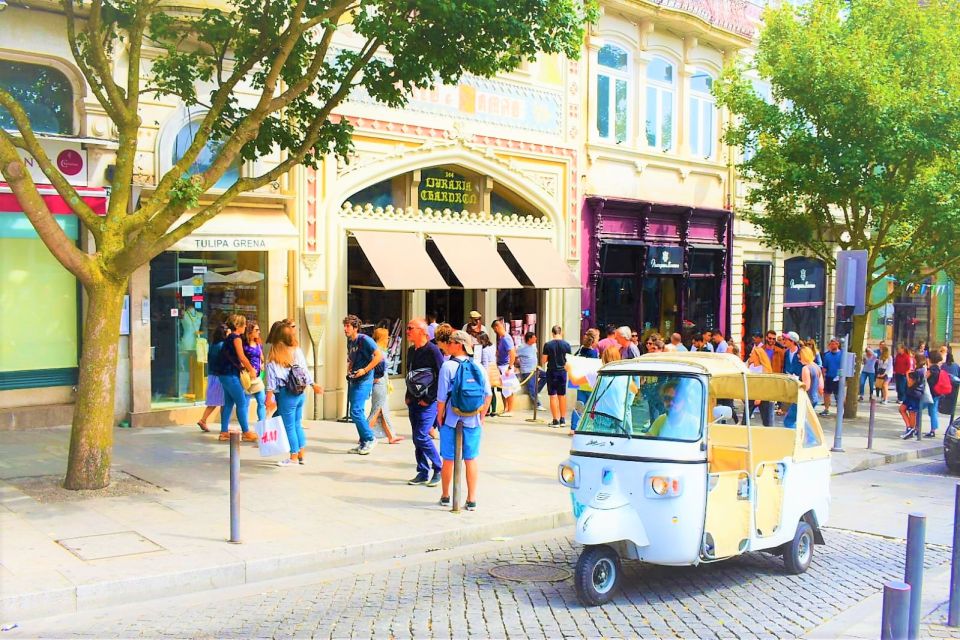
Livraria Lello is a quick stop, but it lands in the right place. It’s built in 1906, and it’s one of those Porto icons that helps you feel the city’s cultural pull beyond the riverfront. Even if you don’t go deep inside, the area around it sets the scene fast.
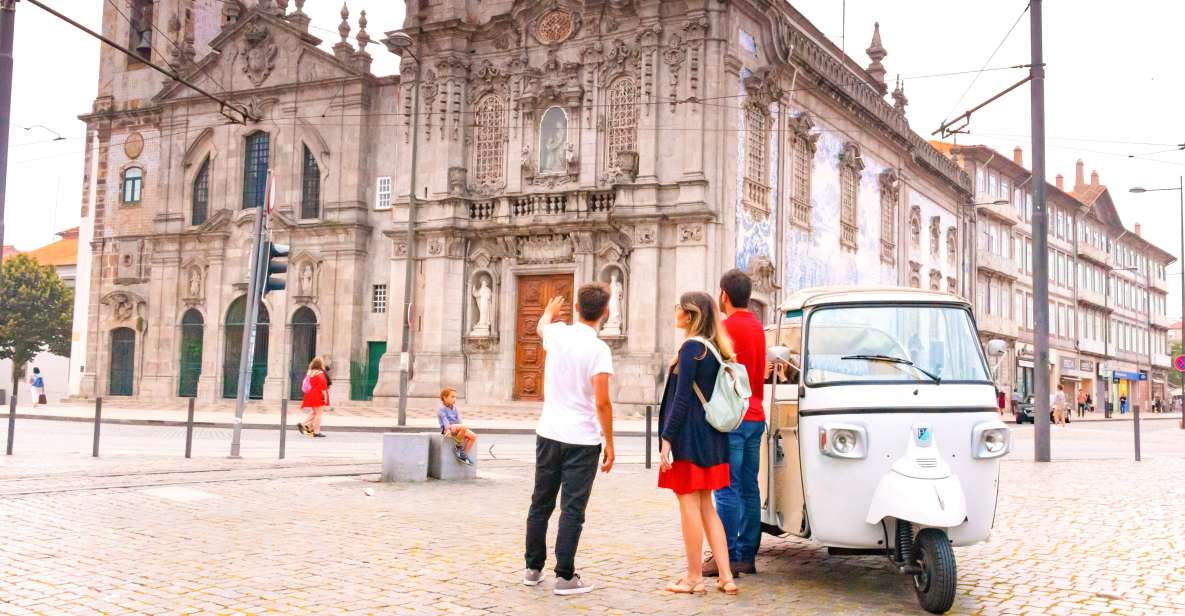
Then you move through Praça dos Leões and see the Carmo Church and Carmelitas Church. From there, the tour gets more atmospheric. You head into narrow lanes of older neighborhoods like Miragaia and Vitória, where streets tighten and views pop out between buildings.
This part is valuable because it’s not just “monuments.” It’s how Porto looks when you’re not at a main square. You get the texture—stone walls, stair-step street lines, and little bends that lead to sudden outlooks.
Tip from the pattern of this tour: wear shoes you can trust on uneven surfaces. You’re getting both rides and walking, and Porto doesn’t grade its sidewalks for comfort.

Sé do Porto Cathedral and the historic center’s key religious sights
The highlights include a stop connected to Sé do Porto Cathedral—one of the city’s most important religious landmarks. Even when you’re not going inside, the cathedral area helps anchor the historic story of Porto.
The good thing about including it in a short tour is context. After you’ve seen tower height and narrow lanes, the cathedral gives you a longer-time perspective. It’s a reminder that Porto wasn’t built for today’s visitors. It was shaped over centuries, and the city still carries that weight.
Expect the classic mix: stone, big forms, and the feeling of being in a place where locals still come, not just a site you pass through.
Bolhão market area and Rua de Santa Catarina: the day’s food and shopping contrast
When the tour reaches the Bolhão area, you get into Porto’s commercial pulse. This is where traditional market energy comes in, with local products and shops that reflect day-to-day life rather than just tourist craft stalls.
Then you move to Rua de Santa Catarina, described as the busiest street in town. This is a strong contrast to Bolhão. The street is commercial and lively, and it’s also where you’ll see Café Majestic, known for being one of the city’s most luxurious cafés.
Even if you don’t sit down for a full break, this segment helps you understand Porto’s rhythm: markets for the local economy, then a showpiece shopping street for the city’s style and high-profile cafés.
If you want to time a quick snack, this is the moment to ask your guide about a short pause. You’ll already be near some of the places people love for pastries, and you’ll have the walking time to make a taste stop fit.
Praça do Infante to Ribeira: the Douro riverfront payoff
The tour then heads toward Praça do Infante, where you’ll see Palácio da Bolsa, São Francisco Church, and the old Ferreira Borges Market. This area functions like a historic stage: multiple landmark faces close together so you get a sense of Porto’s variety without traveling far.
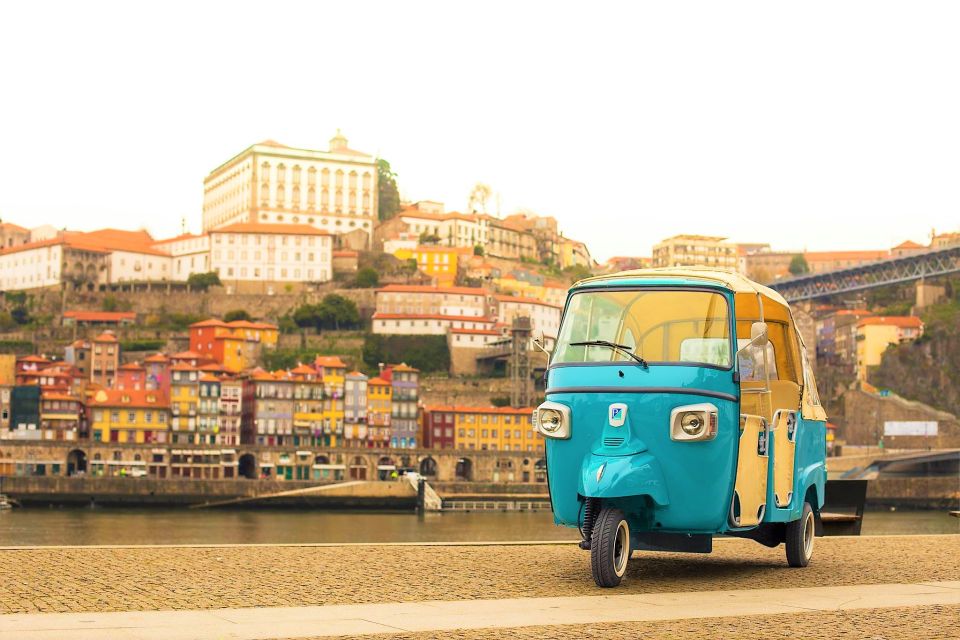
Next comes Ribeira, one of the city’s oldest neighborhoods. This is where the atmosphere shifts to river mode. The streets feel more lived-in and more dramatic, because the river is always part of the scene, even when you’re standing in alleys.
Then you’ll do something practical and satisfying: you cross the bridge for a brief stop at Serra do Pilar Monastery. That cross-bridge movement isn’t just transportation. It positions you for the best views in the area, so the river isn’t only background—it’s the whole frame.
Port wine by the river: finishing with the right kind of slow
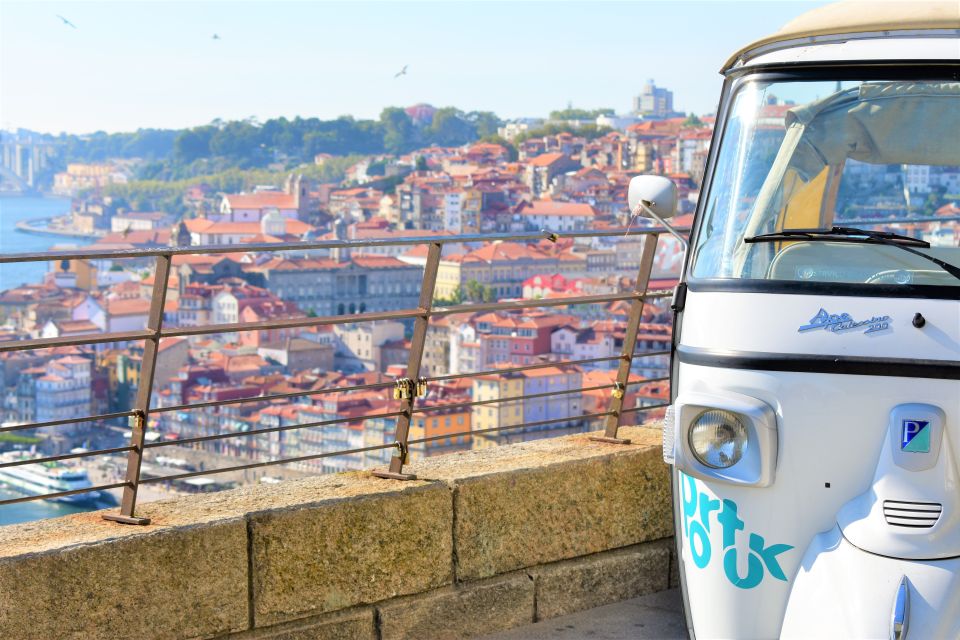
The tour ends with a glass of Port wine as you contemplate the Douro river and Porto across the water. This is the best kind of ending for a short day trip: you’re already warmed up from walking and stairs, then you switch gears to relaxed.
Port wine fits the setting because Porto’s identity is tied to the Douro. It’s not just a tasting as an extra. It’s a way to match the city you saw (bridges, slopes, riverfront neighborhoods) with the product Porto is famous for.
You don’t need to become a wine expert to enjoy this moment. You just need 10–20 minutes to look across the river and let Porto’s layers land.
Tuk-tuk comfort and cobblestone reality (what I’d plan around)
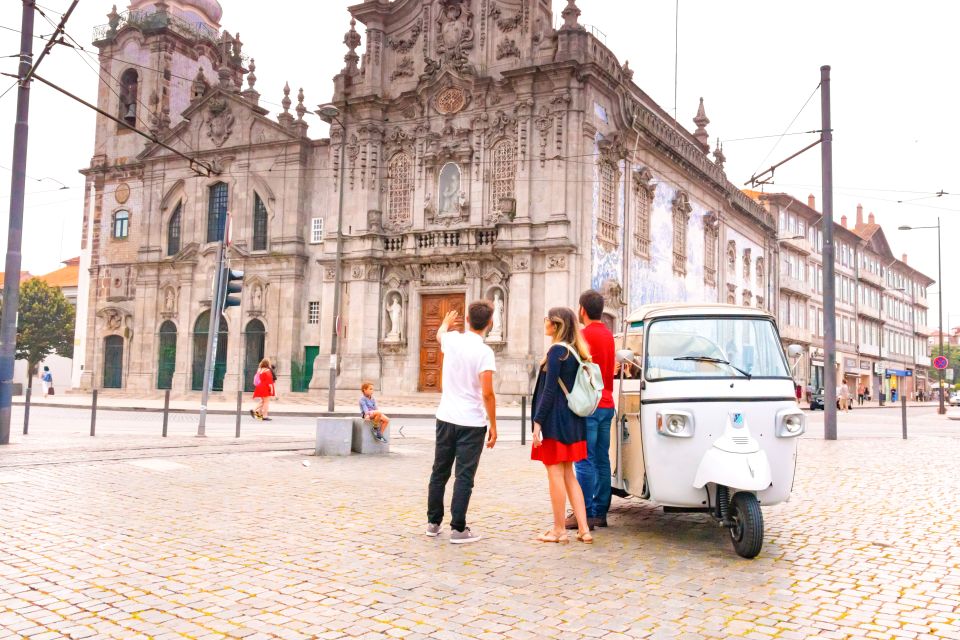
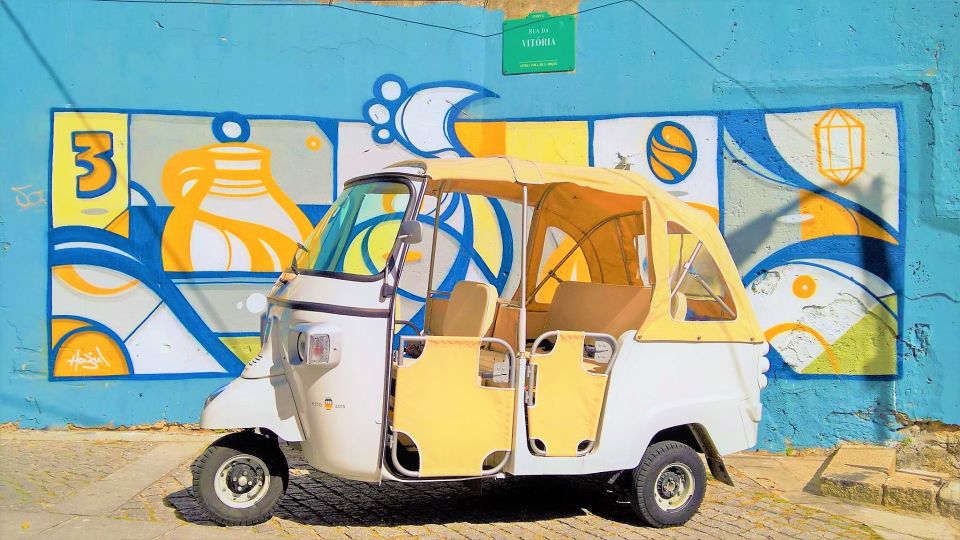
Here’s the honest part: this isn’t a smooth ride like a modern sedan. The tuk-tuk is fun, but it’s also a three-wheeler, and you feel the road—especially on cobbled streets.
One practical consideration: if you have back or neck problems, you should think twice. The tour mixes ride time with walking time, so if bumps are an issue, ask about the pace and how much of the route you can walk instead.
Sound is another practical detail. Old streets and corners can make it hard to hear explanations clearly, even with a guide leading the way. If you care about every detail, go in with the expectation that you may catch the big points rather than every sentence.
What to do: bring sunglasses, light layers, and shoes with grip. Porto’s charm includes uneven surfaces. Dress for it and you’ll enjoy the day more.
Price and value: does $104 make sense?
At $104 per person for about 3.5 hours, this tour sits in the “not-cheap but fair” range—especially because it’s private.
You’re paying for:
- A private guide (so you’re not competing for attention)
- A private tuk-tuk (so you can reach tight areas without doing constant long climbs)
- One glass of Port wine included
So the math is less about “transport cost” and more about saved time plus access. You get to cover a lot of Porto’s center without turning the visit into an all-day hike.
Where to watch the value: entry to paid attractions isn’t included. If you plan to enter specific stops (like towers or museums), budget tickets separately. Also, some iconic places are quick looks in a short tour, so don’t expect hours inside every landmark.
Even with that, if your goal is first-time Porto orientation plus signature stops, this pricing is usually easier to justify than a generic bus tour. You’re not only seeing places—you’re getting a route that connects them.
The guides: friendliness, timing, and flexibility you’ll notice
This tour is private, and that changes the vibe. Instead of following a rigid script, your guide can keep the pace steady and adjust the stops.
In the history of guides for this experience, names like Ana, Tito, Anna, Bernardo, Andre, and Inigo have shown up for this kind of role. The common thread in their feedback is that they’re friendly, helpful, and willing to support the day you actually want.
Some guides also make room for small, unexpected wins. For example, people have mentioned quick photo or stop moments related to Porto’s pop-culture side, including the She Changes installation and the well-known McDonald’s building in Porto. Those aren’t guaranteed for every schedule, but it’s a good sign that your guide may be open to short photo stops if time allows.
If you have must-see requests, bring them up early. This format works best when you set priorities before you start climbing and crossing bridges.
Who should book this tuk-tuk tour (and who should skip)
This experience is a great fit if you:
- Want a first-time Porto overview in a short window
- Like a plan with short walks instead of long guided hikes
- Appreciate viewpoints and key landmarks more than deep museum time
- Are arriving through cruise and need a convenient start around the port area
- Prefer private guiding over group shuffling
You might skip it if:
- You can’t handle uneven streets and potential bumps in a tuk-tuk
- You need a quiet, low-motion experience
- You want an all-day deep-dive into museums and paid interiors (since paid entry isn’t included and time is limited)
Should you book this Leixões to Porto Historic Center tuk-tuk tour?
I’d book it if you want Porto to make sense quickly: the river, the view, the old streets, and the places you’ll remember. The tuk-tuk route is built for time efficiency, and the Port wine ending is a satisfying close.
I’d think twice if your body is sensitive to bumps or stairs, because the day includes a 225-step tower climb and rides over old stone streets.
Best decision tip: if you’re paying for private guiding, come with a short list of what matters most—views, markets, churches, and one or two icons like Livraria Lello or the riverfront. Then you’ll get a tour that feels like it was shaped for you instead of just delivered on a schedule.
FAQ
How long is the Leixões to Porto historic center tuk-tuk tour?
It lasts about 3.5 hours.
Where do I meet the guide?
Meet your guide at Leixões Port, looking for the tuk-tuk in front of the port’s main gate.
What’s included in the price?
The tour includes a personal guide, a private tuk-tuk tour, and one glass of Port wine.
Which languages are available for the live guide?
The guide is available in English, Spanish, and Portuguese.
Is this a private tour?
Yes, it’s a private group experience.
Can I cancel for a full refund?
Yes. You can cancel up to 24 hours in advance for a full refund.