REVIEW · PORTO
The Passing Vessel: Ceramic, Perfumery & Candle Workshop in Porto
Book on Viator →Operated by Sneferu Atelier · Bookable on Viator
You leave with a scent and a story. The Passing Vessel workshop in Porto is a rare mix of hands-on ceramics and perfume craft, with a human, passed-forward twist: you start with a vessel made by someone before you.
I like that you get real guidance while making a fragrance and pouring a candle, not just decorating at the surface level. I also love the receive, create, give idea, where your work becomes part of a chain of makers tied to the workshop’s notes and marks. A possible drawback: if you want a step-by-step candle class focused on different wax types, this is more about fragrance creation than technical wax tinkering.
Sneferu’s team keeps things relaxed, and the pace includes a garden break while the candle sets. In previous sessions, you’ll see the results of other people’s glazing and decoration, then you’ll add your own porcelain jar at the glazing table—leaving it behind for the next participant. If you have allergies, tell the team ahead of time; one participant described helpful adjustments with gloves and clear care during scent work.
In This Review
- Key highlights you’ll care about
- Why this Porto workshop feels different from a typical craft class
- Stop at Sneferu Atelier: choosing your pre-made ceramic vessel
- Creating your custom fragrance and pouring your candle
- The garden break: snacks and drinks while your candle sets
- Decorating a porcelain jar for the next participant
- What you take home, and what gets passed forward
- The people factor: small group size and supportive guidance
- Price and value: what $69.68 buys you in Porto
- Who should book, and who should set expectations first
- Should you book Passing Vessel in Porto
- FAQ
- Where does the workshop start?
- What time does the session run?
- How long is Passing Vessel?
- Is the workshop in English?
- How many people are in a group?
- What can I make in the workshop?
- Are service animals allowed?
- What’s the cancellation policy?
Key highlights you’ll care about
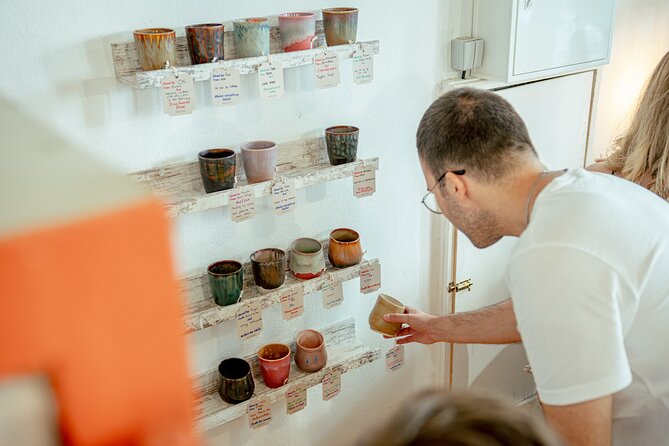
- Receive a pre-glazed ceramic vessel decorated by someone from an earlier session, complete with a maker note.
- Create your own custom fragrance with staff coaching, then pour it into your candle.
- Leave a porcelain jar for the next person by decorating at the glazing table, keeping the story going.
- A small group feel with a maximum of 10 participants and an English-friendly setup.
- A garden break while wax sets, with snacks and drinks to keep the workshop comfortable.
- Scent work that can be allergy-aware, as long as you communicate your needs.
Why this Porto workshop feels different from a typical craft class
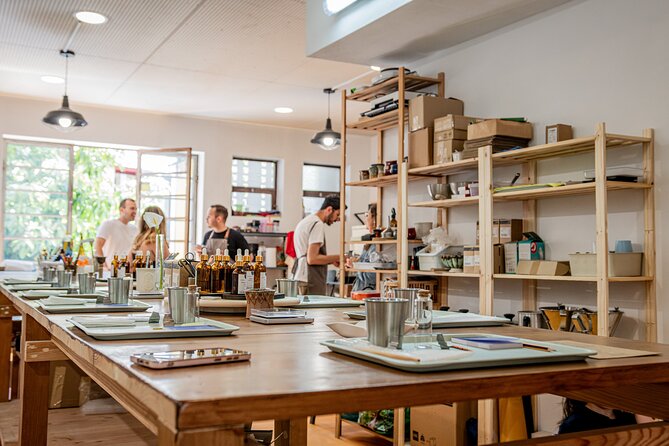
Most craft workshops give you a finished object and send you on your way. Passing Vessel does something smarter. It treats the workshop like a short living line between people: you’re not only making something, you’re adding your page to someone else’s.
The core idea is built around three acts—receive, create, give—and you can feel that right from the first moment. You start by choosing a handmade ceramic vessel that someone else already glazed and decorated. It even comes with a small note from its maker, so the object carries a voice, not just a pattern.
What really makes it worth your time is the combination of skills. You’ll do ceramic decoration and also step into a fragrance-making role, with guidance on building a scent you actually want to wear in your home. And because the group is capped at 10, it doesn’t turn into a rushed assembly line.
A few more Porto tours and experiences worth a look



Stop at Sneferu Atelier: choosing your pre-made ceramic vessel
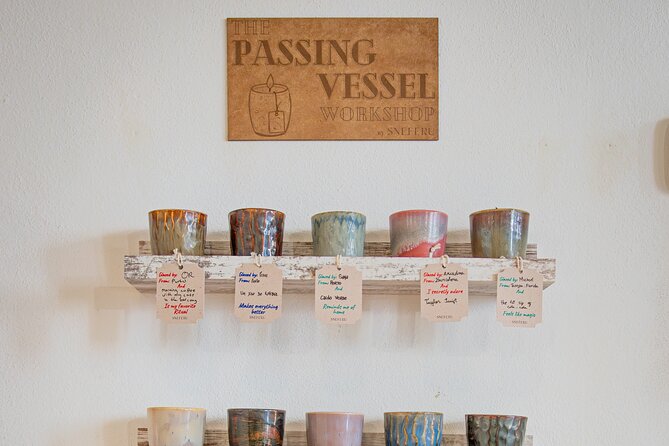
You’ll meet at R. de Ferreira Cardoso 49, 4300-096 Porto, right at the Sneferu Atelier, and the workshop starts at 4:00 pm. The first act is all about choosing: you select a ceramic vessel that’s already been glazed and decorated in a previous session.
This part changes the emotional tone of the workshop. You’re not starting from blank bisque where you have to decide everything yourself. Instead, you’re joining an ongoing craft story. The vessel also includes a small note from the person who made it. That note is the kind of detail that turns a decorative item into something personal—especially if you’re bringing it home as a gift.
Practical note: because the vessel is already decorated, you’ll spend less time worrying about whether your ceramic design is good enough. You can focus on the fragrance part and on your own finishing act later.
Creating your custom fragrance and pouring your candle
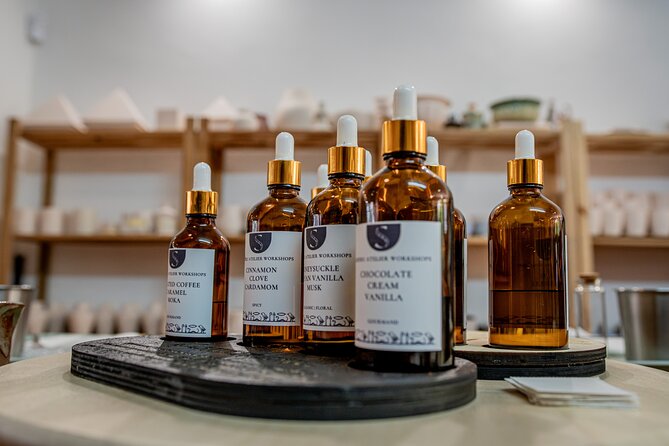
After you’ve chosen your vessel, you shift into perfume and candle mode. You’ll be guided through making a custom fragrance and then pouring a scented candle based on that choice.
This is where the workshop earns its keep. The staff are there to help you think like a perfumer—choosing scent directions and building a combination that feels like yours. The experience is described as hands-on and creative, and you’ll have a chance to experiment rather than follow a script where the outcome is predetermined.
One helpful reality check from past participants: this is not a class where you melt wax and compare multiple wax types step-by-step. You’re not there to do lab-grade candle chemistry. Instead, you’re there to practice scent selection, fragrance building, and candle pouring with the materials and process they provide.
If you’re sensitive to scents, move slowly in your choices. Sample and breathe between steps. The staff’s tone tends to be easy-going, which helps you stay comfortable while you experiment.
The garden break: snacks and drinks while your candle sets
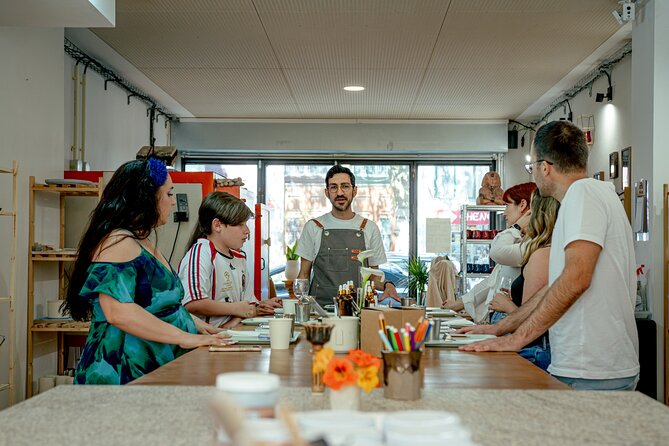
You won’t be working the entire two-ish hours without a reset. While your wax sets, the workshop pauses for snacks and drinks in the garden.
This break matters more than it sounds. Candle-making can take longer than the “hands-on minutes” on paper. The garden time is built in so you can talk with your small group, stretch, and let the workshop keep a calm rhythm instead of feeling like a craft sprint.
Past participants also described the break as a welcome social moment—an opportunity to connect without awkwardness. And yes, wine has come up in people’s descriptions of the garden break, so if you drink, treat that as a nice bonus.
Decorating a porcelain jar for the next participant
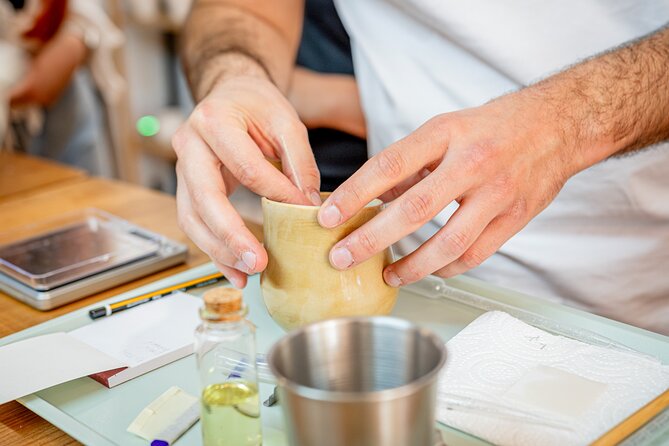
Now comes the third act: give. After the candle work and the break, you move to the glazing table and decorate a new porcelain jar. This jar stays behind so that the next participant can discover it as part of their “receive” moment.
This is the workshop’s signature move, and it’s also why the experience feels more meaningful than a one-off souvenir. You’re making something you won’t take home immediately. Instead, you’re building a small future surprise for someone else—and you’ll decorate with that in mind.
A good way to think about this stage: treat it like “public art” with a private reward later. Even though you’re not getting this jar back, you’re getting the satisfaction of being part of the same craft chain that started with someone else’s vessel note.





What you take home, and what gets passed forward
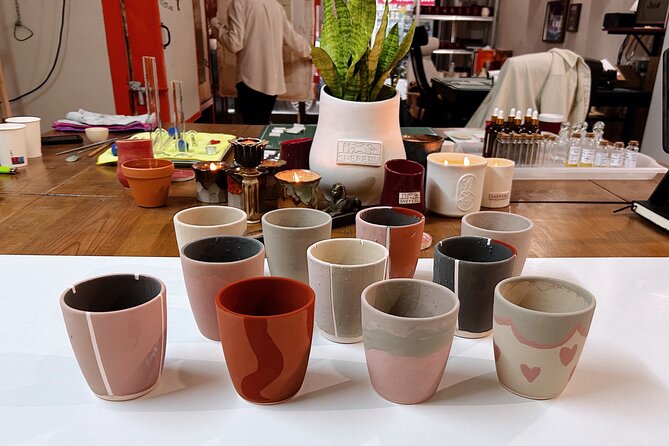
At the end of the workshop, you leave with your candle—poured with your scent and placed into a jar that will be glazed by someone else. In other words, your personal part arrives in the scent and intention, while the final ceramic/glazing finish becomes part of the workshop’s shared timeline.
You also pass forward a vessel of your own: you decorate a jar, mark it as yours, and leave it ready for the next person’s experience. That means the workshop doesn’t just produce objects; it produces continuity.
So what’s the best part for value? You get two outcomes with one shared logic:
- A custom-smelling candle you made
- A ceramic piece that continues the story through glazing and decoration by future participants
The people factor: small group size and supportive guidance
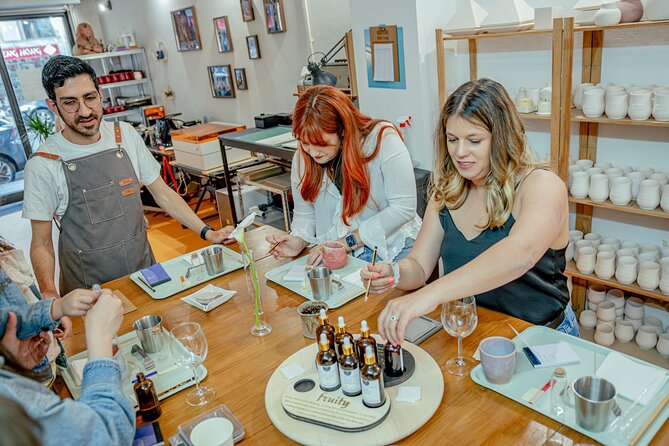
Passing Vessel caps the group at 10 participants, which is key. With a smaller group, you’re more likely to get direct attention when you’re choosing scents or working at the decoration table.
The workshop is offered in English, and multiple staff members are mentioned as doing the teaching and support, including Tiago and Or. Another team member, Anabela, also comes up in descriptions of the experience. Even with an English-language setup, you may hear Portuguese around you—usually part of the charm in a local atelier.
If you’re doing this with kids, the hands-on nature is a big plus. One participant specifically said it’s fun and very hands-on for families and children. If you’re doing it as a team activity, people have also described it as a great format because everyone can participate in making something real.
Price and value: what $69.68 buys you in Porto
At $69.68 per person, you’re paying for more than “a craft.” You’re paying for:
- Ceramic time (choosing a decorated vessel and creating a jar)
- Fragrance guidance and custom scent building
- Candle pouring
- A scheduled break with snacks and drinks
- A group size that stays small enough for real help
The value equation gets clearer when you compare what you’d normally have to pay for separately: fragrance products, candle materials, and a hands-on class with a staff-led pace. Here, your scent-making and ceramic work happen under one roof in a structured session.
A practical takeaway: if you’re in Porto for a limited number of activities, this is a strong “one ticket, two skills” option. It’s less about collecting many tiny souvenirs and more about making one meaningful object with your own taste in it.
Who should book, and who should set expectations first
This workshop fits best if you want a sensory activity that mixes creativity with a gentle structure. It’s also a strong pick if you like craft work but don’t want the stress of perfecting technical techniques from scratch.
You’ll likely enjoy it if you:
- Want a custom fragrance you can take home
- Like ceramics and want to paint/decorate in a guided way
- Prefer a smaller-group setting over a big group class
- Travel with family members and want a hands-on format
You might want to skip or adjust expectations if you:
- Want a deeply technical candle class focused on wax types and detailed candle chemistry
- Expect a purely step-by-step candle procedure with tons of technical troubleshooting
Either way, the scent part is the star, and the ceramic part is closely tied to the workshop’s story chain.
Should you book Passing Vessel in Porto
If you want a workshop that feels personal without being precious, book it. Passing Vessel is a rare blend: ceramics with a human note from the past, and fragrance-making with real choice in the scent you create. The added garden break helps it feel like an experience, not a rushed checklist.
Book it especially if you like the idea of making something that continues beyond you—your jar becomes someone else’s first moment of discovery, and your candle’s final ceramic story is finished by a later maker. That “shared timeline” is the heart of the value.
FAQ
Where does the workshop start?
It starts at R. de Ferreira Cardoso 49, 4300-096 Porto, Portugal.
What time does the session run?
The start time is 4:00 pm, and it ends back at the meeting point.
How long is Passing Vessel?
The duration is listed at about 2 hours.
Is the workshop in English?
Yes, it’s offered in English.
How many people are in a group?
There is a maximum of 10 travelers/participants per workshop.
What can I make in the workshop?
You’ll create a custom fragrance and pour a scented candle, and you’ll also decorate a porcelain jar at the glazing table. You also choose a handmade ceramic vessel that was decorated in a prior session.
Are service animals allowed?
Yes, service animals are allowed.
What’s the cancellation policy?
You can cancel for a full refund if you cancel at least 24 hours before the experience starts.