REVIEW · LISBON
Private Tour: Best of Lisbon Walking Tour
Book on Viator →Operated by Inside Lisbon · Bookable on Viator
Lisbon clicks into place fast. This private walking tour gives you a smart first look at the city’s layers, from squares tied to kings and revolutions to the oldest streets in Alfama—and you’ll refuel with an included pastel de nata plus tapas and wine along the way. I love that it’s paced as a real orientation, not a speed-run, and I love the built-in food stops that make the walking feel like part of the day instead of an interruption. The one watch-out: Lisbon has plenty of hills and stairs, so you’ll want moderate physical fitness, even if your guide can sometimes steer you toward easier paths.
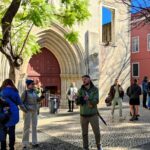
What makes this tour especially useful is how the route keeps widening your mental map. You start in the Rossio area (near Praça Dom Pedro IV), move through downtown landmarks, hit a major viewpoint at Miradouro Chão do Loureiro, and then work your way into Alfama’s narrow lanes before finishing at Praça do Comércio. At about 3 hours, it’s long enough to learn what matters and short enough that you still have energy left for your own wandering.
Since it’s private, you’re not stuck waiting on anyone else. You can also get hotel pickup if you’re a short walk from the meeting point; if not, you’ll meet at Praça Dom Pedro IV and start from there. Guides offer the tour in English, and the overall vibe is easy going with plenty of chances to ask questions.
In This Review
- Key highlights to know before you go
- A first-day Lisbon route that actually helps you plan
- Price and what the $96.79 really buys
- Where you start (and why meeting point matters)
- Praca Dom Pedro IV to Largo de São Domingos: kings, legends, and scars
- Restauradores, Rossio station, and Lisbon during World War II
- Largo do Carmo to Santa Justa: the revolution site and a view that resets the day
- Chiado and Baixa: art streets and the blueprint after catastrophe
- Miradouro Chão do Loureiro: the viewpoint that makes the rest of Alfama make sense
- Alfama: narrow streets, old stories, and real Lisbon texture
- Statue of D. José I: the earthquake king you’ll understand after this stop
- Praça do Comércio (Terreiro do Paço): where the city opens up
- The guide makes a difference: what to watch for
- What kind of traveler should book this?
- Should you book this Lisbon walking tour?
Key highlights to know before you go
- Private tour with flexibility: only your group, so you set the rhythm.
- Tastings included mid-route: pastel de nata, tapas, and a glass of wine to keep you going.
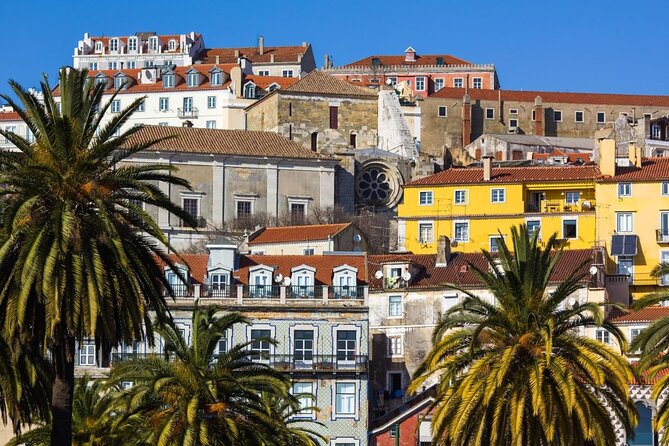
- Views at the right moments: viewpoints that help you understand Lisbon’s layout.
- A guided history you can place on a map: kings, earthquakes, and political turning points tied to specific squares.
- Rossio-to-Alfama flow: you’ll move from downtown order to old-city chaos in a way that makes sense.
- Options for harder walking: guides often adjust for hills/stairs when possible.
A first-day Lisbon route that actually helps you plan
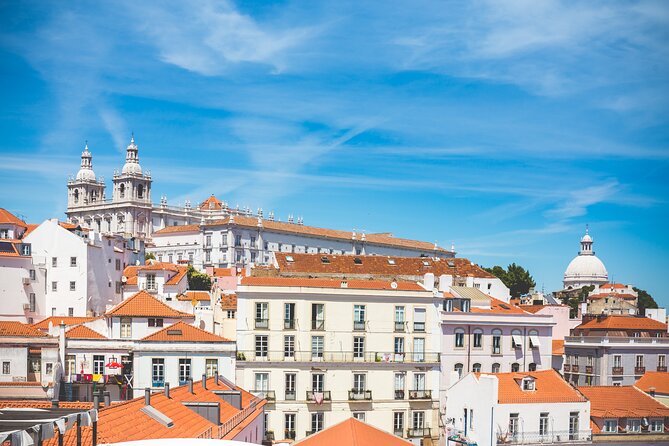
If you’re wondering what to do on day one, this is the kind of tour that stops you from wasting time. Lisbon can feel like three different cities stacked on top of each other—downtown, viewpoints, and the old neighborhoods—and the key is learning how they connect. This tour does that with a walking line that moves from major squares to scenic overlooks to Alfama, then ends at the grand waterfront square.
The “private” part matters more than you might think. A small group can make guides faster or slower, but a private group means you won’t be forced into a single tempo. In practice, that tends to make the walking experience calmer and more personal, especially when you stop often for context. Guides on this route (from people like Natalia and Jose to Joao and Ricardo) are known for mixing street-level facts with stories, and for answering questions without rushing you out of a spot.
At around 3 hours, you get a big chunk of the city without turning your whole day into a lesson. It’s also built for realism: you’ll spend time on foot through areas where you’d otherwise just pass by on your own.
You can also read our reviews of more walking tours in Lisbon



Price and what the $96.79 really buys
At $96.79 per person for a private 3-hour tour, the cost isn’t just “walking with a guide.” You’re also paying for four concrete things:
- A private guide for the full route
- Hotel pickup when you’re close enough to the meeting point
- Pastel de nata plus tapas and one glass of wine
- A guided sequence of major stops where you learn what you’re looking at (instead of guessing)
Food and drink are often what make a walking tour feel worth it, and here they’re included. That helps you avoid the common trap in Lisbon: planning a day around sights, then realizing you’re starving and spending time later trying to find something good between hills. The tastings are built into the experience, so the walking and learning stay tied together.
Is it cheap? No. But it’s also not only sightseeing. If you want a low-effort way to get oriented quickly, the value is in the combination: private time + structured stops + included bites.
Where you start (and why meeting point matters)

Your tour begins at Praça Dom Pedro IV in the Rossio area. The official start address is at Praça Dom Pedro IV, 41, 1100-200 Lisboa. It’s a practical hub: you can reach it using public transit, and it’s right where many Lisbon days naturally begin.
Pickup is offered only if your hotel is a short walk from the original meeting point. If your hotel isn’t within that pickup limit, the tour starts at the meeting point and you simply meet there. This is important because Lisbon is full of winding streets and hill routes—so starting in the Rossio zone keeps the schedule sensible.
The tour ends at Praça do Comércio (Terreiro do Paço). That finish is a smart move. You finish near open space and the water, which makes it easier to transition to your own plan—whether that’s a tram ride, a meal, or just relaxing with a view.
Praca Dom Pedro IV to Largo de São Domingos: kings, legends, and scars
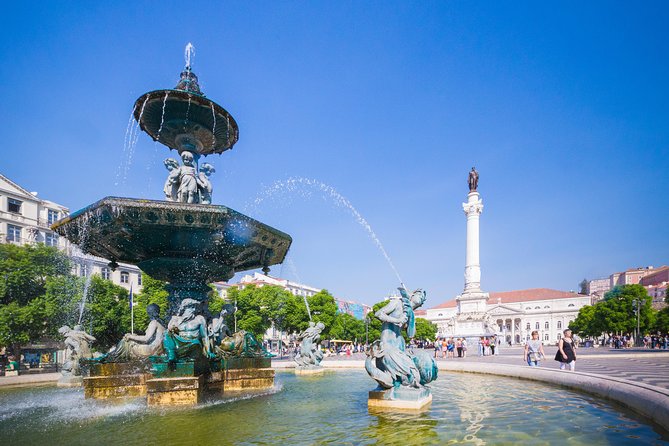
The first stop is Praça Dom Pedro IV. You’re paying attention immediately to the meaning of the place—Peter IV—so you’re not just walking through pretty space. The square sets a tone: Lisbon’s story is written in monuments, names, and public squares.
Next comes Largo de São Domingos, where you visit a church that has suffered injuries through history. This is the kind of stop that’s easy to miss if you’re walking alone. With a guide, you get a frame for what Lisbon went through—especially when the tour mentions Lisbon’s massacre tied to the area’s story. Even if you only remember a few details, you’ll start noticing how often history shows up in the physical city.
What to expect here: short stops, a focused explanation, and a change in your mindset from sightseeing to understanding.
Possible drawback: because these are quick stops, you’ll want to ask questions in the moment if something clicks. If you wait, you can lose your chance to connect the story to the exact spot.
Restauradores, Rossio station, and Lisbon during World War II
Then you move to Praca dos Restauradores. The obelisk in the square is the star here, and your guide explains what it represents and why it connects to independence. It’s a good example of Lisbon’s habit of turning political meaning into public art.
From there, you head to Estação do Rossio, with a World War II reference point. This stop helps you link the city’s famous medieval vibe to the more modern events that shaped Lisbon’s identity.
If your goal is to see Lisbon fast but not shallow, this is a strong sequence. Squares and stations sound boring until you know what they symbolize.
Tip for your feet: these sections are more “walk-and-pause” than “climb-and-sweat,” which is ideal early when you still have fresh energy.
You can also read our reviews of more private tours in Lisbon






Largo do Carmo to Santa Justa: the revolution site and a view that resets the day

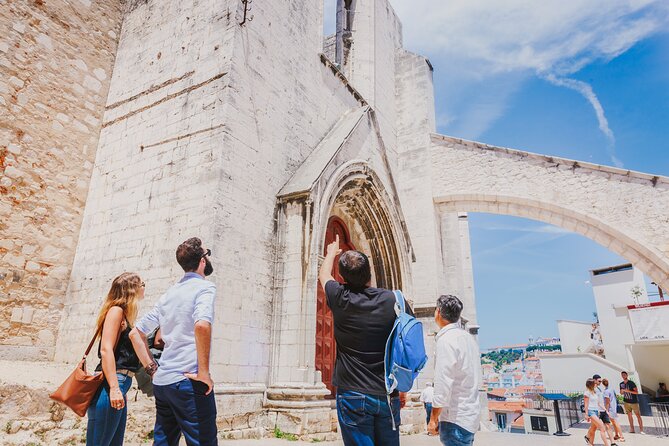
At Largo do Carmo, you’re told that the importance of the place is tied either to the 14th-century convent or to the Carnation Revolution. Either way, the message is clear: Lisbon has a talent for mixing old walls with big political change. You stop here long enough to understand why this location matters, not just what it looks like.
Then comes Elevador de Santa Justa. This is one of those Lisbon monuments you see in photos, but the real value is being there in person with context. The area gives you a chance to admire the view over the historic center. Even if you don’t ride anything, the perspective helps you understand why Lisbon feels like it’s constantly climbing and dropping.
This is where your orientation clicks. Once you can see the city’s layers from up high, you’ll start noticing how your remaining walk fits into the whole picture.
Chiado and Baixa: art streets and the blueprint after catastrophe
Next is Chiado, which your guide frames as an artistic and bohemian neighborhood. You’re not just strolling for atmosphere here. You’ll learn how the neighborhood fits into Lisbon’s culture and identity—and you’ll get a sense of why people associate this area with creativity and style.
After that, you reach Baixa de Lisboa, Lisbon’s heart. This stop focuses on why the area looks the way it does: it was rebuilt after the earthquake of the 18th century, with rules of urbanism and architecture that were innovative for their time. This is one of the big “wait, now I get it” parts of the tour. Many first-time visitors see Baixa as just central streets. With a guide, you understand it as an engineered response to catastrophe.
Practical note: Baixa is good for a brief reset. It’s more straightforward walking than the maze ahead.
Miradouro Chão do Loureiro: the viewpoint that makes the rest of Alfama make sense

Your next viewpoint is Miradouro Chão do Loureiro. You’ll take in a panoramic view, which does two things.
First, it gives you a break from street-level walking. Second, it clarifies the terrain. Alfama isn’t just old. It’s old in a landscape where the hills and narrow lines shape daily life.
If you’ve struggled to understand Lisbon’s geography, this is a key moment. The view helps you picture why Lisbon’s neighborhoods feel so different from each other even when they’re close on a map.
Alfama: narrow streets, old stories, and real Lisbon texture
Then you step into Alfama, the oldest neighborhood. This part of the tour is about time travel through narrow streets and alleys, and it’s where Lisbon feels most like Lisbon.
Alfama is also a good “learning by walking” zone. When you’re in the thick of the lanes, descriptions become more vivid. Your guide keeps explaining the city’s history as you go, so the story doesn’t float above your head—it sticks to what you can see.
You’ll spend about half an hour here. That sounds short, but it’s enough to absorb the feel and learn what matters without turning it into a hike.
Statue of D. José I: the earthquake king you’ll understand after this stop
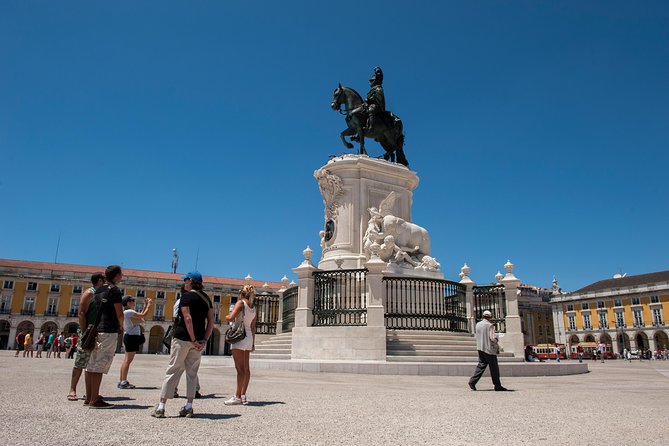
After Alfama, you’ll see the Statue of D. José I. D. José I was the king of Portugal during Lisbon’s earthquake, and your guide explains the rest of the story. This stop ties the political figure back to the physical evidence you saw earlier in Baixa.
It’s also a nice rhythm change: after the complexity of narrow streets, a clear statue stop helps you zoom out mentally.
Praça do Comércio (Terreiro do Paço): where the city opens up
Finally, the tour ends at Praça do Comércio (Terreiro do Paço). This is the residence area tied to king José I, but more importantly it’s the square that connects Lisbon to the world. You get a sense of why this location has always mattered—open space, big presence, and a natural link to the water.
Finishing here is practical. You end in an area where you can keep moving easily—by foot, by local transit, or by starting dinner plans right away. It’s a clean landing after the climb and the tight streets.
The guide makes a difference: what to watch for
A big theme in the experience is that the guide isn’t just reciting facts. The best guides on this route mix history with personal delivery.
For example, I love how guides like Natalia are described as providing solid Portuguese background plus delicious tastings and thoughtful route options for hills and stairs. If you’re booking for a mixed group—someone who loves to walk and someone who needs breaks—that kind of flexibility can be huge.
Jose’s style stands out too, especially for combining deep knowledge with making stops feel special. And Joao’s habit of being quick about how to handle hills and elevators is the kind of practical planning that can save energy.
Even if your guide isn’t one of the names you see, the pattern matters: you want someone who answers questions and can adjust pacing. This tour is set up for that kind of guiding.
What kind of traveler should book this?
This tour fits best if you want a first-day win. It’s ideal for:
- First-time visitors who want Lisbon’s main neighborhoods connected in one walk
- People who prefer learning from a local guide instead of reading signs at random
- Anyone who likes food breaks built into the route
- Couples, families, and small groups who want privacy and flexibility
It also helps if you’re short on time. A 3-hour structure means you can still do your own Lisbon after.
The main mismatch would be if you hate hills or know you’ll struggle with stairs. Lisbon walking is rarely flat, and this tour includes historic areas where terrain matters. That said, guides often try to accommodate with easier walking options when possible.
Should you book this Lisbon walking tour?
Yes—if your goal is a smart, well-fed orientation to Lisbon in a half-day window. The included tastings (pastel de nata, tapas, and wine) make the walk feel like a complete experience, not just a sightseeing march. The route from Rossio through downtown and viewpoints into Alfama helps you understand the city’s layout fast, and finishing at Praça do Comércio sets you up for an easy next step.
Skip it or consider a different option only if you’re very sensitive to hills and stairs. Otherwise, this tour is a strong pick for getting your bearings quickly and learning the kind of history that actually explains what you’re seeing.