Lisbon has a way of making you work for the views. This private electric tuk-tuk tour helps you see more while still getting stops at the places that define the city, from Alfama viewpoints to Belém’s riverfront landmarks. I love the pace: it’s long enough to absorb the stories and short enough to keep the day feeling easy, even with Lisbon’s steep streets.
The ride also feels personal. You get a live guide who adjusts the commentary to your group, and you can ask questions in the moment. One consideration: you’ll mostly view sights from the outside and rely on ticketed sites on your own if you want to go in, plus the tuk-tuk requires some easy step-in/out.
In This Review
- Key highlights at a glance
- Why an electric tuk-tuk fits Lisbon’s hills (and your schedule)
- Price and value: what $156.18 buys you in real time
- The ride plan: pickup, timing, and how to avoid stress
- Stop-by-stop: what you’ll see and why each stop matters
- Lisbon Cathedral and the Roman Theater under the earthquake rubble
- Alfama viewpoints: Portas do Sol and Senhora do Monte
- São Vicente de Fora and the feeling of old Lisbon outside the big sights
- Panteão Nacional: Portugal’s national pantheon
- Prata do Comércio and the Tagus: the city opens up
- Time Out Market Lisboa: a flexible food win during a short day
- Pastéis de Belém: the pastry stop you’ll actually remember
- Belém monuments: Jerónimos and Torre de Belém (outside-first)
- MAAT and Basilica da Estrela: art and religion on different sides of the street
- Príncipe Real, Chiado, and the miradouro-to-coffee rhythm
- Convento do Carmo: the earthquake’s tragedy in stone
- What to watch for during the stops (so you don’t miss the best parts)
- Who should book this tuk-tuk tour?
- Should you book?
- FAQ
- How long is the Private 4-Hour Tuk Tuk Tour?
- Is this tour private or shared?
- Is the tour in English?
- Does it include hotel pickup and drop-off?
- Are admission tickets included for all the stops?
- Will we go inside churches, monuments, or museums?
- How many people can fit in a tuk-tuk?
- Are there any limits for mobility or accessibility?
- Is free cancellation available?
Key highlights at a glance
- Private electric tuk-tuk that keeps you moving without turning the day into a full-on hike
- Miradouro time at multiple viewpoints with big, photogenic panoramas
- A live guide who tailors explanations to what you care about (and knows how to keep momentum)
- Old Lisbon to riverfront Lisbon in one compact loop: Alfama, Chiado, Belém, and more
- Plenty of photo pauses—the stops are short, but you’re not rushed through everything
- Clear ticket expectations, since several major sights are outside-only on this route
Why an electric tuk-tuk fits Lisbon’s hills (and your schedule)
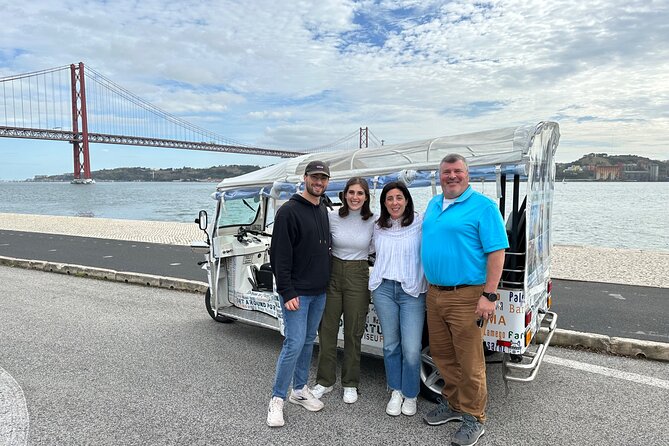
Lisbon’s streets are narrow, steep, and often inconvenient for normal sightseeing plans. This tour solves that by using a private electric tuk-tuk, which gets you close to the viewpoints and main sights without you constantly thinking about stairs, buses, or where to park.
I also like that it’s structured like a guided day, not a random driving tour. Your guide is live the whole time, and the commentary is meant for your group’s interests. In the feedback I saw, guides like Patricio and Emanuel were praised for staying friendly, funny, and patient, while Diego earned a reputation for both history talk and great group photos. So yes, it’s scenic—but it’s also the kind of sightseeing where you can actually learn what you’re looking at.
A practical heads-up: the itinerary is built around “see it from the outside.” That’s ideal for orientation and quick photos, but if you dream of long interior visits, you’ll need to add that on your own day.
You can also read our reviews of more private tours in Lisbon



Price and value: what $156.18 buys you in real time

At $156.18 per person for about 4 hours, this isn’t the cheapest way to tour Lisbon. It is, however, one of the more efficient ways to sample a lot of classic sights without spending the whole day commuting between them.
You’re paying for three things that matter in Lisbon:
- Private transport right from your pickup area (hotel/Airbnb in the city center)
- A dedicated guide who’s answering questions, not just reading a script
- Short, purposeful stops at viewpoints and landmark exteriors, so you get “best of” coverage fast
If your group is okay with a few stops being outside-only, the value is strong. If you’re the type who needs museums and churches inside to feel satisfied, you might feel like the tour is more of a highlights-and-views sampler. Either way, it’s a smart choice when you want to get your bearings early in your trip.
The ride plan: pickup, timing, and how to avoid stress
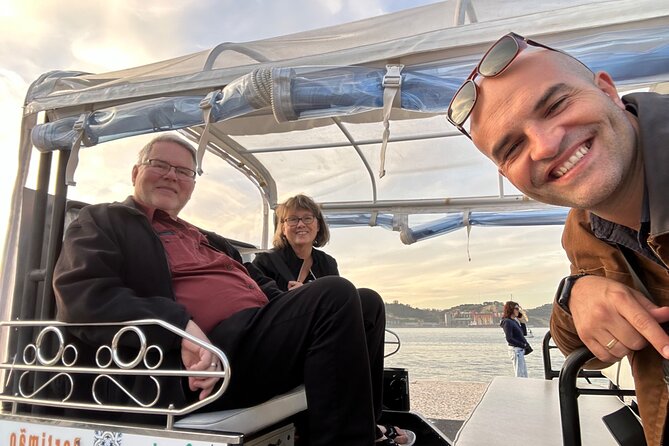
You start at Av. da Liberdade 3 (near Hard Rock Café Lisbon for outside-city-center pickups). The tour ends back at the same meeting point. If you want pickup at your hotel or Airbnb, you’ll want to confirm your address before the day.
You’ll also benefit from the fact that departures have a wide range of times. That helps you match this tour to your energy level and the weather. Lisbon can go from clear to rainy fast, and the route still works because it’s built around quick photo windows and viewpoint stops.
One more detail that affects comfort: the tuk-tuk fits up to 6 people, but for comfort the recommendation is 4 per tuk-tuk. If knees are an issue, getting in and out may be harder than a flat, low bench-style vehicle—so keep that in mind when choosing group size.
Stop-by-stop: what you’ll see and why each stop matters

Lisbon Cathedral and the Roman Theater under the earthquake rubble
You begin with Lisbon Cathedral, originally built in 1147. It’s the kind of place that helps you understand why Lisbon rebuilt after disaster. The route points out how the cathedral survived the powerful 1755 earthquake, which sets a theme you’ll see again at the ruined Carmo Convent later.
Next up is the Museu de Lisboa – Teatro Romano. This Roman theatre is tied to one of Lisbon’s most important turning points: ruins uncovered under the rubble from the 1755 earthquake. Even if you don’t go inside, the quick stop gives context for why Lisbon’s layers of history are literally under your feet.
Both of these stops are timed tight, and tickets are not included for each. Expect orientation, exterior views, and photo time—not a long interior visit.





Alfama viewpoints: Portas do Sol and Senhora do Monte
After the early history stops, the tour pivots to views. At Miradouro das Portas do Sol, you’ll get that “one huge balcony” feel over Alfama, Lisbon’s oldest neighborhood. This is where you start to see why Alfama looks like it does: tight streets, steep angles, and the way the city folds toward the river.
Then you climb mentally (and physically, with the tuk-tuk) to Miradouro da Senhora do Monte, described as Lisbon’s highest lookout. The payoff is huge panoramic viewing—up to about a 250-degree sweep—across the old quarters, toward the castle, and into the wider city.
Both viewpoints are free. In about 10 minutes each, you’re getting the core Lisbon experience: city geometry + the sense of standing above the historic neighborhoods rather than just looking at monuments.
São Vicente de Fora and the feeling of old Lisbon outside the big sights
You’ll pass Igreja de São Vicente de Fora, a 17th-century church and monastery. The timing is short, but the stop matters because it keeps the day grounded in living religious architecture, not only tourist-famous structures.
Then the tour moves into Alfama itself. Alfama is where Lisbon feels oldest and most authentic, and this is the neighborhood stop that helps your photos stop looking like postcard copies.
You’ll want to be ready with comfortable shoes for any walking—even on a tuk-tuk tour—because Lisbon streets are not designed for wide sidewalks. Still, this is one of the best sections for simply watching daily life.
Panteão Nacional: Portugal’s national pantheon
Next comes Panteão Nacional, a unique national church that acts as a pantheon. The stop is brief, and admission isn’t included, but it’s still a meaningful exterior moment. This is where Lisbon’s story turns from earthquake survival to national identity—Portugal’s last resting place for many important figures.
Prata do Comércio and the Tagus: the city opens up
You then reach Praça do Comércio, one of Europe’s most dramatic squares, open toward the Tagus estuary. This stop is a reset. After the steep lanes of Alfama and the viewpoint sweeps, you get a wide horizon and big space—great for regrouping and grabbing a quick snack plan.
If you’re wondering what Lisbon looks like when it’s not stacked on hills, this square is your answer.
Time Out Market Lisboa: a flexible food win during a short day
Next is Time Out Market Lisboa, inside the historic Mercado da Ribeira in Cais do Sodré. Access is listed as free, but food obviously costs extra. The value here is simple: you get an easy, reliable place to eat without derailing the tour.
If your timing overlaps lunch, this is a strong option because you can pick something quick and keep moving. If you’re not hungry yet, you can still use the stop to break up the day and plan your next meal.
Pastéis de Belém: the pastry stop you’ll actually remember
Then comes Pastéis de Belém, one of Lisbon’s most famous pastry stops. The description is exactly what I’d expect you to look for: a pastry that’s slightly crispy outside with a semi-sweet creamy interior.
This stop is short (around 10 minutes). It’s not a sit-down dessert break. You’ll likely want to go in with realistic expectations: grab your pastry, take a few photos, and keep the day’s rhythm.
Belém monuments: Jerónimos and Torre de Belém (outside-first)
You’ll visit the area around Jerónimos Monastery (Mosteiro dos Jerónimos). It’s UNESCO World Heritage (declared in 1983) and is paired with the nearby Tower of Belém in terms of prominence. Admission is not included, and again, expect outside views with photo pauses.
Then comes Torre de Belém, an island fortress once described as Lisbon’s last line of defense. This is one of those structures that feels dramatic even from a short stop because of its maritime setting and historic role.
If you want interiors, this is a perfect day to know what you’re coming back to. If you’re okay with exterior impact, you’ll still get strong “I’m in Belém” proof photos.
MAAT and Basilica da Estrela: art and religion on different sides of the street
Next is MAAT (Museu de Arte, Arquitetura e Tecnologia), launched in October 2016 as part of the EDP Foundation’s cultural patronage. This stop adds a more modern layer to a route that starts with medieval cathedrals and earthquake-era ruins.
Then you’ll pass Basilica da Estrela. Admission is free for the stop as listed, and the visit is short. Think of this as a visual pause—another church exterior that helps you understand Lisbon’s variety beyond just “one style of landmark.”
Príncipe Real, Chiado, and the miradouro-to-coffee rhythm
Lisbon’s center has different moods, and this tour samples two big ones.
At Príncipe Real, you’re in a more cosmopolitan neighborhood vibe. Then the route continues to Chiado, Lisbon’s more elegant area where people meet for coffee, shopping, or to start an evening before heading toward neighboring Bairro Alto.
Between these neighborhood stops, you also get Miradouro São Pedro de Alcântara, known for superb views from Bairro Alto over toward Alfama and Lisbon Castle. This is another “I get it now” moment where Lisbon’s hill system becomes visible, not just talked about.
Convento do Carmo: the earthquake’s tragedy in stone
Your last stop is the ruined Convento do Carmo. This place is visually unforgettable, and the story matters. It’s a reminder of the 1755 earthquake, with the key detail that the roof collapsed on congregants attending Mass on All Saints’ Day, and the building was never rebuilt. The Gothic arches remain, and the architecture dates back to the 1300s, with Manueline (Portuguese Gothic) windows and later additions in the 16th and 18th centuries.
Admission is not included, but the exterior ruin is the point. This stop is the emotional punctuation mark that turns earlier history from background into something you feel.
What to watch for during the stops (so you don’t miss the best parts)
This tour works best when you treat it like guided pacing.
- If you want museum interiors, plan those on separate days. This route is built around outside views and photo time.
- Bring a phone camera posture that’s ready for miradouros. You’ll hit multiple viewpoints, and those short pauses fly by.
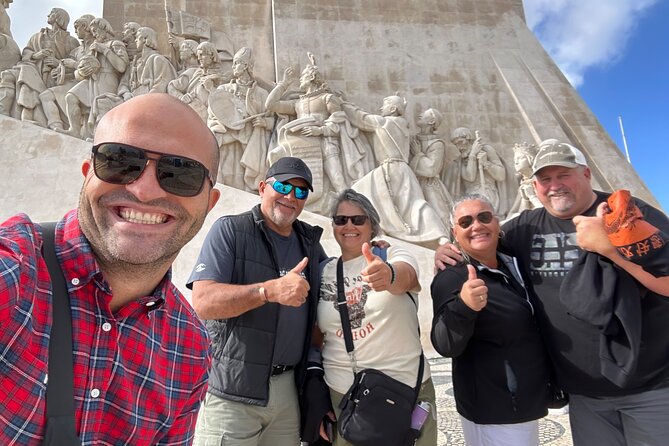
- Use questions as the tour goes. Guides like Diego (photo-friendly) and Patricio (patient and funny) are the kind who respond well when you ask what you should notice.
- If it rains, don’t panic. The route is still packed with stops that work from an exterior standpoint, and one guide-team note included rainy-weather success.
Who should book this tuk-tuk tour?
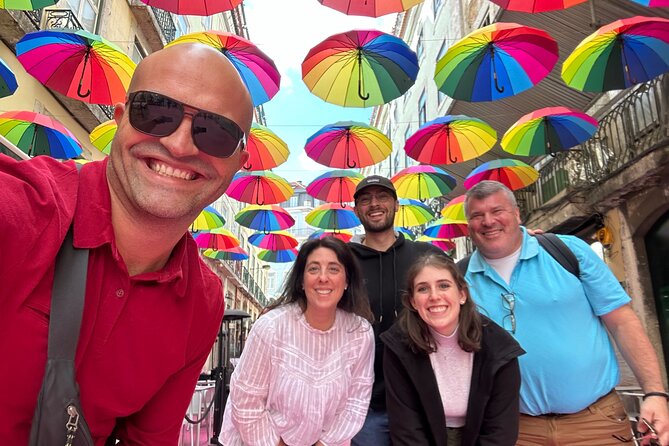
You’ll be happiest booking if you:
- Want a 4-hour overview of Lisbon’s key neighborhoods without burning your whole day on buses
- Like guided storytelling and quick stops where you can learn what you’re looking at
- Prefer comfort and speed over long stair-and-walk marathons
- Have a small group and want private attention (and a guide who can tailor commentary)
You might think twice if you:
- Need frequent indoor visits at each stop
- Have mobility issues that make step-in/out difficult on the tuk-tuk
Should you book?
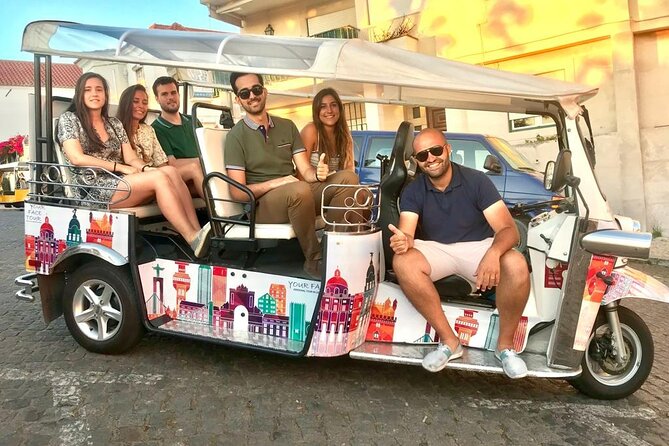
I’d book this tour if you’re trying to get your bearings fast and you want a guided route that connects neighborhoods like Alfama and Belém to the city’s earthquake-era history. The price is fair for what you get: private electric transport, a real local guide, and viewpoint-heavy stops that keep the day efficient.
If you’re picky about entrances, make your plan up front: treat the big sights as “preview from outside,” then add any interior tickets on a different day when you have more time. Either way, this is a smart way to see Lisbon with less strain and more context.
FAQ

How long is the Private 4-Hour Tuk Tuk Tour?
It lasts about 4 hours.
Is this tour private or shared?
It’s private, so only your group participates.
Is the tour in English?
Yes, the tour is offered in English.
Does it include hotel pickup and drop-off?
Yes, hotel pickup and drop-off are included within a selected city-center area. If you’re outside that area, the meeting point is Av. da Liberdade 3 (right across from Hard Rock Café Lisbon).
Are admission tickets included for all the stops?
No. Some stops list admission tickets as not included, while others are free. The tour also focuses on exploring sights from the outside.
Will we go inside churches, monuments, or museums?
The tour is described as exploring each attraction from the outside with time for photos and stories along the way.
How many people can fit in a tuk-tuk?
The tuk-tuk fits up to 6 people, and for comfort they recommend 4 per tuk-tuk.
Are there any limits for mobility or accessibility?
People with limited range of motion in their knees might find it hard to get in and out of the tuk-tuk.
Is free cancellation available?
Yes. You can cancel up to 24 hours in advance for a full refund. Cancellation less than 24 hours before the start time isn’t refundable.