REVIEW · SANTA MARIA
Santa Maria Fullday Excursion
Book on Viator →Operated by Smatur · Bookable on Viator
Santa Maria has a way of surprising you fast. This 6–7 hour small-group excursion strings together the island’s best viewpoints and story stops without feeling rushed. I like that it mixes geology, local crafts, and a proper museum visit, so you don’t just collect photos—you get meaning. I also appreciate the practical touches: pickup options, an air-conditioned vehicle, bottled water, and lunch choices that make a full day actually workable.
The one thing to keep in mind is weather. This tour needs good conditions, and if it’s canceled due to poor weather, you’ll be offered another date or a refund. If you’re the type who hates schedule changes, pack your patience alongside your sunscreen.
In This Review
- Key highlights worth planning around
- Why this full-day loop works so well
- Getting started in Vila do Porto: meet-up, pickup, and timing
- Forte de São Brás: volcanic views plus coastal defense history
- Miradouro São Lourenço: where the photos get easy
- Barreiro da Faneca: the Mars-feeling volcanic ash
- Santa Maria craft cooperative: real work, not a fake souvenir trap
- Estatua de Cristóvão Colombo: a small stop with a big clue
- Baía dos Anjos: natural pools and coastal calm
- Museu de Santa Maria: where daily life makes sense
- Cascata do Aveiro: vineyards, a big waterfall, and a short pause
- Lunch with drinks and coffee: built into the day’s value
- Price and value: what $108.43 really buys
- The weather factor: how to pack for a flexible day
- Who should book this and who might skip it
- Quick FAQ
- FAQ
- How long is the Santa Maria full-day excursion?
- What does the price include?
- Is lunch included, and are there choices?
- Do I need to pay entrance fees at the stops?
- Is pickup available?
- What language is the tour in?
- Should you book it?
Key highlights worth planning around
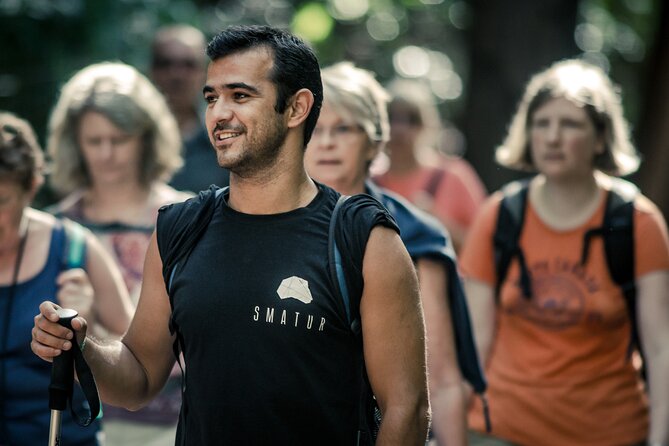
- Small group (max 8 travelers) means you get more questions answered and easier picture stops
- A guide who actually knows the island: I loved the way guides like Miguel and Ricardo explain stories, traditions, and what you’re looking at
- Miradouro time with big payoff at São Lourenço, where the views do most of the talking
- Made-in-Santa-Maria lunch with 3 choices (meat, fish, vegetarian) plus drinks and coffee
- Mandatory craft stop at the cooperative, so you see real work—not a quick storefront glance
- A museum hour that helps the island’s daily life make sense later
Why this full-day loop works so well
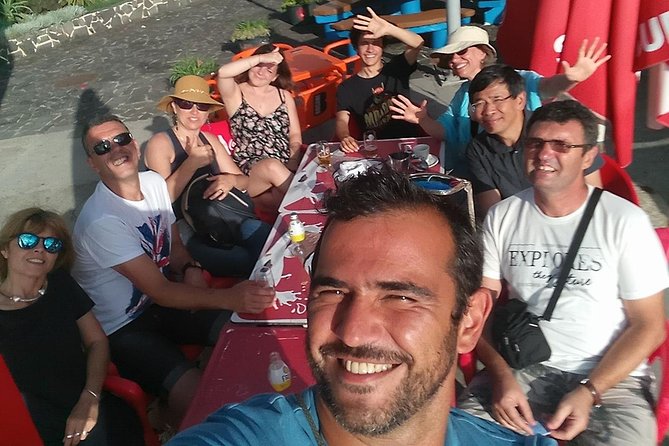
This is the kind of day that’s built for people who want a full taste of Santa Maria without guessing where to go. You spend your time on spots that connect to how the island formed, how people lived, and what the coast looks like up close. The order is logical too: viewpoints early, geology in the middle, then crafts and culture as the day warms up.
With a maximum of 8 travelers, the pace feels human. You’re not fighting the bus crowd at every stop. You also get time at each location (usually around 15–40 minutes depending on the stop) to walk a bit, look around, and actually enjoy the place rather than sprinting through it.
Guides in particular are a big part of the value here. In the experiences I read about, people singled out guides like Miguel and Ricardo for explaining what you’re seeing and coming back to get a better shot when rain changes the light. That’s not just “friendly.” It’s the difference between staring at scenery and understanding what you’re staring at.
Getting started in Vila do Porto: meet-up, pickup, and timing
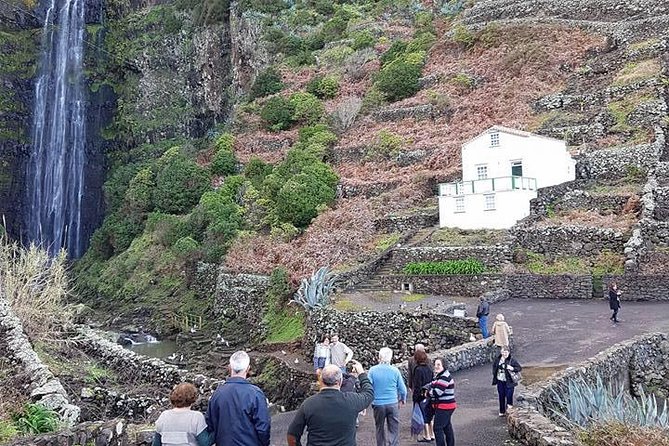
The tour begins at R. Dr. Luís Bettencourt 3, 9580-522 Vila do Porto and ends back there. Pickup is offered, but transfer time can vary depending on whether the vehicle has to stop at other hotels first.
That matters because Santa Maria is small, but travel time still adds up when you’re moving as a group. If you have a tight schedule that day, try to plan a little buffer before and after the excursion so you’re not rushing. The duration is listed as about 6 to 7 hours, but real days run on daylight and road conditions, so treat “about” as part of the plan.
You’ll also use a mobile ticket, which keeps things simple at the start. Service animals are allowed, and the tour is offered in English.
Forte de São Brás: volcanic views plus coastal defense history
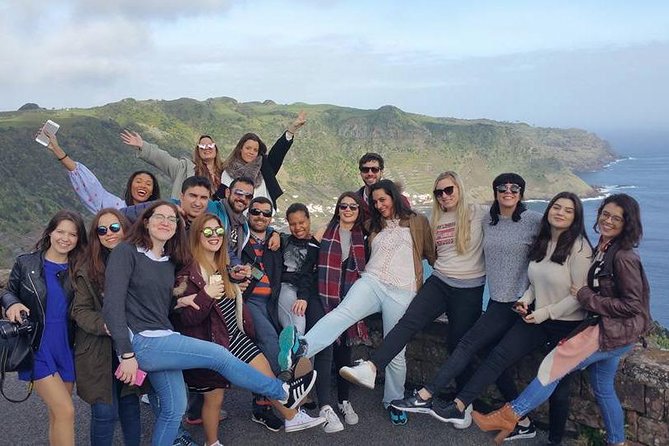
The first stop is Forte de São Brás, a fort from the early 1500s used to protect the island and fight off threats like Algerian corsairs, plus later military involvement around the 1600s. It’s a good opener because it gives you two things at once: a defensible vantage point and a connection to the island’s volcanic origin.
You’ll also get a view of part of the cinder cone believed to be tied to the island’s formation roughly 8.7 million years ago. That’s the fun of starting here: the island isn’t just pretty. It’s physical evidence. The stop is around 30 minutes, and admission is listed as free for this stop, so you’re spending your time looking, not paying extra for entry.
What to watch for: expect some uneven ground and viewpoints that reward slow walking. If you’re traveling in rain or strong wind, dress for it—this is an open, exposed spot.
Miradouro São Lourenço: where the photos get easy
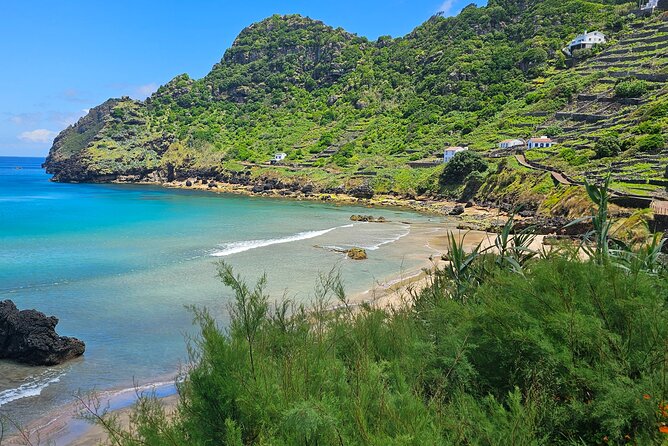
Next up is Miradouro São Lourenço, one of the island’s headline views. This is where you’ll feel why people come to Santa Maria for “paradisiacal” coastline scenes. The stop is about 30 minutes, and entry is free.
What I like about using a miradouro early in the day is timing. Light can be tricky later, and you also want your eyes adjusted before you move on to the more “science-y” places like volcanic ash fields.
Practical note: keep your phone/camera ready, but don’t freeze in one spot. A few steps along the viewpoint can completely change the composition of the bay.
Barreiro da Faneca: the Mars-feeling volcanic ash
Then you’re moving from scenic bay views into something stranger-looking. Barreiro da Faneca is described as a large area of volcanic ash—about 8 hectares—that went through oxidation around 3.5 million years ago. The result is a dramatic, almost alien terrain that some people compare to Mars.
This is a 30-minute stop and free to enter. It’s short enough that it doesn’t drag, but long enough to let your brain catch up: at a glance it looks like “just land,” but once you connect it to volcanic time, it clicks.
If you love unusual terrain: this is one of the stops that makes the day feel different from basic sightseeing. You’ll likely end up walking a little, looking down, and noticing color shifts.
Santa Maria craft cooperative: real work, not a fake souvenir trap
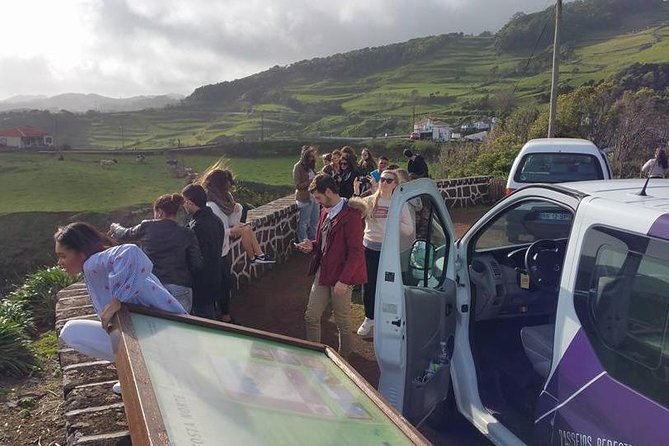
A truly useful part of this excursion is the stop at the Handicraft Cooperative Santa Maria Crl. It’s a cooperative focused on bread/pastry, ear biscuits, and weaving. And importantly, it’s positioned as a place that preserves centuries-old island heritage through the work of local employees. Entry is free here, and the stop is about 40 minutes.
This kind of stop is often hit-or-miss on tours. Here, the best approach is to treat it as an opportunity to learn how island food and crafts connect—not just as a shop window. If you like edible souvenirs, this is where you can pick something that makes sense to bring home.
My advice: go with curiosity. Ask questions if your guide offers them, taste if it’s available, and buy only what you truly want. With a longer day, it’s easy to impulse-buy, so take a breath and think about packing.
Estatua de Cristóvão Colombo: a small stop with a big clue
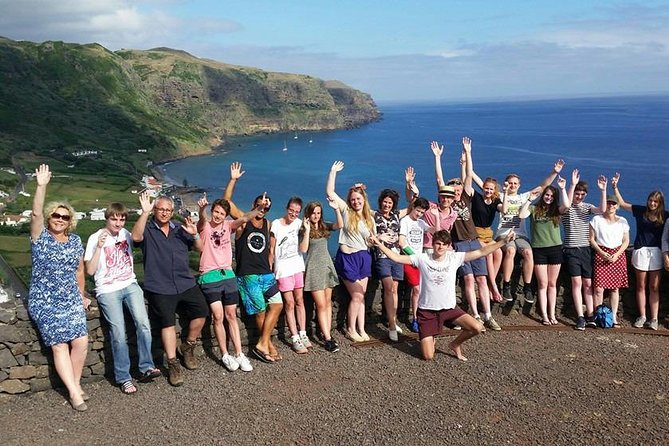
The day includes a quick cultural marker: the Statue of Cristóvão Colombo. It’s tied to a specific historical claim—Colombo’s stop at Lugar dos Anjos in 1493, where he said mass in the Chapel of N. Sra de Sant’Ana.
This is only about 20 minutes, free to enter, so you shouldn’t expect a deep museum-level stop. But it works as a short pause that gives context for later cultural thinking. When you’re touring an island, these “small anchors” help you connect the dots across centuries.
Baía dos Anjos: natural pools and coastal calm
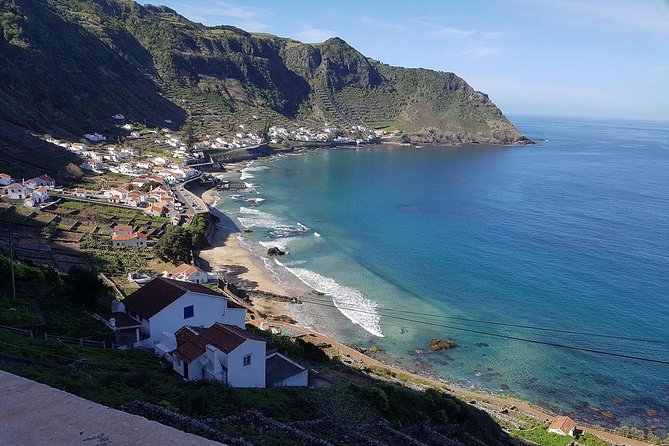
Then you head to Baía dos Anjos, with time to admire the natural pools and the surroundings. This stop is about 30 minutes and free.
This is also the part of the day where you might get your chance to cool off. In the experiences I read, people mentioned that there was an opportunity to swim, and one person even described taking a bath. Since conditions can change, treat it as a possibility, not a guarantee—but if you’re hoping to dip into the water, this is the moment in the schedule when it’s most plausible.
Bring or plan: if you want to swim, wear something you can slip on/off easily. Even if you don’t swim, natural pools are part of the scenery value here.
Museu de Santa Maria: where daily life makes sense
The excursion then turns cultural with about 1 hour at the Museu de Santa Maria. This is described as an ethnographic-style look at earlier ways of living—so you can understand day-to-day culture, not just the island’s outdoor highlights.
It’s an included stop, with admission listed as included. This hour is valuable because it helps reframe what you saw earlier. After volcanic terrain, viewpoints, and food/crafts, the museum gives you the human layer: how people lived, what they valued, and how traditions lasted.
Why it’s worth your time: outdoor stops can all blur together in one day. A museum break acts like a reset button. It also gives you something real to reference when you’re back in your hotel later, trying to remember what you saw.
Cascata do Aveiro: vineyards, a big waterfall, and a short pause
The final scenery stop is Cascata do Aveiro. You’ll have time to admire the vineyard area and see one of Portugal’s larger waterfalls. This stop is only about 15 minutes, free to enter.
A short stop is not a negative here. It works because your day is already full, and the goal is to end with something memorable without burning time. Think of it as a quick “wrap gift” of visuals: vineyards nearby, waterfall energy in front.
Timing tip: if you’re photographing, do it early in the stop. Ten minutes can disappear fast when you’re dealing with angles, crowds (even in a small group), and changing light.
Lunch with drinks and coffee: built into the day’s value
Lunch is included, and that’s a big part of why this excursion feels good value. You get one of three choices: meat, fish, or vegetarian. It also includes drinks with the meal and coffee.
Even if lunch sounds like a simple perk, it changes the whole day. No searching for food while everyone else is trying to catch the bus. No deciding between a quick snack and an actual meal. And because it’s part of the plan, you can keep your energy for the later museum and coastal stops.
The tour also includes bottled water, plus personal accident insurance. That’s one of those small “grown-up travel” items that you don’t notice until you need it.
Price and value: what $108.43 really buys
At $108.43 per person for roughly 6–7 hours, you’re paying for more than a ride. You’re paying for a tight routing of multiple free-entry stops, an included museum visit, and a full lunch with choices. You’re also getting a driver/guide package with English support and a small-group size that helps the day feel personal.
If you were to piece together your own day independently—transport, entry where needed, and lunch—you’d likely spend similar money once you add up time, planning, and transportation hassle. The best value shows up if you don’t want to study a map all morning or bounce between places on your own.
The weather factor: how to pack for a flexible day
This experience requires good weather. If conditions are poor, you may be offered a different date or a full refund. That’s not the tour being dramatic—it’s just a reality for outdoor viewpoints and coastal stops.
From the experiences I read, guides like Miguel actively responded to rain by adjusting and trying again later to get great photo moments. That’s a good sign: the team seems to work with conditions instead of calling it a lost cause.
Pack smart: bring a light rain layer and something for wind, plus sunscreen. Santa Maria can go from clear to cloudy quickly, and you want to stay comfortable through exposed miradouro points and open volcanic terrain.
Who should book this and who might skip it
This fits best if you want:
- a full-day orientation to Santa Maria in one go
- lots of viewpoints plus a museum hour
- a practical lunch plan
- a small group (max 8) so questions aren’t an afterthought
- guided storytelling from people like Ricardo and Miguel, who clearly focus on local explanations and helpful assistance
You might consider skipping if:
- you hate any schedule flexibility due to weather (the tour is weather-dependent)
- you prefer totally free time with no set stops (this one is structured)
- you’re traveling with someone who needs long, slow breaks at each location (most stops are time-boxed)
Quick FAQ
FAQ
How long is the Santa Maria full-day excursion?
It runs about 6 to 7 hours.
What does the price include?
You get air-conditioned transportation, bottled water, personal accident insurance, and lunch (with drinks and coffee). The museum admission is also included.
Is lunch included, and are there choices?
Yes. Lunch includes one of three options: meat, fish, or vegetarian. Drinks and coffee are included with the meal.
Do I need to pay entrance fees at the stops?
Many stops list admission as free, and the museum admission is included. No extra entry cost is suggested for the other included stops.
Is pickup available?
Pickup is offered. Transfer time can vary if the vehicle needs to pick up travelers at other hotels first.
What language is the tour in?
The tour is offered in English.
Should you book it?
If you’re asking me for the simplest recommendation: yes, book it if you want a smart, guided overview of Santa Maria with food handled and a museum stop that actually adds context. The combination of viewpoints, volcanic terrain, a craft cooperative, and a full lunch makes it feel like a day planned by locals, not just a checklist of “pretty places.”
I’d especially book it on a day when you want a clear plan and you don’t want to spend your vacation budgeting time for transportation and meal hunting. If weather looks questionable, keep that rain layer handy—but don’t assume the day will be a washout. The guides seem to work hard to get you those best-moment views.