REVIEW · LISBON
Private 1H30 Tuk Tuk Tour in Lisbon City
Book on Viator →Operated by Tourism Hub Lisbon · Bookable on Viator
Lisbon’s hills are no joke, but you can still see it fast. This private 1H30 Tuk Tuk Tour hits the big sights with short photo stops, so you get views of Alfama and the Tagus without doing a stair workout. You’ll roll past places tied to Lisbon’s past port life, then spend time at lookout points that look right over the city.
I especially like how the tour mixes major landmarks with real neighborhood context, from the Moor-to-Mass conversion story behind Lisbon Cathedral to the old-city water system at Chafariz de El-Rei. I also like the pacing: you get time to step out, take photos, and look around, and the guide style tends to keep the explanations clear and practical. People also name guides like Sami and Fahim for being friendly and detailed without turning it into a lecture.
One possible drawback: a few of the stops are marked as admission not included, so if you want to go inside places like the cathedral or the National Pantheon, you’ll need extra time and budget on top of the tour price.
In This Review
- Key highlights at a glance
- From Time Out Market to your first viewpoint without the hill slog
- Rua Nova do Carvalho: the Pink Street backstory that changes how you see Lisbon
- Lisbon Cathedral (Se de Lisboa): where Moorish roots meet Portuguese rule
- Miradouro das Portas do Sol: the Alfama viewpoint that frames the cruise port
- Miradouro da Senhora do Monte: panoramic Lisbon and St Jorge Castle with live music
- Mosteiro de São Vicente de Fora: Portuguese influence outside the palace bubble
- Alfama by tuk tuk: steep streets, craft shops, and the classic No. 28 tram
- Panteão Nacional: Portuguese heroes, fado royalty, and the tombs that make it political
- Chafariz de El-Rei: an old city fountain tied to medieval water and sailors
- Fado Museum and Praça do Comércio: from 20th-century culture to the river’s grand stage
- Price and value for a 1.5-hour private ride
- Who this Lisbon tuk tuk tour fits best
- Should you book this tuk tuk tour?
- FAQ
- How long is the private tuk tuk tour?
- Where does the tour start and end?
- Is pickup available?
- What language is the tour offered in?
- Are entry tickets included for the stops?
- Is the tour cancellable?
Key highlights at a glance
- Private tuk tuk, 1 hour 30 minutes: a tight route for first-time visitors and hill-weary travelers
- Miradouros built for photos: Portas do Sol, Senhora do Monte, and time in Alfama’s streets
- Portugal’s big names in one stop: National Pantheon ties together religion, national heroes, and fado
- Seedy-past-to-old-town contrast: you pass Rua Nova do Carvalho, Lisbon’s Pink Street with port-era roots
- Fountains with backstory: Chafariz de El-Rei connects medieval water to Lisbon’s maritime past
- Seatbelt safety and smooth logistics: even if you split between buggies, you should stay together
From Time Out Market to your first viewpoint without the hill slog
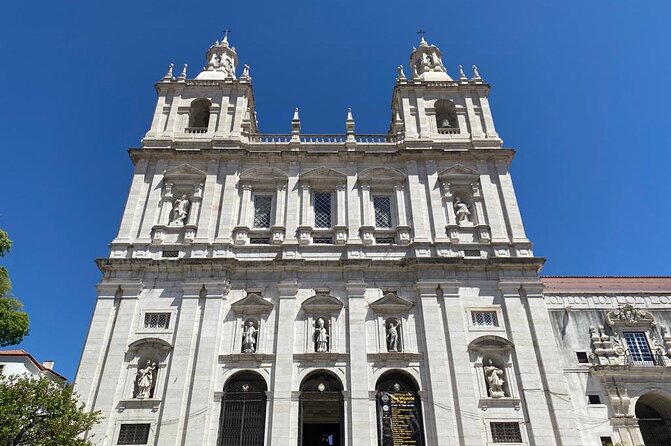
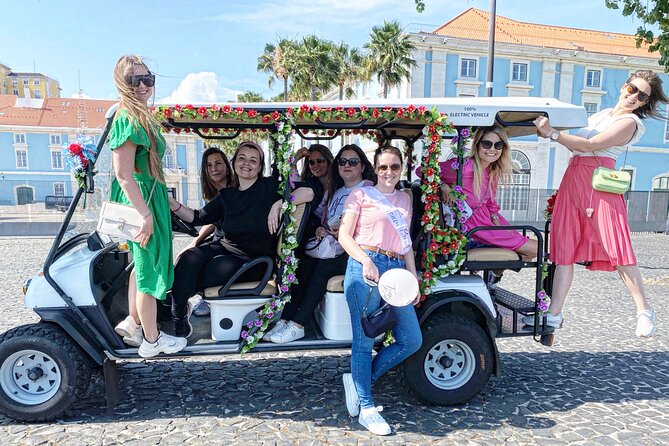
The tour starts near Time Out Market (Mercado da Ribeira), right on Av. 24 de Julho. If pickup is required, the guide may adjust the exact meeting spot, but you’ll be told ahead of time. For me, this matters because it reduces the “where do we meet?” stress at the start of a trip, especially in a city with steep streets and multiple entrances.
You’re on a private tour, so it’s only your group in the tuk tuk. That makes it easier to move at your pace and ask quick questions without competing with other people’s conversations. The tour uses a mobile ticket, and service animals are allowed. You’re also close to public transport, which is helpful if you’re doing this as part of a bigger day plan.
Safety is a real factor in Lisbon tuk tuks, and the reassuring detail here is that the carts come with seatbelts. One of the practical takeaways from prior riders: the seatbelts are snug enough that you don’t bounce around much, even on bumpy streets. If you’re traveling with kids, older family members, or anyone who gets nervous in small vehicles, that can be a deciding point.
A last logistics point that I think you’ll appreciate: if the tour runs with more than one buggy, it should still stay cohesive. In other words, splitting across two carts isn’t automatically a problem for group photo time or keeping everyone aligned.
You can also read our reviews of more city tours in Lisbon



Rua Nova do Carvalho: the Pink Street backstory that changes how you see Lisbon
Before you hit the religious landmarks and viewpoints, you pass Rua Nova do Carvalho, Lisbon’s official link to the Pink Street scene, located around Cais do Sodré. Cais do Sodré used to be tied to Lisbon’s older nightlife reputation, and the street’s past is connected to how this city functioned as a port.
Here’s the context that makes the ride more interesting than a simple photo circuit: Lisbon was an important port city, so sailors arrived to gamble and drink, and to find ways to blow off steam. Rua Nova do Carvalho became one of those meet-and-mix streets, with gambling dens, brothels, and seedy bars referenced by other port cities.
This is exactly the kind of contrast I like seeing while traveling. You’re not just collecting landmarks; you’re learning how the same neighborhoods shift roles over time. And once you know this origin story, you’ll likely notice how Lisbon can feel playful in the evening while still carrying rough edges from earlier centuries.
Lisbon Cathedral (Se de Lisboa): where Moorish roots meet Portuguese rule
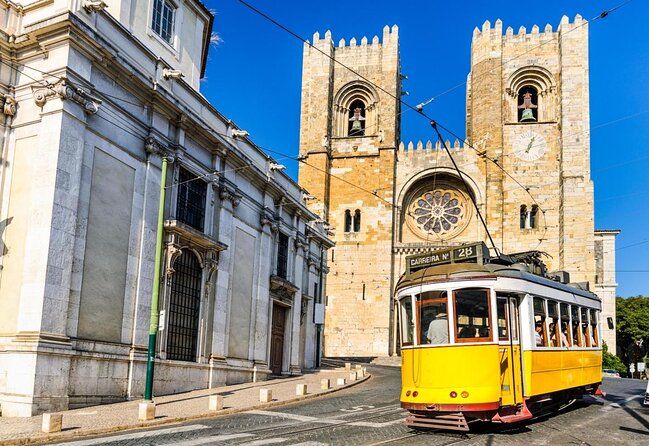
Stop number one is Lisbon Cathedral, also called Se de Lisboa. The standout point is its layered origin: it began as a Moorish mosque in the 8th century, then shifted into Portuguese hands after the defeat of the Moors, becoming a cathedral.
That transformation is the reason this stop feels more than just scenic. When you see an old religious building with changes like that, you understand Lisbon’s position as a crossroads city, shaped by different powers rather than one straight-line storyline. For many visitors, this is the first time they truly see that Lisbon’s past isn’t only about Portugal’s royal era. It reaches deeper, to the period when Islamic rule shaped architecture and city life.
Keep expectations realistic: the stop notes admission ticket not included, and the time is short. So if you want to go inside for a proper look, plan for a bit of extra time and consider whether it’s worth purchasing entry on the spot. If you don’t, you can still get plenty from the exterior and the guide’s explanation.
Miradouro das Portas do Sol: the Alfama viewpoint that frames the cruise port
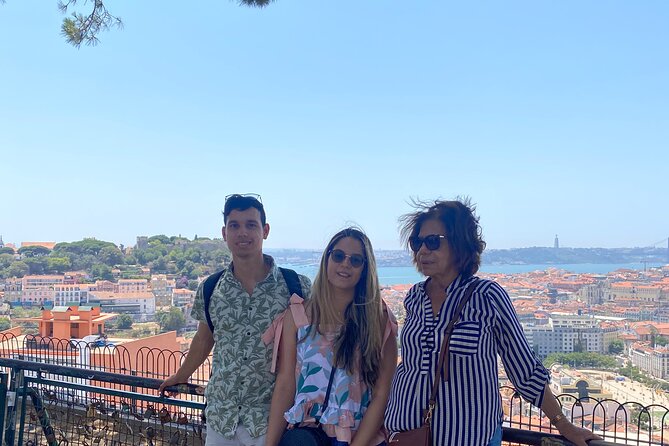
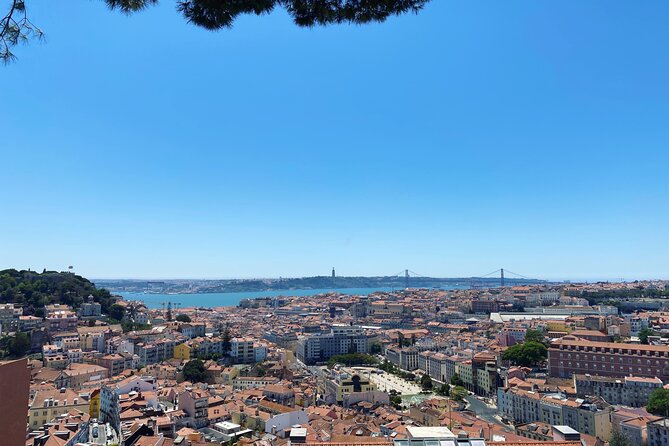
From the cathedral area, you head to Miradouro das Portas do Sol. This is described as the highest viewpoint of Alfama, Lisbon’s oldest neighborhood, and you get the kind of view that makes Lisbon feel like a set built on hills.
What’s useful here is what you can actually spot from the viewpoint. On a clear day, you’ll be able to see the Cruise Ship port, the River Tagus, and the Vasco da Gama bridge, which is noted as the longest bridge in the European Union. That’s the sort of marker that helps first-timers orient themselves fast.
Time at each viewpoint is about five minutes, so treat it like a quick photo mission with a little breathing room. If you want “golden hour” photos, you’ll probably have to plan around daylight yourself, because the tour is built to cover multiple stops within the short 1.5-hour window.
Tip: if you’re carrying a phone or small camera, get your settings ready before you look down over the city. These viewpoints are popular for a reason, and you don’t want to waste time fiddling when the view is at its best.
Miradouro da Senhora do Monte: panoramic Lisbon and St Jorge Castle with live music

Next up is Miradouro da Senhora do Monte, described as the highest viewpoint of Lisbon, and it’s another “step out, look around, then roll on” stop. The payoff is a broader panoramic view of Lisbon and surrounding districts.
The detail I like here is the connection to St Jorge Castle and the mention of live music. That combination matters because St Jorge Castle is one of Lisbon’s anchors, and music makes the viewpoint feel like more than just scenery. Even if you don’t care deeply about fado, the atmosphere is what you’ll remember.
Like Portas do Sol, this stop is listed as about five minutes, so again: show up ready, take the photos you want, and let the rest of the time go toward the next neighborhood.
You can also read our reviews of more private tours in Lisbon






Mosteiro de São Vicente de Fora: Portuguese influence outside the palace bubble

You’ll also pass Mosteiro de São Vicente de Fora. The key detail is that it’s described as the first church built by Portuguese outside the Royal Palace territory. That makes the monastery feel like a step outward from court-centered life.
It also connects to the Portuguese royal family through the Pantheon—the information notes a royal family resting place nearby and positions this monastery as part of that bigger royal story. Visually, you’re also in the right zone for Lisbon’s signature look: the stop notes colorful tile decoration, which is often what people mean when they say Lisbon “looks like Portugal.”
Admission isn’t included here either, so if you want to go in, plan for an add-on time moment. If you don’t, don’t worry too much. With a short tour, the goal is often to choose what you’ll return to later. This monastery is a strong “bookmark for later” stop.
Alfama by tuk tuk: steep streets, craft shops, and the classic No. 28 tram
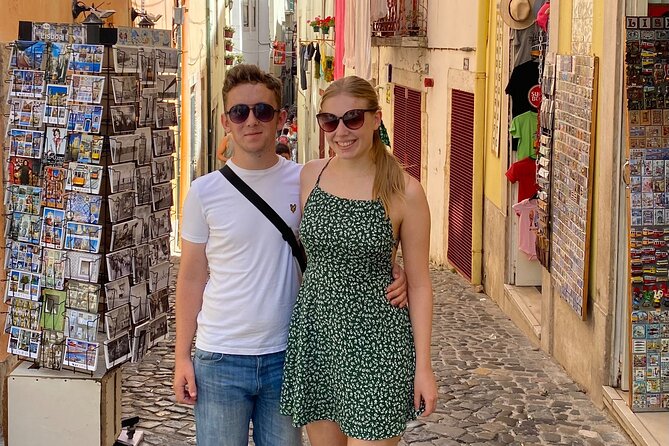
Alfama is where Lisbon starts to feel like a maze you can almost wander forever. The tour gives you a brief window in Alfama’s steep streets, where shops with traditional crafts and cafes line the way.
There’s one practical Lisbon detail included: you’ll pass the historic No. 28 tram, which winds through Alfama on its route toward São Jorge Castle. That tram is slow, loud, and photogenic, and it’s part of why Alfama stays in your head even after you leave.
The tour time in this area is again around five minutes, so this isn’t a full neighborhood walk. But it’s enough to get your bearings, spot the kind of streets you want to return to, and decide whether you’d like to ride the tram next or just explore on foot.
In the evening, the information notes that you can hear fado music from long-running restaurants. Even if your tuk tuk schedule won’t land you in peak fado hour, it’s still a good reminder: Alfama is where music and daily street life overlap.
Panteão Nacional: Portuguese heroes, fado royalty, and the tombs that make it political
The star cultural stop is Panteão Nacional (National Pantheon). This is described as a national monument where Portuguese heroes are buried. It’s not only a memorial. It’s also a way to understand how Portugal frames its identity—who belongs in the national story and why.
The highlights list some of the biggest names tied to Portuguese cultural and public life: Amália Rodrigues, a famous fado singer often called the fado queen; Eusébio, the football legend; and also mentions the madrigal tombs of Vasco da Gama and Luís de Camões.
If you’re a first-time visitor, this stop does a smart thing for you: it connects culture (fado and literature) with national heroes (exploration and the myth-making of empire). It helps explain why Lisbon talks so much about legacy and why so many buildings are designed to signal importance.
As with other indoor sites, admission is not included. So if the pantheon interior is a must for you, treat this stop as a decision point. You can always get the exterior impression on the tour and plan an entry later if time and money allow.
Chafariz de El-Rei: an old city fountain tied to medieval water and sailors
Then you’re pointed to Chafariz de El-Rei (the Royal Fountain). This one is easy to overlook if you’re only hunting big views, but it’s the kind of detail that makes Lisbon feel lived-in.
The information says it’s the oldest city spring and the first public fountain in Lisbon. It was built in the 13th century using waters of the Alfama slope. Later changes expanded it under King D. Dinis, and in 1487, King D. João II ordered piping that sent water to the fountain to supply drinking water to ships heading out for commercial purposes and discovery expeditions.
That sailor connection is key because it loops back to the Rua Nova do Carvalho port-era story. In one afternoon, you go from a street shaped by sailors’ downtime to water infrastructure that helped ships get ready for voyages.
The fountain is described as having had nine working nozzles at its heyday, with different purposes and at least one set for specific groups, including one for sailors. Even if you only spend a short moment looking at it, it’s a powerful reminder that infrastructure and daily life are part of the city’s “history,” too.
Fado Museum and Praça do Comércio: from 20th-century culture to the river’s grand stage
As you pass along, you’ll also see the Fado Museum. Here, the tour isn’t trying to make you love fado. It’s positioned as something broader: more than a musical tribute, it shows the cultural and political environment in Portugal, especially in Lisbon through much of the 20th century.
That framing is useful even if you think you’re not a music person. It encourages you to look at fado as a window into Lisbon’s social mood, not just a genre you hear at dinner.
The route also includes passing Praça do Comércio, described as a large harbor-facing plaza and one of the biggest in Portugal (the information lists dimensions and area). This is the space where Lisbon’s river side feels ceremonial and open compared to Alfama’s tight streets.
Finally, you pass the Rua Augusta Arch on Praça do Comércio. It was built to commemorate the city’s reconstruction after the 1755 earthquake. It has six columns and statues of historical figures, which gives the area a “built to remember” feeling.
If you’re trying to understand Lisbon in one day, this sequence works well. You go from hill neighborhoods and old religious layers to a riverfront plaza designed to project strength and renewal.
Price and value for a 1.5-hour private ride
At $78.31 per person for about 1 hour 30 minutes, this tour sits in the “pay for convenience and access” category. That can feel expensive if you compare it to hopping on public transport.
But the math changes when you factor in two things Lisbon does differently than flatter cities: steep terrain and scattered sights. In a short time, the tuk tuk saves you from planning uphill routes, timing trams, and walking between viewpoints that are far more demanding on foot.
Also, the pricing makes more sense if you value a guide that can connect the dots. The stops are short, so you’re paying for direction and story, not for a long guided march. When guides keep explanations clear and pacing comfortable, the 90 minutes can feel like it has more weight than the clock suggests.
Booking trends show it’s often reserved around 33 days in advance, which is another hint that this is a popular “starter tour.” If you’re visiting during a busy stretch, reserving early helps you lock in a time slot that fits your sightseeing flow.
Who this Lisbon tuk tuk tour fits best
This is a great match if you:
- Want a first-time Lisbon orientation without exhausting yourself on hills
- Like a route that mixes viewpoints + monuments, not just one type of sightseeing
- Prefer a private setup where you can ask questions and move as a group
- Want photo stops at key miradouros rather than committing to long stair climbs
It may be less ideal if:
- You’re the type who needs a long, slow museum experience at each stop
- You’re counting on tickets to be included for indoor sites, since multiple major stops note admission not included
Should you book this tuk tuk tour?
Yes, I’d book it if your goal is getting oriented and seeing the “Lisbon greatest hits” in a short, comfortable window. The strongest reasons are simple: you get top viewpoints, major landmark context, and an efficient ride plan that respects Lisbon’s hills.
I’d think twice only if you want extensive time inside museums and churches during the tour itself. The route is designed for quick stops and smart prioritizing, not for deep, hours-long entry visits.
If you book, treat it like a launchpad: use the tuk tuk to learn the layout, then decide what deserves your longer return time later in your trip.
FAQ
How long is the private tuk tuk tour?
It’s about 1 hour 30 minutes.
Where does the tour start and end?
It starts and ends at Time Out Market (Mercado da Ribeira), Av. 24 de Julho, 1200-479 Lisboa, Portugal.
Is pickup available?
Pickup is offered if required, and the guide may change the pickup location. If it changes, you’ll be informed ahead of time.
What language is the tour offered in?
The tour is offered in English.
Are entry tickets included for the stops?
Admission is not included for some stops, including Lisbon Cathedral, Mosteiro de São Vicente de Fora, and Panteão Nacional.
Is the tour cancellable?
You can cancel for a full refund if you cancel at least 24 hours before the experience starts. If you cancel later than that, the amount paid is not refunded.