REVIEW · LISBON
Paint your tile and create your unique piece in an art gallery in Lisbon
Book on GetYourGuide →Operated by GALERIA 1758 · Bookable on GetYourGuide
Hand-painting Lisbon tiles is surprisingly calming. At Galeria 1758, you learn the Portuguese azulejo tradition and paint your own tile with friendly guidance from Cristina in a relaxed studio setting.
I love that the focus stays on craft and creativity: you get history context, then you’re painting for real, not just watching. You’ll also choose your own patterns and colors, so the result feels personal and actually useful as a souvenir.
The one drawback is timing. With the traditional method, your tiles must be fired after the workshop, so you won’t necessarily walk out with them the same day. If your trip is short, plan your workshop early or ask about the faster option that lets you take your tile home without firing.
In This Review
- Key things to know before you go
- Why Portuguese tile painting beats a typical Lisbon souvenir
- Meeting at Galeria 1758: a friendly studio setting with real tools
- The workshop flow: from tile history to your first painted lines
- Learning the Portuguese tile tradition without turning it into a lecture
- The majolica-on-glaze basics: what you’ll learn (and why it helps)
- Your two hand-painted tiles: how you create something you’ll actually keep
- The firing and the pickup plan: when you’ll get your finished tiles
- Price and value: is $58 a fair deal for what you get?
- Who should book this workshop in Lisbon
- Should you book this Lisbon tile painting workshop?
- FAQ
- How long is the tile painting workshop in Lisbon?
- What does the $58 per person price include?
- How many tiles do I paint?
- Do I need any prior art experience?
- What languages are available during the workshop?
- Do I take the tile home the same day?
- When and where do I get my fired tiles?
- Can I paint more than the 2 included tiles?
- What is the cancellation window?
Key things to know before you go
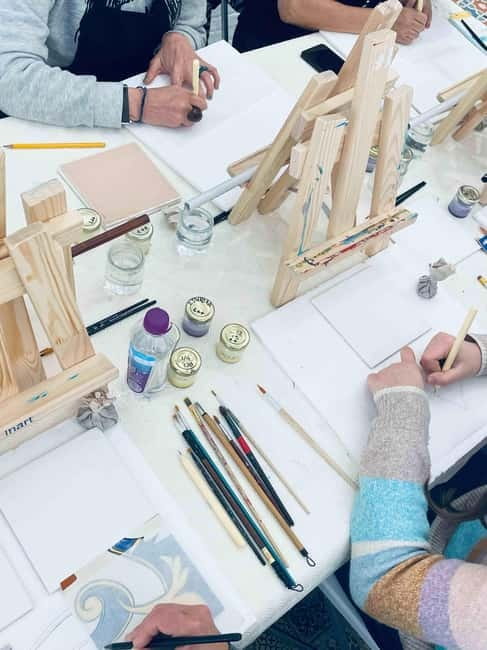
- You make 2 hand-painted tiles (15×15 cm each), finished for you after the process.
- You’ll learn Portuguese tile history and techniques, including painting on glaze (majolica-style).
- Guidance comes from Cristina, with support that works even if you are not artistic.
- The workshop is designed for all levels, from first-timers to people who like structure.
- Traditional tiles mean a firing wait, with pickup at Galeria 1758 later (shipping can cost extra).
- You can also choose a same-day take-home approach, depending on which technique you opt for.
Why Portuguese tile painting beats a typical Lisbon souvenir
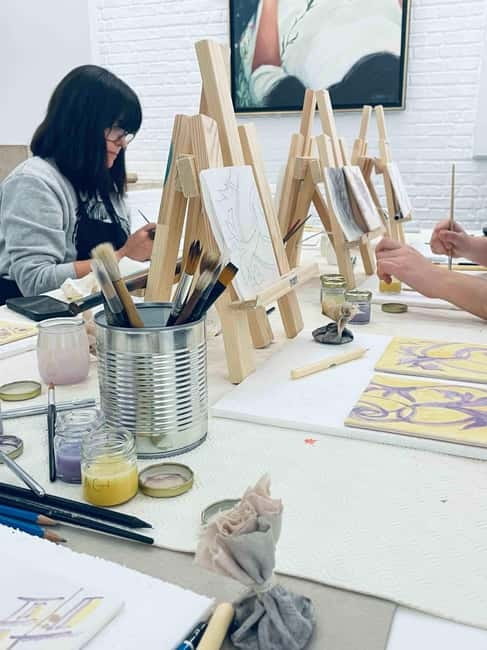
Lisbon is covered in tile work. You see it on building façades, in hallways, and in stairwells that feel like they were designed for slow wandering. The tile workshop at Galeria 1758 gives that same culture a hands-on twist.
What makes this experience valuable is that it’s not only about leaving with a pretty object. You learn how Portuguese tiles became a language of their own—patterns, lines, symbols, and color systems that artists repeated, adapted, and personalized across centuries. Then you do the same thing on a blank 15×15 cm tile, guided step-by-step.
I also like the balance between tradition and choice. Yes, you’ll get technical basics and a cultural intro. But you still get to create a design that looks like you meant it. For souvenirs, that matters: mass-produced keepsakes don’t carry the same feeling as something you painted yourself while someone helped you avoid common mistakes.
One more plus: the studio vibe tends to keep you focused. Several people mention how calming and welcoming it feels, even for teens and families. If you’re the kind of traveler who loves art but not chaos, this fits.
You can also read our reviews of more museum experiences in Lisbon



Meeting at Galeria 1758: a friendly studio setting with real tools
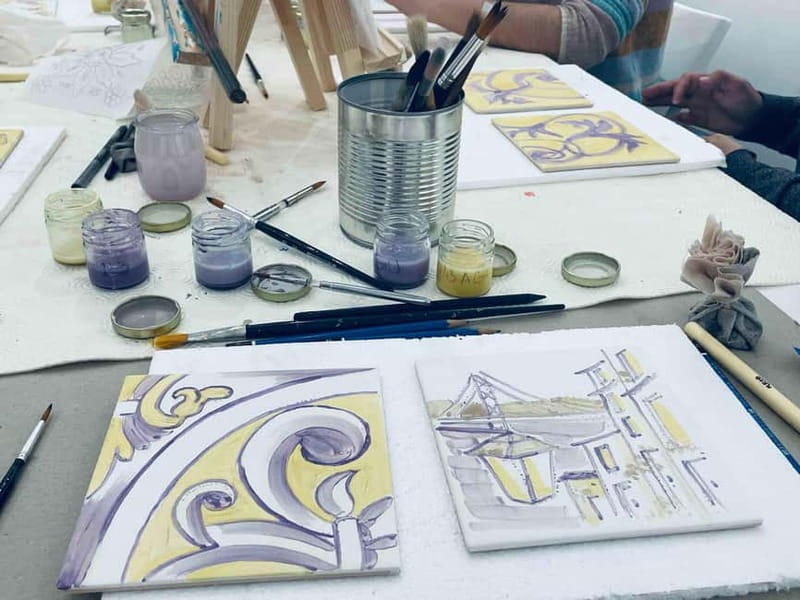
The workshop takes place at Galeria 1758, and the atmosphere is part of the point. This is not a rushed craft stop where you get thirty minutes and a stiff tutorial. It’s a studio where you can concentrate while you work.
You’ll start with a welcome and a short talk about tiles in Portuguese culture, plus examples of traditional and modern pieces. That early context helps you paint with intention, not just copy a pattern you don’t understand. People also highlight how warmly Cristina guides the class, with clear explanations that still leave room for you to make your own decisions.
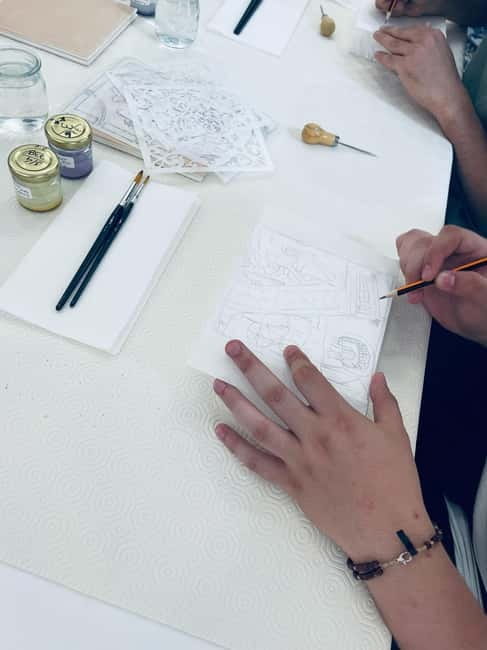
You’re given the materials you need: ceramic pigments, brushes, and support utensils. Aprons are optional, but they’re smart to use if you’d rather avoid pigment stains on your clothes. If you prefer to plan first, there’s also tracing paper/pencil support so you can sketch or transfer a design.
And yes, there’s a comfort factor beyond craft supplies. Depending on what the venue is offering, you might have tea, coffee, or wine during the session. It’s a small detail, but it makes the workshop feel like an actual afternoon activity, not just a ticketed class.
The workshop flow: from tile history to your first painted lines
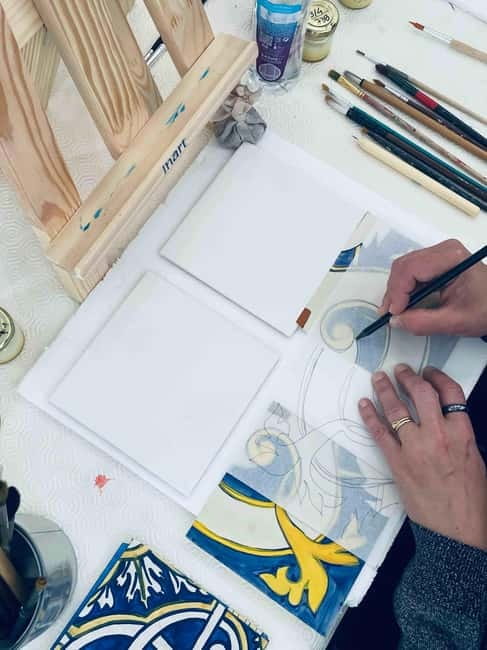
The session has a clear structure, and that’s why beginners do well here. Your time is broken into four main stages, starting with context and ending with your tiles ready for firing.
1) Welcome and introduction (about 15–20 minutes)
You meet the facilitator and the group, then get a tour of Portuguese tile tradition. You’ll see examples that range from classic-looking designs to contemporary takes. This part matters because it helps you recognize what makes a tile design feel Portuguese: the way patterns repeat, and the way lines and fills work together.
2) Technical demo (about 20–30 minutes)
Then you get a real materials walkthrough. You’ll learn about pigments suitable for tiles and how to paint on glazed ceramic surfaces using a traditional approach often described as majolica technique. You also get basics of composition and color—practical stuff like how to avoid muddy transitions and how to build a pattern without overworking it.
3) Individual creation (about 1–1.5 hours)
This is where the class becomes your art time. You sketch and paint your own tile with individual support. Some people mention charcoal stencilling as part of the process, which helps you lay down the design cleanly before you start coloring.
4) Wrap-up (about 15 minutes)
At the end, you share what you made. Then you’ll get clarity on drying and the firing process. The gallery handles the final firing in a ceramic oven, and you’ll take your finished tile later (or coordinate shipping if needed).
Learning the Portuguese tile tradition without turning it into a lecture
One of the most praised parts of this workshop is the cultural grounding. You don’t just paint. You get a short lesson that actually explains why the patterns exist and how Portuguese tiles developed into something recognizable across the country.
The tile tradition here centers on repeating motifs and controlled color. That’s why even people who think they lack artistic skill leave feeling capable: you’re not expected to invent a style from scratch. Instead, you use the underlying rules, then put your personal spin on the design.
From what you’re taught, Portuguese tile painting isn’t random decoration. It’s craft with structure. Lines matter. Shapes matter. And the glaze matters, because you’re painting on a prepared surface designed to accept ceramic pigments.
This is the sweet spot for travelers who like authenticity. If you’ve been wandering Lisbon’s streets looking at tilework and thinking, I wonder how they did this, this workshop gives you a taste of the workflow and the mindset behind it. And because you’re painting in the room, the lesson sticks.
The majolica-on-glaze basics: what you’ll learn (and why it helps)
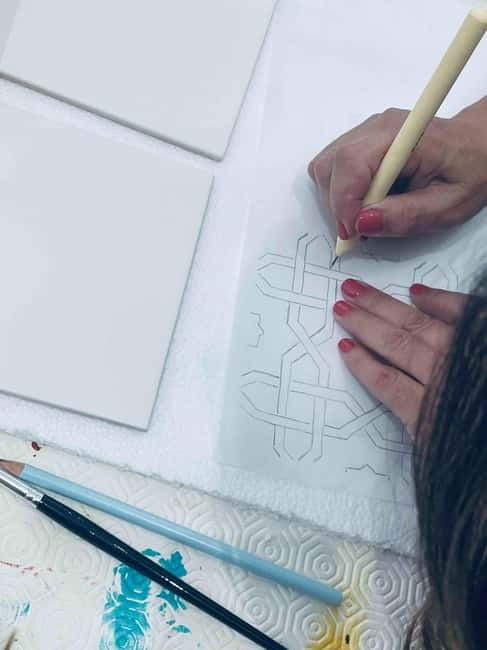
Let’s talk about technique, because this is where your tile can go from nice to wow.
You’ll learn ceramic painting techniques focused on working on glazed surfaces. The approach described as majolica-style painting is key: it’s designed for the look and behavior of pigment on ceramic glaze, not generic craft-painting.
During the technical demo, you should expect:
- A materials explanation (brushes, pigments, and ceramic tiles)
- Basic ways to work with lines, patterns, and filled areas
- Practical composition and color guidance so your design doesn’t feel incomplete
- Help with how to transfer or sketch a design (tracing paper and pencil support)
If you’re worried you’ll mess it up, don’t be. The goal is to give you enough structure to succeed. Several people specifically mention Cristina’s patience and step-by-step support, including for participants who weren’t confident at the start.
Also, painting technique changes how you pay attention. You’ll focus. You’ll slow down. That’s the same feeling you get when you study tilework on a building façade, just with paint in your hand instead of a camera.






Your two hand-painted tiles: how you create something you’ll actually keep
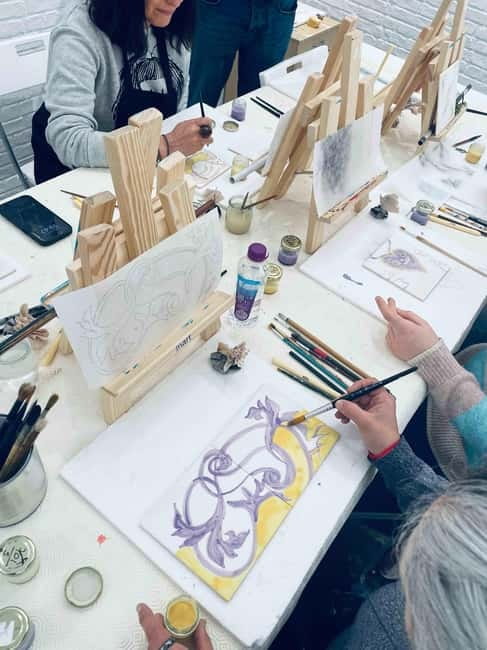
You create two tiles during the workshop—each one 15×15 cm. That’s a smart setup for a souvenir because it gives you options. You can keep one for yourself and gift the other, or you can aim for a matching set to decorate a frame or display shelf.
This workshop also supports different comfort levels:
- If you want freedom, you can develop your own design within the guidance.
- If you want help, you can use stencils or tracing to keep your lines clean.
- If you’re traveling with mixed artistic interests, the class format still works for everyone.
In the process, you’ll paint by building up your design. You might start with outlines or stencilled marks, then add colors and filled areas. You get support during creation, so you’re not left to figure things out solo.
A practical tip: start with the parts that give your tile its structure—lines and main shapes—before you spend time on details. That way, if you make a mistake, it won’t throw off the whole design.
And when you’re done, you’ll have two uniquely yours pieces. That’s not just sentimental value. It also means your souvenir is easier to justify once you get home. It isn’t a random purchase. It’s a small craft story that lives with you.
The firing and the pickup plan: when you’ll get your finished tiles
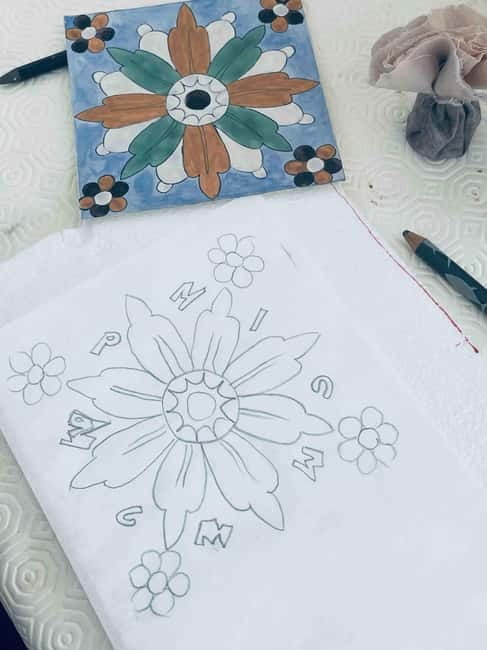
Here’s the big logistics point, and it can make or break the experience for your schedule.
With the traditional method, the tile painting includes final firing in a ceramic oven, and the process requires time—at least 24 hours after you finish painting. In real-world terms, many people report an extra wait of a few days. One person specifically suggested planning for about three additional days after painting for the process to be finished.
After firing, your tiles are delivered in person at Galeria 1758 on a date agreed with you. If you need mailing, shipping can be arranged, but it’s at an additional cost and you’d be responsible for those shipping expenses.
So think about timing when you book. If you do this workshop too late in your trip and you’re flying out the next day, you may end up dealing with shipping. That’s doable for some people, but it’s not ideal.
The good news: the workshop also mentions a faster painting technique that lets you take the tile home the same day without firing. If you’re tight on time, ask about which option fits your schedule and what the trade-offs are.
Price and value: is $58 a fair deal for what you get?
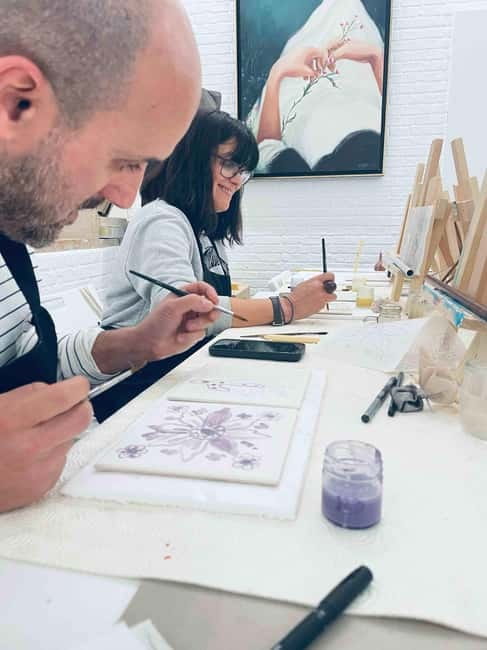
At $58 per person for a 2.5-hour workshop, the value comes from what’s included, not just the craft. You’re paying for guided learning plus the materials plus the finishing work.
Your price includes:
- A history and technique intro around Portuguese tiles
- A demonstration of ceramic painting techniques
- Materials for you to paint: pigments, brushes, tile surfaces, and support tools
- Guidance throughout the creative process
- Firing in a ceramic oven
- Two finished tiles (15×15 cm each) for you to receive after firing
- Tea/coffee/wine depending on the venue
That’s a lot more than a typical casual souvenir activity where you pay for a single object and then do the rest yourself. Here, the studio takes care of the firing step, which is the hardest part to DIY safely and correctly.
One more value factor: you’re not just buying an object. You’re buying time spent learning a technique and understanding a tradition. That tends to create a better travel memory than a quick photo-and-go stop.
Who should book this workshop in Lisbon
This is a strong match if you want a hands-on cultural activity that still feels relaxing. It’s also ideal if your group has mixed preferences.
It especially suits:
- Families and teens who want something creative and guided
- Travelers who enjoy art but don’t want a high-pressure course
- People who like Lisbon’s azulejo tilework and want to understand it beyond photos
- Souvenir shoppers who want a personalized keepsake instead of a generic shop tile
It’s less ideal if:
- You have only one day left in Lisbon and can’t make pickup possible
- You hate waiting for a process to finish (traditional firing requires time)
- You want a deep pottery or sculpting class, because this workshop is focused exclusively on tile painting, not modeling or forming clay
Should you book this Lisbon tile painting workshop?
I’d book it if you want a real, skill-based souvenir and a calm art activity with cultural context. The best part is the combination of structure (history and technique) plus creative freedom (your own design). Add in Cristina’s patient support and the fact that you leave with two tiles, and it becomes one of those Lisbon experiences that stays with you.
Do book this early in your trip if you choose the traditional fired tiles. That way, pickup at Galeria 1758 fits your schedule with less stress. If your itinerary is tight, consider the faster take-home option (no firing) instead.
If you’re looking for something different from the usual walking-tour loop, this gives Lisbon tile culture in a way you can touch, not just photograph.
FAQ
How long is the tile painting workshop in Lisbon?
The workshop lasts about 2.5 hours.
What does the $58 per person price include?
It includes the history and technique introduction, a demo of ceramic painting techniques, materials (tiles, pigments, brushes, and tools), guidance during the session, and the final firing in a ceramic oven.
How many tiles do I paint?
You paint 2 tiles per person, each 15×15 cm.
Do I need any prior art experience?
No experience is needed. The workshop is open to all levels.
What languages are available during the workshop?
The workshop is offered in Portuguese, English, and Spanish.
Do I take the tile home the same day?
It depends on which technique you choose. The traditional technique involves firing and requires time after the workshop. There is also a faster painting technique that lets you take the tile home the same day without firing.
When and where do I get my fired tiles?
Finished fired tiles are delivered in person at Galeria 1758 after firing, on a date you agree upon. Shipping by mail can be arranged for an additional cost.
Can I paint more than the 2 included tiles?
You can paint other pieces such as sardines or swallows, but those are paid separately. Extra firing for additional pieces may also be an added consideration.
What is the cancellation window?
Free cancellation is available up to 24 hours in advance for a full refund.