REVIEW · LISBON
Lisbon (All City) Private Tour – Including Belém & Cristo Rei
Book on Viator →Operated by Yellow Cab TT Tours, Unipessoal, Lda. · Bookable on Viator
Lisbon gets easier when someone else handles the route. This private all-city circuit uses an air-conditioned minivan to connect Lisbon’s modern riverfront, old hill neighborhoods, and the dramatic south-side views in one long, logical day. It’s the kind of plan that helps you get your bearings fast without rushing through stops you’ll wish you studied more.
I especially like the payoff stops. Cristo Rei delivers a sweeping Tagus panorama, and the hotel pickup means you start sightseeing with less hassle and less wasted time. One consideration: several headline monuments here have admission fees not included, so budget a bit extra for entries.
In This Review
- Key points to know before you go
- Private Lisbon in one air-conditioned day: how the pacing works
- Parque das Nações and Expo 98: Vasco da Gama Tower plus Calatrava landmarks
- Alfama and São Jorge Castle Hill: the oldest Lisbon climb
- Miradouro da Senhora do Monte and Lisbon Cathedral: picture-perfect Lisbon views
- Martim Moniz to Rossio and Terreiro do Paço: the downtown spine after 1755
- Avenida da Liberdade, Eduardo VII Park, Chiado, and the Queen Maria I basilica
- 25 de Abril Bridge to Cristo Rei: the south-side view payoff
- Belém’s Jerónimos, Torre de Belém, and Padrão dos Descobrimentos
- Price and value: is $259.50 per person fair for this plan?
- Who should book this tour, and who might skip it?
- FAQ
- How long is the Lisbon private tour with Belém and Cristo Rei?
- Is this tour private or shared with other groups?
- Does the tour include hotel pickup and drop-off?
- What language is the tour offered in?
- Are admission tickets included for Cristo Rei, Jerónimos, and Torre de Belém?
- Are any stops free?
- Is lunch included in the price?
- Should you book this 8-hour private Lisbon circuit?
Key points to know before you go
- Private, adjustable route: the tour is set up so timing and stops can be adapted to what you want to prioritize.
- Expo 98 modern Lisbon in one stretch: Parque das Nações gives you a clean contrast to Lisbon’s older neighborhoods.
- Hilltop views built into the itinerary: Miradouro da Senhora do Monte is timed for pictures, not just passing views.
- Downtown rebuilt after 1755: you’ll move through Rossio and the squares shaped by the earthquake and Marquês de Pombal’s reconstruction.
- Belém is treated like a core destination: Jerónimos, Torre de Belém, and the Discovery-era monument are grouped for maximum sense-making.
- Guide tailoring is real: one guide highlighted by name, Catarina, is described as fun, full of practical details, and willing to tailor the day to what her guests wanted—plus she even recommended a sardines stop.
Private Lisbon in one air-conditioned day: how the pacing works
At about 8 hours, this is designed to feel like a complete Lisbon sampler, not a rushed “hit-and-run” loop. The biggest win is the transport: you’re in an air-conditioned minivan, so you spend less energy relocating between distant neighborhoods. Even better, hotel pickup and drop-off are included, which matters in Lisbon, where uphill streets and traffic can make an ordinary day feel like a chore.
Because it’s private, you’re not squeezed into a larger crowd rhythm. You can ask for small changes—an extra photo moment, a slower walk, or a different order—without the group accordion effect. And the tour includes a mobile ticket, plus it’s run with COVID-clean safety rules (so you’re not guessing about on-the-day procedures).
Now the realistic part: this is still a sightseeing day. You’ll do plenty of looking and a good amount of walking at viewpoints and church areas. If you’re sensitive to long days, you may want to plan comfortable shoes and keep water handy—especially if you’re traveling in warmer months.
You can also read our reviews of more city tours in Lisbon


Parque das Nações and Expo 98: Vasco da Gama Tower plus Calatrava landmarks
You start north in Parque das Nações, Lisbon’s modern riverfront district built for Expo 98, when the Tagus waterfront was reshaped back into city life. If Lisbon’s older areas can feel “all hills and alleys,” this section gives you a breather: wide open spaces, contemporary architecture, and big engineering views.
Expect a strong skyline moment first: the Vasco da Gama Tower, a 145-meter lattice tower named for the explorer. Nearby, the Expo 98 entrance architecture is meant to represent modern engineering ambition. Then you’ll also see Gare do Oriente, the intermodal station designed by Spanish architect Santiago Calatrava, inaugurated in 1998. It even won the Brunel Award in the large new construction category at the time.
What I like about this early stop is how it sets context. Many Lisbon landmarks make more sense once you’ve seen how the city also modernized along the river. Plus, from the waterfront you get a direct visual connection to the Vasco da Gama Bridge, described as the longest bridge in Europe—one of those facts that becomes instantly real when you view it at scale.
This part is also a good time to reset your camera settings and hydrate, since the day pivots later into viewpoints and older districts.
Alfama and São Jorge Castle Hill: the oldest Lisbon climb
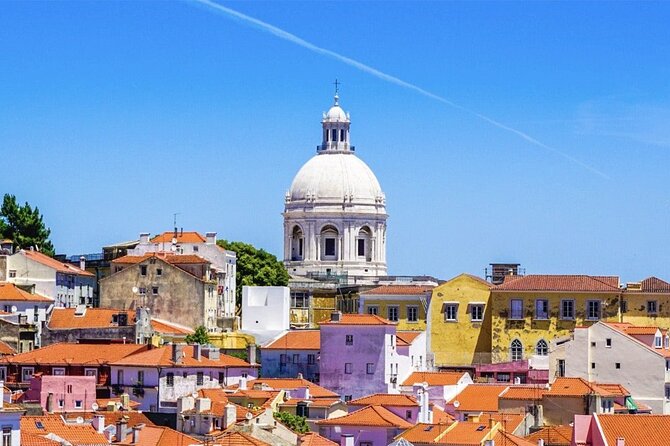
Next comes Alfama, Lisbon’s oldest district, laid out along the slope between São Jorge Castle and the Tagus. The name itself has Arabic roots—connected to “hot fountains” or baths—so even before you reach major sights, the neighborhood signals layers of history. Alfama also ties naturally into fado culture, with plenty of places where you’ll notice the rhythm of old Lisbon through music and small restaurants.
You’ll focus on the São Jorge Castle Hill, where different civilizations took advantage of the strategic location—Fenicians, Romans, Visigoths, and Moors are all mentioned in the background. Since 1147, after Lisbon was conquered by D. Afonso Henriques, the castle area served multiple roles: royal palace, military barracks, national archive, and today a national monument and museum.
Even if you don’t go deep inside every structure, the value here is the viewpoint logic. Alfama isn’t just a neighborhood you walk through—it’s a hillside city built to make you look up at streets, walls, and distant domes. A short time in this area helps you understand why later you’ll keep stopping at lookouts.
A small practical note: Alfama’s streets can be steep. The tour is private and timed, but you’ll still want shoes with grip.
Miradouro da Senhora do Monte and Lisbon Cathedral: picture-perfect Lisbon views
After Alfama, the itinerary hits the kind of stop that feels almost like cheating: Miradouro da Senhora do Monte. From one of the highest viewpoints in Lisbon, you look over Mouraria and Graça, with main landmarks lining up on the horizon. This is the “mandatory stop for pictures” moment, and it’s worth treating it as more than a quick glance.
Why? Because once you see the city laid out, the rest of your walking feels easier to track mentally. You’ll spot how neighborhoods relate to the river, where major streets run, and which areas are higher or lower. It turns Lisbon from a blur of buildings into a map you can read.
Then you move to Lisbon Cathedral (Sé), the city’s oldest church. Built after Lisbon’s conquest in 1147 by D. Afonso Henriques, it survived multiple earthquakes and has been modified and restored over time. The architecture becomes a mix of styles, and the cathedral is classified as a National Monument in 1910.
What I like here is that you’re not just ticking off a church—you’re seeing how survival and rebuilding shaped Lisbon’s look. You also get a nice rhythm switch: big panoramic views, then the slower-feel interiors and stone forms of the city’s older spiritual center.
Martim Moniz to Rossio and Terreiro do Paço: the downtown spine after 1755
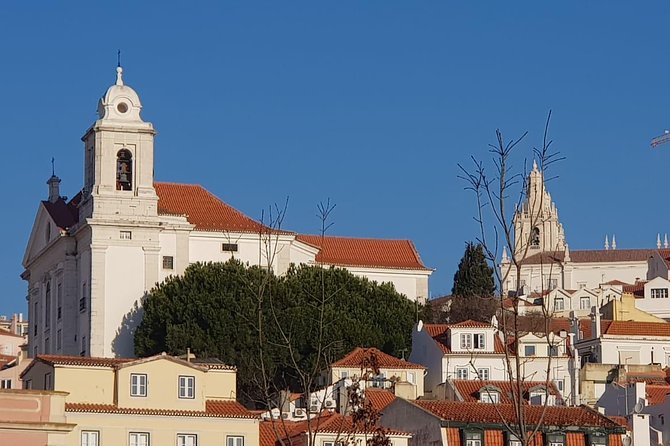
Lisbon downtown can be confusing if you arrive without a framework. This tour gives you that framework by moving through the central squares that define Baixa.
You’ll pass through Martim Moniz, tied to legend from the Reconquest. The story credits a knight who sacrificed himself at the castle door, with his name later attached to a square where different cultures are said to meet. Nearby, the ground layers matter: Martim Moniz’s square story includes the Hospital Real de Todos os Santos, damaged in the 1755 earthquake and later removed. The space became an open market area, then later had a covered market until it was demolished in 1949, returning the area to an open space.
Next is Praca Dom Pedro IV, commonly known as Rossio, and it’s described as the heart of Baixa. It sits in the realm of the late 18th-century reconstruction plan issued by Marquês de Pombal after the earthquake. Rossio is also a launching pad into the pedestrian arteries—particularly toward the river via Rua Augusta and Praça do Comércio.
From there, you reach Terreiro do Paço, known by its former role tied to Paços da Ribeira, the Royal Ribeira Palace. After the 1755 destruction, the square was remodeled as part of the Pombal rebuilding plan and remains one of Europe’s largest city squares.
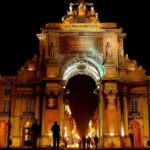
Then you walk through the “connector” you’ll want in your brain: Rua Augusta, with the Arco da Rua Augusta, a 19th-century triumphal arch built to celebrate reconstruction. The plan makes sense because you go from grand square to walking boulevard, rather than scattering these sights randomly.
You can also read our reviews of more private tours in Lisbon






Avenida da Liberdade, Eduardo VII Park, Chiado, and the Queen Maria I basilica
From Rossio and the river-adjacent areas, you climb into Lisbon’s grander boulevards and transitional districts.
The tour includes Praça da Independência with its independence symbolism: it references December 1st, 1640, after sixty years of Spanish domination. The obelisk in the middle carries the names and dates of battles from the Portuguese Restoration War. From there, the route leads you onto Avenida da Liberdade, Lisbon’s main central boulevard, famous for large sidewalks covered in traditional Portuguese calçada, made by hand from light and dark stone cubes.
You’ll also pass Parque Eduardo VII, named for the UK’s King Edward VII, who visited Portugal in 1902. This is a helpful pause in a long day, especially if you want a less intense walking surface after the downtown squares.
Then you get the Chiado area connection. It’s described as a historic neighborhood tied to Lisbon’s growth after the 16th century, built to handle population increase and commercial development. Today it still carries traditional character, and it connects toward Bairro Alto while also serving as a trendy art and fashion business district.
Finally, there’s a stop at the basilica ordered by Queen Maria I. The description highlights her vow and devotion to the Sacred Heart of Jesus, plus the architecture: a huge church with a giant dome, located on a hill and visible from far away. Twin bell towers in front and a style similar to the Mafra National Palace are mentioned, with late baroque and neoclassical influence. If you’ve been thinking Lisbon is all tile facades and small views, this stop corrects that idea with pure monumental scale.
25 de Abril Bridge to Cristo Rei: the south-side view payoff
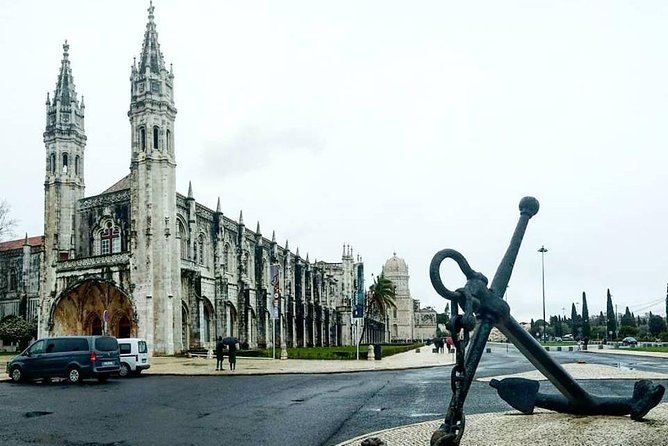
One of the best “how Lisbon works” moves in the itinerary is crossing the water area by way of the Ponte 25 de Abril. This bridge is finished in 1966 and shares its project concept with the San Francisco – Oakland Bay Bridge, and it’s described as one of Lisbon’s most photographed monuments. Seeing it as a named structure—not just a bridge you drive over—helps you appreciate why the Tagus matters so much to Lisbon identity.
Then you head to Santuario Nacional de Cristo Rei. This is where the south-side viewing strategy pays off. Cristo Rei is described as more than 100 meters high and finished in 1959, built to fulfill a vow from the Portuguese episcopate to keep the country in peace during World War II.
If you want one moment that feels like Lisbon’s “grand reveal,” this is the one. The south bank view tends to feel more open across the Tagus, and your earlier viewpoints start to click into place. Also, it’s a strong option for a photo sequence—especially if the light is right.
One practical note: the tour info says admission for Cristo Rei is not included, so you’ll want to factor that into your day plan.
Belém’s Jerónimos, Torre de Belém, and Padrão dos Descobrimentos
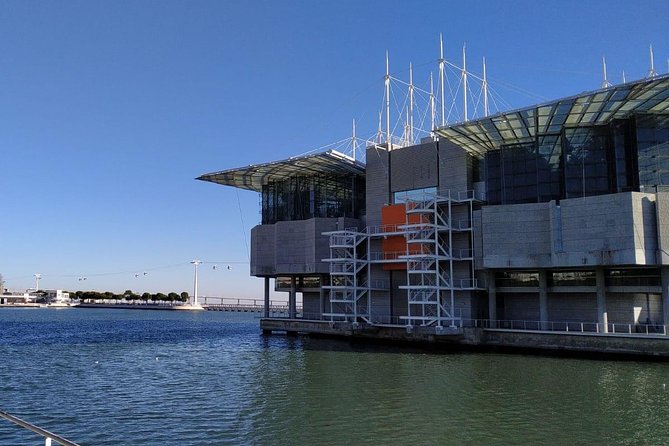
The day finishes with Belém, where Lisbon’s maritime era becomes easy to understand. This isn’t just a scatter of monuments; it’s an intentional grouping of sites that explain Portugal’s Age of Discoveries.
First up is Mosteiro dos Jerónimos. It’s a major example of Portuguese Late Gothic Manueline architecture in Lisbon and a UNESCO World Heritage Site since 1983. Construction began in 1501 and took over 100 years to complete. Even without going full detail-mode on every carved surface, the building’s scale and style make it feel like Lisbon’s “big statement” of that era.
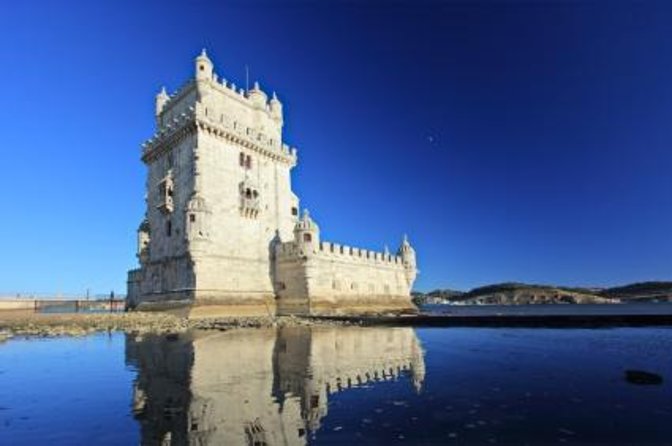
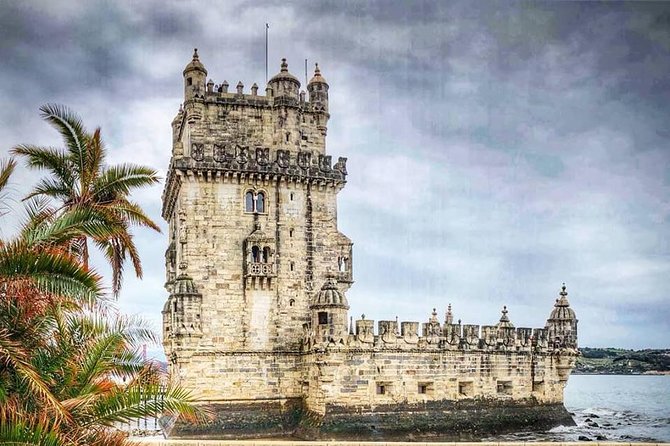
Next is Torre de Belém, one of Lisbon’s most iconic images. Originally built in 1520 and commissioned by King Manuel I, it was a fortified tower near the harbor protecting a growing city as Portuguese caravelas sailed overseas. This is listed as a mandatory photo stop with a shorter scheduled time—often perfect if you’re trying to keep energy for one last monument.
Then you’ll see Padrão dos Descobrimentos, built in 1940 for the Great Exhibition of the Portuguese World. It was renewed in 1960 to celebrate the 5th centenary of Henry the Navigator’s death. This monument helps connect the physical seafaring world of Belém with the broader story of Portuguese expansion.
For these Belém stops, remember: admission for Jerónimos and Torre de Belém is indicated as not included.
Price and value: is $259.50 per person fair for this plan?
At $259.50 per person for an 8-hour private tour with air-conditioned transportation and hotel pickup and drop-off, the value hinges on what you want out of the day.
If you’re trying to cover modern Lisbon (Expo 98), old Lisbon (Alfama and Sé), central Lisbon (Baixa squares), and the south-side viewpoints (25 de Abril Bridge and Cristo Rei) plus Belém’s major monuments, doing it all independently can become expensive in a different way—taxis add up, and you also lose the time you’d spend actually seeing sights.
This tour is priced like you’re paying for planning + transport + context in one package. The “private” part matters because you can adapt your order and pace rather than being dragged along. Also, group discounts are mentioned, which can make the per-person cost look much better if you’re traveling with friends or family.
The main trade-off is the extra cost at sights where admission isn’t included. So I’d treat this as a day where you’re paying for the route and guidance, then topping up a few ticket entries on the ground.
Who should book this tour, and who might skip it?
Book it if you want a one-day plan that ties Lisbon’s neighborhoods together in a way that makes sense. It’s especially good for first-timers who want old-world viewpoints, major landmarks, and a riverfront contrast all in the same day. It’s also a fit if you like having a guide who can tailor the day—Catarina is highlighted as fun, full of facts, and willing to adjust to what guests wanted, even including a recommendation for great sardines.
Skip it if you hate long days or prefer to linger slowly in fewer areas. This route packs in many stops, and while you can adapt timings, you’ll still be moving between districts. If you’d rather spend half a day in one neighborhood and go deep on foot, you may prefer a more focused itinerary.
FAQ
How long is the Lisbon private tour with Belém and Cristo Rei?
It’s about 8 hours.
Is this tour private or shared with other groups?
It’s private. Only your group participates.
Does the tour include hotel pickup and drop-off?
Yes. Pickup is included from where you are staying in Lisbon, and you’re also dropped off after the tour.
What language is the tour offered in?
The tour is offered in English.
Are admission tickets included for Cristo Rei, Jerónimos, and Torre de Belém?
No. Admission for Cristo Rei, Jerónimos, and Torre de Belém is listed as not included.
Are any stops free?
Yes. Several stops are listed with admission ticket free status, including Parque das Nações, Alfama, Miradouro da Senhora do Monte, Lisbon Cathedral, and Rossio.
Is lunch included in the price?
No. Lunch is not included.
Should you book this 8-hour private Lisbon circuit?
Yes, if you want your Lisbon highlights connected into one day with minimal logistics stress. The strongest reasons to book are the hotel pickup, the air-conditioned ride, and the way the route moves from Expo 98 modern design to Alfama viewpoints, then into downtown squares shaped by the 1755 earthquake, and finally into Belém and Cristo Rei for major ending views. If you’re comfortable paying a bit extra for a few admissions and you pack comfortable shoes, this is a strong value way to see a lot of Lisbon without turning your vacation into a transit project.