REVIEW · LISBON
Lisbon: Alfama and São Jorge Castle Quarters Walking Tour
Book on GetYourGuide →Operated by LISBOA AUTÊNTICA LDA · Bookable on GetYourGuide
Alfama feels like a time machine. This half-day walk ties Casa dos Bicos and the São Jorge area into one clear story, from Roman Olisipo and Moorish castle walls to today’s viewpoints. You’ll also get an easy set of “where am I?” anchors around the old center.
I especially like how the guide connects the big eras to what you’re actually seeing. The Roman “Olisipo” layer and the thermal-water name Al-Hamma are the kind of details that make the street grid feel purposeful instead of random.
I also like the practical payoff: Lisbon Cathedral (with entrance) plus the Portas do Sol area for instant orientation. One caution: São Jorge Castle itself isn’t included—so expect the castle neighborhood and walls, not an inside castle visit.
In This Review
- Key highlights you’ll feel fast
- Starting in the right place: Casa dos Bicos near Terreiro do Paço
- Alfama’s layers: Olisipo, Al-Hamma, and the point of all those stairs
- The Roman Cetária stop: evidence you can almost touch
- Secret stairways and hidden squares on the path toward the old Jewish Quarter
- Fado doesn’t start in a concert hall
- Lisbon Cathedral: stepping inside 12th-century origins with mixed styles
- Portas do Sol: panoramic views that reset your mental map
- São Jorge Castle quarters: what you’ll see (and what you won’t)
- What the guide brings to the walk (and how to benefit from it)
- How long is 150 minutes, really?
- Price and value: why $23 can be a smart buy
- Who this Alfama and São Jorge walking tour fits best
- Quick FAQ for planning your visit
- FAQ
- Where is the meeting point?
- How long is the tour?
- How much does it cost?
- What’s included in the tour price?
- Is São Jorge Castle entrance included?
- What languages are the tours offered in?
- What should I wear or bring?
- Is the tour suitable for people with mobility impairments?
- What cancellation and payment options are available?
- Should you book this Alfama and São Jorge walk?
Key highlights you’ll feel fast
- Casa dos Bicos (House of Spikes) as your launch point: a rare survivor built around 1523, near Campo das Cebolas
- Roman Olisipo traces at the Cetária: evidence of old Roman salting tanks tied to Alfama’s thermal waters
- City walls and Moorish São Jorge quarters: the walking route follows the old defensive lines
- Jewish Quarter connections through hidden squares and stairways: detours through patios and alleys that open into surprising space
- Fado origins and local customs at Largo do Chafariz de Dentro: learn how fado took root and how Lisboners keep rhythms in daily life
- Portas do Sol panoramas: a viewpoint stop that helps you map the city for the rest of your trip
Starting in the right place: Casa dos Bicos near Terreiro do Paço

Your tour meets at Campo das Cebolas, at Casa dos Bicos—the House of Spikes. It’s a strong first clue that you’re in the oldest Lisbon orbit: this building dates to about 1523 and survived the 1755 Lisbon Earthquake, which makes it a bit of a living artifact instead of a photo op.
From here, the group moves on foot through the old streets around São Jorge. The walk is designed for orientation, not speed. Even if you’ve only just arrived in Lisbon, this kind of route helps you understand where the city’s “stacked” neighborhoods sit relative to the river and each other.
You’ll also get a useful visual cue for finding the right group: the guide holds a black bag with the Lisboa Autêntica logo.
You can also read our reviews of more walking tours in Lisbon



Alfama’s layers: Olisipo, Al-Hamma, and the point of all those stairs

Alfama isn’t a single “period.” It’s a stack of arrivals. The tour brings that idea to life by walking you through what happens when different cultures reuse the same terrain.
You’ll hear how Lisbon’s Roman past included a name change—Lisbon as Olisipo—and how the Romans noticed the area’s thermal waters. Then the story shifts to the Muslim period, when the thermal waters became known as Al-Hamma (a name connected to the heat and the baths).
That matters because it explains why Alfama feels the way it does. This isn’t just romantic chaos. The streets, wall lines, and settlement choices grew out of water, elevation, and defense. When your guide points to specific spots and ties them to why they mattered, Alfama starts making sense.
The Roman Cetária stop: evidence you can almost touch
One standout moment is the stop connected to the Cetária, where you can see traces of old Roman salting tanks. This isn’t the kind of exhibit that feels disconnected from daily life. It’s evidence of how Lisbon used what it had—coastal resources and the practical needs of food storage.
If you like history that answers a question (how did people live?), this stop clicks. You’re not just learning dates; you’re learning economic logic: preserve, process, transport. And in a neighborhood like Alfama, those survival details echo through time.
Secret stairways and hidden squares on the path toward the old Jewish Quarter
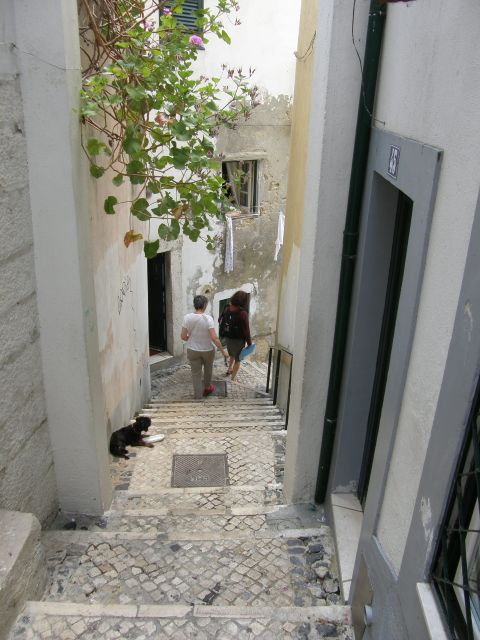
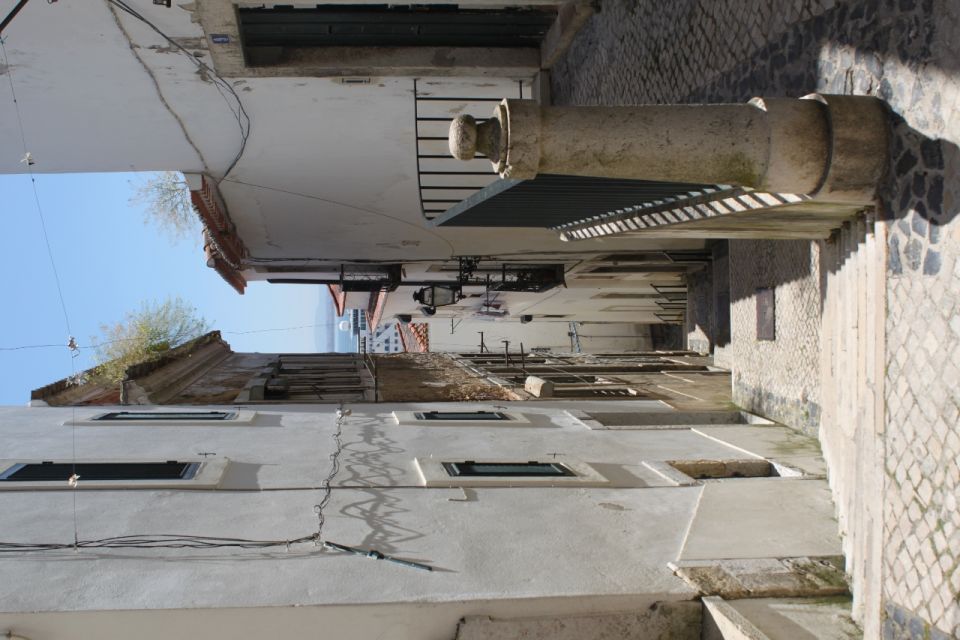
The route is famous for its labyrinth layout: narrow lanes, interior patios, and those surprise turns that make you feel like you’re wandering through someone’s back house. A big part of the experience is how your guide uses that maze to lead you toward the area connected to Lisbon’s old Jewish Quarter.
You’ll pass through spots where hidden squares and stairways open up unexpected views and breathing room. That’s one reason this works as a half-day plan. Instead of “see a building, move on,” the streets themselves become the attraction.
Practical note: this is not the kind of walk that feels good if your legs need flat ground. The activity also isn’t listed as suitable for people with mobility impairments, which usually means you should plan around steep or uneven paths and lots of steps.
Fado doesn’t start in a concert hall
At Largo do Chafariz de Dentro, the tour shifts from stones to sounds. You’ll learn about the birth of fado and the customs around it—how it grew out of local life rather than being invented as a staged performance.
You also get a sense of what fado means when it’s tied to daily routines. This is the part of the tour where the guide’s storytelling style really matters, because you’re translating mood into context: streets, gatherings, and the social fabric that made the music necessary.
If you’re planning to hear fado during your stay, this stop helps you spot what matters: the neighborhood roots and the reason people sing like they do.



Lisbon Cathedral: stepping inside 12th-century origins with mixed styles

A key included stop is Lisbon Cathedral, where you get entrance and a guided visit. The cathedral dates to the 12th century, but what makes it interesting is the mix of architectural styles. It’s like looking at a timeline you can walk around—because Lisbon kept evolving, rebuilding, and adapting rather than freezing in one look.
This is also where the tour balances the street-wandering. After alley after alley, you get a formal space where the guide can explain why Lisbon’s religious architecture carries layers from different moments.
If you’re the type who likes to understand “why the shape is like that,” the cathedral portion is a good match. It turns the earlier neighborhood context into something you can see in stone.
Portas do Sol: panoramic views that reset your mental map
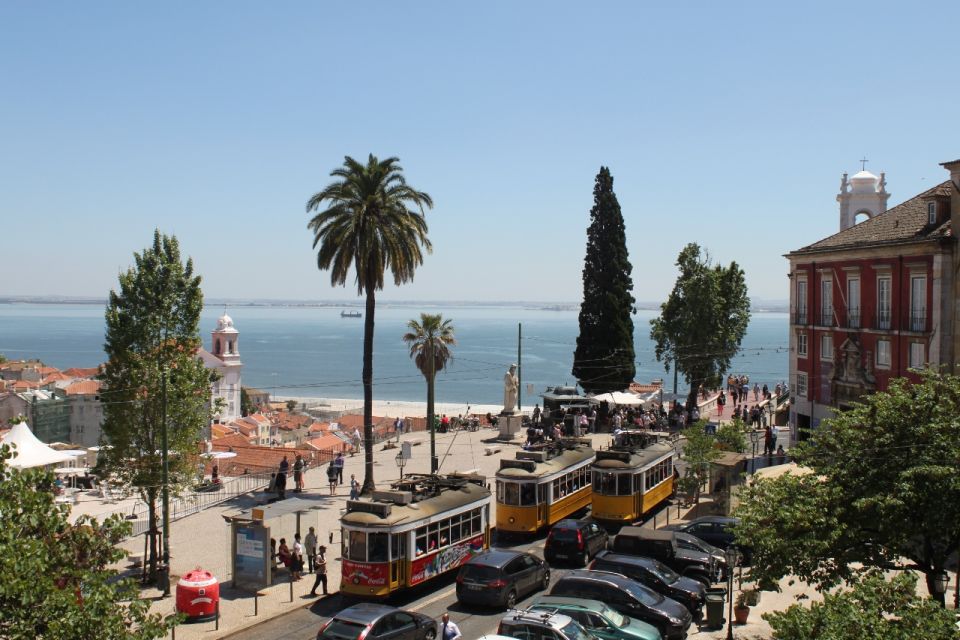
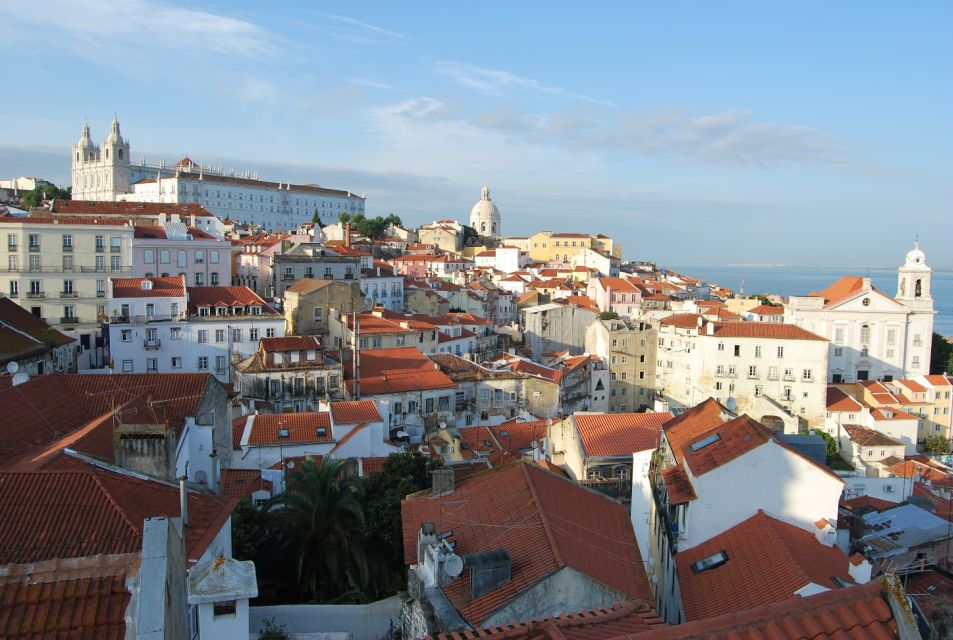
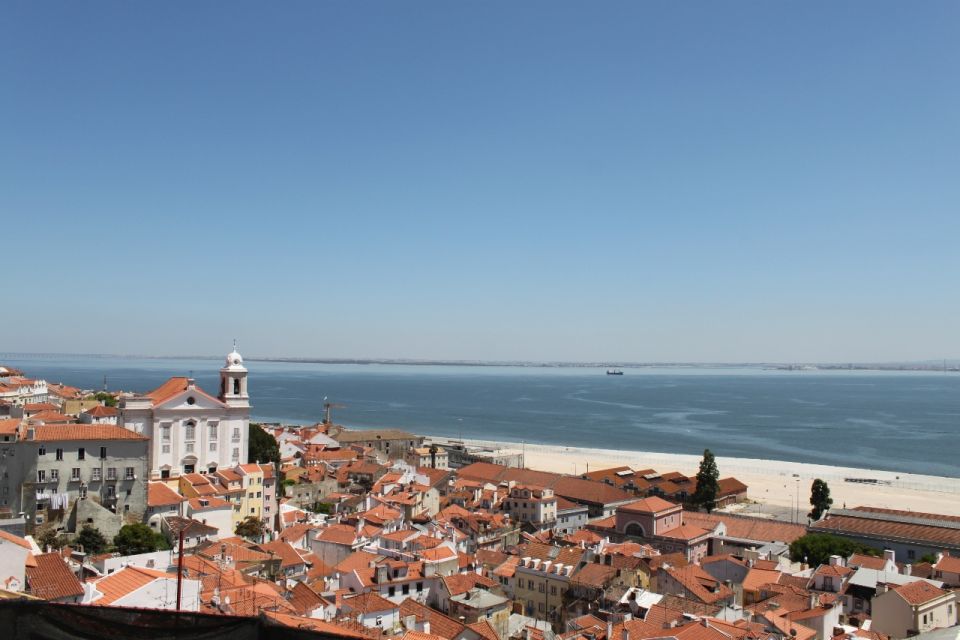
Then you get to Portas do Sol, one of Lisbon’s classic belvedere points. The point here isn’t only the view—though yes, the view is the whole reason people come—but the timing.
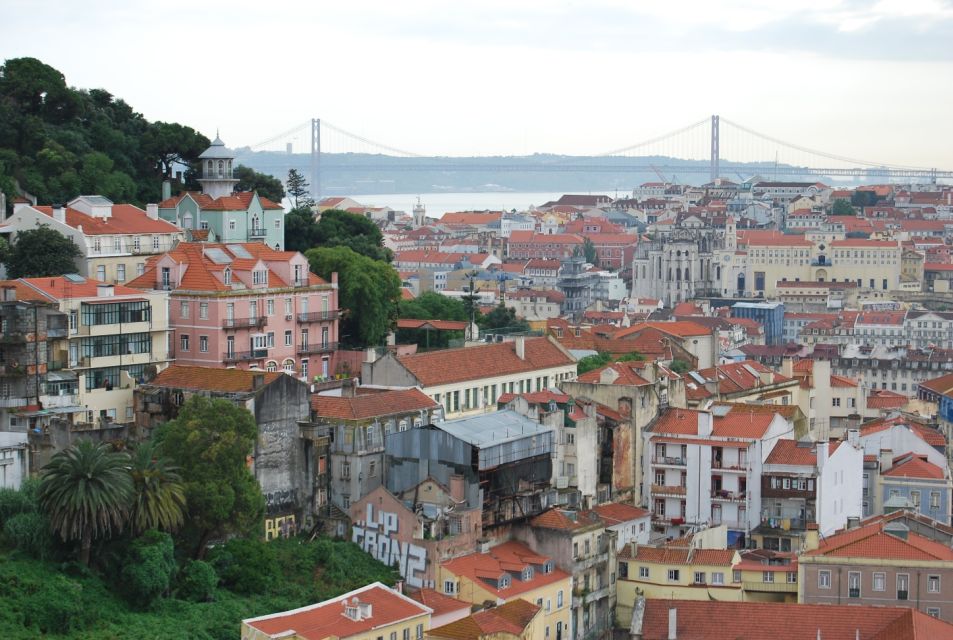
When you reach the viewpoint after walking Alfama, your brain has the “locations” needed to make sense of what you see. You can match the streets you just walked to the city spread in front of you. It’s the fastest way to get oriented if you plan to explore on your own afterward.
São Jorge Castle quarters: what you’ll see (and what you won’t)
The tour’s title points you toward São Jorge Castle, but the experience is more precise: you’ll follow the route connected to the castle and you’ll see the castle walls area. The castle entrance is not included, so you won’t be going inside the castle itself.
That matters for expectations. If you dreamed of roaming interior halls and towers for a long stretch, this walk is the “outside walls and quarters” companion, not a full castle visit. One reason I still like it: it keeps the focus on the older surrounding neighborhood—the part most people miss if they only spend time at viewpoints and museum walls.
Still, it’s worth planning smart. You can use this tour to understand where the castle sits and how it connects to Alfama. Then, if you want the full castle ticket later, you’ll know exactly what you’re aiming for.
What the guide brings to the walk (and how to benefit from it)
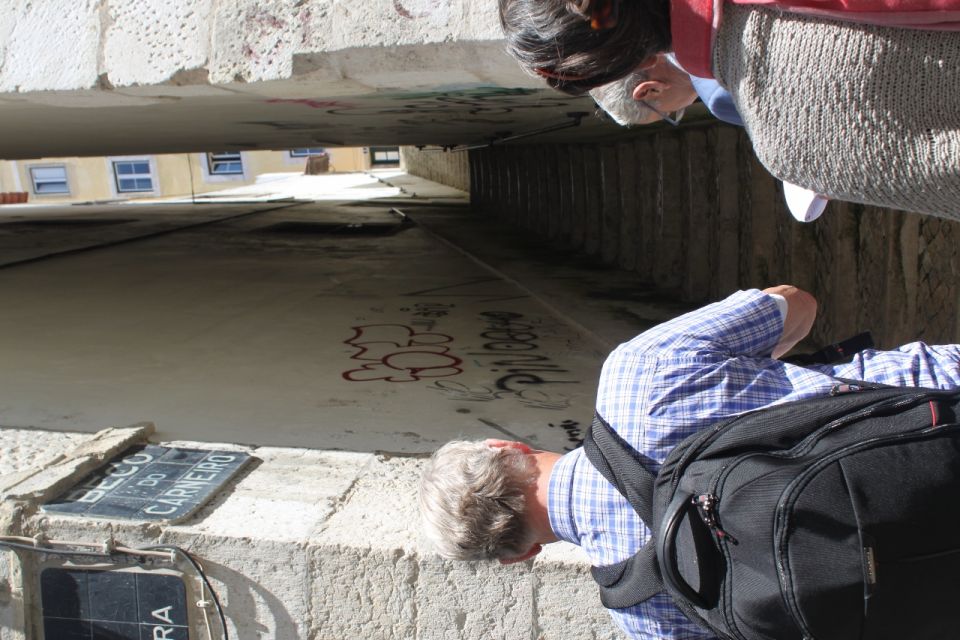
The tour is led by a live guide, and language options are broad: Spanish, Portuguese, German, English, and French. The format works best when you treat the walk like a conversation with a local historian—not a “follow and listen” lecture.
From past guests’ comments, certain guide styles stand out. People have praised hosts like Ricardo (described as a history teacher), Agatha (friendly and very guiding for first-timers), Elena and Helena (responsive to route tweaks and quick to answer questions), and Lucy (strong storytelling connected to place). It’s a good sign when the guide can explain both the big connections and the smaller street-level details.
My tip: ask for two things early on—what to see next, and what to skip if you only have a day or two. This tour specifically offers advice for the rest of your stay, and that can save you time later.
How long is 150 minutes, really?
150 minutes sounds neat on paper, but in Alfama it’s a real half-day. You’ll be walking through multiple micro-areas: the old building start, Roman traces, interior patios and hidden corners, a cathedral entrance, and a viewpoint stop.
Because it’s not a full-day marathon, it suits travelers who want a “best-of-old-Lisbon” framework fast. It also fits well as an early trip, so later wandering feels less like guessing and more like following a plan you understand.
Price and value: why $23 can be a smart buy
At $23 per person, this is priced like an affordable, focused walk. The value comes from what’s actually included:
- live guide
- Lisbon Cathedral entrance and guided tour
- Personal Protection Equipment (PPE): mask and disinfectant gel
What’s not included is the São Jorge Castle entrance, so the tour is intentionally structured to be about the neighborhood and key indoor moment (the cathedral), plus viewpoints.
In plain terms: you’re paying for someone to connect Alfama’s confusing geography to a set of memorable “aha” stops. If you try to do this alone, you’ll still see beautiful streets—but you’ll likely miss the why behind the places, and you’ll spend more time working out directions.
Who this Alfama and São Jorge walking tour fits best
This tour is a great match if you:
- want a first-day or early-day plan to get your bearings
- like history tied to real streets, not just museum walls
- care about Lisbon culture beyond food and shopping, especially fado’s roots
- want an efficient half-day that leads naturally into self-guided exploring afterward
It’s less ideal if you:
- need step-free routes or have mobility concerns
- want a long, inside-only São Jorge Castle experience
Quick FAQ for planning your visit
FAQ
Where is the meeting point?
Meet at Campo das Cebolas, at Casa dos Bicos (House of Spikes). The guide will be holding a black bag with the Lisboa Autêntica logo. The nearest metro is Terreiro do Paço.
How long is the tour?
The tour lasts 150 minutes.
How much does it cost?
The price is $23 per person.
What’s included in the tour price?
It includes a live guide, entrance and a guided tour of Lisbon Cathedral, and PPE (mask and disinfectant gel).
Is São Jorge Castle entrance included?
No. Entrance to São Jorge Castle is not included, though the tour covers the castle area and walls.
What languages are the tours offered in?
The live guide offers tours in Spanish, Portuguese, German, English, and French.
What should I wear or bring?
Wear comfortable clothes since it’s a walking tour.
Is the tour suitable for people with mobility impairments?
No, it is not suitable for people with mobility impairments.
What cancellation and payment options are available?
You can cancel up to 24 hours in advance for a full refund, and there is a reserve now & pay later option.
Should you book this Alfama and São Jorge walk?
Yes—if you want an efficient way to understand Alfama and connect the neighborhood to Lisbon Cathedral and Lisbon’s most famous viewpoints. This walk does the hard part for you: it links Roman traces like Olisipo, cultural stories tied to fado, and Lisbon’s cathedral layers into a route you can remember.
Book it especially early in your trip, then use Portas do Sol and the castle-area context to steer your next days. Just go in knowing the São Jorge Castle entrance is not part of this walk, so you may want a separate castle visit if that’s your top priority.