REVIEW · LISBON
Expert Plus Lisbon Tour with Local Guide in Private Eco Tuk Tuk
Book on Viator →Operated by Eco Tuk Tuk - Portugal · Bookable on Viator
A Lisbon tuk tuk hits different when your goal is big sights with little walking. This private, electric ride strings together the Tagus waterfront, Belém landmarks, and top viewpoints so you get your bearings fast without frying your legs on the hills.
Two things I really like: the tour is private (your group only) and designed to keep momentum, plus you get a smart start at Pastéis de Belém with help to avoid the worst waiting. On a longer route, guides like Sylvia and Lionel also show you how neighborhoods connect, not just what to photograph.
One thing to consider: the stops are preset and photo breaks are scheduled, so you can’t freely rewrite the day on the fly. If you want long, slow time inside museums or churches, plan to add those later.
In This Review
- Key takeaways before you go
- The Eco Tuk Tuk Factor: Lisbon Without the Hill Burn
- Tagus River Start: 25th April Bridge Views That Set the Tone
- Pastéis de Belém: The Custard Tart Stop Done the Smart Way
- Jerónimos Monastery: Manueline Details, Short Time, Big Impact
- Belém Tower Garden and the Waterfront Story You Can Read
- Monument to the Discoveries: Infante Henry’s Message in Stone
- MAAT Exterior Moment: A Museum That Feels Like Part of the River
- Cais do Sodré, Ribeira Market, Pink Street, and the Nightlife Bay
- Chiado: Cafés, Bookstores, Squares, and Lisbon’s Cultural Center
- Bairro Alto and Baixa: Two Different Paces in One Route
- Sé de Lisboa and Portas do Sol: Old Lisbon Up Close
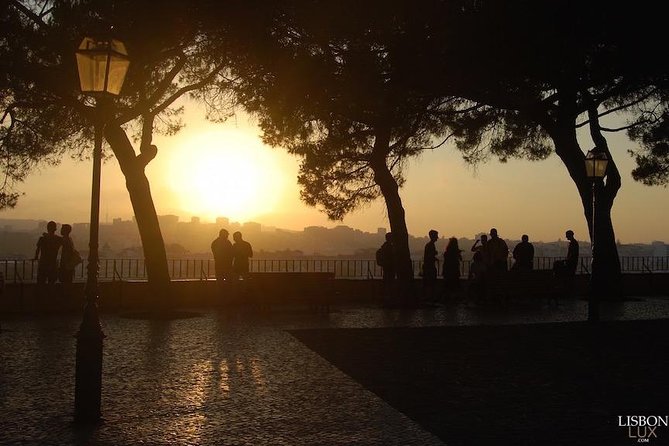
- Miradouro Senhora do Monte and Graça: Where the City Opens Up
- São Vicente de Fora, Santa Engrácia, and Chafariz de El-Rei
- Praça do Comércio: Lisbon’s Big Riverside Square in One Stop
- Price and Value: Why $17.24 Can Still Make Sense
- Who Should Book This Eco Tuk Tuk Tour (and Who Might Not)
- Should You Book This Eco Tuk Tuk Tour in Lisbon?
- FAQ
- How long is the Eco Tuk Tuk Lisbon tour?
- Is this tour private and what vehicle is used?
- Does the price include entry to Jerónimos Monastery and Belém Tower?
- Where do I meet, and where does the tour end?
- Can cruise passengers get pickup?
- What if I’m late to the tour?
Key takeaways before you go
- Private, 100% electric tuk tuk: built for steep Lisbon streets, with drivers who help you get on and off.
- Pastéis de Belém time with skip-the-line: the classic custard tart stop is handled efficiently.
- Belém highlights grouped together: Jerónimos, Tower area, and the Monument to the Discoveries all in one sweep.
- Viewpoints are part of the plan: spots like Miradouro Nossa Senhora do Monte make the hills worth it.
- Entry tickets are mixed: Jerónimos Monastery and Belém Tower admissions are not included.
- Photo stops are preset: you’ll get those signature angles, just on a fixed schedule.
The Eco Tuk Tuk Factor: Lisbon Without the Hill Burn
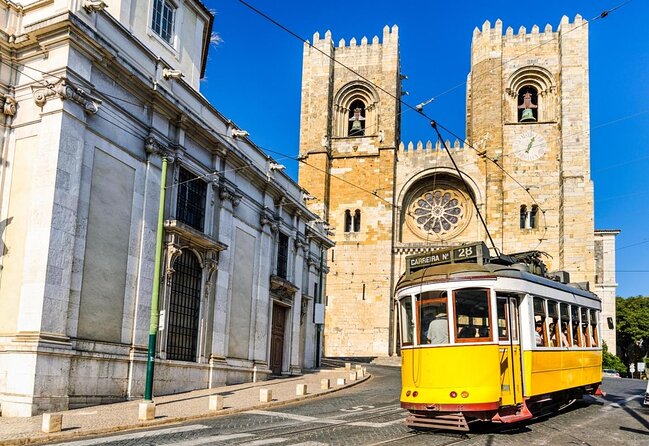
Lisbon is gorgeous, but it is also relentlessly hilly. That is exactly why I like a private eco tuk tuk for a first visit: you trade stair-climbing for short rides and quick, well-timed stops. You still get the city’s drama—river views, tiled facades, and sweeping lookouts—but you do it at a pace that feels sane.
This experience runs with an expert local guide plus a 100% electric tuk tuk. It’s a private vehicle for your group only, and the company books them based on group size (the legal passenger cap per tuk tuk is 4). That matters because it cuts the awkwardness of squeezing into a crowded ride when you’re trying to hear directions in English and keep everyone together.
If you’re traveling with seniors or just want the day to feel easier, you’ll likely appreciate that the guides can help with getting on the vehicle. They also provide blankets and protective covers for rain and wind, which sounds small until you’re sitting out a drizzle with nowhere to hide.
You can also read our reviews of more guided tours in Lisbon


Tagus River Start: 25th April Bridge Views That Set the Tone
A lot of Lisbon tours begin with hills and chaos. This one starts with the Tagus River and the wide-open scenery that tells you where everything sits. You’ll see the 25th April Bridge, inaugurated in 1966, often compared to San Francisco’s Golden Gate Bridge because both are suspension bridges with a similar color vibe.
This opening ride is useful in a practical way. It helps you understand the geography quickly: where the waterfront is, where Belém sits relative to central neighborhoods, and why many viewpoints feel like you’re hovering over the city. Even if you’ve only seen Lisbon photos until now, this first stretch makes the rest of the day click.
One more practical point: the tour is designed to run in rain or heat. So if weather changes your mood later in the day, you’re not gambling on everything being outdoors with no cover. The day still moves.
Pastéis de Belém: The Custard Tart Stop Done the Smart Way
The Pastéis de Belém part is more than a snack. It’s a piece of Portuguese food history you can actually taste. The custard tart is the original Pastéis de Belém, created by monks who lived in the Hieronymites Monastery, and they’ve been cooked here since 1837. From there, the idea of Pastéis de Nata spread.
What makes this stop feel worth it is the logistics: you skip the long line. Instead of losing your first hour in a queue, you get a short time window to grab a tart and decide if you want another (Portuguese custard tart fans know the answer).
In the guides I’ve followed in Lisbon-style tours, the best ones treat this like a real moment, not a rushed line-item. I’ve seen guides like Lionel take the group here so the custard tarts arrive while you’re still in “Lisbon mode,” then keep the story moving toward Belém’s monuments.
A small heads-up: the stop is short (around 10 minutes), so this is about tasting and moving on. If you want a slow breakfast with extra ordering and hanging around, I’d plan a separate return.
Jerónimos Monastery: Manueline Details, Short Time, Big Impact
Jerónimos Monastery (Hieronymites Monastery) is one of Lisbon’s signature architectural stops, and the tour puts it front and center. The key here is the Manueline style—Portugal’s ornate, ship-and-empire era look. Construction started in 1501 and took about a century to complete, and the complex was classified as a UNESCO World Heritage Site in 1983.
What I love about seeing it with a tuk tuk day plan is that you don’t get stuck in the kind of day where you spend half your time traveling and the other half stuck in lines. You get a focused visit window and can get real, close-up impressions without turning the day into a marathon.
That said, the tour does not include admission ticket for the monastery. So you’ll need to decide if you want to spend your limited time entering, or if you’ll focus on what you can see from the outside and the quick interior glimpses depending on conditions. Since the schedule is built for multiple stops, don’t expect an extended deep read of every chapel.
If you like architecture, look for the heavy carved stone style and how the building feels tied to maritime Portugal. Even when you only have minutes, that theme comes through immediately.
Belém Tower Garden and the Waterfront Story You Can Read

From Jerónimos, the tour flows toward the UNESCO zone around Belém Tower. Belém Tower is a 16th-century fortification that served both as a fortress and a ceremonial gateway into Lisbon. In other words, it’s built for defense and theater.
You’ll also appreciate how the tour groups the waterfront sites together. This is one of Lisbon’s big themes: the city’s relationship to ships, trade, and exploration. When you stand in the general Belém area, the monuments stop feeling random. They start reading like chapters.
The tour does not include the admission ticket for the tower area, so again, you’re choosing between quick views and any optional entry depending on timing. The stop time is short, so use it to observe: how the tower sits near the waterline, how the waterfront layout makes sense, and how this area differs from central Lisbon.
Then you’ll move on to another monument that ties the story of Lisbon’s voyages to something you can point at.
You can also read our reviews of more private tours in Lisbon





Monument to the Discoveries: Infante Henry’s Message in Stone

The Monument to the Discoveries is placed along the river where ships departed for the India and Orient trade routes. It celebrates the Portuguese Age of Discovery during the 15th and 16th centuries, and it was built between November 1958 and January 1960 as part of a 500-year anniversary celebration of the death of Infante Henry the Navigator.
This stop is quick (about 10 minutes), but it works because you just came from Jerónimos and the Belém Tower area. The theme is consistent: Portugal’s maritime period wasn’t a side note. It shaped how Lisbon is built and what the city remembers.
If you’re the type who likes to understand what you’re looking at, take the minute to find the monument’s main figures and symbolism. The guide’s explanations make it far more meaningful than it would be as just another riverside photo.
MAAT Exterior Moment: A Museum That Feels Like Part of the River
Next comes an art-and-design stop tied to modern Lisbon: MAAT, the Museum of Art, Architecture and Technology. The tour includes a moment at the museum’s striking front building, described like a wave form along the Tagus.
MAAT opened in 2016, and it’s linked to the nearby thermoelectric power station. Even if you don’t enter (and you likely won’t with the tight schedule), it’s still a worthwhile pause because it changes the visual era. You go from Manueline and maritime monuments to modern design that still stays connected to the river.
If you enjoy architecture that plays with geometry and light, this stop will feel like a bonus rather than filler.
Cais do Sodré, Ribeira Market, Pink Street, and the Nightlife Bay
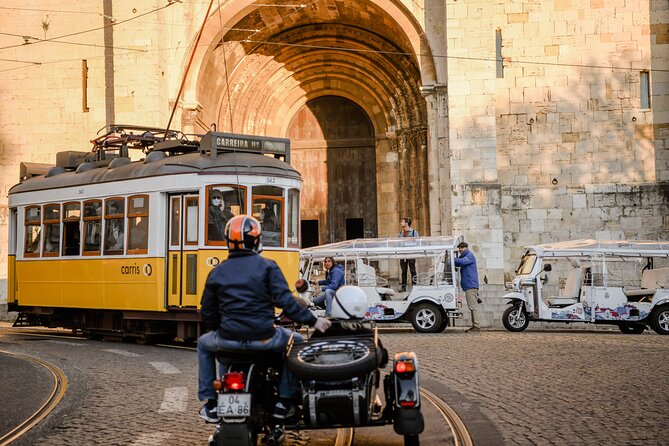
After Belém, the tour shifts toward central Lisbon energy. Cais do Sodré is a riverside district known for its restaurants and nightlife, and this is where you get a different Lisbon mood: less empire stone, more everyday city life.
You’ll pass by Ribeira Market, a 19th-century market with a food court that acts like a hub. It’s known for eclectic stalls with international dishes and local Portuguese specialties. There’s also mention of Pink Street, a place where you can find bars and listen to fado.
The tour stop here is short, so don’t expect a full meal. Instead, treat it like a sampler of neighborhoods. If something catches your eye—especially a food area—save it for later. The value is knowing where to go next without making you guess.
Chiado: Cafés, Bookstores, Squares, and Lisbon’s Cultural Center
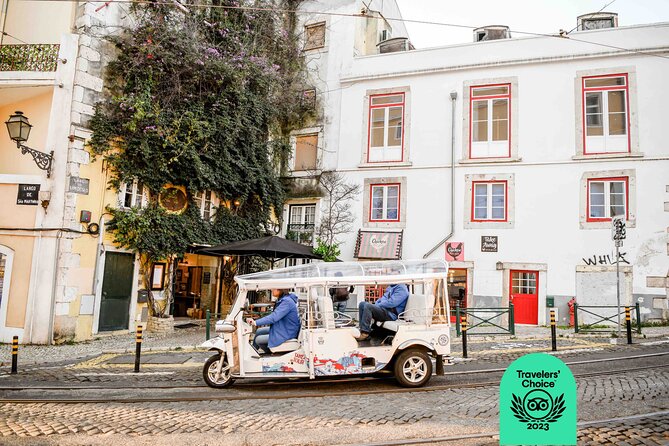
Chiado sits between Baixa and Bairro Alto and is known for culture, elegant architecture, and a cosmopolitan feel. This is the neighborhood that pairs well with your next steps because it’s central and easy to build from.
Landmarks you’ll hear about include Café A Brasileira and Livraria Bertrand, described as the world’s oldest operating bookstore. There’s also São Carlos Theater. Even if you only get a passing view, this part of the tour gives you a sense of Lisbon’s creative side: the cafés, galleries, and theaters that keep the city feeling like more than just viewpoints and pastries.
If you like classic walking-and-shopping neighborhoods, Chiado is the place you might want to extend on foot after the tuk tuk stops for the day.
Bairro Alto and Baixa: Two Different Paces in One Route
Bairro Alto is known for narrow cobblestone streets and a lively nightlife atmosphere. It’s also famous for its fado venues and late-night cafés. What I like about seeing Bairro Alto by tuk tuk is that you avoid committing to the steep hill slog all at once. You can still see the vibe and then decide later how much night energy you want.
Baixa is a different story: it’s Lisbon’s commercial and architectural heart with neoclassical buildings, wide boulevards, and major squares. It was rebuilt after the 1755 earthquake, largely attributed to planning after the devastation under the Marquis of Pombal. You’ll pass important squares like Praça do Comércio and Rossio, and you’ll also see references to Arco da Rua Augusta and Santa Justa Lift.
This section of the tour helps you connect Lisbon’s layers: disaster rebuilding, monarchy waterfront, and the modern city’s center all in one day.
Sé de Lisboa and Portas do Sol: Old Lisbon Up Close
Sé de Lisboa, also called the metropolitan cathedral, is one of the city’s earliest landmarks. Construction began in 1148, shortly after Afonso Henriques conquered Lisbon, and it’s considered the oldest church in Lisbon. That alone makes it a serious stop, even if you’re there briefly.
Then comes Largo das Portas do Sol in Alfama, famous for iconic panoramic views across the Tagus River, the Baixa Pombalina area, and the Castelo de São Jorge. This is where the tour earns its keep. You’re not just checking boxes. You’re getting one of those angles that makes Lisbon’s hill geography feel obvious.
If you only have one afternoon and you want to understand Lisbon’s structure, these are the spots that do it.
Miradouro Senhora do Monte and Graça: Where the City Opens Up
The tour heads to Miradouro Nossa Senhora do Monte in Graça, one of Lisbon’s iconic viewpoints. It offers panoramic views across the city and the Tagus. This is the kind of stop that makes you stop speaking and just look for a minute, even with a short time window.
Graça itself is described as traditional and vibrant in a more local-feeling way, with narrow cobbled streets and plenty of miradouros (viewpoints). You’ll see landmarks like Graça Church and the National Pantheon area, plus small cafés and restaurants where locals and visitors mingle.
This part also pairs well if you want a break from the most tourist-heavy Belém area. You’re still in the center of Lisbon, but the mood feels more day-to-day.
São Vicente de Fora, Santa Engrácia, and Chafariz de El-Rei
Next is a section for Lisbon’s religious and civic landmarks. The Monastery of São Vicente de Fora sits on high ground at the intersection of Graça and Alfama, and the name de fora comes from its location outside the city walls at the time.
You’ll also see the area for the National Pantheon of Portugal, in the Church of Santa Engrácia. The current building stands on a site where an earlier church was ordered in 1568 by Infanta Maria, daughter of King Manuel I, when creating the parish.
Then there’s Chafariz de El-Rei, described as the first public ornamental fountain in Lisbon, built in the 13th century during the reigns of Afonso III and Denis I using strong local groundwater.
These are shorter stops, but they matter if you want Lisbon beyond the biggest photo spots. It’s the difference between seeing Lisbon and understanding Lisbon’s “why” for a few minutes.
Praça do Comércio: Lisbon’s Big Riverside Square in One Stop
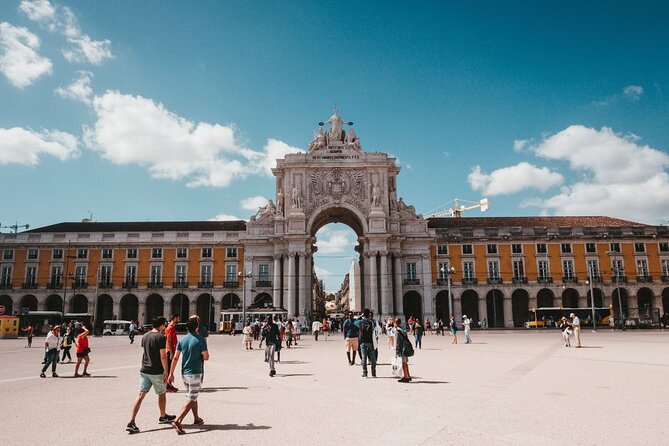
Praça do Comércio, formerly known as Terreiro do Paço, anchors downtown Lisbon right by the Tagus. It’s one of Europe’s largest squares, about 36,000 m² with 79 arches, and it was once the site of Portuguese kings’ palaces for around two centuries. Now the area is partly government departments.
This is a great closing stop because it gives you scale. Before you leave for dinner or an evening walk, you get a final wide view of Lisbon’s center and the riverfront axis that ties the whole day together.
Even if you’re tired, this one feels like a reset. It’s open, it’s bright, and you can see how Lisbon’s parts connect.
Price and Value: Why $17.24 Can Still Make Sense
The price shown is $17.24 per person, and that’s where you want to look at what’s included versus what you still may pay separately.
On the value side, you’re getting:
- a private 100% electric eco tuk tuk for your group
- an expert local driver/guide
- a schedule designed to keep you moving without long queue time at the start
- blankets and protective covers for weather
- photo stops planned in advance so you don’t hunt for viewpoints
The main cost you might add is admission for certain sights. Jerónimos Monastery and Belém Tower admissions are not included. If you plan to go inside, budget for tickets separately.
Given how Lisbon’s hills slow down walking plans, the tuk tuk time is often the difference between seeing 5 things and seeing 10. For a first-timer day, that alone can make the price feel fair.
Who Should Book This Eco Tuk Tuk Tour (and Who Might Not)
This tour is a strong match if:
- you want a high-sight-per-hour day without heavy walking
- you’re visiting for the first time and need quick orientation
- you prefer viewpoints plus landmark stops over long museum sessions
- you want a guide who can connect neighborhoods as you move
It may be less ideal if:
- you’re the type who wants to linger inside churches, museums, or markets for long stretches
- you want total freedom to change the route mid-day (the route and photo stops are preset)
- you’re traveling with needs that require a lot of customized pacing, because time windows are built around multiple stops
One practical note from the tour details: there’s a minimum age of 2 years and a minimum mandatory weight of 9 kg, and no babies. Also, pickup and drop-off at your hotel isn’t listed, so plan on using the meeting point unless you’re selecting cruise port pickup for the longer options.
Should You Book This Eco Tuk Tuk Tour in Lisbon?
If your goal is to see Lisbon’s major highlights while staying comfortable, I think you should book it—especially for a first visit. The private electric tuk tuk format reduces the friction that usually ruins sightseeing days in Lisbon: hills, distance, and time lost figuring out where things are.
Choose the longer duration if you want more neighborhood variety, like moving from Belém monuments into Chiado, Bairro Alto, Baixa, and over to Alfama and Graça viewpoints. Choose a shorter option if you mainly care about Belém plus one or two central viewpoints and want the rest of your day free for your own wandering.
If you want a tight, well-planned highlights day with strong guide storytelling, this is the kind of tour that makes Lisbon feel manageable. And if you get a guide who’s great at explaining what you’re seeing—people like Sylvia, Lionel, or Diniz are named for a reason—you’ll leave with more than photos. You’ll leave with the city’s logic.
FAQ
How long is the Eco Tuk Tuk Lisbon tour?
You can choose from one to four hours, with a typical focus on covering multiple Lisbon highlights while keeping walking to a minimum.
Is this tour private and what vehicle is used?
Yes. It’s a private tour for your group only, using a 100% electric and sustainable vehicle. The company books tuk tuks based on your group size, up to the legal maximum of 4 passengers per tuk tuk.
Does the price include entry to Jerónimos Monastery and Belém Tower?
No. The tour details list admission ticket for Jerónimos Monastery as not included, and the Belém Tower-related stop also shows admission ticket as not included.
Where do I meet, and where does the tour end?
The meeting point is Tv. do Carvalho 25, 1200-058 Lisboa, Portugal. The tour ends back at the same meeting point.
Can cruise passengers get pickup?
For the 3- and 4-hour options, there is pickup from the Lisbon Cruise Port (Jardim do Tabaco Quay). You’ll be asked the day before to select the pickup point (Time Out Market or Lisbon Cruise Port).
What if I’m late to the tour?
If you’re delayed, the activity will be reduced according to the time lost, which may change the fixed route. If your delay is more than 15 minutes, the activity is cancelled and the amount paid is not refunded.