REVIEW · SAO MIGUEL ISLAND
Azores: Swim with Dolphins Atlantic Experience
Book on GetYourGuide →Operated by Azores Whale Watching TERRA AZUL · Bookable on GetYourGuide
Wild dolphins sound like a movie. But this is real.
I love the responsible, rules-first approach—you’re briefed on how to behave so the dolphins stay wild, not “managed.” I also love that the team is small-group focused, so you actually get time and attention during the limited in-water moments. The trade-off: if dolphins don’t show up close, your swim time can be short and sightings aren’t guaranteed.
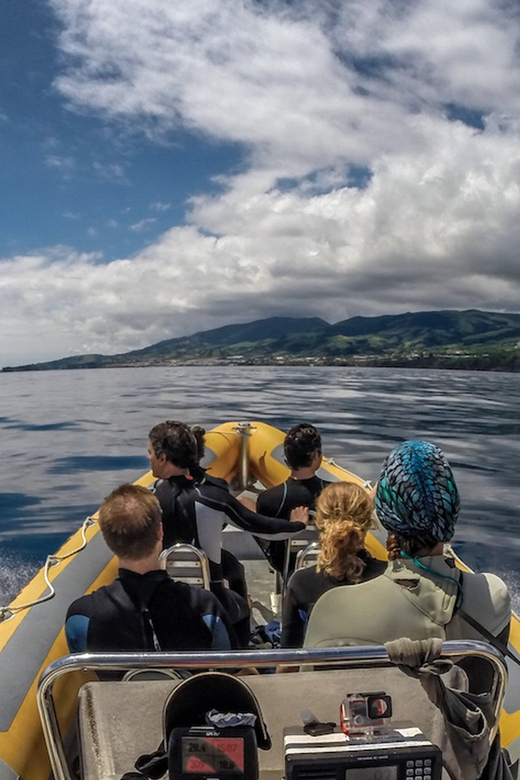
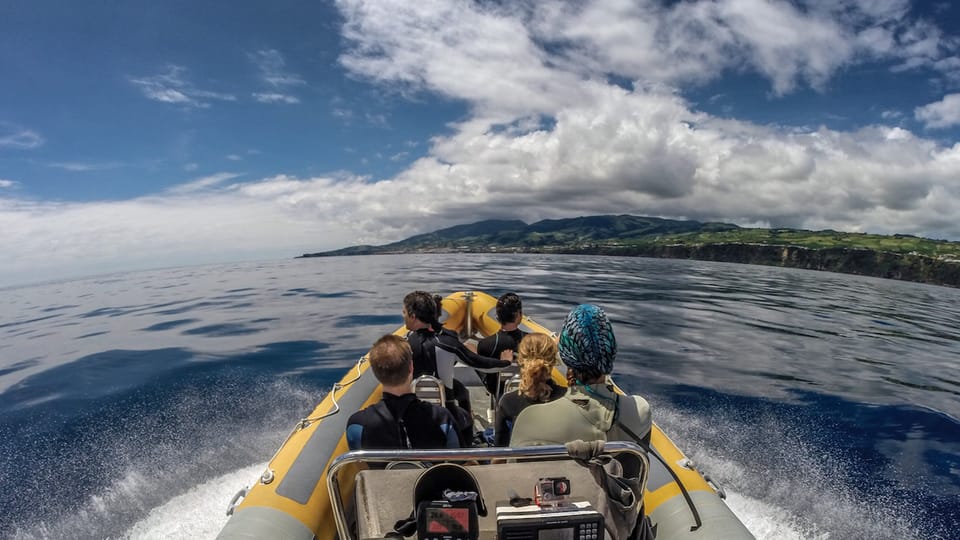
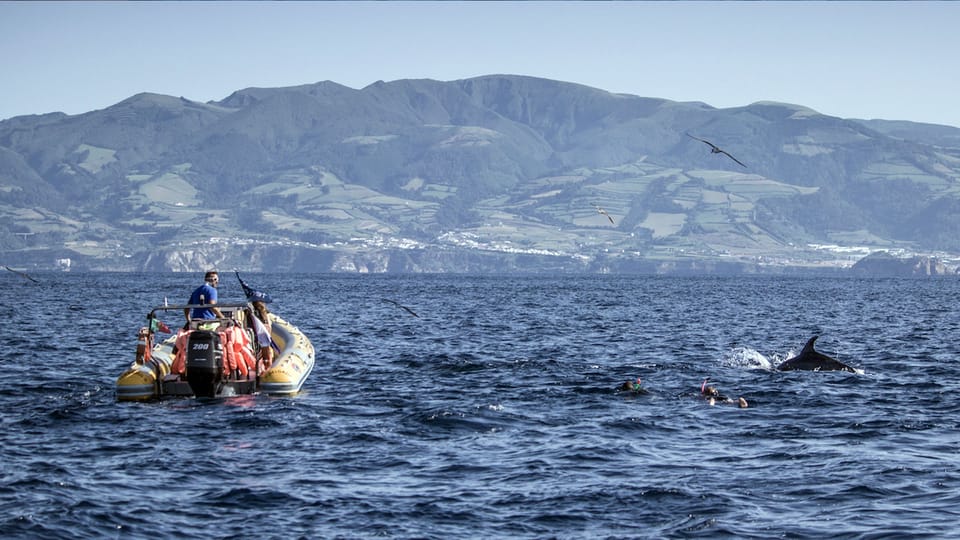
You’ll be out of Vila Franca do Campo on a specialized Zodiac RIB, with lookouts guiding the captain using VHF radio as the team evaluates conditions. Then you switch gears for a snorkeling stop at an islet nearby—simple, gear-included, and usually much warmer-feeling once you’re floating in crystal-clear water.
In This Review
- Key moments that make this dolphin swim work in real life
- What you’re really paying for (and why it’s not just a dolphin selfie)
- The dolphin swim: how the crew finds them and how you get in the water
- The in-water rotation is limited on purpose
- The dolphin species and the season: when this activity makes the most sense
- Onboard safety and the guide role (why you feel cared for, not rushed)
- The return stop you shouldn’t ignore: snorkeling at the islet seabed
- Marina time in Vila Franca do Campo: small break, real convenience
- Price and logistics: is $136 fair for 3 hours?
- Who should book (and who really shouldn’t)
- Good fit if you want wild nature, not a show
- Non-swimmers can join too
- What to bring so you’re comfortable the whole time
- A quick reality check on dolphin sightings
- Should you book the Azores Swim with Dolphins Atlantic Experience?
- FAQ
- Is the dolphin swim offered year-round?
- How long is the experience?
- What gear is included?
- Do I have to swim to join?
- Where do I meet the tour?
- Is this suitable for young children?
- What happens if weather makes conditions unsafe?
Key moments that make this dolphin swim work in real life
- Biologist or naturalist guided: you’re not just watching—you’re learning marine behavior and conservation rules.
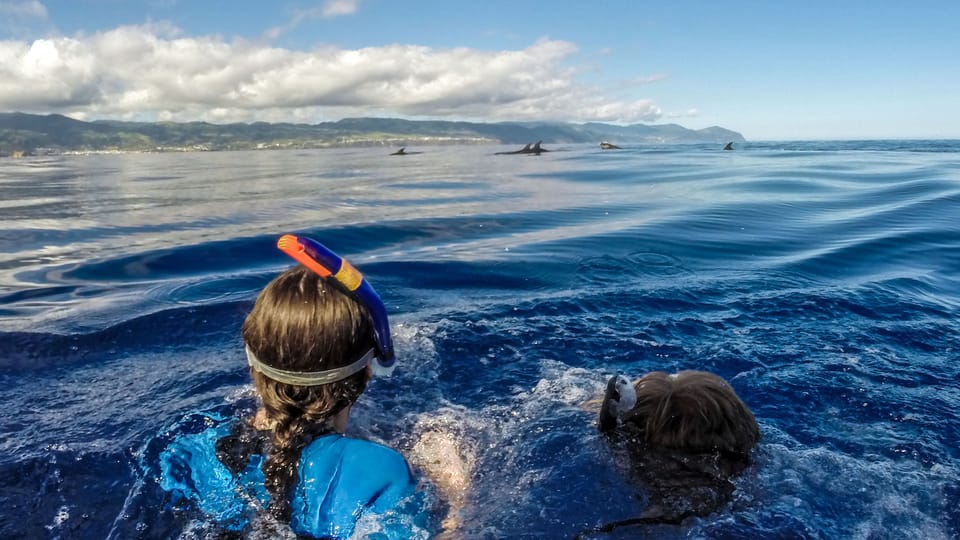
- Small group (max 10): more personal safety guidance and smoother water rotations.
- Two swimmers at a time: you alternate in safe periods, so your chance to swim depends on timing.
- Lookouts + VHF coordination: the crew uses spotting from shore and radio directions to approach carefully.
- Seasonal dolphin chances (late autumn to early spring): this is when the activity runs and water temps average 16–22°C.
- Snorkel stop after dolphins: you get a second aquatic experience instead of just “dolphins and done.”
What you’re really paying for (and why it’s not just a dolphin selfie)
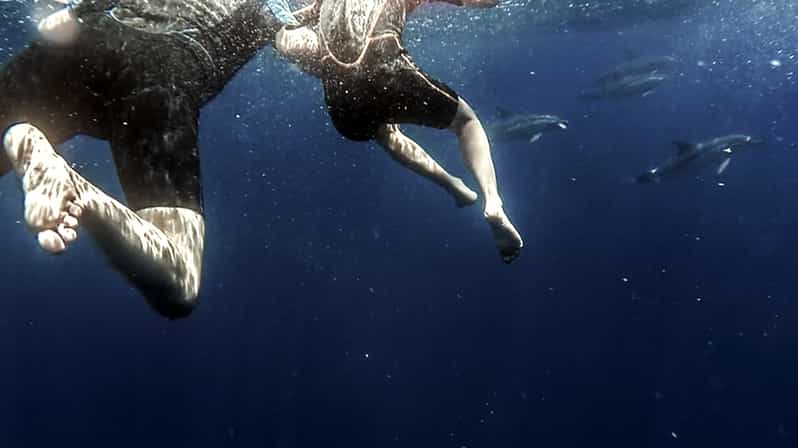
At $136 per person for a 3-hour outing, this doesn’t feel like a bargain tour—and that’s fair. You’re paying for a specialized setup: a dedicated guide and skipper on the water, a fast Zodiac RIB, included neoprene gear plus a poncho and windguard, and insurance built into the experience. There’s also a conservation layer: the activity is explicitly framed as a responsible alternative to animal captivity.
For me, the value is in the method. Wild dolphin encounters are unpredictable. The tour can’t “produce” dolphins like a theme-park show. What it can do is stack the odds ethically—by using trained guidance, careful approach rules, and controlled in-water time.
You can also read our reviews of more dolphin watching tours in Sao Miguel Island


The dolphin swim: how the crew finds them and how you get in the water
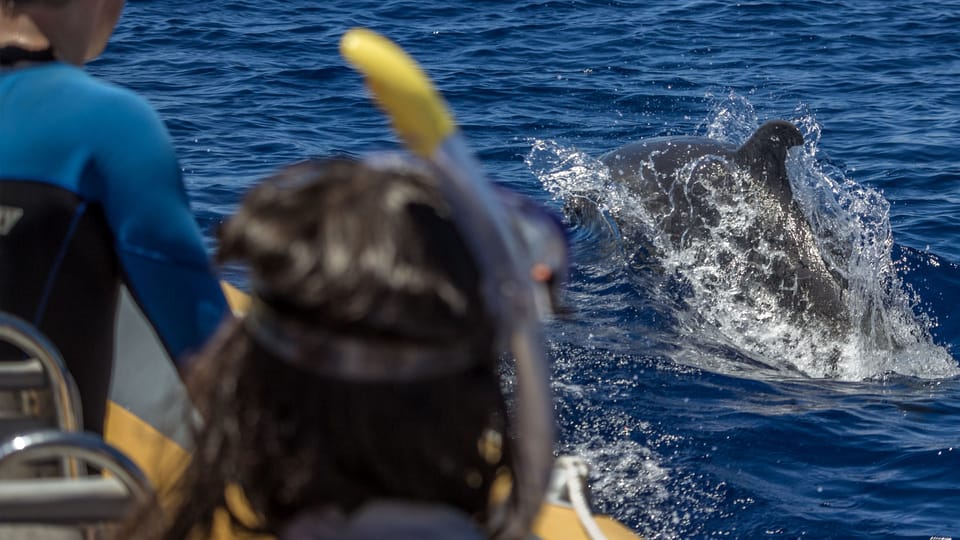
The day begins at the Marina of Vila Franca do Campo. If you chose pickup, you’ll meet at the hotel carport and you’re told to show up early. If not, you go to the marina area yourself—free street parking is available once you’re down at sea level near the local partner base and the yellow boats.
Before you even step aboard, you get a short briefing that matters. You’ll learn the local marine species that can be observed, the safety rules on the boat, and the do’s and don’ts for swimming near dolphins. They emphasize responsible practice and the fact that you can’t control animal behavior.
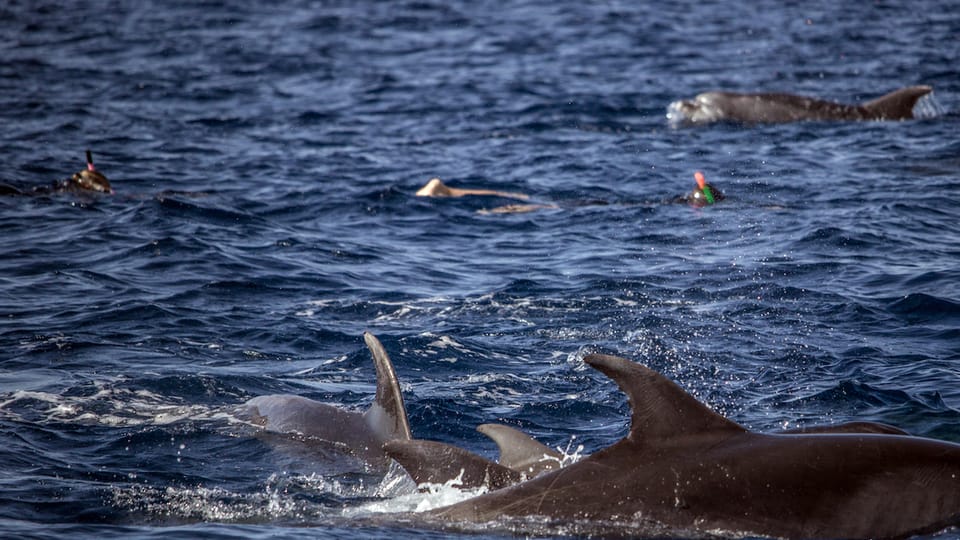
Then the boat ride starts. Lookouts high inland scan for dolphins, and the captain uses VHF radio directions to go to the right spot. Expect the first part to be a quick run out to sea.
Approach is slow and careful. Your guide evaluates conditions before anyone gets in. That’s where this experience feels different from a “grab photos fast” operation. The team is trying to set up a safe, low-impact moment.
The in-water rotation is limited on purpose
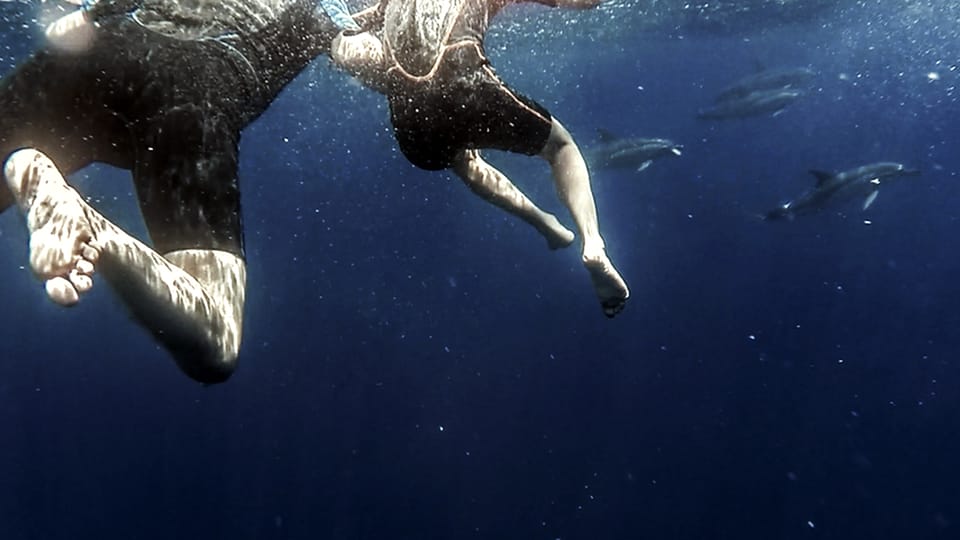
Once things look good, you need to be ready. Two swimmers alternate in the water at safe distance during limited periods. You don’t want to miss your turn—because dolphins may come closer when they’re curious and comfortable, and that window can be brief.
Also, this isn’t a free-for-all swim. You’re not allowed to use fins, touch the animals, feed them, be too noisy, make abrupt movements, or swim too fast near the dolphins.
That may sound strict, but it’s the point. Your behavior is part of the conservation plan—and it’s also what helps keep the encounter respectful and repeatable over time.
The dolphin species and the season: when this activity makes the most sense
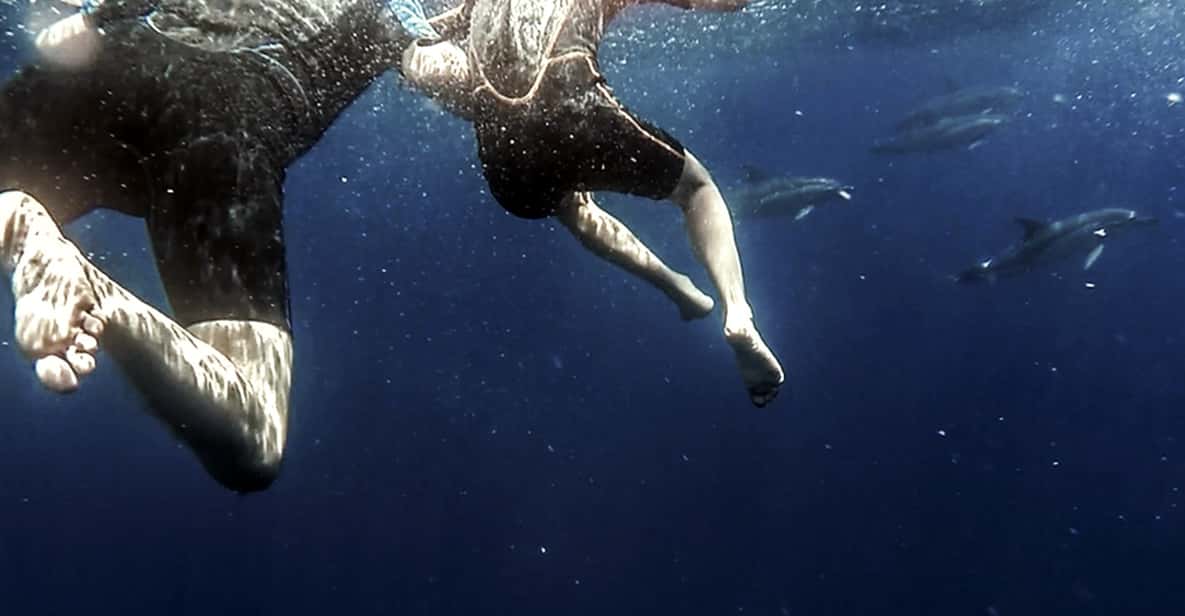
This swim is only offered between late autumn and early spring. That timing isn’t random. It ties to seasonal dolphin behavior and the conditions in the water.
Water temperatures average between 16°C and 22°C, which is why neoprene gear is included. You should mentally prepare for cool-but-manageable water, especially if you’re someone who doesn’t love chilly swims.
The tour says it’s possible to swim with up to four species (depending on conditions and behavior):
- Common dolphins
- Bottlenose dolphins
- Striped dolphins
- Risso’s dolphins
And yes, even in the “right” season, proximity can’t be guaranteed. One of the best pieces of advice here is to go with flexible expectations. If you treat it like nature watching—with a real chance of a close moment—you’ll enjoy it more.
Onboard safety and the guide role (why you feel cared for, not rushed)
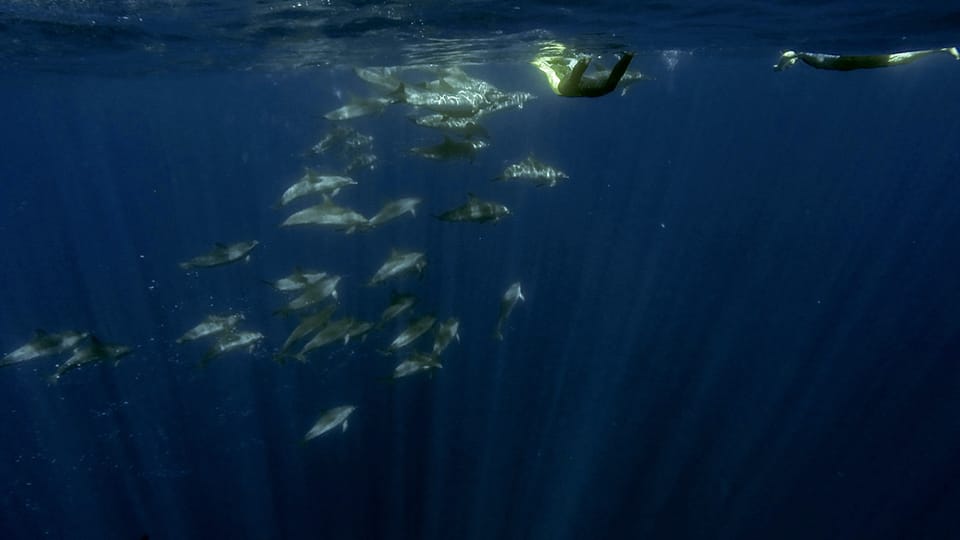
The crew model is simple: you’re guided, and the captain leads the boat safely.
You’ll get onboard safety instructions, plus ongoing direction from your guide when you’re preparing to enter the water. The tour is framed as a high-conservation-risk activity, and that wording translates into practical behavior: qualified guidance is always present to keep environmental and safety standards in check.
In my view, this is where the tour earns its reputation. When the team takes time to explain rules before you go in, you don’t spend the swim panicking about what you’re allowed to do. You also don’t end up drifting into unsafe behavior like sprinting after movement or getting too close too fast.
Language support is also a real practical perk. The tour is offered in English officially, but the team includes multiple languages (German, French, Spanish, Portuguese, Dutch, Italian). If you don’t speak English, you still have a decent chance of understanding what’s happening.




The return stop you shouldn’t ignore: snorkeling at the islet seabed
After the dolphin portion, the boat travels to a coastal snorkeling location near the Islet of Vila Franca do Campo.
This part is built to be accessible for a range of comfort levels. You’re in the water longer than you are during dolphin rotation, and the goal is to see the marine fauna and flora characteristic of the island’s seabed. It’s also a nice “backup plan” for your day—because even if dolphin time is brief, you still get an underwater look.
Practical note: they don’t describe fins use for snorkeling specifically, so follow the tour’s rules for what’s allowed and what isn’t when you’re in the water.
Photo-wise, there’s also a short photo stop at the islet—quick, but useful for grabbing a few frames from shore level before you head back to the marina.
Marina time in Vila Franca do Campo: small break, real convenience
Once you’re back at Marina de Vila Franca do Campo, you get some free time and a quick shopping window. There’s also time to reset—towel, water, warm up after the swim, and decide what you want to do before the scenic drive back.
This is also a good moment to buy a simple snack or grab something warm. After time in neoprene and cool water, you’ll feel the “body is tired” effect even if you enjoyed every second.
Then the ride back includes scenic passing of São Miguel stops, with drop-offs in two locations: Azores Whale Watching TERRA AZUL™ and Ponta Delgada (depending on the option selected).
Price and logistics: is $136 fair for 3 hours?
For a 3-hour experience, $136 isn’t cheap. But the cost-to-inclusions ratio is reasonable:
You get:
- Neoprene gear
- Poncho and windguard
- Guide and skipper
- Specialized Zodiac RIB boat
- Insurance
- Safety briefing and marine guidance
You don’t get:
- Water (bring your own)
And you do have limitations built into the activity:
- Weather and safety conditions can modify or cancel the plan
- Animal behavior determines how close and how long dolphins are
- In-water time is limited by design
So the “value” question comes down to expectations. If you’re hunting a guaranteed long swim, you’ll probably feel disappointed. If you want a responsible, guided ocean encounter plus snorkeling and you’re comfortable with nature uncertainty, it can feel like a standout day in the Azores.
Who should book (and who really shouldn’t)
This experience is not for everyone.
It’s not suitable for:
- Pregnant women
- People with weak back problems
- Wheelchair users and people with mobility impairments
- Anyone under age 4
- People in delicate health conditions
- Unaccompanied minors (children must be with an adult)
And if you’re wondering about effort level: you’ll need to manage getting in and out of the water with neoprene gear, follow strict movement rules, and tolerate cool temperatures.
Good fit if you want wild nature, not a show
You’ll likely love this if you:
- enjoy learning as you travel
- like hands-on nature moments
- want a structured, conservation-minded approach
- can accept that the ocean decides the outcome
Non-swimmers can join too
If you don’t want to swim, the tour offers a non-swimmer option at 50% discount, but you need to provide this at booking time so they can adjust participation.
What to bring so you’re comfortable the whole time
Keep it simple and functional.
Bring:
- Swimwear
- Change of clothes
- Towel
- Camera
- Water
- Biodegradable sunscreen
The neoprene gear and wind protection are included, so you don’t need to solve that problem. But you do want dry clothes ready for after, especially if the wind picks up.
Also, pack your body basics: if you’re sensitive to cold, keep a warm layer for afterward. The water is cool by Azores standards, and time in neoprene still ends with a chill once you’re back on the boat.
A quick reality check on dolphin sightings
Here’s the honest part. Even with dolphins nearby, you might get:
- fewer passes than you hoped
- short close moments
- multiple sightings from the boat
That’s not a failure of the tour. Dolphins are free-ranging, and the team can’t control proximity.
The best mindset is: expect a chance at a close swim, but treat the boat time and marine learning as the real experience. On days when dolphins are extra friendly, your in-water time becomes the highlight. On tighter days, you still leave with an ocean memory you can’t manufacture anywhere else.
Should you book the Azores Swim with Dolphins Atlantic Experience?
Book it if you want a responsible wild encounter with real marine guidance, you’re okay with cold water and limited in-water rotation, and you want snorkeling as a bonus.
Skip it if you:
- need guaranteed long swim time with close animal contact
- have health or mobility limits listed as unsuitable
- are uncomfortable with strict water rules (no touching, no feeding, no noisy behavior, no fins)
If you’re deciding between “dolphins-only” dreams and “responsible nature day” reality, this tour is built for the latter. You’ll spend the morning on a serious boat operation, get guided learning that actually shapes how you behave, and end with underwater views in clear water—exactly the kind of Azores day that feels grounded in nature, not in performance.
FAQ
Is the dolphin swim offered year-round?
No. This activity runs between late autumn and early spring.
How long is the experience?
The tour lasts about 3 hours.
What gear is included?
Neoprene gear is included, plus a poncho and windguard.
Do I have to swim to join?
No. Non-swimmers can join for a 50% discount, but you need to note this at booking so the team can adjust the setup.
Where do I meet the tour?
Meet at the Marina of Vila Franca do Campo. If you’re starting from Ponta Delgada, you head east along the coast and follow signs to Vila Franca do Campo, then descend toward sea level to the marina.
Is this suitable for young children?
Children must be accompanied by at least one adult, and the tour isn’t suitable for children under age 4.
What happens if weather makes conditions unsafe?
The tour is subject to weather and safety conditions and may be modified or cancelled without prior notice.