REVIEW · SAO MIGUEL ISLAND
Terceira Island:Try Scuba in a Shipwreck-Archeological park
Book on GetYourGuide →Operated by Scubazores Divers · Bookable on GetYourGuide
Shipwrecks come alive under your own breath. I like that this one-day SSI Try-Scuba program gives you a clear path from first gear use to a supervised visit to the Angra do Heroísmo underwater archaeological park. It’s designed to be beginner-friendly, with pros steering you through the key skills so you can focus on the magic below.
My favorite part is the way you build comfort before you go under. The training phase teaches breathing, movement, and basic underwater communication, so the next step feels less like guesswork. One thing to consider: if you want underwater photo keepsakes, you may need to ask in advance what’s available, since a lack of photo options came up as a disappointment for at least one participant.
In This Review
- Key highlights worth putting on your shortlist
- How the SSI Try-Scuba session fits into one day on Terceira
- Entering Angra do Heroísmo Bay’s shipwreck park (Lidador at shallow depth)
- What you learn before you go under: breathing, gear, signals, calm control
- Marine life at 8 meters: fish, rays, octopus, and the small surprises
- Gear, safety, and the small-group advantage (10 participants max)
- Price and value: what $129 includes (and what you still need)
- Who should book this Try-Scuba on Terceira (and who shouldn’t)
- What to bring so you’re not scrambling
- Tips to get the most out of your first shipwreck session
- Should you book Try-Scuba at the Lidador wreck?
- FAQ
- What is included in the Try-Scuba price?
- How long is the experience, and how much time is underwater?
- Where do I meet for the activity?
- What languages will the instructors use?
- Is this a good activity for beginners?
- What are the age and pregnancy requirements?
- What should I bring with me?
Key highlights worth putting on your shortlist
- Angra Bay underwater archaeology: the outing centers on the Lidador shipwreck inside a protected underwater park
- SSI Try Scuba structure: first learn skills in a confined water setting before you go to the 8m limit
- Real-world support in the water: an instructor stays with you during the supervised first underwater session
- Weightlessness as a skill goal: the program aims to make you feel calm and buoyant, not just brave
- Azores marine life at shallow depth: you should expect plenty of fish, and feedback also points to sightings like octopus, rays, and sea urchins
- Small-group attention: limited to 10 participants, which helps you get quick help when you need it
How the SSI Try-Scuba session fits into one day on Terceira
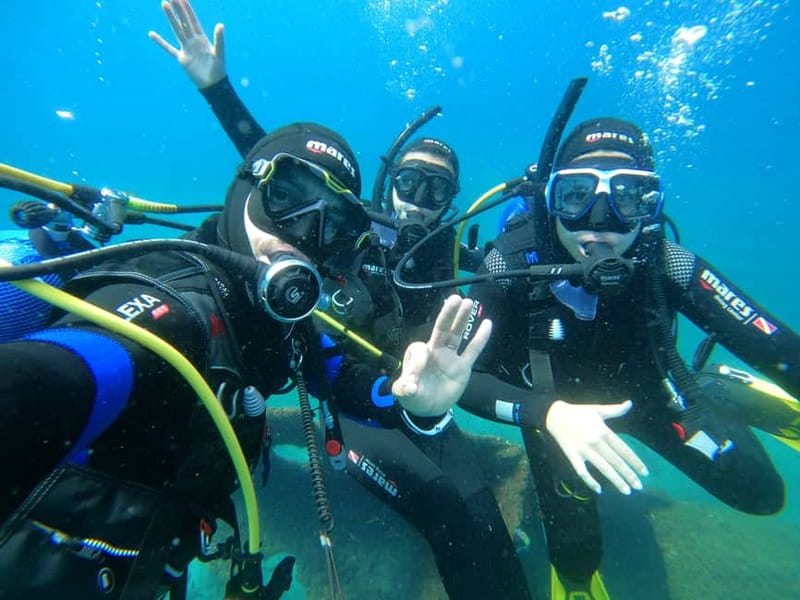
This experience is built around a simple idea: don’t throw you straight into the open water chaos. You start at the Scubazores Divers shop (the meeting point), where you’ll get an initial briefing before anything goes into your hands. The program is designed as the first step toward the Open Water Diver course, so the pace is practical and focused on what you truly need.
Plan on about 120 minutes total for the Try-Scuba training in a confined water environment. That’s where you learn how to handle the equipment, breathe underwater, and move without fighting the water. You’ll also practice basic communication signals, which matters more than people expect—those simple gestures are what keep you feeling in control when you’re surrounded by water.
The instructor support is also part of the value. You can expect instruction in English and Portuguese, and the experience is taught by a certified instructor. The group size is capped at 10, which usually means less waiting for help and more personal coaching while you’re still learning the feel of buoyancy and breath control.
If you’re the type who worries you’ll be the slow one, this format is reassuring. The program is specifically meant for beginners, and it’s capped with a straightforward plan: learn first, then do a supervised underwater session within a safe depth limit.
You can also read our reviews of more scuba diving tours in Sao Miguel Island
Entering Angra do Heroísmo Bay’s shipwreck park (Lidador at shallow depth)
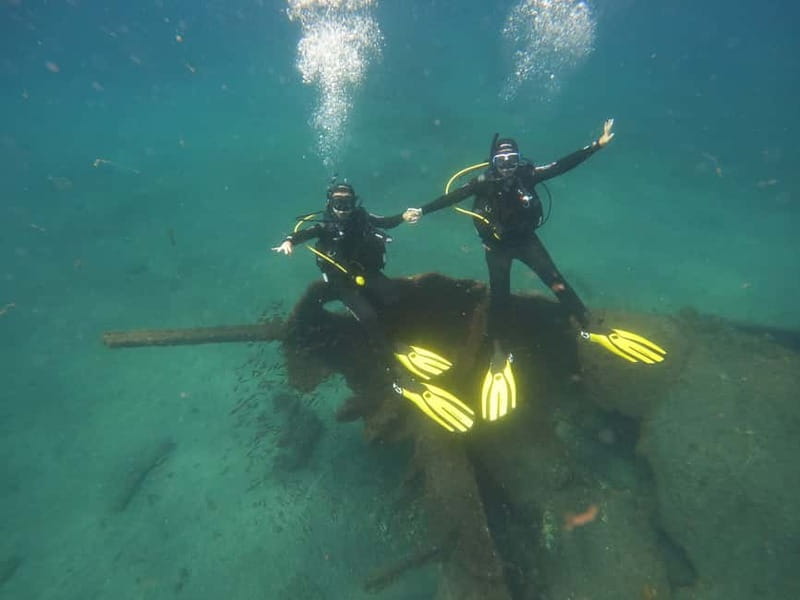
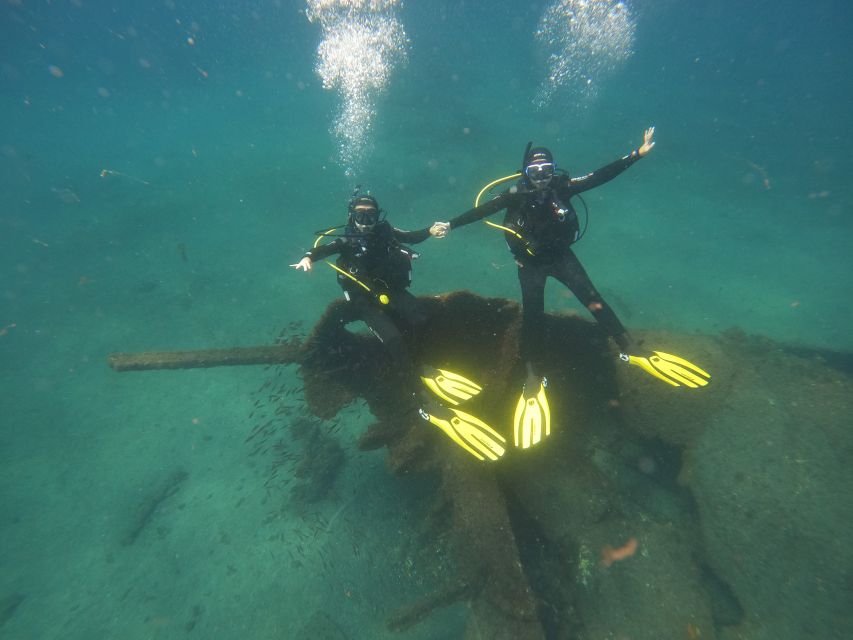
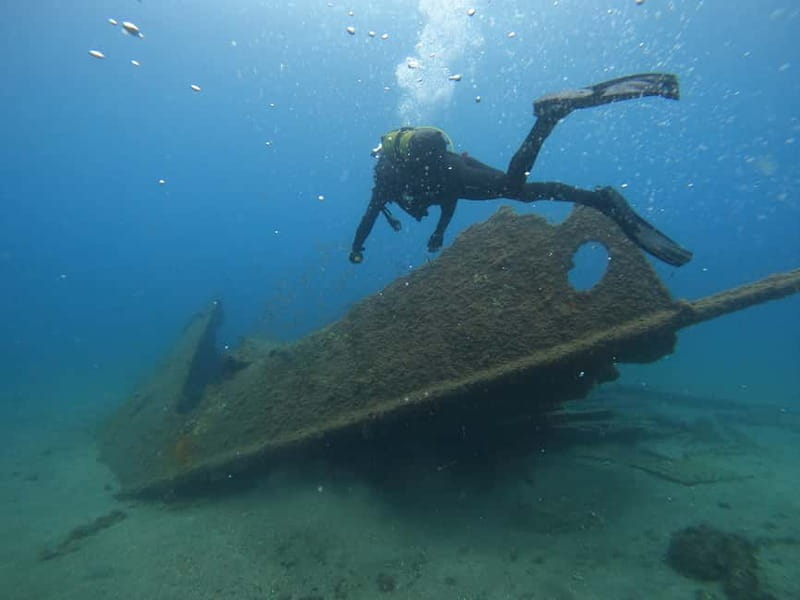
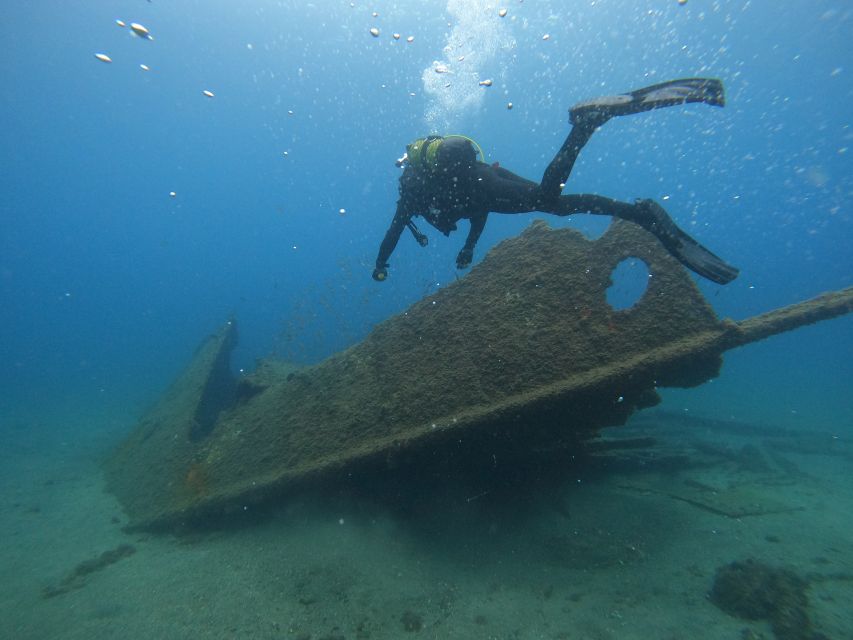
The big headline here is the underwater setting. After the classroom-style and confined-water prep, you head to the Underwater Archaeological Park in Angra Bay—specifically the area tied to the Lidador shipwreck. This is not just a random wreck. It’s part of a protected underwater archaeological zone, which gives the whole experience a sense of place and purpose.
Your first underwater outing runs under close supervision, with a maximum depth of 8 meters and about 30 minutes underwater. That depth limit is exactly what you’d want for a first-time program: it’s shallow enough to feel manageable, but deep enough to see real underwater life and the structure of the wreck clearly.
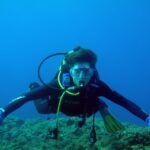
What you’ll likely notice right away is how different the world feels. Several participants described the experience as weightless and floaty, with calm movement between fish and reef. That weightlessness isn’t just a cool feeling—it’s a sign you’re doing buoyancy and breathing correctly.
Also, the underwater world at this depth gives you a good “first success” moment. Instead of trying to cover everything, you can learn to slow down and look. Fish activity tends to be busy near wrecks and reef areas, and the program is designed to help you see what matters rather than rushing past it.
And yes, the shipwreck is the star. If you’ve ever wanted to see a wreck close-up without needing advanced training first, this is one of the most direct ways to do it in a controlled, instructor-led way.
What you learn before you go under: breathing, gear, signals, calm control
The Try-Scuba portion is the reason this works for first-timers. Your briefing is not a vague lecture. You’re taught how to use the equipment, how to breathe underwater, and how to move underwater in a way that doesn’t waste air or panic you. The whole goal is simple: help you feel safe enough to look around.
You’ll also learn underwater communication signals. This is a quiet superpower for new divers (and for nervous ones). When you understand the basic signals, you stop wondering what’s happening around you. You can focus on staying relaxed and following the instructor’s guidance.
The program also aims to make you feel weightlessness—that absence of gravity feeling people talk about is tied to your ability to regulate buoyancy and not sink or hover awkwardly. When that clicks, everything gets easier. Your body becomes calmer. Your breathing becomes smoother. And you can actually enjoy the view instead of managing your panic.
One practical bonus: because you learn these basics first in a confined water setting, the jump to the archaeological park feels like the next step, not a shock. It’s still an adrenaline moment, but you’re not learning from scratch while you’re already underwater.
If you want a concrete example of what good instruction looks like, names like Zeferino and Diogo come up for a reason: participants describe them as kind, helpful, and tuned in to making sure everyone is supported. That kind of coaching is what turns a “first try” into something you’d happily repeat.
Marine life at 8 meters: fish, rays, octopus, and the small surprises
At shallow depths like 8 meters, your job is not to be an underwater athlete. It’s to move slowly, stay neutral, and look. The wreck and reef structure in Angra Bay create a natural “viewing platform,” where fish tend to gather and curious marine life may show up.
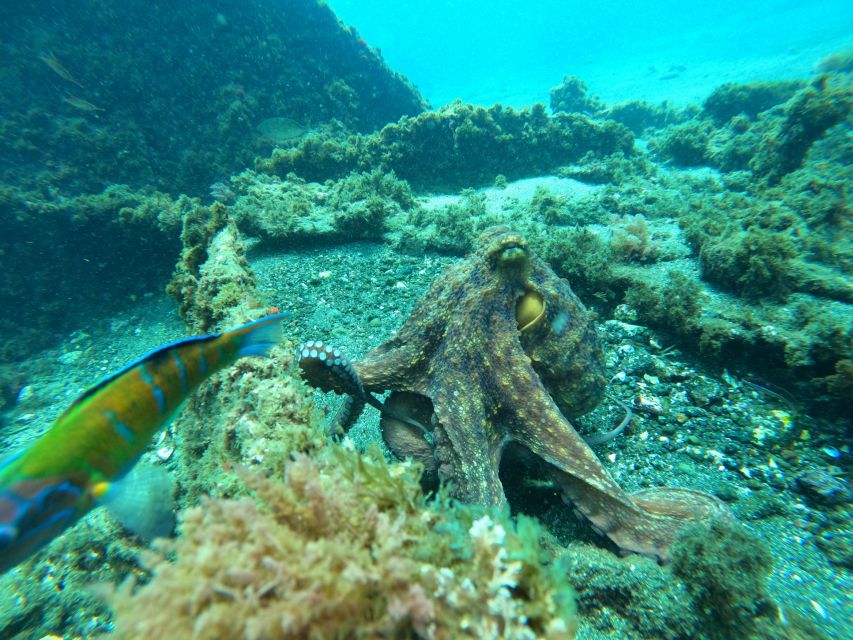
This experience is especially strong if you care about seeing real animal behavior instead of just “being underwater.” Feedback points to a lot of fish action, and also to occasional sightings that can surprise first-timers—people have reported seeing octopus, rays, and sea urchins during the underwater session. At this depth, you don’t need to hunt; you often just need to pause.
The instructors help with that. Local professionals show you the best spots, and that matters because the underwater archaeological park has specific features and angles. You’ll get guidance on where to look and how to position yourself near reef and wreck without stirring up silt or struggling against currents.
Here’s the simple strategy that usually pays off for first-time scuba: let your breathing guide you. If you’re breathing steadily and your buoyancy feels stable, you can afford to slow your head movements. That’s when fish show up, and that’s when you catch the little non-obvious moments—like an octopus tucked into a crevice or a ray gliding through your peripheral view.
Gear, safety, and the small-group advantage (10 participants max)
This is one of those activities where the “invisible” parts matter: gear rental, insurance, and instructor-to-student attention. You’re not expected to bring your own equipment. Equipment rental is included, and you’ll get an initial briefing plus instructor guidance throughout the Try-Scuba process.
Insurance is also included, which is a practical reassurance. And because the program is limited to 10 participants, you’re less likely to get lost in a big crowd. Smaller groups are usually where first-timers get the quick corrections—like how to adjust your movement, how to check your breathing pace, or how to interpret the communication signals.
The instructor language setup helps too. Instruction is available in Portuguese and English, which can reduce confusion right when you’re learning a new skill.
One more safety-and-comfort detail: the program isn’t designed for maximum thrill-seeking. It’s designed for controlled learning, with the underwater part kept within a shallow depth and a set time. That structure tends to keep first experiences smoother, because you’re not expected to improvise.
In feedback, some participants specifically praised feeling well looked after and safe at all times. When you’re first learning scuba skills, that feeling is everything. If you’re calm, you’ll see more, move better, and enjoy the shipwreck and marine life without fighting your own nerves.


Price and value: what $129 includes (and what you still need)
The listed price is $129 per person for a one-day Try-Scuba experience. On paper, that might sound like a “training cost.” In practice, a big part of the value is what’s wrapped into that number.
Here’s what you get included:
- Certified instructor coaching and initial briefing
- Insurance
- Equipment rental
- SSI certificate
You’re also paying for real instruction time: about 120 minutes learning fundamentals in a confined setting, followed by a supervised first underwater session (up to 8 meters and about 30 minutes).
That’s why the value feels reasonable. You’re not just paying for access to the underwater park—you’re paying for professional instruction, gear, and documentation through an SSI certificate. Those pieces matter if you’re planning to continue into Open Water Diver training.
What’s not included is simple: food and drinks. So bring a plan for meals around the experience. Also, the program doesn’t list transport help, so you’ll want to confirm how you’ll get to and from the Scubazores Divers shop at your travel pace.
Also worth noting for budgeting comfort: free cancellation up to 24 hours in advance and a reserve-now option with pay later can lower the risk of booking if your Azores schedule is still shifting.
Who should book this Try-Scuba on Terceira (and who shouldn’t)
This program is aimed at people who want a first underwater experience with a pathway toward certification. If you’ve never used scuba gear before, it’s a smart starting point, because the confined-water training teaches breathing, movement, and signals before you go to the shipwreck park.
It’s also a good fit if you learn best from hands-on guidance. The small-group format helps you get support when you’re learning how to stay buoyant and communicate underwater.
But it’s not suitable for everyone:
- Children under 8 years aren’t suitable
- Pregnant women aren’t suitable
If any of your travel crew fall into those categories, you might need an alternative activity that day.
What to bring so you’re not scrambling
Bring what the operator asks for:
- Towel
- Beachwear
- Child safety seat (if relevant for your situation)
And show up ready for wet gear and a training pace. Even though the underwater part is limited to shallow depth and a short time, you’ll still get the full “water day” experience.
Tips to get the most out of your first shipwreck session
You’ll have a better time if you treat this as skill practice, not a photo shoot or endurance event. The goal is to learn to breathe, move smoothly, and follow the instructor’s signals so you can relax and look around.
A few practical pointers:
- Expect a lot of coaching during the confined-water training. Pay attention early, because it directly affects how comfortable you feel underwater.
- Move slowly once you’re in the water. At shallow depth near a wreck, gentle movement helps you see more and avoid stirring up anything that blocks visibility.
- If underwater photos matter to you, plan ahead. At least one participant wanted an option to get photos afterward, so it’s worth asking the shop what’s available for keepsakes before you go.
Also, bring your energy. Some participants said the experience is suitable even with only a slight athletic ability. That’s a good sign: you’re not being tested like a gym class, but you do need to be comfortable enough to learn basic movements and follow instructions.
Finally, aim to keep your mindset simple. You’re there to learn weightlessness and enjoy the wreck-and-reef setting safely within the program limits.
Should you book Try-Scuba at the Lidador wreck?
I’d book this if you want a structured, instructor-led first scuba experience that takes you to a shipwreck setting without requiring advanced certification first. The combination of SSI Try Scuba, a confined-water skills session, and a supervised underwater visit to the Angra Bay archaeological park makes it a smart “start here” choice.
Skip it if you’re traveling with someone who doesn’t fit the stated limits (children under 8, or pregnancy), or if you’re mainly looking for lots of underwater photo support without needing to plan ahead.
If you’re on the fence, here’s the decision rule I’d use: if you want a guided introduction where safety, skills, and shallow time are built in, this is a strong choice for Terceira. And based on the strong 4.9/5 average rating from 30 learner reports, the overall experience quality seems consistently high.
FAQ
What is included in the Try-Scuba price?
The price includes a certified instructor, initial briefing, insurance, equipment rental, and an SSI certificate. Food and drinks are not included.
How long is the experience, and how much time is underwater?
The Try-Scuba training takes about 120 minutes in a confined water environment. After that, you’ll do a first underwater session of about 30 minutes under supervision, with a maximum depth of 8 meters.
Where do I meet for the activity?
You meet at the Scubazores Divers shop.
What languages will the instructors use?
Instructors provide instruction in Portuguese and English.
Is this a good activity for beginners?
Yes. Try-Scuba is designed as an entry-level introduction to scuba skills, including how to use equipment, breathe underwater, move underwater, and learn basic underwater communication signals.
What are the age and pregnancy requirements?
The activity is not suitable for children under 8 years old and not suitable for pregnant women.
What should I bring with me?
Bring a towel and beachwear. A child safety seat is listed as something to bring.