REVIEW · MADEIRA
Funchal: Scuba Diving Experience for Beginners
Book on Viator →Operated by Madeira Divepoint · Bookable on Viator
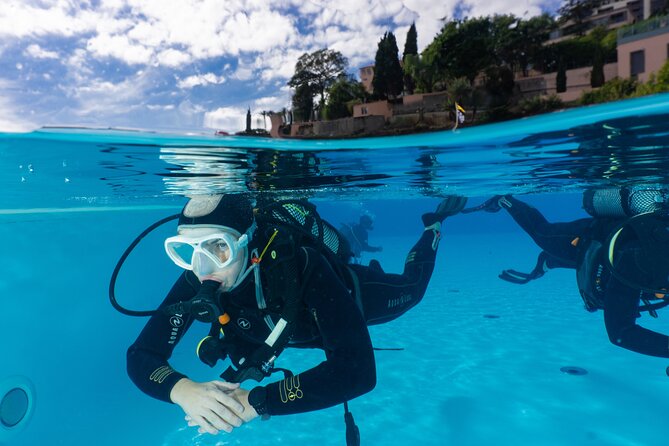
First scuba starts with pool breathing. In Funchal, you learn the basics with a PADI instructor and then head to a private reef for your first look at Madeira’s Atlantic life.
I love that the setup is aimed at true beginners, with step-by-step practice before you ever go out. A possible drawback: the sea part depends on conditions, and first-timers can feel pressure in their ears if they do not equalize calmly.
In This Review
- Key things to know before you go
- Where you start in Funchal (and why the location helps)
- The 3-hour flow: briefing, pool skills, then a shallow reef swim
- Pool session basics: breathing, buoyancy, and getting your body calm
- Your first sea moment: a private reef with coral and fish
- A practical reality check
- Safety and ear equalization: the one skill you should take seriously
- Equipment, cleanliness, and what to expect in the gear area
- Value for money: what your $54.31 actually covers
- Timing, weather, and group size in Funchal
- Who this is best for (and who should think twice)
- The “should I book it?” decision
- FAQ
- How long is the scuba experience in Funchal?
- What’s the minimum age to participate?
- Is hotel pickup included?
- Is the experience offered in English?
- Do I need to avoid flying after the ocean session?
- What happens if the tour can’t run due to poor weather?
Key things to know before you go
- Pool practice first: you’ll get used to the regulator, breathing rhythm, and buoyancy before the ocean session.
- Small group size: up to 8 travelers, which matters when you’re learning and need quick feedback.
- A guided reef swim at Madeira Divepoint: the meeting site has its own private reef area for the shallow experience.
- Instructor support in real time: the standout theme in feedback is patient guidance when nerves or equipment moments show up.
- Weather matters: the experience requires good weather, and you’ll either move dates or get a full refund if it can’t run.
Where you start in Funchal (and why the location helps)
You meet at Madeira Divepoint’s base at Largo Antonio Nobre 1, by Hotel Carlton in São Martinho, Funchal. This matters more than you’d think. Being at a purpose-built training spot means you can move from briefing to gear to pool practice without turning the morning into a half-day travel puzzle.
The facility also sets expectations right away: you’re not just changing costumes and hoping for the best. You’re learning in a pool environment first, with showers and changing areas that many first-timers found clean and comfortable. That kind of practical comfort is not glamorous, but it helps you focus on the skills you’re actually there to learn.
You can also read our reviews of more scuba diving tours in Madeira
The 3-hour flow: briefing, pool skills, then a shallow reef swim
This experience runs about 3 hours. That time is tight, so it works best when you show up ready to pay attention and repeat the exercises until they feel natural.
A typical flow looks like this:
- Start with an introduction and safety briefing at the meeting point.
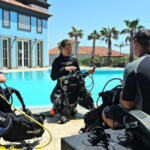
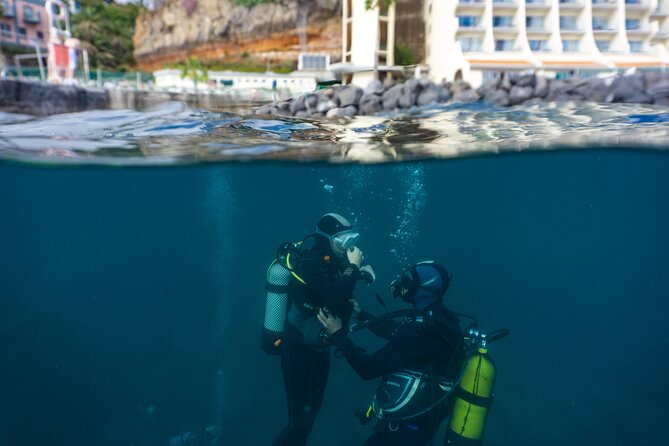
- Pool session to practice breathing, floating, and basic control with your equipment.
- Ocean session (for eligible ages) to apply those skills around a shallow reef area near Madeira Divepoint.
You’ll go from learning how your body behaves underwater to actually using that control in a real environment—without skipping the training step. For beginners, that structure is the whole point.
One detail to keep in mind: pool vs ocean eligibility. The pool session is from 8 years and up, while the ocean portion is 10 years and older.
Pool session basics: breathing, buoyancy, and getting your body calm
In the pool, your main job is to build confidence, not to swim across the planet. You’ll practice:
- Breathing through the regulator (mouth breathing can feel very different at first).
- Floating and basic positioning so you don’t feel like your body is fighting you.
- Using your buoyancy rather than flailing with your hands.
If you’re new, the pool is also where you’ll discover the two biggest beginner surprises:
1) Equipment changes your breathing rhythm. It’s not like regular air in your lungs.
2) Buoyancy feels weird until it doesn’t. The goal is to learn what small adjustments do, not to force movement.
In the feedback I reviewed, many first-timers said the instructors were friendly, patient, and very practical about troubleshooting. One example that stood out: when water leakage or panic moments showed up, the instructor brought the diver back up and calmly reset the plan. That’s a key benefit for you: you’re learning under supervision, when “I’m not sure” is still an acceptable sentence.
Your first sea moment: a private reef with coral and fish
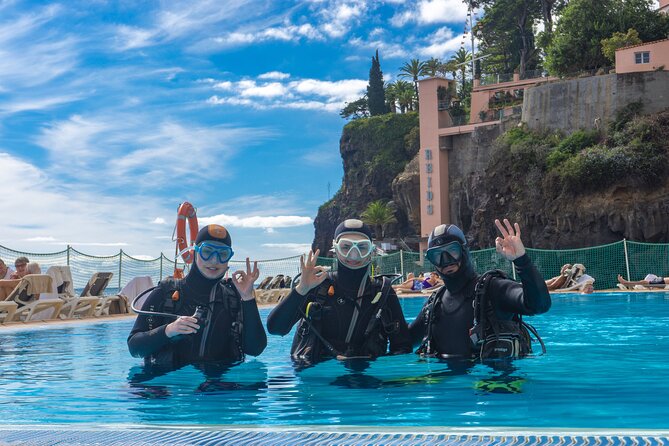
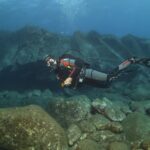
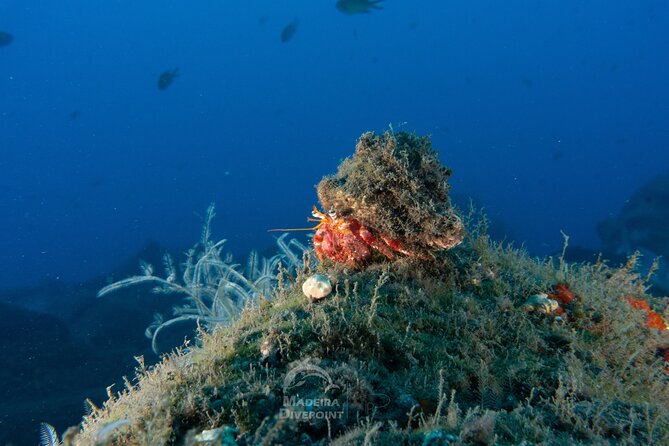
After the pool work, you head out to explore one of the shallow reef areas connected to Madeira Divepoint. This is the part where the training turns into the payoff: you get your first real look at Atlantic marine life at a level beginners can handle.
What you’re likely to see:
- Colorful fish moving around the reef
- Coral formations
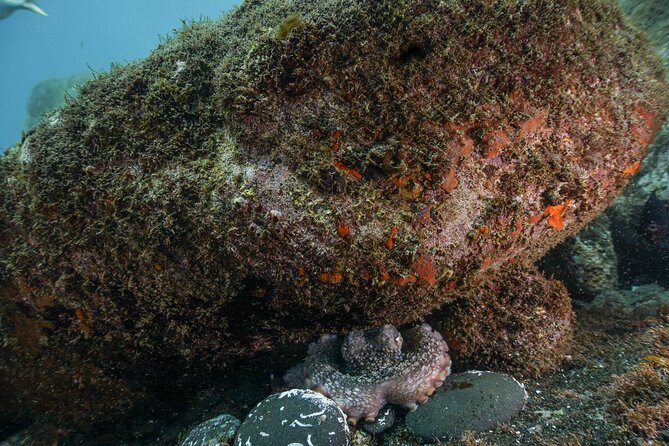
- Possible sightings like octopus (not guaranteed, but it came up in the experience feedback)
Because it’s shallow and beginner-oriented, you’re not hunting for a deep-adventure thrill. Instead, you’re learning how to observe while staying calm and controlled. Think slow, look around, breathe normally, and let the reef come to you.
A practical reality check
Sea conditions can change fast. Stronger waves can mean more movement and easier fatigue. Visibility can also vary. If you tend to get motion sick, the ocean part is the time to be extra upfront with your instructor before you’re already in the water.




Safety and ear equalization: the one skill you should take seriously
The safety briefing covers the big risks and how to respond. For beginners, two things matter most:
- Equalizing your ears as you go down
- Controlling descent pace so your body stays comfortable
Equalization is a personal skill. Some people feel comfortable quickly. Others feel pressure sooner and need more patience, slower movement, or more repetition of the technique.
One negative experience in the feedback described significant ear pain during the sea portion when equalization was difficult and the pace felt too fast. That story isn’t there to scare you—it’s a reminder to plan for your ears. If you know you have sensitive ears or a history of sinus trouble, you should treat this as your first priority.
Here’s the practical way to handle it:
- Tell your instructor early if you’re feeling pressure.
- Don’t try to “tough it out” underwater.
- If you’re still unsure, ask for more time practicing the technique in the pool before going out.
Good instruction turns equalization into something you can manage. Rushed or silent discomfort is where experiences go sideways.
Equipment, cleanliness, and what to expect in the gear area
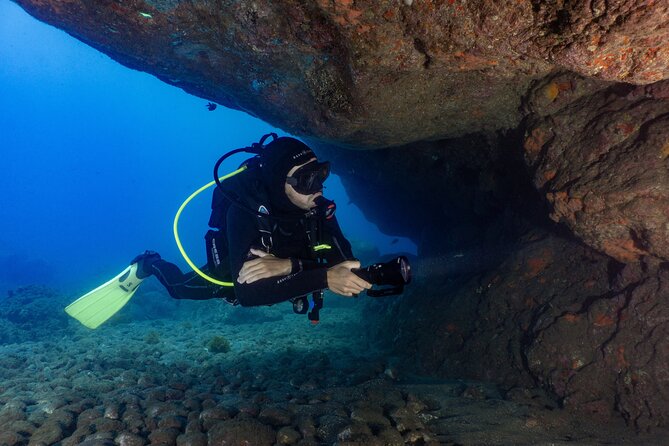
You’re provided with scuba equipment and use of that equipment is included. Reviews also suggest that while equipment may not be brand-new, it is clean. In other words: you’re not walking into a dusty, mystery-gear situation.
Comfort tips that matter:
- Arrive with a clear plan for changing quickly and keeping your hands free.
- Use the time before the pool to confirm fit and comfort (mask and regulator comfort can prevent stress later).
- Plan on getting wet. This is the sea version of learning, not a showroom trial.
One small comfort detail from the feedback that I really like: hot water in the showers and a clean pool area. That means you can wash up properly afterward without turning the rest of your day into a cold, miserable slog.
Value for money: what your $54.31 actually covers
At $54.31 per person for about 3 hours, this price can feel surprisingly reasonable—especially because the included items are the expensive parts for beginners. You get:
- Scuba equipment
- A PADI instructor
- Safety and training session
- Full insurance
- A sea dive/sea session only when the ocean option is selected
What’s not included:
- Hotel pickup and drop-off
- Food and drinks
So how is it good value? You’re paying for trained supervision and equipment time. If you have to rent gear plus pay an instructor plus buy basic accident coverage separately elsewhere, the cost adds up fast. Here, those core pieces are bundled.
The main value risk is your personal comfort. If you need extra practice time in the pool for buoyancy confidence, you’ll want to communicate that early so you don’t feel rushed into the ocean portion.
Timing, weather, and group size in Funchal
This experience is offered in English, and confirmation is received at booking. On average, it’s booked about 24 days in advance, which is a hint that you’ll want to lock your preferred time rather than hoping for last-minute openings.
It also runs only when conditions allow. The operator requires good weather. If it’s canceled due to poor weather, you’ll be offered a different date or a full refund.
Also watch the timing rule after your session: no flying for 12 hours after the sea session. That’s not meant to ruin your trip—it’s a safety rule. If you’re planning to fly the same day, shift your schedule so you’re not pressured.
Finally, the group cap is 8 travelers. Small groups usually mean better attention. That said, if you’re one of the people who needs extra coaching time to get comfortable, you should be ready to speak up. Learning can be slower for some bodies than others.
Who this is best for (and who should think twice)
This is designed as an intro to scuba for anyone 10 years and older for the ocean portion, and 8+ for the pool portion. It’s especially suited for you if:
- You want a first-timer experience with structured training
- You like clear guidance and practice-based learning
- You’re curious about coral and fish around a shallow reef
You might want to think twice—or at least prepare with extra care—if:
- You’re prone to ear pain or pressure during equalization
- You get motion sick in waves
- You want more time than the standard pool session to feel steady before going into the sea
The best beginners don’t pretend they feel fine. They tell the instructor what’s happening fast, so adjustments can be made before discomfort becomes a problem.
The “should I book it?” decision
I’d book this if you want a structured, beginner-friendly introduction in Funchal where instruction is the headline, not just the ocean time. The combination of pool training, PADI-led safety, full insurance, and a shallow reef experience is a solid setup for learning without guessing.
I would also go in with two mindset tweaks:
1) Treat the pool as the main event. The ocean part is where it pays off.
2) Protect your ears. Tell your instructor early and ask for pacing that feels comfortable.
If you can do those two things, this has the ingredients for a genuinely memorable first scuba experience in Madeira.
FAQ
How long is the scuba experience in Funchal?
It lasts about 3 hours.
What’s the minimum age to participate?
The pool session is for ages 8 and up. The ocean session is for ages 10 and up.
Is hotel pickup included?
No, hotel pickup and drop-off are not included.
Is the experience offered in English?
Yes, it’s offered in English.
Do I need to avoid flying after the ocean session?
Yes. You must not fly for 12 hours after diving/your sea session.
What happens if the tour can’t run due to poor weather?
The experience requires good weather. If it’s canceled for weather reasons, you’ll be offered a different date or a full refund.