REVIEW · LISBON
2 Hours Sailing Tour in Lisbon
Book on Viator →Operated by Bloo Boat Charter · Bookable on Viator
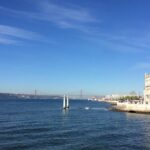
Sail Lisbon without the uphill sweat. On a two-hour Tagus cruise out of Belém, you’ll score close-up photos of major landmarks like the 25 de Abril Bridge and Cristo Rei, all from the water instead of the crowds and hills. One catch: this sailing is weather dependent, so have a flexible plan if conditions don’t cooperate.
What I like most is the small-group feel. With a maximum of 12 travelers, the captain and mate can keep the pace relaxed and answer questions as you pass big sights, while you enjoy the welcome drink and light snacks onboard.
In This Review
- Quick things you’ll notice on this Tagus sail
- Tagus sailing in 2 hours: the quick win
- Meeting at Doca do Bom Sucesso and what the boat day feels like
- Belém’s age of discoveries: the Infante Dom Henrique monument and more
- Central Tejo to MAAT: Lisbon’s old power plant becomes art
- Jerónimos to the 25 de Abril Bridge: classic sights with photo angles
- Praça do Comércio to Alfama, then Cristo Rei’s open-armed finale
- Should you book this 2-hour Lisbon sailing tour?
- FAQ
- How long is the sailing tour?
- Where does the tour depart from?
- Is the tour offered in English?
- What’s included, and are meals provided?
- What landmarks will I see on the route?
- How many people are in the group?
- Are service animals allowed?
- What if the weather is bad or the tour needs to be canceled?
Quick things you’ll notice on this Tagus sail
- Belém start, easy transit access: You’re departing from Doca do Bom Sucesso, near public transportation.
- Landmarks from a smart angle: You’ll see MAAT, Jerónimos, and the bridge approaches with the river as your “view deck.”
- Discovery-era storytelling: The route focuses on the Age of Discoveries monuments right by the water.
- A comfortable 2 hours: Long enough to feel like a real outing, short enough to fit any itinerary.
- Family-friendly crew energy: Multiple departures have been praised for working well with kids and keeping the atmosphere calm.
Tagus sailing in 2 hours: the quick win
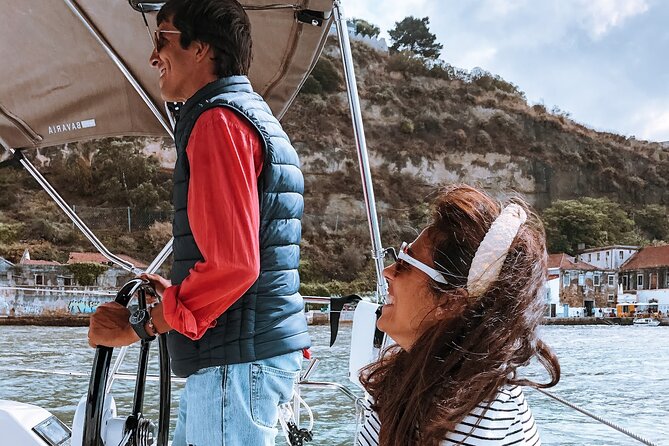
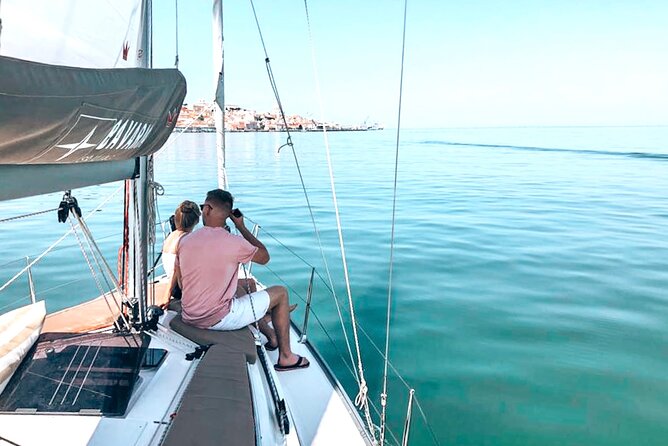
If Lisbon feels like a “steps or stairs” kind of day, this is your reset. Two hours on a sailboat (on a river, not the open sea) is a simple way to experience the city’s scale and shape—wide water, steep hills, and landmarks that look different when you’re level with them.
For about $36.04 per person, you’re paying for real boat time plus the stuff that actually matters on the water: crew, fuel, insurance, and a welcome drink with light snacks. Since meals aren’t included, it works best as either a morning activity before food plans or an afternoon outing that pairs with lunch nearby (Belém has plenty of options).
The sweet spot here is pacing. You’re not trying to cram every neighborhood into one day. Instead, you get a focused ribbon of Lisbon along the Tagus, with just enough commentary to help you connect what you’re seeing to why it exists.
Small groups also make a difference. When you’re not packed in, you can move for photos, watch the water, and still hear the explanation without yelling over strangers.
You can also read our reviews of more boat tours in Lisbon



Meeting at Doca do Bom Sucesso and what the boat day feels like

This sails from Bloo Boat Charter at Doca do Bom Sucesso, gate 3, 1400-038 Lisboa. It’s a straightforward spot to find, and it’s close to public transportation—important in a city where getting from “great view” to “still-not-lost” can be its own workout.
You’ll have a mobile ticket, and the tour runs in English (with crew who also speak Portuguese, French, and Spanish). That matters more than you’d think on a guided sailing, because the best parts of the route are the details: who built what, why the architecture is where it is, and what the bridge and waterfront areas used to do.
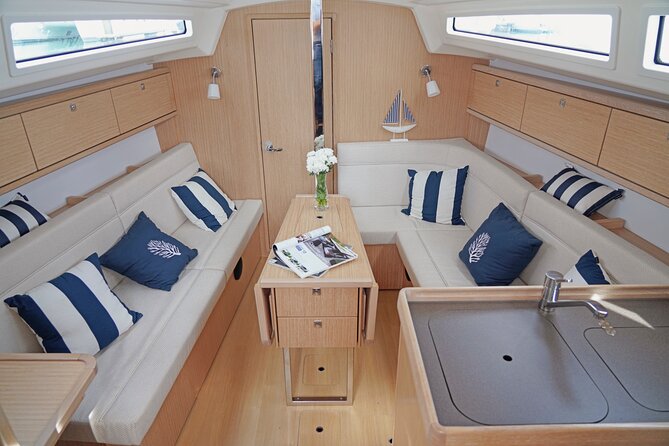
Onboard, plan for a relaxed setup. You’ll have time for photos without the frantic “stand here, smile, move on” vibe. Reviews also mention practical comforts like space below deck for bags, a toilet, and even blankets for cooler weather. If you run cold easily, bring a layer anyway—river air can be sneaky.
Also, note the headcount. This experience caps at 12 travelers, and it’s often described as a good fit for families. If you’re traveling with kids, this kind of group size usually makes it easier for the crew to keep everyone comfortable.
Belém’s age of discoveries: the Infante Dom Henrique monument and more
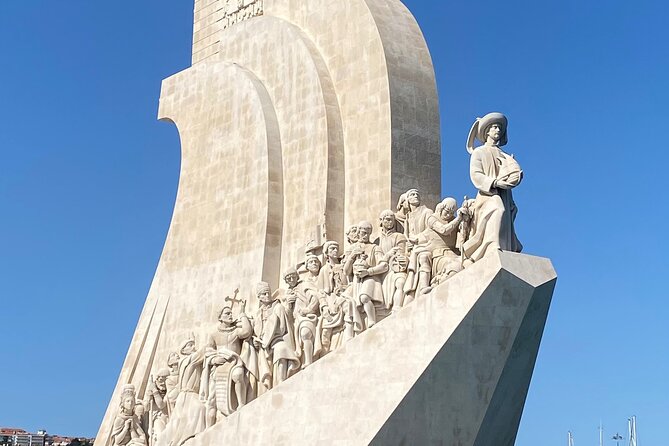
Right after departure, you’re in Belém’s signature zone: memorials and architecture tied to Portugal’s maritime history. One of the first big sights is the National Monument to Infante Dom Henrique (the Navigator). The design is credited to Cottinelli Telmo, and the sculptures are by Leopoldo de Almeida. What you’re looking at isn’t just a statue—it’s built as a whole scene.
The Navigator holds a model of a caravel, and along the ramps there are 32 figures representing key moments from the history of the discoveries. From the river, that layout is easier to “read” than from street level because you get a clean view of the monument’s form and the surrounding waterfront.
Just down the waterline, you’ll also pass a site connected to an earlier layer of naval departures. There’s a spot described as being on a rocky outcrop opposite the old beach of Belém. It was meant to replace an older artillery ship anchored nearby—the stretch is tied to fleets departing for the Indies. The works were associated with Diogo Boitaca, who was also involved in the neighboring Jerónimos Monastery at the time. From the boat, it helps you understand how this coastline functioned: not only as a setting for big buildings, but as working infrastructure.
What this section gives you is context. You start by seeing monuments, but you quickly get the sense that Belém’s waterfront is basically a timeline. If your day starts with the water instead of walking, you’ll understand more when you later visit the areas on land.
Potential downside: because this is a river route, visibility can vary with light, wind, and water conditions. If it’s very bright, photos can be glare-heavy. If it’s overcast, details can look sharp. Either way, you’ll get a better result by aiming photos from the river side when the guide pauses the commentary for sightlines.
Central Tejo to MAAT: Lisbon’s old power plant becomes art
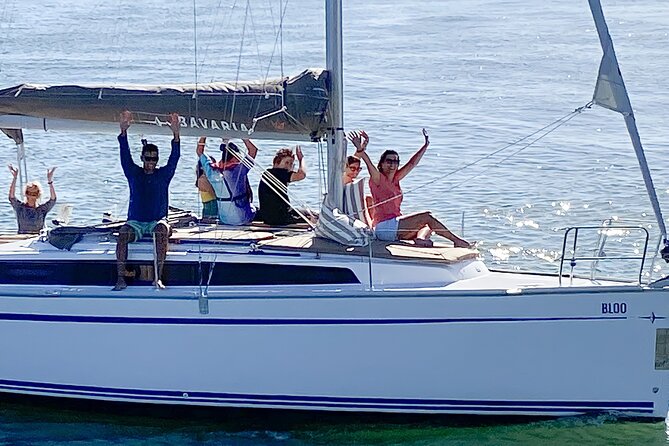
Next comes one of Lisbon’s smartest “wait, what am I looking at?” buildings: Central Tejo. This structure—also called Central Tejo—was built between 1908 and 1951 and functioned as a thermoelectric power station supplying electricity to Lisbon. It’s a standout example of early 20th-century industrial architecture in Portugal, and from the Tagus you see why it belongs on a “Lisbon from the river” route.
Now connect that old function to the present. Close by is MAAT (Museum of Art, Architecture and Technology). MAAT is a contemporary art museum housed in a building classified as a Property of Public Interest, and it actually combines two parts: the old Central Tejo and a new building. So as the boat passes, you get an instant contrast: utility architecture turned cultural space.
This is the kind of stop that makes the cruise feel more than scenic. The river becomes a “divider” between old Lisbon and renewed Lisbon. If you enjoy modern design or you’re the type who likes to understand how cities reuse big structures, this is a strong segment of the tour.
The value here is time. You’re not spending extra hours hopping between areas. You’re getting architecture context in motion, which pairs perfectly with the classic Belém buildings later on.
One thing to keep in mind: with any sight-from-the-water tour, you won’t have inside access to MAAT during the sailing itself. But the external views are the point—watch for the way the museum’s forms relate to the industrial shapes around it.
Jerónimos to the 25 de Abril Bridge: classic sights with photo angles
Then you’re in the zone where postcards turn into real places: the Jerónimos Monastery. Also known as the Monastery of Santa Maria de Belém, it was built in the late 15th century by King Manuel I. It became a National Monument in 1907, later gained UNESCO World Heritage status in 1983 (with the Belém Tower), and in 2007 it was elected one of the Seven Wonders of Portugal.
From the water, you see Jerónimos as mass and detail at the same time. Street-level views can be crowded and vertical; from the Tagus, the perspective gives you breathing room. Even if you know Lisbon’s main sights already, this angle tends to refresh them.
From there, the cruise moves into the iconic engineering moment: the 25 de Abril Bridge. It’s a road-rail suspension bridge over the Tagus connecting Lisbon (north bank) to Almada (south bank). The name changed after 1974—it was called Ponte Salazar until the revolution of 25 April 1974. Work began in 1962, and the bridge opened in 1966.
This is often where you’ll want to slow down for photos. You’ll see the bridge in a way that’s hard to replicate from land because the river gives you depth. If you like photography, this is the segment you’ll keep checking.
How to make the most of it:
- Watch the guide for when the boat lines up for the best sightline.
- Take a few wide shots first, then grab the tight details.
- Keep a layer ready; bridge wind can change fast even when the day is mild.
After the bridge, the route keeps sweeping you through Lisbon’s historic spine, which brings us inland—still from the water.
You can also read our reviews of more sailing experiences in Lisbon




Praça do Comércio to Alfama, then Cristo Rei’s open-armed finale

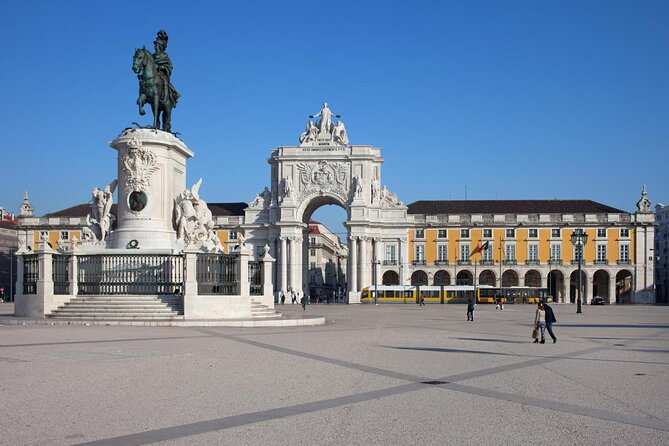
As the boat heads toward downtown, you’ll pass Praça do Comércio (Terreiro do Paço). This huge square once held the royal palace for about two centuries. Today, parts of it are home to government departments, but its big draw is its relationship to the river. It was the grand, “noble entrance” to Lisbon.
In the center, look for the equestrian statue of D. José, erected in 1775 by Joaquim Machado de Castro. On the north side is the Arco Triunfal da Rua Augusta, the entrance into downtown. From the water, the place reads like a stage—columns, marble steps, and the sense that this is where visitors arrived.
Next up is the Cathedral of Lisbon, also called Church of Santa Maria Maior or Sé. Construction began in the second half of the 12th century after Lisbon was taken from the Moors by D. Afonso Henriques. The cathedral’s façade is a mix of architectural styles, and it’s been a National Monument since 1910. Passing it by river makes it easier to spot how time layers different styles on the same site.
Then comes Alfama, the oldest and one of the most typical Lisbon neighborhoods. The name comes from Arabic al-hamma, meaning source of warm waters. It’s known for restaurants and fado houses, plus its role in Santos Populares, especially the night of Santo António (12–13 June).
From the water, you’re not walking Alfama’s lanes, but you’ll see the neighborhood’s hillside structure and density. It’s a great reminder that fado isn’t just a show here—it’s tied to a place with a long memory and steep streets.
Finally, the cruise ends with a view that feels big and symbolic: Cristo Rei. The National Sanctuary of Cristo Rei sits about 133 meters above the Tagus. It includes a portico designed by António Lino (75 meters high) and the statue of the Holy Redeemer with open arms facing Lisbon. The statue is 28 meters high and was made by Portuguese sculptor Francisco Franco de Sousa.
Seeing Cristo Rei from the Tagus gives you the “why” of its placement. It’s built to face the city, and from the water you get that direct alignment. It’s the kind of ending that makes the whole route feel complete: discovery monuments, engineering, downtown power, and then a religious landmark that anchors the skyline.
Should you book this 2-hour Lisbon sailing tour?
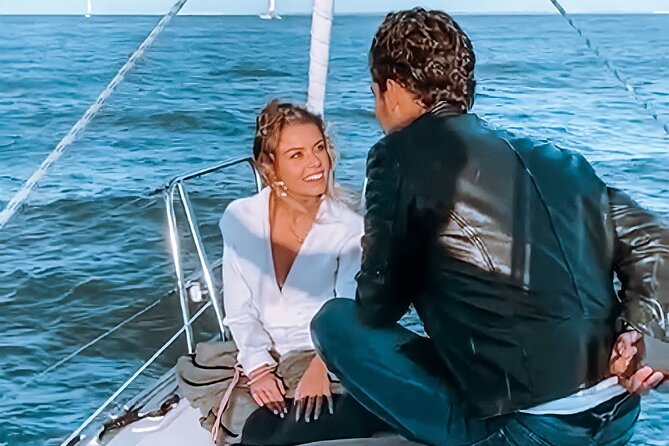
Book it if you want an easy, memorable Lisbon day that doesn’t require planning six different transit hops. This is a smart fit for first-timers who want big landmarks in a short time, and for families who appreciate a calmer pace and crew that can handle kids well.
I’d especially consider it if you care about photos. The river views of the 25 de Abril Bridge and the Cristo Rei alignment are the kind of angles that feel “worth it” even when you’re not trying to do an all-day tour.
Skip or rethink it if you’re the type who wants long time on foot exploring interiors. This sailing is about views and context, not museum time or strolling neighborhoods for hours. Also, because it requires good weather, keep one flexible option in your schedule.
If you’re deciding between doing this cruise early or later: do it early. Seeing the city from the water first helps everything else make more sense afterward.
FAQ
How long is the sailing tour?
The tour lasts about 2 hours.
Where does the tour depart from?
It starts at Bloo Boat Charter, Doca do Bom Sucesso, gate 3, 1400-038 Lisboa, Portugal, and returns to the same meeting point.
Is the tour offered in English?
Yes. The experience is offered in English.
What’s included, and are meals provided?
Included are all fees and taxes, insurance, crew, fuel, a welcome drink, light snacks (peanuts, cashews, fried corn). Meals are not included.
What landmarks will I see on the route?
You’ll pass major sights along the Tagus, including the Infante Dom Henrique National Monument, Central Tejo/MAAT, Jerónimos Monastery, 25 de Abril Bridge, Praça do Comércio, the Cathedral of Lisbon (Sé), Alfama, and Cristo Rei.
How many people are in the group?
This activity has a maximum of 12 travelers.
Are service animals allowed?
Yes, service animals are allowed.
What if the weather is bad or the tour needs to be canceled?
This experience requires good weather. If canceled due to poor weather, you’ll be offered a different date or a full refund. Free cancellation is available up to 24 hours in advance for a full refund.