REVIEW · LISBON
Tour Évora and Alentejo in a private tour
Book on Viator →Operated by Kitzel Tours Portugal · Bookable on Viator
Évora packs real surprises into one day. This private trip pairs a cork-factory lesson with UNESCO streets and major monuments, plus round-trip pickup from Lisbon.
I especially love two parts: the hands-on cork education at Corticarte, and the way the guide guides you through the Chapel of Bones without turning it into a scare tactic. It’s also easy to slow down, ask questions, and keep the day feeling personal.
One thing to watch: you’re signing up for a long day that includes substantial driving, and a few key stops have extra entrance costs (plus lunch is on you).
In This Review
- Key highlights at a glance
- Why this private Évora day feels different from a rush tour
- Lisbon pickup and the real rhythm of a 9-hour day
- Corticarte cork factory: what you actually learn (and why it’s more fun than it sounds)
- Entering Évora’s UNESCO historic center: Roman roots inside medieval walls
- The Água de Prata aqueduct: Renaissance water engineering you can still track
- Capela dos Ossos (Chapel of Bones): intense, but framed for reflection
- Churches, convents, and Manueline details: São Francisco and the Graça complex
- Igreja de São Francisco
- Convento/Church of Nossa Senhora da Graça
- Praça do Giraldo: the square that anchors the whole town
- Temple of Diana, Cathedral of Évora, and ending in Diana’s Garden
- Templo Romano de Évora (Temple of Diana)
- Cathedral of Évora (Se Catedral de Évora)
- Diana’s Garden
- Food and pacing: how to handle lunch without getting rushed
- Price and value: $169.31 for a guided day that actually covers the ground
- Who should book this private Évora and Alentejo day?
- Should you book this Évora private tour from Lisbon?
- FAQ
- How long is the private Évora and Alentejo tour?
- What time does the tour start, and where do we meet?
- Is pickup and drop-off included?
- Is this tour private or shared with other groups?
- What language is the guide?
- What’s included in the tour price?
- What is not included?
- Are tickets included for the Chapel of Bones and the cathedral?
- Is the tour ticket mobile, or do I need to print something?
- What if I need to cancel?
Key highlights at a glance
- Corticarte cork factory: learn how cork oak bark becomes finished products, not just wine stoppers
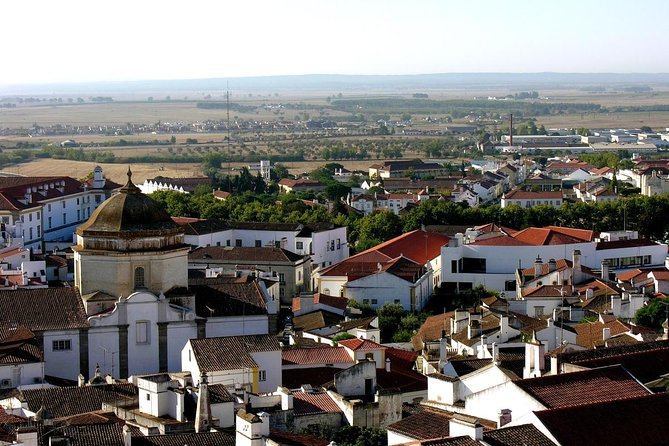
- UNESCO Historic Center: narrow lanes and white houses inside the old medieval walls
- Capela dos Ossos: human-bone chapel that’s dark, but also thoughtfully framed
- Roman + Renaissance engineering: Temple of Diana views plus the Agua de Prata aqueduct story
- Cathedral time inside: granite Romanesque-to-Gothic details and serious architecture up close
- Private pacing: your guide adjusts the flow so the day doesn’t feel like a checklist
Why this private Évora day feels different from a rush tour
Évora isn’t a place you “zip through.” It’s made for stopping. The old city sits inside medieval walls, and when you walk those tight lanes—white buildings, tiled façades, wrought-iron balconies—you feel how layers of centuries are still visible.
With a private guide, you’re not just looking at monuments. You’re learning how they connect: Roman-era importance, medieval power, and later Renaissance building all show up in the same neighborhoods. The guide also has the freedom to steer the pace to your interests, which is a big deal when you’re spending most of a day outside Lisbon.
And yes, this route has a very practical hook: you’ll understand cork in a way that sticks long after you’ve left. Then you’ll see how the city’s architecture tells its own story.
You can also read our reviews of more private tours in Lisbon


Lisbon pickup and the real rhythm of a 9-hour day
Start time is 8:30am, and pickup is from your accommodation (including Porto de Cruzeiros as listed by the operator). The tour runs about 9 hours, which is why this works best when you’re ready for a full, structured day.
Expect travel time to matter. One guide-led route from Lisbon to Évora is commonly around an hour and a half each way, so you’ll likely spend a good chunk of the day on the road before you even begin the sightseeing. That’s the tradeoff for not having to plan transportation yourself.
My practical tip: treat this like a day trip, not a quick outing. Wear comfortable shoes (you’ll be walking in historic streets), bring water for warmer days, and keep your expectations on “efficient and guided,” not “slow wander with no schedule.”
Corticarte cork factory: what you actually learn (and why it’s more fun than it sounds)
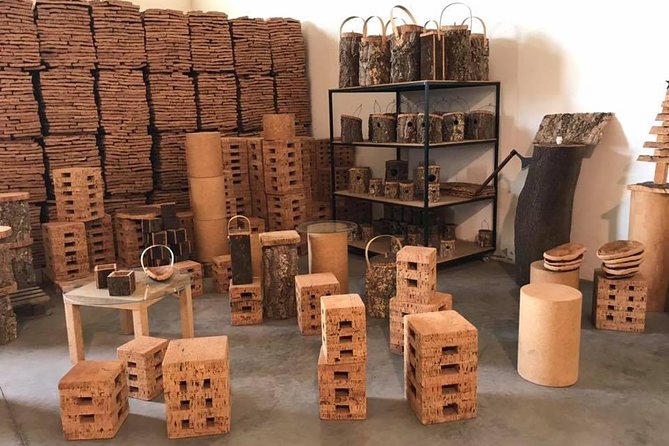
The tour begins at Corticarte – Arte em Cortica, a traditional cork factory visit that lasts about 1 hour. The best part is that you don’t just see finished souvenirs—you learn the full chain from tree to product.
Here are the cork details that make the visit memorable:
- Cork comes from the cork oak (sobreiro), and the bark grows back.
- The bark is removed about every nine years, reaching roughly 25 centimeters thick.
- Cork is valued because it’s resistant to heat, cold, and fire.
- Portugal produces about 55% of the world’s cork, and it shows up in more than just wine corks.
- Cork’s big wine role: it allows tiny oxygen exchanges so wine can age while maintaining quality.
You also get a sense of how broad the applications are—decorative wall/floor coverings, sports equipment, and everyday products—so cork feels less like a novelty and more like real Portuguese industry.
This stop has free admission, which makes it an especially strong value add. It’s also frequently the surprise favorite: even if you think you know cork, the process is oddly fascinating.
Entering Évora’s UNESCO historic center: Roman roots inside medieval walls
After the factory, you head to the Centro Histórico de Évora, the walled, “inside-the-walls” historic area. This UNESCO-listed core dates back to Roman roots and later absorbs many influences: Celts, Romans, Arabs, Jews, and Christians.
A few specifics help you understand what you’re seeing:
- The historic center covers about 107 hectares.
- It’s clearly defined by medieval walls measuring over 3 km.
- Évora’s “golden age” arrived in the 15th century, when it became a residence of Portuguese kings.
The guide uses this setting well. In about 45 minutes, you get oriented quickly: which streets matter, what to notice in façades, and how the layers of history show up in what looks like an ordinary corner.
My takeaway: UNESCO can feel like a label. Here it’s more like a map. Once you understand the walls and the layers, you stop treating the town like a postcard.
The Água de Prata aqueduct: Renaissance water engineering you can still track
One of the quieter—but really satisfying—stops is the Água de Prata Aqueduct (Aqueduto da Água da Prata). Plan about time on site as part of the city walk, and use the stop to train your eyes: aqueducts are hard to “see” unless someone helps you read them.
Key facts to listen for from your guide:
- It’s Renaissance hydraulic engineering built to supply water to Évora.
- Inaugurated in 1537, built during King João III’s reign.
- Designed and built by royal architect Francisco de Arruda.
- It transports water from springs in Graça do Divor, near the São Bento de Castris Convent area.
- The system covers about 18 km.
This is one of those details that makes your walk feel smarter. You stop thinking of Évora as only medieval stone and start seeing it as a functioning, maintained city with serious infrastructure.




Capela dos Ossos (Chapel of Bones): intense, but framed for reflection
Then comes the stop many people remember: the Chapel of Bones. It takes about 30 minutes and has an extra admission (not included).
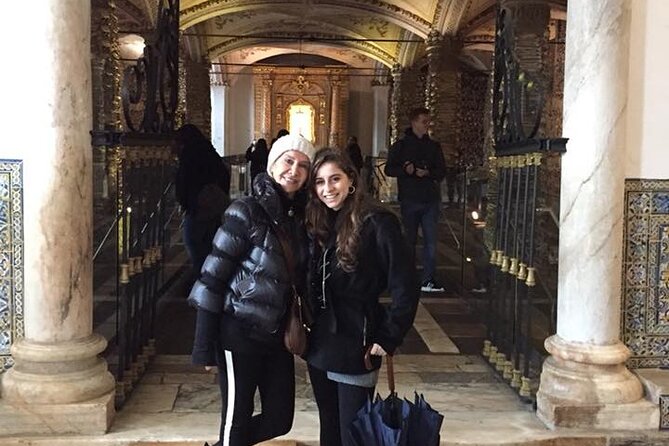
What makes it worth going isn’t just the shock value. The chapel is estimated to involve remains of more than 5,000 monks, and the message at the entrance sets the tone: you’re nudged toward thinking about life and mortality, not just staring at decoration.
Practical consideration: if you’re sensitive to morbid displays, this is the moment you’ll feel it most. I’d still recommend it for most people, but come in prepared. The guide’s framing matters here.
Churches, convents, and Manueline details: São Francisco and the Graça complex
Évora’s church architecture is the kind of thing you’d miss without someone pointing it out. Two stops hit this nicely:
Igreja de São Francisco
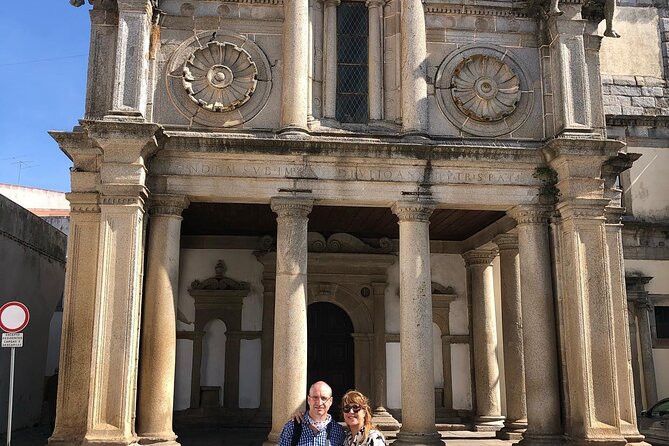
This is a Gothic-Manueline church built between 1480 and 1510. The stone masters listed for the build are Martim Lourenço and Pero de Trilho, and it’s decorated by royal painters Francisco Henriques, Jorge Afonso, and Garcia Fernandes.
A key visual cue is the symbolic language inside the monumental nave:
- the cross of the Order of Christ
- emblems connected to founding kings D. João II and D. Manuel I
Plan around 20 minutes, and note that admission is free for this stop.
Convento/Church of Nossa Senhora da Graça
This Renaissance monument (founded 1511) is associated with hermit monks of Saint Augustine and designed by architect Miguel de Arruda.
What you’ll likely hear about: the façade includes the famous Atlantean figures, nicknamed the Meninos da Graça. They look playful at first glance, but they’re also part of a serious Renaissance statement.
Timing here tends to be shorter (about a stop along the route), but it’s the kind of place where the photos don’t capture the first glance at the scale.
Praça do Giraldo: the square that anchors the whole town
If you want a quick way to feel how Évora’s streets connect, anchor yourself in Praça do Giraldo. It’s the central square people use as a reference point, and it’s tied to local legend and power shifts.
This square has been associated with the city since 1571/1573, and it’s named in homage to Geraldo Geraldes, Sem Pavor, the figure said to have conquered Évora from the Moors in 1167. He was then appointed mayor and frontier leader of Alentejo by D. Afonso Henriques.
It’s a short stop—about 15 minutes—but it helps you understand where you are and why the town feels organized around a center.
Temple of Diana, Cathedral of Évora, and ending in Diana’s Garden
This is where Évora turns from “historic town” into “architectural storybook,” and it happens fast.
Templo Romano de Évora (Temple of Diana)
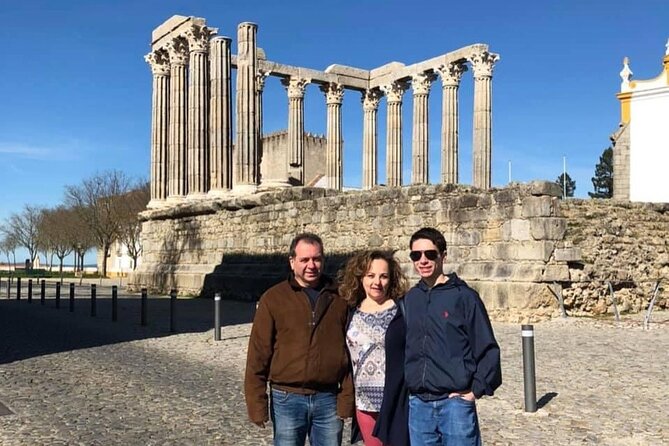
This Roman temple sits next to the cathedral area and gives you a strong sense of why Évora mattered to the Romans. It also lines up with the bigger water story—your guide points out the aqueduct of the Water of the Silver (with arches still visible inside the city).
Admission is free here, and expect about 15 minutes.
Cathedral of Évora (Se Catedral de Évora)
The cathedral is the big-ticket monument stop in many minds, but it still moves at a comfortable pace with a guide.
Listen for the timeline:
- construction began 1186
- consecrated 1204
- completed 1250
- built in granite
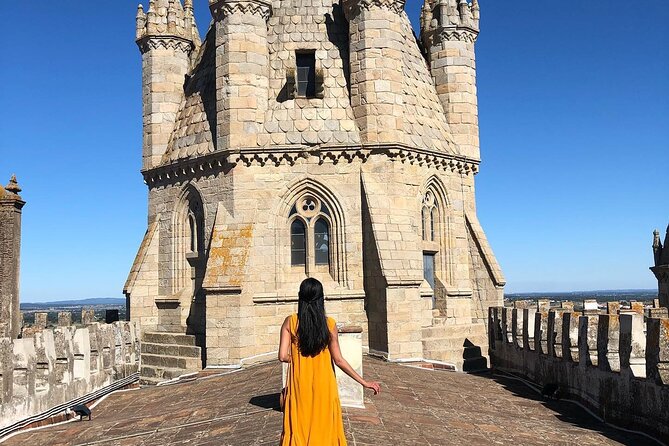
- it shows the transition from Romanesque to Gothic
You’ll also see:
- medieval towers on either side of the façade, including the bell tower
- sculptures of the 14th-century Apostles attributed to Mestre Pêro
- the dome area described as the cathedral’s showpiece element, with a “lantern” look and a stone needle-like feature
Plan about 45 minutes, and note that admission is not included for this stop.
Diana’s Garden
Finally, the visit can end—or begin—with Diana’s Garden, located in the cultural center area near Largo do Conde de Villa Flor. It’s set in harmony with the Roman temple view, so it’s a nice way to process what you just saw instead of rushing out the door.
Even if you’re not a “garden person,” it’s a useful pause spot before the drive back to Lisbon.
Food and pacing: how to handle lunch without getting rushed
Lunch isn’t included, and that’s important. The tour gives you freedom rather than forcing one set meal. In practice, that means you can take a sit-down option your guide recommends—or if you prefer a lighter bite, you might choose something simpler inside the walls and keep moving.
What makes this work well is the private format. If you’re tired, you don’t have to ask to slow down. If you’re hungry but not ready for a long meal, the guide can steer you toward something workable.
My tip: plan your energy. With an 8:30am start and a drive both directions, you’ll feel the day. If you tend to get cranky at mid-afternoon, eat early and then switch to small snacks later.
Price and value: $169.31 for a guided day that actually covers the ground
At $169.31 per person, this tour is clearly not a “budget bus ride.” The value comes from what’s bundled:
- a private guide
- air-conditioned vehicle
- private transportation
- pickup and drop-off at your accommodation
- compulsory insurance
- WiFi on board
- English language guide
- mobile ticket
- private experience so only your group participates
Extra costs are real, too:
- Lunch is not included
- Tickets for museums are about €10 per person (as listed)
- some specific monuments have admissions not included, like the Chapel of Bones and the cathedral area
So when does it make sense financially? It’s strongest when you want to avoid the hassle of figuring out connections, entering monuments efficiently, and paying for multiple separate tickets without a guide who can explain what you’re seeing. With a private setup, your time usually costs more than you think—this tour tries to protect it.
Who should book this private Évora and Alentejo day?
This fits you if:
- you want a focused day in Évora rather than chasing lots of far-flung stops
- you care about how Portuguese industry (cork) connects to everyday culture
- you enjoy architecture: Roman temple vibes, Renaissance church façades, and a big cathedral
- you like learning in conversation, not just listening to a headset tour
It may feel less ideal if:
- you hate long driving days
- you’re not interested in cork or prefer more nature/megalith sights outside Évora
- you strongly dislike morbid art (the Chapel of Bones is the obvious “yes/no” moment)
Should you book this Évora private tour from Lisbon?
My honest take: book it if you want an organized, high-value day where Évora makes sense. The cork factory visit gives you a concrete Portuguese skill and industry story, and the historic center stops feel intentional. The private guide format also helps you keep the day relaxed even when there’s a lot packed in.
Skip it (or adjust expectations) if you’re mainly looking for a slow, free-form stroll and don’t want extra admissions or a long travel day. Also, if the Chapel of Bones would bother you, make peace with that choice before you go.
If your goal is one great day outside Lisbon with strong monuments plus a cork story you’ll remember, this is a solid pick.
FAQ
How long is the private Évora and Alentejo tour?
The tour runs for about 9 hours.
What time does the tour start, and where do we meet?
It starts at 8:30am, with pickup arranged from your accommodation (and Porto de Cruzeiros as listed by the operator).
Is pickup and drop-off included?
Yes. Round-trip transport includes pickup and drop-off at your accommodation.
Is this tour private or shared with other groups?
This is a private tour/activity, so only your group participates.
What language is the guide?
The tour is offered in English.
What’s included in the tour price?
Included are a private guide, air-conditioned vehicle, private transportation, pickup/drop-off, compulsory insurance, and WiFi on board.
What is not included?
Lunch is not included. Entrance fees for museums (listed as €10 per person) are also not included.
Are tickets included for the Chapel of Bones and the cathedral?
No. The Chapel of Bones and the Cathedral of Évora are listed with admission not included.
Is the tour ticket mobile, or do I need to print something?
A mobile ticket is included.
What if I need to cancel?
Free cancellation is available up to 24 hours before the experience’s start time for a full refund. If you cancel later than that, the amount paid is not refunded. The operator also notes there may be a minimum number of travelers and you’ll be offered a different date/experience or a full refund if that minimum isn’t met.