REVIEW · PORTO
Small Group Secrets of Porto Walking Tour
Book on Viator →Operated by Detours · Bookable on Viator
Porto makes more sense with a local guide. This 4-hour small-group walk helps you connect the dots fast, from the Dom Luís I Bridge to the miradouros above the Douro. I like the max 16-person group size (so questions don’t vanish) and the way the stops include free-entry viewpoints instead of just photo corners. One thing to consider: it’s a walking tour with moderate fitness needs, and the whole experience depends on good weather.
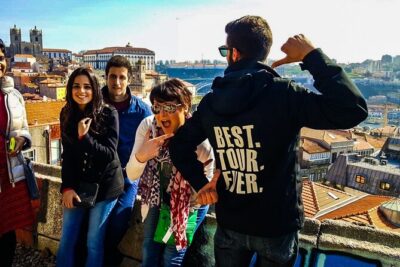
If you’re the type who wants context—why places matter, who shaped the city, and how the river and neighborhoods fit together—this tour is built for that. Guides like André, Neuza, Sara, Gonçalo Valente (aka Gustav), and Raquel have a reputation for pacing the group well and making the route feel personal. The final product is a Porto introduction you can actually use when you’re choosing what to see next.
In This Review
- Key Highlights Before You Go
- Getting Your Bearings Fast at the Start Point
- Dom Luís I Bridge: The Best First Chapter for Porto
- Padre Américo and the City’s Identity Through People
- Ribeira Pass-By: The Riverfront You’ll Want to Revisit
- Henry the Navigator Statue: Exploration Stories in a Walkable Zone
- Miradouro da Vitória: The View That Explains Porto
- Passeio das Virtudes: Another Angle on Miragaia
- Praca Gomes Teixeira: Where the Walk Lands
- Price and Value: Why $42.05 Can Feel Fair
- What You’ll Notice About the Guides
- Weather, Fitness, and How to Pack Smart
- Should You Book This Small Group Secrets of Porto Tour?
- FAQ
- How long is the Small Group Secrets of Porto Walking Tour?
- What does the tour cost?
- What’s the group size limit?
- Where does the tour start and end?
- What language is the guide?
- What should I wear or plan for physically?
- Are there any ticket costs for the stops?
Key Highlights Before You Go
- Small group format (up to 16 people) means more back-and-forth, not a lecture you can’t reach.
- Dom Luís I Bridge orientation ties Porto, Gaia, the Douro, and even the Maria Pia Bridge into one easy story.
- Landmark mix with local names like Largo do Padre Américo, not just the usual big sights.
- Great viewpoint progression: Miradouro da Vitória to Passeio das Virtudes, with big views and short walks between.
- Optional building moments may happen depending on access and the guide’s approach.
- Value beyond walking: all fees and taxes are included, plus a donation to a local development association.
Getting Your Bearings Fast at the Start Point
The tour meets in the historic area at Arnaldo Gama, a solid launching point if you want to start your Porto morning without guesswork. The walk runs about 4 hours, and it ends at Praça de Gomes Teixeira—another central spot that’s useful if you plan to continue on foot or hop into public transit.
Because you’re near public transportation, this is easy to plug into a busy day. And since the tour runs with a maximum of 16 people, it feels more like a guided walk with a real route plan than a crowded march.
I also appreciate that you get a mobile ticket. In a city where you’ll be checking multiple landmarks and opening times, anything that reduces admin stress is a win.
You can also read our reviews of more walking tours in Porto

Dom Luís I Bridge: The Best First Chapter for Porto
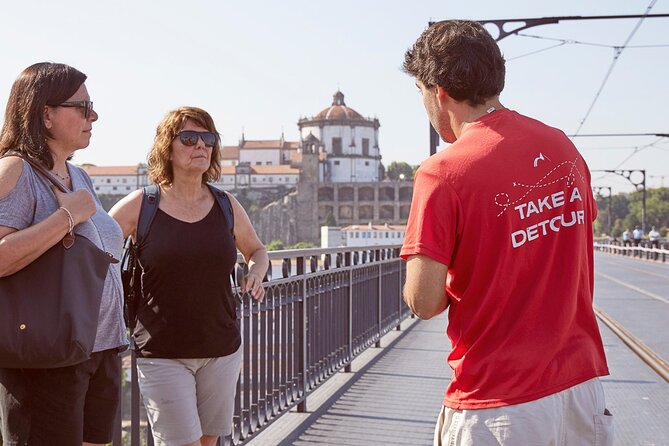
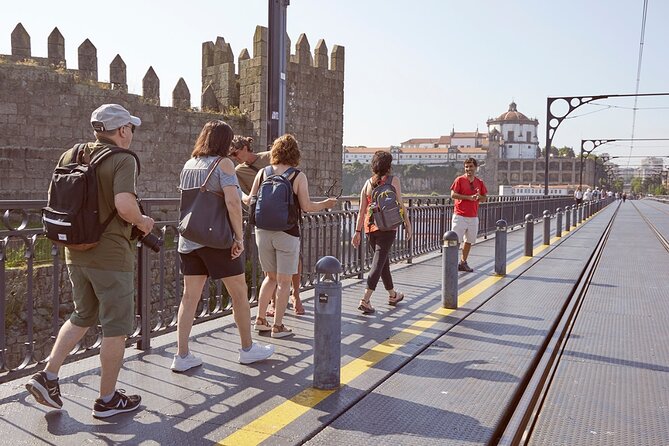
Your first real “okay, I get it now” moment comes at Dom Luís I Bridge. This is where the guide typically sets the big picture: Porto’s historical center, what’s going on across the river in Gaia, and how the Douro river shaped trade, ships, and the city’s wealth.
What makes this stop especially useful is that it doesn’t stay stuck on the bridge as a structure. You’ll also get an overview of the Maria Pia Bridge, which helps you understand that Porto’s identity isn’t just one bridge—it’s a whole network of engineering tied to the river.
Practical tip: if you’re sensitive to crowds, go a little slower at this first stop. It’s early, so you’ll still find breathing room while you orient yourself.
Padre Américo and the City’s Identity Through People
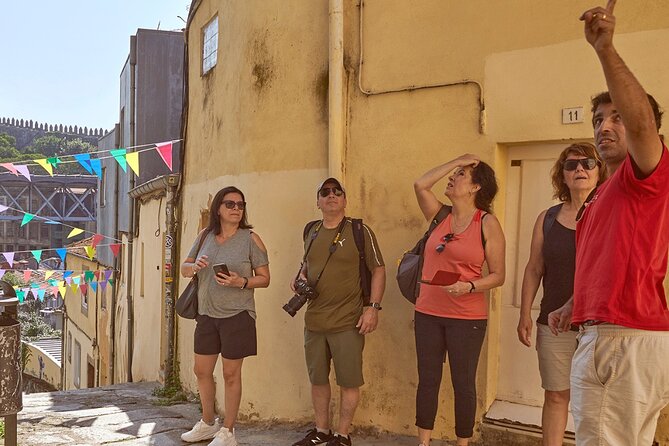
Next you head to the Monumento ao Padre Américo area at Largo do Padre Américo. Instead of treating Porto like a collection of stones, the guide uses this stop to explain who Padre Américo was and how he contributed to local society.
This kind of stop matters more than you might think. Porto can feel like it’s all architecture until someone connects the city to real people and local character. When that happens early, you start noticing those human details later—signage, street rhythm, and why certain neighborhoods feel the way they do.
Time on this segment is short—about 10 minutes—so it works as a palate cleanser between larger “wow” sights.
Ribeira Pass-By: The Riverfront You’ll Want to Revisit
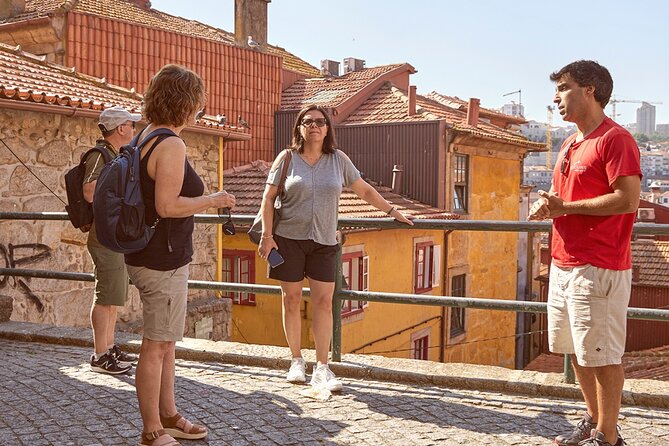
Then comes the Cais da Ribeira section. You don’t just hear about the riverfront; you actually pass by it, which is the easiest way to understand why Ribeira stays on so many first-time lists.
Even as a pass-by, it’s valuable because it helps you “map” the river visually. Later, when you decide whether to walk along the water or cut up into the neighborhoods, you’ll know what you’re aiming for.
If you’re planning photos, this is a good moment to remember what direction the river runs and where the bridges frame the view. That simple spatial awareness makes the rest of Porto easier.
Henry the Navigator Statue: Exploration Stories in a Walkable Zone
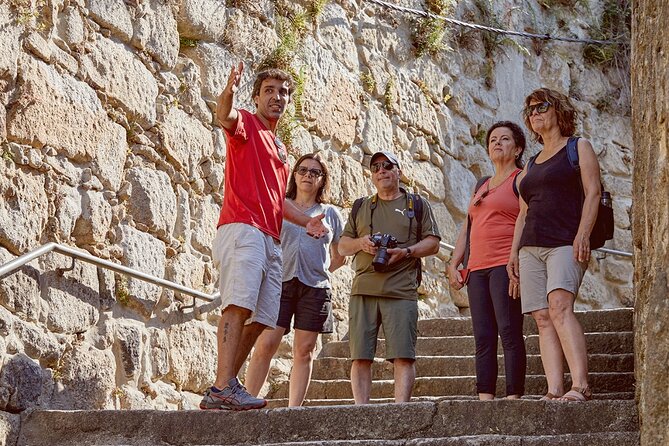
A major stop brings you to the Statue of Prince Henry the Navigator. Here, the guide connects Portugal’s exploration journey with Porto’s landmarks around you.
This area also ties in the Stock Palace and S.Francisco Church. You don’t have to be a Portugal-history expert to follow the story. The goal is to give you enough context that these names stop being random labels and start feeling like part of a larger chain.
If you’re the type who loves quick legends and cultural backstories, you’ll likely enjoy the way the tour turns this region into a narrative route rather than a checklist.




Miradouro da Vitória: The View That Explains Porto
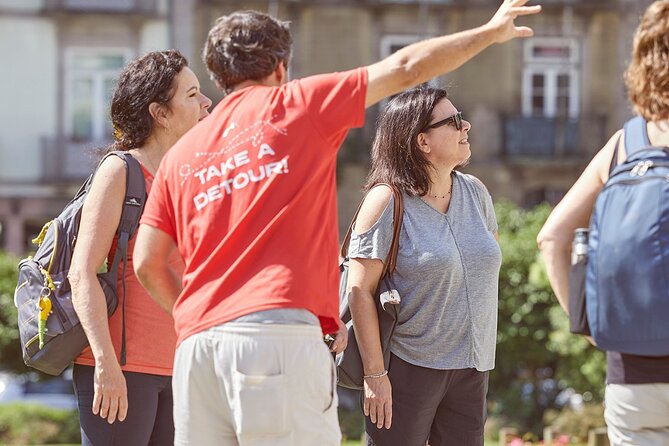
Now you climb into one of the best “aha” points of the whole walk: Miradouro da Vitoria. Expect a sweeping look over the old city and the river.
This viewpoint works because it gives you structure. From up here, Porto stops looking like a pile of narrow streets and starts looking like a city built around slopes and waterways. When you can see that logic, you move through the streets with more confidence.
Time here is about 15 minutes, so it’s not rushed into a 30-second photo stop. You’ll have enough time to take in the river curve and the rooftops without feeling like you’re holding up the group.
Passeio das Virtudes: Another Angle on Miragaia
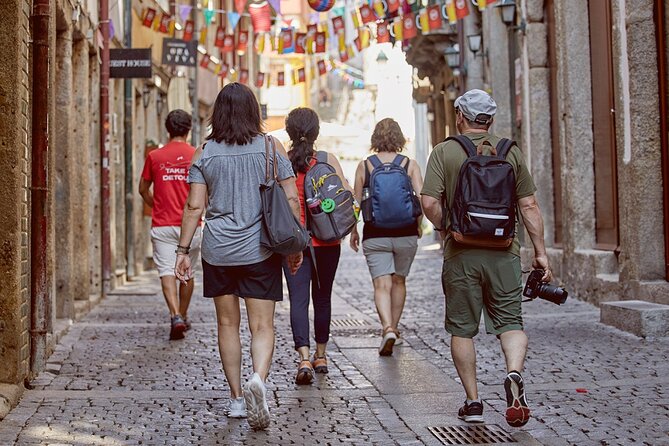
After Vitória, the tour continues to Passeio das Virtudes, with a view over the Miragaia area. It’s a shorter stop—around 10 minutes—but it’s positioned perfectly. You’ve already learned what to look for. Now you compare angles and see how Porto’s neighborhoods layer against the river.
Two viewpoints in a row is smart if you want photos, yes—but it’s even smarter if you want orientation. By the end, you can usually explain where you are relative to the water and which direction key sights sit.
Praca Gomes Teixeira: Where the Walk Lands
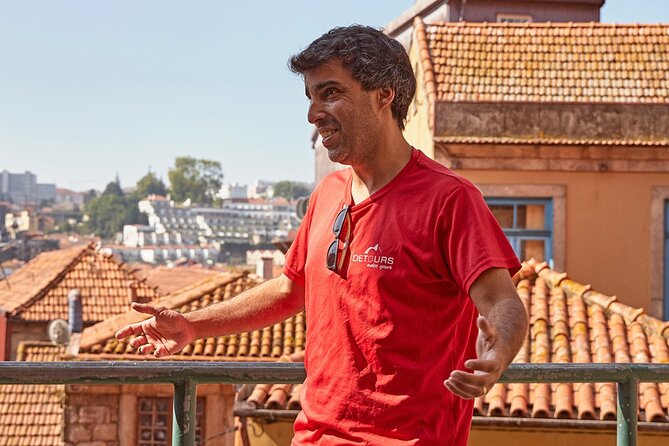
The tour finishes at Praça de Gomes Teixeira. It’s a helpful landing spot because you’re still in the city’s active fabric, not dumped somewhere remote.
This ending matters because you’ll have a clearer idea of what you want to do next: whether you continue exploring on foot, look for a café recommendation your guide shared, or head back toward the river area with better map sense.
The guides in past tours (like Sara and Gonçalo Valente) are especially known for sharing next-step ideas. Even if you don’t follow every suggestion, having a short list usually beats wandering with no plan.
Price and Value: Why $42.05 Can Feel Fair
At $42.05 per person for about 4 hours, this tour sits in a mid-range price zone for Porto walking tours. What makes it feel more reasonable than a generic walking tour is what’s included:
- all fees and taxes
- a donation to a local development association
- an English (and French) speaking guide
- the stops are listed with free admission
So you’re paying mainly for time, routing, and interpretation—not ticket purchases. That’s the kind of value that works well in a city where the best experiences often come from understanding context rather than buying entrance fees at every corner.
Also, the group cap of 16 helps keep the experience focused. If you’ve ever been stuck behind a crowd in a “guided” tour, you know why this matters.
What You’ll Notice About the Guides
The quality of a walking tour is basically the guide. This one has strong signals: guides are friendly, adapt to the group’s needs, and keep things moving at a comfortable pace. Names that have shown up include André, Neuza, Sara, Gonçalo Valente (Gustav), and Raquel.
A couple patterns are worth highlighting:
- Pacing that respects the group: you aren’t forced into a sprint.
- Storytelling that connects dots: bridges, exploration, and social figures are linked to what you’re seeing.
- Practical follow-ups: recommendations for what to eat and where to go next can save time later.
If you care about learning through stories and not just facts, this is exactly the style that tends to land well.
Weather, Fitness, and How to Pack Smart
This experience requires good weather. If conditions aren’t right, you’ll be offered a different date or a full refund. That’s important in Porto, where your comfort depends a lot on wind, rain, and slippery streets.
The tour also calls for moderate physical fitness. Translation: it’s not a museum-chair experience. Plan for uphill stretches, uneven sidewalks, and standing at viewpoints for short bursts.
For comfort:
- wear shoes you trust on cobblestones
- bring water
- consider a light layer; river air can feel cooler even when the sun is strong
If you’re hoping for an ultra-easy stroll with minimal elevation, you might want to compare with other options. But if you can handle a steady walking pace, you’ll likely be fine.
Should You Book This Small Group Secrets of Porto Tour?
Book it if you want a structured Porto introduction that mixes major landmarks with city-flavored stories. The combination of Dom Luís I Bridge context, Henry the Navigator’s exploration theme, and two different miradouros gives you a strong “mental map” of Porto in one go.
Skip it (or at least think twice) if:
- you’re looking for a long, ticket-heavy sightseeing day
- you don’t do well with walking and moderate fitness demands
- weather is unpredictable during your dates (since the tour depends on it)
Overall, this is a strong fit for first-timers and for anyone who wants to stop wandering and start understanding the city. The small-group size and the guide-driven pacing are the two things that most often make people feel like the time was well spent.
FAQ
How long is the Small Group Secrets of Porto Walking Tour?
It runs about 4 hours.
What does the tour cost?
The price is $42.05 per person.
What’s the group size limit?
The maximum group size is 16 travelers.
Where does the tour start and end?
It starts at Arnaldo Gama, romancista histórico (R. de Arnaldo Gama, 4000-098 Porto) and ends at Praça de Gomes Teixeira (4050-161 Porto).
What language is the guide?
The tour is offered with an English guide, and French guide support is listed as available as well.
What should I wear or plan for physically?
It’s best if you have moderate physical fitness. You’ll be walking and spending time outdoors at viewpoints.
Are there any ticket costs for the stops?
Admission tickets are listed as free for the stops included. Personal expenses are not included.