REVIEW · LISBON
Queer Lisbon Nightlife Tour
Book on Viator →Operated by Queer Lisbon Tour · Bookable on Viator
Lisbon at night tells a different story. This Queer Lisbon Nightlife Tour threads queer spaces through viewpoints and protest history, so you’re not just hopping between bars—you’re understanding the why behind the scene. I like how the route starts with a gorgeous city view at Miradouro dos Barros and then immediately connects culture to Portugal’s colonial past.
I also really appreciate the practical value: you get an updated Queer Map of Lisbon (PDF) plus a Portuguese and English-speaking local guide, so you can keep exploring after the tour. One thing to weigh: meals and drinks are on you, and since it runs in the evening, weather matters.
In This Review
- Key things that make this tour worth your time
- A 3.5-hour queer nightlife route with history in mind
- Getting oriented: Miradouro dos Barros is your starting compass
- Stop 1: Miradouro dos Barros and the colonialism conversation
- Stop 2: Damas for music, food, and immigrant-led change
- Stop 3: Graça & São Vicente mural tied to the Carnation Revolution
- Stop 4: Má Língua (or A Mata) and the cost of closing queer spaces
- Stop 5: Drama Bar for Lisbon’s contemporary scene and organizing
- Price and value: what $66.08 buys you (and what it doesn’t)
- Who should book this Queer Lisbon Nightlife Tour?
- Should you book it?
- FAQ
- What time does the tour start?
- How long is the Queer Lisbon Nightlife Tour?
- Is the tour offered in English?
- Where do we meet and where does it end?
- What is included in the price?
- Is dinner included?
- Are admission tickets included at every venue?
- How big is the group?
- Is there free cancellation?
- What if the weather is bad?
Key things that make this tour worth your time
- A small-group night plan (maximum 15 people) that keeps the conversation moving
- A queer-first route through places like Damas, Má Língua (or A Mata), and Drama Bar
- History with context, from colonialism to the Carnation Revolution mural stop
- A decolonial lens on nightlife, including how immigration shapes today’s LGBTQ+ conversations
- A free, updated queer map you can use right after the tour
A 3.5-hour queer nightlife route with history in mind
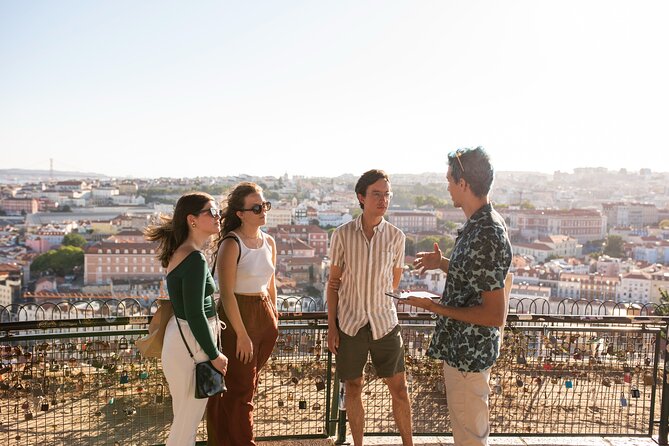
This tour is built for people who want nightlife with meaning, not just noise. It runs about 3 hours 30 minutes, starting at 6:30 pm, and it’s designed around conversation—both about queer community life and the broader political forces that shaped (and keep shaping) Portuguese society. You’ll walk at an evening pace, hit multiple stops, and hear how Portuguese culture and LGBTQ+ visibility connect across time.
The big win here is the mix. You’re going to a viewpoint first, then you’re going into venues where queer voices show up in real ways—through music, food, performance spaces, and organizing. The tour also doesn’t treat queer history as a museum piece; it keeps one foot in today, including the recent closures that affected queer and immigrant-owned venues.
If you want Lisbon nightlife in a structured, friendly format, this delivers. It’s not the kind of night where you feel lost in a crowd. With a max group size of 15, you get enough time to ask questions and take in what each place represents.
You can also read our reviews of more nightlife experiences in Lisbon


Getting oriented: Miradouro dos Barros is your starting compass
The meeting point is Miradouro dos Barros, Calçada do Monte, 1100-361 Lisboa. Starting at this viewpoint sets the mood fast: you get that evening look at the city first, then the guide frames what you’re about to experience. Lisbon’s nights can feel like a blur if you start cold. Starting with a view gives you bearings—both literally and emotionally.
At the start, you’ll also get context for the themes the tour will return to. The conversation at this first stop focuses on the impacts of colonialism on Portuguese culture. That’s not random background. It helps you understand why culture, identity, and power keep showing up in modern queer spaces—especially spaces connected to immigration and decolonial perspectives.
Practical tip: since this is an evening tour, wear layers you can adjust. Viewpoints can cool down quickly, and you’ll be transitioning into venues after.
Stop 1: Miradouro dos Barros and the colonialism conversation
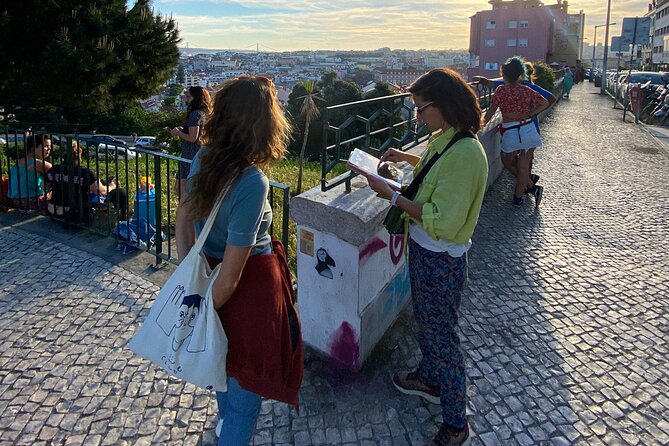
This first stop is about framing. You’ll gather at Miradouro dos Barros, then the guide discusses how colonialism has influenced Portuguese culture. It’s a smart opener because it puts later venue stories into context. When you learn the background early, the nightlife stops land harder—because you understand the stakes behind who gets space, who gets visibility, and who gets pushed out.
Time-wise, this part is short—around 20 minutes—which is good. You’re not stuck listening for ages before you get moving. It’s enough to set the thread for the night, especially if you like your explanations tied to what you’re about to see.
Admission here is free for the stop. So you get a strong start without feeling like you’re paying extra just to begin the tour.
Stop 2: Damas for music, food, and immigrant-led change
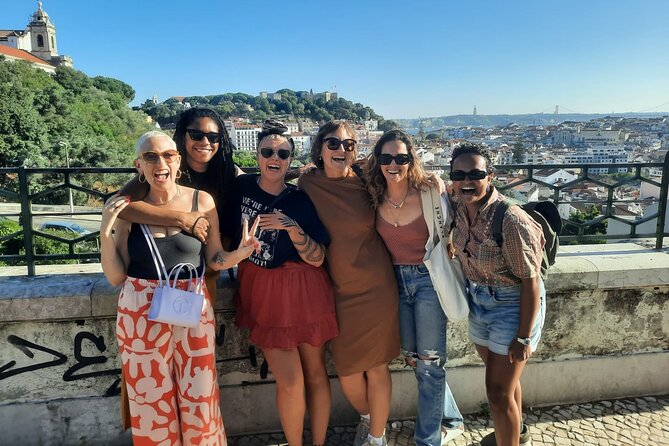
Next you head to Damas, a venue that combines restaurant, bar, and concert space. This is one of the places where Lisbon’s queer nightlife feels most alive, with queer voices taking up real presence in the room.
What I like about this stop is that it’s not only about entertainment. Damas is described as a space that supports immigrants driving social and political change in Portugal. That matters because queer nightlife can sometimes feel cut off from the bigger world. Here, the tour’s angle stays grounded: queer community life is part of broader movements for rights, belonging, and representation.
You’ll have about 40 minutes at Damas, and the tour notes that admission isn’t included for this stop. In practice, that usually means you’ll want to plan for paying your own way—especially if you want the Portuguese dishes the venue is known for. Even if you don’t eat, it’s worth budgeting for at least one drink so you can actually enjoy the space.
Stop 3: Graça & São Vicente mural tied to the Carnation Revolution

After Damas, the tour makes a brief stop in Graça & São Vicente to admire a mural dedicated to the Carnation Revolution. This is a history moment, but it’s connected to place, not just dates.
Here’s what you’ll learn: the guide explains the dictatorship and the historical context that led to the revolution, how it unfolded, and its lasting impact on Portuguese society. That sequence is important. The point isn’t only to know what happened—it’s to understand why it still matters for how Portuguese people talk about freedom, protest, and civic change today.
This stop runs around 30 minutes, and it’s listed as free for admission. Expect it to be more of a guided pause than a full museum-style lesson.
If you like tours that connect social movements to current life, you’ll probably enjoy this part. It also keeps the night from feeling like it’s only about venues; you get a different kind of cultural stop that still feeds into the evening’s themes.






Stop 4: Má Língua (or A Mata) and the cost of closing queer spaces
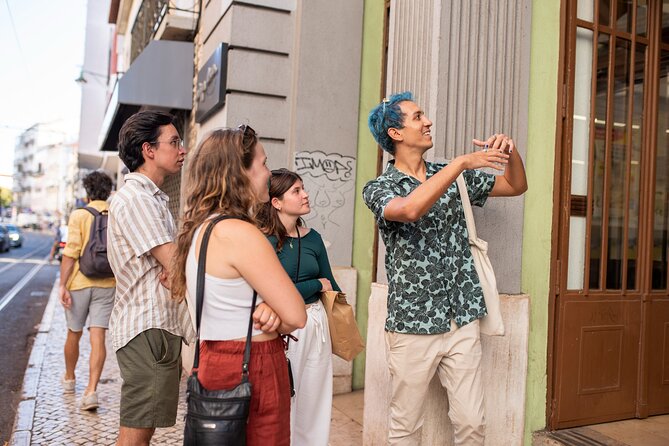
Next comes Má Língua, also noted as A Mata, described as queer-friendly bars and cultural spaces where the queer community can perform. This is where the tour turns toward the real-world pressure on queer and immigrant-owned venues.
The guide focuses on challenges faced by these venues and specifically the wave of closures in 2024. That’s heavy information, but it’s also a vital part of understanding Lisbon’s LGBTQ+ landscape right now. If you only see the bars that remain open, you miss the story of what was lost and what people are trying to protect.
You’ll spend around 40 minutes here. Admission isn’t included for this stop, so plan on paying your own way for drinks (and possibly a cover, if the venue charges one—your best move is to check what’s typical when you arrive). The value of this stop is the conversation around why places close, and what it does to the community that relies on them.
One practical note: if you’re sensitive to political talk or tough current-news themes, this part may feel more intense than the earlier stops. But it’s exactly the kind of honesty that makes the nightlife feel real.
Stop 5: Drama Bar for Lisbon’s contemporary scene and organizing
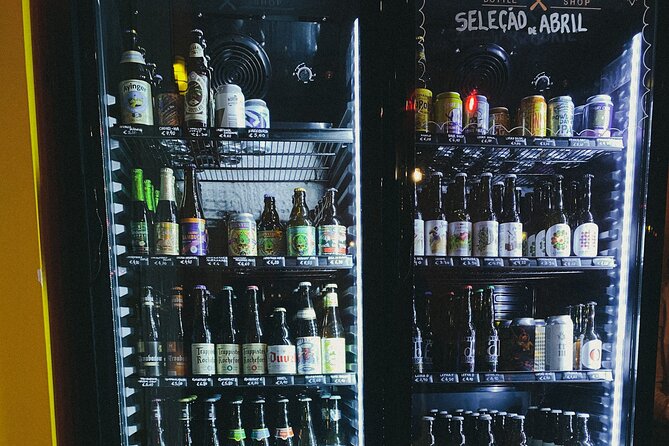
The tour ends at Drama Bar, a queer-owned bar where the conversation gets focused on Portugal’s contemporary queer scene, with a special lens on Lisbon. This is where the night shifts from history and threats to active community life: the importance of associations and collectives leading discussions and exploring solutions for LGBTQ+ needs.
The guide also highlights the role of immigration in bringing a decolonial perspective—moving away from traditional norms so the community can serve a broader, more diverse range of people. That theme is woven through the whole night, but Drama Bar is where it feels most practical. You’re in a queer-owned space, and you’re hearing about how people organize, not just what they believe.
This final stop lasts about 1 hour, and the tour includes admission here. That’s a nice payoff after the earlier parts where you’re likely paying for drinks or food on your own.
Because it’s at the end, it also works as a natural landing point. You finish with context that helps you choose where to go next, without guessing.
Price and value: what $66.08 buys you (and what it doesn’t)
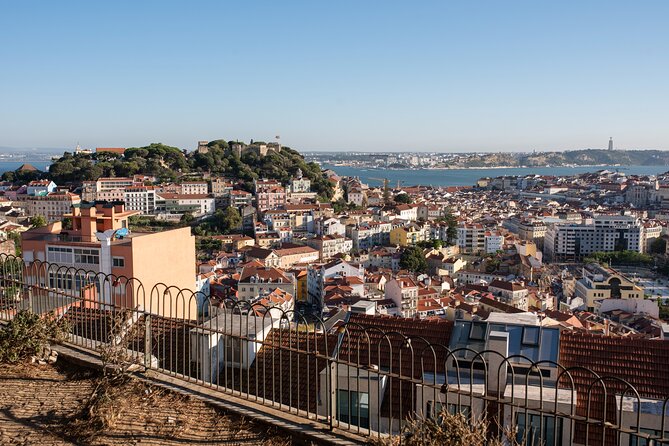
The price is $66.08 per person for roughly 3.5 hours. That can sound like a lot until you look at what’s included: a local guide who speaks Portuguese and English, plus an updated Queer Map of Lisbon (PDF). Those two items alone are useful. The map can keep paying off after the tour, and the guide saves you from piecing together connections between history and nightlife.
It also helps that the group size is small (up to 15 people). Smaller groups tend to mean better conversation and more flexibility. And because this is a nightlife-focused route with multiple venues, you’re paying for structure and storytelling, not just transportation from place to place.
What you should budget separately:
- Dinner and drinks are not included
- Admissions are noted as not included at Damas and Má Língua (or A Mata)
At the end, Drama Bar admission is included, which softens the costs a bit. Still, go in knowing you’ll want to spend something personally to enjoy the spaces.
For value, I’d think of it like this: you’re buying a guided night with context, plus a useful planning tool. If you want to explore queer Lisbon on your own without a framework, it’s harder. If you want to understand what you’re seeing and why, the price starts to feel fair.
Who should book this Queer Lisbon Nightlife Tour?

This tour fits best if you:
- want queer nightlife with political and cultural context
- like tours that connect present-day community life to big historical themes
- prefer a guided route when you’re still learning a city at night
- appreciate spaces that involve queer voices, immigration stories, and community organizing
It may be less ideal if you’re only looking for a casual bar crawl with minimal talking. The stops are designed for discussion—colonialism impacts, dictatorship and revolution context, and the recent closures of queer/immigrant-owned venues. You’ll likely enjoy it more if you’re open to conversation.
Also, plan your expectations around meals. You’ll be paying for dinner yourself, so either eat before you arrive or keep room for a meal stop if you can and want to.
Should you book it?
If you’re aiming for Lisbon nightlife with meaning, I think you should book this. The strongest reasons are the structure and the context: you start with a major viewpoint, connect history to culture, visit multiple queer venues, and end with a conversation about organizing in today’s scene. The included updated queer map is a bonus that helps you keep momentum after the tour.
I’d only pause if you hate paying out-of-pocket for drinks and dinner, or if political history and current challenges like venue closures will drain your energy on a night out. Otherwise, this is a smart way to get your bearings fast and leave with a clearer sense of where queer Lisbon is headed next.
FAQ
What time does the tour start?
It starts at 6:30 pm.
How long is the Queer Lisbon Nightlife Tour?
It runs for about 3 hours 30 minutes.
Is the tour offered in English?
Yes, it’s offered in English.
Where do we meet and where does it end?
You start at Miradouro dos Barros, Calçada do Monte, 1100-361 Lisboa, Portugal, and the tour ends at Rua Maria Andrade, R. Maria Andrade, 1170 Lisboa, Portugal.
What is included in the price?
The price includes a Portuguese and English-speaking local guide and an updated Queer Map of Lisbon (PDF). Admission is also included for the final stop.
Is dinner included?
No. Dinner and drinks are not included, so you pay for your own meal and drinks.
Are admission tickets included at every venue?
No. Admission is marked as free at the Miradouro dos Barros and the Carnation Revolution mural stop, not included at Damas and Má Língua (or A Mata), and included at the final stop (Drama Bar).
How big is the group?
The tour has a maximum group size of 15 people.
Is there free cancellation?
Yes. You can cancel for a full refund if you cancel up to 24 hours in advance of the experience start time.
What if the weather is bad?
The experience requires good weather. If it’s canceled due to poor weather, you’ll be offered a different date or a full refund.