REVIEW · LISBON
Queer Lisbon Historical Tour
Book on Viator →Operated by Queer Lisbon Tour · Bookable on Viator
Lisbon’s queer past is written into the streets. This Queer Lisbon Historical Tour is a 4-hour walking route that connects big national moments to specific corners of the city, with an English-speaking local guide and a mobile ticket you can pull up on your phone. I like how the story stays grounded in place, not slogans.
I love two details in particular: the opening at the monument honoring victims of homophobia in Príncipe Real, and the ending at a queer-owned venue in Graça that explicitly centers Black queer resistance through Criolense Kitchen Club. The tour also gives you a practical Queer Map of Lisbon (PDF) so you can keep exploring after the walk.
One consideration: this is a walking tour with viewpoints and a moderate pace, so bring comfortable shoes and be ready for some uphill movement if you’re sensitive to hills. If the weather is bad, the tour can be canceled for another date or a refund.
In This Review
- Key highlights you’ll feel on this tour
- Where queer history starts: Príncipe Real’s homophobia memorial
- Bairro Alto, Bica & Cais do Sodré: viewpoint time with real questions
- Largo Trindade Coelho: Padre António Vieira and the church as a regulator
- Largo do Carmo: revolution beginnings and the long dictatorship that shaped “normal”
- Praça Martim Moniz to Graça & São Vicente: where contemporary movements meet new perspectives
- Price and value: is $72.29 worth it?
- Logistics that actually matter: meeting point, walking pace, and your comfort
- What this tour is really good at (and where it might not be your match)
- Should you book this Queer Lisbon Historical Tour?
- FAQ
- How long is the Queer Lisbon Historical Tour?
- How much does it cost?
- What language is the tour offered in?
- What’s included in the ticket price?
- What isn’t included?
- Where do I meet and where does it end?
- What if the weather is poor or plans change?
Key highlights you’ll feel on this tour
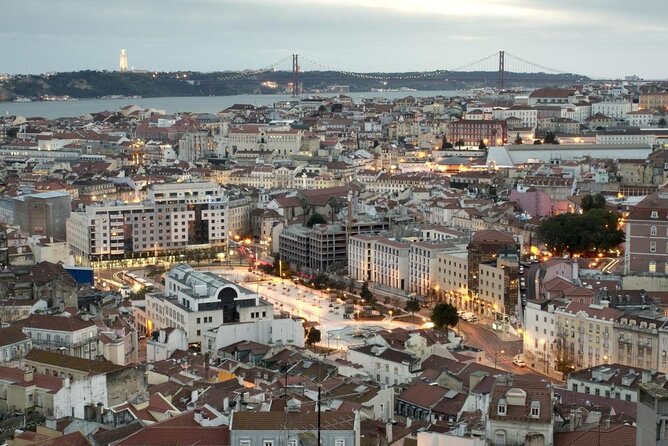
- Príncipe Real’s homophobia victims monument sets the tone fast, with an introduction to LGBTQ+ movement beginnings in Portugal
- Bairro Alto and Bica area viewpoint turns city views into a conversation about privilege and inclusion
- Padre António Vieira monument and church influence links religion to sexual regulation and social attitudes
- Largo do Carmo’s revolution and dictatorship context explains how a long-running regime shaped family norms
- Martim Moniz and immigrant energy connects contemporary queer movements with new perspectives
- Graça ending at Criolense Kitchen Club’s community gives a living, present-tense finish to the history
Where queer history starts: Príncipe Real’s homophobia memorial
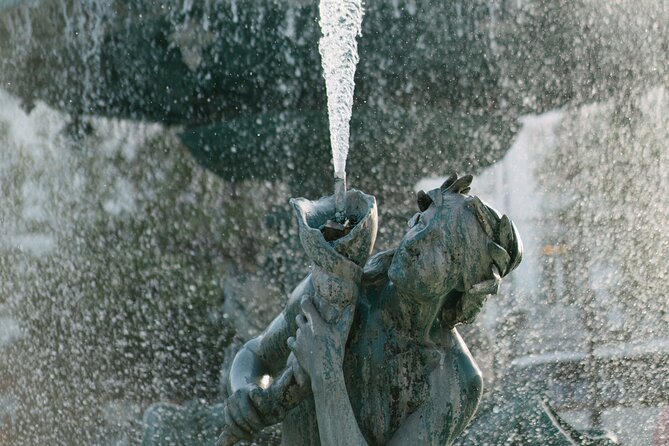
The tour kicks off at a monument honoring victims of homophobia in Príncipe Real, and that choice matters. Before you get into dates or political eras, you’re asked to start with remembrance—why some people were targeted, and why public rights have such a heavy backstory.
From there, the guide frames the beginnings of the LGBTQ+ movement in Portugal, including early Pride March efforts and public demonstrations. It’s a strong opening because it sets expectation: this isn’t just about famous names, it’s about how communities found ways to show up in public.
Practical note: the first stop is about 30 minutes, so you’ll be warmed up and oriented before the walking ramps up. It’s also free to access, which keeps your time focused on the conversation instead of logistics.
You can also read our reviews of more historical tours in Lisbon



Bairro Alto, Bica & Cais do Sodré: viewpoint time with real questions
Next, you move through the Bairro Alto area and near Bica and Cais do Sodré, taking pauses that feel purposeful rather than scenic-only. You’ll stop at a viewpoint to take in the hills and Lisbon’s spread, but the discussion doesn’t stay visual. The guide uses the change in the neighborhood through day versus night as a jumping-off point for how LGBTQ+ spaces can feel different depending on access and privilege.
This section is where I think the tour earns its name as a historical walk that’s also a present-day reckoning. You’ll talk about patriarchal and colonial mindsets that still show up in everyday behavior, and you’ll be invited to ask whether inclusion in Portugal actually reaches everyone.
You’ll also get language for something many people feel but can’t easily name: the gap between public acceptance and lived safety. That’s a useful shift because it changes how you view the street scenes you’ll see later on your own.
Expect this stop to be shorter—about 20 minutes—with plenty of movement between moments. Wear shoes you can trust on stone streets.
Largo Trindade Coelho: Padre António Vieira and the church as a regulator
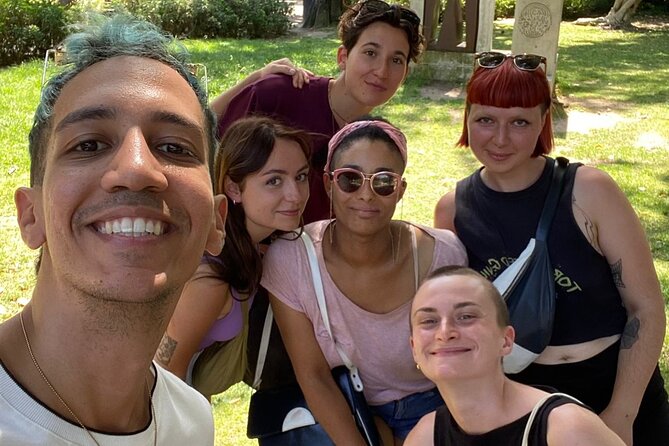
At Largo Trindade Coelho, you’ll observe the monument of Padre António Vieira and then talk about the role churches have played in regulating sexuality. The tour connects that influence to societal attitudes—especially toward homosexuality and toward any expression that falls outside strict norms of sameness.
This part is especially valuable if you’re the kind of traveler who wants the why behind modern social dynamics. You’ll see how power can work without always looking like power. In this telling, it’s in rules, teachings, and the way institutions shape what people are allowed to be publicly.
The stop runs about 20 minutes and is free to access, so you can take it in without feeling rushed. If you’re curious about how cultural institutions affect daily life, this is one of the most direct segments of the tour.
Largo do Carmo: revolution beginnings and the long dictatorship that shaped “normal”
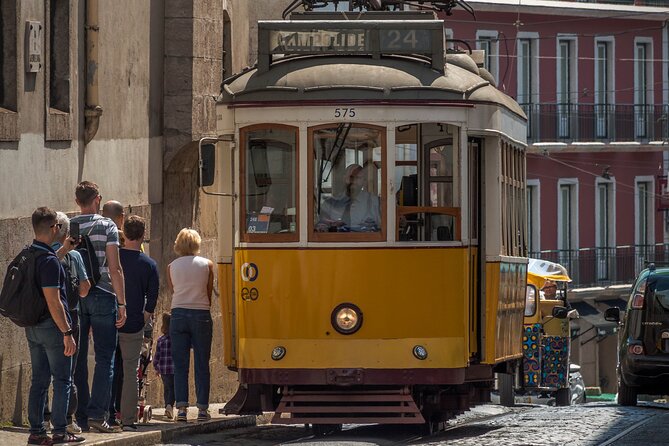
Largo do Carmo is a big pivot point. Here, you explore the site where the Portuguese revolution began and learn about the country’s dictatorship—described as the longest-lasting in Europe. That timeline matters because it helps you understand why certain social attitudes didn’t just disappear with political change.
The guide also explains how the regime pushed a strict family model: man, wife, and happy children—nothing different. When you hear that clearly stated, it stops being abstract history. You start noticing how “normal” can be enforced through schooling, media, and moral expectations.
Another strong piece in this stop is the emphasis on resistance by key LGBTQ+ figures during that period. Even without turning into a textbook, the message is clear: people didn’t only endure; they pushed back where they could.
This segment lasts about 20 minutes and is free to access. It’s short, but it leaves you with a sharper lens for interpreting later discussions about today’s queer organizing.
Praça Martim Moniz to Graça & São Vicente: where contemporary movements meet new perspectives
After the dictatorship era, the tour turns toward what’s happening now. At Praça Martim Moniz, you’ll talk about contemporary queer movements challenging existing structures and raising hard questions. This is where the tour stays intentionally forward-looking instead of stuck in the past.
You’ll also learn how immigrants bring new strength and perspectives into LGBTQ+ movements in Portugal. That point adds depth because it frames queer activism as something that keeps evolving—shaped by who arrives, who speaks, and what experiences push people to organize.
Then the walk finishes in Graça & São Vicente at a queer-owned venue, where you pay homage to the Black queer resistance associated with Criolense Kitchen Club. The guide ties that resistance to the neighborhood’s role in the LGBTQ+ community, which is a great closing move. You go from laws and institutions to community-building, culture, and mutual support.
The final stop is around 20 minutes and is free to access as part of the tour. It’s also a practical way to end: you’re left with a place and an organization to connect with beyond the tour itself.




Price and value: is $72.29 worth it?
At $72.29 per person for about 4 hours, this isn’t a bargain tour, but it can be good value for the right traveler. Here’s why: you’re paying for a guided walk that links multiple neighborhoods to a single narrative, plus you get an updated Queer Map of Lisbon (PDF) you can use afterward.
You also get a Portuguese and English-speaking local guide, and the tour is offered in English. For many people, that language support is a real quality-of-life factor, especially when the subject matter is nuanced and you want to catch every detail.
The group size is capped at 20, so it’s not a giant crowd experience. That matters with a tour like this, because the conversation often leans into discussion and questions, not just one-way narration.
What you don’t get is dinner. That’s typical for walking tours, but it’s worth planning around if you’re hungry. If you want a full meal included, you’ll need to pick a spot separately when you’re done.
Logistics that actually matter: meeting point, walking pace, and your comfort
You meet at the Juniper tree arbor in the Misericórdia area of Lisbon (1250-095 Lisboa). The tour ends in Graça, which is a convenient neighborhood to continue exploring, grab a snack, or hop on public transportation.
The tour is near public transportation, which helps if you want to arrive early or if you need an easier way back. Service animals are allowed too, which is a good detail if you travel with one.
The physical note is “moderate fitness.” In practice, that usually means you should expect a steady walking pace, streets that aren’t flat, and the kind of step-up-and-down movement Lisbon is known for. If you’re pacing yourself for hills and cobblestones, you’ll likely feel fine.
Weather matters here. The tour requires good weather, and if it’s canceled due to poor conditions, you’ll be offered a different date or a full refund. So if you’re booking during a rainy stretch, I’d keep your schedule flexible.
What this tour is really good at (and where it might not be your match)

This tour is strongest when you want LGBTQ+ history connected to everyday places. The route intentionally mixes memorial sites, political landmarks, religious influence points, and contemporary queer neighborhoods, so you can see how power moves through culture over time.
I also like that the guide doesn’t treat inclusion as a simple yes/no topic. The discussion about whether inclusion is for everyone, and the role of patriarchal and colonial mindsets, gives you a framework for reading Lisbon in a more critical way than a standard sightseeing walk.
If you prefer strictly factual, date-heavy tours with minimal discussion, this might feel too conversational. This route includes reflective questions and guided discussion, so it’s better suited to people who like thinking out loud while they walk.
Should you book this Queer Lisbon Historical Tour?
I’d book it if you want LGBTQ+ history in Lisbon tied to specific neighborhoods and real community spaces, and if you’re comfortable with a moderate walking pace for about 4 hours. You’ll get an English local guide, a mobile ticket, and an updated Queer Map (PDF) that helps you keep the thread going after the tour ends in Graça.
I’d hesitate if you dislike discussion-based walking tours, or if hills and uneven streets tend to wear you out. And if your trip dates are known for bad weather, plan your schedule with a little slack since the tour needs good conditions.
If you match those points, this is one of the rare tours that feels both historical and human—ending with a venue where queer resistance is still part of the neighborhood’s daily life.
FAQ
How long is the Queer Lisbon Historical Tour?
It lasts about 4 hours.
How much does it cost?
The price is $72.29 per person.
What language is the tour offered in?
It’s offered in English, with a Portuguese and English-speaking local guide.
What’s included in the ticket price?
You get an updated Queer Map of Lisbon (PDF) and a Portuguese and English-speaking local guide.
What isn’t included?
Dinner is not included, and you pay for your own meal and drinks.
Where do I meet and where does it end?
You start at Juniper tree arbor, Misericórdia, 1250-095 Lisboa, Portugal, and the tour ends in Graça, Lisbon.
What if the weather is poor or plans change?
The tour requires good weather. If it’s canceled due to poor weather, you’ll be offered a different date or a full refund. You can also cancel for free up to 24 hours in advance for a full refund.