REVIEW · LISBON
Private Evora Heritage and Alentejo Wine Tour from Lisbon
Book on Viator →Operated by YesExperiences Portugal · Bookable on Viator
Évora and Alentejo in one smooth day. This private outing strings together big-name wineries, UNESCO-era streets, and a Chapel of Bones stop that feels like time travel with a spooky twist. I love the pickup-to-dropoff convenience, and I also like how the day mixes wine tastings with real cultural sights (not just photo stops). One thing to consider: lunch isn’t included, so you’ll want a plan for eating in Évora.
The structure works because you’re not bouncing around on your own timetable. You’ll spend hours walking vineyards and visiting producers, then switch gears to Roman and medieval landmarks in Évora, and finish with the cork process at Corticarte. The day runs about 9 to 11 hours, so it’s best treated as a full “see a lot, but not rushed” day.
In This Review
- Key things to know before you go
- From Lisbon pickup to the first big viewpoint: your day starts with the Tagus
- Winery stop 1: João Portugal Ramos and the idea of Portuguese grapes meeting modern methods
- What to watch for
- Winery stop 2: Enoturismo Cartuxa and the monastery-backed identity
- The practical payoff
- Winery stop 3: Quinta São José da Pêra Manca and their red-wine focus
- Possible drawback
- Winery stop 4: Ervideira, producing since 1880 and run by active family generations
- What I like about placing Ervideira here
- Winery stop 5: Herdade do Esporão and the harvest-driven cellar heart
- Note on tastings and what’s actually included
- Chapel of Bones: a 16th-century reminder that history can be unsettling
- How to handle the emotional tone
- Évora old town and the Temple of Diana: UNESCO without the overhead
- Practical suggestion
- Cork at Corticarte: learn the process, then buy the souvenir that makes sense
- Why this stop is a standout value
- Food and tastings: what’s included and how to plan lunch in Évora
- Price and value at $335.19 per person: what you’re paying for
- When it might not be the right deal
- Who this day tour suits best
- Should you book the Private Evora Heritage and Alentejo Wine Tour?
- FAQ
- Is pickup and drop-off included?
- How long is the tour?
- Is this tour private?
- What language is the tour in?
- Are winery and attraction entrance tickets included?
- Is lunch included?
- How many wine tastings are included?
- What food is included besides wine tastings?
- What about the cork factory stop?
- What is included for cancellation?
Key things to know before you go
- Private transport from your accommodation means you’re not tied to a fixed bus route
- Multiple winery visits (but only two tastings) keeps it varied without turning into nonstop drinking
- Chapel of Bones timing is short (about 30 minutes) but it’s intense enough to remember for years
- Évora’s highlights are focused: Temple of Diana plus a quick window in the old town
- Cork factory stop at Corticarte is the kind of souvenir shopping that teaches you what you’re buying
- Guide flexibility can help you adjust pacing when something runs long
From Lisbon pickup to the first big viewpoint: your day starts with the Tagus
This tour begins with pickup and drop-off at your accommodation, using an air-conditioned vehicle for the long run south. Right out of Lisbon, you’ll pause at the Portuguese Golden Gate viewpoint, overlooking the city and the Tagus River. It’s a good warm-up because it gives you the mental map for where you are—and where you’re going.
You’ll be out for roughly 9 to 11 hours, so pack like it’s a full day: light layers, comfortable shoes, and water. The van is your comfort base between stops, and the schedule is built so each stop has its own rhythm: winery time, then a cultural cluster in Évora, then a practical “learn and buy” stop.
If you’re staying in Lisbon’s Baixa area, plan on about 90 minutes driving time to Évora. That’s long enough that the early viewpoint matters—it breaks the trip so it doesn’t feel like straight highway boredom.
You can also read our reviews of more private tours in Lisbon


Winery stop 1: João Portugal Ramos and the idea of Portuguese grapes meeting modern methods
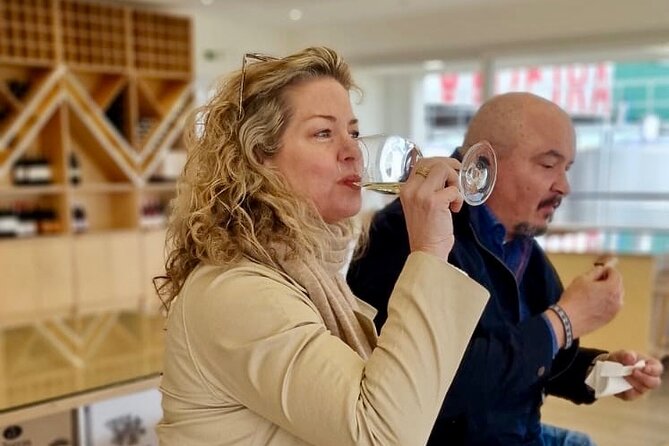
At João Portugal Ramos Wines, you get a focused introduction to how modern winemaking can still respect Portuguese tradition. The winery is known for a mix of indigenous grapes and international varieties, so your palate doesn’t get stuck in only one style.
Expect a visit that lasts around 1 hour 30 minutes, with entry included. The useful part for you: you’ll get context for how Alentejo-style wines can still carry Portugal’s grape identity. If you’re the type who likes to understand what you’re tasting—rather than just sipping—this stop does that job.
What to watch for
This is a winery visit, so pacing can feel different from a casual tasting room. If you prefer fast, simple tastings, you might want to slow down your expectations here and treat it as an educational stop.
Winery stop 2: Enoturismo Cartuxa and the monastery-backed identity
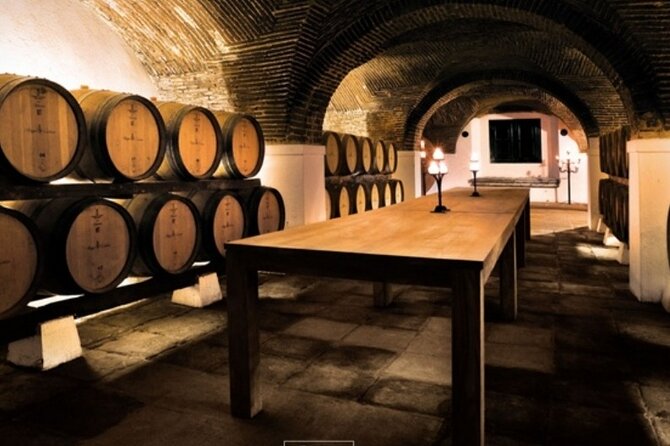
Cartuxa (Enoturismo Cartuxa) is named for the 16th-century Mosteiro da Cartuxa (Cartuxa Monastery) right next door. That monastery link matters because it helps explain the brand’s identity: excellence, quality, and a style that’s meant to feel distinct.
You’ll get about 1 hour 30 minutes here, with admission included. This stop is a good contrast to the first winery because Cartuxa’s story is built around place and tradition, not just grape and technique.
The practical payoff
When wineries use heritage like this, it usually shows up in how they talk about process and values. Even if you don’t geek out on specifics, you’ll likely notice the difference in how the guide frames the wines.
You can also read our reviews of more historical tours in Lisbon





Winery stop 3: Quinta São José da Pêra Manca and their red-wine focus

Pera-grave / Quinta São José da Pêra Manca (São José da Pêra Manca) is one of the more “Portugal classic” stops on the day. The origins date back to the 16th century, and today it’s especially famous for red wines made from traditional regional grape varieties.
The key grapes mentioned for this property are Aragonez, Trincadeira, and Alicante Bouschet. You’re looking at wines described as having intense flavors and excellent structure, with aging potential. That’s the kind of promise that makes sense when you hear about old estates and traditional varieties.
You’ll have about 1 hour 30 minutes, with admission included. This stop is where many people start to connect the dots between why Alentejo reds can feel structured without feeling heavy.
Possible drawback
Not every stop is built for a long cellar walkthrough. If your priority is seeing fermentation tanks or long underground cellar systems, keep in mind this tour’s main value is the guided visit plus tasting components, not a full technical tour at every winery.
Winery stop 4: Ervideira, producing since 1880 and run by active family generations
Ervideira is one of the secular wine companies in Portugal dedicated to producing since 1880, with fourth and fifth-generation active producers. The day gives you about 1 hour 30 minutes at this stop, again with admission included.
You’ll hear how the estate focuses on creating exclusive wines while maintaining quality in international markets. For you, that matters because it connects local vineyards to the way Alentejo wines travel globally.
What I like about placing Ervideira here
By the time you reach this stop, your palate is warmed up from earlier visits. That makes it easier to appreciate how different producers interpret the same region through their own process and goals.
Winery stop 5: Herdade do Esporão and the harvest-driven cellar heart
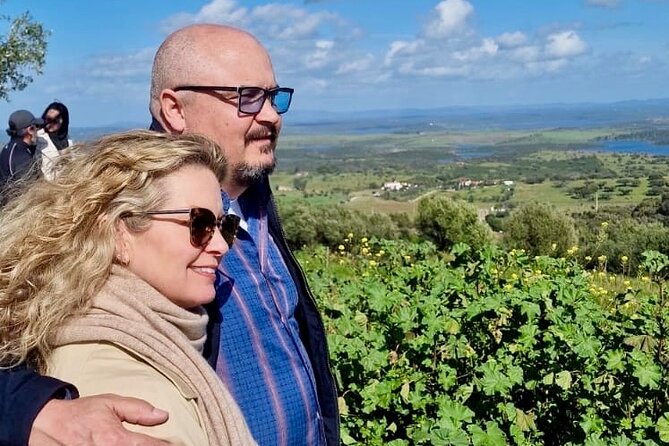
Herdade do Esporão is longer than the other winery stops, with about 2 hours allocated here. The focus is on the estate as a historical producer and on how the cellar work follows the rhythm of harvest, guided by the oenology team and the calendar.
This is where the tour starts to feel like a proper “estate visit” rather than a rapid collection of stops. The vines are located in the heart of Reguengos de Monsaraz, and the description emphasizes balanced wines—balanced, seductive, and also able to age.
Note on tastings and what’s actually included
The tour includes wine tasting at two wineries, plus cheese tasting and smoked sausages. That means not every winery stop will necessarily center on the tasting experience in the same way. Still, by the time you reach Esporão, you’re likely to be ready to compare styles.
Chapel of Bones: a 16th-century reminder that history can be unsettling
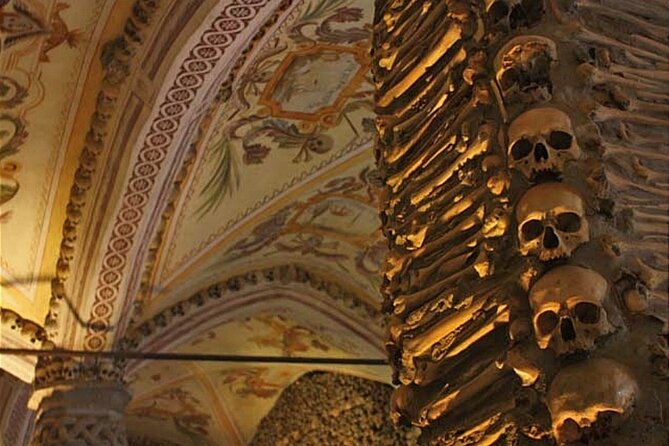
Then comes the stop that most people remember: the Chapel of Bones, attached to the Church of St. Francis. Built in the 16th century by Franciscan monks, it’s famous for its macabre interior decoration where walls and pillars are covered in human bones.
The description includes the idea that the bones come from around 5,000 monks, exhumed due to lack of cemetery space, then arranged into patterns. Skulls show up as decorative elements, and there’s even an inscription above the entrance translating to we bones that are here await yours.
You’ll have about 30 minutes here with admission included. It’s brief, but it lands hard because it’s not theatrical for tourists—it’s a religious and cultural message about mortality and life’s transience.
How to handle the emotional tone
If you’re sensitive to grim interiors, give yourself permission to move slowly and look only when you feel ready. If you’re not, still go in prepared: this is meant to affect you, not just impress you.
Évora old town and the Temple of Diana: UNESCO without the overhead
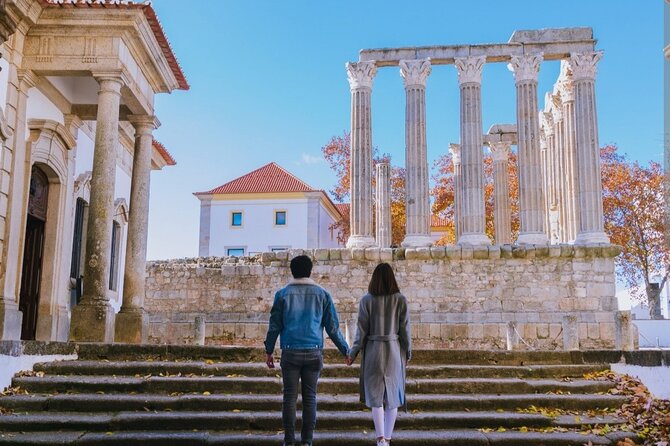
Évora is UNESCO World Heritage, and the tour gives you a focused window in the city center. You’ll have about 1 hour in Évora with admission free for that portion. The idea here is not to “do everything,” but to get enough structure to feel the place.
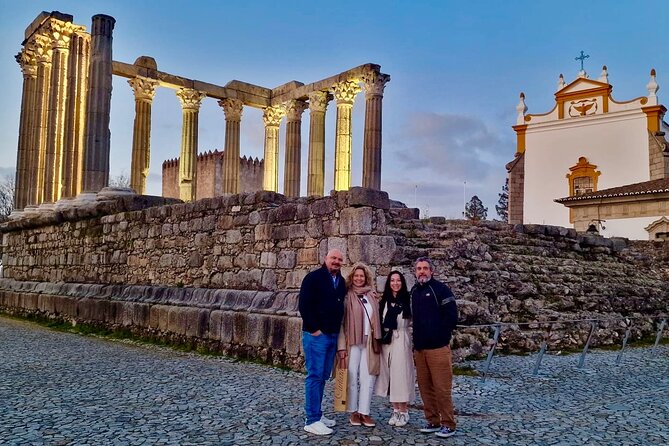
You’ll also visit the Temple of Diana (Templo Romano de Évora), known as Templo de Diana. The temple dates to the beginning of the 1st century AD, and it was built on what was once the Roman Forum. Alterations happened during barbarian invasions and the Christian period, and the monument’s original glory was restored in the 19th century.
Plan on about 10 minutes for the temple stop, with admission included. That’s a quick hit, but it works well because the city streets around it can be the real payoff—whitewashed houses, narrow lanes, and the feeling that Roman and medieval eras overlap.
Practical suggestion
Wear shoes you can walk in. Évora streets are part of the experience, and you’ll enjoy it more if you’re not thinking about your feet.
Cork at Corticarte: learn the process, then buy the souvenir that makes sense
Before you head back, you’ll stop at Corticarte for an on-site cork factory experience. Expect about 30 minutes covering the preparation process, with explanations from cork harvesting to quality selection and final products.
Then there’s a shop where you can buy authentic Portuguese souvenirs. A tip that’s worth taking seriously: if you want cork items, get them here rather than trying to hunt for the same quality later in Lisbon. You’ll understand what you’re buying, and you can choose with more confidence.
Why this stop is a standout value
It’s the rare “shopping” moment that actually teaches you something. Even if you only buy one small item, you leave with a clearer sense of why cork products last and how the material becomes finished goods.
Food and tastings: what’s included and how to plan lunch in Évora
This tour includes cheese tasting and smoked sausages, plus wine tasting at two wineries. Bottled water is also included, and you’ll have alcoholic beverages during the tastings. If you’re a food-focused traveler, this is a smart blend: a bite-sized local pairing plus tastings, without forcing a full sit-down meal.
Lunch is not included, which is the one gap in the day. The best way to handle it is to treat lunch as an intentional decision: either budget for a simple meal in Évora or ask your guide for a casual tavern option that fits your pace.
In my view, this tour format works best if you don’t try to force a “perfect” meal schedule. Keep it flexible. One good lunch beats trying to squeeze in another attraction before you’re ready.
Price and value at $335.19 per person: what you’re paying for
At $335.19 per person, you’re not just paying for entry tickets. You’re paying for private, door-to-door transport plus a certified guide plus included admissions across several winery-style stops, the Chapel of Bones, the Temple of Diana, and the cork factory.
The value equation gets stronger because:
- Your time is protected. You avoid public transport planning and timing stress.
- The guide matters. A well-paced explanation can make each stop feel connected instead of separate errands.
- You get both wine culture and Évora culture in a single day without trading one for the other.
This is also why the private nature is a big deal. You can move through crowded sights faster when you need to, and you can slow down when you want to read signs, linger for views, or take a moment after Chapel of Bones.
When it might not be the right deal
If your only goal is wine tasting above all else, the structure may feel too varied. This day is wine plus culture plus cork. If that matches your tastes, the price makes sense.
Who this day tour suits best
This tour fits you if you want:
- A full day with structure: viewpoints, multiple visits, and a clear ending
- Wine interest with context: indigenous grapes, historic estates, and how producers describe quality
- Culture stops that are short but memorable: Chapel of Bones and Temple of Diana
- Private comfort: pickup, air-conditioned transport, and drop-off at your accommodation
It’s especially good for couples, small groups, or anyone who doesn’t want to spend a day logistics-hunting across southern Portugal.
If you’re traveling solo, it can still be a great value when you consider the transport and guide time, though you’ll want to be sure you’re okay with a long day.
Should you book the Private Evora Heritage and Alentejo Wine Tour?
Yes—book it if you want one day that mixes Alentejo wine culture with Évora’s standout landmarks, all handled by a guide and driven by someone local. The itinerary is built so you get variety: modern winemaking and monastery heritage, structured reds and historic producers, then a UNESCO city stop plus an unforgettable Chapel of Bones moment, and finally a cork stop that turns souvenir shopping into a mini lesson.
Skip it only if you need lunch included, prefer a lighter day with fewer stops, or want a long technical cellar tour at every winery. With that one caveat, this is a strong pick for a “see the region fast, but still feel the place” day out of Lisbon.
FAQ
Is pickup and drop-off included?
Yes. Pickup and drop-off are included from your accommodation.
How long is the tour?
It runs about 9 to 11 hours.
Is this tour private?
Yes. It’s private, and only your group participates.
What language is the tour in?
The tour is offered in English.
Are winery and attraction entrance tickets included?
Yes. All entrances are included.
Is lunch included?
No. Lunch is not included.
How many wine tastings are included?
Wine tasting is included at two wineries.
What food is included besides wine tastings?
Cheese tasting and smoked sausages are included.
What about the cork factory stop?
You’ll visit the Corticarte cork factory for about 30 minutes, including explanations of the process and a shop for products.
What is included for cancellation?
Free cancellation is available up to 24 hours in advance for a full refund.