REVIEW · PORTO
Porto Tuk Tuk Tour: Clérigos, Scenic & Viewpoints – 1H to 4H
Book on GetYourGuide →Operated by Tuktour Porto · Bookable on GetYourGuide
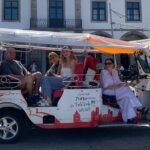
Porto by tuk-tuk turns a half-day into real movement. I like that this is a private tour with a live guide, so you’re not stuck listening to strangers while you bounce around. I also like the vehicle choice: a compact tuk-tuk can slip into side streets you’d never bother trying on foot. One thing to consider upfront: snacks aren’t included, so plan food timing around your tour slot.
If you want a quick “get your bearings” loop, this route hits the main Porto-and-river hits while keeping the pace light enough to still enjoy photos and viewpoints. You’ll start at R. de Alexandre Herculano 251 and work through central landmarks, then cross into the viewpoints that look over the Douro. Just note the tour isn’t suitable for everyone—no kids under 7, and it’s not a fit if you have back problems or if you’re pregnant.
In This Review
- Key things to know before you go
- Why a tuk-tuk makes Porto feel smaller (and easier)
- Price and value: what you’re paying for with a $41 private tour
- The route overview: from Aliados to Afurada and back
- Avenida dos Aliados and Batalha Square: where Porto’s energy starts
- Rua Santa Catarina: Porto’s showpiece street for colors and café windows
- Palacio da Bolsa: architecture that makes the route feel bigger
- Gaia, bridges, and the Porto–Douro connection (Arrábida Bridge plus Ponte D. Luís context)
- São Pedro da Afurada: quick photo stops with real fishermen-village vibes
- Douro Ecological Reserve and Praia de Lavadores: when the views turn toward the coast
- The private guide experience: what to look for once you’re rolling
- Who this Porto tuk-tuk tour suits best
- How it runs in real life: timing, movement, and comfort
- Should you book this Porto Tuk Tuk Tour?
- FAQ
- How long is the Porto tuk-tuk tour?
- Is this tour private?
- What’s included in the price?
- Are snacks included?
- Where do I meet the tour?
- What languages is the live guide available in?
- Is alcohol allowed during the tour?
- Is the tour suitable for children?
- Is the tour suitable for pregnant women?
- Is it refundable if I cancel?
Key things to know before you go
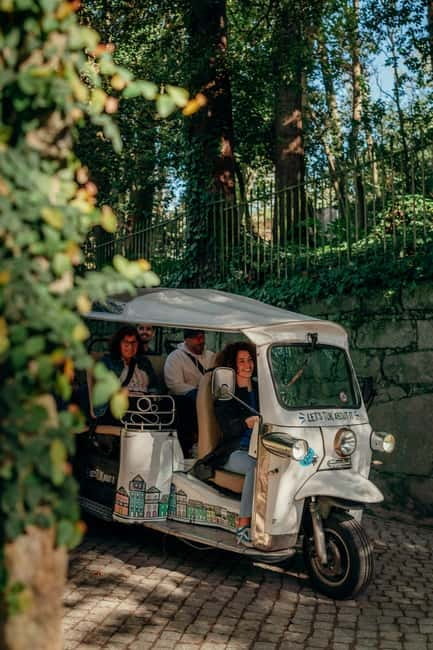
- Private tuk-tuk access for tight lanes and shortcuts that bigger vehicles can’t manage
- Douro River sightseeing paired with photo stops that don’t eat your whole afternoon
- Santa Catarina Street as a major Porto strolling-and-people-watching corridor
- Ponte D. Luís context (including the Seyrig and Eiffel connection) as you move through bridge views
- São Pedro da Afurada fishermen-village atmosphere with quick, scenic stops
- Guide flexibility to adjust the route to your time window from 1 to 4 hours
Why a tuk-tuk makes Porto feel smaller (and easier)
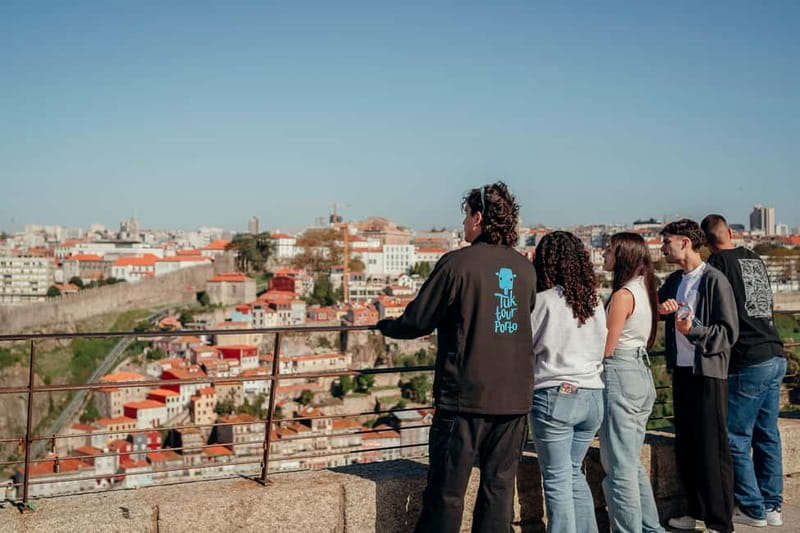
Porto is one of those cities where “short distance” can still mean stairs, slopes, and twists. A tuk-tuk changes the math. Instead of grinding through hills or relying on buses that don’t care about your schedule, you ride in a compact vehicle that’s built for narrow streets and quick turns.
The biggest practical win is how immediate the city feels. You’re not shut inside a large bus cocoon. You’re moving through real neighborhoods—passing squares, storefronts, and residential streets—while your guide explains what you’re seeing in the moment. That’s why this works so well at the start of a trip. If you’ve only got a day or two in Porto, this is the kind of tour that gets you oriented fast.
Also, on a private tour you can actually ask for small changes. In real life, that can look like shifting photo priorities (a river view now, a street stop later) or spending an extra minute where something catches your eye. If you’ve had enough “line up, move on” travel days, this format tends to feel calmer.
A few more Porto tours and experiences worth a look



Price and value: what you’re paying for with a $41 private tour
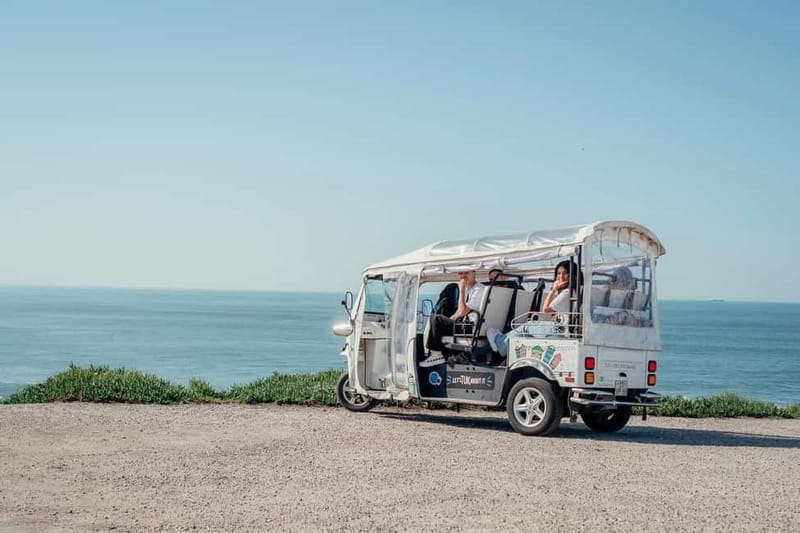
At $41 per person, you’re paying for three things at once: a private guide, the tuk-tuk vehicle, and a structured route that covers a lot of ground without you doing the navigation homework.
That’s the value angle. If you were to replicate this by yourself, you’d spend time planning and likely waste time on dead ends—especially around central Porto where lanes turn into lanes, and you’re constantly judging what’s walkable. The tuk-tuk cost is basically buying you time and convenience, plus local context so you don’t just see pretty streets—you understand what you’re looking at.
Is it cheap? Not really. But it’s often better value than a longer day of piecing together multiple taxis or public transit rides plus self-guided research. This is also the kind of tour where paying for a guide matters: the highlights are not just “big sights,” they’re the bridge stories, the street names, and the riverfront character.
The route overview: from Aliados to Afurada and back
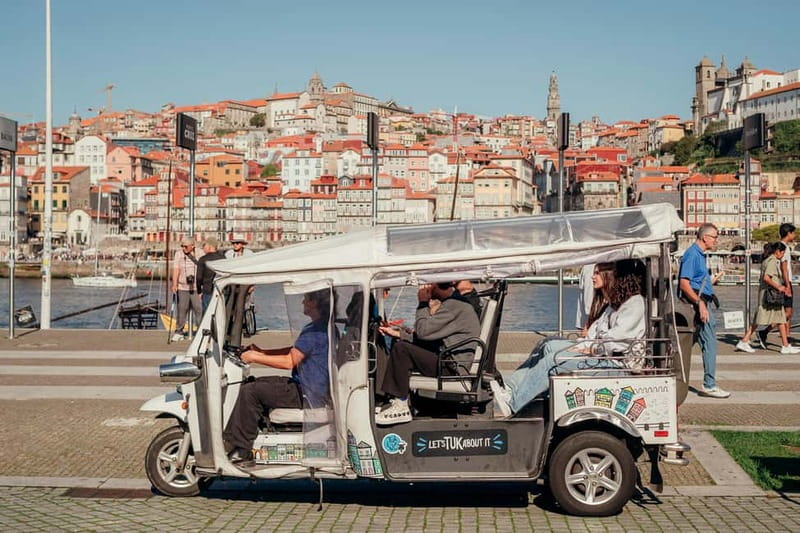
The tour is designed to run in 1 to 4 hours, depending on what starting times you choose. In practice, that means the stops you hit feel more “selected” than “everything.” If you book only the shortest window, you’ll likely skim the route and lean more on views. If you go longer, you’ll have room for a bit more time at the key photo points.
You’ll start at R. de Alexandre Herculano 251, then move through central Porto highlights like Avenida dos Aliados, Batalha Square, and Rua Santa Catarina. From there, the route shifts toward major architecture and connection points, including Palacio da Bolsa, then the riverside perspective through Vila Nova de Gaia and Arrábida Bridge.
Then the itinerary swings toward the Douro edge and fishermen-town feel: São Pedro da Afurada (photo stop), Marina da Afurada (photo stop), Douro Ecological Reserve (photo stop + sightseeing), and finally Praia de Lavadores (photo stop + sightseeing). It’s a logical arc—city core first, then river and landscape views, and back again.
One small consideration: because some stops are timed as photo stops (not long explorations), you’ll get the best value if you’re comfortable with short bursts. This isn’t the tour for lingering hours in one place.
Avenida dos Aliados and Batalha Square: where Porto’s energy starts
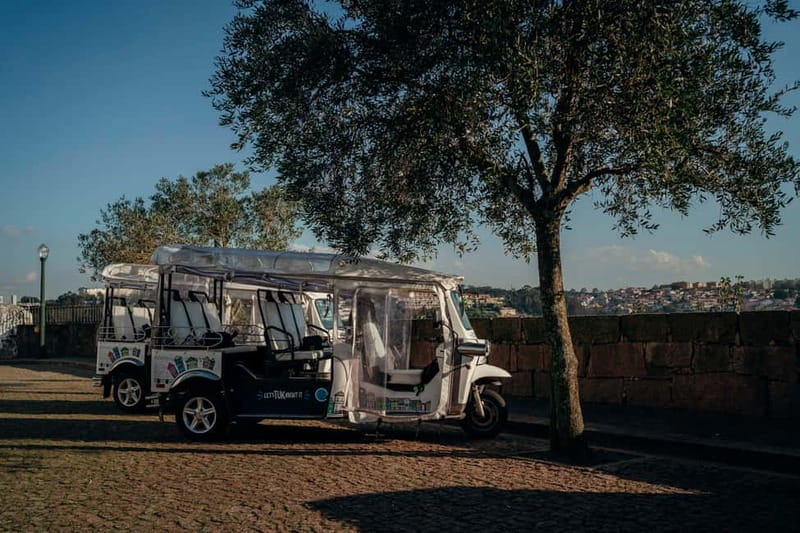
Your tour kicks off in a very Porto way: you roll straight into the city center. Avenida dos Aliados is one of those civic backbones—wide enough to feel like a main stage, busy enough to tell you you’re in the thick of things. Even if you don’t stop long, this is a good warm-up. You get orientation quickly: where the flow of people goes and how streets connect.
Then comes Batalha Square, another “stop and look” moment. Squares are how Porto organizes its neighborhoods. Around places like this you can sense the city’s rhythms—street life, building styles, and the way major streets converge.
What I like about this opening is that it sets you up for the rest of the route. After these early stops, Rua Santa Catarina doesn’t feel random; it feels like a clear continuation of Porto’s story—from public squares to a major shopping-and-street-life corridor.
Rua Santa Catarina: Porto’s showpiece street for colors and café windows
Rua Santa Catarina is a highlight for a reason. This is the kind of street where you can watch everyday life move by, plus it’s a key corridor for getting a feel for the city’s vibe. On a tuk-tuk, you get the best of both worlds: you’re close enough to see the details, but you’re not stuck walking every stretch.
The guide element matters here. If you’re new to Porto, street names can feel like background. A good guide turns them into context—what the street represents, how it fits into the city’s layout, and what to pay attention to as you pass.
If you like having a few seconds to look, snap photos, and keep moving, this stop hits a sweet spot. If you’re the type who prefers a slower “walk and linger” day, keep an eye on your tour length. The longer the tour, the more breathing room you’ll usually have for the street moments.



Palacio da Bolsa: architecture that makes the route feel bigger
From the street energy, the tour gives you Palacio da Bolsa. This is a major architecture stop, and it helps balance the route. Before you reach the riverfront, you’re not only seeing views—you’re seeing the kinds of buildings Porto built (and why the city’s wealth and connections mattered).
Even if you’re not going deep into interiors, the exterior perspective works. It gives you a visual anchor. It also helps you connect the dots between Porto’s historic core and the commercial energy of the river—since the Douro and its network are part of why these grand buildings exist.
This is also a good example of what a private guide does well: when the route is tight, they help you decide what’s worth noticing fast, so you don’t miss the meaningful details while you’re in motion.
Gaia, bridges, and the Porto–Douro connection (Arrábida Bridge plus Ponte D. Luís context)
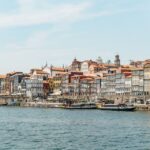
Once you move toward Vila Nova de Gaia and the Arrábida Bridge area, the tour shifts from city streets to big views. That’s where Porto changes feel: you get air, distance, and the layered geometry of river crossings.
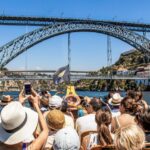
The highlights also point to Ponte D. Luís, tied to the engineering collaboration between Théophile Seyrig and Gustave Eiffel. Whether you’re looking at the bridge from the road or catching part of its silhouette as you reposition, this bridge story adds weight to the scene. You stop seeing it as just a pretty structure and start recognizing it as a landmark piece of engineering.
This bridge-and-Gaia portion is one of the best reasons to choose a tuk-tuk. You can reposition without fighting parking hassles or wasting time switching between transit lines. You’re basically borrowing the guide’s local driving instincts to get you to viewpoint angles efficiently.
If you’re a photo person, this is the segment where you’ll want your camera ready. The river gives you that classic Porto look—waterline, architecture layers, and bridge shapes all in one frame.
São Pedro da Afurada: quick photo stops with real fishermen-village vibes
Then you slow down into character at São Pedro da Afurada. This is the kind of place where the city feels more working-class and less postcard-only. The stop is short—about 10 minutes—but it’s designed to give you the “I’m in the right neighborhood” feeling without turning your day into a long hike.
Why this works: it’s not just another scenic viewpoint. It’s a functional waterfront village identity. You see the riverfront with a different mood than the central city, which makes the Douro feel personal rather than just scenic.
From there you move to Marina da Afurada for a 15-minute photo stop. The marina adds polish to the same river setting—different perspective, different vibe. Together, these two stops create contrast: working waterfront feel, then a more structured harbor view.
If your tour timing is tight, this is still a worthwhile pairing because both stops are in the same neighborhood zone. You’re not bouncing far away to chase photos; you’re collecting multiple angles in one stretch.
Douro Ecological Reserve and Praia de Lavadores: when the views turn toward the coast

Next comes the more nature-and-outlook part: Douro Ecological Reserve for 15 minutes of photo stop and sightseeing, followed by Praia de Lavadores for another 15 minutes of photo stop and sightseeing.
This is where you see how the Douro side transitions toward broader river-to-coast open space. Even if you’re not going into nature trails (the stop is short by design), you still get that “wide view” feeling. It breaks up the architecture and streets you saw earlier, so your day doesn’t feel like a nonstop city-wall-to-city-wall loop.
Praia de Lavadores is also a great finish because it gives you a different kind of Porto image: sky and water first, then the city energy fades behind you. In a compact tuk-tuk tour, that’s a smart way to end—your eyes reset before you head back.
One note for comfort: these are outdoor moments. Bring whatever helps you tolerate the weather. If you’re going in bright sun, you’ll be glad for sun protection. If it’s windy, expect it near the water.
The private guide experience: what to look for once you’re rolling
A private tuk-tuk tour only feels good when the guide can drive and explain at the same time. In the real guide mix for this company, that seems to be a strength. Some guides handle both roles smoothly—like Ruben, who was described as both guide and driver, and Francesca with strong guiding and driving together.
There’s also a theme of personalization. Tiago and Mateus were noted for tailoring the tour for elderly parents, while Rodrigo was praised for being flexible and even managing a vehicle issue quickly by getting a replacement fast and adjusting the plan on the spot.
That matters for you because private tours live or die on adaptability. If it’s raining, if the light is better somewhere else, or if your group has different energy levels, your guide should be able to steer the day without wrecking the timing.
Who this Porto tuk-tuk tour suits best
This is a strong choice if you:
- Have limited time and want to see a lot without walking uphill for hours
- Like having a guide’s context as you move (not after you’ve gotten home)
- Want a flexible schedule you can tweak while still following a coherent route
- Prefer a more intimate vehicle experience than big group buses
It’s not the best choice if you:
- Have back problems, because the tour is not suitable for you
- Are pregnant, because it isn’t suitable
- Are traveling with children under 7, since the tour isn’t suitable for that age group
- Expect long stops at every attraction (some are explicitly photo stops)
Also, plan your food. Because snacks aren’t included, you don’t want to discover you’re hungry halfway through. Build that into your day before you meet at R. de Alexandre Herculano 251.
How it runs in real life: timing, movement, and comfort
This tour is built around movement. You’ll see a list of stop types—sightseeing stops and photo stops—and the photo stops are timed (for example, 10 minutes at São Pedro da Afurada, and 15 minutes at Marina da Afurada and the reserve/coast viewpoints).
That structure is exactly why it works as a first-timer orientation tour. But it also means you’ll get the most enjoyment if you’re okay with quick looks rather than long museum-style pacing.
If you’re bringing older family members, do yourself a favor and think about breaks. The tour format is flexible, but you should still be proactive about comfort needs during a day with multiple short hops.
Last practical point: alcohol and drugs aren’t allowed, and alcoholic drinks aren’t allowed in the vehicle. If you’re the type who likes wine-tasting spillovers, keep that for after the tour ends.
Should you book this Porto Tuk Tuk Tour?
I’d book it if you want a time-efficient Porto and Douro sampler that feels personal and allows quick viewpoint stops. It’s especially worth it early in your trip when you need orientation, and it’s a smart choice if you want riverfront character without committing to a full walking day.
Skip it (or choose a different format) if you need long, slow stops, or if your body needs low-impact travel. This one is about motion and angles.
If you can handle short photo windows and you’re ready to move through the city with a private guide in a compact tuk-tuk, you’ll likely find it a fast, fun way to understand Porto beyond the main squares.
FAQ
How long is the Porto tuk-tuk tour?
The tour duration is listed as 1 to 4 hours, depending on the starting time you choose.
Is this tour private?
Yes. It’s a private tour with a private guide.
What’s included in the price?
The tour includes the private tour and a private guide.
Are snacks included?
No, snacks are not included.
Where do I meet the tour?
The meeting point is R. de Alexandre Herculano 251. There’s a note to look for bikes hanging around and to check in where the tours are run.
What languages is the live guide available in?
The live guide is available in English, French, Portuguese, and Spanish.
Is alcohol allowed during the tour?
Alcohol and drugs aren’t allowed, and alcoholic drinks are not allowed in the vehicle.
Is the tour suitable for children?
It’s not suitable for children under 7 years old.
Is the tour suitable for pregnant women?
No, it’s not suitable for pregnant women.
Is it refundable if I cancel?
You can cancel up to 24 hours in advance for a full refund.