REVIEW · LISBON
Lisbon: Sunset Tagus River Sailing Tour with Drinks
Book on Viator →Operated by Sailing with Sal · Bookable on Viator
Sunset looks better from the water. This Lisbon sail stays small-group (max 10) so you get a calmer pace and real conversation as you glide along the Tagus. I like the included drinks too, with wine/beer plus water and juice, which makes the whole outing feel like a proper evening. The main drawback is simple: you’re on the river, so cool, breezy weather can make it feel colder even when the light is beautiful.
You also get a smart mix of big sights without rushing. There’s a choice of morning or sunset sail times, and the whole outing is about 2 hours, enough to see a lot and still keep the rest of your day (or night) open.
This is the kind of tour where the crew actually sets the tone. I’ve seen mentions of blankets on chilly departures, plus music and a friendly, close-up feel from hosts like Sal and captain Miguel (with first mate Sara showing up in the stories). Just plan to dress in layers and expect to spend time in open air.
In This Review
- Key takeaways before you sail
- Lisbon Sunset Sailing, Tagus Views, and the Calm of a Small Yacht
- Getting to Doca de Alcântara: Where You Meet and How It Feels
- Terreiro do Paço and the Tagus-Front Story You See From the Water
- Almada Across the River and Cacilhas Lighthouse’s Fog-Logic
- Cristo Rei and the 25 de Abril Bridge: Big Monuments, Clear Angles
- Belém From the Water: Fake Lighthouse to Belém Tower to the Discoveries
- MAAT on the Riverfront: When Modern Architecture Meets the Same Water
- Drinks, Blankets, and the On-Board Touches That Actually Matter
- Morning vs Sunset Times: Getting the Light You Want in Two Hours
- Price and Value: Why About $39.91 Feels Reasonable
- Who Should Book Sailing with Sal, and Who Might Skip It
- Should You Book This Lisbon Tagus Sunset Sail?
- FAQ
- What’s included in the ticket?
- How long is the sailing tour?
- How many people are on board?
- What time options are available?
- What language is the tour offered in?
- What happens if the weather is poor?
Key takeaways before you sail
- Max 10 people on a 12-meter yacht means a more personal ride, not a cattle-car cruise
- Two included drinks (wine or beer) plus juice and water keep you comfortable without hunting for a bar
- A highlight loop from Terreiro do Paço and Almada to Christ the King, 25 de Abril Bridge, and Belém
- Crew-led storytelling with names like Sal, Miguel, Sara, and Marianna showing up in feedback
- Cold-weather help: blankets are mentioned for chillier sunsets, and music can be part of the mood
Lisbon Sunset Sailing, Tagus Views, and the Calm of a Small Yacht
If you’re in Lisbon for the first time, it’s easy to feel like you’re always moving. This is one of those rare tours that gives your feet a rest while still delivering the famous postcard moments. The Tagus (Tejo) acts like a free “camera lens,” turning major Lisbon landmarks into something bigger and clearer than you get from the sidewalks.
What makes this sail work is the scale. A 12-meter sailing yacht sounds modest, and that’s the point. With a maximum of 10 people onboard, you can hear the crew’s explanations and look around without constantly threading between strangers. It also keeps the vibe more relaxed, even if it’s raining or overcast, because you’re not stuck in a crowd waiting your turn.
And then there’s the included drinks. You don’t just get water. You get a choice of two drinks—wine (white, green, or rosé) or beer—plus bottled water and apple or red fruits juice. For about the cost of a nice dinner in many parts of town, you’re basically paying for a two-hour river experience with comfort built in.
You can also read our reviews of more boat tours in Lisbon



Getting to Doca de Alcântara: Where You Meet and How It Feels
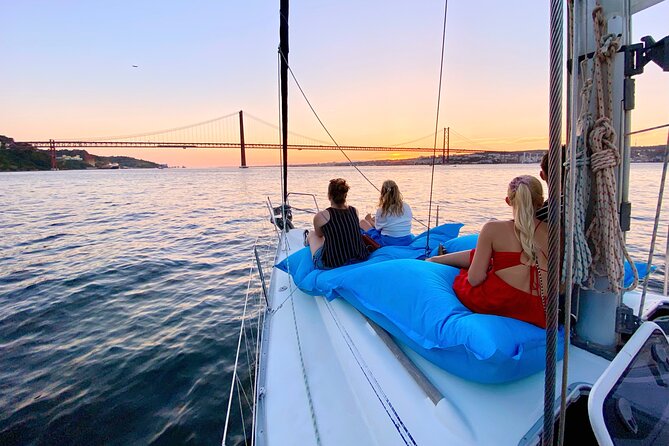
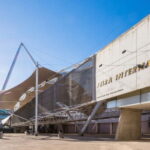
You board at Doca de Alcântara, at the liscont building near R. da Cintura do Porto de Lisboa. It’s near public transportation, which matters in Lisbon where parking and walking routes can be a puzzle.
One practical note from experience: the dock area is not right at the city’s main center. If you’re staying central, plan for a walk or use an Uber/taxi to shorten the trip. Once you arrive, the atmosphere shifts quickly—everything feels more “you’re going out on the water” than “you’re queued for a bus.”
You’ll also want a mobile ticket ready. You’ll get confirmation at booking time, and the tour ends back at the meeting point, so you’re not stuck figuring out how to get home after sunset.
Terreiro do Paço and the Tagus-Front Story You See From the Water
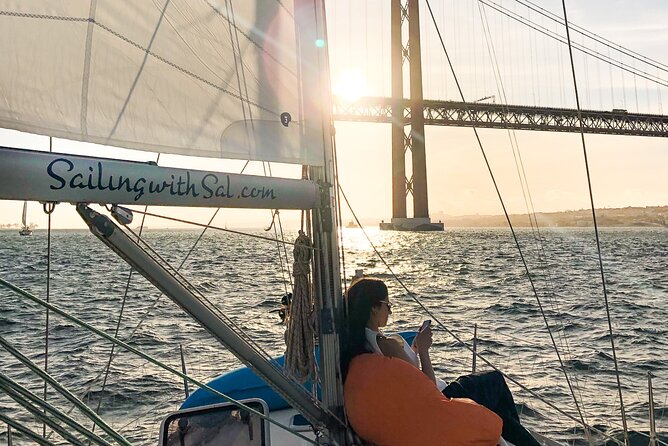
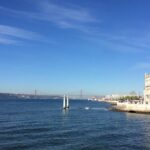
As you head out, you face the Tagus toward the south and get a front-row look at Terreiro do Paço, a famous Lisbon plaza tied to royal power and a city reset.
Here’s the version that makes the view feel real: Terreiro do Paço was once associated with the Royal Palace of Ribeira. Then came the 1755 Lisbon earthquake, which destroyed much of what stood there. After that, the plaza was rebuilt as part of the Pombaline Downtown (Baixa) plan—ordered under the Marquis of Pombal, who served as a minister from 1750 to 1777 during the reign of King D. José I.
On the sail, you don’t stop to read plaques. You simply glide by and connect the landmark shapes to the dramatic turning point in Lisbon’s story. That’s why this opening stretch is valuable: it sets context fast, without dragging you into a museum line.
Almada Across the River and Cacilhas Lighthouse’s Fog-Logic
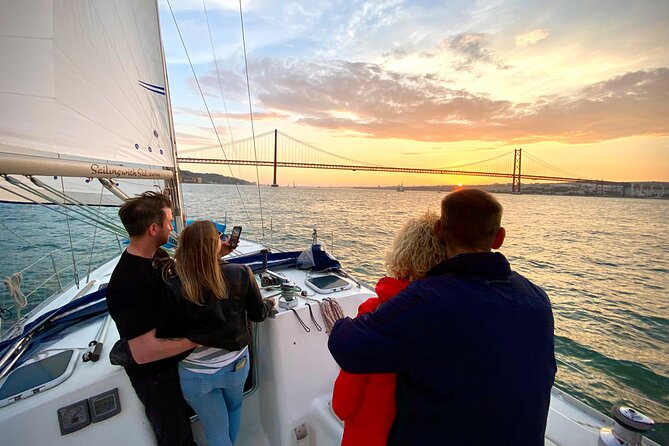
Crossing-eye views from Lisbon to Almada are one of the hidden pleasures of sailing the Tagus. On one side you see the Portuguese capital’s built edges. On the other, Almada brings a different feel—older docks and shipyard energy—so Lisbon doesn’t look like a single flat skyline.
Then you get to Cacilhas Lighthouse, and it’s a detail you’ll actually remember because the purpose is so specific. The lighthouse started operating on 31 December 1885, designed to mark the southern limit of the anchorage area on the Tagus where fog is common. It used a fixed white light over 342 degrees, backed by a fifth-order lens with a nominal range of 11.5 nautical miles.
A couple more technical layers make it extra interesting:
- A bell was added in May 1886 (clockwork-controlled).
- In 1905, a system covered the light for five seconds every minute to help it stand apart from other fixed lights.
- It shut down from March 1916 to the end of 1918 during World War I.
- In 1927, it switched to acetylene gas, added blue panels to create a green light effect, and got a fourth-order lens to match international port light rules.
Why does any of that matter when you’re on a boat? Because it turns a simple white beam into a practical piece of river infrastructure. You start seeing the Tagus as a working route, not just a sightseeing backdrop.
Cristo Rei and the 25 de Abril Bridge: Big Monuments, Clear Angles
From the water, Christ the King (Santuário de Cristo Rei) looks like it owns the skyline. This Catholic shrine sits in Almada and was inspired by the statue of Christ the Redeemer in Rio de Janeiro, after Cardinal Patriarch of Lisbon visited the Brazilian monument.
The project was inaugurated on 17 May 1959, and the giant statue carries a message of gratitude: Portuguese people were spared the direct destructive effects of World War II. That adds weight to the view because you’re not just seeing a silhouette—you’re seeing a symbol with a reason.
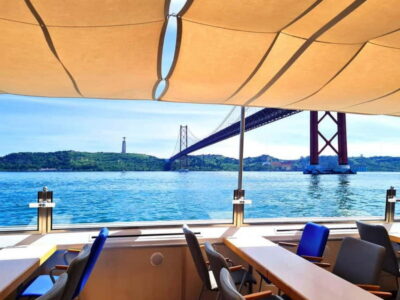
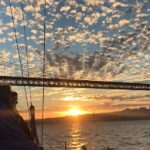
Next comes the 25 de Abril Bridge. It’s a massive river crossing that’s impossible to miss. Historically, it was called the Salazar Bridge (Ponte Salazar) from its opening in 1966 until 1974. After the Carnation Revolution overthrew remnants of Salazar’s regime, it was renamed for April 25, the revolution date. Locally it’s also called Ponte sobre o Tejo, meaning bridge over the Tagus.
Sailing past it gives you something buses and walking viewpoints often don’t: a sense of scale and relationship between the river and the city. You can see why this bridge matters to how Lisbon functions.
You can also read our reviews of more evening experiences in Lisbon



Belém From the Water: Fake Lighthouse to Belém Tower to the Discoveries
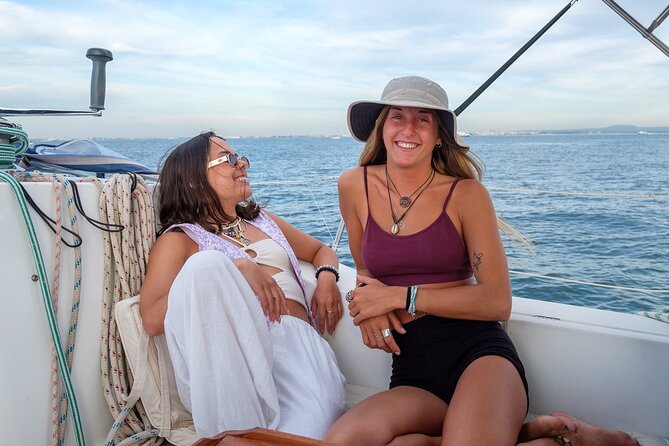
When you reach the Belém side, the vibe shifts from modern viewpoints to Renaissance-era stone and the Age of Discovery story that Lisbon helped drive.
One quirky stop along the way is an Expo-era false lighthouse. It never worked as a light. Built for the Portuguese World Exhibition in 1940, it functions as a tourist element positioned between Belém Tower and the Monument to the Discoveries.
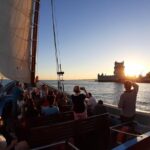
Then you hit the classic: Belém Tower (Tower of Saint Vincent). This 16th-century fortification was built as a gateway to Lisbon for explorers—serving as an embarkation and disembarkation point. Architecturally, it’s strongly linked to the Manueline style, with influences from other styles mixed in.
From there, you’ll see the Padrão dos Descobrimentos (Monument of the Discoveries) on the river. It marks the Portuguese Age of Discovery in the 15th and 16th centuries, celebrating ships and voyages that pushed trade and exploration toward India and the Orient.
If you care about photos, this part of the sail is where they tend to come out best. You’re moving, you’ve got wide angles, and the river gives the monuments room to breathe in the frame.
MAAT on the Riverfront: When Modern Architecture Meets the Same Water
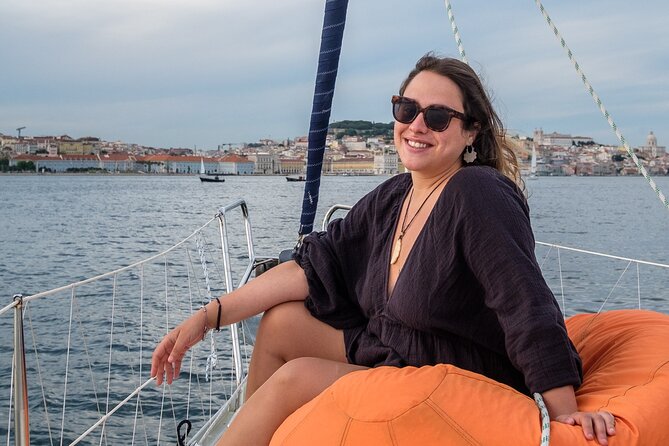
One of the most satisfying things about this sail is how it threads together Lisbon’s eras. After you’ve seen old fortifications and exploration monuments, the route keeps moving toward MAAT—the Museum of Art, Architecture and Technology.
MAAT launched in October 2016 through the EDP Foundation. It sits on the Belém waterfront and spreads across 38,000 square meters. The campus includes a repurposed power station, Central Tejo, originally built in 1908, plus newer buildings designed by London-based architecture studio AL_A (Amanda Levete Architects). They connect via landscape work by Lebanese architect Vladimir Djurovic.
Even if you’re not planning to go inside a museum that day, seeing MAAT from the river helps you understand Lisbon’s rhythm right now. It’s not only a city of monuments; it’s a city still building.
Drinks, Blankets, and the On-Board Touches That Actually Matter
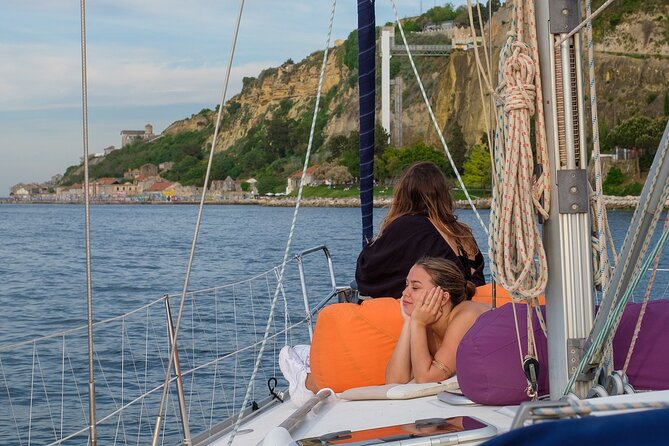
This tour isn’t only about sights. It’s also about staying comfortable while you take them in.
Included with your ticket are:
- Two alcoholic drinks: white, green, or rosé wine or beer
- Bottled water
- Apple or red fruits juice
Food isn’t listed as included, so think of this as a drink-and-sit-with-the-view experience rather than a full meal cruise. That said, I’ve also seen people describe small snacks like crackers and nuts depending on the departure. If you’re the type who needs fuel before you sail, pack a light snack just in case.
Comfort details show up again and again: people mention blankets on chillier evenings, and that can change the whole experience when sunset arrives and the wind picks up. Smoking isn’t allowed onboard, which helps keep things pleasant and clean.
Music can be part of the mood. One departure included Fado-style music, and other trips describe a calm atmosphere with an easygoing soundtrack rather than loud party energy.
One more practical tip: wear layers. With sailing, the temperature can swing fast between when you board and when the sun drops.
Morning vs Sunset Times: Getting the Light You Want in Two Hours
You can choose morning or sunset. Both can work, but sunset is where the Tagus feels like its own stage.
Two hours sounds short, but it’s the right length for this type of route. You get a guided sweep past major areas—Terreiro do Paço, Almada, Cacilhas, then toward Almada again for Cristo Rei and the bridge views, and finally into the Belém lineup with tower and monuments. You won’t leave feeling exhausted the way you might after a full-day sightseeing grind.
Sunset also rewards patient people. Even with clouds, the river gives you shifting light on stone and water. On rainy or overcast nights, you trade bright color for softer contrasts, and the experience still holds up because you’re sheltered by the boat and supported by the crew.
If you like to plan your day, this is great for:
- A first afternoon that helps you get your bearings fast
- A last-night option when you want calm, not another museum list
- Anyone who wants big Lisbon views without stepping into crowds and lines
Price and Value: Why About $39.91 Feels Reasonable
At $39.91 per person, this sail isn’t priced like a discount nap on a ferry. You’re paying for three things that matter:
- A small yacht ride (max 10) rather than a large group
- Two included drinks plus water and juice, which removes the most annoying part of sailing tours—constant buy-this, buy-that pressure
- Guided narration as you pass key sites, so the route feels like a story instead of a moving view
You should still remember the boundaries. It’s about drinks and sightseeing, not a long food-and-walking day. If you want a meal, plan one before or after. If you want a full museum visit, MAAT (or other sites) will need a separate slot.
Booking seems to happen relatively steadily, with many people reserving about 17 days in advance on average. That’s usually a good sign: it suggests the tour timing fills up in peak periods.
Who Should Book Sailing with Sal, and Who Might Skip It
This tour fits people who like:
- Clear landmark views from the water
- A short, guided outing that doesn’t eat the whole day
- A small-group vibe with a crew that pays attention
- Comfort upgrades like blankets when needed and drinks included
It also works well for solo plans. One person mentioned they found the onboard atmosphere friendly, which matters if you’re traveling alone and don’t want to feel awkward on a shared activity.
It may not be your best choice if you want:
- A multi-hour open-ended cruise with lots of free time away from the route
- Deep museum time inside Belém attractions
- A strictly quiet, strictly silent experience (the crew talks, because the point is seeing and learning)
Should You Book This Lisbon Tagus Sunset Sail?
I’d book it if you want the Tagus to be part of your Lisbon story, not just a background on your photos. The value is strong because your ticket already includes drinks plus water/juice, and the small-group size keeps the experience easy to enjoy. Add the mix of landmark stops—from Terreiro do Paço and Almada through Cristo Rei and the 25 de Abril Bridge, then into Belém Tower and the Discoveries monument—and you get a lot of payoff for two hours.
If you’re sensitive to cold or windy weather, plan smart: dress in layers and expect that the river can feel cooler near sunset. But that’s also why the blankets help. This is the kind of tour that turns a chilly evening into a cozy one.
If your goal is to see Lisbon from a fresh angle without spending your whole day walking, this is an excellent fit.
FAQ
What’s included in the ticket?
Your ticket includes two drinks (wine in white/green/rosé or beer), bottled water, and apple or red fruits juice. Food is not listed as included.
How long is the sailing tour?
The duration is about 2 hours.
How many people are on board?
This activity has a maximum of 10 travelers.
What time options are available?
You can choose a morning or sunset cruise time.
What language is the tour offered in?
The tour is offered in English.
What happens if the weather is poor?
This experience requires good weather. If it’s canceled due to poor weather, you’ll be offered a different date or a full refund. Smoking is not allowed onboard.