REVIEW · LISBON
Lisbon Small Group Day Cruise with Historic Commentary & a Drink
Book on Viator →Operated by PALMAYACHTS · Bookable on Viator
Two hours on the Tagus feels like cheating. It’s Lisbon by boat—easy, scenic, and paced for people who don’t want to spend the day transferring between viewpoints. You get historic commentary as you glide past major sights, plus an included drink to make the whole thing feel like a real outing, not a rushed sightseeing sprint.
What I like most is the small-group size (max 12). That means you can actually hear the captain/guide talk, and the vibe stays calm instead of turning into a floating school bus. I also like the route: it mixes the iconic Belém monuments with big city landmarks like the 25 de Abril Bridge, so you get a broad picture of Lisbon in a short window.
One thing to consider: this is weather-dependent. It requires good weather, so if conditions are rough the operator may reschedule or refund. If you’re the type who wants a full, museum-style day, the 2 hours will feel short—this is best as an efficient, scenic introduction.
In This Review
- Quick hits before you go
- Why this 2-hour Tagus cruise works so well in Lisbon
- The route: Belém, the 25 de Abril Bridge, and Almada’s skyline views
- Padrao dos Descobrimentos: the Age of Discovery in one river-side stop
- Ponte 25 de Abril: Lisbon’s Golden Gate look-alike (with its own meaning)
- Torre de Belem: fortress and ceremonial gateway from the river
- Sanctuary of Christ the King (Almada): why the skyline changes everything
- Praça do Comércio (Terreiro do Paço): Lisbon’s riverfront comeback after 1755
- Castelo de São Jorge: the bonus view you’ll notice right away
- Small-group comfort: what onboard feels like
- A note about sailing conditions
- The commentary: how to get the most out of the history without slowing down
- Morning vs afternoon: when to choose for the best experience
- Value check: is $49.58 worth it for a 2-hour cruise?
- Who should book this Tagus sailing cruise
- Should you book? My practical recommendation
- FAQ
- How long is the Lisbon Small Group Day Cruise?
- Is the tour offered in English?
- What is included with the ticket?
- How many people are on the boat?
- Where does the cruise start and end?
- What sights will we see during the cruise?
- Do you need admission tickets for the monuments?
- What if the weather is poor?
- What is the cancellation policy?
Quick hits before you go
- Max 12 people keeps the commentary clear and the experience relaxed.
- 2 hours on the water is ideal when you’re tight on time.
- A welcome drink is included (wine, beer, soft drink, or water).
- You pass major Lisbon icons without dealing with lines or entry tickets for viewpoints.
- Restroom onboard means you can focus on the scenery, not logistics.
- Morning or afternoon start lets you pick the light and crowd level you prefer.
Why this 2-hour Tagus cruise works so well in Lisbon
Lisbon is made for looking. From street level, the city is full of angles, viewpoints, and sudden staircases that lead to a postcard. From the water, it’s a different game: the monuments line up, the river shapes the city, and you get that satisfying sense of orientation fast.
This cruise is built around that idea—short, focused, and scenic. You’re out long enough to feel like you did something special, but not long enough to drain your energy. It’s especially handy on days when you’ve already got a plan on land (or when the sun is doing its usual Lisbon thing and you don’t want to be exposed for hours).
The small-group setup matters more than you might think. With fewer people aboard, the captain and guide can keep the storytelling moving at a human pace. That’s where the tour earns its keep: the boat isn’t just transport; it’s the platform for context.
And yes—there’s a drink waiting for you. It’s not a fancy tasting, but it makes the first 10 minutes feel like you’ve started your vacation instead of just arriving to an activity.
You can also read our reviews of more boat tours in Lisbon



The route: Belém, the 25 de Abril Bridge, and Almada’s skyline views
You’ll be moving along the Tagus and seeing Lisbon’s two big “moods” from different angles—historic maritime Lisbon on one side, and the dramatic bridge-and-ridge views toward Almada on the other.
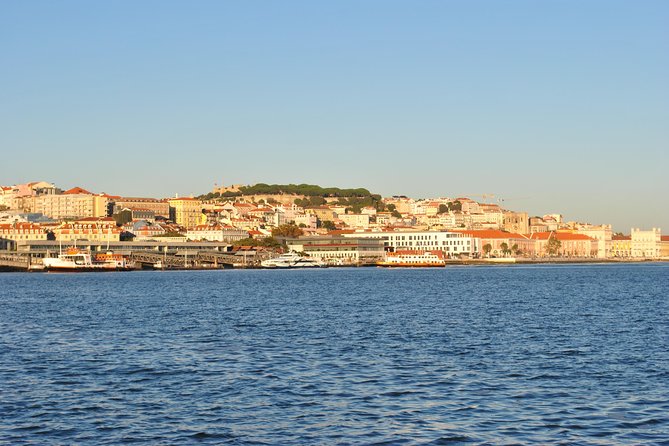
Here’s what the run feels like in practical terms: you start in Belém, get your first look at Portugal’s Age of Discovery monument, glide past the signature bridge, then continue along toward landmarks that sit high above the river. You’ll also get views back toward Lisbon’s iconic hilltop castle from the water.
You’re not trying to get off and wander between sites. Instead, you’re getting a guided sweep where the boat’s movement does the work. If your legs have had enough of cobblestones, this is the day to let the water carry you.
Padrao dos Descobrimentos: the Age of Discovery in one river-side stop
Your first major point of reference is the Padrao dos Descobrimentos in Belém. This monument is tied directly to the Portuguese Age of Discovery—the era when Portuguese ships pushed out across oceans to trade and explore routes toward India and the Orient.
From the water, this stop hits differently than it would on foot. You’re seeing it in its natural setting: a northern-bank riverscape tied to departure and return, not a monument sitting alone in a plaza. The commentary usually turns that physical location into a story—why this shoreline mattered, and why Belém became synonymous with exploration-era Portugal.
Practical note: even if you don’t plan to go inside anything, you still benefit. The river perspective gives you the “why here” context fast, which makes your later sightseeing on land much easier.
Ponte 25 de Abril: Lisbon’s Golden Gate look-alike (with its own meaning)
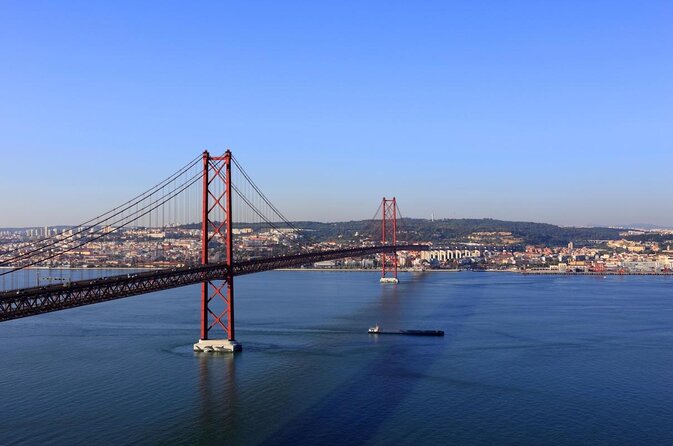
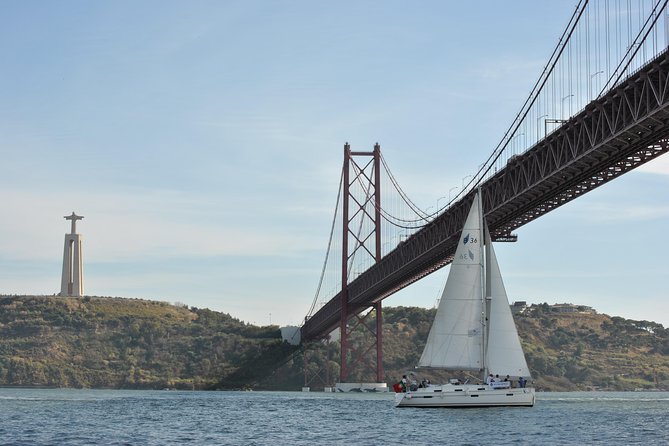
Next, you pass under the 25 de Abril Bridge. This is the kind of sight that’s instantly recognizable—its color and suspension style invite that famous comparison to San Francisco’s Golden Gate Bridge. But the name here carries its own story.
The bridge opened in 1966, and it used to be called Salazar Bridge until 1974. Then came the name 25 de Abril, tied to the Carnation Revolution. That political history is part of what makes the bridge more than a photo op. You’re not just spotting a landmark; you’re seeing a symbol of change in Portugal.
From the boat, passing underneath adds a wow-factor. It also gives you a sense of scale—how the Tagus connects city life to the south bank. If you like landmarks that feel like infrastructure with personality, this section delivers.
Torre de Belem: fortress and ceremonial gateway from the river
After the bridge, you’ll head toward Belém Tower, another UNESCO-linked sight tied to the Age of Discoveries. This tower wasn’t just decorative. It functioned as a fortress and as part of the port activity connected to Portuguese departures.
You’ll also get the “gateway” angle: Belém Tower is described as a ceremonial entrance to Lisbon, which matters because the story of the city’s maritime past isn’t limited to ships. It’s about how the city presented itself—before journeys, and as a visible sign of power and purpose.
The value here is speed plus context. You’ll see the tower from the water during a moving moment, and then you can decide later if you want to spend time going deeper on land.
You can also read our reviews of more historical tours in Lisbon
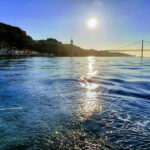


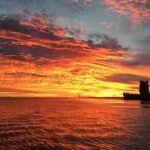


Sanctuary of Christ the King (Almada): why the skyline changes everything
Then comes one of the cruise highlights for views: the Sanctuary of Christ the King in Almada. This is a Catholic monument dedicated to the Sacred Heart of Jesus Christ, overlooking Lisbon from across the water.
You also get the origin story behind it. It was inspired by the Christ the Redeemer statue in Rio de Janeiro, but it’s tied to local Lisbon leadership and events—project inauguration in 1959, and the idea that it was built in gratitude after Portugal was spared the worst effects of World War II.
From the river, you understand why this place is dramatic. A huge statue on a ridge doesn’t work as well in a quick street pass. From the water it’s framed by the Tagus, and the scale reads instantly.
If you’re the kind of traveler who likes “stand there and look” moments, this is that portion of the ride.
Praça do Comércio (Terreiro do Paço): Lisbon’s riverfront comeback after 1755
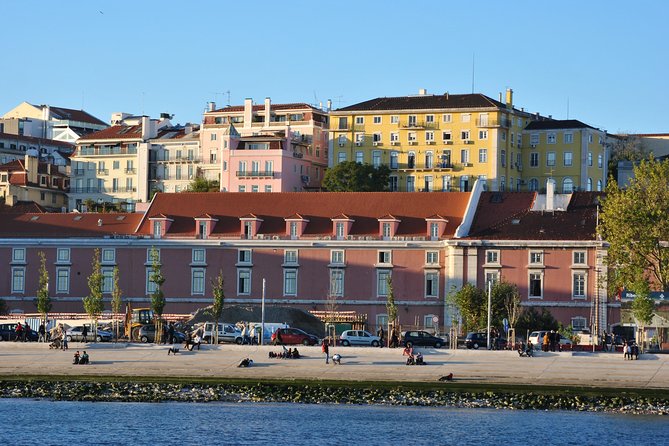
You’ll also catch views of Praça do Comércio, still commonly called Terreiro do Paço. This square sits right by the Tagus and connects you to an important Lisbon turning point: the royal Ribeira Palace was located here until it was destroyed during the 1755 Lisbon earthquake.
After the quake, the square was remodeled as part of the Pombaline downtown rebuilding, directed by Sebastião José de Carvalho e Melo, the Marquis of Pombal.
On the cruise, this works as a “how Lisbon rebuilt itself” chapter. It’s not just pretty waterfront. It’s a place where you can trace catastrophe and recovery through city planning. From the water, you can also appreciate how the Tagus shaped the city’s commercial and civic life.
Castelo de São Jorge: the bonus view you’ll notice right away
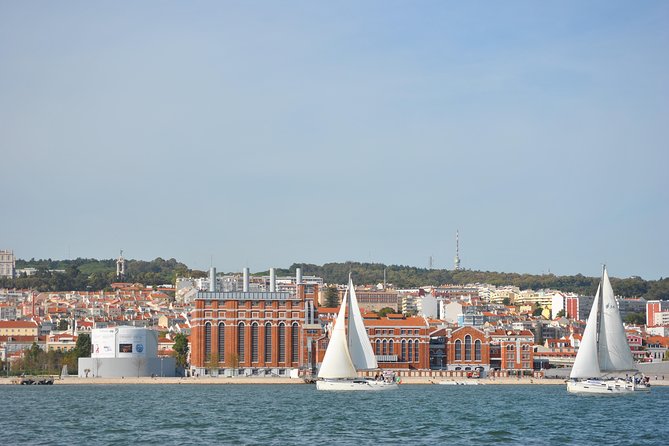
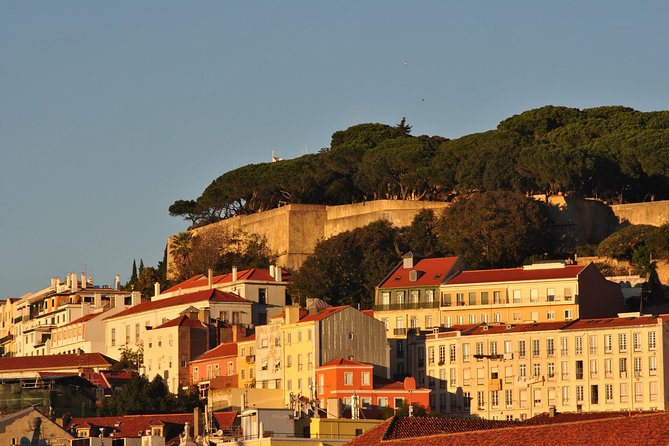
One of the easiest wins from the river is the view of Castelo de São Jorge, perched above Lisbon. Even if you don’t plan to enter the castle, you’ll likely feel how it controls the city’s geometry.
This is one of those spots where the boat perspective gives you context for the hilltop feel of Lisbon. It also helps you “map” Lisbon mentally—so later, when you’re on land, the streets and viewpoints feel less random.
Small-group comfort: what onboard feels like
This cruise caps at 12 travelers, and that shows in the comfort. You’re not packed in shoulder-to-shoulder. You also have a restroom onboard, which is a big deal on any water activity, especially if you’re pairing it with a day of walking.
You’ll also get a welcome drink. You can choose from a glass of wine, beer, a soft drink, or water. It’s a nice touch, and it makes the short duration feel more like a complete experience.
The tour also includes mobile ticketing and is offered in English. If you like organized but not stiff tours, this fits that sweet spot.
A note about sailing conditions
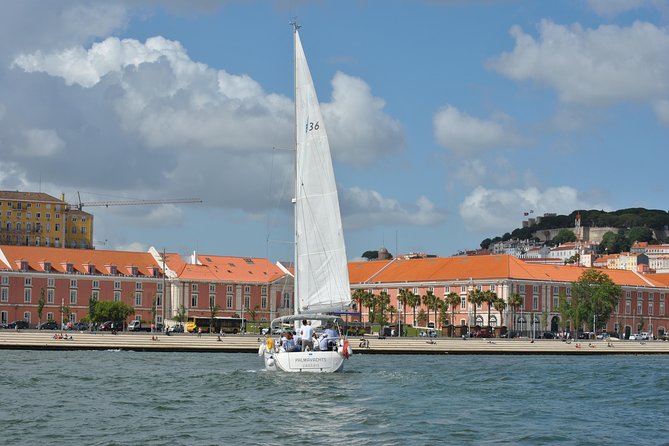
You may feel some motion depending on wind and weather. One of the reasons people love this kind of sailing catamaran cruise is that you can feel the river’s character—sometimes light, sometimes breezy. On a windy day, you might notice the boat tilt a bit as it catches wind. It’s part of the charm, as long as you go in expecting a real boat ride.
The commentary: how to get the most out of the history without slowing down
The best way to enjoy the historic commentary is to treat it like a conversation with your surroundings. Don’t worry about memorizing dates. Focus on the “why.”
When you’re looking at Belém’s monuments, the stories usually connect Portugal’s sea power to specific places—Belém’s riverfront, its departure role, and the symbolism of structures like the tower. When you’re under the 25 de Abril Bridge, the point shifts to identity and modern history—political change and engineering at once. When Christ the King appears across the water, the commentary turns toward religion, memory, and gratitude tied to 20th-century events.
The strongest sign this works is that multiple crew members are described as making the experience personal and easy to follow. Names that have shown up include Benny (guide) and Miguel (captain). Other crew names you might hear credited include Rui, and some tours even mention sailing time at the helm with captains like Mark when conditions allow. If you want the kind of experience where people talk to you like a human, not a barcode, this is built for that.
Morning vs afternoon: when to choose for the best experience
You can pick a morning or afternoon start time, which matters for two reasons: light and crowds.
Morning tends to feel calmer on the water. Afternoon can be great if you like warmer light and want your views to glow a bit more. If you’re trying to avoid packed tourist energy, choosing earlier can help—especially with a small group, where you’ll notice the difference in how the river feels.
If you’re flexible, go for the time that matches your energy. This is a short tour, but it still requires you to be present and enjoy the motion. If you’re already tired from climbing Lisbon’s hills, I’d lean morning or mid-afternoon so the rest of your day still feels pleasant.
Value check: is $49.58 worth it for a 2-hour cruise?
At about $49.58 per person for roughly 2 hours, the value comes from what’s bundled.
You’re getting:
- time on the water with major Lisbon landmarks
- historic commentary that turns sights into context
- a welcome drink
- a restroom onboard
- a max 12 small-group setting
The alternative is doing those sights separately on foot and by transit—plus dealing with time lost between them. Here, the boat connects the dots quickly. And because the tour focuses on the river perspective, you aren’t paying for museum entry. You’re paying for orientation, views, and stories in one shot.
So yes, it’s a splurge compared to a simple walk around Belém—but it’s a smart splurge if you want Lisbon’s big picture without giving up your whole day.
Who should book this Tagus sailing cruise
This tour is a great fit if:
- you want Lisbon’s main highlights without cramming in long hours
- you like history stories but don’t want a slow, sit-down format
- your schedule is tight and you need a good “first or middle of trip” activity
- you prefer relaxed sightseeing with a drink in hand
It might be less ideal if:
- you want museum entrances or guided walking tours inside monuments
- you need a full half-day or full-day immersion in one neighborhood
- you’re traveling on a day when weather is highly unpredictable and you hate reschedules
Should you book? My practical recommendation
I’d book this if you want a simple win: Lisbon from the water, meaningful landmarks, and commentary that makes the river route feel purposeful. The combination of short duration, small-group pace, and included drink makes it a strong use of your time—especially for first-timers or anyone juggling multiple plans.
The only real reason to skip is if you absolutely can’t handle weather risk or you’re hoping for a long, hands-on historical deep dive. Otherwise, this is the kind of activity that leaves you with photos and—more importantly—with a clearer sense of where Lisbon’s story lives.
FAQ
How long is the Lisbon Small Group Day Cruise?
The cruise lasts about 2 hours.
Is the tour offered in English?
Yes, the tour is offered in English.
What is included with the ticket?
You get a welcome drink (wine, beer, soft drink, or water), a restroom on board, and private transportation is included.
How many people are on the boat?
The tour has a maximum of 12 travelers.
Where does the cruise start and end?
It starts at Lisbon Boat Tours – Palmayachts, Doca de Belém – Gate 1, Av. Brasília, and ends back at the same meeting point.
What sights will we see during the cruise?
You’ll pass by Padrao dos Descobrimentos, Ponte 25 de Abril, Torre de Belem, the Sanctuary of Christ the King, and Praça do Comércio (Terreiro do Paço), plus you can see Castelo de São Jorge from the river.
Do you need admission tickets for the monuments?
Admission tickets are listed as free for the sights noted in the tour description.
What if the weather is poor?
This experience requires good weather. If it’s canceled due to poor weather, you’ll be offered a different date or a full refund.
What is the cancellation policy?
Free cancellation is available up to 24 hours in advance for a full refund.
If you want, tell me your travel month and whether you prefer morning or afternoon, and I’ll help you pick the best start time for the feel you’re going for.