REVIEW · VILAMOURA
Lagos and Sagres Premium – Shared small group > VTours Algarve
Book on Viator →Operated by VTours Algarve · Bookable on Viator
Cliffs first, history after, no car stress. This Lagos and Sagres Premium day trip gives you pickup and drop-off from hotels between Faro and Lagos and keeps the group small at up to 8 people.
It’s a great way to cover a lot of Algarve without spending your vacation time figuring out routes and parking.
I also love how much is handled up front: entry tickets for the monuments and church stops are included. Plus, many days are led by Pedro, whose passion for the region turns each viewpoint into a real story, not a checklist of stops.
The one possible drawback is the pace. It’s a full day with mostly short walking times, so if you want hours alone on one beach, plan extra time on your own.
In This Review
- Key highlights at a glance
- From pickup to photo stops: what this day trip actually feels like
- The route starts with Lagos city’s protector statue
- Ponta da Piedade Lighthouse: sea arches, sea pillars, and serious wow views
- Cabo de São Vicente (St Vincent): fortress defense plus a working lighthouse
- Sagres: why Henry the Navigator still matters here
- Marina de Lagos and the harbor breeze
- Lagos old town: layers of Celt, Rome, Moor, and the Discoveries era
- Two quick cultural stops: Henry the Navigator statue and Santa Maria church
- Value and pricing: what $216.04 buys you in real terms
- Best for you if you want guided clarity (and not too much driving)
- A note on the guide experience and the personal touch
- Should you book Lagos and Sagres Premium with VTours Algarve?
- FAQ
- What time does the tour start, and how long does it last?
- Do they pick up from hotels?
- How big is the group?
- Are admission tickets included?
- Is lunch included in the price?
- What’s included besides the guide and transportation?
- What should I bring for the day?
- What language is the tour offered in?
- Are service animals allowed?
- What happens if the weather is bad?
Key highlights at a glance
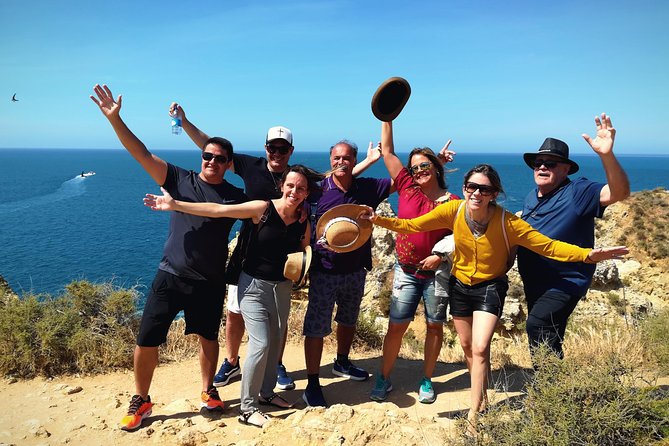
- Hotel pickup and drop-off between Faro and Lagos (less stress, more time outside)
- Small group size (max 8) for a more personal feel
- Admission tickets included so you don’t pay on the spot
- Major cliff viewpoints at Ponta da Piedade and Cabo de São Vicente
- Henry the Navigator links tying Sagres to the Portuguese Discoveries
From pickup to photo stops: what this day trip actually feels like
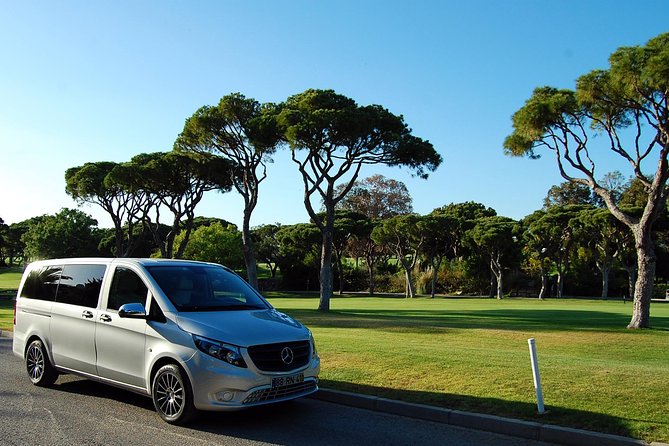
This tour is built for people who want the classic Algarve hits in one day, without committing to a full-day driving plan. You start at 9:30 am, and the tour runs about 8 hours. Most days feel like a smooth loop: coastal viewpoints, a historical fortress, then Lagos old town.
You’ll ride in an air-conditioned vehicle with parking taken care of. The small group size (up to 8) matters more than you might think. With fewer people, it’s easier to pause for pictures, ask questions, and keep your walking pace comfortable—especially when you’re hopping between viewpoints and older streets.
Bring comfy shoes. The Algarve can look easy on a map, but the paths near the cliffs and the harbor areas often involve uneven ground, stairs, or short climbs. Also pack sun protection; you’ll be outside for long stretches, and wind is common near the Atlantic.
One smart detail: you get bottled cold water, so you’re not stuck buying a drink at your next stop.
You can also read our reviews of more tours and experiences in Vilamoura.



The route starts with Lagos city’s protector statue
Before you reach the big coastal viewpoints, you get a drive-by in Lagos with an explanation tied to the city’s protector. It’s brief, but it sets the mood. Instead of starting with scenery only, you begin with local meaning—why certain places matter to Lagos, not just what they look like.
That matters because Lagos and Sagres aren’t just pretty coastlines. They connect to maritime defense, Portuguese exploration, and the way the sea shaped daily life.
Then you’re on the move toward the first major cliff stop.
Ponta da Piedade Lighthouse: sea arches, sea pillars, and serious wow views
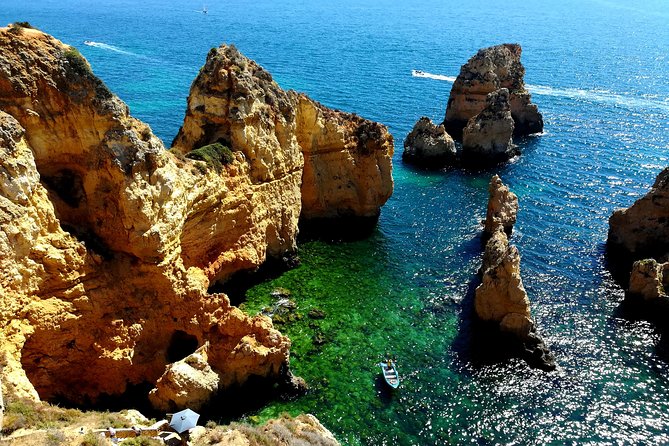
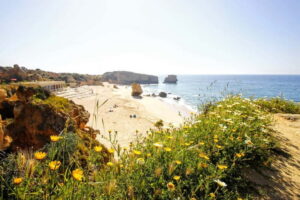
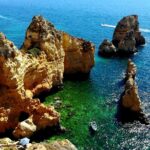
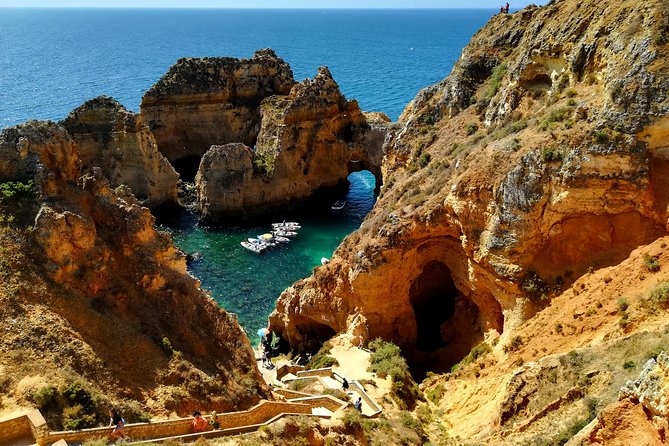
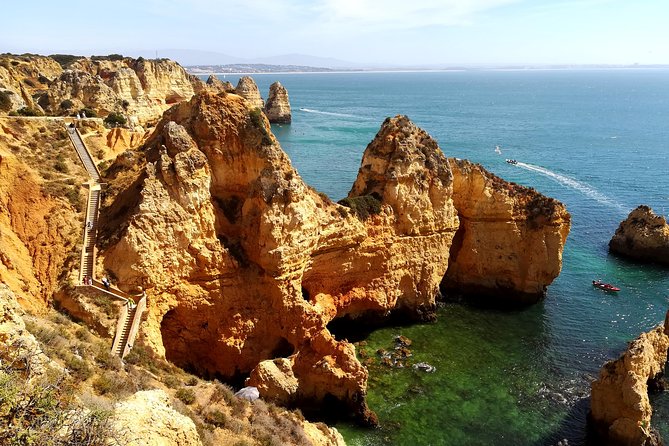
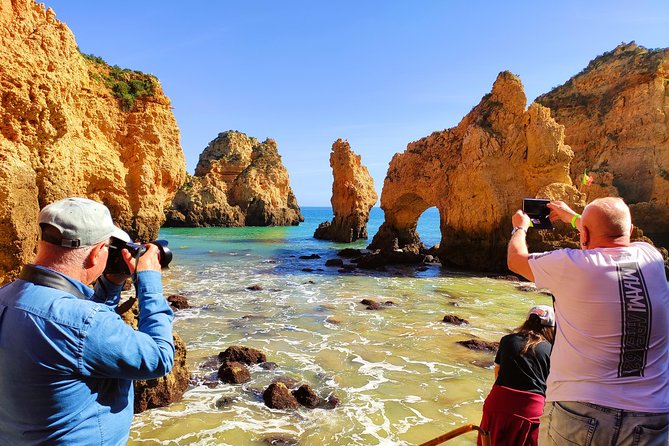
Ponta da Piedade Lighthouse is the kind of place where you’ll want your camera, but you’ll also want a moment to just stand and breathe. This headland is famous for dramatic sandstone shapes made by years of winter storms: sea pillars, fragile rock arches, and hidden grottos.
You get about 1 hour here. That’s enough time to walk to viewpoints and settle on a few angles, without feeling rushed like you do on faster tours. Still, keep expectations realistic. A lighthouse area is not a single flat promenade; you’ll likely navigate paths that can get slippery when damp and uneven when the wind is strong.
What I like about this stop in a guided format is how the guide frames what you’re looking at. Instead of just saying “rocks,” you understand how storms shaped the coastline over time. Even if you don’t memorize the geology terms, it helps you see the coastline with better context.
Practical tips:
- Wear shoes with grip.
- If it’s windy, stay aware of your footing near ledges.
- Bring sunglasses even on cloudy days—this coast can glare.
Cabo de São Vicente (St Vincent): fortress defense plus a working lighthouse
Next comes Cabo de San Vicente, also associated with São Vicente (St Vincent). You’ll spend around 45 minutes here, and it’s a shorter stop than Ponta da Piedade—but it packs a lot in.
The fortress at this point traces back to the 16th century. It was built to protect the coast from frequent attacks by Moorish pirates, and it sits on the site of an earlier medieval convent connected to the mortal remains of São Vicente. You’re seeing military architecture, not just a viewpoint platform.
Inside the fortress area, you can also view the lighthouse of São Vicente, built in 1904 and still operating today. It’s one of those details that makes the stop feel alive: you’re not just looking at a historic relic; the light is still doing its job.
This is one of the best places on the tour for those wide Atlantic views. When the weather is clear, the contrast between the dark water and pale cliffs feels sharp and dramatic. When it’s cloudier, the cliffs still look intense—more moody than postcard-perfect.
One consideration: this area can feel exposed. If you run cold easily, bring a light layer even in warm months.
Sagres: why Henry the Navigator still matters here
After the cliff stops, you’ll reach Sagres. You get about 1 hour, and this is usually where the group takes lunch. Lunch is not included—you’ll typically get a 1-hour break to eat at a Portuguese restaurant in Sagres. It’s a good moment to step away, refuel, and use the restroom before the day’s final stretch.
What makes Sagres more than a scenic stop is the story tied to the southern tip of continental Europe. The area’s geography is part of the legend: 50-meter-high headlands drop dramatically into the sea, and that sense of being at the edge of the known world is exactly why explorers turned here in the 15th century.
This is also where Henry the Navigator fits in. The guide ties Sagres to the maritime learning that fed Portugal’s exploration era. You’ll hear how cartographers, astronomers, and mariners gathered, how navigators built on earlier expeditions, and how instruments like the sea compass, astrolabe, and quadrant helped determine latitude.
Even if navigation history isn’t your thing, you’ll likely walk away with a clearer sense of why the sea mattered so much to Portugal. Sagres was never just a beach stop; it was a place where planning and knowledge met ocean conditions.
Some departures may include extra photo-oriented stops in the Sagres region (for example, a fishing port area) depending on the day’s flow and your guide’s route planning. If you care about photography, you’ll want to pay attention when your guide suggests the best angles—people often note that Pedro adds ideas for better pictures.





Marina de Lagos and the harbor breeze
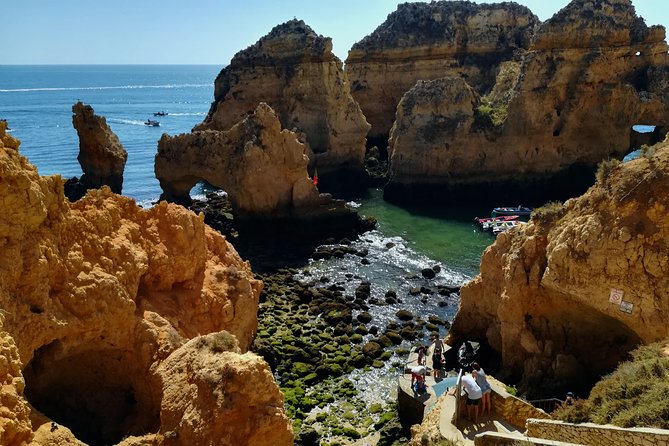
Before jumping fully into Lagos old town, you make a quick stop at Marina de Lagos for about 15 minutes. It’s short, but it serves a purpose: you shift from cliff drama to a calmer, human-scale harbor atmosphere.
You’ll have time for a walk along the river side, crossing a draw bridge, with that cool Atlantic breeze. This is also one of the better spots for quick browsing—there’s time for souvenirs by the river or around the old town area.
Because this stop is brief, it’s not the time to hunt for a perfect lunch spot or do a long wandering detour. Treat it as your breath before the main city walk.
Lagos old town: layers of Celt, Rome, Moor, and the Discoveries era
Then you arrive in Lagos, with about 1 hour 30 minutes to explore. Lagos feels energetic and grounded at the same time—part historic core, part working port identity. You’ll likely notice the pride in old stone, old walls, and places that still show how the town evolved.
Here are the big historical layers you’ll hear connected to what you see:
- Early inhabitants linked to the sea were Celtic, with the old name Lacobriga
- Then came Phoenicians, Greeks, and Carthaginians
- The Romans brought growth and prosperity
- In the 10th century, the Moors built walls around Lagos
And then there’s the 15th century. This is when Lagos becomes tied directly to the Portuguese Discoveries. Because the port sat opposite Africa, it became a major departure and arrival point for ships headed toward the African continent.
Walking with a guide through a place like this is the difference between reading plaques and actually understanding why the town developed where it did. You start noticing patterns: port-adjacent life, defensive priorities, and the way the town kept reinforcing its connection to the sea.
A practical note: Lagos has narrow streets and uneven surfaces in places. If you’ve got sore feet, this is where comfy shoes pay off.
Two quick cultural stops: Henry the Navigator statue and Santa Maria church
After Lagos old town, you’ll end with two short cultural stops.
First is the Statue of Infante Dom Henrique. Henry the Navigator is tied back into the day’s theme of learning, navigation tools, and maritime planning. This stop is only about 5 minutes, so don’t expect a long photo session. Instead, use it as a simple “theme recap” checkpoint.
Then comes the Church of Santa Maria de Lagos, also around 5 minutes. This is a 15th-century church with a rectangular layout, a single nave, and key features like a baptistery and high choir. The high altar is described as painted with luminous colors and biblical scenes.
This church stop works well because it gives you variety at the end of the day. You’ve been looking outward at sea and cliffs. Now you step into a quieter, interior moment.
Value and pricing: what $216.04 buys you in real terms
At $216.04 per person, this is not the cheapest way to get around the Algarve. But it’s priced like a day trip that handles several annoying pieces for you.
Here’s the value math that matters:
- Pickup and drop-off from hotels between Faro and Lagos: you’re not arranging transport or dealing with parking logistics on your own.
- Admission tickets included for museum/church/monument stops: you avoid the small add-on costs that creep up when you DIY.
- Air-conditioned vehicle + parking fees: comfort and practical convenience during a long day.
- Bottled cold water: easy to overlook, but it helps on a hot or windy day.
- Small group setting: up to 8 people means you’re more likely to get personal attention rather than being shoved along a schedule.
The main cost you’ll add yourself is lunch. Lunch is usually in Sagres and typically takes about an hour, but it’s not included. Budget for that and you’ll avoid the end-of-day surprise.
If you plan to drive yourself, you’d pay gas, possibly tolls depending on your route, and spend time researching parking and entrance tickets. For a one-day “best-of” trip, the included entries and pickup make the price feel more fair than it looks at first glance.
Best for you if you want guided clarity (and not too much driving)
This tour fits well if you:
- want a single-day arc from Lagos to Sagres and back
- like history when it’s tied to real places you can stand in
- would rather follow a guide’s timing than plot your own route
- value small-group pacing and a guide who checks that everyone’s comfortable
It may be less ideal if you:
- prefer long, independent beach time
- dislike tight schedules and short stops
- want a slower “stay and soak it in” trip with fewer locations
One thing I’ve learned from similar coastal tours: the best experience usually comes from treating each stop like a chance to get bearings and pick up stories, then following up later on your own. This day can help you decide what deserves a second visit.
A note on the guide experience and the personal touch
In many recent departures, the guide role is led by Pedro, and that name shows up for a reason: people describe him as warm, energetic, and genuinely passionate about the Algarve. The common thread isn’t just facts—it’s the way he mixes history with local context and keeps the day moving at a pace that feels workable for the whole group.
You’ll also get practical help, like water on board and lunch recommendations for where to go once you’re in Sagres. Some groups even describe photo-oriented guidance—help with angles and timing so your pictures match what you’re actually seeing.
Safety and comfort also come up. One traveler noted the guide using a clean BMW station wagon and driving with a calm focus, which matters on coastal roads and near older city streets.
Should you book Lagos and Sagres Premium with VTours Algarve?
If you want the classic Algarve highlights—Ponta da Piedade cliffs, Cabo de São Vicente’s fortress-and-lighthouse viewpoint, Sagres with Henry the Navigator context, and Lagos old town—this is a solid “see it in one day” option.
Book it if your priority is effortless logistics, included entry tickets, and a small group where the guide can share stories and keep the pace human. Skip it if you’re the type who needs hours alone on one beach or you’re planning a trip with limited time for foot traffic.
One final tip: this kind of coastal route depends a lot on weather. If conditions are rough, the tour may be adjusted or rescheduled. If you can be flexible with dates, you’ll get more from the viewpoints.
FAQ
What time does the tour start, and how long does it last?
The tour starts at 9:30 am and runs for about 8 hours.
Do they pick up from hotels?
Yes. Pickup and drop-off are offered from hotels within the tour’s pickup area between Faro and Lagos.
How big is the group?
This tour is a small group with a maximum of 8 travelers.
Are admission tickets included?
Yes. Entry fees for museums, churches, or monuments are included, so you don’t need to pay for those on the spot.
Is lunch included in the price?
No. Lunch is not included. There is usually a break of about 1 hour in Sagres at a Portuguese restaurant.
What’s included besides the guide and transportation?
You get an air-conditioned vehicle, parking fees, and bottled cold water. Admission for the relevant stops is also included.
What should I bring for the day?
Bring comfortable shoes and sun protection like a hat, sunglasses, and sunscreen, plus clothes suited to being outside.
What language is the tour offered in?
The tour is offered in English.
Are service animals allowed?
Yes, service animals are allowed.
What happens if the weather is bad?
This experience requires good weather. If it’s canceled due to poor weather, you’ll be offered a different date or a full refund.