REVIEW · LISBON
Lisbon Private Tour – The best introduction to the city
Book on Viator →Operated by Hi Lisbon Walking Tours · Bookable on Viator
Old Lisbon moves fast.
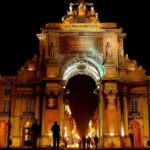
This private 3-hour introduction blends Alfama and Mouraria with key landmarks and viewpoints so you get your bearings without doing homework. You start at the grand Praça do Comércio area, then work your way into the medieval lanes where Lisbon’s layers show up in doors, churches, and street corners.
I love two things most here: the guide’s inside context that makes the sights click, and the smart mix of iconic stops plus quieter back-street moments in neighborhoods that don’t feel like a checklist. I also like that the tour is set up for a small private group (up to 6), so the pace and questions stay human.
One drawback to plan for: food and drinks are not included, so you’ll want to eat before or after (or budget a quick stop on your own).
In This Review
- Key Things You’ll Love About This Private Lisbon Intro
- Entering Lisbon at Praça do Comércio, the City’s Big Welcome
- Igreja de Nossa Senhora da Conceição Velha: Where a Synagogue Became a Church
- Casa dos Bicos and José Saramago’s Foundation: Manueline Style with a Literary Pulse
- A Roman Catholic Church on Saint Anthony’s Traditional Birth Site
- Lisbon Cathedral: Old Mosque to Old Church, Same Ground, New Meaning
- Alfama’s Streets: Getting Oriented in the Oldest Neighborhood
- Miradouros: Portas do Sol, Santa Luzia, and Graca for Views That Work
- Calcada da Amalia: A Fado Landmark Written into the Sidewalk
- Graca and the Moorish-Era Landmark Feeling
- Mouraria’s Berço do Fado: Walking the Streets that Shaped Fado
- Finishing Near Praça da Figueira: The Hospital Past
- Price and Value: $181.48 for a Private Group That Actually Uses Your Time
- What Kind of Travelers Should Book This?
- Should You Book This Alfama and Mouraria Private Tour?
- FAQ
- How long is the Lisbon Private Tour – The best introduction to the city?
- Is this tour private?
- How much does the tour cost?
- What language is the tour offered in?
- Where does the tour start and end?
- What’s included in the price?
- Are there admission tickets for the stops?
- Is food or drinks included?
- Can I cancel and get a full refund?
Key Things You’ll Love About This Private Lisbon Intro
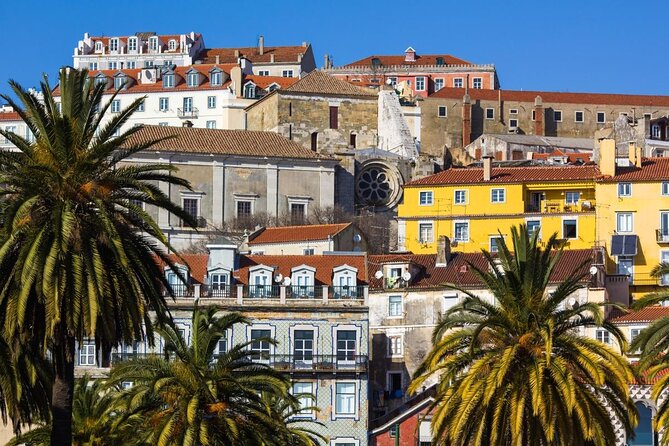
- A pro guide who helps the city make sense as you move through old streets and major landmarks
- Top-of-Lisbon viewpoints like Portas do Sol, Santa Luzia, and Graca for big views in short breaks
- Churches tied to real historical layers, including synagogue and mosque sites now reused as Christian landmarks
- Fado-focused Mouraria stops, including the Berço do Fado monument and the Amália Rodrigues walkway
- Free-admission stops are built into the route, so your time goes to seeing, not paying
Entering Lisbon at Praça do Comércio, the City’s Big Welcome
Your tour starts at Praça do Comércio, Lisbon’s great public square by the water. Even if you only spend about ten minutes there, it’s the perfect warm-up. This is where you can look around and get a feel for the city’s geography—what’s close, what rises, and where the streets will start to twist as you move inland.
I like starting here because it anchors the rest of the walk. From a wide space, you can later compare the scale: the dramatic openness of the square versus the tight geometry of Alfama’s lanes. You’ll also be near excellent public-transport access, which makes it easier if you arrive early or need to adjust your day.
Quick practical note: because you’re starting at a major square and ending in another central area, plan for a smooth next step after the walk. You’ll finish near Praça da Figueira, so that’s a helpful spot to aim for lunch, a coffee break, or an easy connection onward.
You can also read our reviews of more city tours in Lisbon


Igreja de Nossa Senhora da Conceição Velha: Where a Synagogue Became a Church
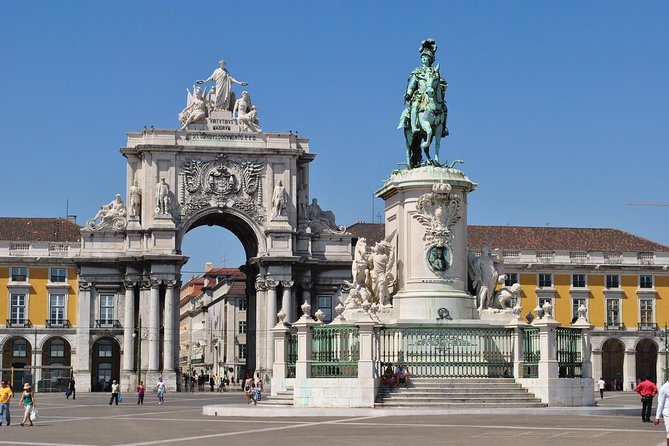
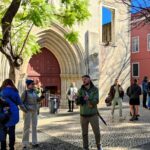
Next you’ll visit Igreja de Nossa Senhora da Conceição Velha, a church known for its layered past. The key story here is simple and powerful: it was built on the site of an old synagogue in the 16th century.
That detail matters because it explains something you’ll keep seeing throughout Lisbon. The city wasn’t built by one group, in one era, and then frozen in time. Instead, places were reused—sometimes peacefully, sometimes not—and the built environment keeps the memory even when the names change.
In a short stop, you won’t become a historian. But with a good guide, you can walk away understanding the pattern: why Lisbon has Christian landmarks that occupy older cultural foundations, and why that affects the way neighborhoods feel today. The upside is that this stop adds meaning to everything else you’ll see right after.
Casa dos Bicos and José Saramago’s Foundation: Manueline Style with a Literary Pulse
Then you’ll reach Casa dos Bicos (Museu de Lisboa). This is an old palace known for Manueline architecture, a style tied to Portugal’s age of discovery—think ornate stonework and distinctive, patterned design.
Even if you’re not a museum person, this stop is worth it for the exterior and the atmosphere. The building holds José Saramago’s Foundation, which gives Lisbon an artistic, modern hook right in the middle of older stone. It’s a reminder that the city’s identity isn’t only medieval tiles and church bells. Lisbon’s thinkers—writers in particular—still shape what the city is about.
One thing to keep in mind: this is a brief pause (about ten minutes). You’ll get the experience of the place, not a long, slow museum visit. If you want more time inside later, you can build that into another day.
A Roman Catholic Church on Saint Anthony’s Traditional Birth Site
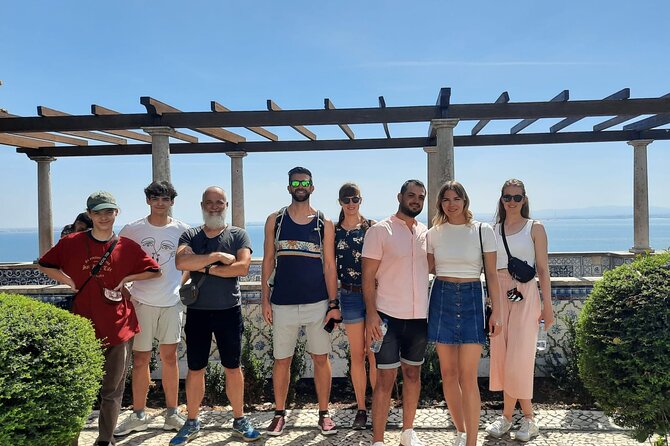
As you continue, you’ll stop at a Roman Catholic church built on the place where Saint Anthony of Lisbon was born. This isn’t just a religious stop. It’s one more example of how Lisbon assigns sacred meaning to specific locations and keeps those meanings visible.
If you’re the kind of traveler who likes to understand why places matter to locals, this works well. The guide can connect the story to the bigger emotional map of the city—how Saint Anthony became tied to Lisbon’s identity, and how that identity shows up in streets you’d otherwise breeze past.
This stop is short, so treat it like a quick “story checkpoint” rather than a full worship-and-stay moment. You’ll move on while the ideas are still fresh.
Lisbon Cathedral: Old Mosque to Old Church, Same Ground, New Meaning
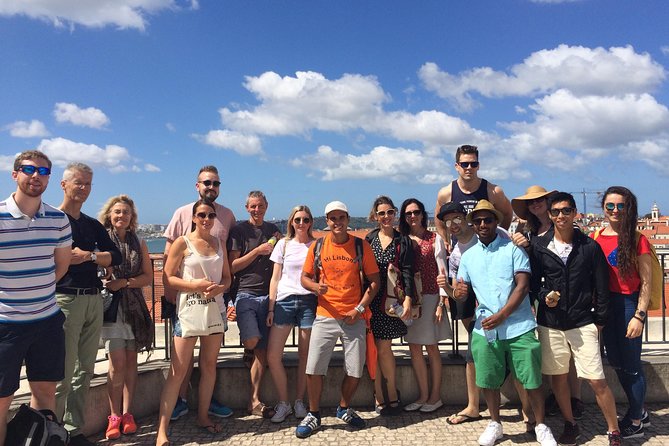
Now you hit one of the biggest anchors in the route: Lisbon Cathedral (Sé Cathedral). It’s described as the oldest church in Lisbon, built on the place of an old mosque.
That shift—mosque to cathedral—is not rare in Lisbon, but Sé Cathedral is a heavy hitter because it’s right at the center of the story. When you stand there, you’re seeing how power, belief, and architecture get layered on the same site over centuries.
What I like about including Sé in a half-day tour is timing. You’re not exhausted yet, so you can actually absorb what you’re looking at. And you’re getting a major “timeline marker” while your guide can still connect it to nearby neighborhoods—especially Alfama, where so many small streets feel medieval even when everything else modernizes.
You’ll also make a quick stop at an older fountain built in the 14th century nearby. It’s the kind of detail that makes photos better later because you remember the texture of the street, not just the big-name buildings.
You can also read our reviews of more private tours in Lisbon






Alfama’s Streets: Getting Oriented in the Oldest Neighborhood
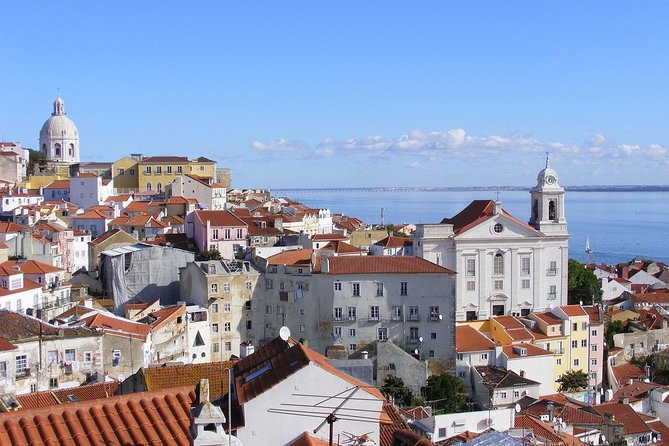
After the landmark stops, the tour turns into a walk through Alfama, Lisbon’s oldest neighborhood. Here, you’re no longer collecting history facts as much as you’re learning how the neighborhood works.
The streets in Alfama tend to feel intimate—tight turns, steep-looking paths, and viewpoints that pop up when you least expect them. That’s why a guide is such a big deal on this kind of walk. With a pro, you don’t just “see Alfama.” You understand how to move through it and where the city wants to show you itself.
I also appreciate that this isn’t presented as a cookie-cutter route. The best tours in Alfama and Mouraria avoid the biggest crowds and keep you in the parts of town where locals still feel present. The whole point is to help you get your bearings fast, then enjoy the streets on your own afterward.
Miradouros: Portas do Sol, Santa Luzia, and Graca for Views That Work
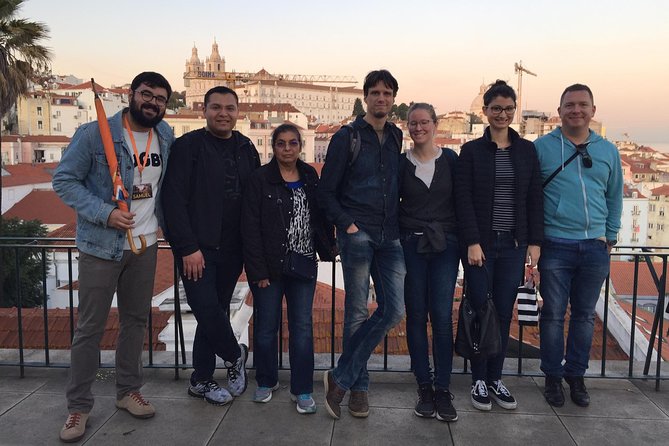
This tour leans into the viewpoints for a reason. Lisbon is a city of angles. If you miss the miradouros, you miss part of the city’s personality.
You’ll stop at Miradouro das Portas do Sol, then Miradouro de Santa Luzia, and later Miradouro da Graca (named after Sophia de Mello Breyner Andresen). These are short breaks built into the route so you can look out, orient yourself, and feel how the city stacks on the hills.
Here’s the practical value: each viewpoint gives you a different slice of the same landscape. In a couple hours, you’ll start recognizing where things sit relative to each other. That makes your next day easier, whether you return for photography or plan a longer ride across town.
Also, viewpoints are a sanity saver. You might not notice it at first, but constant street-to-street walking can wear you down. These short pauses reset your energy while still keeping the pace moving.
Calcada da Amalia: A Fado Landmark Written into the Sidewalk
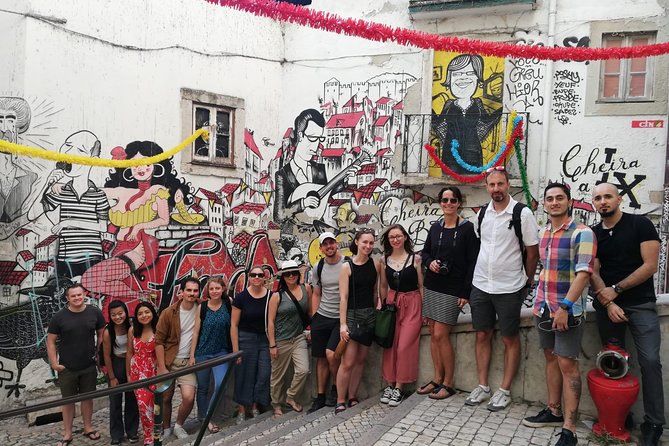
One quick stop you’ll enjoy if you like music and local culture is Calcada da Amalia. It’s described as a famous work made with Portuguese stones, featuring the face of Amália Rodrigues, often called the Queen of Fado.
This is a clever kind of Lisbon landmark. It’s not a formal building you walk into. It’s public art—right there in your walking path. The result is that you experience it without needing tickets or a big schedule.
If you’re new to Portuguese music, this is a fast entry point. Even if you don’t know Amália’s entire story, you’ll leave with a specific name tied to a visible, memorable place.
Graca and the Moorish-Era Landmark Feeling
After that, the route includes Miradouro da Graca, described with the note that it connects to the Moorish period and is one of the city’s famous landmarks.
You can treat this as two layers in one spot. First, it’s a view. Second, it’s a reminder that Lisbon’s look and layout weren’t created solely by later Christian-era planning. The city’s past keeps shaping how neighborhoods feel, even if you’re only seeing angles and street lines.
I like having this kind of stop because it helps you stop thinking of Lisbon as one period. Instead, you start seeing the city as an ongoing conversation between eras.
Mouraria’s Berço do Fado: Walking the Streets that Shaped Fado
Now comes the heart of the second neighborhood: Mouraria. You’ll walk through the streets of Mouraria, an area described as being built by the Moors after the conquest of the city by Christians.
That historical note matters because Mouraria isn’t only about scenic lanes. It’s also about cultural identity. The tour highlights Monumento Mouraria Berço do Fado, which is the kind of landmark that ties music to place—suggesting that fado wasn’t just something performed somewhere. It grew out of neighborhood life.
You’ll likely get the most from this portion if you pay attention to the way lanes funnel and open. Mouraria rewards slow looking, even though you’re not stopping for long at each point.
And just as with Alfama, this is where a good guide helps you move with confidence. If you’re trying to avoid feeling lost, Mouraria can be a perfect classroom: you’ll learn patterns, then you’ll recognize them later when you explore on your own.
Finishing Near Praça da Figueira: The Hospital Past
The tour ends around Praça da Figueira. The route notes that it was built on the site of the biggest hospital in Lisbon, which helps explain how the area has long served as a central gathering point—even as its purpose changed.
This ending is helpful because it puts you back into a more open, recognizable urban space. After earlier tight lanes and viewpoint stops, you get a chance to reset and decide what you want next: a meal, a coffee, or a museum visit.
If you’re planning a day after this, Praça da Figueira is a convenient “launch pad.” You’re not stuck at the top of a hill far from everything. You finish where the city stays connected.
Price and Value: $181.48 for a Private Group That Actually Uses Your Time
At $181.48 per group (up to 6) for about 3 hours, the price isn’t cheap in the abstract. But value shows up quickly when you think about what you’re buying.
You’re paying for:
- A professional guide who can connect landmarks to the bigger story
- A private format so your group can set a comfortable pace and ask questions
- A planned route that includes major anchors and multiple viewpoints
- Stops marked as free admission ticket in the route description, which helps keep the day from turning into a pay-per-stop affair
If you’re traveling with friends or family, private tours usually become more sensible. Split across multiple people, it can work out like paying for a premium guided experience without the “shared group pace” problem.
Also, the booking average noted (around two months in advance) suggests it’s a popular way to start a Lisbon visit. If you’re going in peak season, that’s a hint to lock it in earlier.
What Kind of Travelers Should Book This?
This tour is a strong match if you:
- Want a first-day orientation in Lisbon without spending hours planning
- Like walking tours but don’t want to wander blindly through Alfama and Mouraria
- Care about historical layers (synagogue-to-church, mosque-to-cathedral, Moorish-era ties)
- Enjoy viewpoints and quick cultural stops like Amália Rodrigues references
It’s also a good choice if you want a guide who can stay engaging. Guides associated with this tour’s team—names like Sarah, Clayver, and Keiber appear in standout feedback tied to being insightful, flexible, and focused on the Alfama experience.
Should You Book This Alfama and Mouraria Private Tour?
Yes, if you want your Lisbon trip to start with momentum. This is one of those walks that gives you immediate payoff: big landmarks, meaningful cultural context, and viewpoints that help you understand the city’s shape.
I’d say skip it only if you’re not interested in walking and prefer a low-footprint day, or if you’re hoping for a tour that includes meals and doesn’t require any planning on your part.
If you book, go in with one mindset: let the guide teach you how Lisbon fits together. You’ll leave with memories, photos, and—most importantly—direction for the rest of your stay.
FAQ
How long is the Lisbon Private Tour – The best introduction to the city?
It’s about 3 hours.
Is this tour private?
Yes. It’s private, meaning only your group will participate.
How much does the tour cost?
It costs $181.48 per group, up to 6 people.
What language is the tour offered in?
The tour is offered in English.
Where does the tour start and end?
It starts at Praça do Comércio (1100-148) and ends at Praça da Figueira (1100-241), Lisbon.
What’s included in the price?
A professional guide is included.
Are there admission tickets for the stops?
The stops listed in the route are marked with admission ticket free.
Is food or drinks included?
No. Food and drinks are not included.
Can I cancel and get a full refund?
Yes. You can cancel up to 24 hours in advance for a full refund.