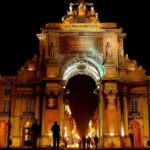
Lisbon rewards slow eyes and quick questions. This private tour focuses on the viewpoints and neighborhoods that explain the city fast, without group-tour herding. You get a personalized walk (or Vespa option) with a local who can tailor the pace to you, plus time to ask about what you just saw.
I love the start-at-a-viewpoint format. You begin at Rua de São Pedro de Alcântara, then your guide points out what you’re looking at as you move through Lisbon’s layers: riverfront history, hillside streets, and photo-ready angles over red roofs. I also like that the tour ends with practical recommendations, so you can keep exploring confidently on your own right after.
One thing to consider: most major sights on this route are viewed from the outside. If you’re hoping to go inside churches or lifts as part of the tour, you’ll need extra entry tickets (the tour itself doesn’t include them).
In This Review
- Key things you’ll notice on this private Lisbon highlights walk
- Starting in the right place: Miradouro de São Pedro de Alcântara
- Terreiro do Paço (Praça do Comércio): the square that tells a backstory
- Bairro Alto’s 1500s vibe: artists, writers, and everyday Lisbon
- Alfama: the oldest streets and the best angles
- Churches and monuments you can see clearly from the outside
- The shrine-turned-São Roque memory space
- Church of St. Dominic (Igreja de São Domingos)
- Santa Justa Lift (Carmo Lift)
- Cathedral of Saint Mary Major (Sé)
- Convent of Our Lady of Mount Carmel
- A crowded connector street and the view that makes it all click
- The ginjinha pause: a drink stop that’s also a food map
- Practical pacing: 1–3 hours that stay focused
- Value check: $106.42 per person and what you’re actually buying
- Who should book this Lisbon private highlights tour
- Should you book it?
- FAQ
- How long is the private Lisbon tour?
- Is this tour private?
- What’s included in the price?
- Are entrance tickets included for attractions?
- Is the tour offered in English?
- Where do we meet, and where does it end?
- Is hotel pickup included?
- Does it use a mobile ticket?
- How far in advance do people typically book?
- Is it free to cancel?
Key things you’ll notice on this private Lisbon highlights walk
- Private guide, only your group for a more natural pace and better Q&A
- Miradouro de São Pedro de Alcântara as your orientation jump-start
- Neighborhood flow through Baixa-adjacent squares, Bairro Alto, and Alfama
- Church and lift exteriors that show Lisbon’s style without waiting in lines
- A local drink/snack stop that breaks up the walk and gives you local-food leads
- Carbon-neutral, B-Corp framed experience with a smaller-tour feel
Starting in the right place: Miradouro de São Pedro de Alcântara
Your tour meets at Rua de São Pedro de Alcântara. That’s a smart choice because it’s a viewpoint zone, not a random street corner. Even before you “do” anything, you get a mental map: where the city drops toward the river, where Alfama clings to the hills, and how Lisbon’s viewpoints stitch neighborhoods together.
Expect a short, guided orientation moment. Your guide will point out key visual anchors so later, when you’re walking (or when you’re hunting lunch), you’ll know what direction you’re facing and what area you’re in. This is especially helpful in Lisbon because hills can make even simple walks feel like puzzles.
You can also read our reviews of more private tours in Lisbon



Terreiro do Paço (Praça do Comércio): the square that tells a backstory
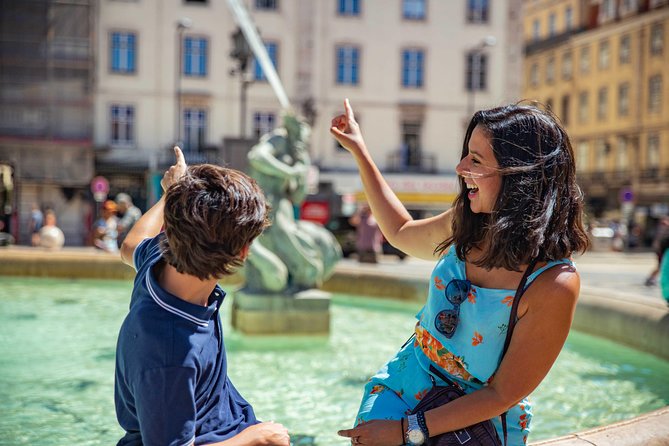
From the high viewpoint area, the tour moves toward Terreiro do Paço, better known for the big name Praça do Comércio. This square sits on the site of the old royal palace before the 1755 earthquake reshaped Lisbon. Standing here is like getting handed the city’s “why” in one glance: Lisbon rebuilt, redistributed, and rebranded itself around the riverfront.
The practical win: you get a history lesson without turning the tour into a lecture. Your guide ties events to street layout and landmarks you’ll see again later. Also, since time at each stop is short, you won’t get stuck staring at one plaque while everyone else moves on.
Bairro Alto’s 1500s vibe: artists, writers, and everyday Lisbon

Next comes Bairro Alto, a quarter that dates back to the 1500s. It has a reputation for creative life—artists and writers—but the best part is that you’ll experience the neighborhood’s street texture: narrow lanes, changing views, and the sense that Lisbon never fully “straightens out.”
This is a good stop if you like atmosphere. You’ll get a feel for how Lisbon’s center works after dark too, but you don’t have to wait for nighttime to appreciate it. The tour keeps things moving, so you’ll get just enough time to orient and photograph, then move on.
Alfama: the oldest streets and the best angles
Then you step into Alfama, one of Lisbon’s oldest areas, where streets curve, buildings crowd closer, and viewpoints keep popping up. The tour route leans into what makes Alfama practical for visitors: shops selling traditional crafts, local cafés, and small vantage points over the city.
What I like about this portion is the rhythm. You’re not just taking pictures—you’re learning how to read the neighborhood. Your guide points out where to stand for views, which directions tend to lead you into the prettiest lanes, and why certain corners feel busier than others.
Alfama is also where you’ll feel the “Lisbon walking math.” Even if the tour is short, expect some uphill/downhill movement between stops. If you’re booking with a mobility limitation, bring it up early so your guide can adjust the pace. (More than one guide on this tour has been praised for adapting to different needs.)
Churches and monuments you can see clearly from the outside
This tour includes several major religious landmarks, but you’ll mainly experience them as exteriors. That can be a plus. You get architectural context without committing to ticket lines and interior time.
Here are the key stops you’ll pass and what they mean:




The shrine-turned-São Roque memory space
One stop references a church space that originally began as a shrine dedicated to St. Sebastian, and later housed artifacts connected to São Roque. São Roque became a saint through his association with healing during plague outbreaks in Europe. Even from outside, this kind of story matters because it explains why Lisbon’s older religious buildings feel tied to public health and civic memory, not just personal devotion.
Church of St. Dominic (Igreja de São Domingos)
You’ll also pass the Church of St. Dominic, a National Monument dedicated in 1241. At one point, it was the largest church in Lisbon. The value here is perspective: guides help you see the building as a marker of power and community priorities at that time. The facade is impressive, and the surrounding streets make the scale feel even bigger.
Santa Justa Lift (Carmo Lift)
You’ll pass by the Santa Justa Lift, also called the Carmo Lift. This is one of those Lisbon icons where even seeing it from the street gives you a strong “yes, that’s why it’s famous” moment. The exterior view works well on a highlights tour because you can recognize the landmark quickly, then later decide if you want to add the lift ticket on your own.
Cathedral of Saint Mary Major (Sé)
Next is the Sé, the Cathedral of Saint Mary Major, also called Lisbon Cathedral. It’s described as the oldest church in the city and the seat of the Patriarchate of Lisbon. From the outside, it gives you a grounded sense of age and authority—Lisbon’s long timeline, not just a weekend version.
Convent of Our Lady of Mount Carmel
You’ll also pass the Convent of Our Lady of Mount Carmel, a former convent in Santa Maria Maior. From outside, it’s a reminder that Lisbon’s hilltop religious spaces were often community centers. Your guide can help you connect the building to the surrounding neighborhood layout, which is where these monuments stop feeling like random stops.
A crowded connector street and the view that makes it all click
Between neighborhoods, you’ll pass a busy, crowded street that acts like a bridge between areas. Expect it to feel lively and slightly chaotic, which is exactly why it belongs on an orientation tour. You’re learning where the movement is, not just where the postcards are.
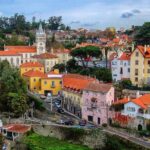
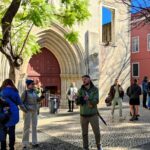
Then the route returns to viewpoints—because Lisbon is basically a city built for looking outward. You’ll get panoramic shots over Alfama’s red-roof houses and churches, plus a high-point in the neighborhood that offers wide views from a churchyard. If you’re doing this early in your trip, this is where you start seeing the city in layers, not in isolated stops.
The ginjinha pause: a drink stop that’s also a food map
One highlight is a stop at an open-fronted bar known for a pip-spitting crowd and local ginjinha, the cherry-like liqueur. This is the tour break that feels like Lisbon, not Lisbon-on-paper. If you like tasting something local while you rest your legs, this works well.
More than one guide has been praised for food guidance beyond the drink stop. You’ll often walk away with clear suggestions for where to eat and what to try later. That’s the real value here: you’re not just getting history, you’re getting a short list you can follow without guesswork.
Practical pacing: 1–3 hours that stay focused
The tour is listed at about 1 to 3 hours, and the schedule is structured with short time blocks at each main stop. That makes it a good fit for travel days when you want a strong start but still need the rest of the day free.
In real terms, that timing matters because Lisbon can turn one long sightseeing stretch into “why am I still walking?” The short, guided sequence keeps your energy steady while giving you the big landmarks and neighborhood feel.
Also, many guides on this type of private tour are praised for adjusting pacing. For example, one guide was specifically noted for working with a senior at a slower rate without losing the important highlights. So if you want a calmer tempo, you can ask for it upfront.
Value check: $106.42 per person and what you’re actually buying
At $106.42 per person, this isn’t the cheapest thing you’ll do in Lisbon. But it’s also not priced like a full-day private driver. You’re paying for three things:
- Private attention (only your group, guided in English)
- Fast orientation across the most important central neighborhoods
- A local drink/snack plus recommendations you can use immediately
If you’re traveling as a small group or you care about nailing directions and neighborhoods early, the per-person cost can feel reasonable. If you’re only after a couple photo stops and you’re comfortable building your own route, you might find cheaper options. Still, the private structure can save you hours of wandering and second-guessing.
One booking note to protect your expectations: this experience can be run by Vespa or foot depending on the tour option. Since there have been complaints about mismatch between what people thought they booked and what happened, it’s smart to confirm the option you selected before the day arrives.
Who should book this Lisbon private highlights tour
This tour is a good match if:
- You’re in Lisbon for a short window and want an efficient “city reading” first day
- You like neighborhoods with personality, especially Bairro Alto and Alfama
- You enjoy viewpoints and stories tied to place and buildings
- You want help with food and getting around hills (that practical advice is a recurring strength)
It may not be ideal if:
- Your priority is going inside lots of attractions during the tour. Most stops are outside only.
- You want an all-day, deep-ticket itinerary. This one is built for a focused window and then independent exploring.
Should you book it?
If you want an early Lisbon reset—viewpoints first, neighborhoods second, and a guide who helps you move around smart—yes, book it. The best part isn’t any single monument. It’s the way the route teaches you how the city works, then hands you recommendations so you don’t waste your best remaining hours.
Just double-check your booking option (Vespa vs foot) and set the expectation that you’ll see key sights mainly from the outside. With that in mind, this is a strong way to start Lisbon with less stress and better direction.
FAQ
How long is the private Lisbon tour?
It’s listed at about 1 to 3 hours, depending on the exact route option and your pace.
Is this tour private?
Yes. It’s a private tour with only you and your local guide.
What’s included in the price?
You get the private multilingual local guide, the private experience without crowds, and 1 local drink or snack depending on the option you book.
Are entrance tickets included for attractions?
No. The tour visits sights from the outside, so entrances are not included.
Is the tour offered in English?
Yes, it’s offered in English.
Where do we meet, and where does it end?
You meet at Rua de São Pedro de Alcântara (1200-470 Lisboa). The tour finishes in the city center of Lisbon.
Is hotel pickup included?
No, hotel pickup and drop-off aren’t included.
Does it use a mobile ticket?
Yes, the tour includes a mobile ticket.
How far in advance do people typically book?
On average, it’s booked about 40 days in advance.
Is it free to cancel?
Free cancellation is available. You can cancel up to 24 hours in advance for a full refund.