REVIEW · LISBON
Lisbon: Jewish History Tour of Lisbon
Book on GetYourGuide →Operated by Lisbon Walker · Bookable on GetYourGuide
Lisbon’s Jewish story is written into streets. This 3-hour guided tour threads medieval Judiarias with later chapters, from the origins tied to the Exodus to the 1940s refugee passage in Lisbon.
I like how the route anchors big ideas to very specific places. You spend time around Praça do Comércio and then work your way through Alfama, Baixa, Mouraria, and key stops like Rossio, with a guide who keeps the timeline clear and makes neighborhood details matter.
One consideration: there are few physical remains of the medieval community to point at. If you expect ruins or lots of artifacts, plan for mostly oral history and street-level context.
In This Review
- Key highlights worth centering
- A 3-hour Jewish history route that actually walks the story
- Starting at Praça do Comércio: where the Exodus thread begins
- Alfama’s Judiaria streets: segregation you can feel in the layout
- Baixa and forced conversions: reading the city after identity is stripped
- Rossio and the 1506 Pessah massacre: when a square holds a date
- Mouraria, the Resistance museum, and the 1940s refugee passage
- Price and logistics: what $106 really buys you
- How to get the most out of this kind of history walk
- Should you book this Lisbon Jewish History Tour?
- FAQ
- How long is the Lisbon Jewish History Tour?
- How much does it cost, and what’s included?
- Where do I meet the guide?
- What languages are offered?
- Is food included?
- What should I bring?
Key highlights worth centering
- Praça do Comércio ties the story to the Exodus and sets the tone for everything that follows
- Alfama and the castle hill area show how medieval segregation shaped daily life
- Baixa District focuses on forced conversions and how power changed identities
- Rossio and the 1506 Pessah massacre turns a modern square into a specific historical moment
- Stops like Mouraria and a Resistance museum bring the story into the 20th century, including 1940s refugees
A 3-hour Jewish history route that actually walks the story
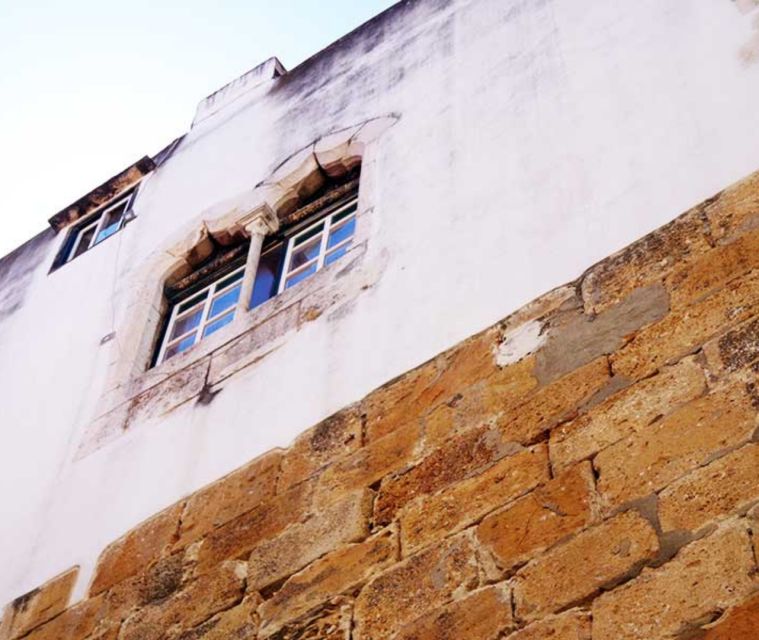
This tour is built for people who want more than a facts-only lecture. You get a guided walk that connects Lisbon’s Jewish presence across eras, moving through the castle hill zone, Alfama, and the lower-city Baixa area. Then it keeps going into places tied to later events—so you’re not stuck in medieval Lisbon the whole time.
At $106 per person, you’re paying for a guided experience rather than museum entry. The tour length is set to about 3 hours, which is a sweet spot: long enough to cover multiple districts and major turning points, short enough that you can still enjoy the rest of Lisbon after.
It’s also a private group experience, with the guide speaking English or Portuguese. That matters because this topic benefits from follow-up questions—especially when you’re trying to make sense of names, dates, and how Portuguese Jewish history intersects with wider European events.
You can also read our reviews of more historical tours in Lisbon


Starting at Praça do Comércio: where the Exodus thread begins
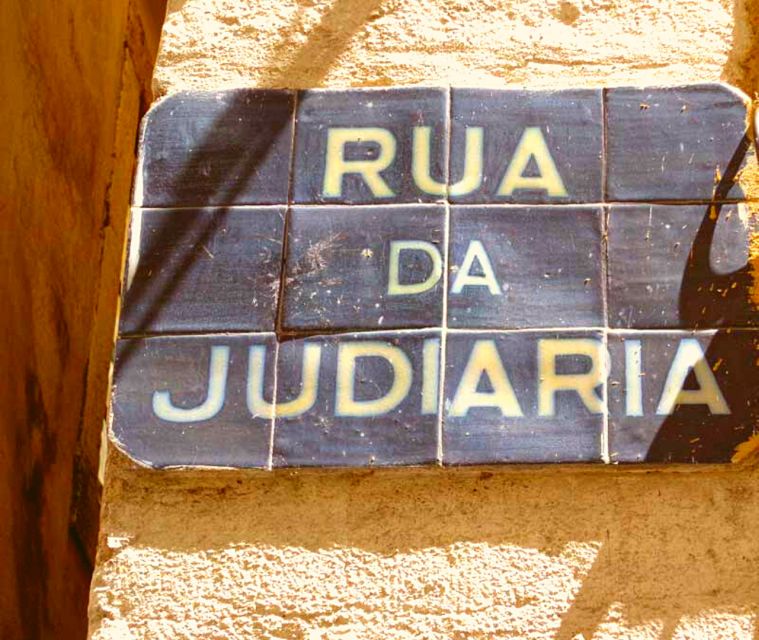
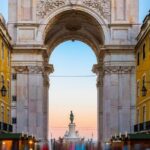
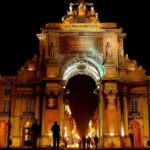
Your meeting point is very easy to spot: look for the guide under the big triumph arch at Praça do Comércio. The guide will be wearing an orange backpack or a tote bag with the Lisbon Walker logo. That first visual cue saves time, especially if you arrive a little early and the square is busy.
The tour starts at Praça do Comércio, a huge, open space that helps you get your bearings fast. Here, the tour links the area’s meaning to the idea of the Exodus—not as a vague theme, but as a story anchor for how Jewish presence is framed in Lisbon’s long memory.
From there, you’ll pass by Praça do Município, then head along Rua do Comércio. The route also includes Casa dos Bicos and the riverside area around Ribeira. I like this opening because it sets a practical pattern: you see a place, then the guide connects it to who lived there, what changed, and why that change mattered.
Alfama’s Judiaria streets: segregation you can feel in the layout
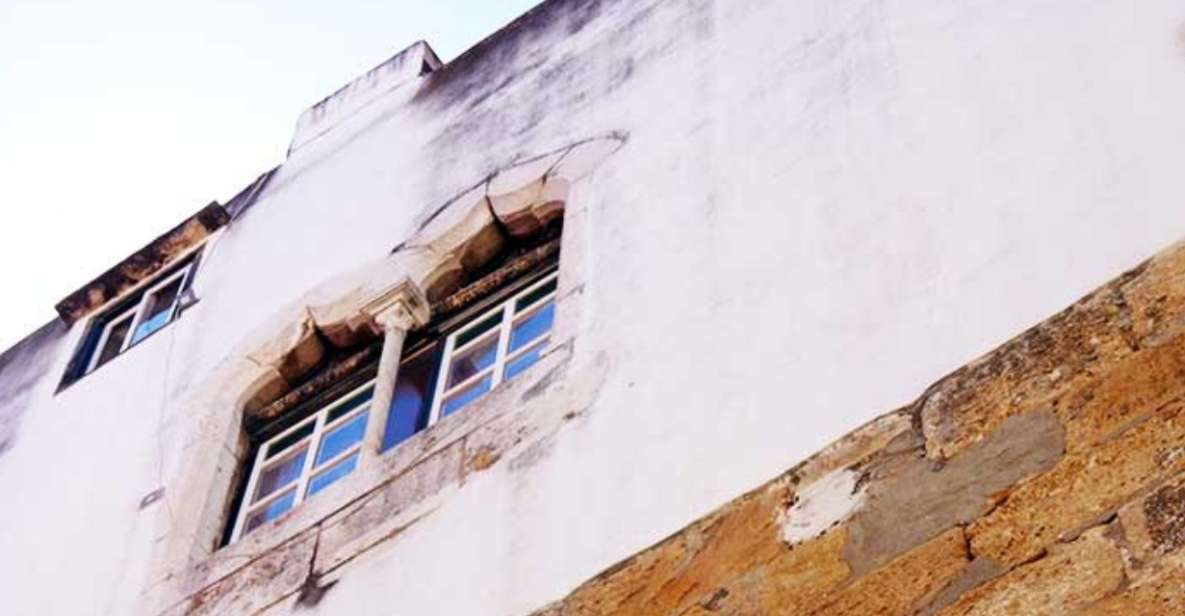
Alfama is the part of Lisbon people picture first. It’s also where you learn the difference between Lisbon as a postcard and Lisbon as a social map.
This tour focuses on the Alfama Jewish quarter and the medieval reality of segregation. Instead of treating the Judiarias like a single landmark you can photograph, the guide treats them like a network—streets, hills, routes, and boundaries. When the city forces people into certain places, the street grid becomes part of the story.
Expect the tour to spend time in the general castle hill / Alfama zone, because that’s where medieval Lisbon’s geography still affects how you move today. Even if you don’t have surviving synagogue ruins to visit, you’ll get something more useful: an explanation of how place could control access, safety, and identity.
A recurring theme from the experience is that the physical record is thin. Multiple guides on this tour have done a good job setting expectations, so you’re not surprised by the lack of intact material remains. In plain terms: you’ll be interpreting neighborhoods, not hunting for artifacts.
Baixa and forced conversions: reading the city after identity is stripped
After Alfama, the tone shifts toward what happens when tolerance disappears. The Baixa District stop is where the tour leans into forced conversions—and it’s done in a way that helps you understand consequences, not just events.
I appreciate this part because it answers a big question many people have after they hear about persecution: what does it change in daily life? The guide connects the political and religious pressure to how people had to live, what they could say, what they could practice, and how later generations inherited complicated identities.
This section also tends to include religious architecture in the area (and sometimes you’ll catch references to other older layers under the city). One guest noted the tour included viewing hidden Roman remains and churches, which is a good reminder: Lisbon’s buildings are layered. You’re often walking over different centuries, even when the Jewish story isn’t marked with a visible monument.
Rossio and the 1506 Pessah massacre: when a square holds a date
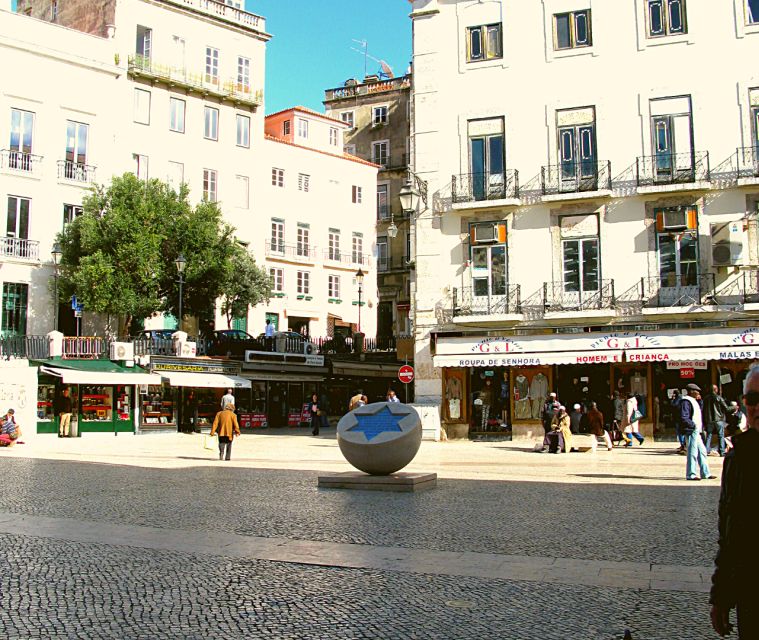
The tour’s Rossio portion brings you to a central Lisbon square and links it to a specific tragedy: the 1506 Pessah massacre. What makes this stop work is the way the guide treats Rossio as more than a convenient meeting point.
Rossio is a place you’ll see again and again while you’re in Lisbon, which means the guide’s framing sticks. Once you know the historical reference tied to the square, your “normal walk” through the center becomes a “timeline walk.” You start noticing how the city’s public spaces could host moments of violence, fear, and power.
If you like history that feels anchored—place name plus event plus impact—this is one of the best parts of the route. It’s specific. It’s memorable. And it gives the rest of Lisbon a sharper edge.



Mouraria, the Resistance museum, and the 1940s refugee passage
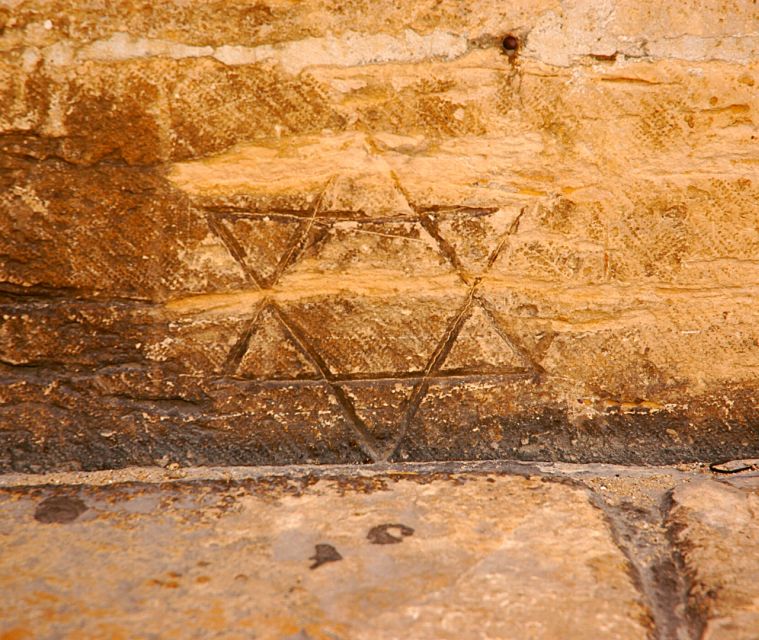
The tour doesn’t stop at medieval Lisbon. It includes later chapters, including IIWW refugees passing through Lisbon in the 1940s. That’s an important pivot, because it shows continuity in Lisbon’s role as a crossroads—first in the medieval world, then in the upheaval of the 20th century.
You’ll visit Mouraria, a district closely tied to immigrant and cultural layers in Lisbon. Then you’ll stop at the Resistance museum (included as part of the route), and from there continue toward Praça da Figueira and the center.
I like how this arc changes your mindset. You’re no longer just asking, What happened to Lisbon’s Jewish community centuries ago? You’re also asking, Why did Lisbon matter to people seeking escape and survival later on? The tour also points to how the broader diaspora spread from Lisbon across the Atlantic, into the Mediterranean, and onward to Asia and northern Europe.
Price and logistics: what $106 really buys you
Here’s the honest value math. You’re paying $106 per person for a 3-hour guided tour, and that guide time is what you’re getting. There’s no big-ticket museum admission included here—just a focused route and a live guide.
A few details that affect how the day feels:
- No hotel pickup or drop-off is listed, so you’ll be doing your own arrival and return to the meeting point.
- Food and drinks are not included, so plan on eating separately if you want a full day meal.
- It’s a private group, and the tour indicates skip the ticket line. That helps if any stops would otherwise require time you’d rather spend walking and asking questions.
One small upside: the route is walking-heavy, but at least one guest specifically called out minimal hill climbing. Still, Lisbon has its own opinions about hills, so comfortable shoes aren’t optional.
How to get the most out of this kind of history walk
This tour works best if you’re willing to treat the city like a document. Since physical remains can be scarce, your guide’s explanation becomes the evidence. Guides on this route—people like José, Filipa, Rita, Sofia, Jorge, and José Antunes show up in past experiences—tend to keep the story structured and answer questions as they come.
When you’re standing in a place with a known event (like Rossio and the 1506 Pessah massacre), ask the guide to explain what you should notice in the surrounding streets and buildings. When you’re in Alfama, ask how segregation worked in daily life, not just in theory. That kind of questioning turns a walking tour into something you can carry home.
Also: if you’re the type who likes to compare stories across cities, use the diaspora angle. The tour’s reference to Lisbon’s wider spread across the Atlantic and beyond helps you connect Portuguese Jewish history to the bigger movement of communities across continents.
Should you book this Lisbon Jewish History Tour?
Book it if you want a guided, story-driven walk that connects multiple Lisbon districts—especially if you like explanations tied to specific places like Praça do Comércio, Alfama, Baixa, and Rossio. The private group format is a plus if you want to ask questions without rushing.
Consider skipping (or pairing it with something else) if you’re mainly chasing physical artifacts. This experience is stronger at helping you understand the past through the city’s geography and built environment, not through a lot of surviving synagogue or community remains.
One final practical note: start with the expectation that this is 3 hours of narrative walking. If you show up ready to read the city with your guide, you’ll leave with a clearer map of how Lisbon’s Jewish story shifted over centuries—and how the later refugee passage in the 1940s connects Lisbon to world events.
FAQ
How long is the Lisbon Jewish History Tour?
It’s a 1-day activity that lasts about 3 hours with a guided tour.
How much does it cost, and what’s included?
The price is $106 per person, and it includes the 3 hours guided tour.
Where do I meet the guide?
Meet your guide at Praça do Comércio, looking under the big triumph arch. The guide will wear an orange backpack or carry a Totebag with Lisbon Walker big logo.
What languages are offered?
The live tour guide is available in English and Portuguese.
Is food included?
No. Food and drinks are not included.
What should I bring?
Bring comfortable shoes since it’s a walking-focused tour. Also, check availability for starting times when you book. Free cancellation is available up to 24 hours in advance for a full refund.