REVIEW · LISBON
Lisbon Historic – Private Vintage Sidecar Tour
Book on Viator →Operated by Rétro Tour Lisboa · Bookable on Viator
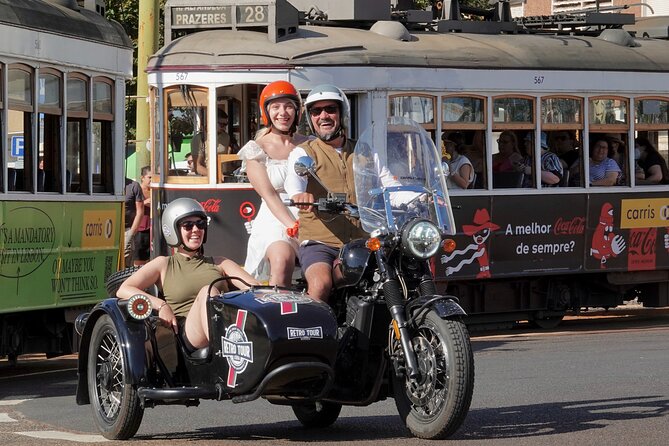
Lisbon looks better from a sidecar. This private vintage sidecar tour strings together Lisbon’s biggest historic hits in about an hour, with time for viewpoints and a real reset stop. I especially like the private group size (up to 2), which makes the whole experience feel relaxed instead of rushed with strangers.
I also like how the timing respects your day: you get the ride and the key sights without tying up half of Lisbon. One thing to consider is that this is a fast-moving highlights route, so you should treat it as orientation plus photo time, not a slow, deep museum day.
In This Review
- Key highlights worth knowing before you go
- Why a 1-hour vintage sidecar loop is such good value
- Praça do Comércio: start with a Lisbon anchor point
- Carmo Church ruins: the city’s scars and the quiet drama
- Viewpoints and gardens: when the sidecar ride turns into real scenery
- Liberty Avenue to Baixa: grand streets that lead you into Lisbon’s repair job
- Rossio: National Theatre past, jacarandas present
- Lisbon Cathedral (Sé) area: layers from church to cathedral
- Poetess viewpoint + Braganzas hotel panels: Lisbon’s culture side
- National Pantheon dome: the classic finale with a big-city view
- Flea market street art and another pantheon view
- Price, timing, and who this sidecar tour fits best
- The one thing that can change your experience: comfort and pace
- FAQ
- What’s the duration of the Lisbon Historic Private Vintage Sidecar Tour?
- How much does it cost, and how many people can join?
- Is pickup available?
- Is the tour in English?
- Do I need a printed ticket?
- Where is the tour meeting point?
- Is free cancellation available?
Key highlights worth knowing before you go
- Private sidecar time for up to 2 means less waiting and easier photo stops
- About 1 hour keeps the day flexible, even if you have other plans later
- Carmo Church ruins + multiple viewpoints give you dramatic “Lisbon from above” moments
- Rossio and Baixa highlights connect the city’s Portuguese past to how it was rebuilt after disaster
- Pantheon dome views wrap the tour with a big, classic Lisbon monument moment
- A short break with coffee cups and local sweets adds a human, pause-in-the-day touch
Why a 1-hour vintage sidecar loop is such good value

You’re paying for time plus access. In a city like Lisbon, where neighborhoods climb and streets twist, getting around can chew up your schedule. A private vintage sidecar tour keeps the focus on the story and the views, not logistics.
At $155.42 per group (up to 2), the price makes more sense when you compare it to two separate tickets, rides, and the time cost of trying to replicate this exact route on your own. If you’re traveling as a couple or with a close friend, you’re essentially buying a guided route plus transport, not just a driver taking you from point A to point B.
The big practical win is the length. About one hour is long enough for multiple stops and short walks, but short enough that you won’t feel like you’ve sacrificed your whole day. It also fits well if you’re jet-lagged, have limited mobility, or just want to get your bearings fast.
Booking pattern note: it tends to be reserved about 57 days in advance on average, so if you’re going in a busy season, I’d plan ahead rather than assuming you’ll find an easy last-minute slot.
You can also read our reviews of more private tours in Lisbon



Praça do Comércio: start with a Lisbon anchor point
The tour begins at R. Garrett 88 (1200-204 Lisboa) and you end back there. From that meeting point, you’ll move into the heart of the old-city grid fast, which is exactly what you want on a short tour.
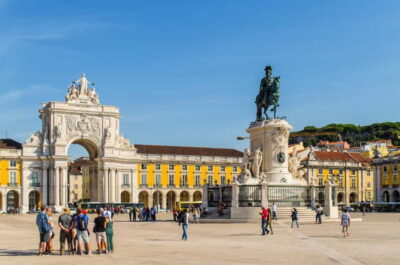
Praca do Comercio is the emblematic square you hit first. It’s a strong opening because it gives you a clear sense of where you are in the city: wide, formal, and unmistakably Lisbon. And this stop includes free admission (so you’re not wasting your time or budget on entry fees).
From a traveler standpoint, this first stop works like a compass. After you’ve seen the square, the rest of the route makes more sense: you’re not just hopping to random landmarks, you’re moving across a historical spine.
Downside? Like most quick guided routes, you’ll be there long enough to orient yourself and get key photos—but not long enough for a full, lingering sit-down. If you love long people-watching sessions, you’ll likely want to return later on your own.
Carmo Church ruins: the city’s scars and the quiet drama
Next comes the Gothic ruins of Carmo Church, the kind of place that makes you slow down without anyone asking. It’s famous not because it’s intact, but because it’s layered: the cloisters and ruins house an archaeological collection, turning the site into both a memorial and a historical record.
This stop is a smart mid-tour choice. Early on, you’ve got the big open square. Then you shift into a more intimate space, where you can actually feel the weight of Lisbon’s past. The contrast helps you remember the tour, not just the photos.
In practical terms, this is a good stop if you like to understand what you’re seeing. Ruins are usually more “meaningful” when you have a guide to point out what to look for, and here the tour’s pacing suggests you’ll get that quick interpretive context without turning it into a lecture.
Viewpoints and gardens: when the sidecar ride turns into real scenery

After the ruins, the route leans into what Lisbon does best: views. You’ll reach an elevated belvedere with panoramic scenes of Lisbon’s colorful rooftops. This is where the sidecar itself matters. You can try to arrange viewpoint stops on foot or by tram, but in limited time, you’ll feel the difference when someone else handles the route.
Then you’ll pause in a garden area with specific named trees—iron tree, cheese tree, or kapok tree—plus the mention of famous kiosks where you can sit, contemplate, and have a drink. Even if you don’t buy anything, this is the kind of stop that breaks the day’s rhythm in a useful way.
And that ties directly to one of the tour’s most praised moments: during the break, the guide provides coffee cups and local sweets. That’s not a tiny detail. In a one-hour experience, it keeps things human and memorable, and it gives you a quick energy reset.
If you’re sensitive to weather, consider that this whole segment involves outdoor walking and lookout time. Lisbon can be sunny, breezy, or unexpectedly cool depending on the season, so bring a light layer.
Liberty Avenue to Baixa: grand streets that lead you into Lisbon’s repair job
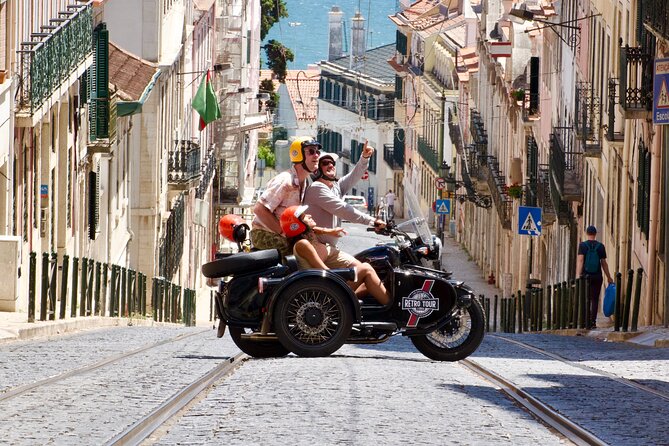
Liberty Avenue acts like a cinematic transition. You travel into a more majestic corridor that takes you straight toward Baixa District, the area built after the devastating earthquake period.
And that’s the key here: Baixa isn’t just a set of pretty streets. It’s an urban plan. The tour frames Baixa’s 18th-century reconstruction by the Marquis of Pombal as an urbanistic logic designed to be resistant to future tremors. That concept changes how you view the grid: you start seeing planning, not just architecture.
This is one of those stops where being on a guided route is an advantage. From the street, it’s easy to treat Baixa as scenery. With context, you’ll notice the structure and the idea behind it.
Quick caution: Baixa is busy and central. On a short tour you’ll pass through key sections and see what matters, but you won’t have time to wander side streets for long. If you want to shop or linger, plan an extra hour later in your day.
You can also read our reviews of more historical tours in Lisbon






Rossio: National Theatre past, jacarandas present

Then you reach Rossio, one of the places where Lisbon feels both historic and everyday. The tour points out that Rossio gathers stores, tourist activity, and history—and includes details like the National Theatre (noted as formerly the court of the Inquisition).
This stop also has a seasonal detail you’ll genuinely care about: the famous purple jacarandas in April–May. If your dates land in that window, you’ll get color and atmosphere you can’t replicate by visiting at any other time.
Even if you visit outside that season, Rossio is still valuable because it anchors the route socially. It’s not just monuments. It’s where people live their day-to-day, with a layer of national theater and historic memory in the mix.
Lisbon Cathedral (Sé) area: layers from church to cathedral
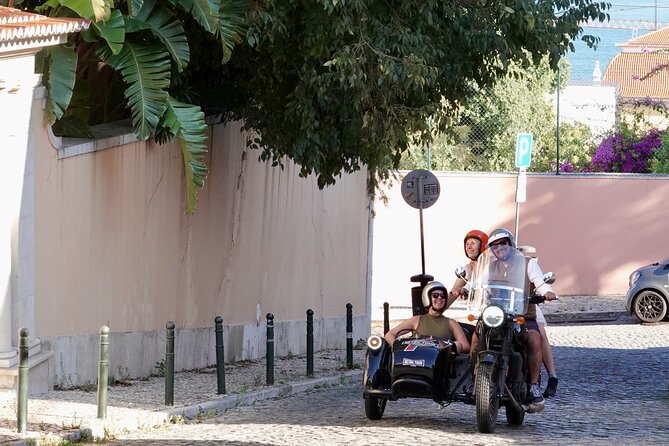
One of the most history-heavy segments comes next, centered around the church complex that the tour describes with multiple phases: it was built as a church around 1150, became a cathedral around 1250, and ties into the story of Lisbon’s Muslim period.
The tour also makes a strong point about location and overlap: it was probably built very close to the main mosque during Muslim occupation. Then it adds another layer via the cloister ruins, which suggest remnants of Roman civilization.
That’s a lot of time in one place, and the reason a guided short format works here is simple: you get the chronology without needing to hunt for it yourself.
Here’s the trade-off. You’ll likely walk enough to orient and see the key elements, but not enough to inspect every architectural or archaeological detail. If you’re the kind of visitor who wants to read every plaque and study masonry, you’ll want a longer follow-up visit.
Poetess viewpoint + Braganzas hotel panels: Lisbon’s culture side

After Sé Cathedral’s layered past, the route shifts toward viewpoints and cultural anchors.
You’ll visit a point of view dedicated to the poetess Sofia de Mello Breyner Andresen, noted as dying in 2004. That matters because it connects Lisbon’s historic walls to modern Portuguese identity. It also gives you another scenic break after the more detailed history.
Then you’ll see an old building described as connected to the Braganzas—the last Portuguese dynasty—with mention of about thirty panels from La Fontaine’s fables. Even without a deep architectural dive, those details help you notice Lisbon as a city that repurposes buildings and stories instead of starting from scratch every era.
National Pantheon dome: the classic finale with a big-city view
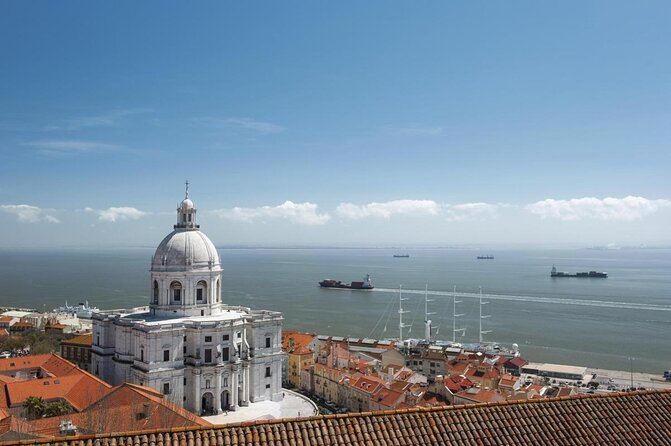
The route’s last major set piece is the National Pantheon of Lisbon. The tour frames it as an imposing monument with graves of illustrious Portuguese personalities, and it highlights the dome for panoramic views.
It’s also described as neo-Manueline in style, with a sumptuous interior. Since this is a short tour, you shouldn’t expect a long stop inside at a slow pace, but you will get the sense of why it’s considered emblematic.
If you love ending your day with a skyline moment, this is timed well. After multiple historical stops and viewpoints, the Pantheon dome provides the kind of “look back at the city” payoff that makes the whole loop feel complete.
Flea market street art and another pantheon view
To round out the experience, you’ll pass a flea market area and get a view of another pantheon (the current one is referenced as housing the illustrious), with notes that street art meets tradition.
Even when your plan is only one hour, this stop makes the tour feel more Lisbon and less museum map. You get a quick taste of how modern street culture overlaps with historic places.
Practical note: flea markets can get crowded. In a short tour, you’ll likely take it in from the edges rather than browsing stalls deeply.
Price, timing, and who this sidecar tour fits best
For $155.42 per group (up to 2) for roughly one hour, this is priced like a guided private transport experience, not like a public tram hop. That makes sense because you’re paying for convenience plus a curated route plus the vehicle time.
The value improves if you fall into one of these groups:
- You’re traveling as a couple (or small pair) and want your time to feel efficient.
- You like history but don’t want to turn your day into a lecture-and-lines marathon.
- You want a high-impact highlights route that reduces planning time.
- You’re more interested in orientation and viewpoints than in long museum interiors.
If you’re the type who wants to linger, read everything, and go deep on one site, this tour can feel short because it’s built for motion and key stops. For that style of travel, you’d pair it with longer independent visits to Sé Cathedral, the Carmo ruins area, and the Pantheon.
The one thing that can change your experience: comfort and pace
One real consideration is the nature of a sidecar ride plus quick stop timing. You’ll need to be comfortable with getting on and off smoothly and moving at guide speed between viewpoints.
The good news is the experience is set up for it. The guidance includes help getting in and out if needed, and the tour can run a little longer when it makes sense.
Weather can also influence how long you’ll want to stand at viewpoints and how often you’ll need breaks, especially in breezy rooftop-air Lisbon spots.
Should you book this tour?
If you want Lisbon’s core historic map plus viewpoints in about one hour, this is a strong pick. The private format for up to two, the guided pacing, the included pause with coffee cups and local sweets, and the route’s focus on the big storytelling points (Carmo ruins, Baixa reconstruction logic, Sé Cathedral layers, and the Pantheon dome) make it a practical way to spend limited time.
I’d skip it only if you want a slow, deep dive with long indoor stops. Otherwise, it’s a smart shortcut to understanding Lisbon fast, and it gives you clear places to return to later.
FAQ
What’s the duration of the Lisbon Historic Private Vintage Sidecar Tour?
It runs for approximately 1 hour.
How much does it cost, and how many people can join?
It’s $155.42 per group for up to 2 people.
Is pickup available?
Yes, pickup is offered.
Is the tour in English?
Yes, it’s offered in English.
Do I need a printed ticket?
You’ll use a mobile ticket.
Where is the tour meeting point?
The meeting point is R. Garrett 88, 1200-204 Lisboa, Portugal, and the activity ends back at the meeting point.
Is free cancellation available?
Yes. You can cancel for a full refund, with free cancellation available up to 24 hours in advance.