REVIEW · LISBON
Lisbon Bike Tour: Downhill Downtown Lisbon to Belém
Book on Viator →Operated by Lisbon Bike Tour Outdoors · Bookable on Viator
Downhill Lisbon sounds almost too easy. Starting from Parque Eduardo VII and rolling toward Belém, it’s a practical way to see a lot without the stair-and-tilt workout. I love that the route is planned so you get flat and descending riding, and I also like that you’re not just snapping photos—you stop for stories, plus a local drink and pastry along the way.
One thing to keep in mind: the tour is relaxed, with multiple short stops for explanations. That’s great for learning, but if you prefer constant motion, you may wish for slightly less talking and faster transit between sights.
In This Review
- Key highlights to know before you pedal
- Why this Lisbon bike route feels different: all the way from Eduardo VII to Belém
- The bike and safety basics that actually matter on this route
- Starting at Alameda Cardeal Cerejeira, then dropping from Parque Eduardo VII
- Stop-by-stop: what you’ll see and why each moment clicks
- Marques do Pombal and the earthquake story
- The Avenue of Freedom (Avenida da Liberdade) pass
- Praça dos Restauradores and the Glória Funicular
- Rossio Square pass: Lisbon’s classic center rhythm
- Igreja de S Domingos and the old Jewish neighborhood context
- Praça da Figueira and Alfama neighborhood stories
- Praca do Comercio (Terreiro do Paco): Lisbon’s big square moment
- Cais do Sodré: Tejo views plus Cristo Rei and Ponte 25 de Abril sightlines
- Docas de Santo Amaro and the April 25th Bridge explanation
- Passing MAAT and the old powerplant architecture
- Padrão dos Descobrimentos (outside): the Discoveries period, explained
- Torre de Belém (outside, UNESCO area): a finish that feels like a win
- How long it really takes (and why the pace is part of the deal)
- Best value for who: families, first-timers, and “no hills” fans
- Weather and comfort: what to expect if the morning turns
- Guide style makes a difference (and you’ll usually get a good one)
- Should you book Lisbon Bike Tour: Downhill Downtown Lisbon to Belém?
- FAQ
- How long is the Lisbon Bike Tour from downtown to Belém?
- What time does the tour start?
- Is the tour mostly downhill?
- What’s included in the price?
- What isn’t included?
- Are entrance tickets included for major landmarks like Jerónimos or Belém Tower?
- Where do the tour start and end?
- What group size should I expect?
- Is the tour offered in English?
- What if the weather is bad?
Key highlights to know before you pedal
- Easy downhill route: designed with no climbs, so it feels manageable even if you’re not training for a race
- Start at Parque Eduardo VII: you begin above the city, which sets up the whole descent
- River views you can’t fake: the ride reaches the Tejo shoreline and key Belém waterfront spots
- Food and local liquor included: you get a drink plus a pastry snack, which helps justify the price
- Small group size (max 15): makes it easier to move together and handle the occasional busy crossing
- Family-friendly bike options: tag-alongs and child seats are part of the setup
Why this Lisbon bike route feels different: all the way from Eduardo VII to Belém
This is the kind of tour you book when you want Lisbon’s best “wow” moments without wasting your whole day on buses, parking searches, or backtracking. The big draw is the overall downhill feel. You start higher up, then you flow through central Lisbon and finally arrive at Belém along the water—so you’re not constantly thinking about hills, gears, or whether your legs will forgive you later.
The ride is also a route choice, not just a bike rental with stops. You cover viewpoints and neighborhoods that are spread out, but you do it in a smooth sequence that works well for first-timers. Lisbon is famous for short walks that suddenly turn into steep ramps, so having the city “carried” by your bike lane-to-street momentum is a real advantage.
Price-wise, $47.79 can look like “just a tour,” until you realize what’s bundled: bike use, helmet, insurance, guide time, and a local drink plus pastry. For a city where eating out adds up fast, that included snack and drink turn the cost from slightly pricey into fairly sensible. And because the route reaches Belém without you coordinating separate transport, it can save you money on taxis or multiple transit rides—especially if you’re traveling early in your trip.
You can also read our reviews of more cycling tours in Lisbon


The bike and safety basics that actually matter on this route
You get a bike and helmet included, plus insurance and a guide. That matters because you’ll be mixed into normal city movement at street level, not sealed inside a private road. Lisbon’s cycling infrastructure is improving, but it’s not consistent everywhere—so you want equipment and guidance that reduce stress.
Bring the right mindset. This tour is “easy” in the sense that it’s planned downhill or flat, but you still need basic comfort riding in traffic-adjacent areas. If you’re wobbling, stopping often, or anxious about joining the flow, the guide will help, but the whole group experience is smoother when you can ride steadily.
One practical note I’d flag: bells. A few riders commented that it can be annoying when only the guides have bells and pedestrians share the path. It’s not a deal-breaker, but it’s a good thing to request or double-check before rolling out—simple safety beats awkward moments.
Starting at Alameda Cardeal Cerejeira, then dropping from Parque Eduardo VII
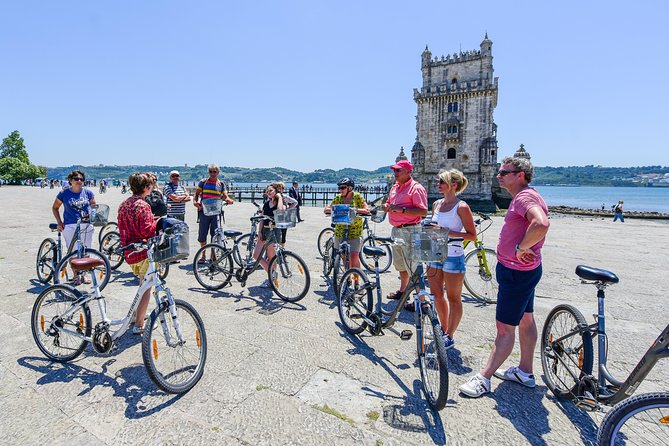
The meeting point is Alameda Cardeal Cerejeira, 1070-051 Lisboa, and you’re set up for a 9:30 am start. The first stop is at the top of Parque Eduardo VII—an ideal launch point because it gives you gravity for the rest of the morning.
From here, you’re basically using Lisbon’s natural layout to your advantage. You’re not fighting the city. You’re working with it. That’s why so many people call this a great first-day plan: you get a big-picture feel for where districts sit relative to each other, and you do it without burning your energy on steep streets.
Stop-by-stop: what you’ll see and why each moment clicks
Marques do Pombal and the earthquake story
After you begin descending, you’ll reach Marques do Pombal, with a focus on the 1755 earthquake history. This is one of those Lisbon moments where the city’s geography and rebuilding story help explain why the streets feel the way they do today.
This stop is short, but it sets context. When Lisbon later opens into big squares and river views, you’ll understand the bigger story behind the layout rather than just seeing photogenic corners.





The Avenue of Freedom (Avenida da Liberdade) pass
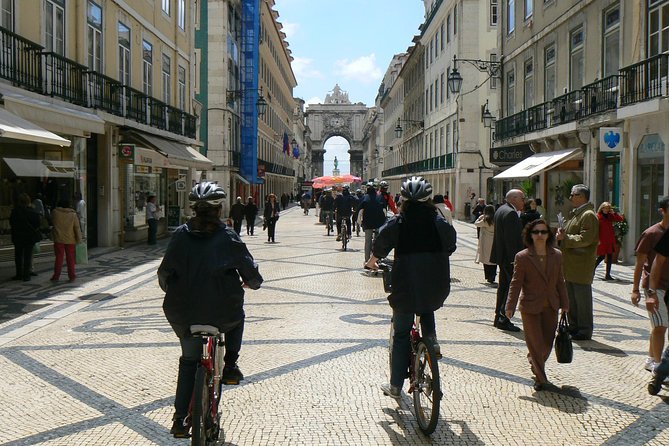
Next you’ll roll past the Avenue of Freedom, which is one of those central stretches that feels like a transition from classic hills-and-old-stone to a more grand, modern-feeling Lisbon. It’s not just scenery; it’s the sense of moving across layers of the city.
The best part here is momentum. You’re still riding, still gathering sights, but you’re also resetting your brain for what’s next: squares, churches, and the historic core.
Praça dos Restauradores and the Glória Funicular
You’ll pause at Praça dos Restauradores, learning about the Glória Funicular. Even if you don’t take the funicular itself, knowing where it fits into Lisbon’s “hill solution” helps you understand how people navigate elevation here.
I like stops like this because they connect practical Lisbon movement (how you travel) with cultural landmarks (how you explore).
Rossio Square pass: Lisbon’s classic center rhythm
You’ll pass Rossio Square, one of the city’s central anchors. This is a quick “you’re here, you’re in the middle of it” moment—busy, lively, and full of energy.
The drawback: if your timing is sensitive to crowds, Rossio can feel like a lot. The good news is the tour keeps you moving, so you’re not stuck wandering in the thickest areas longer than necessary.
Igreja de S Domingos and the old Jewish neighborhood context
You’ll reach Igreja de S Domingos, tied to history of the old Jewish neighborhood. This is one of those stops where the architecture acts like a time marker, and the guide helps connect the site to the wider story of Lisbon’s past communities.
This can be a powerful moment because it’s more than a landmark photo. It’s a reminder that Lisbon’s “old city” wasn’t a single culture in one time period—it was layers.
Praça da Figueira and Alfama neighborhood stories
At Praça da Figueira, the guide shares stories that connect to the older neighborhood of Alfama. Alfama is famous for vibe, views, and winding streets, but it’s hard to grasp quickly if you only do walking. A bike tour helps you feel the city’s shape first, then your imagination fills in what your legs will do later on foot.
Expect this stop to be more narrative than “look at this one thing.” That’s the value: the ride becomes a guided map you carry into the rest of your day.
Praca do Comercio (Terreiro do Paco): Lisbon’s big square moment
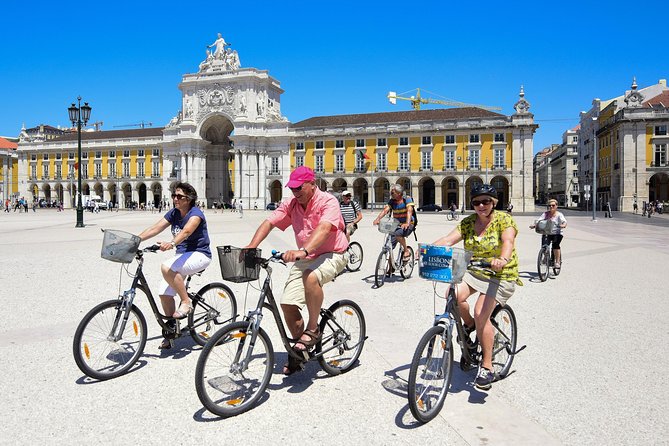
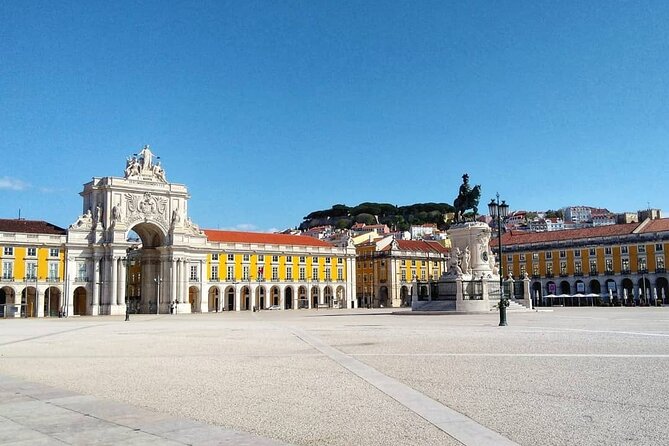
Then comes Praça do Comércio (Terreiro do Paço), the biggest square in Lisbon. The size alone is impressive, but the real point is how the square opens toward the water. It makes the shift to Belém feel logical, not random.
This stop is also where the tour balances learning with atmosphere. You can take in the scale, notice how streets funnel in and out, and imagine where you might want to return later for a slower walk or a meal.
Cais do Sodré: Tejo views plus Cristo Rei and Ponte 25 de Abril sightlines
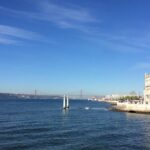
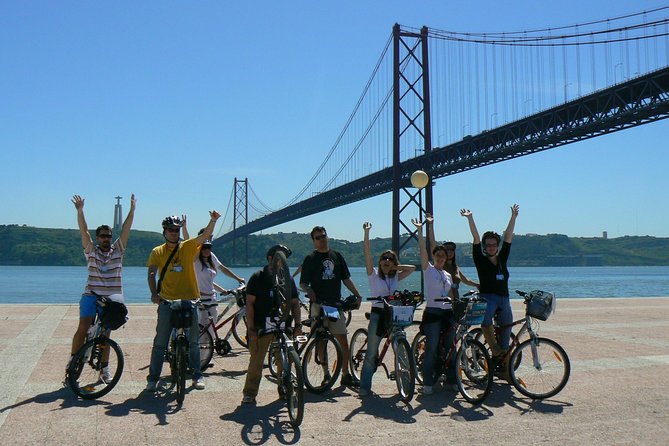
At Cais do Sodré, you’ll get a view toward the Tejo River, with sights including Cristo Rei and the Ponte 25 de Abril. This is where the ride turns into scenery you can’t easily recreate from a quick bus stop.
What I like here is how it frames Lisbon as a river city. From downtown, you see how Belém makes sense, not just as a destination, but as the continuation of Lisbon’s water-facing identity.
Docas de Santo Amaro and the April 25th Bridge explanation
You’ll come through the Docas de Santo Amaro, with a guide explaining the April 25th Bridge. This is one of the best “transport and meaning” stops. Bridges in Lisbon aren’t just engineering—they’re part of how the city links itself to wider Portugal.
If you’ve ever looked at a map and wondered how Belém ties into the rest of the region, this is the explanation that turns the dots into a story.
Passing MAAT and the old powerplant architecture
Next you’ll pass the MAAT area and an older powerplant structure. Even if you don’t go inside, the contrast helps. Lisbon’s riverfront is now cultural and modern in places, not just historical.
This “pass-by” segment keeps the flow of riding, while still giving you a taste of what Belém’s waterfront has become.
Padrão dos Descobrimentos (outside): the Discoveries period, explained
At Padrao dos Descobrimentos, you’ll see it from the outside and hear the history tied to the Discoverer’s period. The monument is huge and hard to miss, so the external view is enough to anchor your understanding.
Important note: admission isn’t included for certain monuments, so treat this as a visual stop rather than a ticketed visit. That’s not a bad thing—it keeps the tour on time and keeps you focused on the bike ride itself.
Torre de Belém (outside, UNESCO area): a finish that feels like a win
Finally, you’ll see Torre de Belém from the outside, another UNESCO-listed landmark. It’s a classic ending because it screams Belém, even without stepping inside.
Then the tour ends at Altis Belém Hotel & Spa, near the Doca do Bom Sucesso.
This matters for your day planning. You finish where you actually want to keep exploring, so you don’t have to immediately reverse course or reorganize transport.
How long it really takes (and why the pace is part of the deal)
The tour runs about 3 hours 30 minutes. Most stops are around five minutes, which adds up fast because you’re stopping, learning, and re-grouping before moving on.
If you want nonstop motion, you might feel it’s slow. If you want to understand what you’re seeing, the stop rhythm works well. I like this pace for early-day touring because it helps beat jet lag: you get movement, fresh air, and guided stories without the strain of long walks.
Best value for who: families, first-timers, and “no hills” fans
This is one of the best “first Lisbon day” bike ideas if you want orientation. Many people use it right when they arrive because it gives you a mental map in a few hours, and then you can choose later whether to focus on Belém, Alfama, or downtown.
It’s also a strong option for families with kids and mixed biking skills. The setup supports:
- tag-alongs with 20-inch wheel bikes
- 24-inch bikes
- child seats for kids 1 to 3 years old up to 22 kgs
And since the ride is planned to be downhill or flat, it’s far less intimidating than tours that include climbs.
If you’re an experienced cyclist hunting for big climbs and epic effort, this won’t feel like a training ride. But as sightseeing with minimal suffering, it nails the brief.
Weather and comfort: what to expect if the morning turns
This experience requires good weather. Bad conditions can shut it down, with an option for a different date or a refund.
On a lighter note: even when weather threatens, having a route that’s mostly downhill helps keep things calm. You’re less likely to get stuck sweating halfway up a hill while everyone waits.
Guide style makes a difference (and you’ll usually get a good one)
The most praised element is the guide. People repeatedly mention guides like Gina, George, Jorge, Joe, Lara, Vincent, Gino, and Rachel for pacing and storytelling.
Here’s what to look for as a rider: clear instructions before you roll out, short factual stories that fit each stop, and the ability to keep the group together. When that works, the tour feels like a conversation through Lisbon’s key districts, not just a checklist.
Should you book Lisbon Bike Tour: Downhill Downtown Lisbon to Belém?
Book it if you want an efficient morning that hits major Lisbon highlights, then ends in Belém with the momentum to keep exploring. The big win is the all-downhill/flat design, plus the practical bundle of helmet, bike, insurance, and included local drink and pastry.
Skip it (or at least consider carefully) if you hate any kind of guided stop-and-go rhythm. The ride does include explanations and re-grouping, and some people want faster sightseeing.
My quick rule: if you want Lisbon’s shape and river views without getting crushed by hills, this is a smart move.
FAQ
How long is the Lisbon Bike Tour from downtown to Belém?
It’s about 3 hours 30 minutes.
What time does the tour start?
The start time is 9:30 am.
Is the tour mostly downhill?
Yes. It’s described as very easy with no climbs, staying descending and flat.
What’s included in the price?
You get bike use, a helmet, insurance, a guide, local liquor (alcoholic beverages), and snacks including local pastry.
What isn’t included?
Meals and additional drinks aren’t included. Some monument admission is also not included.
Are entrance tickets included for major landmarks like Jerónimos or Belém Tower?
The Padrao dos Descobrimentos and Torre de Belém are seen from the outside, and admission is listed as not included for those stops.
Where do the tour start and end?
It starts at Alameda Cardeal Cerejeira, 1070-051 Lisboa. It ends at Altis Belém Hotel & Spa, Doca do Bom Sucesso, 1400-038 Lisboa.
What group size should I expect?
The tour has a maximum of 15 travelers.
Is the tour offered in English?
Yes, it’s offered in English.
What if the weather is bad?
The experience requires good weather. If it’s canceled due to poor weather, you’ll be offered a different date or a full refund.