REVIEW · PORTO DISTRICT
Pinhão: Rabelo Boat 1-Hour Tour
Book on GetYourGuide →Operated by Magnifico Douro · Bookable on GetYourGuide
Cruising the Douro from Pinhão feels like getting a front-row seat. This 1-hour rabelo boat tour slides along the river through Portugal’s oldest wine demarcated region and lets you see UNESCO-classified Douro scenery from the water—no buses, no staircases.
I like two things right away: the timing is perfect for jet-lagged legs and families, and the Magnifico Douro Boat Tour app gives you multilingual, geo-localized commentary as you pass quintas and terraces. One thing to keep in mind: a chunk of the experience depends on your phone and the audio guide working smoothly, so you’ll want to prep before you board.
In This Review
- The best parts I’d copy for your trip
- One drawback to plan for
- Key things to know before you go
- Booking Value: why $17 feels like a smart use of time
- Getting to the pier: find Magnifico Douro near the iron bridge
- The boat and atmosphere: rabelo-style, comfort-focused
- Entering the route: Ponte do Pinhão and the first look at the terraced hills
- Quinta do Bomfim and Quinta da Roeda: spotting estates as patterns, not just names
- Vieira de Sousa and Roncão turning point: when the cruise changes its perspective
- Quinta da Romaneira, Quinta do Pessegueiro, and Quinta do Ventozelo: the return cruise becomes a quiz
- Quinta das Carvalhas and finishing strong in Pinhão
- How the audio app really works (and how to avoid the common hiccups)
- Who this tour suits best (and who might want a longer one)
- Final thoughts: should you book the Pinhão rabelo 1-hour cruise?
- FAQ
- How long is the Pinhão: Rabelo Boat 1-Hour Tour?
- What does it cost?
- Where is the meeting point?
- What route will the boat take?
- Is there a live guide on board?
- What languages are available for the audio guide?
- What should I bring for the audio tour?
- Is the tour run in rain?
- Is anything besides the boat included in the price?
- Is free cancellation available?
The best parts I’d copy for your trip
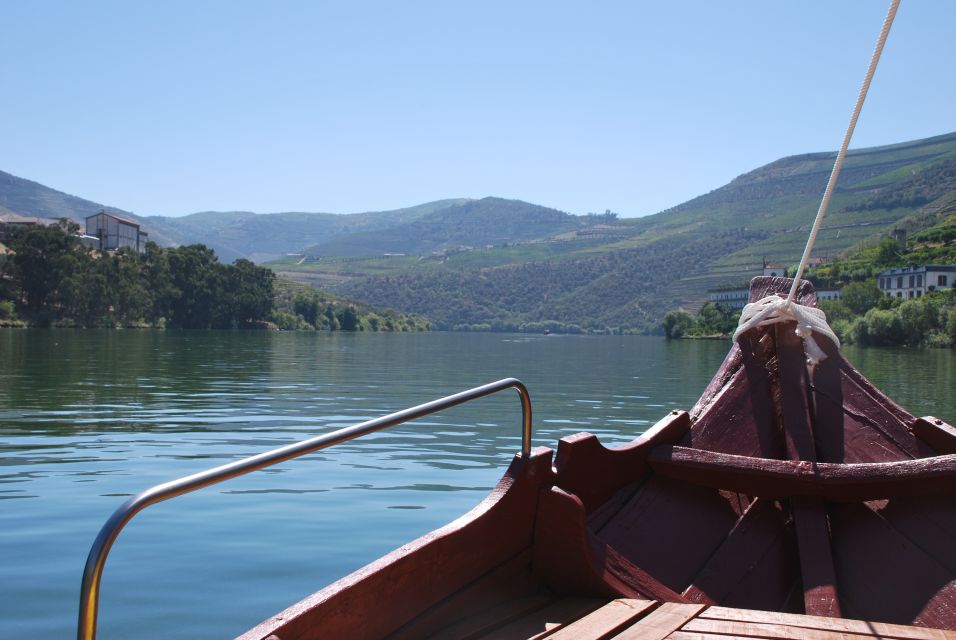
First, the river route is easy and satisfying: you start in Pinhão, go upstream under the Eiffel iron bridge, then turn around around the Roncão area and cruise back. Even though it’s the same stretch both ways, the views genuinely shift—angle, light, and terrace shapes look different when you’re heading back.
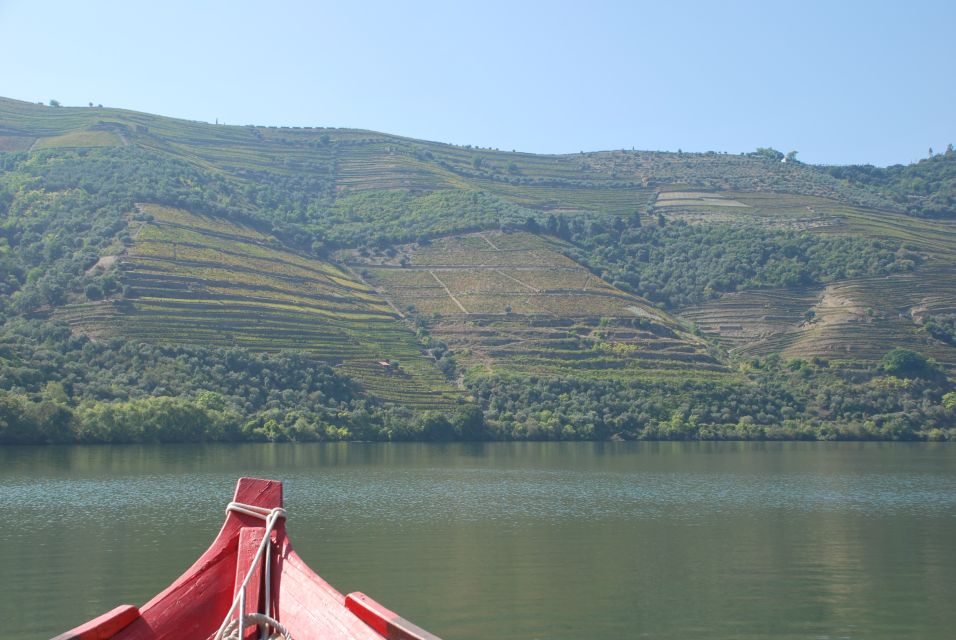
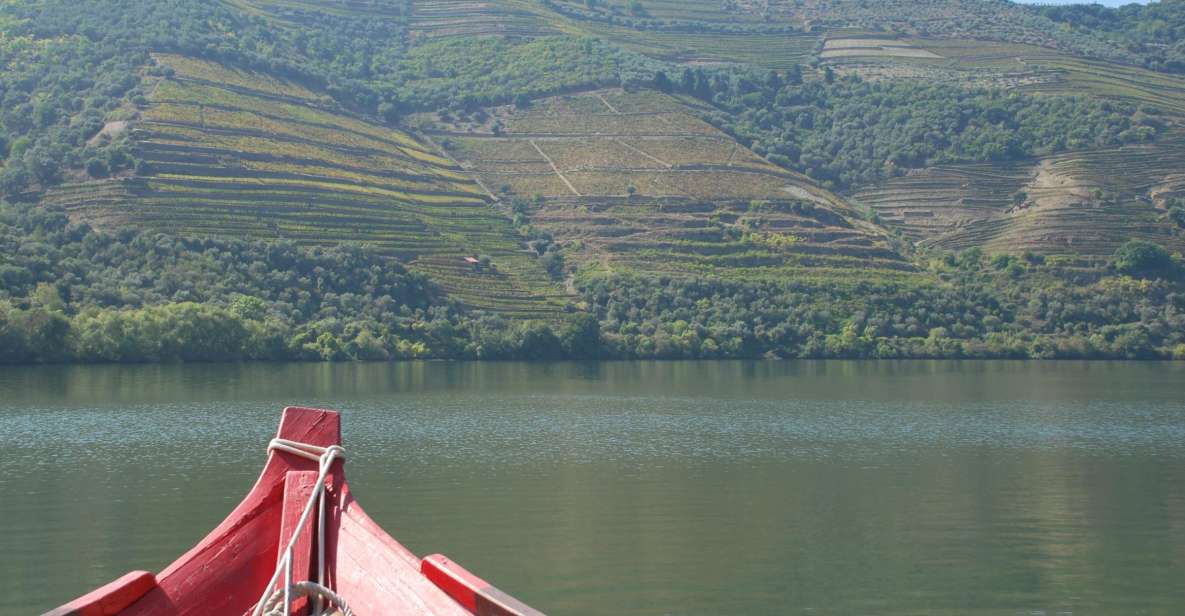
Second, the boat setup is practical. The tour runs rain or shine, and the boats have closed areas, so you’re not stuck freezing in bad weather. Plus, you can choose where to sit for comfort; if it’s dry, the front/bow area is where you’ll feel the breeze and get that clear “river straight ahead” feeling.
One drawback to plan for
If you’re hoping for a nonstop live guide, adjust expectations. This tour leans on the app-based audio. Some people find it easy; others run into glitches like audio cutting out or QR steps being a bit confusing. My advice: download early, bring earphones, and don’t assume you’ll get perfect sound at every moment.
You can also read our reviews of more boat tours in Porto District
Key things to know before you go
- App-first audio: Download the Magnifico Douro app and bring your own earphones for the best experience
- UNESCO views from the water: Terraced vineyards and historic estates look different when you float past them
- Same route, new perspective: Going upstream and then back changes what you notice on both sides of the river
- Comfort in rain: Boats are closed, so bad weather doesn’t automatically ruin the cruise
- Sit for the view: Early spots near the front are limited; the best angles get taken fast
Booking Value: why $17 feels like a smart use of time
For about $17 per person for a full hour on the Douro, this is one of the more efficient ways to see the valley without committing to a half-day winery plan. You’re paying for a simple goal: time on the river plus context about what you’re seeing.
The value gets even better because it’s flexible in the moment. You’re not locked into a long schedule where one delayed meal or a late arrival can derail the day. You can also slot it in as a break between tasting stops or viewpoints around Pinhão, Peso da Régua, or the broader Douro area.
One more practical point: the cruise is short enough that you can stay curious without getting tired. After an hour, you’ll still want to keep looking up at the terraces. That matters, because the Douro’s magic is the details—how vineyards climb, how stonework holds the slopes, and how the river acts like a corridor through the estates.
Getting to the pier: find Magnifico Douro near the iron bridge
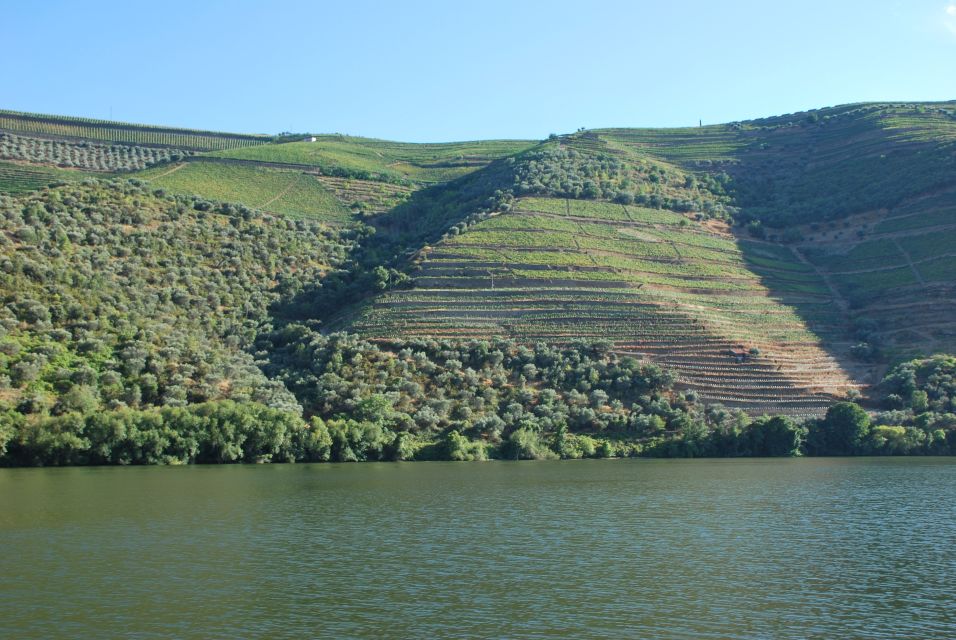
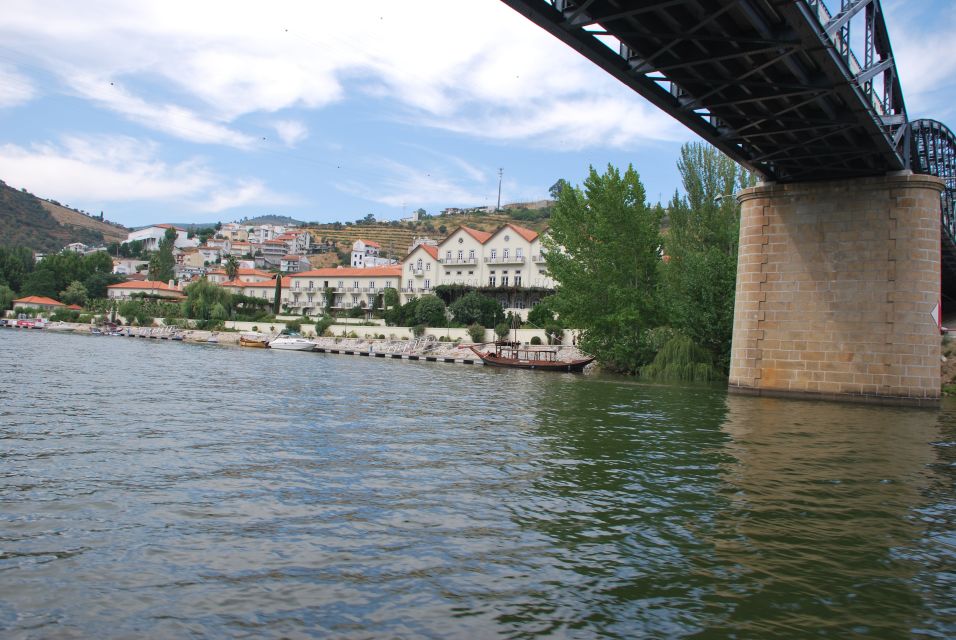
Your meeting point is Magnifico Douro Pier in Pinhão, near the iron bridge, in front of the Vintage House Hotel garden gate. Enter by the bridge. That sounds straightforward, but bridges can be confusing when you’re arriving on foot or with a taxi-drop that’s a few minutes off.
What I’d do: get there a little early and take 5 minutes to locate the exact pier entrance. There’s a reason this matters—some sailings can run a touch late if passengers board after the schedule. Arriving early also gives you first pick for seating, and on a one-hour cruise, the best seats matter.
The boat and atmosphere: rabelo-style, comfort-focused
This is a rabelo-style experience: traditional in spirit, designed for the river, with open and closed areas so you can stay comfortable in different seasons. In plain terms, that means you’re not stuck fully exposed when the weather turns.
Depending on the sailing, you may notice the boat is more tourist-comfort focused than the tiny, classic “only-you-and-the-river” image you might have in your head. The key thing is still the same: you’ll have indoor shelter if needed, and you can choose where to sit based on temperature, wind, and how much you want to feel the river breeze.
Either way, the vibe tends to be relaxed. It’s not a loud party cruise. If you want a calm break, this is usually the right call.

Entering the route: Ponte do Pinhão and the first look at the terraced hills
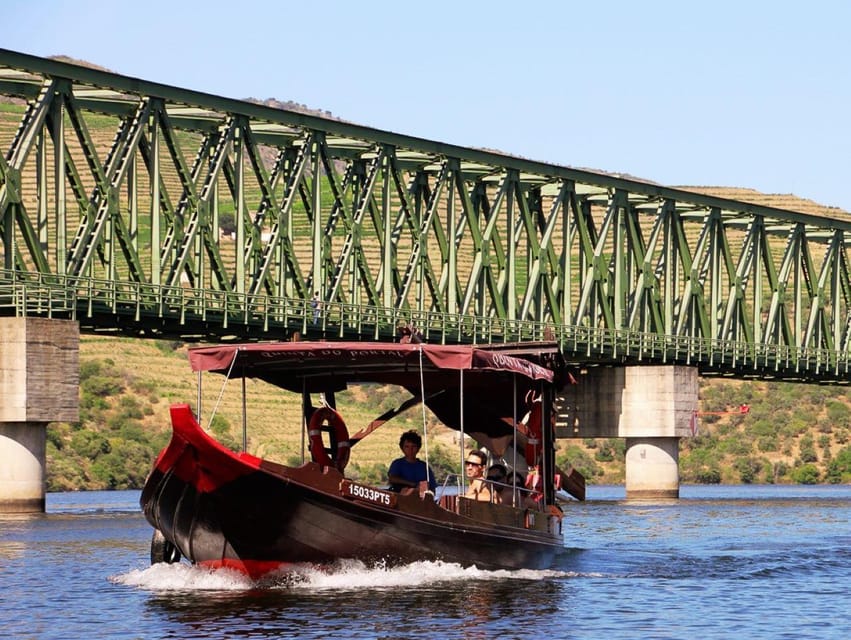
Right after you depart, you’ll start to see why the Douro Valley is protected and why so many people keep coming back. The terraces aren’t just scenery. They’re the operating system of the wine region.
At Ponte do Pinhão, the river opens up and you get early orientation: you’ll start to understand how the hills step up away from the water and how the vineyards cluster into distinct parcels. If you have the app running, you’ll likely also get guided context about what you’re passing as the boat moves.
A small drawback here: if the audio isn’t working yet (or you haven’t gotten your earphones ready), the early minutes can feel like a blur of similar-looking green. That’s not bad—it’s just why I recommend starting the app before boarding if you can.
Quinta do Bomfim and Quinta da Roeda: spotting estates as patterns, not just names
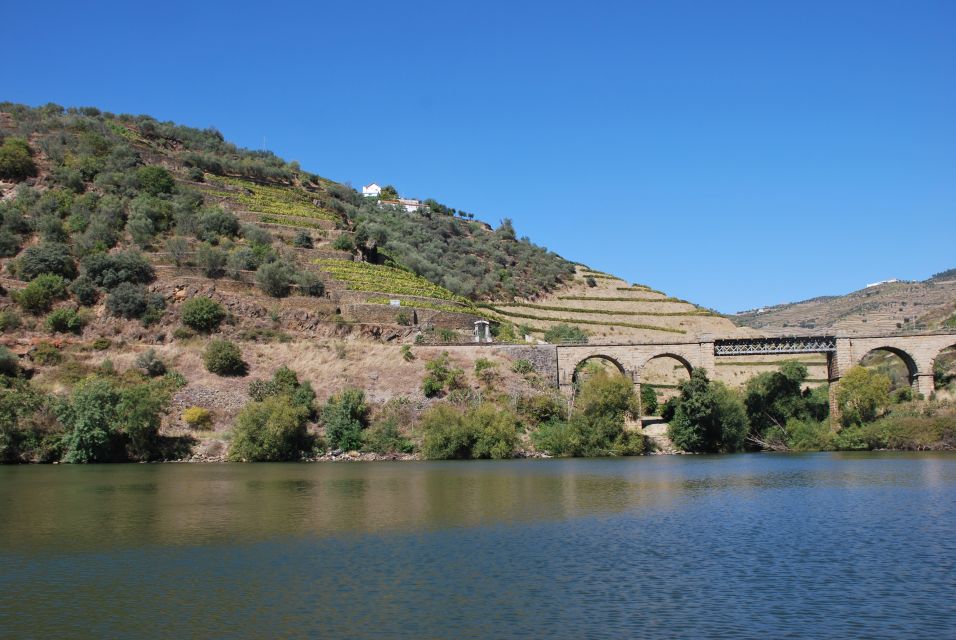
As you continue, you’ll pass Quinta do Bomfim and then Quinta da Roeda. These are the kinds of names you’ll hear again if you visit tasting rooms later in the region. On the boat, though, the “wow” is visual pattern recognition.
Here’s what you should look for:
- how terraces break into blocks
- how the vineyard slopes relate to the river bend
- how farm buildings and walls sit above the waterline
The audio guide can help connect the visual shapes to the specific estate names. When it works well, it turns random hills into a story you can follow—what you’re looking at isn’t just pretty, it’s mapped.
If the audio is glitchy, no panic. Just switch your focus to rhythm: one side of the river, then the other. The Douro keeps changing the view angle as you move.
Vieira de Sousa and Roncão turning point: when the cruise changes its perspective
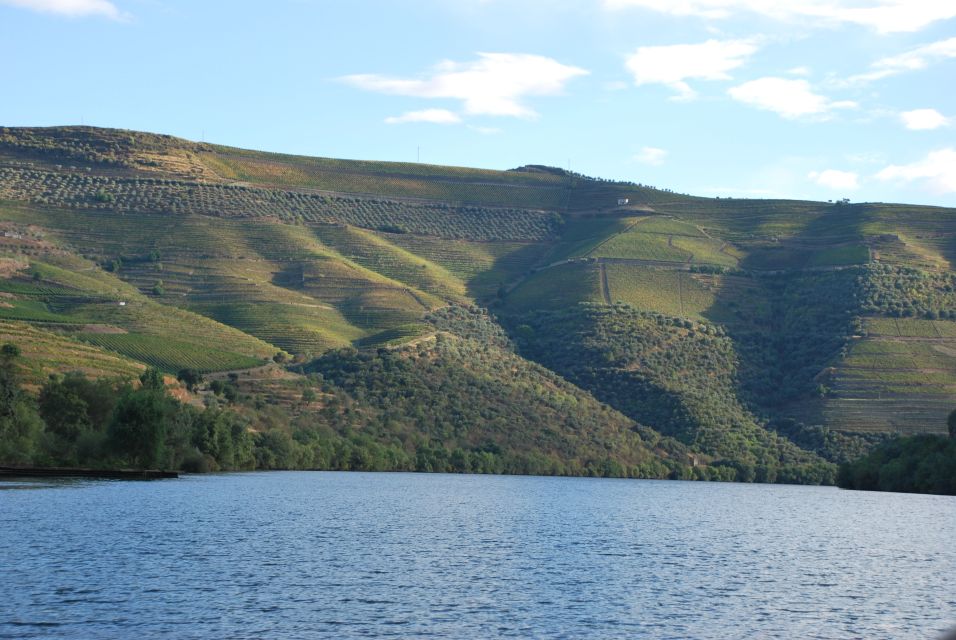
Eventually you reach Vieira de Sousa – Quinta do Roncão, which is also where you turn around. This is a key moment because it changes the entire feel of the cruise.
Heading upstream, you get one type of view: estates and terraces seem to stack toward the horizon. Then you pivot, and suddenly the same terraced slopes look deeper, closer, or simply different—because you’re now tracking the river in the opposite direction.
Practical tip: this is a good time to reposition. If you started on one side of the boat, move to the other side for the return. You’ll notice details you missed on the first pass, especially where terraces meet the water.
Also, if you’re traveling with someone who gets restless, the turning point is a natural “pause moment.” It’s where conversation tends to perk up: wow, look at that line of vines; that estate is on the opposite bank; wait—did we see that wall earlier?
Quinta da Romaneira, Quinta do Pessegueiro, and Quinta do Ventozelo: the return cruise becomes a quiz
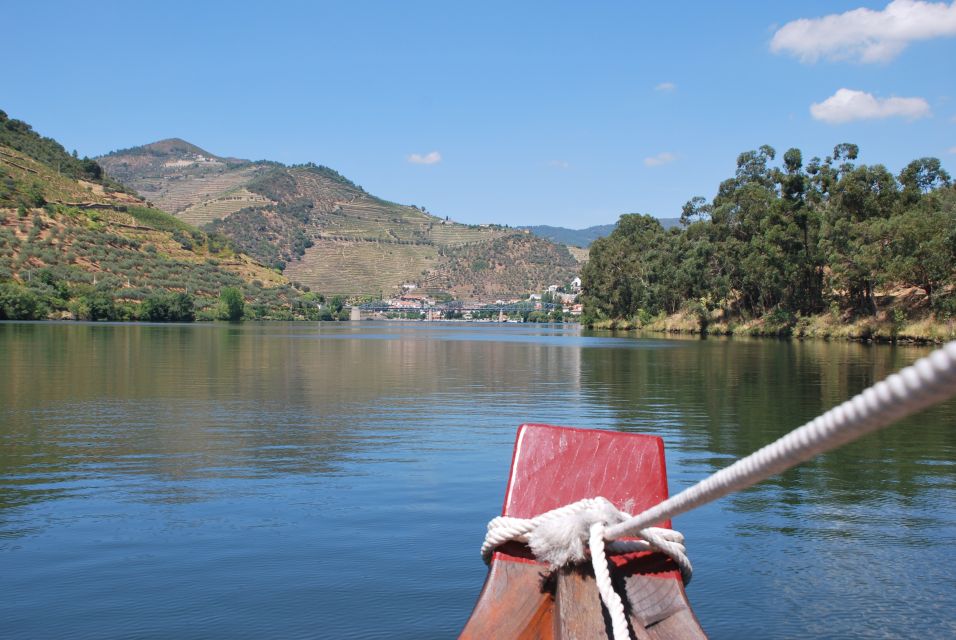
On the way back, you’ll pass Quinta da Romaneira, Quinta do Pessegueiro, and Quinta do Ventozelo. If you’re using the app, this stretch becomes a bit like a live slideshow you control. The geo-localized commentary is meant to match what you’re seeing along the route, so you’re not just listening in the dark.
Even without perfect audio, this is still worth it because the return cruise highlights how repetitive Douro terracing can be in one direction—and how varied it becomes in another. You may catch differences in:
- terrace density
- where the vineyard parcels cluster
- where the river widens or tightens
Drawback to watch for: some people find audio can cut in and out. When that happens, you may need to pause your listening and just enjoy the river visually. That’s fine. But if you’re the type who really wants commentary, bring patience and don’t rely on flawless tech.
Quinta das Carvalhas and finishing strong in Pinhão
As you approach the end of the hour, you’ll pass Quinta das Carvalhas and then return to Magnifico Douro Pier. This final section often feels calmer, partly because your brain has already adjusted to the rhythm: river, terrace, estate, river, terrace, estate.
If you’re hoping for photos, consider this: your best angles usually happen when the boat is moving smoothly and you have enough light on the slopes. The last part is still good, just don’t expect the same “first-time wow” feeling. You’ll already have seen plenty—now it’s about choosing your favorites.
When you step off the boat back in Pinhão, you’ll probably understand the valley better than you did before boarding. That’s the point of a short cruise like this: it doesn’t replace wine tastings. It sets the stage.
How the audio app really works (and how to avoid the common hiccups)
The tour includes a mobile app with geo-localized, multilingual commentary. You’ll use the Magnifico Douro – Boat Tour app and scan or receive audio cues tied to your location.
Here’s what to do to maximize success:
- Download the app ahead of time and test it once before you go
- Bring your own earphones
- Get ready for a QR step when you’re on board (captains may provide guidance)
- Keep your phone charged since it’s running audio during the cruise
Based on real-world experience, some people have no trouble and find the app easy to follow. Others mention the app can be fussy, stop playing, or require extra steps to get the right settings. So aim for “prepared,” not “optimistic.”
When audio works, it gives you context about wine farms, the wine, and the river itself. When it doesn’t, you can still enjoy the cruise—you just lose the estate-by-estate explanation.
Who this tour suits best (and who might want a longer one)
I think this tour is ideal if you:
- want a low-effort, high-reward hour on the Douro
- have kids or anyone who gets bored fast
- are doing a wine trip and need a calmer break between tastings
- like learning, but don’t want a long guided day
It may feel less ideal if you:
- expect constant live narration
- rely on spotty phone audio and don’t like troubleshooting
- want a deeper dive into winemaking beyond what the app provides
If you’re not sure, treat this as the Douro’s “best-of highlights” version: short, scenic, and easy to fit anywhere.
Final thoughts: should you book the Pinhão rabelo 1-hour cruise?
Yes, I’d book it if your goal is a clear, efficient way to see the Douro Valley’s terraces and quintas from the water. The price is fair for the time you get, the route is straightforward, and the views do the heavy lifting.
Skip it or choose something else if you’re mainly chasing a live guide experience or you know you’ll hate app-based audio. In that case, you might prefer a longer tour with more direct human narration.
My simple advice: download the app early, arrive a little before departure, and plan to sit where you can see the terraced slopes. Do that, and this hour on the Douro becomes an easy win.
FAQ
How long is the Pinhão: Rabelo Boat 1-Hour Tour?
The tour lasts 1 hour.
What does it cost?
It costs $17 per person.
Where is the meeting point?
You meet at the Magnifico Douro Pier in Pinhão, near the iron bridge, in front of the Vintage House Hotel garden gate. Enter by the bridge.
What route will the boat take?
You start from Pinhão, cruise under the Eiffel iron bridge, travel upstream until the Roncão area, turn around, and return to Pinhão.
Is there a live guide on board?
The experience includes a mobile app with multilingual audio commentary. A host or greeter is listed (English and Portuguese), but the audio guide is a major part of the experience.
What languages are available for the audio guide?
The audio guide is available in Portuguese, English, French, Spanish, and German.
What should I bring for the audio tour?
Download the Magnifico Douro – Boat Tour app ahead of time and bring your own earphones.
Is the tour run in rain?
Yes. The tour runs rain or shine, and the boats are closed.
Is anything besides the boat included in the price?
The tour includes the rabelo boat tour and the mobile app with geo-localized multilingual commentary. Drinks are not included.
Is free cancellation available?
Yes. You can cancel up to 24 hours in advance for a full refund.