REVIEW · LISBON
Lisbon: Belem Motorcycle Side-car Tour
Book on Viator →Operated by Rétro Tour Lisboa · Bookable on Viator
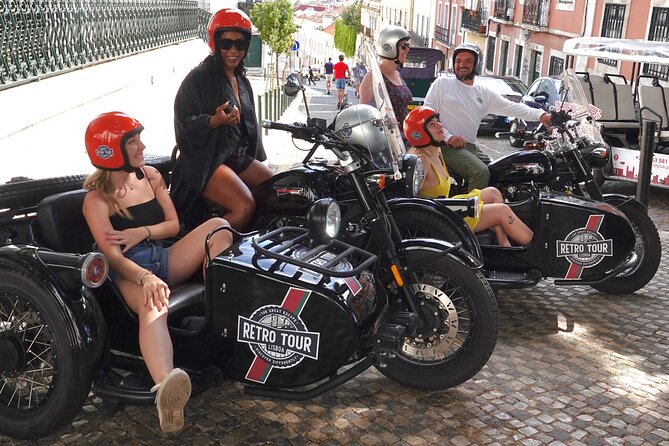
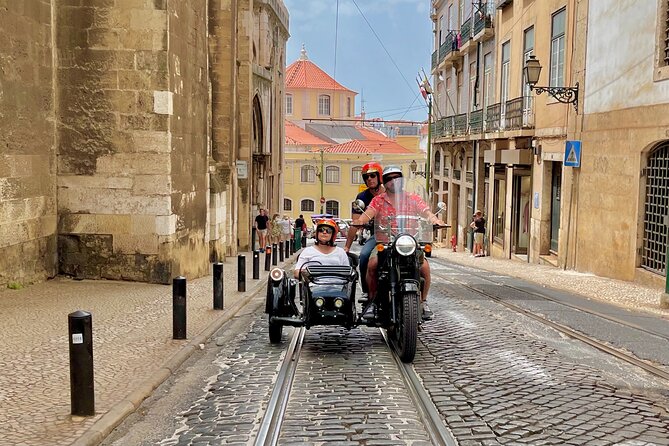
Sidecar tours make Lisbon click fast. This private Belem-focused ride is a fast, fun way to see major Lisbon sights in about 90 minutes, with stops that mix viewpoints, river landmarks, and old neighborhoods. You get classic Belém highlights like the Tower of Belém, plus a greener break in Monsanto, all in one smooth loop.
I especially like the time-saving route: you cover viewpoints over Alfama and the Tagus, then slide into Belém sights without getting stuck on logistics. I also like the human touch—the guide (Stéphane) brings practical comfort like blankets and gloves, and even pastry snacks to keep the ride pleasant.
One consideration: this is designed for movement, not long museum-style stays. If you want 45–90 minutes inside buildings at each stop, plan to pair this with a second day on foot.
In This Review
- Key highlights
- Why this Belem side-car tour feels like a smart first move
- The Carmo Church ruins stop: Lisbon’s dramatic “wait, what happened?” moment
- Viewpoints and garden squares: the underrated joy of “pause and look”
- Big squares with Tagus views: where the city feels open
- Pink Street area and a food stop: a quick taste test with a purpose
- Pont 25 de Abril area: seeing how Lisbon moves between river banks
- Belém pastry shop roots and Tower of Belém: the “must-see” stops that actually pay off
- Jerónimos-area architecture and the feeling of multi-stage construction
- Monsanto’s forest break: a surprising switch in the Lisbon mood
- Basilica of the Stars and the garden: a calm pause with a local story
- Bica funicular and the ride’s final texture on your way back
- Price and value: what you’re really paying for
- Who this tour suits best (and who might want something else)
- Should you book this Lisbon Belem side-car tour?
- FAQ
- FAQ
- How long is the Belem motorcycle side-car tour in Lisbon?
- What is the price, and how many people can join?
- Is pickup available?
- Is the tour private?
- What language is the tour offered in?
- Where does the tour start and end?
- Do I need a physical ticket?
- Is free cancellation available?
- Is the tour near public transportation?
Key highlights

- Private side-car ride for up to 2 with a focused route and pickup
- Belém landmarks including the Tower of Belém and the famous pastry stop area
- Big-city views over Alfama and the Tagus from multiple belvederes and squares
- A quick food moment tied to a market concept known for chef-level flavors at fair prices
- Monsanto’s forest escape plus the Basilica of the Stars and its garden
- Bica funicular area for that classic uphill Lisbon texture
Why this Belem side-car tour feels like a smart first move

Lisbon has a talent for making first-time plans feel messy. Hills, neighborhoods that look close on a map but feel far on foot, and streets that funnel you in circles. A motorcycle side-car tour cuts through that confusion fast. In about 90 minutes, you get a guided sweep that helps you understand where everything sits—especially the geography around the Tagus River.
You’re not just riding for fun (though it is fun). You’re also collecting orientation points. The route is built around viewpoints and major squares, so you can match what you see on the street with what you’ll later find on your own. That matters because Lisbon rewards repeat visits: you’ll come back with better eyes once you know the “shape” of the city.
And yes, it’s private for your group of up to two. That’s a big deal here. With fewer people around, the guide can pace the stops for your questions, your photo habits, and the weather. It also makes the ride feel more personal than the usual bus rhythm.
You can also read our reviews of more tours and experiences in Lisbon.



The Carmo Church ruins stop: Lisbon’s dramatic “wait, what happened?” moment
One of the first stops is the Carmo Church ruins—an evocative gothic shell with an archaeological collection inside. Even from the outside, it’s the kind of place that changes your mood. The intact city around it feels normal, but then you hit the ruins and the scale of history hits you.
Why it works on a motorcycle tour: you don’t need to spend hours to get value. You get the emotional punch quickly, and the guide can frame what you’re seeing in a way that makes the ruins more than a photo background. This is also a good starting point because it sets Lisbon’s story early: the city has layers, and you’re seeing one layer before you jump into the prettier postcard stuff.
Possible drawback: if you love long, quiet archaeology time, you’ll likely want to return later. Here, the goal is momentum and perspective.
Viewpoints and garden squares: the underrated joy of “pause and look”
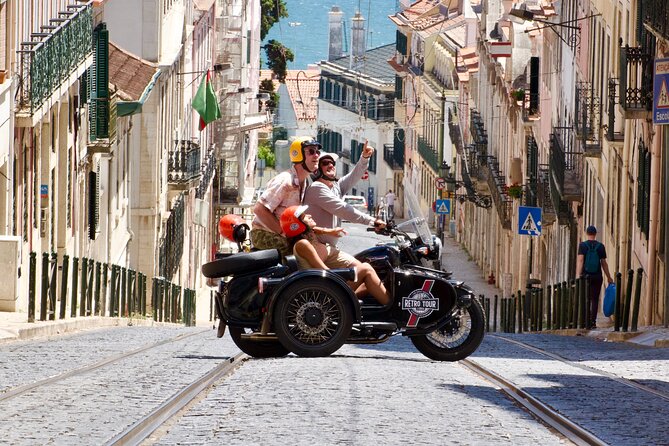
Between the ruins and the river viewpoints, the itinerary includes a historic square with a peaceful garden and a panoramic look over the city. This is one of those classic Lisbon rhythms: move, stop, look, then move again. The garden stop gives your eyes a breather and gives your photos something different than churches and rooftops.
Then you get a belvedere view aimed at Alfama and the Tagus. Alfama is all curves and steepness, and from a good vantage point you can finally picture how the streets stack up. That’s huge if you plan to walk later, because it tells you where the best viewpoints might be and which hills are worth committing to.
Lisbon often sells itself with miradouros. This tour uses them as navigation tools, not just decoration. You’ll likely finish the ride knowing which areas you want to revisit and which ones you can approach with a smarter plan.
Big squares with Tagus views: where the city feels open
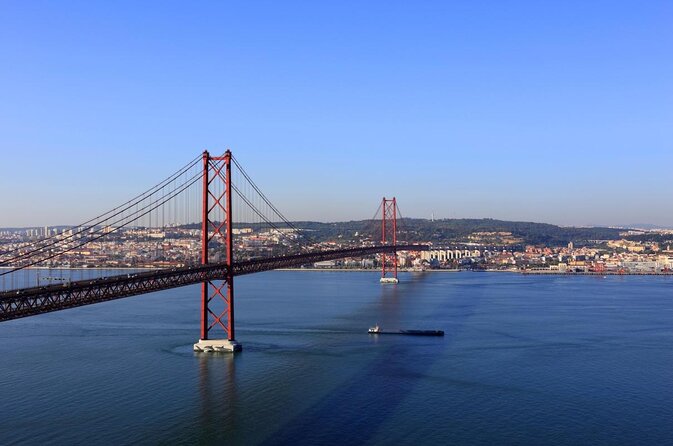
The tour also includes a vast historic square lined with stately buildings and views toward the Tagus River. This kind of space does something to the mindset. Narrow streets can make Lisbon feel tight and complicated; a wide square makes it feel designed and legible.
From a practical standpoint, big-sight viewpoints also help you pace your day. After this tour, you’ll be less likely to waste time wandering without a goal. You’ll know where the river energy is strongest and how the architecture shifts as you move toward Belém.
It also gives your camera a break from constant angles. Squares help your photos look like Lisbon as a whole, not just close-ups.
Pink Street area and a food stop: a quick taste test with a purpose

One stop runs through an animated district with the famous Pink Street, Lisbon’s well-known nightlife strip. It’s not just about seeing a sign or a street name. It shows you how the city changes mood by neighborhood. Daytime or early evening, the energy feels different than the river views and historic squares. You’re getting Lisbon’s social map.
Then comes a market concept that was overhauled about a decade ago into a go-to place for tourists and locals who want flavors at fair prices. The idea is chef-level cooking paired with fast, snackable formats. Think of it as Lisbon learning to be both grown-up and casual.
Why this matters on a side-car tour: you don’t want to end up hungry and wandering later. This kind of stop helps you stay energized while still keeping the main route tight. If you’re planning to eat on your own after the tour, you’ll have a stronger sense of what style you want—chef-driven bites versus sit-down meals.



Pont 25 de Abril area: seeing how Lisbon moves between river banks
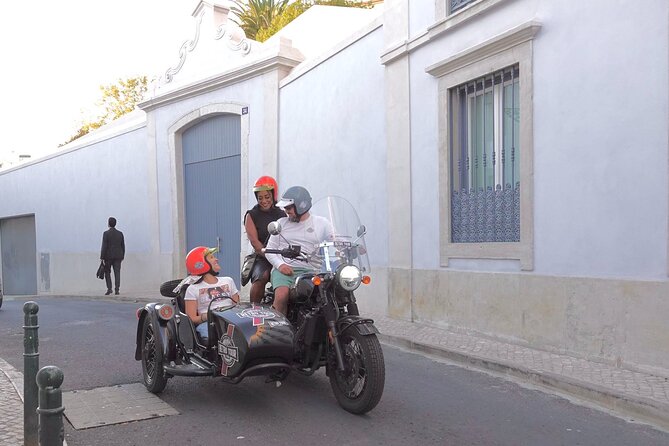
Construction from the early 1960s to the mid-1960s led to what’s now known through multiple names tied to Portugal and its era: Bridge over the Tagus, Bridge Salazar, and Pont du 25 avril. Even if you don’t get time to stop and stare at the bridge itself for long, you’ll get the important context: this landmark exists because the city needed smoother exchanges between the two banks.
On a tour like this, that makes the skyline make sense. You see where the bridge fits into the city’s flow, not just as a dramatic structure but as a connector. It’s also a useful mental link for planning future transit—because you’ll understand why certain routes feel direct and others feel like they go the long way around.
Potential consideration: the ride is structured around short, photo-friendly moments. If bridge photos are your top priority, pair this with a separate outing where you can linger.
Belém pastry shop roots and Tower of Belém: the “must-see” stops that actually pay off
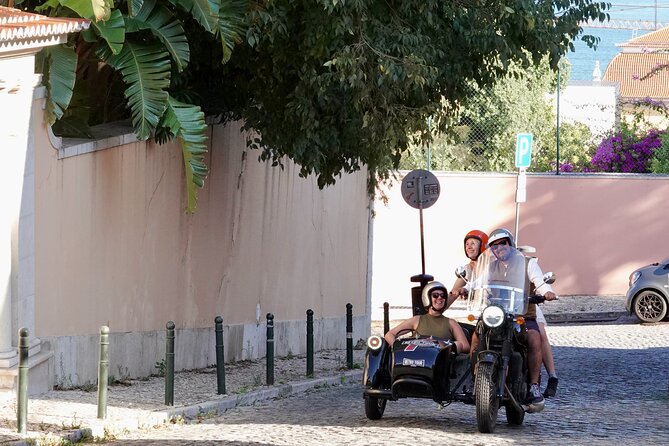
Now you hit the famous Belém sequence, and it’s built for maximum recognition. You’ll learn context around the pastry tradition—religious orders ended in 1832, and within the next few years (1837) the Belém pastry shop era begins. The shop is described as an icon of Portuguese gastronomy, with daily sales counted in the thousands. That’s the scale of how beloved and constant this stop is.
Then you reach the Tower of Belém, a 16th-century masterpiece of Manueline architecture tied to Portugal’s maritime discoveries. Tower of Belém stops are tricky on tours because people either rush through them or treat them like a one-minute checklist. On this ride, the approach is different: you’re not just arriving at a landmark, you’re arriving after building the mental “why” through river context, squares, and bridge connections.
That makes the Tower feel less like a random landmark and more like part of a wider story—Lisbon’s seafaring identity made visible in stonework and detail.
Possible drawback: it’s an icon, so it can be busy. This tour still works, but if you’re someone who hates crowds, you’ll probably want to do a second visit on a calmer day for longer time at your own pace.
Jerónimos-area architecture and the feeling of multi-stage construction
The itinerary includes another major construction phase spanning the 1500s and involving multiple architects. Even without sitting through a long lecture, you get a sense that Lisbon’s big architectural statements weren’t built in a single wave. They’re the result of change over time—different leaders, shifting priorities, evolving styles.
This matters because it affects how you look at the buildings. When you understand that multiple architects and phases are involved, you start noticing contrasts: where ornament intensifies, how forms shift, and where different styles overlap. It turns a stop from “pretty building” into “built over time.”
If you want the deepest experience, you’ll still want a separate follow-up visit. But as a side-car tour stop, it gives you the right level of context to make your later walking more rewarding.
Monsanto’s forest break: a surprising switch in the Lisbon mood
After the historic core and Belém landmarks, the route makes an excellent pivot: Parque Florestal de Monsanto. This is the city doing something rare—making you feel like you’re stepping into a wooded area right inside Lisbon’s orbit.
The timing is also helpful. The stop here is about 10 minutes, and the key is that it’s free admission. You’re not losing time to ticket lines or long winding approaches. You get a quick dose of greenery, and that refresh helps your energy for whatever comes next.
The description points out that the area was long desired but only realized later, and that intense vegetation now covers a large share of the surface. Translation: you get the sense of a living park, not just a paved scenic pull-off.
Basilica of the Stars and the garden: a calm pause with a local story
Monsanto doesn’t end at trees. The tour also includes a beautiful basilica setting with a garden and a notable detail: it welcomed the first lion of Lisbon. The basilica structure is associated with a build period in the 1850s to 1870s.
This kind of detail is exactly why side-car tours are great. You get one quick story that changes how you perceive the place. Even if you don’t go deep into the setting, you remember the unusual image: a first lion of Lisbon arriving there. That’s the sort of fact that makes a stop stick.
The garden adds to the mood shift. After river architecture and city squares, this feels like a reset button—quiet, leafy, and a chance to gather your thoughts before the final Lisbon funicular section.
Bica funicular and the ride’s final texture on your way back
The last style of stop is tied to Lisbon’s Elevador da Bica area. The Bica funicular is described as the one built the latest (1892), and it’s noted as the fourth funicular in the town, also called the most attractive due to shops and surrounding homes.
Even if you only see it as part of a short stop, it gives you that Lisbon texture: neighborhoods shaped by slopes, street life close to stairways and rails, and an everyday-feeling streetscape rather than only monument zones. This is a smart finishing note because it brings you back to street-level reality.
And since the tour ends back at the meeting point on R. Garrett, it’s easy to continue your day with a clear plan. You’re not left stranded in a far-off corner.
Price and value: what you’re really paying for
At about $227.08 per group (up to 2) for roughly 1 hour 30 minutes, this isn’t a budget-friendly “drop in and out” activity. But it can be excellent value when you look at what’s included in that price.
You’re paying for:
- a private motorcycle side-car ride (not a shared bus experience)
- pickup offered, which saves you time and hassle
- a route that hits multiple high-value photo and orientation points fast
- guide touches that make the ride comfortable, like blankets and gloves, plus pastry snacks
If you’re traveling with a partner or a close friend and you want a first-day orientation that doesn’t require you to master Lisbon transit or plan between neighborhoods, this price starts to make sense. Two people sharing the cost feel more like a smart splurge than a major expense.
If you’re solo or you’re the kind of traveler who wants to linger forever at each site, you may prefer spending that money on one long guided walking day plus self-paced discovery. The side-car tour is a momentum tool.
Who this tour suits best (and who might want something else)
This is a strong match if you:
- want a quick orientation before you walk Lisbon on your own
- like scenic stops and city viewpoint photos
- enjoy guided storytelling, especially with practical context and small details
- are okay with short visits and moving efficiently
It may be less ideal if you:
- want long museum time at each stop
- hate any moving around during a trip
- prefer only indoor attractions and no scenic viewpoints
One extra note from the comfort side: the guide providing warmth (blankets and gloves) and snack support is the kind of detail that makes a weather-changing city more manageable. Bring a light layer anyway, but you’ll be less stressed if conditions feel cool.
Should you book this Lisbon Belem side-car tour?
I’d book it if you want a first-day experience that teaches you Lisbon quickly: where the hills sit, how the Tagus shapes the city, and why Belém matters beyond its postcard reputation. The route is efficient, the stops are varied, and the ride feels thoughtfully handled by Stéphane, including real comfort help and pastry snacks.
I wouldn’t book it if your plan is mostly “slow and deep” at one or two places. This tour is about covering key areas in a short window, so you’ll still want follow-up walking days for the places that grab you most.
FAQ
FAQ
How long is the Belem motorcycle side-car tour in Lisbon?
The tour lasts about 1 hour 30 minutes.
What is the price, and how many people can join?
It’s priced at $227.08 per group for up to 2 people.
Is pickup available?
Yes, pickup is offered.
Is the tour private?
Yes. It is private, and only your group will participate.
What language is the tour offered in?
The tour is offered in English.
Where does the tour start and end?
It starts at R. Garrett 88, 1200-022 Lisboa, Portugal, and it ends back at the meeting point.
Do I need a physical ticket?
No. You’ll get a mobile ticket.
Is free cancellation available?
Yes. You can cancel up to 24 hours in advance for a full refund.
Is the tour near public transportation?
Yes, it’s listed as near public transportation.