REVIEW · LISBON
Jewish Sephardic history in Lisbon
Book on Viator →Operated by TakingUThere · Bookable on Viator
Jewish history in Lisbon can feel like a ghost story. This tour turns that into a clear, human route through the city, starting with an inside visit to Shaare Tikva and ending with major landmarks tied to the Inquisition era. I especially liked how the guide brings the big picture together with real places, not just facts on a page, and how entrance fees are handled for you so the stops stay smooth and low-stress.
The second thing I liked: you’re not just stuck at the synagogue. You walk through Principe Real, Chiado, Baixa, and Rossio, learning what the Jewish community meant in Lisbon even when physical traces were erased. One drawback to know up front: you’ll do a lot of walking on narrow streets and steps, and Lisbon’s current buildings often don’t match the older Jewish footprint you’re hearing about.
Also, the synagogue visit has rules. You can only go inside on Tuesdays and Thursdays, and there’s a dress code (no uncovered shoulders, shorts, or mini-skirts). If you’re okay with that, and you like history explained by a real Lisbon person, this is an excellent way to connect the Sephardic story to today’s city.
In This Review
- Key highlights you’ll actually feel
- Entering Shaare Tikva Synagogue: the anchor of the story
- Principe Real to Chiado: learning a city that changed
- Bertrand Bookstore in Chiado: a literary stop with local ties
- Praca do Comercio (Terreiro do Paco): where Portuguese history shifted
- Rossio Square and Pedro IV: Inquisition-era traces in plain sight
- São Domingos and the 1506 Lisbon Massacre: a heavy stop, handled with clarity
- Price and logistics: is $84.10 actually good value?
- Who this tour fits best (and who might want another option)
- Practical tips so you enjoy every step
- Should you book this Jewish Sephardic Lisbon tour?
- FAQ
- What does the tour include?
- Can I visit the synagogue inside on any day?
- Is there a dress code?
- Why does the booking ask for passport details?
- How much walking is involved?
- Can I cancel and get a full refund?
Key highlights you’ll actually feel
- Inside Shaare Tikva Synagogue with skip-the-line ticket handling, plus guided context on what you’re seeing
- All entrance fees are included, so you don’t get nickel-and-dimed mid-walk
- A small group (max 8) keeps questions possible and pace more human
- A practical walk through Jewish Lisbon’s geography: Principe Real, Chiado, Baixa, Rossio
- Hard history handled on-site, including the 1506 Lisbon Massacre reference at São Domingos
- Guides add personal connection, including Paulo Levy leading the walking portion in many departures
Entering Shaare Tikva Synagogue: the anchor of the story
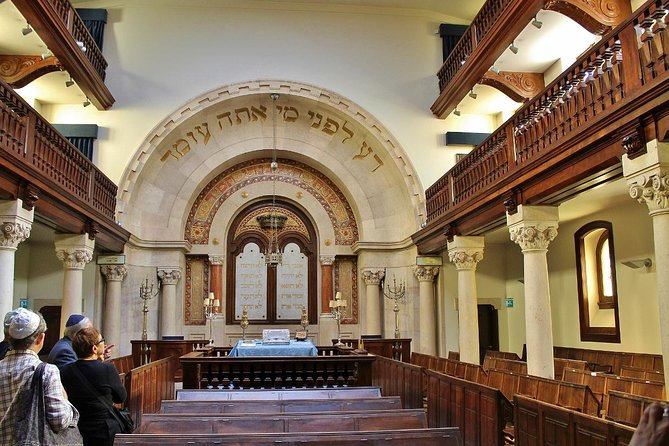
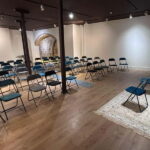
Your tour begins at Shaare Tikvah Synagogue, on R. Alexandre Herculano 59. This is the first synagogue built in Portugal since the late 15th century, so it’s not just a pretty building. It’s a statement that Jewish communal life did not fully disappear—it changed shape, survived, and returned.
You’ll go inside for about 45 minutes with your guide and included tickets. That matters because a synagogue visit can be hit-or-miss without context. With a guide, you get the why behind what you’re seeing, instead of just admiring architecture and moving on.
Two practical notes you should plan around:
- Inside access is limited to Tuesdays and Thursdays. If your trip lands on another weekday, you might miss that interior portion.
- There’s a strict dress code. Plan your outfit before you arrive. If you show up with uncovered shoulders or shorts, you’ll be the one who’s delayed, not the tour.
Why I think this stop is worth prioritizing: Lisbon is full of places that look Catholic and Portuguese on the surface. Shaare Tikvah gives you the Jewish anchor early, so the rest of the walk makes sense instead of feeling like random sightseeing.
You can also read our reviews of more historical tours in Lisbon



Principe Real to Chiado: learning a city that changed
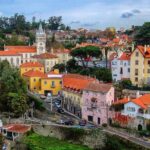
After Shaare Tikvah, you walk from the synagogue area down toward Principe Real Park, then continue into Chiado. The walking time is short on paper, but the change of neighborhoods is big in practice. Principe Real has that livable, park-and-street feel, and Chiado is one of Lisbon’s classic shopping and café districts.
Here’s the value: this tour uses Lisbon’s geography to talk about belonging—where communities lived, how they moved, and how they were pushed out and pulled back in different eras. The key idea isn’t that you’ll see one perfectly preserved Jewish quarter. It’s that you’ll understand how Jewish life threaded through Lisbon, even when later events wiped out a lot of physical evidence.
And Lisbon has reasons for that. The tour’s framing includes the fact that the city was heavily damaged by the 1755 earthquake, tsunami, and fires, and then Jewish symbolism and sites were further impacted by the Portuguese Inquisition over centuries. That is why you won’t get a clean, medieval “this is the old Jewish street” experience. Instead, you get a guided way of reading the city you see now.
If you’re the type who likes stories with locations attached, you’ll enjoy this part.
Bertrand Bookstore in Chiado: a literary stop with local ties
When the walk reaches Chiado, you stop near Bertrand, the oldest bookstore in the world (since 1732). This isn’t just a trivia pin—this stop is there because your guide connects Jewish presence to Lisbon’s intellectual and cultural life.
You’ll also hear about a famous Jewish writer in relation to Lisbon. The tour format is set up for these connections, not for you to chase down history on your own mid-walk. In some runs, the discussion also touches on Portuguese literature and names like Pessoa, which comes up in the guide’s storytelling.
A practical tip: Bertrand is a place people like to browse. Don’t let browsing steal time from the guide’s explanation. If you want to buy something, do it after the stop’s main points are covered.
Praca do Comercio (Terreiro do Paco): where Portuguese history shifted
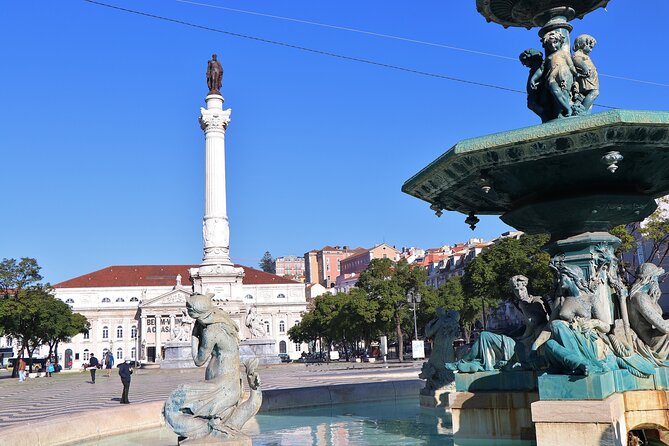
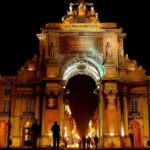
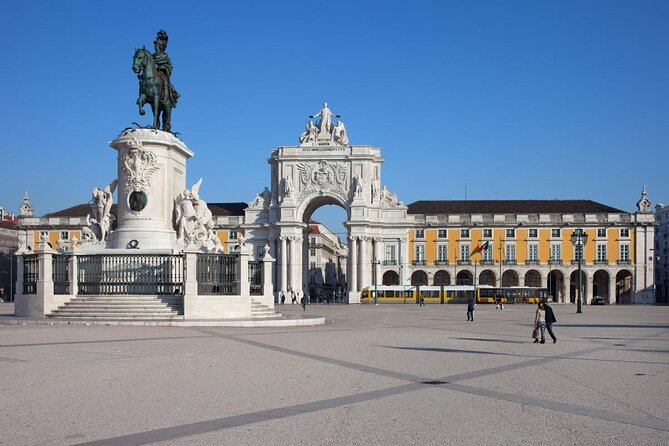
Next comes Baixa and Praca do Comercio, also known as Terreiro do Paco. This is the biggest square in Portugal, and it’s the kind of place where the scale helps you grasp how public power and public events shaped the country.
Your guide uses this open space to explain turning points in Portuguese history. Even though you won’t be entering a museum here, it works because the square itself gives you a sense of how events would have played out at street level—crowds, announcements, and the way governments used public space.
Admission is free for this stop, which is nice, but the real benefit is the context. After Shaare Tikvah, and after tracing Jewish life through neighborhoods, this is where the tour zooms out: Portugal’s broader story explains why Jewish history in Lisbon had such sharp turns.
Rossio Square and Pedro IV: Inquisition-era traces in plain sight
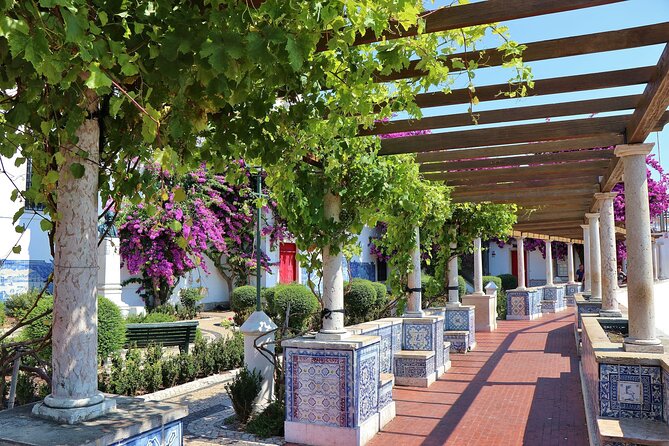
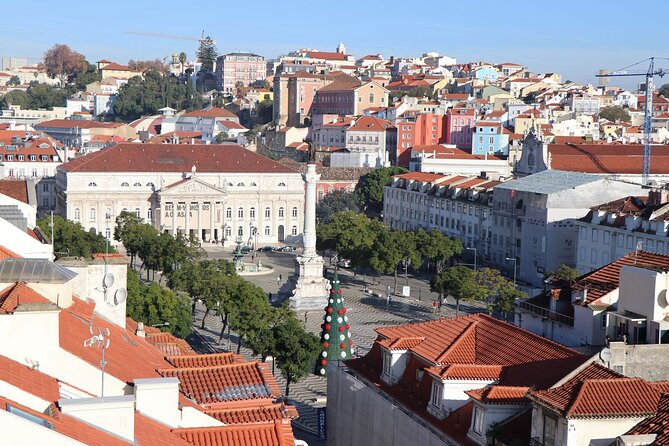
From Praca do Comercio, you walk to Rossio Square area, where Praca Dom Pedro IV sits. The centerpiece here is the Column of Pedro IV, known as the Soldier King. At the base are four female figures representing Justice, Wisdom, Strength, and Moderation.
That’s the visual lesson. The historical lesson is how institutions shape cities over time. Your guide ties this area to the Portuguese Inquisition era: the Estaus Palace was headquartered there from the mid-15th century, and it was later replaced by the D. Maria II National Theatre, founded in 1842.
This is one of my favorite moments on the tour because it teaches you how to spot history without a signboard. You’re looking at a monument and a theatre, but the guide connects the dots to what used to occupy that ground. That’s exactly the kind of “how to read Lisbon” skill you’ll reuse during the rest of your trip.



São Domingos and the 1506 Lisbon Massacre: a heavy stop, handled with clarity
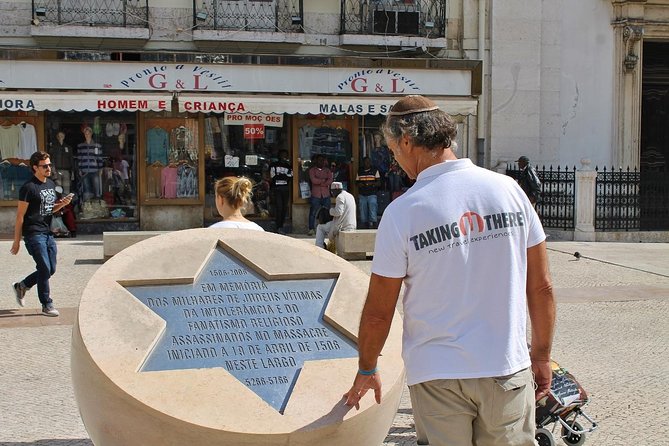
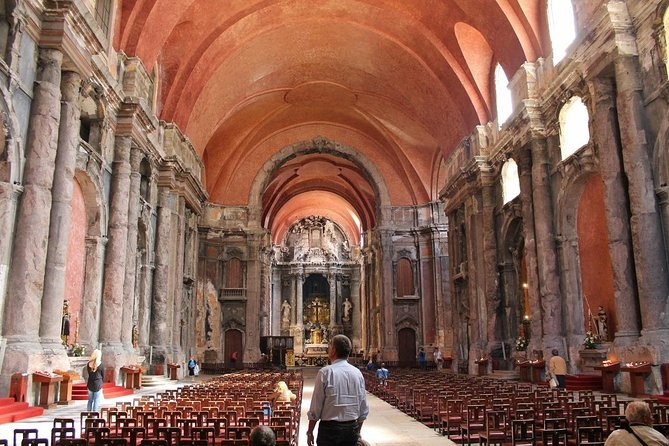
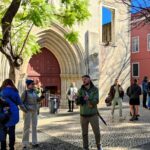
You’ll pass by the sight associated with the April 19, 1506 Lisbon Massacre and learn what happened and why. The tour explains that over the next three days after that event, more than 3,000 New Christians were murdered in the streets, with the Royal Army stopping the violence.
The epicenter is the São Domingo Church area. This part of the walk isn’t comfortable, but it’s important. It’s also practical history: if you want to understand why so much Jewish life in Lisbon became hidden, erased, or forcibly transformed, you need to face what happened during moments like this.
If you prefer lighter history while you travel, this may be the one stop that slows your mood. Go in knowing that the tour includes real consequences, not just cultural trivia.
Price and logistics: is $84.10 actually good value?
At about $84.10 per person for roughly 4 hours, the value comes from what’s bundled. You’re paying for:
- A professional guide with a small-group format (max 8)
- An inside visit to Shaare Tikvah Synagogue with tickets included
- Guaranteed help to skip ticket lines
- Entrance fees handled for the locations where entry applies
Several other stops are ticket-free, so your money isn’t being “spent” on fees you could have avoided. Instead, you’re paying for the guided interpretation—especially at the synagogue and at the historical context around major city sites.
One more detail that affects value: the tour includes a mobile ticket. That removes friction when you’re trying to coordinate street-level navigation in Lisbon’s older areas.
What you should factor in before booking is pace. A lot of the experience is walking—on narrow streets, with steps. The tour lists moderate physical fitness as the requirement. If that sounds like you’re on the edge, I’d think twice or go in with good shoes and realistic expectations about speed.
Who this tour fits best (and who might want another option)
This is best for you if you:
- Want a Sephardic-focused explanation of Jewish history in Lisbon, not just one isolated synagogue visit
- Like guided storytelling that connects Jewish life to Portuguese history and city layout
- Enjoy walking tours when the route is meaningful, not just a way to cover distance
It may be less ideal if you:
- Want lots of surviving, clearly marked Jewish landmarks. In Lisbon, much of what used to be there is not what you see now, due to major historical disruptions and later persecutions.
- Have limited mobility. The tour can be long on foot and includes steps.
In short: if you like context and interpretation, this tour is the right tool. If you mainly want physical remains, you may feel you’re seeing mostly “where history happened,” not “what still exists.”
Practical tips so you enjoy every step
A few things will make this experience smoother:
- Bring your passport details when booking. The tour requires name, passport number, expiry date, and country for security reasons.
- Follow the dress code early. Plan for covered shoulders. If you’re wearing anything borderline, change it before you go.
- Wear shoes you can trust on Lisbon steps. Even when time slots look short, Lisbon’s terrain doesn’t.
- Check the day you’re going. Inside synagogue access is only on Tuesdays and Thursdays.
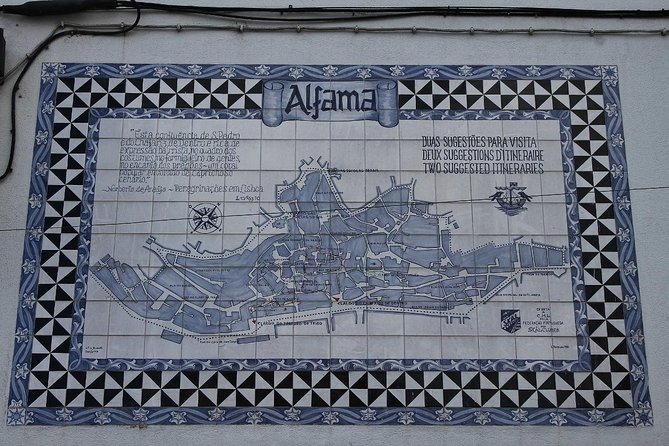
- Expect the ending point to vary. The tour ends somewhere in Old Town, potentially near Alfama, based on weather and group needs.
These are the small things that determine whether the tour feels relaxed or stressful.
Should you book this Jewish Sephardic Lisbon tour?
I’d book it if your goal is to understand Lisbon’s Jewish story through the places where it played out, especially starting with an inside synagogue visit. The combination of Shaare Tikvah access, the guided city walk, and the inclusion of tickets makes it one of the more practical ways to learn without turning the day into a ticketing puzzle.
Skip it if you’re counting on lots of clearly visible old Jewish structures or you’re not comfortable with a moderate walking pace. Also, if your travel dates don’t fall on Tuesday or Thursday, confirm what that means for your synagogue experience.
If you’re okay with a guided route through what’s left, and what’s missing, this tour helps you read Lisbon with new eyes—starting at Shaare Tikvah and carrying through the city’s public squares and church landmarks.
FAQ
What does the tour include?
You get a small-group tour with a professional guide. The price includes an inside visit to Shaare Tikvah Synagogue with tickets, plus the guide accompanying you inside. The tour also includes skipping ticket lines where applicable, and entrance fees are included for the stops that require them.
Can I visit the synagogue inside on any day?
No. You can only visit the inside of the synagogue on Tuesdays and Thursdays.
Is there a dress code?
Yes. You need to follow synagogue dress rules, including no uncovered shoulders, shorts, or mini-skirts.
Why does the booking ask for passport details?
For security reasons, you need to provide passport details (name, number, expiry date, and country) at the time of booking for all participants.
How much walking is involved?
The tour is designed for people with moderate physical fitness. Expect a walking route through Lisbon’s neighborhoods and some steps, so wear comfortable shoes.
Can I cancel and get a full refund?
You can cancel for a full refund if you cancel at least 24 hours before the experience’s start time. If you cancel less than 24 hours before, the amount paid is not refunded.