REVIEW · LISBON
Halfday Tuk Tuk Tour Lisbon Highlights-Viewpoints-Local Stories
Book on Viator →Operated by Tugatours · Bookable on Viator
Lisbon has a way of throwing hills at you, fast. This half-day electric tuk-tuk tour turns the chaos into a tidy route of viewpoints and monuments, with a local guide narrating what you’re seeing. In a few hours, you get the big-picture Lisbon vibe: grand squares, tiled churches, and the kind of overlook where the Tagus basically steals the show.
I especially like the live local storytelling. Names and details matter here—like how João Correia helps you connect earthquake-era rebuilding with what you see today, street by street. The second big win is the hill-proof pacing: you cover major neighborhoods without burning the day on climbs, twists, and waiting around.
One thing to keep in mind: this is a fast, highlights-style route, so indoor time can be brief, and some stops involve paid entry (the Pantheon dome, for example). If you love long museum stays, plan to come back later on your own.
In This Review
- Key things I’d plan around on this tuk-tuk tour
- Lisbon tuk-tuk style: how this route helps you see more for less effort
- Getting your bearings in Baixa Pombalina, Rossio, and Praça do Comércio
- Lisbon Cathedral (Santa Maria Maior): Romanesque power and surviving earthquakes
- Miradouro das Portas do Sol: the classic Alfama view for photos and calm
- Senhora do Monte viewpoint: higher views, fewer crowds, free entry
- São Vicente de Fora: tiles, tombs, and a terrace view over Alfama
- Feira da Ladra on Tuesdays and Saturdays: flea-market energy with a heads-up
- National Pantheon (Santa Engrácia): the dome viewpoint and iconic interiors
- Alfama’s lanes and fado culture: why this neighborhood feels different
- Largo do Carmo and São Roque: earthquake memory and baroque surprises
- São Pedro de Alcântântara and Príncipe Real: garden views and a gentler side of Lisbon
- Parque Eduardo VII and the modernization line: from Pombal to Avenida da Liberdade
- Praça dos Restauradores: the perfect finish point to keep exploring
- Price and pacing: is $96.55 per person good value?
- Who should book this tuk-tuk tour (and who should adjust)
- Should you book the Halfday Tuk Tuk Tour Lisbon Highlights?
- FAQ
- How long is the Halfday Tuk Tuk Tour in Lisbon?
- What does it cost per person?
- Is there hotel pickup?
- What language is the tour guide commentary in?
- Is this tour private?
- Are tickets included for every stop?
- Are there restrictions on children?
- Where does the tour start and end?
Key things I’d plan around on this tuk-tuk tour
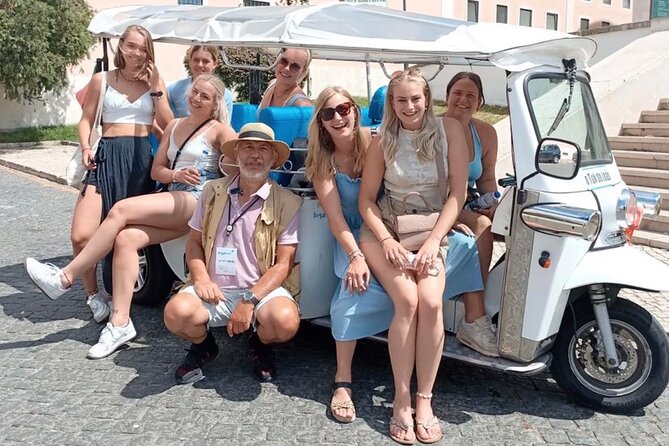
- Electric vehicle + local guide = easy first-day orientation without getting exhausted early
- Big viewpoint hits like Portas do Sol and São Pedro de Alcântara, with photo time built in
- Baixa and Praça do Comércio give you Lisbon’s center-of-the-map context fast
- Alfama stops are timed for character, including the flea market days if your schedule matches
- A few entries may cost extra, so decide ahead of time what you want to go inside
- Private tour setup means you stay together as a group, not shuffled around with strangers
Lisbon tuk-tuk style: how this route helps you see more for less effort
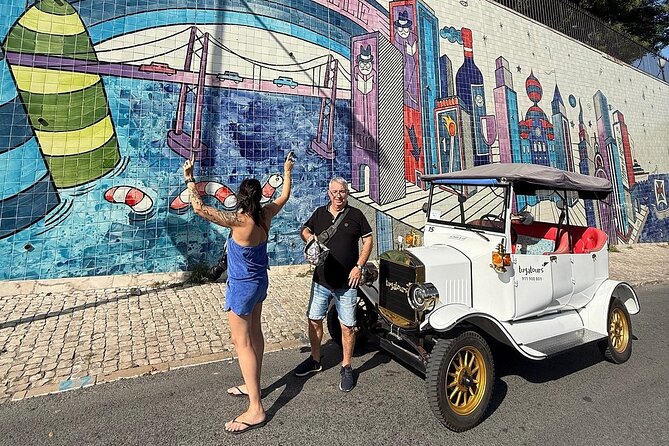
This tour is built for the way Lisbon actually feels on the ground. Streets are steep, corners appear suddenly, and the city’s best angles often sit above your head. An electric tuk-tuk lets you keep your energy for the views instead of spending it on the stairs you didn’t know you had to face.
You’ll be with an experienced guide who provides live commentary in English, and the vehicle is private for your group. That matters because Lisbon isn’t just sightseeing; it’s stories—earthquake rebuilding, Moorish-era traces, and centuries layered into stone, tiles, and street patterns.
The duration is listed as about 3 to 4 hours, and it’s designed like a “greatest hits” pass. You’ll see a lot, but you won’t linger forever—so treat this as your map-and-context day, not your one-and-done day for museums.
You can also read our reviews of more tours and experiences in Lisbon.

Getting your bearings in Baixa Pombalina, Rossio, and Praça do Comércio
Baixa de Lisboa (Baixa Pombalina) is Lisbon’s engineered center, rebuilt after the 1755 earthquake with a grid plan. From the tuk-tuk you’ll glide through the wide, straight streets and neoclassical facades that make this area feel different from the older hills behind it.
This stop is a smart starting point because it teaches you how Lisbon “works.” As you pass places like Rossio, Praça da Figueira, and especially the grand Praça do Comércio facing the Tagus, you learn where the city’s open spaces sit in relation to the neighborhoods you’ll visit later.
Practical note: the center is lively and layered with monuments and shops, so it helps to listen to the guide while moving. You’ll catch the “why” behind what you see, not just the “what.”
Lisbon Cathedral (Santa Maria Maior): Romanesque power and surviving earthquakes

Next up is Lisbon Cathedral, also known as Igreja de Santa Maria Maior. It dates to the 12th century after the reconquest of Lisbon from the Moors, and you can feel that long timeline in the building’s Romanesque-style facade and two fortified towers.
Inside, the cathedral isn’t one uniform style—it reflects centuries of modifications and restorations, including Gothic, Baroque, and Neoclassical elements. The guide’s focus on how it survived multiple earthquakes (including 1755) helps you see the cathedral as a symbol of persistence, not just an old church.
If you like architecture that shows damage, repair, and change over time, this stop pays off. If you’re short on time or prefer quieter corners, keep it efficient and aim for the main interior highlights rather than trying to read every chapel detail.
Miradouro das Portas do Sol: the classic Alfama view for photos and calm
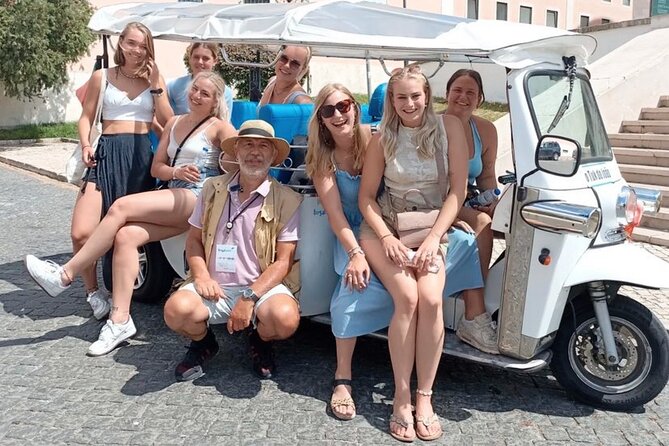
Portas do Sol is one of Lisbon’s signature viewpoints, overlooking Alfama’s roofs and the Tagus. The viewpoint’s name connects to the old Moorish city walls and gates, so even before you look at the view, you’re already getting a small history lesson.
This is the kind of stop that’s worth doing even if you’ve seen Lisbon photos online. The angle is famous for a reason: you get depth, rooftops, and river views all at once, which makes the city feel three-dimensional rather than flat in your mind.
Your best move here is basic: camera ready, quick walk for a couple angles, then take a moment to actually look. Lisbon light changes fast, and this is one of the spots where that matters most.
Senhora do Monte viewpoint: higher views, fewer crowds, free entry

Miradouro da Senhora do Monte sits in the Graça neighborhood and is one of the tallest viewpoints in Lisbon. The guide positions it as a wide-angle overlook—from the Castle of São Jorge area across toward the Tagus, and even toward the 25 de Abril Bridge.
You’re also next to the chapel dedicated to Our Lady of the Monte, associated with patronage for pregnant women. That spiritual context gives the stop more weight than just scenery.
This stop is listed as about 10 minutes, and admission is free. That timing is perfect for a quick reset—short, scenic, and not draining—especially if you’ve already started the tour feeling the city’s hills.



São Vicente de Fora: tiles, tombs, and a terrace view over Alfama

São Vicente de Fora is a major church and monastery, built in the 17th century and designed in a Manierist and Baroque style. The “Fora” part matters—it points out that it was outside the old city walls, so it has a slightly different historical footprint than churches inside the old core.
Inside, what stands out is the decoration: Portuguese marbles and tiles from the 17th and 18th centuries, plus the monastery cloister where tiled panels tell La Fontaine fable stories. It’s the kind of place where you don’t just look at art—you start noticing how the building teaches.
There’s also a terrace with a view over Alfama and the Tagus. If you’re tired from moving around, this is a good spot to step out and let the scene do the work.
Feira da Ladra on Tuesdays and Saturdays: flea-market energy with a heads-up
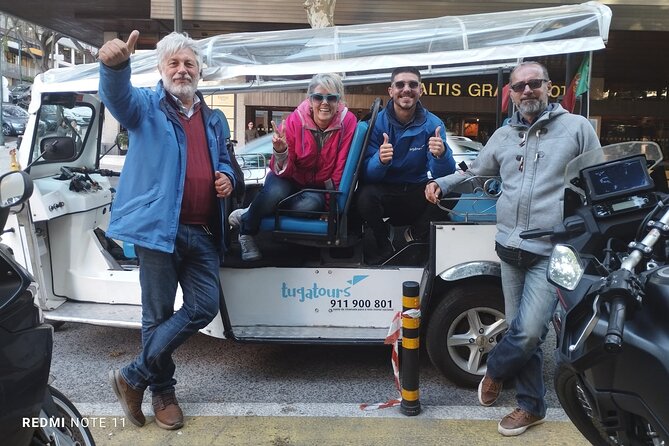
Feira da Ladra is Lisbon’s well-known flea market, and it runs in Alfama on Tuesdays and Saturdays. This is the kind of stop you’ll either love or at least appreciate as a slice of real local life: antiques, books, furniture, vintage clothing, crafts, souvenirs, and odds-and-ends.
The market name comes from the word ladra, related to stealing, because of old stories about small thefts. The modern market is about more than that, but it’s still smart to keep an eye on personal belongings in busy market areas.
This stop is where the tour can shift from monuments to everyday culture. If you enjoy browsing and bargaining vibes (even if you buy nothing), this is a high-value moment.
National Pantheon (Santa Engrácia): the dome viewpoint and iconic interiors
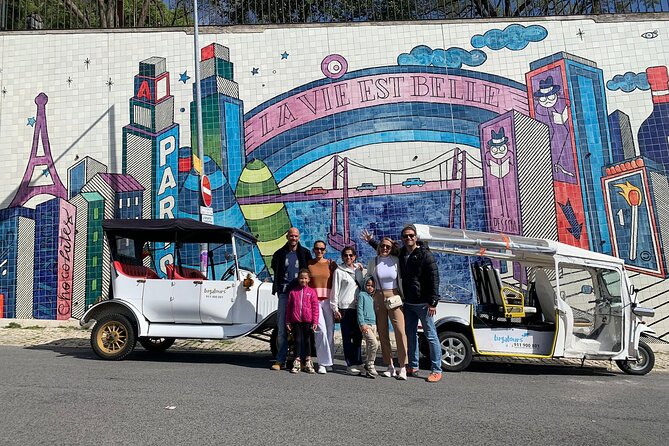
In the heart of Alfama is the National Pantheon, also known as Igreja de Santa Engrácia. Construction began in the 17th century, but completion took much longer—so you’ll hear the popular phrase about it being endless. It’s a reminder that Portugal’s grand buildings often carry long timelines, not quick answers.
From the outside, the building is famous for its large white dome, visible from many parts of the city. Inside, the ship is decorated with colorful marbles, and the top dome viewpoint is where you get striking views over the Tejo River and the rooftops of Alfama.
This stop is listed as about 10 minutes, and admission is not included. That’s the one place where your choice matters: if you want the dome viewpoint, budget for entry or plan to skip it if you’re keeping spending tight.
Alfama’s lanes and fado culture: why this neighborhood feels different
Alfama is Lisbon’s oldest neighborhood, and it shows in the narrow streets, steep slopes, tiled houses, and balconies. Even from a tuk-tuk perspective, you can feel the neighborhood’s layout: it’s a maze designed for walking, not car-speed travel.
This is also one of the places where fado connects most strongly to daily life. You’ll see the neighborhood in a way that makes fado feel like it belongs here, not just something performed for tourists.
If you’re hoping to understand Lisbon’s personality, Alfama is where the city slows down in your head. Try to notice the tiles and the street corners the guide points out, because those details help you visualize what you might explore on foot later.
Largo do Carmo and São Roque: earthquake memory and baroque surprises
Largo do Carmo is in Bairro Alto and is known for the ruins of the Church of Carmo. Destroyed in the 1755 earthquake, the ruins function as an outdoor archaeological museum, which means history is literally in the open air around you.
The surrounding area also has that “meeting point” feel, with cafes and bars nearby. It can be a good transition space after darker, older streets—just remember it’s also a spot where you might lose time if you’re not focused.
Then you head to the Church of São Roque in Chiado, one of the oldest and most important churches in Lisbon. Inside, the key draw is the richly decorated interior: tiles, golden scale details, and major sacred art collections. The Chapel of St. John the Baptist is a highlight, with its story of being brought piece by piece from Rome.
This stop is a strong reminder that Lisbon’s religious sites aren’t only spiritual stops. They’re also art buildings shaped by trade, wealth, and survival through earthquakes.
São Pedro de Alcântântara and Príncipe Real: garden views and a gentler side of Lisbon
Miradouro de São Pedro de Alcântara is one of the most charming viewpoints, located near the Elevator da Glória climb. It’s set up like a small garden with fountains and benches, plus tiled panels that help identify monuments visible from there.
The timing works well because it offers a relaxing break in the middle of the route. This one is listed as about 10 minutes, with admission free, so you can step out, reset, and still keep momentum.
Príncipe Real adds a calmer, more refined mood. The square is known for well-kept gardens, older trees, and a tropical greenhouse with exotic plants. On weekends there’s an organic and craft market, which can be a bonus if your tour day lines up.
Parque Eduardo VII and the modernization line: from Pombal to Avenida da Liberdade
Parque Eduardo VII is Lisbon’s largest public park in the center, opened in 1903. It’s a green pause with wide paths and garden areas, plus panoramic views over the city and the Tagus—so it works even if you don’t want to do a long walk.
At the base of the park there’s the imposing statue of the Marquis de Pombal, tying the park back to the earthquake rebuilding story that started in Baixa. Cultural events and festivals happen here too, so the space has more life than a simple viewpoint.
From there, the tour hits Praça Marquês de Pombal, a busy rotunda where the statue leads into Avenida da Liberdade. This is Lisbon’s modernization corridor—wide, tree-lined, and built as a grand social and cultural artery.
Avenida da Liberdade is an ideal “final act” area because it’s elegant and easy to read as a city centerpiece. Even if you don’t stop long, it helps your mind connect neighborhoods into one coherent map.
Praça dos Restauradores: the perfect finish point to keep exploring
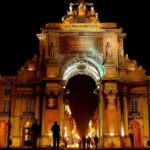
The tour ends at Praça dos Restauradores at the end of Avenida da Liberdade. The square is marked by an obelisk inaugurated in 1886, commemorating Portuguese independence in 1640 after 60 years under Philippine rule.
This ending point works well because it’s connected to other areas—Bairro Alto is within reach, and you’re near the Elevator da Glória route back toward the viewpoints area. If you still have energy, you can keep moving on your own and turn this into a longer day.
Think of it as: you finish where Lisbon makes sense, not where you feel dropped off in the middle of nowhere.
Price and pacing: is $96.55 per person good value?
At $96.55 per person for about 3 to 4 hours, the real value here is what you’re buying: a private electric vehicle, hotel pickup in the city center area, and live English commentary. For Lisbon’s hills, that convenience can save real fatigue time.
It’s also good value if you’re a “see the map first” type traveler. You’ll cover a lot of ground across Baixa, Alfama, Chiado/Bairro Alto viewpoints, and into modern Lisbon, and you’ll leave with clear ideas about where you want to walk next.
The one cost wrinkle is tickets. Some viewpoints are free, like Senhora do Monte and São Pedro de Alcântara (both listed as free), but the Pantheon dome entry is not included. Before you book, decide if you want that interior + dome view enough to pay the extra.
Who should book this tuk-tuk tour (and who should adjust)
This fits best if you:
- want a first-time Lisbon orientation without over-planning
- like viewpoints and quick context for big monuments
- prefer a guide to help connect earthquake-era stories and neighborhood layouts
You might want to swap or add more time if you:
- love spending 60+ minutes inside churches or museums (this tour is a highlights rhythm)
- plan to pay extra for ticketed interiors and want to know which ones matter most to you
There’s also an age note: it is not allowed for children under 7 years old. If you’re traveling with younger kids, you’ll need a different option.
Should you book the Halfday Tuk Tuk Tour Lisbon Highlights?
Yes, if you want the fastest way to understand Lisbon’s geography and get the famous views without turning your legs into a souvenir. I’d book it on the early side of your trip so the rest of your days feel smarter.
If you’re the type who wants slow, deep museum time in one neighborhood, treat this as your orientation day and plan longer returns on your own for the places that hook you.
FAQ
How long is the Halfday Tuk Tuk Tour in Lisbon?
The tour is listed as about 3 to 4 hours.
What does it cost per person?
The price is listed as $96.55 per person.
Is there hotel pickup?
Yes. Pickup is offered from hotels located in the city center, and you’ll receive pickup details for the meeting point/garage if pickup isn’t requested.
What language is the tour guide commentary in?
The tour includes live comments by an experienced local guide in English.
Is this tour private?
Yes. It’s private, so only your group participates.
Are tickets included for every stop?
No. The tour notes that tickets are not included, and at least one stop (the National Pantheon dome) is specifically listed as admission not included.
Are there restrictions on children?
Yes. Children under 7 years old are not allowed.
Where does the tour start and end?
It starts at Rua de Arroios 120, 1150-260 Lisboa, and ends at Praça dos Restauradores (Restauradores Square), 1250-001 Lisboa.