REVIEW · MADEIRA
Funchal: Old Town Walking Tour
Book on GetYourGuide →Operated by Madeiran Heritage · Bookable on GetYourGuide
Two hours can teach you a lot about Funchal. This old-town walk connects iconic sights with smaller, story-rich stops so the city center makes sense fast.
I especially liked the mix of religious architecture and working-industry places, from the Jesuits’ College area to the Farmers’ Market.
I also like how the tour’s storytelling is driven by guides from the Madeiran Heritage programme, with a steady pace that leaves room for questions and photos. You’ll hear names like Annabelle and Elias pop up again and again in recent guides for a reason: they tend to explain the why, not just the what.
One thing to plan for: the route includes cobbled streets and slight inclines, so comfortable shoes matter, and it may not be easy if your mobility is limited.
In This Review
- Key reasons this tour works
- Starting at the Jesuits’ College of Funchal, right in the middle
- Funchal City Hall stop: a quick detour with big meaning
- The 19th-century sweet factory: Madeira’s sugar legacy in your hands
- Farmers’ Market and the embroidery connection on busy streets
- Santa Maria Street to Admiral’s Garden and the fortress ruins
- Colombo Square: sugarcane, power, and a link to the Atlantic story
- Regional Legislative Assembly and the Cathedral as a 16th-century power center
- Municipal Garden and the Wine Lodge visit: quick, local, and practical
- Jesuits’ Church and back to the Jesuits’ College: the tour’s circle closes
- How much it costs, and why $19 makes sense for a 2-hour plan
- Who this tour is best for (and who should plan differently)
- Should you book the Funchal Old Town Walking Tour?
- FAQ
- FAQ
- How long is the Funchal old town walking tour?
- Where do I meet the guide?
- What’s included in the tour?
- Which languages are the live guides?
- Is the tour wheelchair accessible?
- What should I bring?
- Can I cancel for a refund?
Key reasons this tour works
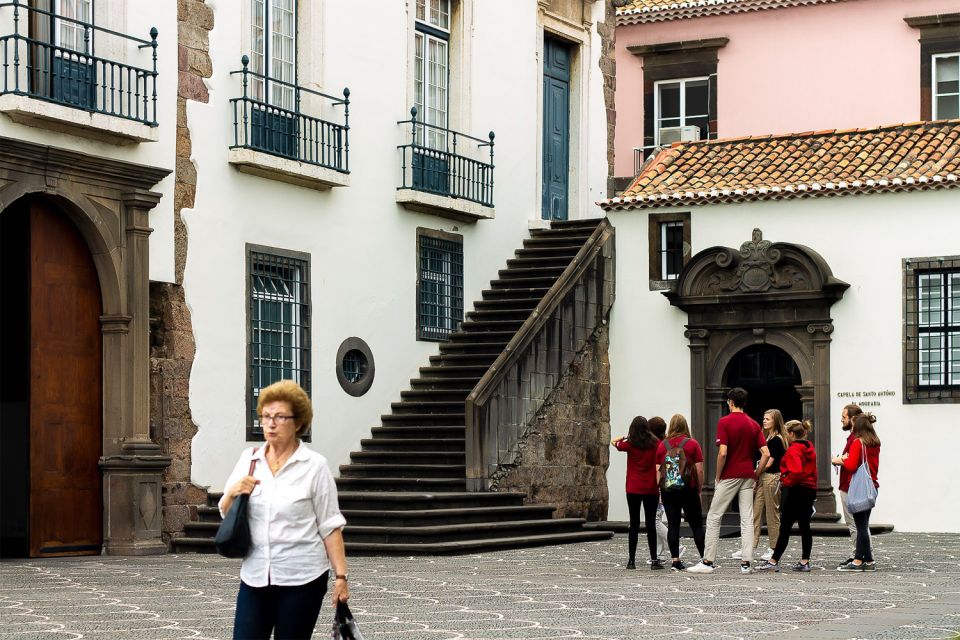
- Meet inside the University of Madeira world: you start at the Jesuits’ College of Funchal area, which makes the city feel academic and local at once.
- Farmers’ Market with a purpose: it’s not just browsing; you get context on Madeira’s embroidery and trade.
- Sweet factory + traditional wine lodge: you see how sugar culture turned into everyday goods (and how wine fits in).
- Old fortress ruins near the riverbeds: you’ll learn why protection from flooding shaped the city’s layout.
- Sugarcane and a surprising Americas connection: Colombo Square ties Madeira’s economy to the wider Atlantic story.
Starting at the Jesuits’ College of Funchal, right in the middle
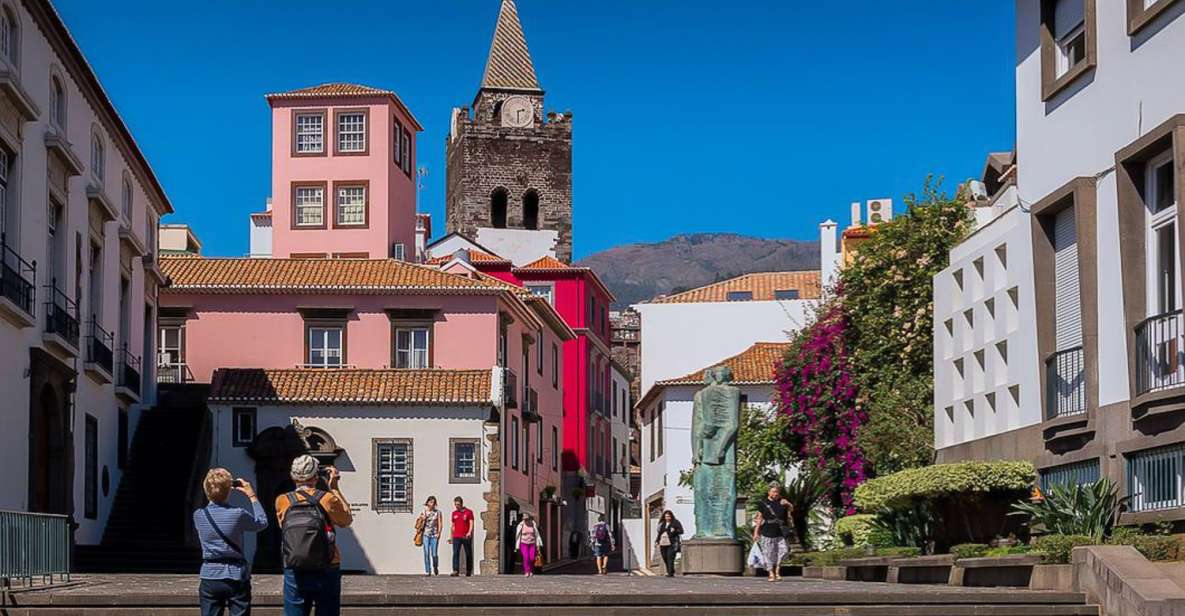
Most walking tours start at a random street corner. This one starts with intention. You meet at Colégio dos Jesuítas do Funchal, at the University of Madeira entrance on Rua dos Ferreiros, next to D’Oliveiras Madeira Wine. Arrive about 10 minutes early so you’re ready to move when your guide gathers the small group.
The big advantage here is that the tour begins where Funchal’s power and education once clustered. Even if you’ve never visited a Jesuit site before, it’s a clean way to set the tone: Madeira’s story isn’t only about beaches and views. It’s also about institutions, networks, and people who organized knowledge and trade.
Then comes the part that really helps first-timers: the guide frames what you’re about to see. You’ll get a clear sense of how Madeira and Funchal shaped the city center—so when you later hit the Cathedral, legislative buildings, and market streets, it clicks rather than feeling like a random checklist.
You can also read our reviews of more walking tours in Madeira

Funchal City Hall stop: a quick detour with big meaning
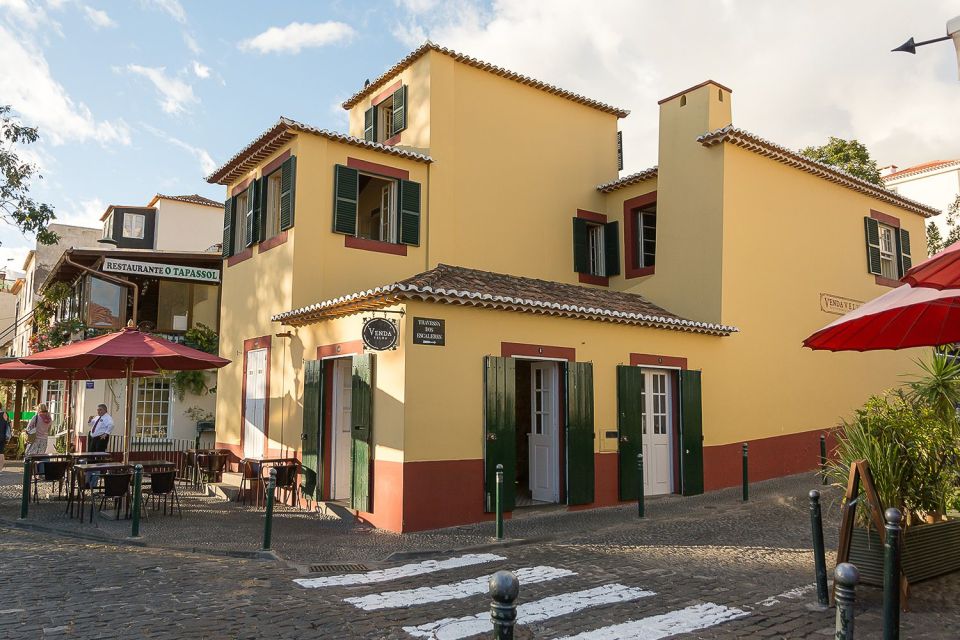
Before the tour moves into the market and the older lanes, you stop at Funchal City Hall. The highlight here is a photo stop and time to look at something you might not notice if you were walking on your own.
Why this matters: City Hall sits where modern civic life overlaps with the city’s older identity. In a short, 2-hour format, a quick orientation point like this helps you understand why certain streets and squares keep showing up in the story—especially when the tour later returns to plazas and churches.
Expect the guide to connect the dots between administration, commerce, and local industries. It’s brief, but useful—think of it as your mental map getting sharpened.
The 19th-century sweet factory: Madeira’s sugar legacy in your hands
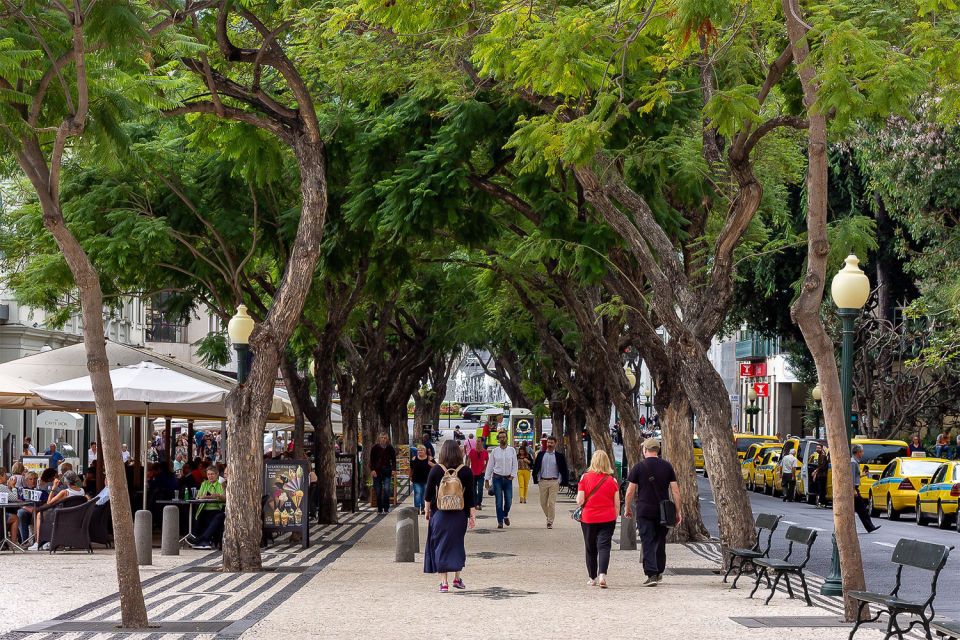
Next up is a traditional sweet factory founded in the 19th century. This is one of those stops that’s both simple and revealing. Sugarcane wasn’t just a field crop; it shaped jobs, shipping, and the kinds of goods people bought and gave.
Seeing (and learning about) sweets made from that heritage gives you a practical lens on Madeira’s past. It turns the big historical idea—sugar—into something you can picture on a kitchen table or in a local shop.
If you’re the type who likes history with an edge of everyday life, this is a strong early anchor. It also pairs nicely with later stops around sugarcane and Colombo Square. You’ll start by tasting the culture, then you’ll learn the economic engine behind it.
Farmers’ Market and the embroidery connection on busy streets
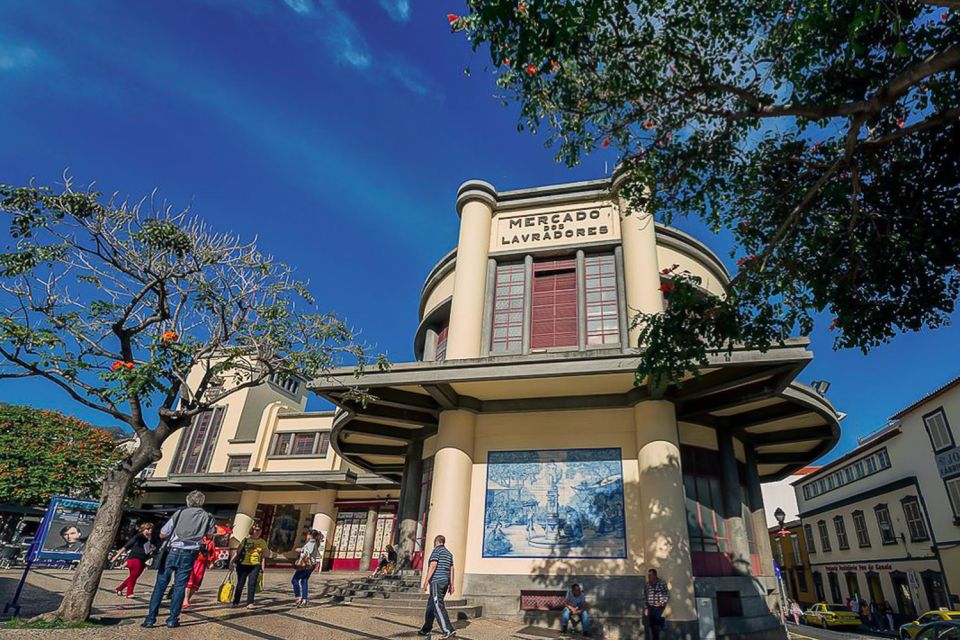
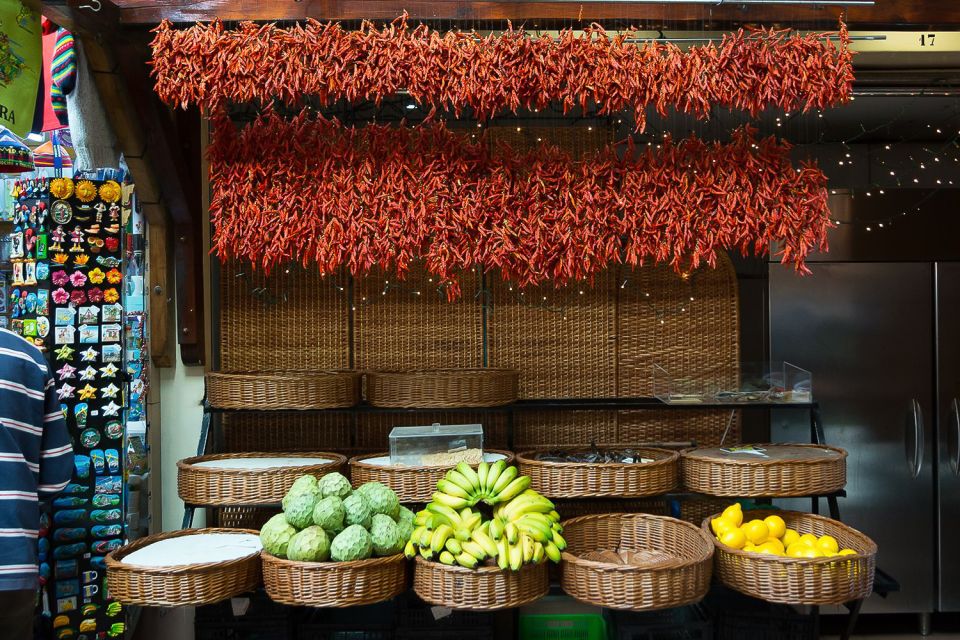
Then you reach the Farmers’ Market, Funchal for a guided look. Markets are great because they’re history you can watch in real time: crops, vendors, and the rhythms of daily life.
But what makes this stop better than just shopping is the context you get from your guide. You’ll pass along one of the city’s busiest streets while learning about the early days of Madeira’s embroidery industry. It’s a reminder that Madeira’s economy wasn’t only agriculture and shipping. Craftwork and trade mattered too.
A guided market visit can be surprisingly efficient. In two hours, you don’t want to spend all your time wandering aimlessly. Here, you get signposts—what to notice, what questions to ask, and what connections to remember when you move deeper into the old lanes.
Also, this is a nice point to reset your energy. If you’ve been walking around Funchal already, you’ll appreciate the shift from monuments to people and stalls.
Santa Maria Street to Admiral’s Garden and the fortress ruins
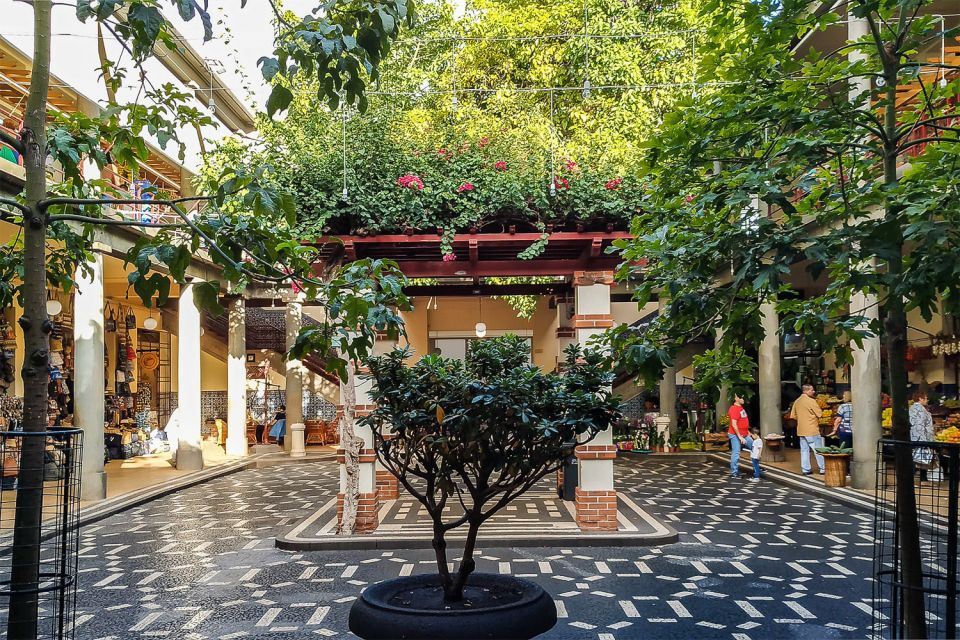
After the market, the tour turns into the older part of town—down Rua de Santa Maria and toward Admiral’s Garden.
This section is where the walk starts to feel like a guided stroll through layers of time. You move from lively commerce into narrower medieval-style streets, then toward landscape-shaped history: the ruins of an old fortress.
Those fortress ruins sit near the riverbeds that were once walled in to protect the city from flooding. That detail is important. Funchal didn’t just grow because it looked nice. It grew because people worked around real physical problems—water, risk, and defense.
If you enjoy “how cities actually work” history, this is a memorable segment. It also helps you understand why some walls, shapes, and routes exist even if modern life has changed what they’re used for.



Colombo Square: sugarcane, power, and a link to the Atlantic story
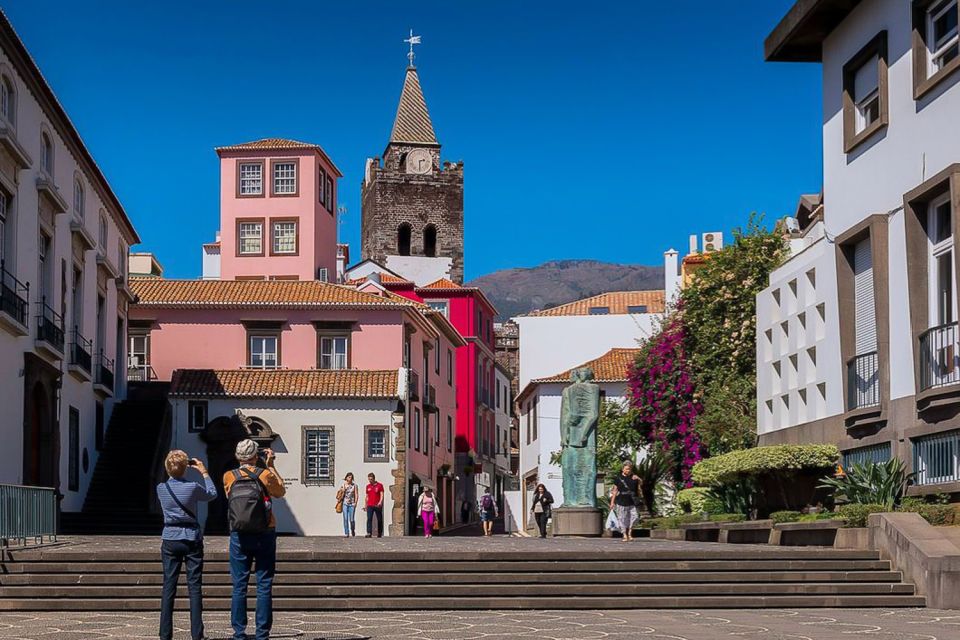
From Admiral’s Garden and the fortifications, you head to Colombo Square, where you explore Madeira’s sugarcane industry.
Here’s the twist you’ll want to remember: there’s a surprising connection to the discoverer of the Americas, who once lived on the island. The guide ties this in so you understand why Madeira mattered in the wider Atlantic world—not just as an island stop, but as a place with influence through trade and agriculture.
This part works especially well after the sweet factory stop. You’ll have the personal, tangible side of sugar in your head, and now you’ll see the economic and geopolitical side.
If you’re curious about why names like Colombo show up in places tied to Madeira, this is your answer—made simple enough for a short tour, but specific enough to stick.
Regional Legislative Assembly and the Cathedral as a 16th-century power center
Next, you pass the Regional Legislative Assembly and visit Funchal Cathedral.
Two key ideas make this stop more than a quick exterior photo. First, your guide explains how in the 16th century the Cathedral served as the seat of the largest diocese in the world. That’s a bold statement, and it reframes Funchal: it wasn’t a backwater outpost. It was a religious and administrative hub with global reach.
Second, you’ll get help reading the city’s hierarchy. Why would an island community concentrate such importance in a Cathedral? Your guide’s commentary brings the logic back to you—trade, voyages, population centers, and the need for governance and faith institutions tied to the broader Portuguese world.
If churches aren’t usually your thing, you’ll still likely enjoy this one because you’re not only looking at architecture. You’re learning what the building represented at the time.
Municipal Garden and the Wine Lodge visit: quick, local, and practical
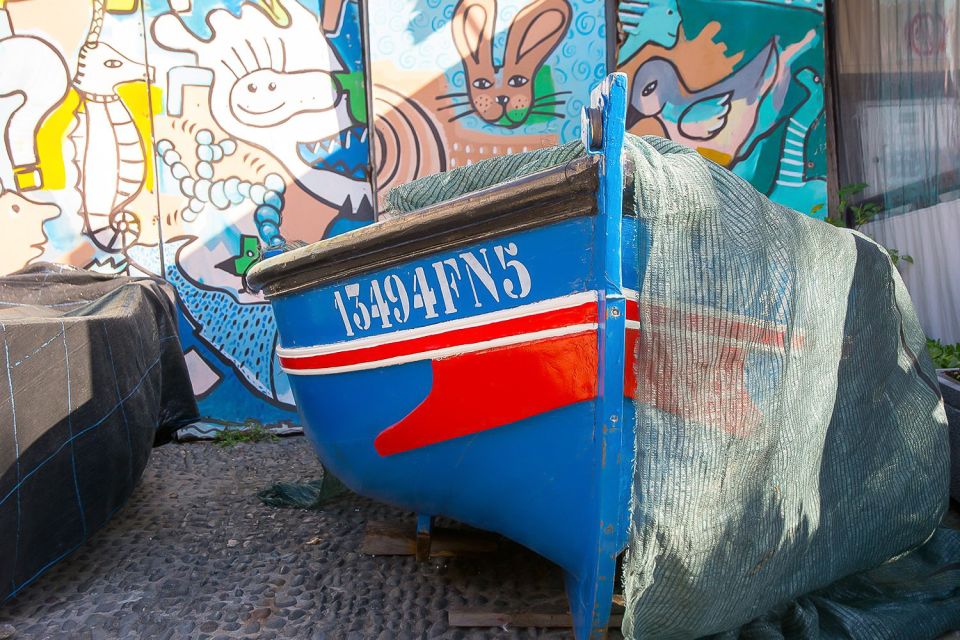
After the Cathedral, you head to Jardim Municipal do Funchal (Municipal Garden). This is mostly a breather—green space and a pause in the stone-and-street pace.
Then comes a visit at a traditional wine lodge. Even though it’s quick, it’s a smart pairing with the sugar story. Madeira is famous for wine, but it’s not a standalone product. It grew within the same economic ecosystem: land use, exports, and a local culture that turned agriculture into trade-ready goods.
Many people also walk away with a small Madeira wine tasting experience at the end of the tour. If you’re doing this as your first evening in Funchal, it’s a nice way to end on flavor, not only facts.
Jesuits’ Church and back to the Jesuits’ College: the tour’s circle closes
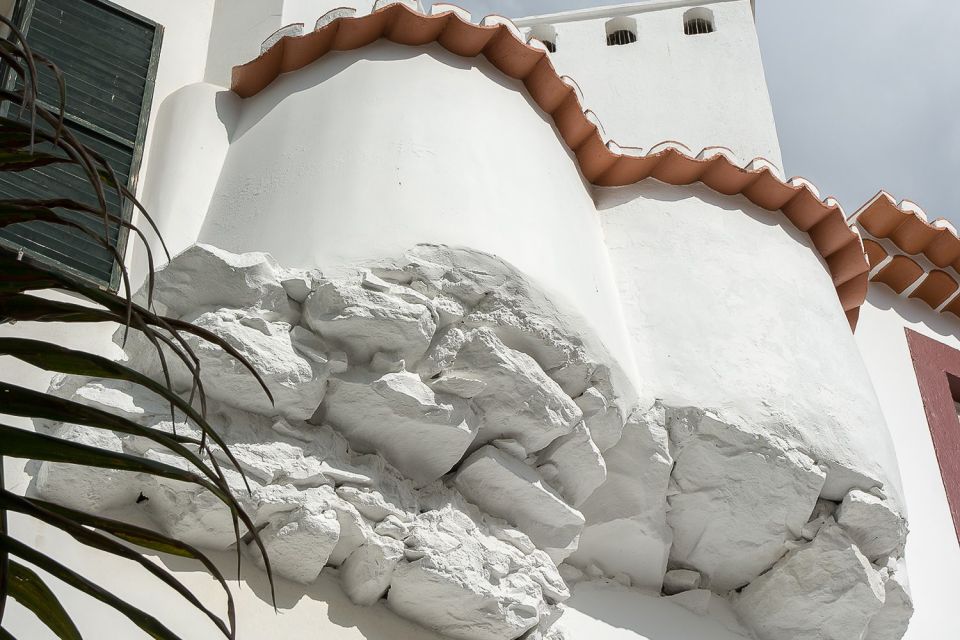
The final leg brings you to Igreja do Colégio and then back to the former Jesuits’ College, which is also part of your starting base. There’s something satisfying about returning to where you began, because you can now “read” the place differently.
You’ll likely notice how the tour structure works like a loop:
- Start with an education/religion base
- Move through industry and markets (sugar, sweets, craft)
- Travel back into the city’s governance and faith landmarks
- End where you started, with the bigger picture in place
Along the way, the route includes a pass-by stop at Madeira Photography Museum – Atelier Vicente’s, which adds a touch of modern cultural identity without derailing the historical arc.
How much it costs, and why $19 makes sense for a 2-hour plan
At $19 per person for a 2-hour guided walk, this is priced like a practical old-town orientation. You’re not paying for a bus ride. You’re paying for:
- small-group interpretation
- entrance included for the Jesuits’ College of Funchal
- guided visits to the Farmers’ Market, a 19th-century sweet factory, and a wine lodge
- and visuals or printed materials to support the stories
For first-time visitors, that’s a strong deal. You get multiple “anchor points” in a short time, and your guide helps you see connections you might miss if you were only reading plaques.
If you’re also considering booking multiple tours, keep one thing in mind: this route already includes sweet and wine stops. So if another tour promises those same highlights, you may not need to stack them.
Who this tour is best for (and who should plan differently)
This is ideal for you if you:
- want a focused introduction to Funchal’s old town
- like history explained with real-world examples (sugar, sweets, wine, markets)
- enjoy small-group pacing and time for questions and photos
- are visiting for a short stop and need a compact city-center loop
It may be less ideal if:
- you need lots of step-free routes (the walk includes cobbled streets and slight inclines)
- you’re carrying a large bag (luggage or large bags aren’t allowed)
Good news: the tour runs in most weather conditions, so you’re not locked into only one “perfect day” window. Still, pack sun protection or rain gear so you’re comfortable.
Should you book the Funchal Old Town Walking Tour?
Yes, I’d book it—especially as your first or second day in Madeira. For $19, you’re getting a tidy, high-signal loop through the city center: Jesuit landmarks, market life, sugar-linked industry, fortress-for-flood-history, and a Cathedral stop that explains why Funchal mattered.
If you hate walking, skip it. But if you can handle an easy-to-moderate old-town pace with comfortable shoes, this is one of the most efficient ways to turn Funchal from scenery into context. And the best part is that the money supports educational outreach and student assistance connected to the University of Madeira—so your ticket has a local-purpose angle, not just tourist value.
FAQ
FAQ
How long is the Funchal old town walking tour?
It’s a 2-hour guided walking tour.
Where do I meet the guide?
Meet at Colégio dos Jesuítas do Funchal (University of Madeira Rectory), at the University entrance on Rua dos Ferreiros, next to D’Oliveiras Madeira Wine. It is not inside the church; look for the glass doors and University of Madeira signage.
What’s included in the tour?
The tour includes a 2-hour guided walking experience, entrance to the Jesuits’ College of Funchal, a guided visit to the Farmers’ Market, visits to a traditional wine lodge and a 19th-century sweet factory, plus historical commentary and printed or visual materials to support the storytelling.
Which languages are the live guides?
The tour is offered with live guides in German, English, and French.
Is the tour wheelchair accessible?
The tour is listed as wheelchair accessible, but the route includes cobbled streets and slight inclines, so it may still be difficult for some guests with limited mobility.
What should I bring?
Wear comfortable shoes. You may also want sun protection or rain gear depending on the forecast.
Can I cancel for a refund?
Yes. You can cancel up to 24 hours in advance for a full refund.