REVIEW · PORTO
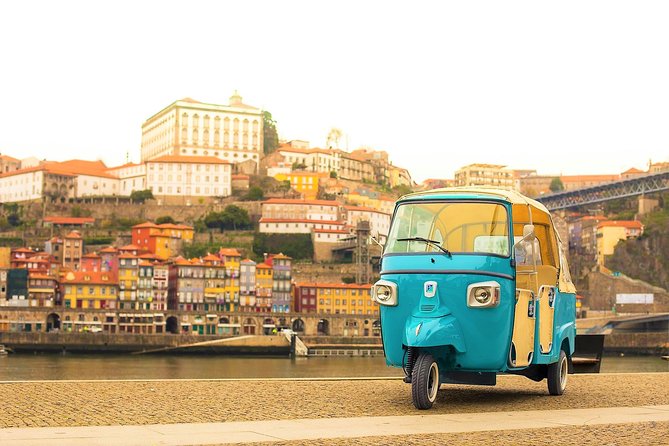
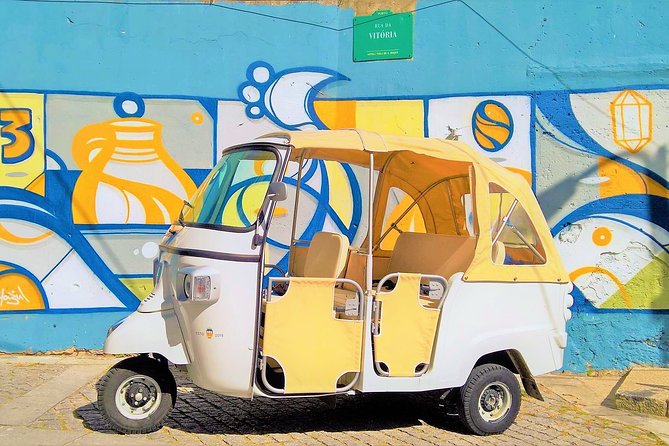
Full-Day Private Tuk Tuk All Around Porto
Book on Viator →Operated by Portuk · Bookable on Viator
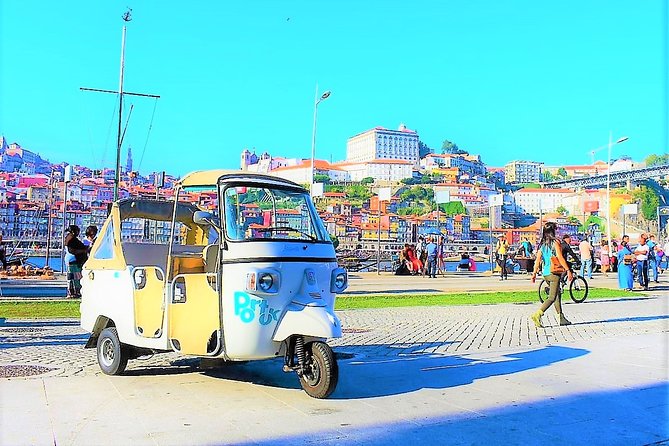
Porto feels like a moving postcard. This full-day private tuk-tuk loop is a fun way to see a lot without the crush of big buses, and I especially loved the 20,000-tile stories at São Bento Station and the wine tasting lunch that gives you a real break.
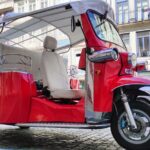
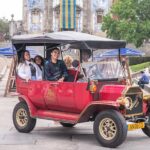
One thing to keep in mind: the tuk-tuk is small, so the ride can feel tight and bumpy on cobblestones, especially if you’re tall or you’ve got three adults in one vehicle.
In This Review
- Key highlights to look for before you go
- The value of doing Porto from a tuk-tuk
- How the day really flows (and why timing matters)
- Teatro Nacional São João: a grand façade with real layers
- Porto Cathedral and the Romanesque-to-Gothic story
- São Bento Railway Station: the stop that feels like art
- Igreja do Carmo and rococo details you’ll miss if you rush
- Old prison walls: Antiga Cadeia da Relação
- Fonte dos Leões: the small stop with a big “wait, what?”
- Livraria Lello: when the ticket is worth planning for
- Cordoaria Garden (Jardim de João Chagas): where you cool off
- Igreja de São Francisco: the Church of Gold and the catacombs
- Palacio de Cristal gardens: your Porto postcard from ground level
- Infante Dom Henrique monument: a quiet meaning stop
- Torre dos Clérigos and the bell-tower silhouette
- Dom Luís I Bridge: the iron deck-over-deck signature
- Serra do Pilar monastery: circular church views that feel cinematic
- Ponte Infante Dom Henrique: the modern arch you can’t ignore
- Palácio da Bolsa and the Arabian Room moment
- Mercado Ferreira Borges: iron architecture turned entertainment venue
- Alfândega Porto Congress Centre: a neoclassical building with iron bones
- Igreja dos Carmelitas: rococo drama on a classical façade
- Guides make or break the day (and the best ones know the timing)
- What can go wrong: privacy, rain, and group comfort
- Who this Porto tuk-tuk tour is best for
- Should you book this Porto tuk-tuk tour?
- FAQ
- How long is the Porto private tuk-tuk tour, and what time does it start?
- What’s included in the price for this full-day tour?
- Are monument tickets included for every stop?
- Is this tour really private for only my group?
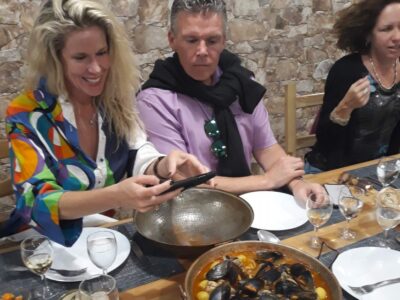
- What kind of lunch and wine tasting should I expect?
- Do I need a minimum group size to book?
Key highlights to look for before you go
- A private, guide-driven day that’s built around your pace (and your photo stops).
- Tile overload at São Bento Station—20,000 painted stories under a glass-and-iron roof.
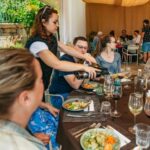
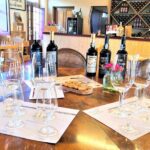
- Wine tasting + regional lunch with local producers, plus cheeses, sausages, and canned fish.
- Big Douro viewpoints from Palacio de Cristal and the Serra do Pilar terrace.
- Church interiors that earn their fame like Igreja de São Francisco and other Porto rococo stops.
- Rain is handled, but not fully blocked—bring a poncho if weather is questionable.
The value of doing Porto from a tuk-tuk
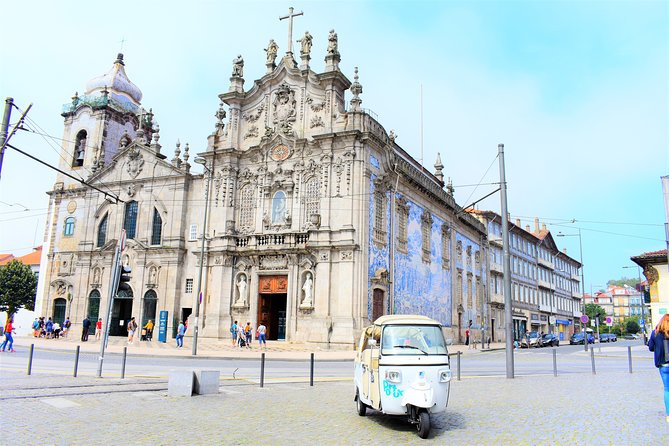
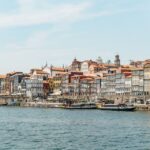
Porto is perfect for a tuk-tuk day because you’re not just ticking boxes. You’re moving between steep streets, quick look spots, and proper viewpoints, all in a vehicle that helps you slow down when the guide points out something worth seeing.
At $166.99 per person for an ~8-hour outing, you’re paying for more than transport. You’re buying a driver/guide, live commentary, wine tasting, and a regional lunch. When those are included, the per-person price makes sense—especially if you’re traveling with a friend or couple and you want the day to stay flexible.
The private part matters most here. Your guide can steer the timing—more time for photos at a miradouro, less time if you’re tired, and extra local context when you ask questions. That’s also why the best guides on this route tend to be the patient, “we can take our time” kind.
You can also read our reviews of more private tours in Porto
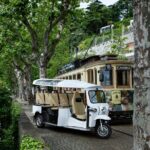
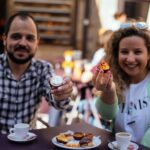

How the day really flows (and why timing matters)
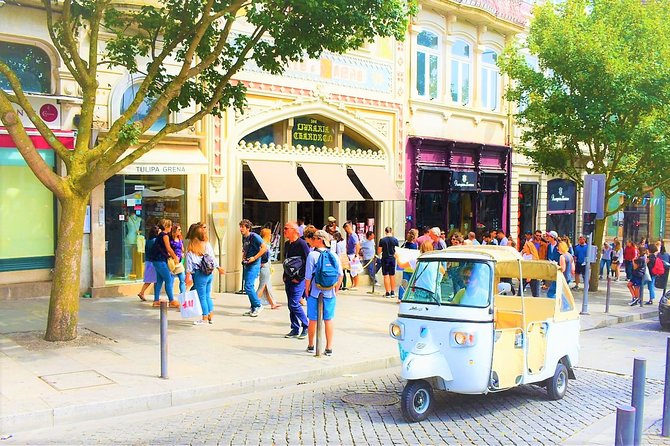
This is built around a start at 9:30 am and a full day back at the same meeting point. You’ll bounce through the historic core first, then out toward major river landmarks and gardens, and finally back toward Porto’s cultural center.
You should think of it as three rhythms:
1) Quick exterior viewing at major monuments (with short stops to read what you’re seeing).
2) Interior time when it’s free or ticket-included by the venue (some places require separate admission).
3) A mid-day food and wine reset, which is what keeps the long day from feeling like one long line.
Plan for walking too. Even with a tuk-tuk, some stops are short but involve stairs, uneven sidewalks, and cobblestones. Wear shoes you’d be fine wearing for a city stroll, not just museum slippers.
Teatro Nacional São João: a grand façade with real layers
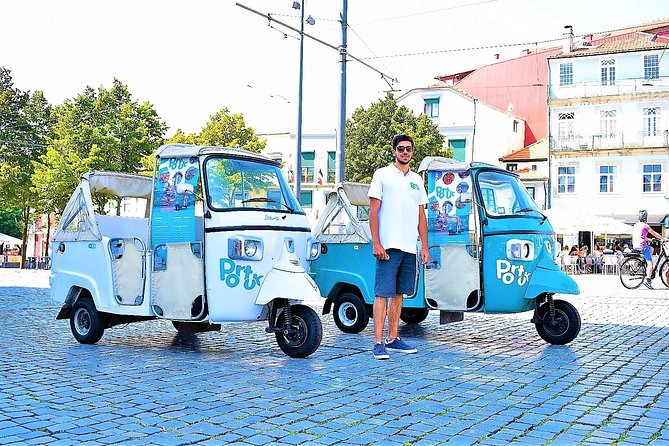
You start near the Teatro Nacional São João, a classic 1910 building set atop ruins from an earlier theatre that burned in 1908. The décor isn’t random: the façade includes emblems meant to symbolize themes like pain, quality, hate, and love.
This stop is a good “warm-up.” It helps you understand Porto’s habit of rebuilding, reworking, and rebranding in place—often using older sites as foundations. The exterior is free to enjoy, and it’s close to other landmarks, so it works as an efficient first stop before you head deeper into the center.
Porto Cathedral and the Romanesque-to-Gothic story
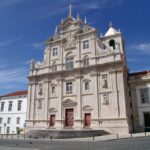
Next comes the Catedral do Porto. The key idea here is change over time: Romanesque construction from the 12th/13th centuries, then expansions that shape it into a layered cathedral you see in its later form.
What I’d prioritize inside (if you buy admission) is the Gothic São João Evangelista Chapel and cloister from the 14th century. Then look for later additions like the Santíssimo Sacramento Chapel and its silver altar, plus Baroque frescos by Nicolau Nasoni, and tilework tied to Vital Rifarto.
Ticket entry here isn’t included, so don’t count on long interior time unless you’re comfortable paying for it. Even if you keep it exterior-focused, this is still a meaningful stop because the architecture tells a clear timeline.
São Bento Railway Station: the stop that feels like art
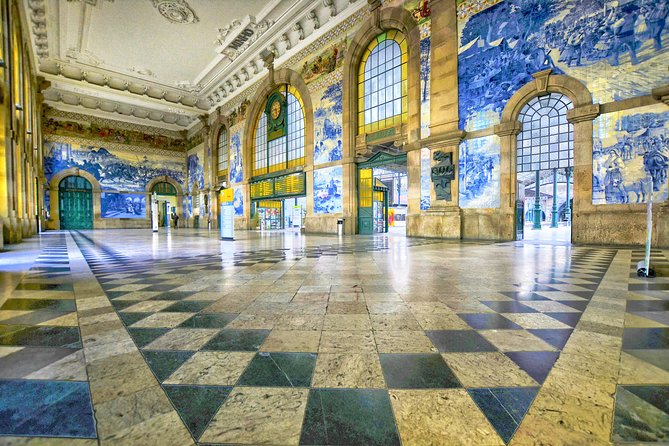
If you only wanted one “must” on this route, São Bento Station is it. The station’s early 20th-century design uses a glass and cast-iron roof, and the real star is the lobby covered with around 20,000 narrative tiles by painter Jorge Colaço.
This is one of those places where the value is in slowing down. You’ll want to stand and look. The guide’s commentary helps you read the scenes instead of just snapping photos of a wall.
You’ll get about 10 minutes here. That’s not long, but it’s enough if you focus on a few panels and don’t try to absorb everything at once. It’s free too, so it’s a great place to spend extra energy before lunch.
A few more Porto tours and experiences worth a look

Igreja do Carmo and rococo details you’ll miss if you rush
Igreja do Carmo is a standout Porto rococo church built in the second half of the 18th century, with notable carvings inside. Its side façade was tiled in 1912, and those tile drawings were designed by Silvestre Silvestri—figurative scenes linked to the cult of Nossa Senhora (Our Lady).
Admission isn’t included here, so again think short and intentional. Even if you don’t go inside, you can still enjoy the architecture and the fact that Porto layers decoration on top of older styles.
This is also a good stop to ask your guide what you should look for first inside. With rococo, the details can be overwhelming if you don’t know where to start.
Old prison walls: Antiga Cadeia da Relação
One of my favorite “less obvious” stops is Antiga Cadeia da Relação. This granite building dates back to 1582 and was rebuilt in 1767 in a neo-classical style. What really catches the eye is the geometry: 103 windows, and a polygon-shaped structure with four façades.
It also carries stories beyond architecture. Portuguese figures like Camilo Castelo Branco and Zé do Telhado were kept here. Today, it’s the Portuguese Centre for Photography, including an exhibition center.
This stop is free and works well as a mental reset. It breaks up the heavier cathedral-and-church pace and adds a human history angle that feels real, not like a postcard.
Fonte dos Leões: the small stop with a big “wait, what?”
Fonte dos Leões is short—about five minutes—but it’s a fun detail stop. It’s a 19th-century fountain built by a French company and cast by the Val d’Osne foundry in France, modeled largely after the fountain in Leicester’s Town Hall Square.
It’s the kind of place that makes Porto feel connected to wider Europe. And because it’s free, you can enjoy it without thinking about time pressure.
Livraria Lello: when the ticket is worth planning for
Livraria Lello is famous for a reason, but it’s also famous for being busy. The building housing the library opened in 1906 with an Art Nouveau façade and neo-Gothic details.
Inside, you’ll see painted plasterwork meant to imitate wood and a grand staircase connecting floors. There’s also a huge stained-glass skylight featuring the library’s monogram and the motto Decus in Labore.
Admission isn’t included, so you should expect to pay separately if you want the full experience. With only about 20 minutes, arrive ready to move between the façade, the staircase, and the skylight—those are the “hit list” moments.
Cordoaria Garden (Jardim de João Chagas): where you cool off
After Livraria Lello, Jardim de João Chagas (Cordoaria Garden) is a relaxing break. This garden used to relate to rope-making activity, where rope makers stayed for about 200 years, and the area became a public garden project in the mid-1800s.
Look for statues of Ramalho Ortigão and António Nobre, plus sculptures by Juan Muñoz from 2001. If you’re out of breath from cobblestones, this stop gives you a chance to sit and let the day catch up with you.
It’s free, and it makes the “full-day” feel manageable.
Igreja de São Francisco: the Church of Gold and the catacombs
Igreja de São Francisco is Porto’s Gothic landmark with a dramatic twist. The construction began in the 14th century, but the interior is where the reputation hits: gilded Baroque carved wood from the 17th and 18th centuries.
People call it the Church of Gold for a reason. The Tree of Jesse is a highlight, and the church also includes catacombs. This one is free, and it’s UNESCO-linked since 1996, so you’re stepping into a major cultural site.
Because this stop is free and time is short, you’ll want to decide early: do you want maximum interior look time, or do you want the quick highlights plus photos? Your guide’s pace makes the difference between rushed viewing and actually enjoying it.
Palacio de Cristal gardens: your Porto postcard from ground level
Next: Jardins do Palacio de Cristal. This is a botanical garden that feels like a set of smaller gardens that open up slowly as you walk. Expect paths with sun-dappled light, fountains, sculptures, and plants like giant magnolias, camellias, cypress, and olive trees.
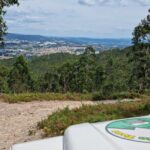
The key value here is the views. Porto and the Rio Douro keep unfolding as you reposition, so it doesn’t feel like one single viewpoint. It’s also free, and you get about 30 minutes, which is enough time to find a spot, stop, and actually look.
On a rainy day, gardens can be slippery and misty. Still, even wet views can look dramatic, and a good guide will help you adapt where you stand and what you photograph.
Infante Dom Henrique monument: a quiet meaning stop
Jardim do Infante Dom Henrique sits by Mercado Ferreira Borges and Palácio da Bolsa in the historic center. Beneath it, there’s an underground car park, and above it you’ll find the Monument to the Infante D. Henrique.
It was built to mark Portuguese navigation and faith, completed around the 1900 era after construction started in 1894. This is free and not a long stop, but it gives the day a theme: Porto’s maritime role isn’t just a view—it’s a driving force in the city’s identity.
Torre dos Clérigos and the bell-tower silhouette
Torre dos Clérigos is one of Porto’s best-known skyline landmarks. The church is Baroque, and the tall bell tower is visible from multiple points around the city.
Admission isn’t included here, so decide if you want to pay to go up or keep it as a look-from-below and photo-stop day. Either way, it’s worth seeing because Porto is a city of angles, and this tower pulls your eye upward in a big way.
You’ll have about 20 minutes, which typically works well for either quick viewing or a short ticketed experience.
Dom Luís I Bridge: the iron deck-over-deck signature
Dom Luís I Bridge is one of those structures that makes Porto instantly recognizable. It was inaugurated in 1886 and designed by engineer Teófilo Seyrig, a disciple of Eiffel. The bridge is made of two overlapping iron decks, and the arch is considered one of the world’s biggest forged-iron spans.
You’ll mostly enjoy it from the road and nearby walkable viewpoints. The upper deck is used by Porto Metro, connecting key areas of Porto and Vila Nova de Gaia.
This stop is free and it’s a great “stretch” moment between church stops and gardens.
Serra do Pilar monastery: circular church views that feel cinematic
Mosteiro da Serra do Pilar is a World Cultural Heritage site and one of the best “big view” stops. Construction started in 1538 and took shape through about 1670.
The church is circular, with a dome surrounded by a balcony, and there’s a circular cloister with 36 Ionic columns—claimed to be the only example of this design in Portugal. The real payoff is the terrace: from here you can look across the riverside toward Gaia, Porto’s historic center, the Cathedral, and Dom Luís I Bridge.
You get about 15 minutes, and you’ll want them. This isn’t just a scenic stop; it’s a place where the city makes sense as one connected panorama.
Ponte Infante Dom Henrique: the modern arch you can’t ignore
Then you move on to Ponte Infante Dom Henrique, inaugurated in 2003. It’s a Maillart-type arch bridge with a 371-meter deck and a 280-meter arch span noted as a world record by experts in bridge design.
If you’re the kind of traveler who likes modern engineering, this is a fun contrast to all the older religious and historic stone you’ve seen earlier. It’s free and takes about a short stop to appreciate its scale.
Palácio da Bolsa and the Arabian Room moment
Palácio da Bolsa (Stock Exchange Palace) is a National Monument and a major stop for architecture fans. It’s neoclassical and designed in 1842, and it’s the headquarters of the Commercial Association of Porto.
The famous highlight is the Arabian Room. Even if you only catch part of the palace experience, the building’s importance as a cultural and conference center is clear.
It’s free on this route, so it’s a strong value add. It also sits on the Urban Wine Route, which fits the day’s wine tasting vibe.
Mercado Ferreira Borges: iron architecture turned entertainment venue
Mercado Ferreira Borges was built in 1885 by order of the city council, designed to replace the old Ribeira market. It’s an important example of iron architecture in Porto.
The market didn’t stay a simple market forever. It’s been renovated for entertainment use, and Hard Club is now located there. This is a shorter, about-10-minute stop, but it helps you understand how Porto reuses strong industrial-era structures instead of replacing them.
Alfândega Porto Congress Centre: a neoclassical building with iron bones
Alfândega Porto Congress Centre is another architectural contrast stop. It’s a neoclassical building from the 19th century with two façades—one facing the Douro River and one facing the city. The construction uses iron alongside stone, brick, and wood depending on the space.
Restoration later adapted the building for transport and communications use, and it now manages a congress center. In other words: it’s functional, not just decorative.
This is free and quick, so focus on what makes it different from the churches earlier in the day.
Igreja dos Carmelitas: rococo drama on a classical façade
The last church stop is Igreja dos Carmelitas. It’s a 17th-century church with a classical façade dating to the 1850s. The project is attributed to Nicolau Nasoni, and the altarpiece is Porto rococo style, described as stylistically revolutionary.
It’s national monument status and it fits well as a final “detail” stop: a chance to see ornate work even when the day is almost done. You’ll have about five minutes, so you’ll likely do exterior and quick interior highlights.
Guides make or break the day (and the best ones know the timing)
This is one of those tours where your guide’s style really shows. In the feedback you can spot patterns: guides like Anna, Gabby, Bernardo, Fabio, Leonardo, and Gonçalo have been praised for being patient, friendly, and good at adapting the day to what the group can handle.
You’ll get the most out of it if you use your questions. Ask where to stand for photos at the bridges, ask which church detail is the most “worth the look,” and ask for small local context you can’t get from a guidebook.
Also, take guide suggestions for food seriously. Lunch is part of the included value, and several guides have steered people toward solid local spots and memorable seafood experiences. Even if the lunch format is more tasting than a huge sit-down meal, it can still be a highlight.
What can go wrong: privacy, rain, and group comfort
Let’s keep this honest. Two issues came up in experiences people described:
- Private vs. shared: One negative account said a tour billed as private ended up combined due to last-minute issues like a driver problem or a tuk-tuk breakdown. I’d treat the word private as a goal, not a guarantee, and confirm vehicle details in advance if privacy is essential.
- Comfort and weather: The tuk-tuk can be tight for three adults, and on cobblestones the ride can get stiff by the end of the day. Rain is another factor; reports mention limited side coverage, so bring a poncho or light rain layer.
There was also a food mismatch reported once—vegetarian needs not matching the lunch plan at the restaurant. If you have dietary restrictions, message ahead so the guide and restaurant can be aligned with what you’ll actually eat.
Who this Porto tuk-tuk tour is best for
This tour shines if you want:
- A full-day overview without hopping multiple transit lines.
- A guide who can explain what you’re seeing, not just drive past it.
- A mix of major sights and calmer city corners with photo stops.
- Included wine tasting and lunch so your day doesn’t break into separate plans.
It might be less ideal if:
- You’re very tall or uncomfortable in compact vehicles.
- You want guaranteed quiet time inside ticketed venues like Livraria Lello without paying extra.
- You’re traveling with strict dietary needs and you didn’t confirm them ahead.
Should you book this Porto tuk-tuk tour?
Yes, if your goal is a high-value, guide-led sightseeing day that covers the best of Porto’s historic core, churches, gardens, and river views, and you’ll appreciate the included wine tasting and regional lunch.
I’d book it especially if you’re planning your first day in Porto and want to get your bearings fast. The combination of São Bento Station tiles, Serra do Pilar viewpoints, and the bridge panoramas makes it easier to plan the rest of your trip with confidence.
If privacy and comfort are your top priorities, do a quick confirmation before you go. Ask about the vehicle size and seatbelts for your exact group, and bring rain protection just in case. Then you’re set for a day that feels like Porto is moving at your speed.
FAQ
How long is the Porto private tuk-tuk tour, and what time does it start?
It runs for about 8 hours and typically starts at 9:30 am. It ends back at the same meeting point.
What’s included in the price for this full-day tour?
You get a driver/guide with live commentary, a local guide, wine tasting, and lunch featuring regional products like cheeses, sausages, and canned fish along with some wines from small local producers.
Are monument tickets included for every stop?
No. Some stops are free to enjoy, but others note that admission tickets are not included, including places like the Cathedral do Porto, Igreja do Carmo, Livraria Lello, and Torre dos Clérigos.
Is this tour really private for only my group?
It’s listed as a private tour/activity, meaning only your group participates. Still, it’s smart to confirm your vehicle details if privacy is a deal-breaker for you.
What kind of lunch and wine tasting should I expect?
The tour includes a tasting-style lunch of regional products such as cheeses, sausages, and canned fish, paired with wines from small local producers. Wine tasting is part of the included experience.
Do I need a minimum group size to book?
Yes. A minimum of 2 people per booking is required. Children must be accompanied by an adult. The tour also requires good weather, and if it’s canceled due to poor weather, you’ll be offered a different date or a full refund.