REVIEW · LISBON
Évora and Monsaraz from Lisbon
Book on Viator →Operated by Jump in tours · Bookable on Viator
Évora and Monsaraz feel like time travel. This private day trip from Lisbon gives you UNESCO old-town wandering plus the unforgettable shock of the Chapel of Bones, all with real context about Alentejo. The trade-off is simple: it’s a long day with a drive both ways, so you’ll want to settle in and enjoy the ride.
What I like most is how the day stays practical and flexible. You get pickup from any Lisbon accommodation at 8:30 am, travel in an air-conditioned minivan, and ride with live commentary that helps you understand what you’re seeing as you go. Guides I’ve heard praised—Rui and Gui, plus João, Antonio, Alejandro, and Miguel—are big on stories and answering questions, and that makes the stops feel less like checklists.
One more thing to consider: entrances for some top sights aren’t included. Cathedral rooftop access and the Bone Chapel admission are listed as not included (and there’s also a monument entrance fee), so you’ll want to budget a bit extra on top of the tour price.
In This Review
- Key highlights you should care about
- Lisbon pickup to Alentejo plains: why the drive is part of the experience
- A practical timing note
- Évora’s medieval core: Temple of Diana and the UNESCO city feel
- The Roman Temple area: fast, iconic, and free
- Évora Cathedral: the rooftop views are the payoff
- Where the day’s mood shifts: Chapel of Bones
- Cathedral rooftop and Bone Chapel: how long is enough?
- Monsaraz hilltop village: fortress walls and Spain-border views
- The best moment: standing on the walls
- Castle details and local traditions
- Food breaks in Alentejo: what to expect when lunch isn’t included
- Private tour format: why the group size matters
- Price and budgeting: does it feel like good value?
- Who should book Évora and Monsaraz from Lisbon?
- Should you book this day trip?
- FAQ
- How long is the Évora and Monsaraz day trip from Lisbon?
- What time does the tour start, and where do you meet?
- Is this a private tour?
- What’s included in the price?
- Are entrance fees included?
- Can I cancel for a full refund?
Key highlights you should care about
- Pickup from any Lisbon hotel at 8:30 am, with a direct run to Alentejo
- Two UNESCO-grade stops in Évora, including the Roman Temple site and the medieval core
- Chapel of Bones time-boxed for 45 minutes, so you don’t get stuck there too long
- Monsaraz hilltop views toward Spain, plus fortress details and whitewashed village streets
- A guide who talks through what matters, from architecture to the cork-and-pig connections that shape local food
- Air-conditioned comfort + bottled water, which matters on a long drive day
Lisbon pickup to Alentejo plains: why the drive is part of the experience
This starts as an easy logistics win. You’re picked up at your Lisbon accommodation, then you head south in an air-conditioned minivan. The day has a clear beginning and end, with hotel pickup and drop-off included, so you’re not wasting time figuring out trains or transfers when you’d rather be looking out the window.
And honestly, the drive is where the “Portugal you came for” starts. As you leave Lisbon behind, the scenery shifts into rolling plains with cork trees, olive groves, and vineyards. It’s peaceful, slow-moving, and it sets expectations for Évora and Monsaraz: this isn’t a city-only day.
If you like when a tour actually explains the region, listen during the transit. The live commentary helps you connect agriculture and history—why this area has a certain look, why certain foods show up later, and why you’ll hear about cork. You’ll also see how far the countryside changes within a few hours, which makes those hilltop views in Monsaraz hit harder.
You can also read our reviews of more tours and experiences in Lisbon.

A practical timing note
You’re looking at about 6 to 8 hours total. That’s enough time to do the main sights without feeling like you’re sprinting, but it still means you should plan for a full day: comfy clothes, water nearby (it’s provided), and a flexible mindset if you’re sensitive to long drives.
Évora’s medieval core: Temple of Diana and the UNESCO city feel
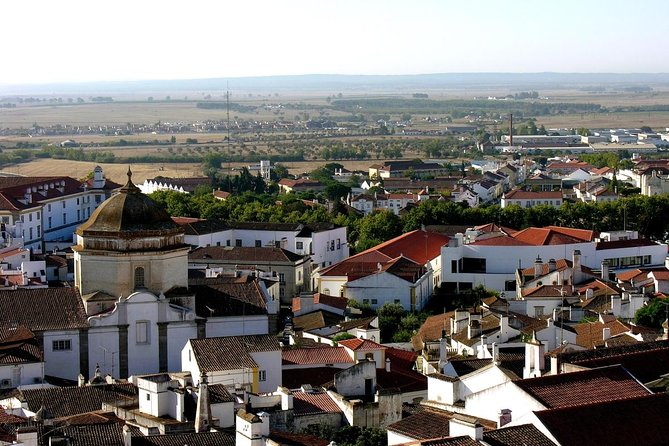
Évora is the kind of place where you walk a few streets and suddenly you understand why it’s UNESCO. The old town has that warm, sunlit feel, and it’s easy to spend time just looking at how the lanes fold around the buildings.
You get about 2 hours here for wandering at your own pace, which is key. You’re not trapped inside a rigid order. You can pace yourself, stop for photos, and give your feet breaks when you need them.
The Roman Temple area: fast, iconic, and free
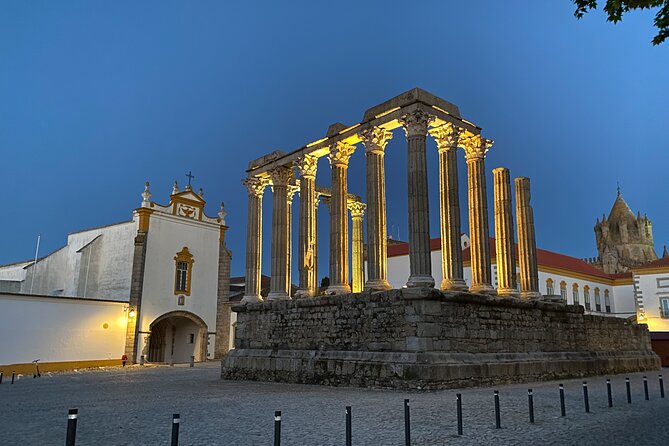
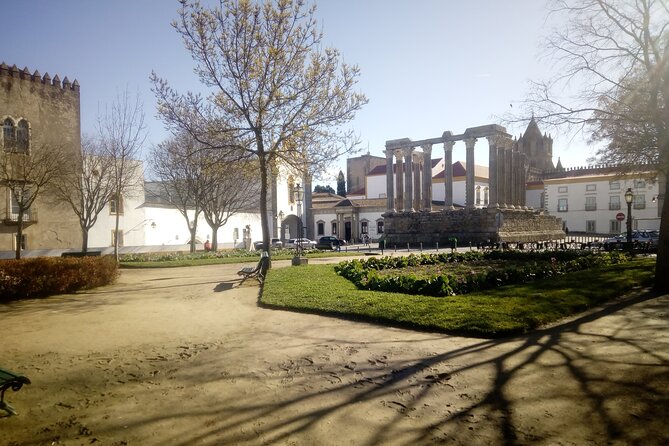
One of the first “wow” stops is the Roman Temple of Évora (Temple of Diana). It’s a 1st-century landmark and a UNESCO World Heritage site, and it’s often just the right length: about 20 minutes. It’s not a museum-heavy experience; it’s more like standing close to something that survived when so much else didn’t.
The best part is that it’s listed as free, so you’re not burning budget just to see the classic exterior views.
Évora Cathedral: the rooftop views are the payoff
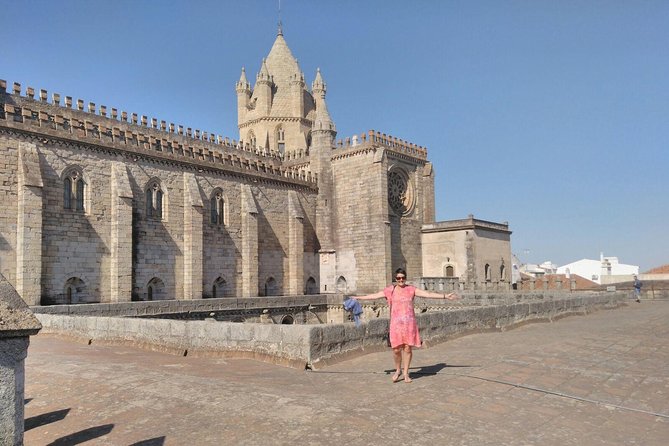
Then there’s Sé Catedral de Evora, the large medieval cathedral in Portugal. Your time here is about 45 minutes, with the important catch that the cathedral admission (including rooftop access) is not included.
Why do people care about the rooftop? Because it turns the city into a map. You can look out over Évora’s rooftops and the Alentejo plains, and everything suddenly makes sense: why the streets feel enclosed, how the city sits in the wider region, and where the viewpoint drama comes from.
If you like photos, this is one of the best times for them during the day—bright light and a high vantage point.



Where the day’s mood shifts: Chapel of Bones
After the main sights, Évora slows down in a different way. The Chapel of Bones has a very specific mood: walls covered with thousands of human bones, and a quiet atmosphere that can feel spooky without being a theme park.
You’ll get about 45 minutes at the chapel area. The ticket is not included. I like that the timing is long enough to take it in, but not so long that you get tired of the concept. It’s also a good moment to ask your guide questions about how the site became what it is, since it ties into broader attitudes toward death and remembrance.
Cathedral rooftop and Bone Chapel: how long is enough?
These two stops are where planning matters most because entrance fees are involved.
For the cathedral, your 45 minutes makes sense: walk in, see what you want, then head up for the rooftop panorama. If you skip the rooftop, you might feel like you rushed. If you do it, it becomes a highlight.
For the chapel, the key is emotional pacing. Don’t treat it like a quick photo stop. If you read signage (when available) and let it land, the site feels more thoughtful than just creepy. And because the visit is timed to about 45 minutes, you can keep it from taking over your entire schedule.
Tip: bring patience for both. The cathedral and chapel are popular enough that you might want a calm strategy: look first, then take photos, then return for details if there’s room.
Monsaraz hilltop village: fortress walls and Spain-border views
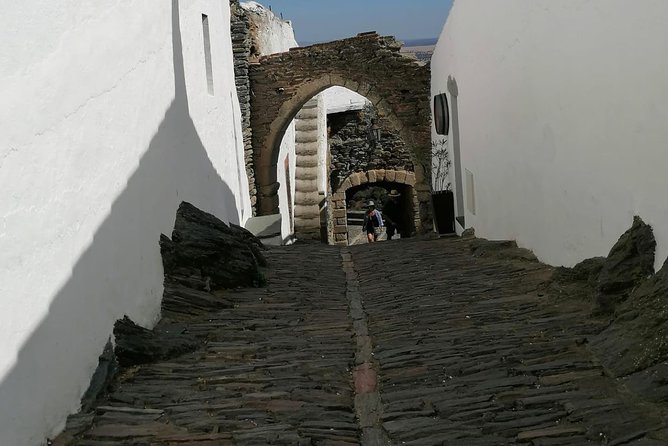
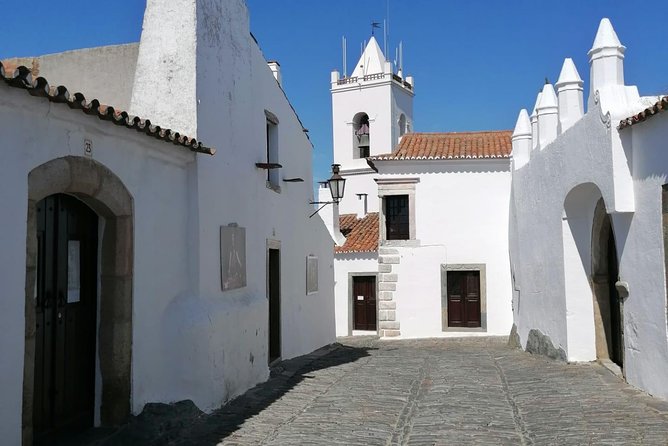
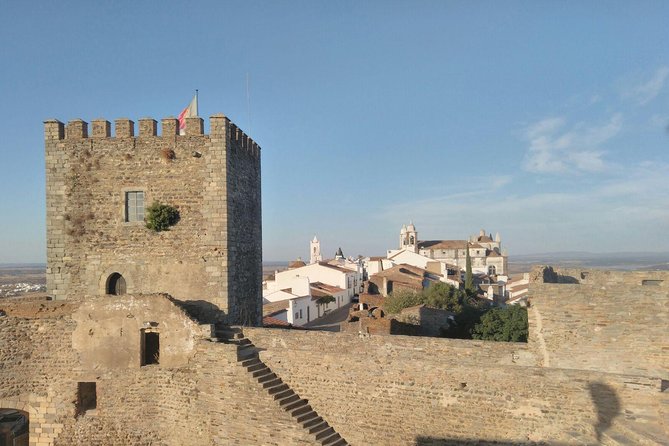
Then the day changes scale. Monsaraz is small, high, and built to be seen from far away. The village sits on a hilltop, and you immediately get that “walled viewpoint” feeling—whitewashed streets, stone edges, and a castle area that frames views across the water toward Spain.
You get about 2 hours here, with free time at the main village sights. That window is ideal because Monsaraz rewards slow walking. You don’t need to rush from place to place to feel like you saw the real village life.
The best moment: standing on the walls
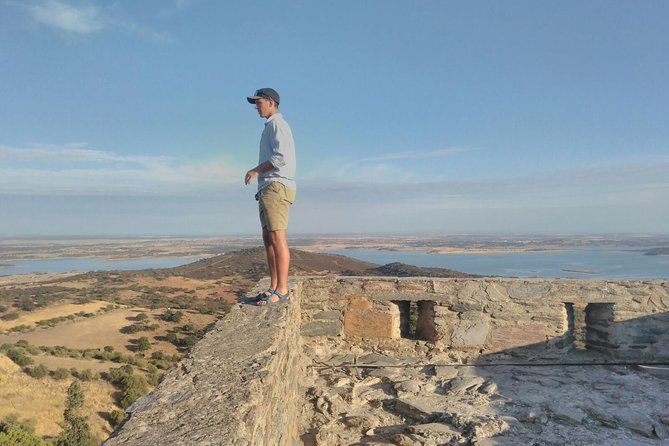
The big payoff is the view. From Monsaraz you can see across the border region toward Spain, and you also get sweeping looks over vineyards, olive groves, and cork trees in the wider countryside.
If you’re the type who likes to understand a place’s geography, this is where it clicks. The village isn’t just pretty—it’s strategic. The elevated position explains why it grew the way it did and why the fortifications matter.
Castle details and local traditions
You might also notice references to local traditions tied to the fortress area. One thing guides often bring up is that the castle bullring relates to a running-of-the-bulls tradition once a year. Even if you’re not there for that festival moment, it helps connect what you see (walls, spaces, and shape of the grounds) to what locals do.
Food breaks in Alentejo: what to expect when lunch isn’t included
Lunch is not included, but your guide comes with recommendations and a practical sense of where to go. Many people end up trying hearty Alentejo dishes during the midday break—especially oxtail stew and black Iberian pork cheeks, usually paired with local wines. Dessert is often mentioned too, with chocolate cake showing up as a common favorite.
Here’s the key value for you: you’re not left guessing. When someone local points you to a good spot, you save time and you avoid the most common tourist-lunch traps.
One more helpful point from the way guides work: they sometimes adjust the afternoon if there’s interest and time. For example, some people were able to add a cork factory stop and a vineyard visit as part of the day’s flow. If you’re into food-and-farming connections, ask your guide if an extra agriculture stop is realistic.
Private tour format: why the group size matters
This is a private tour, meaning it’s just your group. That changes the whole feel. You can move at a pace that suits your legs and your attention span. It also makes it easier to ask questions without hearing the constant shuffle of other parties.
It also helps at “feeling overwhelmed” moments. Évora can be visually dense, and Monsaraz can be deceptively calm. With a guide actively explaining as you go, you don’t spend the day feeling lost.
The best part from the guide stories I’ve heard connected to this route: people mention being treated with patience and flexibility, including accommodating time for small shopping stops (like ceramics) when it fits the schedule.
And yes, driving quality matters on a day like this. The route has long stretches, so you’ll feel the difference between a smooth driver who pays attention and one who rushes. The guides linked with this trip tend to keep it comfortable.
Price and budgeting: does it feel like good value?
At $183.07 per person, this is the kind of day trip that can be either a bargain or a headache depending on what you compare it to. Here’s why it’s usually good value:
You’re paying for door-to-door pickup and drop-off, a private minivan ride, live commentary, and guide time for multiple major sights. The total effort is more than just transportation—you’re buying interpretation, timing, and a route that hits both Évora and Monsaraz in one day.
What to budget on top:
- Monument entrance fees are not included and are listed as €8.00 per person
- Sé Catedral de Évora (rooftop access) is not included
- Chapel of Bones is not included
- Lunch is not included
How to think about it:
If you’re the kind of traveler who hates arriving at famous places and then trying to figure out ticket rules on the fly, the tour helps you avoid that stress. You’re also getting multiple stops that are partly free and partly paid, so you won’t feel like you’re paying admission for every single step.
If you want the “best deal mindset,” plan to splurge where it counts: rooftop views at the cathedral and time inside the chapel. Those are the parts you’d regret skipping.
Who should book Évora and Monsaraz from Lisbon?
This tour fits best if you want:
- A full day that mixes history, viewpoints, and countryside
- A route with multiple anchor sights instead of one main town
- Private pacing, where you can stop for photos without feeling rushed
- A guide who connects what you see to the region’s agriculture and traditions
If you hate long drives, you might prefer something closer to Lisbon. But if you can handle a long day and you want to understand why Alentejo looks and eats the way it does, this is a strong choice.
Should you book this day trip?
I’d book it if you want a simple, high-impact day with a local guide steering you through Évora’s UNESCO core and Monsaraz’s fortress views. The combination of medieval streets, the Roman Temple stop, the Chapel of Bones, and the Spain-border panoramas is a solid spread, and the private format makes it feel personal rather than crowded.
Skip it (or rethink) if you already plan to spend multiple days in the area and you’d rather go slow with no entrance-fee surprises. But for a first taste of Alentejo from Lisbon, this is one of the most practical ways to get the region’s signature mix of people, stone, and views.
FAQ
How long is the Évora and Monsaraz day trip from Lisbon?
It runs about 6 to 8 hours.
What time does the tour start, and where do you meet?
Start time is 8:30 am, and you’ll be picked up from any accommodation in Lisbon.
Is this a private tour?
Yes. It’s private, and only your group participates.
What’s included in the price?
Included are bottled water, the driver/guide, live commentary on board, hotel pickup and drop-off, private tour, and transport by air-conditioned minivan.
Are entrance fees included?
No. Monument entrance fees are listed as not included (€8.00 per person). The cathedral and Chapel of Bones admissions are also not included, while the Roman Temple of Évora and several areas are listed as free.
Can I cancel for a full refund?
Yes. You can cancel up to 24 hours in advance for a full refund. Cancellation made less than 24 hours before the start time isn’t refundable.