REVIEW · MADEIRA
Camacha: Levada Trail e-Bike Guided Tour
Book on GetYourGuide →Operated by Madeira Island Route · Bookable on GetYourGuide
Levada paths feel made for e-bikes. From Camacha, you ride beside the levada water channel through forest trails, crossing old bridges and moving at a pace that actually lets you notice plants and views.
What I like most is the mix of scenery and guidance: the trail is naturally beautiful, but the tour also teaches you what you’re looking at and how Madeira’s landscape is managed. I also really value how the guide sets you up—seat height, e-bike basics, and a group pace that works.
One real consideration: the tour runs rain or shine, and the trail can turn muddy and slippery. If you hate wet shoes or walking through cold patches, plan for that reality.
In This Review
- Key things that make this e-bike levada tour special
- How the e-bike changes the levada experience
- Camacha pickup and van ride: start calm, not stressed
- First ride in Camacha: fields, forest edge, and the “getting warm” segment
- Along the levada channel: old bridges and forest details you actually notice
- Laurel-forest vibes: why this UNESCO stretch feels worth it
- A rest break at the water mill and the oddly-shaped tree
- The dirt-road climb toward Santo da Serra viewpoint (and yes, the sheep)
- Descending through oaks and rejoining the levada toward Camacha
- Santo da Serra market stop: a short taste, not a detour
- Small-group pacing and guides like Venancio
- Price and value: what $82 buys you in real terms
- Who should book this, and who should skip it
- Practical packing tips so you finish the ride feeling good
- Should you book the Camacha levada e-bike tour?
- FAQ
- How long is the Camacha Levada Trail e-Bike Guided Tour?
- Does the tour run rain or shine?
- What’s included in the price?
- Is food or drinks included?
- What language is the live guide available in?
- What should I wear and bring?
- Is this tour suitable for children or people with mobility impairments?
Key things that make this e-bike levada tour special
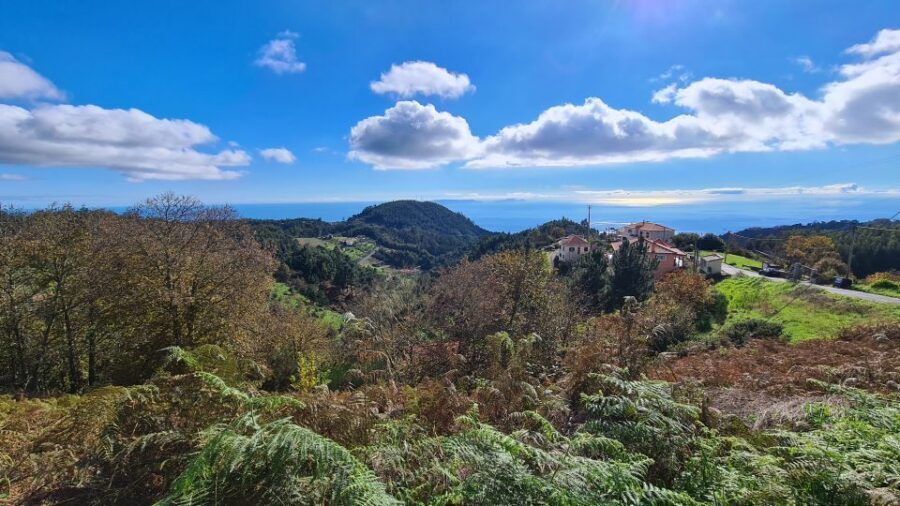
- Camacha start, made for wandering and photos: a picturesque village base before you head into the green quiet.
- Old bridges plus the levada channel: you’re not just riding through trees—you’re following Madeira’s water story.
- Eucalyptus forest to UNESCO laurel forest: you get a real change of scenery as the vegetation shifts.
- Santo da Serra viewpoint with sheep: a classic Madeira moment that feels like a reward for the climb.
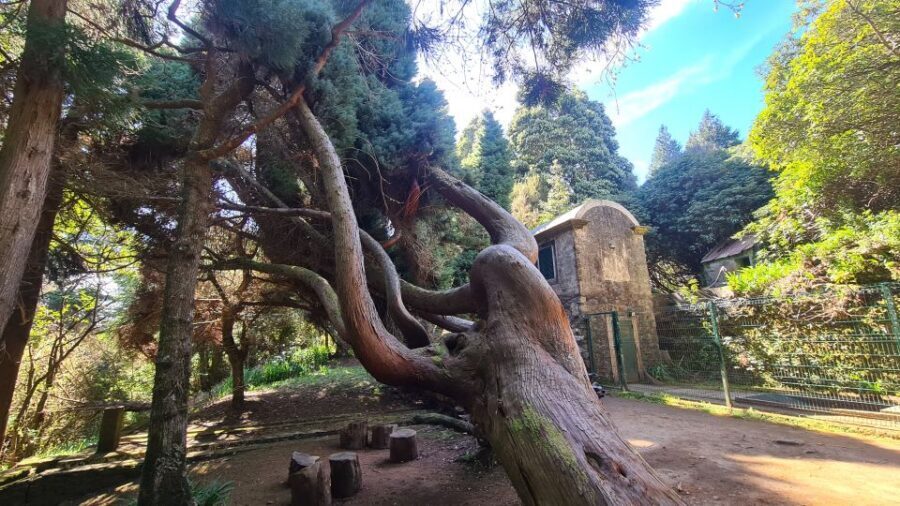
- Rest stop at a water mill and odd-shaped tree: brief pause to regroup before the next section.
- Small group (8 max): easier support, calmer riding, and more time for questions.
How the e-bike changes the levada experience
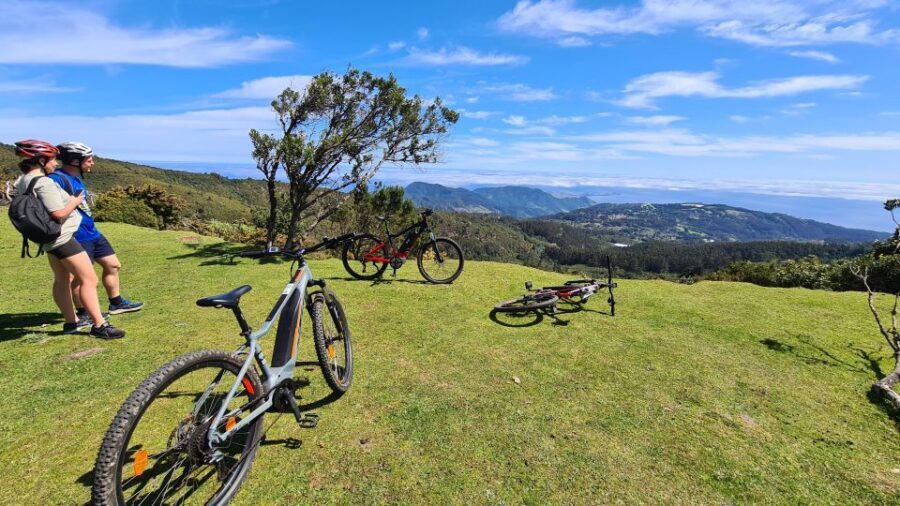
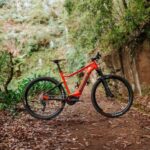
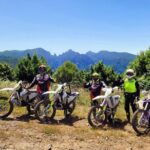
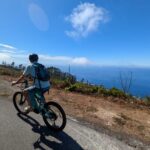
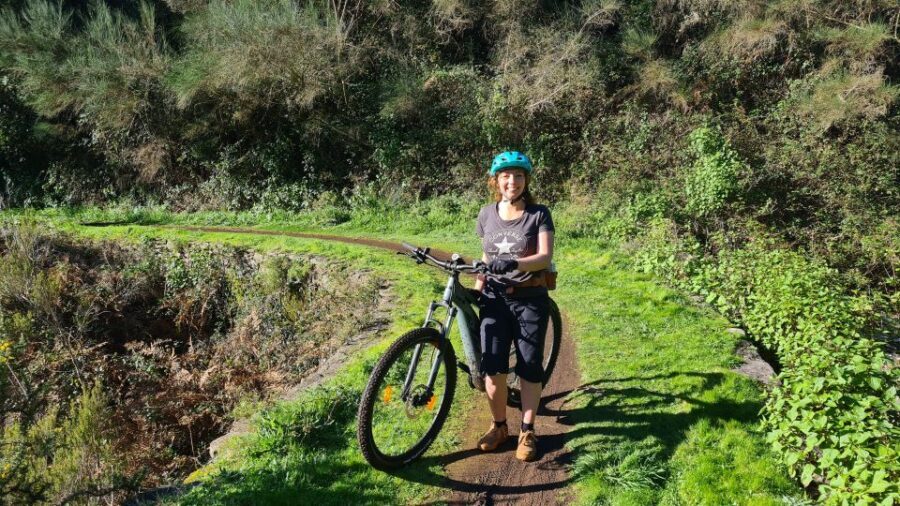
This is not a hardcore mountain-biking day. The electric assist matters because it lets you focus on smooth control and scenery instead of burning your legs on climbs. Even in hillier sections, riders can keep a steady rhythm and still stop for viewpoints.
The trail stays “in nature,” but it isn’t a rough-boulder scramble. You’re on mountain paths that may get narrow and wet, so you’ll still need decent balance and the willingness to ride carefully. The good news: in practice, the e-bike support makes the route feel doable for a wide range of ages.
I also like that the tour treats the e-bike like a tool you learn, not a magic wand. At the start, the guide helps adjust the bike and explains how to use the motor so you can match assistance to the terrain instead of fighting it.
You can also read our reviews of more cycling tours in Madeira
Camacha pickup and van ride: start calm, not stressed
The day begins with hotel pickup from multiple areas, so you’re not stuck trying to get yourself to a trailhead on public transport. Options include places like Funchal, Caniço, Machico, and Ribeira Brava (plus several others), with a shared van transfer of about 30 minutes.
That transfer time is useful. It gives you a buffer to get oriented before you’re on a narrow track, and it’s also when the guide can talk you through what to expect in the forests. If you’ve been traveling all morning, this structure helps you arrive already in “tour mode.”
Tip: you’ll want to be at the lobby about 10 minutes before your pickup time. That small habit prevents the day from feeling rushed.
First ride in Camacha: fields, forest edge, and the “getting warm” segment
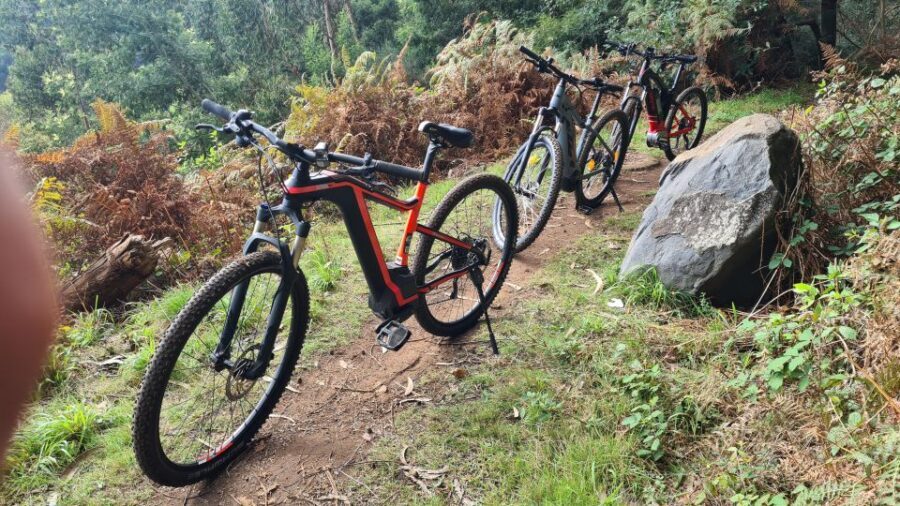
You start with an electric mountain bike ride from Camacha for about 1.5 hours. This part works like an introduction to the terrain and the riding style you’ll use for the rest of the tour.
One of the pleasures here is that you begin in a human-scale village setting. You can admire cultivated fields and get your first sense of how close Madeira’s communities are to the steep green everywhere. Then, as the ride progresses, you feel the forest take over and the sound changes from road life to wind and birds.
For beginners, the e-bike stage is a confidence builder. Several riders have said the bikes are easy to ride and the assistance makes steep bits manageable, especially right at the start when you’re still learning how much power you want.
Along the levada channel: old bridges and forest details you actually notice
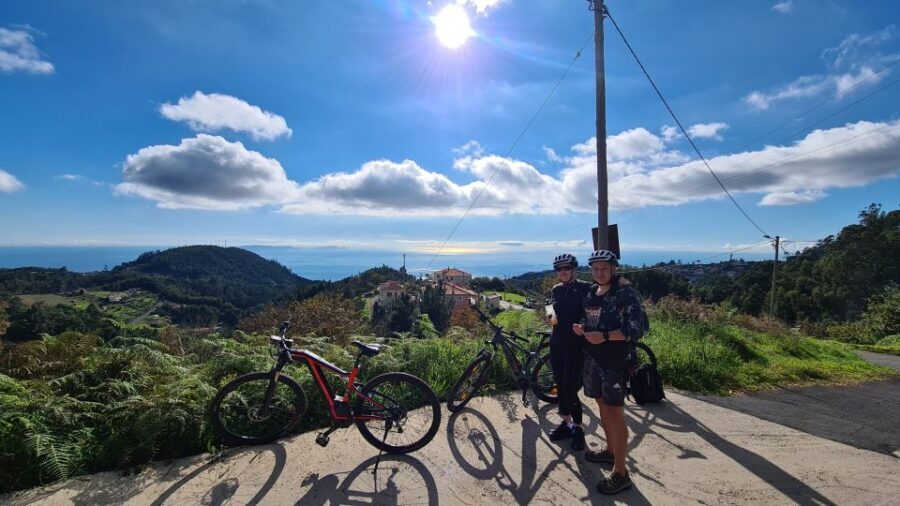
The heart of the tour is riding alongside the levada—the water channel system that’s central to life on Madeira. You’ll cross old bridges and follow sections where the trail parallels the channel, so you get movement plus a constant reference point.
What makes this section really good is the layered environment. The route passes through areas with eucalyptus forest character, then transitions toward the laurel forest, which is recognized as a UNESCO heritage site. When the vegetation changes, it changes how the air feels too—more shaded, more “still,” with plants that look different at close range.
You’ll also get the sense of Madeira’s strong relationship with water management. The levadas aren’t just scenery; they’re part of how the island has been shaped, farmed, and sustained.
Even if you’re not a plant nerd, you’ll likely find yourself looking at leaves, bark textures, and small flowering plants more than you would on a standard hike. The slower, guided pacing makes that possible.
Laurel-forest vibes: why this UNESCO stretch feels worth it
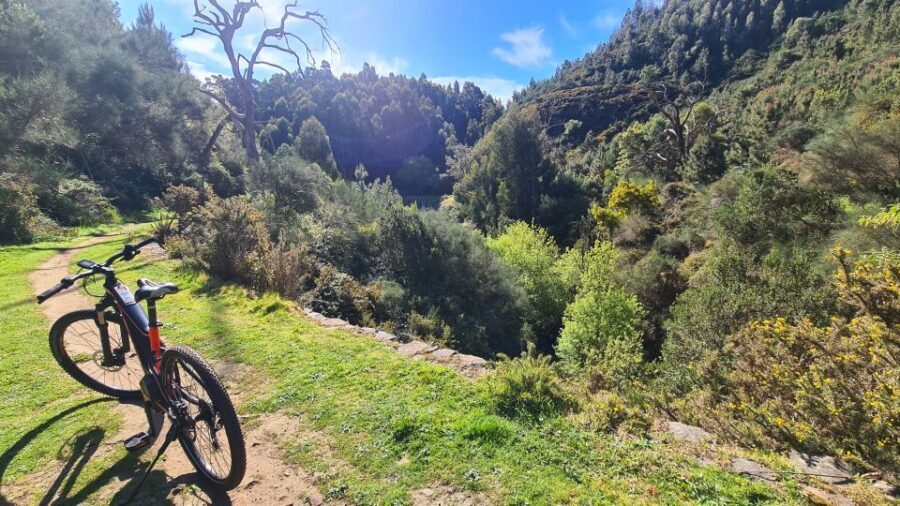
The laurel forest segment is the “slow down and look” part. It’s the area people mention most because it feels like you’ve stepped into a different version of the island—cooler, quieter, and thick with growth.
This isn’t just a branding stop. You can use this time to practice your riding habits: gentle braking, smooth turns, and staying alert on uneven ground. Rain can make the footing change quickly, so it helps to treat this stretch as the place where you take your time.
And because it’s guided, you’re not wandering with a blank stare. The guide points out the fauna and flora and connects them to the forest conditions. That turns the UNESCO label into something you can feel, not just something you read.
You can also read our reviews of more guided tours in Madeira

A rest break at the water mill and the oddly-shaped tree
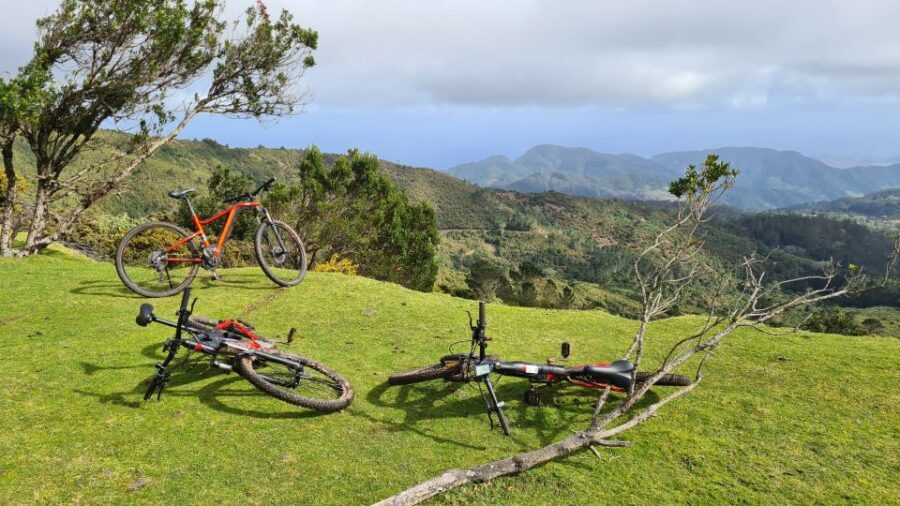
After you’ve been riding with the levada, the tour reaches a spot known for a water mill and a funny-shaped tree. This is where the tour gives you a breather—an actual break from pedaling and balance work.
I like rest stops like this because they keep the day fun. You’ll likely have a chance to take photos, dry your hands a little, and reset before the next climb.
In wet weather, breaks become more important. Mud and cold can dull your focus, so having a planned pause helps you keep control when the trail turns slick.
The dirt-road climb toward Santo da Serra viewpoint (and yes, the sheep)
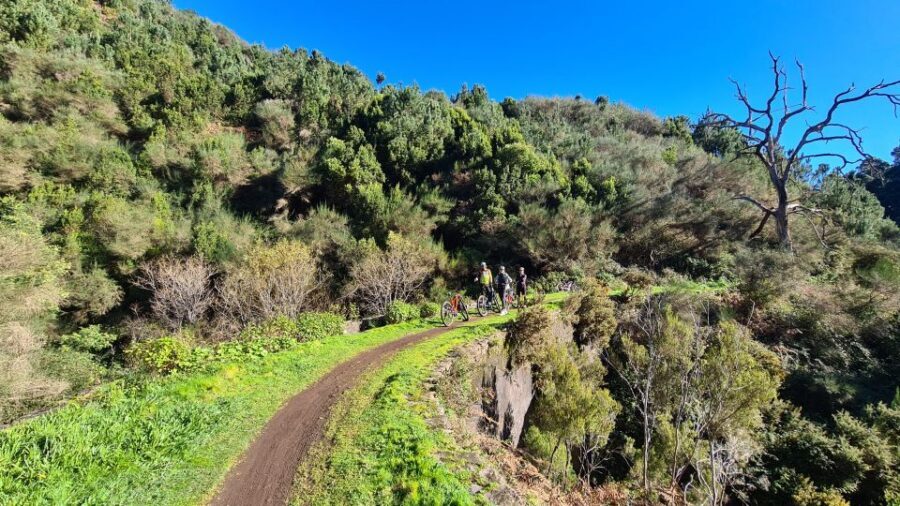
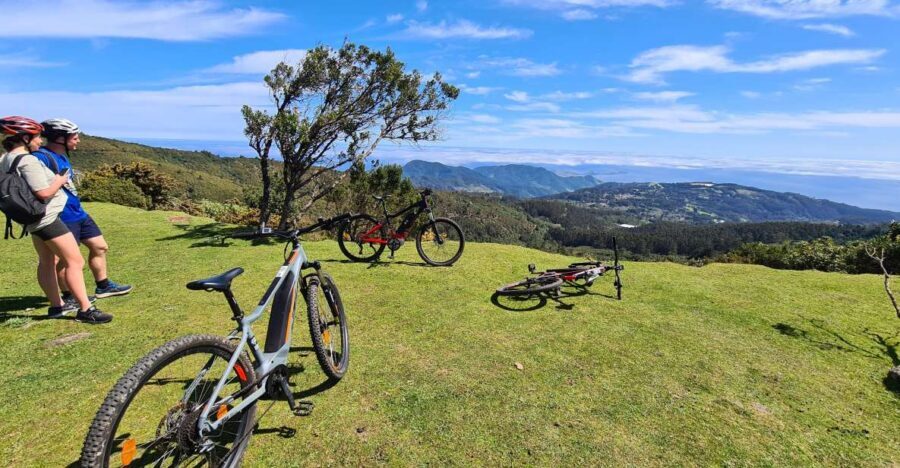
Then comes the part where the e-bike really earns its keep: a dirt-road climb toward a viewpoint over Santo da Serra. Some riders describe it as a satisfying effort rather than a suffer-fest, largely because you can let the motor do the hard work on the steep bits.
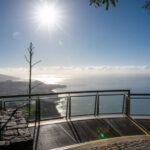
And then you get the payoff. There’s often a welcome from sheep near the viewpoint area, which adds a simple, local charm to a big “wow” view. It’s the kind of moment that makes the whole forest ride feel like more than transport—you’re being guided to a perspective.
Practical note: the climb is where you should use the assistance levels thoughtfully. If you crank full power from the start, you might feel less stable on uneven ground. A smoother approach usually feels safer and more comfortable.
Descending through oaks and rejoining the levada toward Camacha
After the viewpoint, you descend on a road that features oaks, then you return to the levada in the direction of Camacha. This is where the day shifts from effort to flow.
Downhill sections can be fun, but they’re also where confidence matters. Several riders mention there are a few thrills, but nothing that requires advanced biking skill—still, you’ll want to ride like it matters because wet surfaces can turn “easy” into “slippery.”
This final leg is great for soaking in what you saw earlier. Returning along the levada gives you continuity—you’re not bouncing between unrelated places. Instead, you get a loop-like feel, where earlier forest scenes and bridges become familiar as the trail brings you back.
Santo da Serra market stop: a short taste, not a detour
There’s a ride segment connected to the Santo da Serra market, roughly 45 minutes on the bike. Think of it as a chance to break the forest rhythm and have a look at everyday Madeira life.
It’s not framed as a long shopping spree. It’s more like a quick cultural reset so the day doesn’t feel only green and quiet. If you like markets, this part gives you a glimpse without taking over your whole afternoon.
Also, since food and drinks aren’t included, this is one of your best chances to pick up something for later—if the market is operating on your day.
Small-group pacing and guides like Venancio
This tour runs with a small group capped at 8 participants. That’s a big deal on narrow levada trails because it reduces bottlenecks and gives the guide space to check on everyone.
The guides also get repeatedly praised for two things: friendliness and real problem-solving. Riders mention that guides such as Venancio and Vincenzio/Vincenzo adjust seats, explain how to use the e-bike controls, and keep the group moving safely. One strong theme is responsiveness—if weather changes, the guide may modify the route to avoid the worst conditions.
I like that because Madeira weather can shift fast. Even when rain is heavy, a guide who stays flexible can keep the tour from becoming a frustrating slog.
Price and value: what $82 buys you in real terms
At about $82 per person for roughly 3.5 hours, this is a value play if you price it the way a rider actually thinks.
You get:
- pickup and drop-off from multiple hotel areas
- an electric mountain bike
- a live guide (English, French, German, Portuguese)
- supportive gear like gloves and glasses if clients need them (when requested)
You’re also paying for access. Riding a levada route with the right timing, forest context, and safe pacing is hard to replicate solo—especially when rain makes trails unpredictable.
What’s not included is straightforward: food and drinks and clothing. So if you’re planning, budget for a snack or drink stop of your choice. And because the ground can get muddy, you’ll want proper sports shoes (and ideally shoes you don’t mind sacrificing).
Who should book this, and who should skip it
This works best for people who want nature without “all day hiking.” If you can ride a bike comfortably and you’re okay with uneven paths, you’ll probably have a great time—even if you’re older or new to mountain bikes. Multiple riders mention the ride was doable for seniors, with the motor making a huge difference.
It’s also a good choice if you like being outdoors but don’t want to navigate. The guide handles the route flow, stops for scenery, and teaches you what you’re seeing.
Skip it if you have mobility impairments or you’re bringing children under 12. The tour is also rain-or-shine, so if you’re very rain-sensitive, you’ll want to think twice about muddy, cool conditions.
Practical packing tips so you finish the ride feeling good
Because this is an all-weather forest ride, plan for getting wet and muddy. Wear breathable clothing you don’t mind cleaning afterward, and choose shoes that can handle slippery terrain.
If you can, bring:
- food and drinks (since these aren’t included)
- breathable layers you can manage in sun or rain
- sports shoes with grip
One small but useful idea: avoid white trainers. A few participants came home with full-on mud coverage, and no one wants to turn a fun morning into a shoe-loss story.
Should you book the Camacha levada e-bike tour?
If you want Madeira nature with less physical strain and more guided interpretation, I’d book it. The combination of levada riding, the laurel forest UNESCO stretch, and the way the e-bike keeps the day enjoyable makes it a smart pick for a short Madeira stay.
Book it especially if you like forests, old bridges, and viewpoint rewards like the Santo da Serra sheep moment. And if you’re the kind of person who actually likes learning why places look the way they do, the guide-led plant and fauna explanations are a real bonus.
Just go in with the weather mindset. Rain can make the trail muddy and cold, and the route might adjust. If that doesn’t bother you, you’ll likely come back feeling like you saw a side of Madeira you can’t get from roads alone.
FAQ
How long is the Camacha Levada Trail e-Bike Guided Tour?
The tour lasts about 3.5 hours.
Does the tour run rain or shine?
Yes. It takes place rain or shine, and the course may change depending on weather.
What’s included in the price?
Hotel pick-up and drop-off, an electric mountain bike, a tour guide, and gloves/glasses if you previously requested them.
Is food or drinks included?
No. Food and drinks aren’t included, so bring your own.
What language is the live guide available in?
The guide offers English, French, German, and Portuguese.
What should I wear and bring?
Bring food and drinks, breathable clothing, and sports shoes. The tour is on forest paths, so you should be ready for muddy conditions.
Is this tour suitable for children or people with mobility impairments?
It isn’t suitable for children under 12, and it’s also not suitable for people with mobility impairments.