REVIEW · PORTO
Authentic Braga & Guimarães: Small Historical Group Tour
Book on Viator →Operated by Oporto Road Trips · Bookable on Viator
Ancient Portugal, in one well-paced day. This small-group tour connects Guimarães and Braga with real, walkable old-town stops and big religious sights, including UNESCO-listed Bom Jesus do Monte. It is the kind of day where each stop adds a new layer of how northern Portugal formed its identity.
What I like most is the feel: up to 8 people in a premium air-conditioned vehicle, plus an expert guide who keeps things clear and moving. I also love how the day balances guided moments with breathing room, from Guimarães viewpoints down to Braga’s pilgrimage stairways.
One practical consideration: lunch is not included, so you’ll want to plan for it during the free-time windows. If you hate making food decisions on the fly, bring a simple backup plan.
In This Review
- Key highlights worth your attention
- Why Guimarães and Braga click as a Porto day trip
- Price and what you actually get for your $70.60
- Guimarães Castle to São Miguel do Castelo: Portugal’s origin story in stone
- Guimarães palaces and old streets: from royal weddings to lived-in city life
- Largo da Oliveira and Padrão do Salado: where Portugal felt legal and political
- Se de Braga (Braga Cathedral): the early Portuguese claim
- Bom Jesus do Monte: UNESCO pilgrimage where the view becomes part of the route
- Sameiro Sanctuary at 566 m: big views with less show
- How the day really feels: pace, walking, and your best game plan
- The guides are the secret sauce: Cheila, Nuno, Brahim, and Francisco
- Should you book this Braga and Guimarães tour?
- FAQ
- What cities does this tour cover?
- How long is the tour?
- What time does the tour start?
- Is hotel pickup included?
- Is the tour offered in English?
- Is lunch included?
- Are monument entrances included?
- How big is the group?
- Can I cancel for a full refund?
Key highlights worth your attention
- Small-group size (max 8) keeps questions from getting lost and makes the pace feel human
- Guimarães Castle area + São Miguel do Castelo links the city to Portugal’s early legends
- Braga Cathedral (included) anchors the day with a monument that predates the nation-state
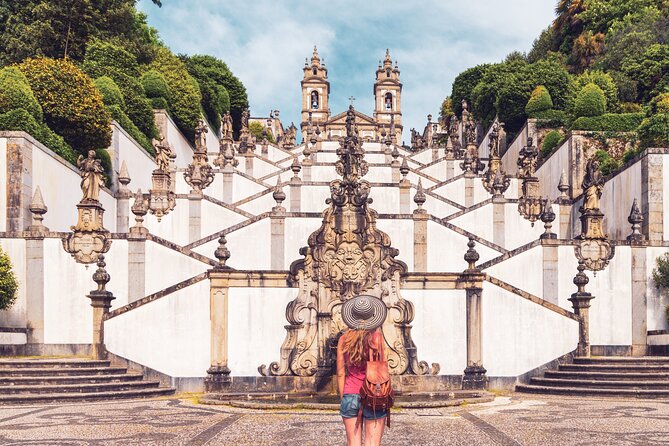
- Bom Jesus do Monte is UNESCO (2019), and the Via Crucis walk turns views into part of the story
- Sameiro Sanctuary at 566 m gives Braga panoramas without needing a long hike
Why Guimarães and Braga click as a Porto day trip
If you’re basing yourself in Porto, this tour is a smart shortcut to two cities that don’t feel like leftovers of each other. Guimarães gives you the early chapters—castle-top origin stories, old streets, and medieval squares. Braga then expands the theme into religious architecture and pilgrimage, with sanctuaries that feel designed for both devotion and storytelling.
It also helps that the day is structured for first-timers. You’re not wandering randomly through history; you’re moving along an arc: royal beginnings in Guimarães, then cathedral authority in Braga, then pilgrimage spectacle.
And because the group is small, you get better use out of the guide. On a bigger bus, you end up hearing a lot but absorbing less. Here, you can ask follow-ups and actually keep up with what you’re standing in front of.
You can also read our reviews of more historical tours in Porto

Price and what you actually get for your $70.60
At $70.60 per person for about 8 hours, this is priced like a value-focused guided day rather than a high-end private driver-only service. You’re paying for the convenience of hotel pickup and drop-off, a premium air-conditioned vehicle, and an expert guide who structures your time across multiple major stops.
You also get entrances to monuments included (and many key church and square stops are free to enter anyway). Bottled water is provided, which matters when you’re hopping between cities and doing short walks.
Two details that quietly improve value: the tour uses a mobile ticket, and it runs in English. If you want to understand what you’re seeing without constantly guessing, that is a big part of the deal.
Guimarães Castle to São Miguel do Castelo: Portugal’s origin story in stone
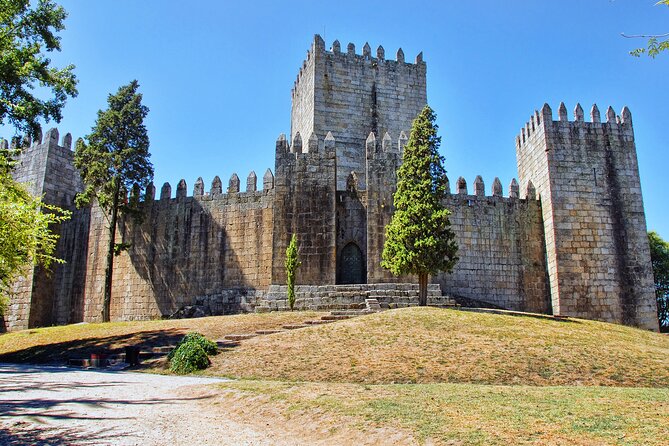
The day starts with a focus on the upper part of Guimarães, around the Guimarães Castle area. You’ll begin there and then descend toward the city center, which is a great way to understand the geography—old power sat high, and daily life spread below.
Your first major church stop is Igreja de São Miguel do Castelo. It is a 13th-century building in Romanesque style, and it was rebuilt in the early 20th century to match its original look. The legend connects this site directly to Portugal’s first king, D. Afonso Henriques, who was said to be baptized here. Even if you take legends as legends, the point is clear: this church is one of those places where faith, myth, and national identity overlap.
What to do here: don’t just look. Slow down and notice the Romanesque feel—simple forms, heavy presence, and a sense that time has layered onto the structure rather than replacing it.
Guimarães palaces and old streets: from royal weddings to lived-in city life
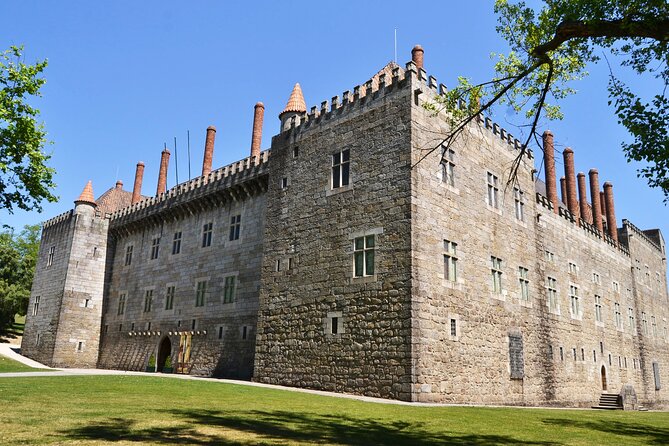
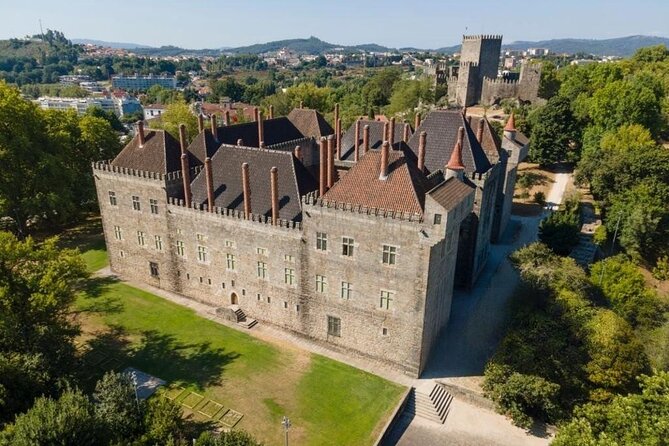
After the first church, you’ll move through the historic flow of Guimarães. One highlight is a palace dating to the early 15th century, commissioned by D. Afonso, son of King D. João I, connected to his marriage to D. Constança de Noronha. Over time, the palace served multiple purposes, so it was worn down—then it was restored at the start of the 20th century. Today it’s classified as a national monument and operates as a museum.
Inside, you’re looking at collections including tapestry, furniture, Chinese porcelain, and paintings. That mix matters. It helps you picture the palace not as an empty monument, but as a home for art, trade, and daily elite life.
Then you’ll pass Rua de Santa Maria, one of the city’s earliest streets. It served as a key connection between the convent of D. Mumadona Dias, the residential area, and the Castle. This kind of street context is the difference between seeing a pretty street and understanding why that street exists.
Next comes Praca de S. Tiago, a social square surrounded by typical architecture. There’s a pilgrimage legend attached to it involving the apostle James and an image of the Virgin Mary. The church linked to that story was built in the 12th century and later demolished in the 19th century, so you get a sense of how religious focus can shift over time.
Largo da Oliveira and Padrão do Salado: where Portugal felt legal and political
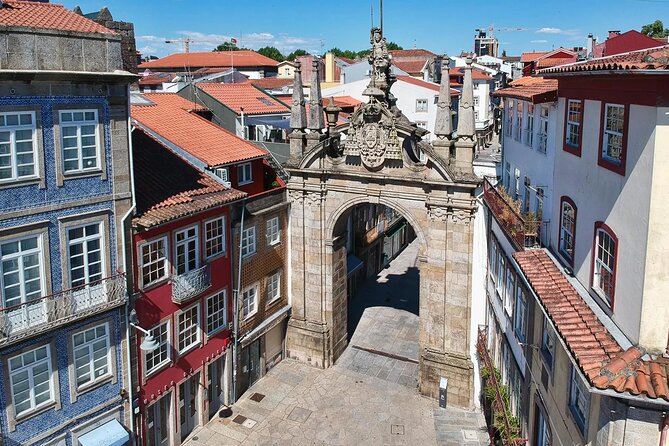
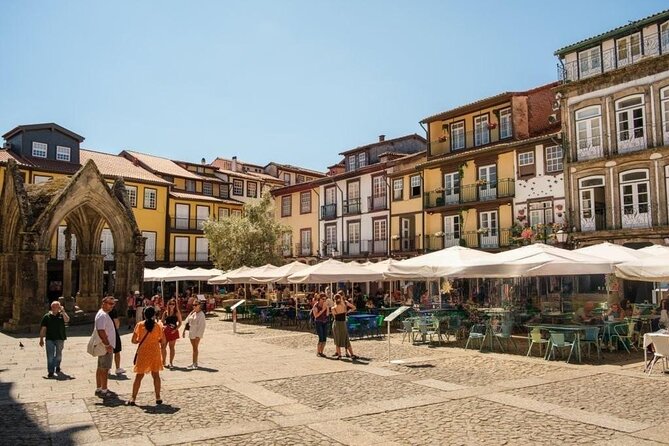
At Largo da Oliveira, you’re in one of Guimarães’s most emblematic squares. The name comes from an ancient olive tree symbolizing peace and tradition. The square also hosted major events over centuries, including medieval courts and key moments tied to Portugal’s nation-building.
Right nearby is Padrão do Salado, a monument celebrating D. Afonso IV’s victory over the Moors at the Battle of Salado in 1340. This is a sharp stop for history-minded travelers because it gives you something tangible: a concrete marker of military victory, not just a vague reference in a textbook.
Then you’ll finish the Guimarães cluster at Igreja de Nossa Senhora da Oliveira – Colegiada de Guimarães. This church’s origins go back to a monastery founded in the first half of the 10th century by Countess Mumadona Dias. The current church was built in 1387 by order of King D. João I, following Gothic models. It’s one of those places where the stonework and scale help you understand why medieval cities were so serious about religious institutions.
Practical tip: if you want good photos, this is where you’ll get the best composition without sprinting—small moves, big payoff.


Se de Braga (Braga Cathedral): the early Portuguese claim
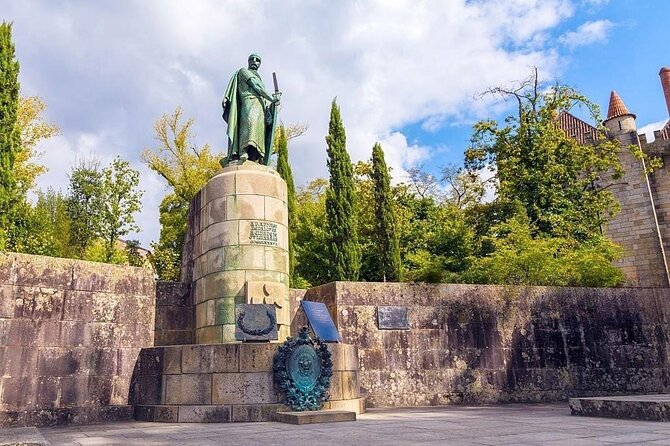
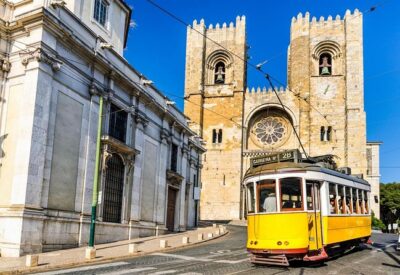
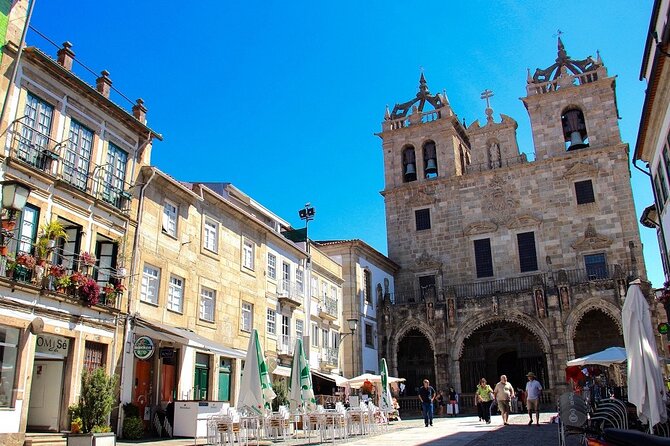
Once the tour shifts to Braga, the stop that anchors the theme is Se de Braga, Braga Cathedral. Construction dates to the end of the 11th century, and it was dedicated to the Virgin Mary by Bishop D. Pedro. The cathedral is considered the first Portuguese cathedral, built several decades before the founding of the nation itself.
That timing is the whole point. You’re seeing architecture that predates the modern sense of a country, which gives the day a deeper feel than a simple sightseeing list.
Look for how the cathedral frames religious authority. This is not a small chapel; it’s a statement. Even if you’re not a church fanatic, the scale and age make it worth the stop.
Bom Jesus do Monte: UNESCO pilgrimage where the view becomes part of the route
Bom Jesus do Monte is where the tour turns from history into motion. The sanctuary has over 600 years of history and is tied to Counter-Reformation influences, created after the Council of Trent in the 16th century.
A big reason I like this stop is that it’s not just a building at the top of a hill. The Via Crucis winds up the mountainside with chapels, fountains, and sculptures representing the Passion of Christ. It culminates in a neoclassical church built between 1784 and 1811.
Then you’ll reach the famous Staircase of the Five Senses, a baroque work designed around human senses with fountains and statues. Even if baroque detail isn’t your normal thing, it’s hard not to appreciate the planning: the sanctuary uses your steps as the structure of the visit.
And yes, you get panoramic views of Braga. UNESCO recognized Bom Jesus do Monte as a World Heritage Site in 2019, largely for how well it fits the hillside setting and for its pilgrimage role.
Sameiro Sanctuary at 566 m: big views with less show
After Bom Jesus, you’ll head to Sanctuary of Our Lady of Sameiro (Santuário do Sameiro). This one feels more local and slightly calmer. It was founded on June 14, 1863, by Father Martinho António Pereira da Silva.
Sameiro is described as the second largest Marian pilgrimage center in Portugal, after Fátima. It sits at 566 meters altitude, and the payoff is the view over Braga and the surrounding area.
If you’re deciding which sanctuary photos matter most, here’s a good approach: use Bom Jesus for the main spectacle (stairs and Via Crucis), then use Sameiro for a slower look and a wider overview. You’ll finish the day with context instead of just images.
How the day really feels: pace, walking, and your best game plan
This is a full 8-hour day, so don’t schedule anything tight right after. The walking is described as moderate and not strenuous, but you will do several short segments: castle-area descents, old-town stops, and time moving around churches and sanctuaries.
Here’s what you can do to make the day easier:
- Wear comfortable shoes you trust on uneven old-stone streets
- Bring a light layer for church shade and then sun at higher points
- Use the provided bottled water and keep sipping on the move
- Plan for lunch since it’s not included
Guides usually build in the right kind of timing—short visits where the point is the story, and longer moments where you can breathe and look at details. In at least one case, guides also tailored food plans for vegetarian preferences, so it’s worth mentioning what you need when you join.
One more detail: the tour mentions green wine and that the legal drinking age is 18+. If alcohol is in the plan for you, keep that age rule in mind and pace your day.
The guides are the secret sauce: Cheila, Nuno, Brahim, and Francisco
The reviews’ common thread is guide quality, and I agree it makes or breaks a day like this. On this tour, I’d expect an expert guide who can connect the dots between places you might otherwise treat as random landmarks.
I’ve seen multiple guide names connected to the experience, including Cheila, Nuno, Brahim, and Francisco. Across their styles, the consistent strengths are:
- Clear English narration
- A calm, organized pace that avoids that frantic tourist scramble
- Passion for northern Portugal that makes the legends and monuments feel less like homework
One guide detail I really like: Francisco’s mention of audio-visual support on board. That kind of prep helps you arrive at each stop already oriented, so you spend more time watching and less time trying to decode what you’re looking at.
And yes, there’s also praise for drivers being careful and punctual with pickup. That matters because you’re combining two cities in one day. If the transport is smooth, the history feels smoother too.
Should you book this Braga and Guimarães tour?
I think it’s a strong choice if you want a single-day answer to: What makes northern Portugal feel Portuguese? You’ll get the national-origin legends of Guimarães, then the cathedral claim in Braga, then pilgrimage architecture at Bom Jesus do Monte and Sameiro.
Book it if:
- You like guided history you can actually follow while walking
- You value small-group comfort over packed buses
- You want UNESCO on a day trip without building an itinerary yourself
Skip it (or at least be cautious) if:
- You strongly prefer full freedom and DIY wandering
- You don’t want to think about lunch during an 8-hour schedule
- You dislike any chance of timing being stretched by mixed-language conversations in a small group
Overall, for the price, this is practical sightseeing with real structure—and the small group size means the day feels thoughtful, not rushed.
FAQ
What cities does this tour cover?
It covers Guimarães and Braga, with multiple stops in each city.
How long is the tour?
The duration is about 8 hours.
What time does the tour start?
The start time is 8:30 am.
Is hotel pickup included?
Yes, hotel pickup and drop-off are included.
Is the tour offered in English?
Yes, it is offered in English.
Is lunch included?
No, lunch is not included.
Are monument entrances included?
Entrances to monuments are included, and several stops involve free admission.
How big is the group?
The tour is limited to a maximum of 8 travelers.
Can I cancel for a full refund?
Yes. You can cancel up to 24 hours in advance for a full refund.