REVIEW · PORTO
7-Day The Way of St James Bike Tour- The Coast Path – Camino to Santiago
Book on Viator →Operated by Top Bike tours Portugal · Bookable on Viator
Bike the Atlantic to Santiago. This Coast Path route turns the Camino into a practical, scenic ride from Porto to Santiago de Compostela, using modern Trek mountain bikes and a setup built for self-paced travel. I especially like the coast-focused days through Portugal and northern Spain, plus the easy win of having your route loaded on GPS and your luggage handled for you. One thing to plan for: you’ll face some hills, and summer heat can be real.
What makes this trip feel manageable is the small scale: a maximum of two travelers, with English support and transfers that keep logistics from eating your energy. You also end with a big payoff in Santiago at the Plaza of Obradoiro and the baroque cathedral, which is the emotional finish line for the Way of St James. If you want a light, smooth ride with zero effort, this may not be the right fit.
In This Review
- Key highlights you’ll feel on the ride
- Porto to Santiago by bike: what this route is really like
- The self-guided system that keeps your brain free
- Day 1 in Porto: briefing, orientation, and rolling out
- Day 2: Esposende, Póvoa de Varzim, and Vila do Conde
- Day 3: Viana do Castelo to Caminha on the Minho River
- Day 4: crossing into Spain and riding into Bayona
- Day 5: San Simón’s Bay and Arcade oysters with Santiago culture nearby
- Day 6: Caldas de Reis hot springs and medieval pilgrimage echoes
- Day 7: the final ride into Santiago de Compostela
- Bikes, terrain, and fitness: what easy to moderate really means
- Weather and timing: summer heat changes the whole game
- Price and value: is $2,990.44 per person a good deal
- Who should book this Camino bike tour
- Should you book it?
- FAQ
- Where does the tour start and when?
- How long is the experience and how many nights are included?
- Is this tour guided by an instructor each day?
- What bike do you get, and is a helmet included?
- Do you have luggage transfer between stops?
- What meals are included, and what is not?
- Are transfers included from Porto airport, and is there a return transfer from Santiago?
- What is the difficulty level, and are there hills?
- What should I do about hot weather in summer?
- Is travel insurance included?
Key highlights you’ll feel on the ride
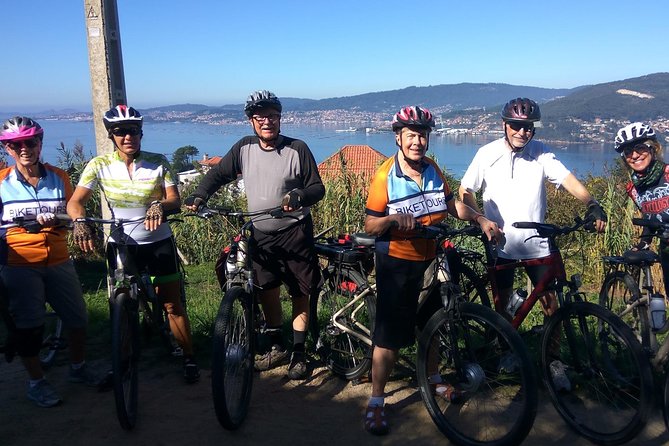
- Porto to Santiago de Compostela by Coast Path, with Atlantic views and historic port towns
- Self-guided routing with GPS, plus a road book when you want a backup
- Trek mountain bikes + helmet, and luggage transfer so you ride light
- Coastal food focus, including the famed oysters of Arcade (with Fiesta de la Ostra in early April)
- A hot-springs stop in Caldas de Reis, plus pilgrimage-era connections
- Santiago finale at the Plaza of Obradoiro, arriving at the baroque cathedral
Porto to Santiago by bike: what this route is really like
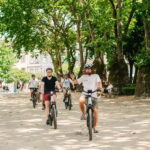
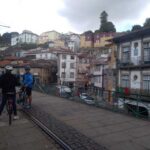
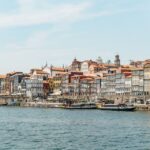
This is not the “rougher, more remote” version of the Camino. It’s the Coast Path style: more sea air, more towns, and a route designed to keep you moving with a plan. You’ll start in Porto, ride north along Portugal’s Atlantic edge, then cross into Spain for Bayona, Arcade, and onward until Santiago de Compostela.
You’re riding for a goal, but the day-to-day experience stays friendly. The itinerary threads together centuries of maritime life, religious pilgrimage culture, and food that actually changes from stop to stop. And because your routing is self-guided, you can keep a steady pace without waiting on a group schedule.
You can also read our reviews of more cycling tours in Porto
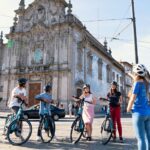
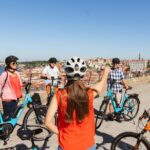
The self-guided system that keeps your brain free
This tour uses GPS with your route and includes a road book. That matters more than it sounds. When you have both, you’re not guessing at turns, and you’re not stuck if GPS battery life gets sketchy.
You also get luggage transfer, which is a big deal for a multi-day bike trip. It means you can travel with the basics while your bigger bag moves between stops. In real terms, you spend less time carrying, organizing, and re-packing, and more time actually riding.
And if something goes wrong with your bike, the support you get is part of the value. One rider highlighted The Fold ‘n’ Visit friendly staff for fixing a bike problem quickly, which is exactly what you hope for when you’re far from a shop that speaks your language.
Day 1 in Porto: briefing, orientation, and rolling out
Your start is a briefing at Rua João das Regras 62 in Porto at 8:00 am. It’s a good first move because you can get your bearings fast: bike setup, route explanation, and the practical stuff you need before you ride.
Porto is a city you can feel immediately, even if you’re not sightseeing all day. Once you’re on the bikes, you’re working the tour rhythm: ride, arrive, settle, eat. Then the next morning, you do it again.
Day 2: Esposende, Póvoa de Varzim, and Vila do Conde
Day 2 takes you north from Porto toward Esposende, a seaside city with Middle Ages roots. Expect a steady stream of coastal views and the kind of small “Portuguese rivieras” that make this route so appealing: water on one side, roads and bike paths on the other.
As you continue, you reach Póvoa de Varzim and its fishing villages. This is where the day stops being just pretty and starts becoming culturally grounded. You can experience traditions tied to fish exploration, then taste the local gastronomy that came from that work.
You end in Vila do Conde, where the region’s importance during the Portuguese Discoveries becomes clearer. If you like seeing how ports shaped history, this is a strong day. If you want a long climbing effort, this isn’t that day—this is more about getting into the coast rhythm.
Day 3: Viana do Castelo to Caminha on the Minho River
On Day 3, you ride into Viana do Castelo, another important docking city linked to the Discoveries era. The clue here is ship-building and maritime development in the 14th and 15th centuries. It gives the coast a purpose beyond scenery.
Then you finish in Caminha, right where the Minho River meets the sea. This area is known for its natural, green heritage, including waterfalls, beaches, and viewpoints. Practically, it’s also a nice end-of-day target: you get a strong sense of place when you arrive.
One consideration: river-and-coast routes can feel breezier in places. Bring a layer even if the day seems mild when you start.

Day 4: crossing into Spain and riding into Bayona
Day 4 is your first full shift into Spain, ending in Bayona. The route description makes the city sound tied to Pontevedra, and when you roll in, you’ll feel that in the mix of old center streets and sea-driven life.
Bayona is described as Roman-born with medieval growth toward the coast, with influence from the Catholic Church. That blend matters because it explains why the town feels layered instead of just coastal.
There’s also a fun historical hook: during the 16th century, Bayona was raided by British ships led by Francis Drake, aiming for commercial and merchant advantage. It’s the kind of detail you’ll remember when you see old ports and waterfront movement.
Day 5: San Simón’s Bay and Arcade oysters with Santiago culture nearby
Day 5 stays on the coastline and runs through the stream of Vigo, ending in San Simón’s Bay. This is where the trip leans into “this is why you bike here” energy—water views, coastal towns, and a route that keeps you close to the action.
Then you hit Arcade, and the highlight is obvious: the famous oysters produced and harvested in the region. This is more than food tourism. It’s a direct connection between the coast and daily life, and it’s why the stop has a strong identity.
You also pass cultural markers linked to Santiago’s world, including the church of Santiago in Arcade, dated to the 12th–13th centuries. Even if you’re not planning deep historical walks, having a Santiago-related sight alongside the oyster stop makes the day feel like part of the same journey.
One timing note: the Fiesta de la Ostra happens in the first week of April. If your trip overlaps that, expect extra visitors and more energy in town.
Day 6: Caldas de Reis hot springs and medieval pilgrimage echoes
Day 6 ends in Caldas de Reis, where hot springs shaped the early settlement. The area is described as having pre-Roman inhabitants who lived from those springs, and even the name connects to Afonso VII and pilgrimage activity toward Santiago in the Middle Ages.
This day gives you a different kind of recovery option. Instead of only biking onward, the stop is clearly built for relaxation and wellness tourism thanks to the hot springs. Even if you don’t plan a long soak, the town atmosphere helps you reset.
Food is also part of the story here: empanadas of lamprey and traditional Spanish bread are called out in the tour notes. It’s a good night to eat something local and heavy enough to match your effort on the bike.
Day 7: the final ride into Santiago de Compostela
Your last cycling day ends in Santiago de Compostela, one of the biggest pilgrimage cores in Western Europe. By now, you’re not just moving through towns—you’re arriving at a place with gravity.
Your finish point is the Plaza of Obradoiro, where you’ll see the majestic baroque cathedral that holds the remains of the apostle. This arrival can feel bigger than the route itself because it shifts from “daily rides” into “this is the destination people talk about.”
Practical tip: plan your arrival timing so you’re not rushing inside the square. You’ll want time to look up, take in the architecture, and enjoy that last moment without checking the next thing on your phone.
Bikes, terrain, and fitness: what easy to moderate really means
The tour calls itself easy to moderate, and it also mentions there are some hills. That combination is common on coastal routes: you don’t always climb mountains, but you do get up-and-down stretches, especially when the road follows inlets, bridges, and small rises.
You ride Trek mountain bicycles with a helmet included. Mountain bikes aren’t only for dirt trails here. They’re useful because the route can mix bike paths, tarmac, and rural streets.
Your physical fitness should be moderate. If you can comfortably ride for hours on a steady day and handle some elevation, you’ll be fine. If you only bike occasionally or prefer flat routes with no surprise grades, you might feel the extra effort.
Weather and timing: summer heat changes the whole game
The tour recommends cycling early during July, August, and September because of hot weather. That advice matters for safety and comfort, not just enjoyment. Starting sooner also helps you finish days with less fatigue, which makes your evening meals and settling in feel easier.
Also carry enough water at all times. The tour notes explicitly say to do that, and on a coast route, heat plus sun reflection off surfaces can sneak up fast.
Price and value: is $2,990.44 per person a good deal
At $2,990.44 per person, this isn’t a budget trip. The question is what you get for that cost, and the package does include real value.
You’re paying for:
- 7 nights of comfortable accommodation
- Bike rental (Trek mountain bikes) + helmet
- GPS route, plus a road book
- Luggage transfer
- Porto airport arrival and departure transfers
- Round-trip support via van at the end (Santiago pick up back to Porto city)
- Breakfast included across the days (8 breakfasts are listed)
- Some selected meals are referenced in the tour highlights, while lunches and dinners are not included
What that means in practice: you don’t spend time coordinating hotels, chasing luggage, or guessing route logistics. You also arrive with bikes and helmet sorted, which is a big cost if you’d do it independently.
If you want independence without micromanaging every detail, the price starts to make sense. If you’re the kind of traveler who loves building your own route and handling everything locally for cheap, then this will feel expensive. But for a smooth coast-to-Compostela bike mission with support, it’s competitive.
Who should book this Camino bike tour
This is a good fit if you want:
- the Camino goal (Porto to Santiago) without the hardest, most rugged approach
- a coast-heavy route with food stops like Arcade oysters
- self-guided flexibility with GPS and road-book backup
- a small group size, with a maximum of two travelers
- an easy-to-moderate challenge that still feels like you earned the finish
It’s less ideal if you:
- want a fully guided day-by-day ride with a large group dynamic
- dislike any hills at all
- are traveling on a tight budget and don’t value transfers, luggage handling, and pre-arranged lodging
Should you book it?
I’d book this if you’re craving an Atlantic-flavored Camino experience that feels organized, not stressful. The mix of Portugal coastal towns, the Spain border days, and a Santiago finish at the Plaza of Obradoiro hits the sweet spot for many people: real distance, real meaning, and a route that keeps you riding instead of planning.
If you’re sensitive to heat, plan your start time seriously in summer and commit to carrying water. If you’re comfortable with moderate cycling and a few hills, this is a strong way to reach Santiago without turning your trip into a constant grind.
FAQ
Where does the tour start and when?
The meeting point is Rua João das Regras nº 62, 4000-290 Porto, Portugal, with a start time of 8:00 am.
How long is the experience and how many nights are included?
The duration is listed as about 8 days, and the package includes 7 nights of accommodation.
Is this tour guided by an instructor each day?
This tour uses GPS with a route for self guided riding, and it also includes a road book.
What bike do you get, and is a helmet included?
You get Trek mountain bicycles, and a helmet is included.
Do you have luggage transfer between stops?
Yes. Luggage transfer is included.
What meals are included, and what is not?
Breakfast is included (8 breakfasts are listed). Lunches and dinners are not included. The highlights also mention selected meals as part of the package.
Are transfers included from Porto airport, and is there a return transfer from Santiago?
Yes. Porto arrival and departure airport transfers are included. After the ride, there is a van pick up back to Porto city from Santiago.
What is the difficulty level, and are there hills?
The tour is described as easy to moderate, with some hills to contend with. You should have a moderate physical fitness level.
What should I do about hot weather in summer?
During July, August, and September, it is recommended to cycle early due to hot weather, and you should carry enough water at all times.
Is travel insurance included?
Travel insurance is not included. The tour notes that insurance is only available in guided bike tours, so you should contract your own travel insurance.