REVIEW · PORTO
Six Bridges Cruise in Porto with Port Wine Tasting
Book on Viator →Operated by Sailing 360 · Bookable on Viator
Six bridges in one trip sounds almost too good, and it is. This short Douro River cruise pairs big bridge views like Dom Luís I and the Eiffel-designed D. Maria Pia with Port wine tastings while you float between Porto and Vila Nova de Gaia. I like the small-group feel, and I like that the pacing leaves room to actually look out the windows. One thing to keep your expectations tight on: the bridge talk and the food pairing can be more brief and less detailed than the vibe of the description suggests.
If you time it for later departures, you can line up the ride with that classic Porto golden-hour light. The route starts out near the Atlantic side of the river, so you see the bridges both as you head out and again on the return—very efficient for first-timers.
Key points to know before you go
- Six bridges, two banks: you cruise between Porto and Gaia and pass the major crossings people come to see.
- Wine tasting on the water: you get multiple pours of Port, served with small bites.
- Small max group: capped at 15 travelers, which helps the experience feel calmer.
- Wi‑Fi and music onboard: you’re set up to stay connected, but the music may be subtle over the engine.
- Sunset-friendly: the boat setup can slow down near the end so you can shoot photos in softer light.
In This Review
- Six Bridges in 2 Hours: Why This Cruise Makes Porto Click
- Getting To the Boat: Vila Nova de Gaia Start Point and Timing
- Onboard Comfort: Wi‑Fi, Music, and a Boat That Feels Like a Boat
- Arrábida Bridge First: A Fast Lesson in Modern Porto Infrastructure
- Port Wine Stops With Views of Porto and Gaia
- Dom Luís I Bridge: Porto’s Icon Seen From the Water
- D. Maria Pia Bridge and Gustave Eiffel’s Iron-Arched Legacy
- Infante Dom Henrique and São João: Newer Crossings, Older Layers Beneath
- Infante Dom Henrique Bridge
- São João Bridge
- Port Wine Tasting: What You Should Expect to Taste
- Where to Sit for Better Views (and Better Photos)
- Price and Value: Is $66.08 Worth It?
- Who This Cruise Suits Best
- Should You Book This Six Bridges Porto Cruise?
- FAQ
- How long is the cruise?
- What language is the tour offered in?
- What’s the group size limit?
- Where does the tour start in Porto-area?
- Is Wi‑Fi available onboard?
- What happens if weather is poor?
Six Bridges in 2 Hours: Why This Cruise Makes Porto Click
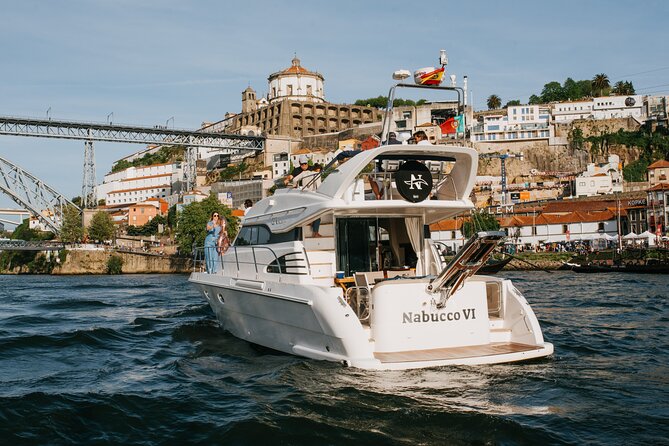
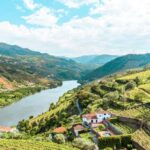
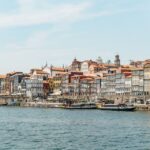
Porto is a city where viewpoints matter. From street level, you get pieces—churches here, river views there. From the Duoro River, you suddenly get the whole system: how the city clings to the north bank, how Gaia sits across the water, and how the bridges tie it all together.
This cruise is built around that idea. It’s short enough that it won’t steal your whole day, yet long enough that you’re not just snapping photos and rushing off. You’re floating while the skyline changes, which is the real magic here.
The bridge lineup is the other reason it works. You’ll see Dom Luís I, the city icon with its steel-and-stone profile; you’ll also pass the Arrábida Bridge, a modern-looking counterpoint built to handle traffic demands. Then you get the Eiffel connection with D. Maria Pia—one of the most famous iron arches tied to Portuguese infrastructure.
I also like that you’re not stuck in one single view. Because the cruise runs out and then back, you get repeated chances to photograph the same bridges from slightly different angles and at different light levels.
Possible drawback? If you’re expecting a long, detailed lecture on bridge engineering, you may feel the explanations are brief. The staff will answer questions, but the tour style leans more toward views + tasting than deep, minute-by-minute history.
Getting To the Boat: Vila Nova de Gaia Start Point and Timing
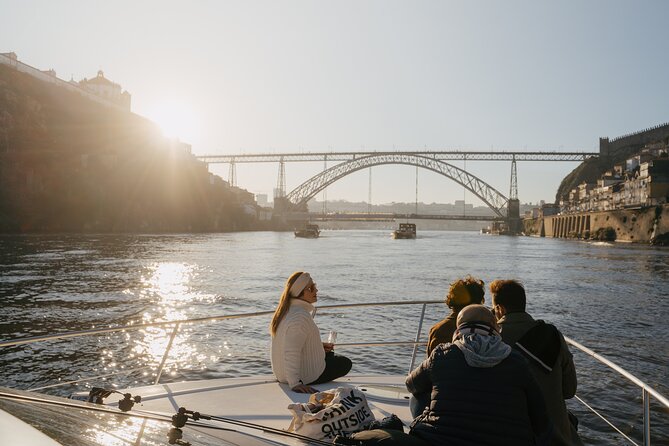
Your meeting point is in Vila Nova de Gaia, at R. da Praia 430 (4400-354). The trip ends back at that same point. That matters because many people plan their Porto sightseeing around the Ribeira area and then assume everything is walkable.
In practice, the boat location is along the marina side, and getting there from the city center can take more time than you think. A smart move is to plan transport early rather than counting on a quick walk. If you’re already in Porto for the day, you’ll waste less time (and stress) by heading across with enough buffer.
Departure times are described as afternoon options, which is perfect. Pick a departure that matches your energy level. If you want that softer light, a later slot helps, especially if you’re hoping for sunset-style views. Some departures are scheduled so the boat can turn toward the horizon near the end, giving you a better photo moment and a more relaxed finish.
You can also read our reviews of more food & drink experiences in Porto



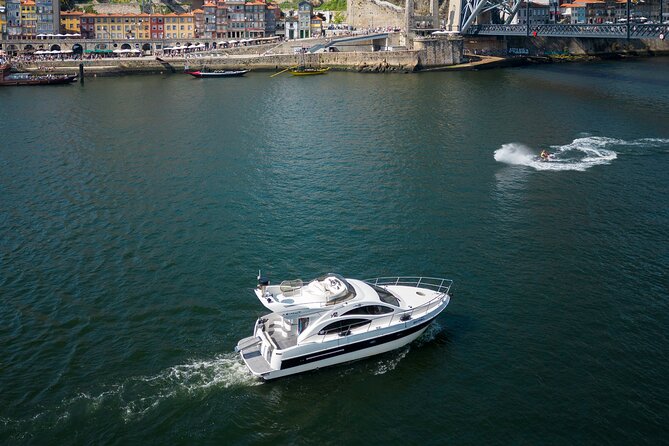
Onboard Comfort: Wi‑Fi, Music, and a Boat That Feels Like a Boat
This experience runs on a vessel that’s set up for passenger comfort—clean, and generally easy to relax on. The tour notes Wi‑Fi and music onboard, and that’s often part of the vibe. Still, one repeated practical detail: the engine sound can drown out music, so don’t plan your mood around perfect audio.
Size also helps. With a maximum of 15 travelers, you’re less likely to feel lost in a crowd. You can spread out a little, and you usually get more personal attention from the crew.
Weather can change your comfort level in Porto quickly, especially on the river. Some departures run with seasonal realities like wind and cool air. On chilly evenings, the crew may provide blankets, and if rain shows up, there can be enough sheltered seating to keep you dry until the clouds pass.
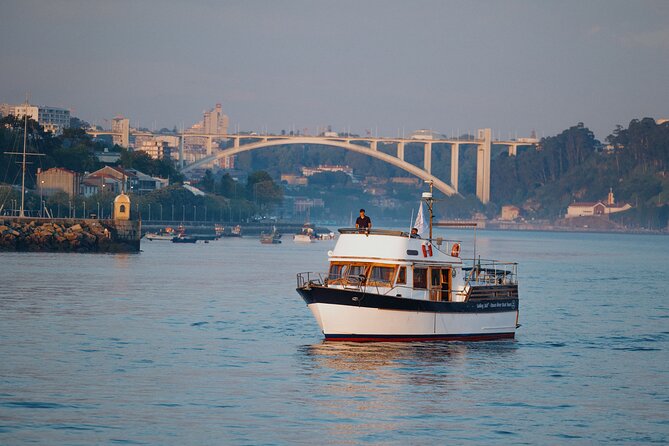
One last thing I’d flag: a few people said the boat they boarded wasn’t exactly the same as what was shown in the promotion images. That’s not a deal-breaker if you mainly care about the ride and the views, but it’s worth knowing so you don’t feel surprised when you get there.
Arrábida Bridge First: A Fast Lesson in Modern Porto Infrastructure
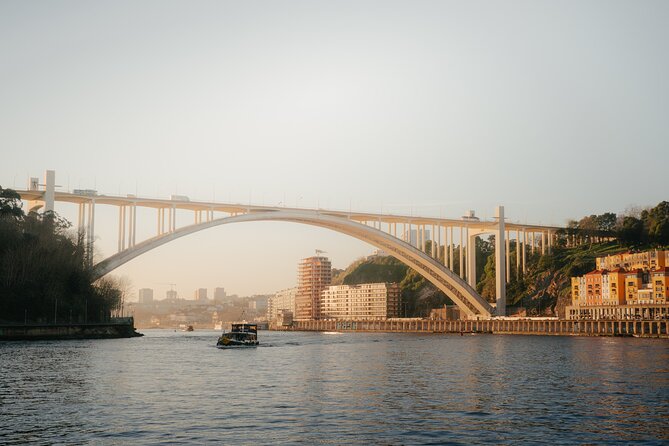
The cruise starts by bringing you to the Arrábida Bridge, an arch bridge over the Douro that connects Porto and Gaia. It was built in 1963 as traffic increased and the older bridges needed help carrying the load.
What makes this stop interesting from the river is that it gives you a contrast view. From the ground, Porto often feels like it lives in layers of old stone and old streets. Seeing Arrábida from water level shows a different truth: the city keeps adapting, and the infrastructure is part of the story.
The tour info also notes that at the time of construction, Arrábida had the largest reinforced concrete arch of any bridge worldwide. You don’t need to memorize engineering facts to enjoy it—you just get the visual payoff. It’s the kind of bridge that looks purposeful and practical, not just decorative.
Timing note: depending on your departure, the river light can make the arch lines look extra crisp, which helps photography a lot.
Port Wine Stops With Views of Porto and Gaia
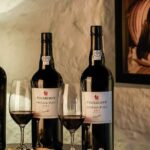
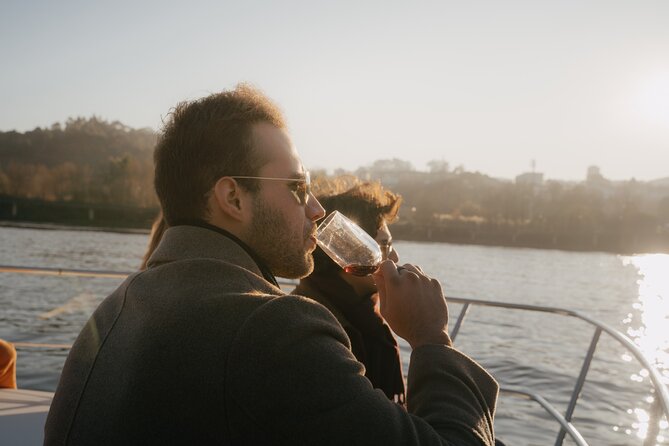
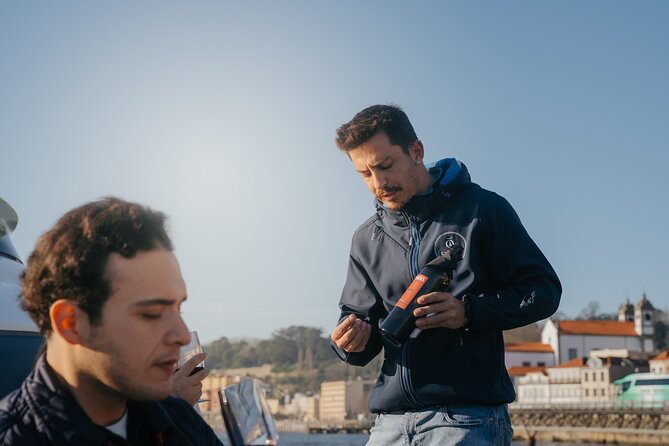
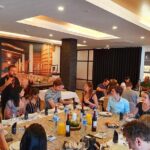
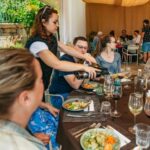
Half the value of this cruise isn’t the engineering—it’s the timing of the tastings. The route includes moments where you enjoy Port wine (and small bites) while the crew points the boat toward the best angles.
The plan is described like this:
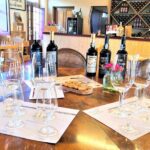
- You’ll have a Port wine tasting with chocolates while you’re seeing both Porto and Gaia from the river.
- Later, you’ll have another moment with a glass of Port, again paired with river views.
Here’s the practical reality to manage: the tasting is described as multiple quality Port wines—and several people report four different pours. But some reports mention three. That doesn’t automatically mean it’s worse; it may be a service variation by departure.
The same goes for the chocolate pairing. Some people say the chocolates were good, and others say the pairing wasn’t what they expected—either fewer chocolates than promised or snack items that didn’t feel like a thoughtful pairing. Since this is a wine-focused cruise, I’d plan to enjoy the wine first, and treat the snacks as a bonus rather than the main event.
If you care about chocolate as part of the Porto experience, build in at least one land-based stop too—Porto has plenty of options, and then you’re not stuck with what the boat serves.
Dom Luís I Bridge: Porto’s Icon Seen From the Water
The Dom Luís I Bridge is the kind of structure you recognize instantly once you see it—steelwork, sweeping curves, and that unmistakable Porto silhouette.
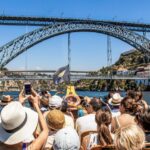
From the river, it lands differently than on a postcard. You see its scale and how it slices the skyline. You also see how people use it as a connector between banks, which makes the bridge feel less like a monument and more like part of daily life.
The tour’s explanation frames Dom Luís I as a true icon and a 19th-century engineering marvel. You don’t need to be an engineer to get it. When you’re floating a few steps away from the bridge, you can feel why it became famous: it’s dramatic without trying too hard.
Photography tip: if you’re on an upper or open part of the boat, keep your lens ready as you approach. The best shots often happen just as the bridge lines up behind the skyline—before you drift too far past it.
You can also read our reviews of more boat tours in Porto
D. Maria Pia Bridge and Gustave Eiffel’s Iron-Arched Legacy
This is one of the most historic bridges in the story. The D. Maria Pia Bridge is described as a national monument and as a railway infrastructure that crosses the Douro between Porto and Gaia.
The big hook: it was designed by Gustave Eiffel and was once the largest iron arch bridge in the world. From a tourist perspective, that means two things:
1) it’s not just a local bridge, and
2) it’s tied to the broader era of industrial engineering.
From the river, you’ll see its iron-arch character and understand why Eiffel’s name matters. This is also where river perspective wins. Overhead or from a street viewpoint, you might miss how the structure frames the water and the city behind it. From the cruise, the bridge sits in a moving “window,” which makes it feel like you’re watching the city’s gears shift.
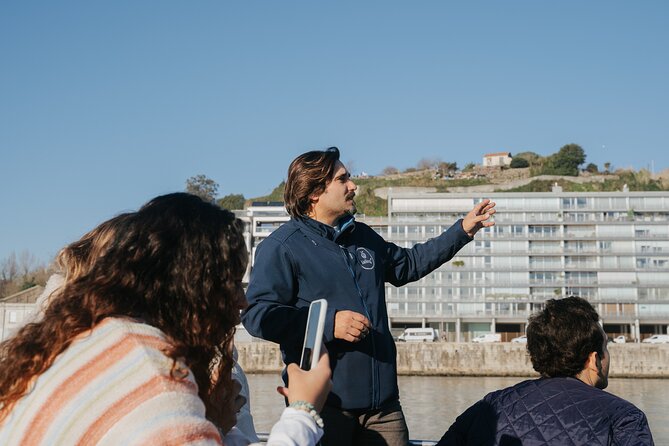
If you want more historical detail, ask questions. Some guides give fast, clean explanations with room for back-and-forth. If you want a long lecture, don’t count on it. But you can usually get extra answers if you ask specific questions.
Infante Dom Henrique and São João: Newer Crossings, Older Layers Beneath
After you’ve seen the older icons, you get the newer crossings.
Infante Dom Henrique Bridge
The Infante Dom Henrique Bridge, also called the Infante Bridge, is a road bridge connecting Vila Nova de Gaia to Porto. It’s described as the newest bridge connecting the two banks.
It’s named for Infante Dom Henrique, a key promoter of the Portuguese expansion and the so-called Portuguese Discoveries. That gives you a thematic link: Portugal’s history isn’t only in buildings inland. It’s also literally in the names of the infrastructure that shapes how people move today.
São João Bridge
Then comes the São João Bridge, built to replace the earlier D. Maria Pia Bridge.
One of the most interesting details in the tour description is what happened during construction: archaeologists found remains of a Roman road and a medieval shipyard. That’s a powerful reminder that the riverbanks aren’t blank canvases. Even as the city builds modern connections, history shows up under the surface.
From the water, this section of the cruise can feel slightly different. The bridge designs can look more streamlined than the older iron arch, and the skyline may frame them differently. Either way, you’re getting the full “bridge evolution” story in a single ride.
Port Wine Tasting: What You Should Expect to Taste
Port wine on a boat sounds romantic—and it can be. The tasting here is set up as a guided experience with small bites, and the crew typically explains what you’re tasting.
What you can expect from the service style:
- Several pours across the tasting flight (often reported as four)
- Short explanations about the wines and what flavors to look for
- Chocolate and snack items included with the pours
The most important mindset: treat this tasting as a nice, casual introduction rather than a deep sommelier session. Some guests were happy with the education and found it a highlight. Others expected more detailed history behind the wine and chocolates and felt the pairing effort was lighter than advertised.
If you’re a serious wine person, I’d still do this cruise for the views. But for the deepest Port education, plan one land-based cellar visit too.
Also, don’t drink on an empty stomach if you’re sensitive to wine. The cruise includes small bites, but it’s still a short ride with alcohol. A light meal beforehand makes the experience easier to enjoy.
Where to Sit for Better Views (and Better Photos)
This kind of cruise is all about angles. If you can, choose your spot based on the weather:
- If it’s warm enough and you want skyline shots, the outdoor or upper viewing areas usually give you the best bridge lines.
- If it’s windy or chilly, sheltered seating can be more comfortable, and the provided blankets can help a lot.
The boat’s operation can also affect views. Near the end, some departures slow and turn toward the horizon for sunset-style scenery. If you know you want the last-light moment, plan to be ready at the front or toward the best viewing side when the crew sets up that turn.
Bring simple photo gear you actually use. A phone is fine. The bridges and skyline are close enough that you don’t need complicated lenses for a great memory.
Price and Value: Is $66.08 Worth It?
At about $66.08 per person, you’re paying for three things at once:
1) a short Duoro cruise with repeated bridge views,
2) an onboard Port wine tasting experience,
3) a small-group, low-effort way to see Porto and Gaia from the river.
Is it cheap? No. But you’re not paying like a big bus tour either. For many visitors, the river portion is what makes Porto feel real. When you’re comparing options, this one works particularly well if you want a guided-feeling experience without committing to a full half-day or day trip.
I’d call it good value if:
- you want a single afternoon plan that covers multiple bridges,
- you enjoy Port tasting as part of your sightseeing, and
- you like the idea of seeing both banks in one easy loop.
I’d think twice if:
- you mainly want a detailed engineering or wine lecture,
- you’re very strict about chocolate pairings matching the description, or
- you’re hoping the music will be clearly audible (it can get lost under engine noise).
Who This Cruise Suits Best
This is a strong fit for:
- first-time Porto visitors who want the bridges fast,
- couples who want relaxed scenery with wine,
- families who can enjoy a calm 2-hour activity without long walking days.
It’s also a good option if you’re short on time. A 2-hour cruise doesn’t compete with a dinner plan or a cellar visit—it complements them.
If you’re traveling solo, the group size helps too. With a max of 15, you won’t feel swallowed by a crowd.
Should You Book This Six Bridges Porto Cruise?
Yes, I’d book it if your priority is views + Port tastings with minimal hassle. The bridge mix is exactly what you want in Porto: Dom Luís I for the icon moment, Arrábida for modern contrast, D. Maria Pia for the Eiffel connection, and the São João era for the newer skyline plus the Roman-and-medieval construction finds.
Book it with the right expectations: this isn’t a classroom tour. The wine experience and snacks are part of the fun, but the bridge explanations and the chocolate pairing can be lighter than some descriptions suggest. If you’re okay with that, you’ll likely leave happy—especially from a sunset-leaning departure where the light turns the river into a photo stage.
FAQ
How long is the cruise?
It runs for about 2 hours.
What language is the tour offered in?
The tour is offered in English.
What’s the group size limit?
The maximum group size is 15 travelers.
Where does the tour start in Porto-area?
The meeting point is R. da Praia 430, 4400-354 Vila Nova de Gaia, Portugal, and it returns to this same meeting point.
Is Wi‑Fi available onboard?
Yes, Wi‑Fi is included on the boat.
What happens if weather is poor?
This experience requires good weather. If it’s canceled due to poor weather, you’ll be offered a different date or a full refund.