Porto can feel like a blur of tiles and hills, until someone stitches it together. This 3-hour walking tour links the city’s landmarks with the people and politics behind them, from the Salazar-era setting to the sweeping outlook at Miradouro da Vitória. You’ll walk out with a cleaner map of Porto and a sharper sense of how the Douro city thinks.
What I like most is the way the route stays efficient: you hit the main sights without turning it into a full-day slog. Second, the tour adds a real taste of Porto—a single glass of port plus a light snack—so the history doesn’t stay stuck in the past. One thing to plan for: Porto’s streets are steep and often uneven, with lots of cobbles and stairs, so good shoes matter.
In This Review
- Key Highlights You’ll Actually Feel on the Walk
- Getting Your Bearings at the Porto Cathedral (Rua de São Filipe de Nery)
- Jardim da Cordoaria and Tribunal do Porto: Salazar’s Shadow in Plain Sight
- Torre dos Clérigos Area: Seeing Why It Became an Ex-Libris
- Miradouro da Vitória: Napoleonic Invasion and the 19th-Century War
- Avenida da Liberdade to São Bento: The Finish That Feels Like a Reward
- Port Tasting and a Light Snack: A Small Stop With Big Payoff
- What Makes This Tour Feel Efficient (Even When Porto Isn’t Flat)
- Value Check: Why $24.14 for 3 Hours Can Be a Smart Move
- Best For: History Lovers, First-Timers, and People Who Like Seeing the City Make Sense
- Should You Book This Porto Walking Tour?
- FAQ
- How much does the Porto Walking Tour cost?
- How long is the tour?
- What time does the tour start?
- Where do I meet and where does it end?
- Is the tour offered in English?
- How big is the group?
- Does the tour include port tasting and a snack?
- Do I get a mobile ticket?
- What if the weather is bad or I need to cancel?
Key Highlights You’ll Actually Feel on the Walk
- Clérigos and Torre dos Clérigos views that help you understand why Porto built upward
- Miradouro da Vitória for the Napoleonic and 19th-century Portugal context from above the city
- São Bento station finish inside one of the world’s most famous train stops
- Small groups (max 15), which keeps the pace human and questions easy
- Port tasting with a practical how-to, not just a pour-and-go moment
Getting Your Bearings at the Porto Cathedral (Rua de São Filipe de Nery)
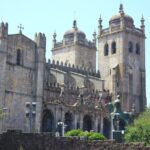
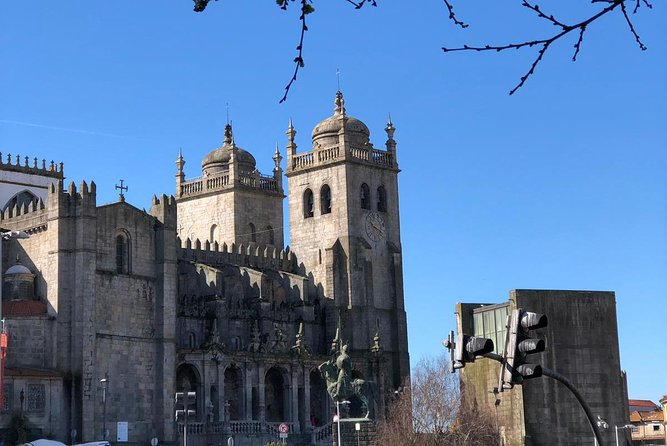
The tour starts at Rua de São Filipe de Nery, and the first stop is near the Porto Cathedral. That’s a smart opening, because it anchors you in Portugal’s broader story before you start moving through neighborhoods and monuments.
From the cathedral area, you get the kind of orientation that saves you later: where the city’s power sat, how Porto’s identity formed, and why certain buildings feel like they belong to eras of control, trade, and faith. It also helps that the starting point isn’t far from classic Porto foot-traffic routes, so you can match the walk with whatever you planned for the rest of your day.
Practical tip: since this is a walking tour with several historic stops, start the day with a bit of patience. Porto can be charming fast, but the angles and slopes make it worth pacing yourself.
You can also read our reviews of more walking tours in Porto

Jardim da Cordoaria and Tribunal do Porto: Salazar’s Shadow in Plain Sight
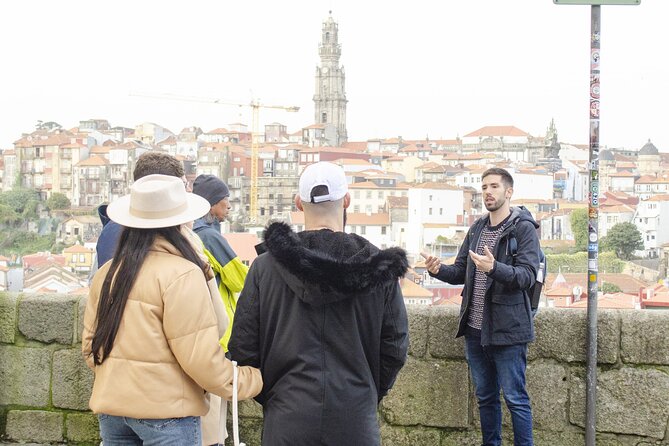
One of the more interesting parts of the walk is the shift from postcard Porto into political Porto. You’ll pass through Jardim da Cordoaria and the area of the tribunal (court) in Porto, where the guide explains the dictatorship of Salazar and how it shaped everyday life and the city’s tone.
This isn’t taught like a dry lecture. The value is in connecting ideas to places you can point at. When you stand near key civic buildings and then hear what the regime meant, you start noticing how architecture and public spaces carry messages—even after the regime is long gone.
If you like history that explains why a city looks the way it does, this segment will click. If politics isn’t your thing, you can still enjoy it as context for understanding Porto’s later choices and cultural identity.
Torre dos Clérigos Area: Seeing Why It Became an Ex-Libris
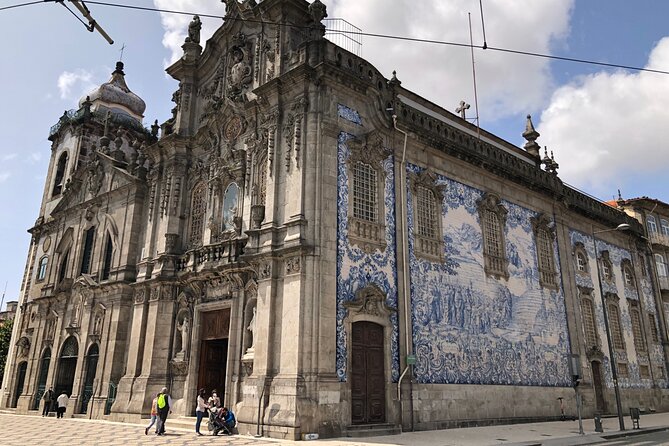
Next comes the Torre dos Clérigos area—often called an ex-libris of Porto. The guide ties this landmark to the city’s relationship with religion, power, and art, which helps you appreciate it beyond the usual take-a-photo-at-the-base routine.
There’s another small but real convenience here: you may be able to step into nearby church spaces around Clérigos Tower without being stuck waiting in the biggest crowds, depending on timing. That matters in Porto, where “quick stops” can easily eat your morning if you hit the wrong moment.
Also, if you’re the type who likes to understand what you’re looking at, this stop sets you up. The city’s vertical drama—church towers, viewpoints, steep streets—starts to make sense when you know what to look for.
Miradouro da Vitória: Napoleonic Invasion and the 19th-Century War
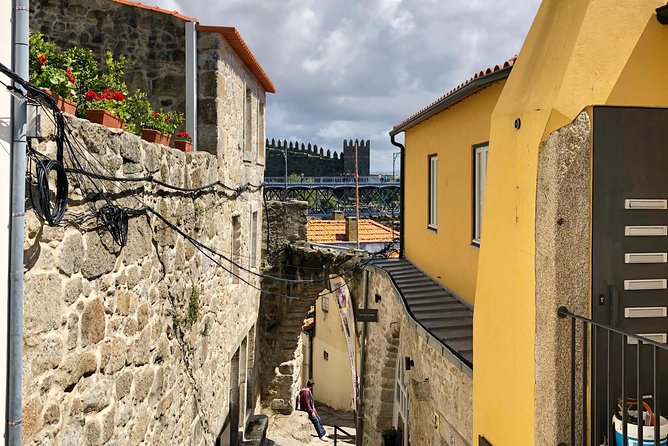
After passing more historic monuments, you climb to Miradouro da Vitória. This is one of those moments where the viewpoint does more than give you a view. From up high, the guide frames the Napoleonic invasion and the Portuguese Civil War of the 19th century, using the city below as your visual anchor.
What makes this valuable is the timing. Seeing the city from above clarifies routes, neighborhoods, and how the hills shaped movement. Then the guide connects that geography to events and tensions of the 1800s. It’s easier to remember battles and dates when you can point to the city’s shape.
Don’t overpack this part with expectations. You’re there to learn and orient, not to linger all day. Still, if the weather is clear, the viewpoint can turn the tour from good to memorable.
Avenida da Liberdade to São Bento: The Finish That Feels Like a Reward
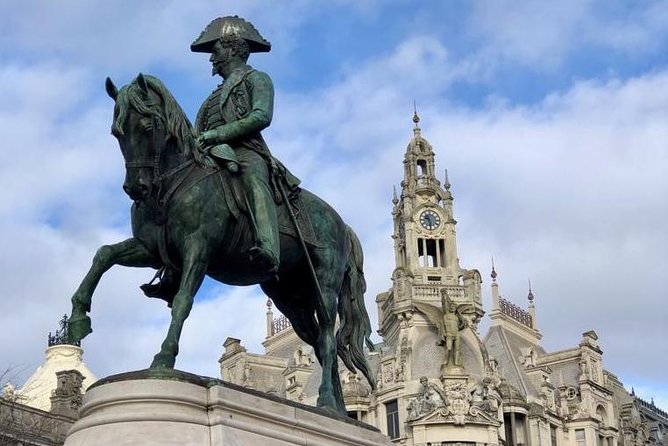
The walk continues along Avenida da Liberdade and ends at São Bento Station—inside Estação de São Bento, described as a former convent and widely known as one of the most beautiful train stations in the world.
This is a great way to close, because it switches the mood from streets to a grand interior. And São Bento isn’t just pretty tiles. It’s a place where art, history, and daily life overlap. You finish the walk with something that feels iconic, even if you started the morning thinking you’d just grab a few highlights.
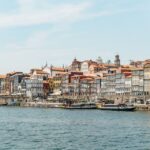
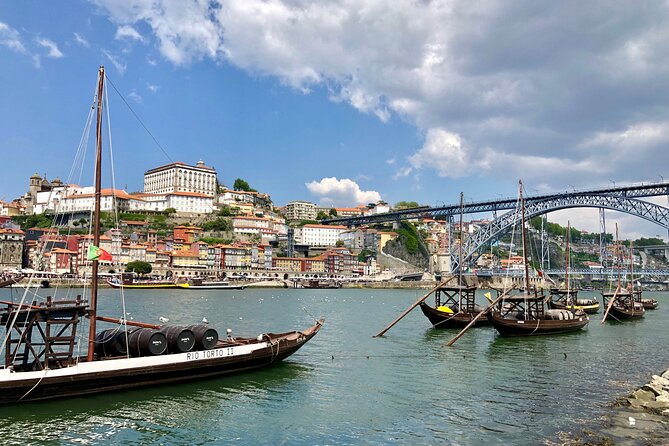
Bonus for planning your next steps: the tour ends at Ribeira Square (Praça Ribeira) by the Douro river area. From there, you’re positioned to keep exploring on your own without starting from scratch.


Port Tasting and a Light Snack: A Small Stop With Big Payoff
Most Porto walking tours give you views. This one also gives you a simple, city-specific break: a single glass of port and a light snack.
What I like about this is that it’s not just a taste. The guides (names mentioned in the feedback include Nuno, Sid, and David) explain how to appreciate port and connect it to Porto’s identity as a trading and wine city. That means you’re drinking with context, and you’re less likely to order the first thing you see later.
Practical note: port tasting can affect how quickly you want to keep walking after. Plan for a relaxed stretch after the tour ends, especially if you’re heading straight into a meal or a river stroll.
What Makes This Tour Feel Efficient (Even When Porto Isn’t Flat)
The route is built around major hits that are geographically connected. That keeps the “Are we close yet?” feeling to a minimum and helps you cover a lot in about 3 hours.
The guides are also praised for being friendly and story-driven. You’ll get answers and suggestions that help for the rest of your trip—where to eat, how to think about what you’re seeing, and how to enjoy what’s next.
Still, there’s one reality check: Porto’s pavements can be steep, narrow, and uneven. The reviews point out the gradients and cobbles clearly, and you should take that seriously. Wear shoes you’d trust on a tough hike, not soft sandals.
Value Check: Why $24.14 for 3 Hours Can Be a Smart Move
At $24.14 per person for about 3 hours, this tour hits a strong value zone—mainly because you’re paying for more than walking.
You’re getting:
- a guided route that ties together multiple key sights
- port tasting plus a light snack
- a group size capped at 15 people, so it doesn’t turn into a hurried stampede
If it’s your first day in Porto, this style of introduction helps you avoid random guesswork. You come away with a sense of what you want to repeat and what you can skip.
If it’s mid-trip, it still helps, because a good guide can point out the “why” behind places you would otherwise treat like photo stops.
Best For: History Lovers, First-Timers, and People Who Like Seeing the City Make Sense
This walk is a good fit if you want:
- a story-first tour (history, politics, culture tied to places)
- a tight route that doesn’t waste your time
- a tasting moment that connects to Porto’s identity
It’s also ideal if you like small-group energy. With max 15 people, there’s more room to ask questions and get real answers rather than a “next stop” rush.
Who might think twice:
- If you’re sensitive to steep hills, cobblestones, and stairs, the pace and terrain may feel like a lot. The tour says most people can participate, but your comfort with walking on uneven surfaces matters.
- If you’re visiting in bad weather, note that the experience requires good weather, and you’ll be offered an alternate date or a full refund if it’s canceled for weather.
Should You Book This Porto Walking Tour?
If you want a smart first look at Porto that includes history, viewpoints, and a memorable ending inside São Bento, this is an easy yes. The port tasting and the efficient route make the hours feel well spent, and the small group size keeps the experience human.
I’d book it especially if you’re juggling a short trip and want to get your bearings fast. Just come prepared for Porto’s slopes. Bring good shoes, keep your energy steady, and you’ll likely finish with a clearer map of the city and a better idea of where to spend your next day on your own.
FAQ
How much does the Porto Walking Tour cost?
It costs $24.14 per person.
How long is the tour?
The walk lasts about 3 hours (approx.).
What time does the tour start?
It starts at 10:00 am.
Where do I meet and where does it end?
You meet at Rua de São Filipe de Nery, Porto. The tour ends at Ribeira Square (Praça Ribeira) near the Douro river.
Is the tour offered in English?
Yes, the tour is offered in English.
How big is the group?
The tour has a maximum of 15 travelers.
Does the tour include port tasting and a snack?
Yes. The tour includes a single glass of port and a light snack.
Do I get a mobile ticket?
Yes, the tour uses a mobile ticket.
What if the weather is bad or I need to cancel?
The experience requires good weather. If it’s canceled due to poor weather, you’ll be offered a different date or a full refund. The tour also offers free cancellation up to 24 hours in advance for a full refund.