REVIEW · PORTO
Porto private morning Tour, discover the most iconic attractions
Book on Viator →Operated by Endless Weekend Tours · Bookable on Viator
Porto can feel like a puzzle with missing pieces, until a good driver lines them up. This private morning tour strings together the city’s most iconic corners in a logical route, so you get the sights without the stress. I love the luxury vehicle with onboard Wi-Fi (yes, it helps for maps and ride-sharing), and I also like how the plan mixes major landmarks with the smaller, story-heavy spots that make Porto feel real. One consideration: a schedule this packed means you’ll do short looks and photos more often than long stays.
The best part is the guide-led perspective: you’re not just passing monuments, you’re learning how Porto grew, fought, traded, and rebuilt. On the driver side, Carlos is repeatedly praised for being sharply on-point with history and for steering people toward practical food choices once you’re on foot. If you prefer a purely factual, never-personal style, you might want to set that expectation early.
In This Review
- Key Things I’d Prioritize on This Porto Private Morning Tour
- How a 4-Hour Private Format Makes Porto Click Fast
- Avenida dos Aliados Area and Praça de D. Pedro: Start With the City’s Power Line
- Mercado do Bolhão: A Real Market That Teaches Porto’s Daily Life
- Praça da Batalha and Teatro São João: Squares With Battlefield Names
- Medieval Wall Remnants and the Porto Cathedral Complex
- São Bento Railway Station: Porto’s Moving Tile Museum
- Café Majestic and Rua Santa Catarina: Belle Époque Break Without the Formality
- Igreja do Carmo, Igreja das Carmelitas, and Casa Escondida
- Clérigos Tower: The 240 Steps View That Makes Porto Feel Like a Map
- Livraria Lello: See the Famous Staircase, Even If You Skip the Ticket
- São Francisco Church and Palácio da Bolsa: Church of Gold Meets the Arab Room
- Bridges Over Water: Dom Luís I, São João Bridge, and Ponte D. Maria Pia
- Dom Luís I Bridge
- Ponte D. Maria Pia
- São João Bridge (Ponte de São João)
- Gaia Viewpoints: Jardim do Morro and Mosteiro da Serra do Pilar
- Forts and Coastal Edge: Porto’s Defensive Past
- Contemporary Porto Stops: Serralves and Casa da Música
- Optional Add-Ons If You Want Porto at a Slower Pace
- Price and Value: Is $185.02 Worth It for a Private Morning?
- Should You Book This Private Porto Morning Tour?
- FAQ
- FAQ
- What’s the duration of the Porto private morning tour?
- Is hotel pickup included?
- Does the tour include Wi-Fi and refreshments?
- Are entrance tickets included for all stops?
- What’s the meeting point and where does the tour end?
- Can I buy optional activities like a Douro cruise or Port wine tour through this experience?
- What if weather is poor on the day of the tour?
Key Things I’d Prioritize on This Porto Private Morning Tour
- UNESCO World Heritage landmarks in one ride-and-walk route, not piecemeal visits
- Onboard Wi-Fi + bottled water + refreshments, so the morning stays easy
- São Bento Station’s 20,000 painted tiles, a real visual history lesson
- Panoramic Duoro-and-city views that start with Clérigos Tower and keep going
- Many entrances are pay-on-site, so you’ll want cash/fees ready for optional add-ons
- A guide who also helps you eat well, which is usually the difference-maker in Porto
How a 4-Hour Private Format Makes Porto Click Fast
This is designed as a private experience, so it’s only your group in the vehicle, with pickup offered from downtown Porto and Gaia hotels and B&Bs. That matters because Porto’s historic core is best seen with a mix of quick walking and well-timed stops. You’ll get short, focused time at each place, then roll on before the streets get crowded or the light changes.
The vehicle setup is the practical win. You’re traveling in comfort (with personal accident and liability insurance included), and the van has Wi-Fi, bottled water, and refreshments. For a morning tour, that’s not a luxury detail—it helps you stay oriented, check directions, and recharge without breaking the rhythm of sightseeing.
You can also read our reviews of more private tours in Porto


Avenida dos Aliados Area and Praça de D. Pedro: Start With the City’s Power Line
Your tour centers on Porto’s grand approach streets and civic landmarks right away. Expect to be in the zone where Avenida dos Aliados feels like the city’s grand front porch, bordered by 1920s–1940s buildings, with older pieces anchoring the scene. You’ll also see the Cardosas building and the Porto Town Hall area that frame the space around Praça de D. Pedro IV.
Look up at the mix of architectural layers. The statue of D. Pedro IV (the Liberator) sits at the center of Praça de D. Pedro, and it’s a strong way to start understanding Porto: the city loves civic symbolism, and it also loves physical reminders of its own turning points.
If you like photos, this is a solid first stop, because the views work even when you only spend a few minutes here.
Mercado do Bolhão: A Real Market That Teaches Porto’s Daily Life
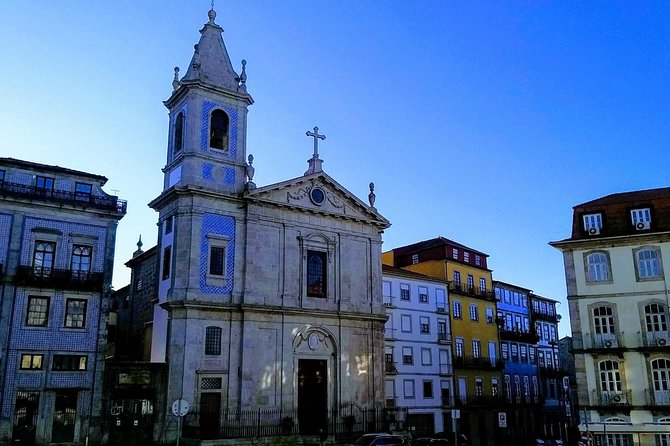
Then you shift to Mercado do Bolhão, the city’s most emblematic market, dating from the mid-1800s. What makes it special is the structure: two floors, built with neoclassical style that feels monumental even though it’s still a working market. It’s also a place where Porto’s everyday rhythm shows up—fish, butchers, vegetables, and flowers—lined up along the surrounding streets.
I like that the tour gives you time to orient yourself outside the market too. The stalls are organized into specialized sections, so it’s easier to see how commerce shapes the streets around it. This stop is free for entry, which makes it an easy win even if you’re not shopping.
Practical note: market mornings can be lively. If you’re sensitive to crowds or strong smells, keep it short and focus on the architecture and the “how this works” layout.
Praça da Batalha and Teatro São João: Squares With Battlefield Names
From the market, you land at Praça da Batalha, a historic square tied to a battle dating back to the 10th century, when Porto faced defeat and the city was destroyed along with other places across Portugal and Spain. The name stuck, even though it doesn’t match your modern expectation of what a battle-name square would mean.
On the cultural side, the square also relates to Teatro São João, one of Porto’s oldest major theatres. It opened in 1798 for operas and drama, and its story includes a fire disaster in 1908. Even if you don’t enter the theatre, just knowing that timeline helps the square feel layered instead of random.
If you like cities where public spaces have names with teeth, you’ll enjoy this stop.
Medieval Wall Remnants and the Porto Cathedral Complex
Porto’s expansion shows up in the remains of the city walls. You’ll see how work began in the 1300s under D. Afonso IV, then took much longer to finish, with completion in the early 1400s under D. Fernando—hence the name tied to the ruler. Later, in the 1700s, the wall lost military value and parts were demolished. Today, only fragments survive, which makes them easier to miss unless someone frames them for you.
Next comes Catedral do Porto (12th/13th century roots with later additions). This is one of those stops where the building’s age matters. The tour gives you time to notice standout areas inside without turning the cathedral visit into a marathon. Special mentions include:
- the Gothic Chapel of St. John the Evangelist and its cloister
- expansion areas like the chancel
- the Chapel of the Blessed Sacrament with its silver altar
Admission is not included here, so if you care about a full interior look, plan to pay on-site.
A few more Porto tours and experiences worth a look

São Bento Railway Station: Porto’s Moving Tile Museum
If you only have time for one “wow” indoor stop, make it São Bento Railway Station. This is an early 20th-century glass-and-iron station built on the site of a 16th-century convent (São Bento de Avé Maria). But the real star is the vestibule wall art: 20,000 painted tiles by Jorge Colaço that chart the evolution of transport, plus Portuguese regional life and history.
I love using this stop to teach your eyes. Before you look at tiles like decoration, you learn to read them like scenes. It changes how you see Porto’s visual storytelling.
Entry is free, and it’s a great place to cool off if the morning runs hot.
Café Majestic and Rua Santa Catarina: Belle Époque Break Without the Formality
Next is Café Majestic, opened in 1921 and famous for Belle Époque style and Art Nouveau detail. The interior is known for marble, gilded mirrors, and ornate woodwork—an aesthetic time machine when you step inside.
The tour doesn’t force you into a long sit-down, but it gives you a chance to connect Porto’s culture with its coffee-and-conversation legacy. If you want a pastry and a quick espresso break, this is a natural moment.
Right nearby is the Relógio das Galerias Palladium, an ornate clock with a carillon and four statues that perform every three hours: São João, Infante D. Henrique, Almeida Garrett, and Camilo Castelo Branco rise and move as bells ring. It’s the kind of detail you’ll appreciate more if you’re standing there when it happens.
No entry ticket is included for this stop.
Igreja do Carmo, Igreja das Carmelitas, and Casa Escondida
Religious architecture in Porto isn’t quiet and plain. Near the Igreja do Carmo (with exterior azulejos) and Igreja das Carmelitas, you get two Baroque churches close together. The tour also highlights something easy to overlook: Casa Escondida, the hidden house wedged between the churches due to the density of the built area.
That small architectural trick is one of my favorite kinds of travel moments. It proves Porto’s history wasn’t written only by big projects—small, practical solutions shaped the cityscape too.
Entry is free, and the “serious look, quick walk” pace here works well in a 4-hour morning.
Clérigos Tower: The 240 Steps View That Makes Porto Feel Like a Map
Then you climb Torre dos Clerigos, built in the first half of the 1700s by Nicolau Nasoni. It’s Baroque and unmistakable in the skyline, and the panoramic view is the whole reason to come.
The tower climb is 240 steps. That’s not nothing, so you’ll want good footwear and an honest sense of your comfort with stairs. If you can climb, you get views over Porto and the Douro River that connect many of the other stops into one picture.
Clérigos is also tied to pop culture (it showed up in Suicide Squad in 2021), but the payoff here is still purely geographic. It helps you “read” Porto after you leave the tower.
Admission isn’t included for this.
Livraria Lello: See the Famous Staircase, Even If You Skip the Ticket
Livraria Lello is one of Porto’s most recognizable bookstores. The building opened in 1906, with a façade mixing Art Nouveau and Neo-Gothic details. Inside, the emphasis becomes the interior design: painted plasterwork that imitates wood and a major staircase connecting floors.
One standout detail is the stained-glass skylight with the library’s monogram and motto.
Here’s the value question: the tour doesn’t include entry, so you’ll decide if it’s worth paying for the Gold Ticket/priority option (listed as €16 per person). If you’re short on time or prefer to keep spending controlled, you can still enjoy the exterior and treat it as a photo stop.
São Francisco Church and Palácio da Bolsa: Church of Gold Meets the Arab Room
This is the historic pairing that turns Porto from picturesque to powerful.
First, Igreja de São Francisco, the Church of Gold. Construction began in the 1300s, and it’s famous for its Baroque interior with carved woodwork so rich a traveler described it as a Church of Gold. Highlights you’ll want to look for include the Tree of Jesse, plus the catacombs. Admission isn’t included here, and there’s a separate paid option listed for entry.
Then comes Palácio da Bolsa, the neoclassical monument financed by a literary grant (a tax on wine) and built after a convent site was destroyed in a fire. Its big star is the Arab Room—and it’s located in the historic center as the place of the Commercial Association of Porto. There’s an optional guided tour listed for an extra cost.
If you love interiors, this section is where your memory will anchor. If you dislike museums and want more time outside, this is the part where you’ll feel the trade-off.
Bridges Over Water: Dom Luís I, São João Bridge, and Ponte D. Maria Pia
Porto’s big lesson is that the city isn’t only on the land. The Douro River is the divider and the connector at the same time, and the tour hits that lesson via major bridges.
Dom Luís I Bridge
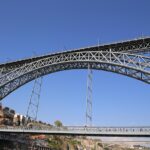
You’ll spend time walking the Dom Luís I bridge between Porto and Gaia. This is often the highlight because it gives you a moving viewpoint: the river, riverbank architecture, and the scale of the city all stack into one view as you walk.
Ponte D. Maria Pia
You also get time around Ponte D. Maria Pia, Gustave Eiffel’s first masterpiece. It replaced an earlier suspension bridge and stayed in use for 114 years. It’s a biarticulated arch that supports a single-track rail board through truss pillars. This is a “stop and stare” bridge for people who like engineering history.
São João Bridge (Ponte de São João)
The tour includes the São João Bridge, a 2000s replacement structure that carries a metro line and has a record-making arch design. It’s described as the slenderest in its typology by experts, with a long deck (371 meters) and a large arch span.
All bridge stops are free for admission.
Gaia Viewpoints: Jardim do Morro and Mosteiro da Serra do Pilar
Once you’re over to Vila Nova de Gaia side, the tour keeps the momentum going with calm, scenic places.
Jardim do Morro is a hillside park with panoramic views and wide pathways—great for slowing down after earlier walking and viewpoints. The monastery setting nearby makes it feel like a blend of nature and built heritage.
Then you see Mosteiro da Serra do Pilar, a monastery built by the Order of St. Augustine, with construction starting in 1538 and continuing in stages that changed the original plan over centuries. What makes it unique is the circular church and cloister forms. It also serves religious, cultural, and military functions today. Admission is not included.
If you want a break from the densest city core, this portion is your reset.
Forts and Coastal Edge: Porto’s Defensive Past
The tour keeps pushing outward for dramatic structure and sea-breeze scenery.
You’ll see Fortress São João Baptista (built at the end of the 1500s) to protect the coast and the Douro entrance. The site also has additional modern fortress elements added in the 1600s, plus an access gate from the 1700s.
Then it’s Castelo do Queijo (São Francisco Xavier Fort), built in the 1600s to protect against North African pirates. The rocky hill shape is the reason behind the nickname: cheese castle.
These stops are free. They also make the whole tour feel less like a “pretty postcard loop” and more like a city with strategy and survival.
Contemporary Porto Stops: Serralves and Casa da Música
To round things out, the tour includes a modern design and arts angle in Porto.
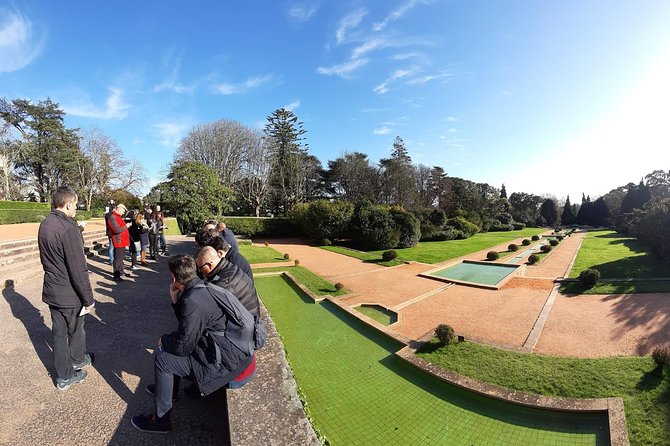
Serralves Park and the Art Deco House: the house is from the 1930s and is considered one of the best examples of Art Deco movement in Europe. It’s part of Serralves, which includes exhibitions and events, and sits inside a park known for 18 hectares of gardens, plus a traditional farm and even a forest area.
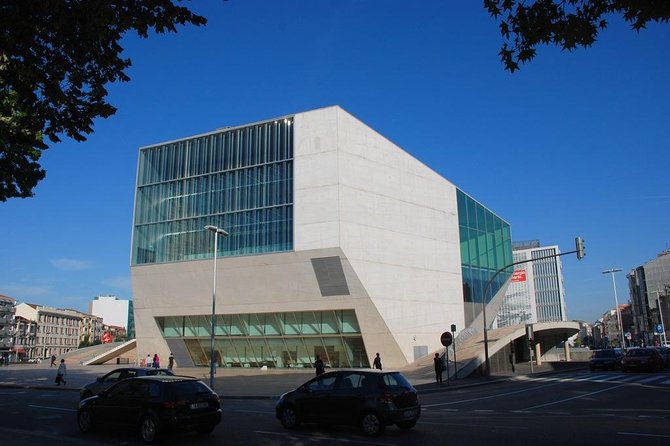
Then there’s Casa da Música, Porto’s main concert hall in the Boavista area, designed by Rem Koolhaas and inaugurated in 2005. If you like architecture that looks like it’s from the future, this is the mental shift at the end of the morning.
These aren’t presented as long museum sessions in this time window, but they give your day balance.
Optional Add-Ons If You Want Porto at a Slower Pace
If you’re not done once the morning tour ends, you’ve got a menu of extras. Nothing is automatically included—you pay separately when you choose them.
Private Douro River Cruise (Sunset)
- €360 to €460 per person
- about 2 hours
- billed as an exclusive sunset experience with views of Porto, Vila Nova de Gaia, and the six bridges
Dona Antónia Port Wine Cellars Tour
- €32 to €41 per person
- about 1h30
- includes a walk through historic cellars and tasting of 5 Port wines
Fado Night & Traditional Dinner (with transport included)
- €80 per person
- about 2h30, starting at 20:00
Fado Show in Porto with Port Wine
- €20 to €26 per person
- about 1 hour, daily at 18:00 and 19:30
If you’re deciding between them, I’d pick one “culture night” (fado) and one “food/wine” element (cellars), and skip the rest unless you’re staying multiple days.
Price and Value: Is $185.02 Worth It for a Private Morning?
For $185.02 per person, you’re paying for a private, guided route plus a comfortable vehicle with Wi-Fi, bottled water, and refreshments. That can be excellent value in Porto because entrance fees add up fast, and self-guided logistics can eat time—especially when you’re trying to hit bridges, cathedral areas, and interior-heavy sites in one morning.
The trade-off is that several of the biggest-ticket attractions in this outline aren’t included in the base price. Options listed as not included cover:
- Lello Library priority Gold Ticket (€16 per person)
- Clérigos Tower skip-the-line (€10 per person)
- Palácio da Bolsa guided tour (€14 per person)
- Church of São Francisco entrance (€10 per person)
So you’ll get the most value if you plan your priorities in advance: decide what interiors you truly want to pay for, and treat the rest as visual orientation.
Should You Book This Private Porto Morning Tour?
Book it if you want the fastest route to the icons without doing mental math. It’s especially good for first-time Porto visits, for people who dislike long waits, and for anyone who wants a guide to help connect the dots between streets, churches, tiles, and river views.
Skip or adjust if you want long, slow museum time. This tour is paced for coverage, not deep study inside every site. Also, if you dislike when guides mix in personal restaurant tips, ask them to focus only on history and where to stand for the best photos.
FAQ
FAQ
What’s the duration of the Porto private morning tour?
It runs about 4 hours.
Is hotel pickup included?
Pickup is offered, including from downtown hotels and B&Bs in Porto and Gaia.
Does the tour include Wi-Fi and refreshments?
Yes. The luxury vehicle includes Wi-Fi, bottled water, and refreshments.
Are entrance tickets included for all stops?
No. Several major sites have tickets not included, including places like Clérigos Tower, Lello Library, and interiors such as the Church of São Francisco and optional Palácio da Bolsa guided access.
What’s the meeting point and where does the tour end?
The tour starts at Praça da Liberdade 19, 4000-322 Porto, Portugal, and ends back at the same meeting point.
Can I buy optional activities like a Douro cruise or Port wine tour through this experience?
Yes, optional add-ons are listed, including a sunset Douro cruise, a Dona Antónia Port wine cellars tour, and fado experiences. They’re not included unless you book them in the final booking.
What if weather is poor on the day of the tour?
The experience requires good weather. If it’s canceled due to poor weather, you’ll be offered a different date or a full refund.