REVIEW · PORTO
Porto: Fun Private Tuk Tuk Tour
Book on Viator →Operated by byLocals · Bookable on Viator
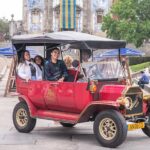
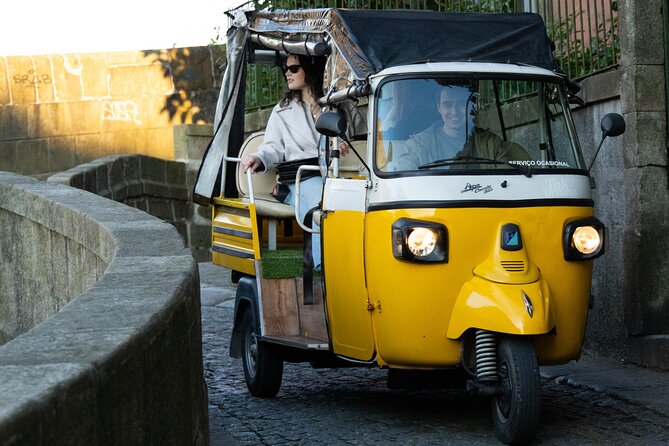
Porto’s hills melt fast in a tuk tuk. This private 1.5-hour ride gives you a quick, high-impact tour of the city’s signature spots, without the leg-burn of stair climbs and guesswork. You’ll cruise through historic districts and engineering landmarks, then step out for short looks and photo breaks.
I especially love the bridge-and-river focus—Porto’s skyline makes total sense when you’re moving across and beside the Douro. Second, I like that the guides (I’ve heard from folks traveling with José, Ana, Tanya/Tonya, Leandro, Tiago, Carlos, Bruno, Pietro, and Pedro) bring both city context and a good sense of fun, including tips for what to do next. The main drawback to plan for is weather and timing: it’s an open-air ride, and several stops are brief, so you’ll want to pick a couple “must-see” spots ahead of time.
In This Review
- Why This Tuk Tuk Tour Works So Well in Porto
- Key Stops You’ll Hit (And What They’re Actually Like)
- The Itinerary, Stop by Stop (What You’ll Notice on the Ground)
- Starting near São João National Theatre: a strong opening point
- Fernandine Wall: medieval defense, minus the crowds
- Monastery of Serra do Pilar: views that make Porto click
- São João Bridge and the idea of modern Porto
- Ponte D. Maria Pia: Eiffel’s iron arch in action
- Dom Luís I Bridge: the Porto icon you actually understand after riding
- Jardim do Infante Dom Henrique and Ferreira Borges Market: Ribeira stroll vibes
- Palácio da Bolsa: UNESCO-level architecture in a fast stop
- Church of São Francisco: Gothic outside, Baroque inside
- Miragaia district: the old streets taste real
- Ponte da Arrabida: another bridge, another engineering style
- Cordoaria Garden and the church pair: culture, tiles, and quick history
- Clérigos Tower: 75 meters of Porto perspective
- Jardins do Palacio de Cristal and Passeio das Virtudes: viewpoints with breathing room
- São Bento Railway Station: azulejos that make waiting feel like an event
- Porto Cathedral (Sé do Porto): old stone, big views
- Price and Value: Why $57.45 Can Make Sense Here
- What Makes This Tour Special (Based on Real-World Guide Styles)
- Who Should Book This Tuk Tuk Tour?
- Should You Book This Porto Private Tuk Tuk Tour?
- FAQ
- FAQ
- How long is the Porto Fun Private Tuk Tuk Tour?
- What is the starting point for the tour?
- Is this tour private or shared?
- What language is the tour offered in?
- What’s included in the price?
- Are attraction tickets included?
- What should I know about weather?
- Can I bring a service animal?
Why This Tuk Tuk Tour Works So Well in Porto
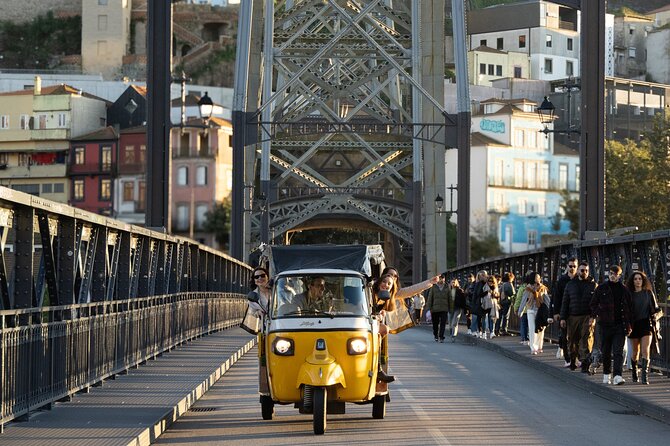
Porto is one of Europe’s best walking cities, but it’s also one of Europe’s hilliest. A tuk tuk tour is a smart middle ground: you get the wow views and historic highlights, but you’re not spending the whole day fighting elevation. The pace stays friendly—short stops, then back on board.
Because it’s private, you control the flow more than you would on a group bus. You’re not waiting for other people to find the “right” photo angle. That matters in a place where the best angles often require a few seconds of positioning.
Key Stops You’ll Hit (And What They’re Actually Like)
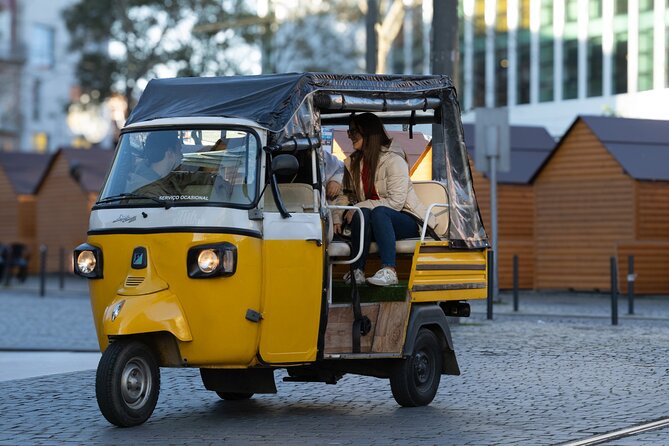
São João National Theatre for a cultural first impression
You start near Praça da Batalha and the São João National Theatre, a late-1700s landmark rebuilt in 1920. Even if you don’t go inside, it sets the tone: this is Porto with arts and architecture in its DNA.
Fernandine Wall remnants for medieval Porto context
The old Fernandine Wall is one of the best ways to understand how Porto grew for protection. You’ll see meaningful stretches in the Ribeira and Morro da Sé areas. It’s not a full wall experience like you’d see in some walled cities, but what remains still tells the story clearly.
Serra do Pilar monastery for views across the Douro
The Monastery of Serra do Pilar has that distinctive circular church design, plus Renaissance-era character. Expect a short stop that works like a reset button for your eyes—Douro, rooftops, and a big-picture feel for where Porto sits.
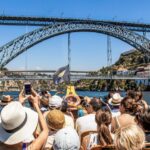
Three iconic bridges: São João, Maria Pia, and Dom Luís I
Porto’s bridges are basically outdoor museums for engineers.
- The São João Bridge is modern rail infrastructure from the early 1990s era.
- Ponte D. Maria Pia is older, iron, and elegant—Gustave Eiffel’s design—with rail history behind it.
- Dom Luís I Bridge is the classic Porto-to-Gaia connection with its two levels and metal decks, now including the metro.
You’ll get quick looks and photo angles rather than long museum-style explanations, which is perfect for a 90-minute overview.
Ribeira-area landmarks for old-street atmosphere
The tour threads through the Ribeira orbit with stops like the Infante Dom Henrique Garden (with the statue of Prince Henry the Navigator), the former Ferreira Borges Market (now used for events and exhibitions), and the Palácio da Bolsa (famous for the Arab Room). This is where Porto’s past feels close enough to touch.
Church stops that separate Gothic style from Baroque interiors
You’ll visit the Church of São Francisco (Gothic structure, Baroque interior with gilded woodwork and the Jesse Tree) and make a quick church walk near Carmo/Carmelitas, where ticket details differ. If you like architecture variety, this part alone justifies going.
You can also read our reviews of more private tours in Porto


The Itinerary, Stop by Stop (What You’ll Notice on the Ground)
Starting near São João National Theatre: a strong opening point
The tour begins by Praça da Batalha at the São João National Theatre. This is a good start because it puts you in the city center area right away, before the ride starts pulling you toward the river viewpoints. Think of it as a cultural warm-up.
What I like: the theatre gives you a visual anchor. Porto isn’t only bridges and tiles. It also has big civic buildings and performance spaces.
Fernandine Wall: medieval defense, minus the crowds
You’ll make a short stop for the Muralha Fernandina—a defensive wall built in the 14th century during King Fernando I’s reign, replacing earlier walls as the city expanded. Some portions were partially demolished in the 19th century, but enough remains to show the shape of the original story.
Why it matters: this quick glimpse helps you connect Porto’s medieval growth to the modern streets you’ll see right after. You start noticing why areas sit where they do.
Potential drawback: the stop is brief. If you want long reading time, bring curiosity more than expectations of a full-history presentation.
Monastery of Serra do Pilar: views that make Porto click
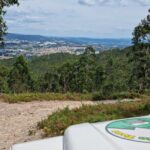
Next up is the Monastery of Serra do Pilar in Vila Nova de Gaia. Its circular church and Renaissance character are memorable. The payoff is the panorama over Porto and the Douro River.
This is one of those stops where stepping out for just a few minutes can change how the rest of the city feels. Suddenly the hills, the river bend, and the bridge lines all make sense together.


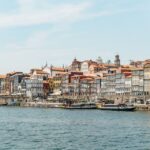
São João Bridge and the idea of modern Porto
The São João Bridge is a railway bridge inaugurated in 1991, designed by Edgar Cardoso. What you’ll notice isn’t just the structure—it’s the contrast with the older iron bridges you’ll see soon after.
The value here: it prevents the classic “Porto = only old stuff” mindset. Porto keeps evolving.
Ponte D. Maria Pia: Eiffel’s iron arch in action
Ponte D. Maria Pia was inaugurated in 1877 as the first railway bridge over the Douro. Gustave Eiffel designed the iron arch. It was decommissioned in 1991, but it remains an engineering landmark with the same elegant silhouette you’ll want to photograph.
This stop works best if you appreciate the idea of transportation as architecture. You’re not just looking at metal—you’re looking at history that still shapes the city.
Dom Luís I Bridge: the Porto icon you actually understand after riding
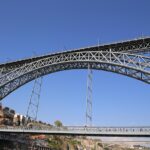
The Dom Luís I Bridge, inaugurated in 1886 and designed by Théophile Seyrig, is one of Porto’s most iconic landmarks. It has two decks linking Porto and Vila Nova de Gaia and currently supports metro use alongside vehicles and pedestrians.
If you’ve ever seen this bridge from postcards and wondered why locals love it, you’ll likely get the answer here. From the vehicle route and brief stops, you see how it organizes movement across the river.
Jardim do Infante Dom Henrique and Ferreira Borges Market: Ribeira stroll vibes
You’ll stop at the Infante D. Henrique Garden in the Ribeira area, created in the 19th century. There’s a statue of Prince Henry the Navigator—an easy way to connect Porto’s river life to Portugal’s maritime history.
Then you pass the Ferreira Borges Market building, inaugurated in 1885. It no longer functions as a market, but it now serves as a cultural and leisure space, hosting exhibitions and events.
Why this is worth it: these are the spaces where you’d naturally want to linger after the tour. They’re the “okay, I get it” transition from sightseeing to exploring.
Palácio da Bolsa: UNESCO-level architecture in a fast stop
The tour includes the Palácio da Bolsa, a 19th-century neoclassical building that served as the headquarters of the Porto Commercial Association. It’s known for the Arab Room and is a UNESCO World Heritage Site. You’ll have a short window here.
What to expect: don’t plan on a deep interior visit unless the tour timing allows it. But even just understanding the building’s purpose and style gives you a big-picture win for Porto’s wealth and trade history.
Church of São Francisco: Gothic outside, Baroque inside
The Church of São Francisco is a major architecture stop: a Gothic exterior with a richly decorated Baroque interior, including gilded woodwork and the unique Jesse Tree sculpture.
If you love ornament, this is the moment. If you’re more of a “show me the view” traveler, you’ll still enjoy it because it feels like Porto spent real effort here—not a quick decorative afterthought.
Miragaia district: the old streets taste real
A stop near Miragaia gives you a look at one of Porto’s oldest, most picturesque river-adjacent areas. Expect narrow lanes, colorful houses, and that historic merchant-and-artisan feel.
This part is best for photos and for soaking in the texture of the city. The tuk tuk keeps you from walking too far, but the view of the streets still feels authentic.
Ponte da Arrabida: another bridge, another engineering style
You’ll also pass the Arrábida Bridge, inaugurated in 1963 and designed by Edgar Cardoso. It’s a road bridge with a reinforced concrete arch that was considered huge at the time.
Why you’ll like it: Porto’s bridges aren’t repeating the same idea. Each one marks a different chapter of construction and transportation.
Cordoaria Garden and the church pair: culture, tiles, and quick history
The tour includes a short weather-permitting walk near Cordoaria Garden, known for century-old trees and sculptures such as Juan Muñoz’s The Boys. From there, you’ll see the Church of Carmo and the Church of Carmelitas.
Important ticket detail: the Church of Carmo is not included, while the Church of Carmelitas is included. Plan for that if you want to prioritize which interior you care about most.
Why these stops work: you get Baroque-Rococo architecture cues and a glimpse of how Porto uses tile and façade storytelling—especially the large tile panel on Carmo’s side façade.
Clérigos Tower: 75 meters of Porto perspective
The Clérigos Tower (75 meters tall) is one of Porto’s best-known monuments. The tour includes the exterior stop and nearby context; if you want to climb, you’ll need to plan around the time window you have.
This is a great place to remind yourself why the city is so steep: it’s built to be seen from many heights.
Jardins do Palacio de Cristal and Passeio das Virtudes: viewpoints with breathing room
You’ll stop at the Crystal Palace Gardens (where the Crystal Palace building was replaced by the Rosa Mota Pavilion). Expect Douro River views plus sculptures and calm green space.
Then there’s the Passeio das Virtudes, a terraced spot famous for panoramic views and a relaxed feel.
These viewpoint stops do a job the rest of the itinerary can’t: they help you rest your eyes between dense historic areas.
São Bento Railway Station: azulejos that make waiting feel like an event
São Bento Station is a must in Porto, and this tour gives you a quick look at why. The station opened in 1916 and is famous for Portuguese azulejo tiles covering the walls with historical and cultural scenes.
Even if you’re not catching a train, this is worth the pause. It turns a functional space into a cultural one.
Porto Cathedral (Sé do Porto): old stone, big views
The final major historic stop is the Porto Cathedral, built between the 12th and 13th centuries. It’s mostly Romanesque, with Gothic and Baroque influences from renovations.
The cathedral sits in the historic center and offers a strong view over the city and the Douro River. Even a short stop helps you feel Porto’s older core.
Price and Value: Why $57.45 Can Make Sense Here
At $57.45 per person for about 1.5 hours, you’re paying for three things at once: private transport, a local guide, and a route that strings together Porto’s biggest hits efficiently.
Here’s why it can be good value:
- Porto’s steep geography makes taxis and walking time expensive in fatigue, not just money.
- The itinerary covers major bridges, Ribeira-area landmarks, and cathedral/station highlights in one go.
- Many stops are described as free entries, so your pay isn’t only feeding museum time.
Where it might not be the best deal:
- If you’re the type who wants long museum interiors and lots of time in each building, a 90-minute overview may feel short.
- You should note the Church of Carmo ticket is not included, so one stop could add a bit to your budget depending on your priorities.
What Makes This Tour Special (Based on Real-World Guide Styles)
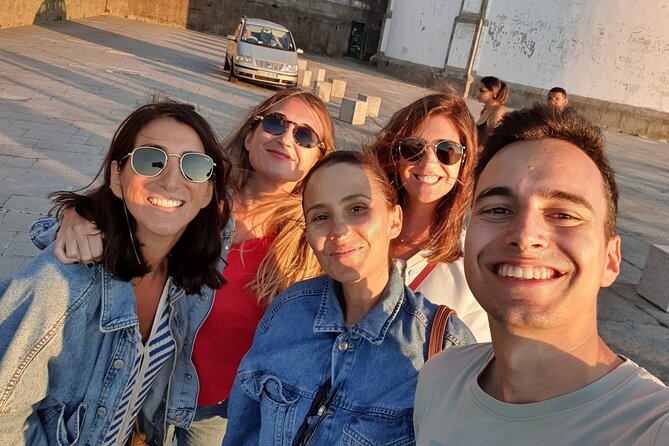
One theme shows up again and again through guide feedback: people tend to remember the guide’s personality and problem-solving.
Some guides are praised for:
- making the ride fun while still explaining Porto clearly
- taking extra time for picture points
- tailoring the flow to your interests
- staying upbeat even when weather changes
And yes, rain happens in Porto. The tuk tuk helps because you’re not only on foot. One rainy-day experience was still described as a memorable tour, which lines up with the practical idea: you’re protected compared to walking across steep streets for each stop.
Who Should Book This Tuk Tuk Tour?
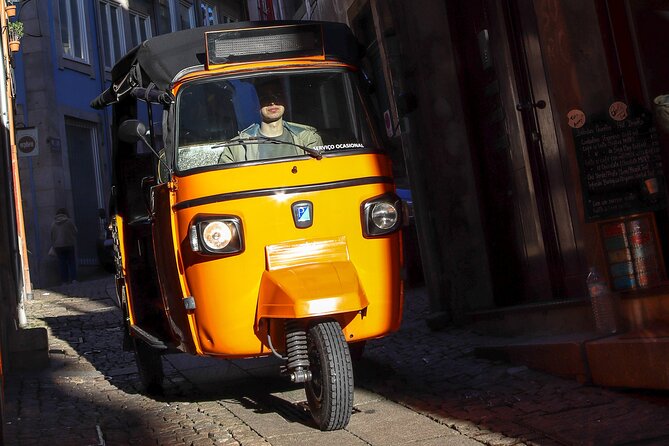
This is a strong fit if:
- you want a fast, structured overview without heavy hiking
- you’re short on time and want the main Porto highlights plus bridge variety
- you prefer a private experience where you can ask questions and adjust stops
- you’re traveling with someone who doesn’t want nonstop stairs
It’s less ideal if:
- you want long, slow museum-style time at each site
- you dislike open-air transport or you’re extremely sensitive to rain
Should You Book This Porto Private Tuk Tuk Tour?
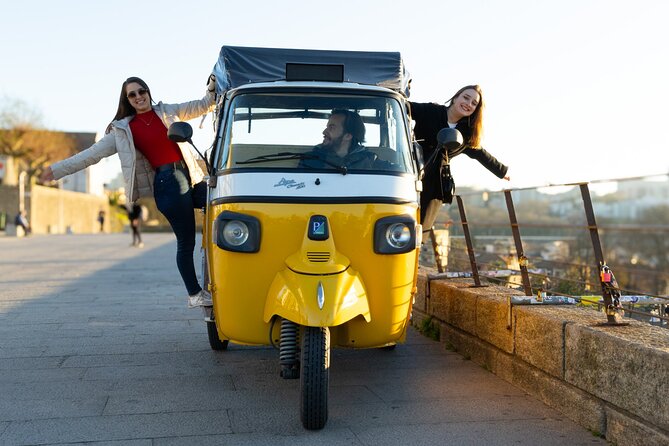
I think you should book it if you want a smart first- or second-day move in Porto. The route covers what most first-timers miss when they only wander on foot: the bridge system, the river viewpoints, and the mix of architecture styles from cathedral to station tiles.
My decision tip: decide your top 3 priorities before you go. If you care most about interior spaces, focus your attention around the churches and the Palácio da Bolsa. If your priority is views and city layout, lean into the monastery, garden terraces, and bridge stops. Either way, this tour is built to help you get oriented fast and then choose where to spend your extra hours afterward.
FAQ
FAQ
How long is the Porto Fun Private Tuk Tuk Tour?
It’s approximately 1 hour 30 minutes.
What is the starting point for the tour?
The tour starts at São João National Theatre, Praça da Batalha, 4000-102 Porto, Portugal.
Is this tour private or shared?
This is private. Only your group will participate.
What language is the tour offered in?
The tour is offered in English.
What’s included in the price?
The tour includes private transportation and a local guide. You’ll also receive a mobile ticket.
Are attraction tickets included?
Most stops listed are free, but the Church of Carmo is not included. The Church of Carmelitas is included.
What should I know about weather?
This experience requires good weather. If it’s canceled due to poor weather, you’ll be offered a different date or a full refund.
Can I bring a service animal?
Yes, service animals are allowed.
If you’d like, tell me your travel dates and whether you’re more into bridges/views or churches/buildings, and I’ll suggest which stops to prioritize during the short time on the ground.