REVIEW · PORTO
Porto 6 bridges Speedboat Tour along the Douro
Book on Viator →Operated by BBDouro · Bookable on Viator
Speed and history on the Douro. This short 45-minute speedboat ride is one of the quickest ways to see Porto’s riverfront from the best angle: out on the water, passing major landmarks and even aiming toward the open sea when conditions allow. I like two things right away: the meeting point at BBDouro / Douro Marina is simple to find, and the crew keeps the vibe exciting without cutting corners on safety with life vests. One possible drawback: the whole experience moves at a speedboat pace—so the sights are viewed and explained fast, not lingered over.
What makes it especially fun is how the route ties Porto and Gaia together. You get a guided sweep of recognizable points like the Ribeira area, the wine-trade world of rabelo boats, and the estuary’s wildlife corridor, all while the captain maneuvers for great angles. Plus, the reviews are pretty consistent about the small comfort touches—jacket offers if you get a bit wet—and a captain who makes you feel in control. If you hate speed or you’re hoping for a slow, sit-down sightseeing day, this may feel a bit too zippy for your taste.
In This Review
- Key things that make this Douro speedboat work
- Porto 6 Bridges on a speedboat: why the timing feels perfect
- Your 45-minute route: what you see at each stop
- Stop 1: Douro River—wine trade scenes and the river-to-sea moment
- Stop 2: Douro Marina—modern port energy in one look
- Stop 3: Centro Interpretativo do Patrimonio da Afurada—fishing village at the river’s edge
- Stop 4: Ponte da Arrábida—Porto-to-Gaia connection that solved traffic
- Stop 5: Museu do Carro Electrico (Tram Museum area)—how Porto powered its rail past
- Stop 6: Igreja da Confraria das Almas do Corpo Santo de Massarelos—tiles, pilasters, and structure
- Stop 7: Alfândega Porto Congress Centre—iron-and-stone mercantile architecture
- Stop 8: Passeio das Virtudes—vertical gardens with terrace views
- Stop 9: Torre dos Clérigos—bell tower turned landmark and navigator
- Stop 10: Cais de Gaia—port-wine waterfront built for unloading barrels
- Stop 11: Barcos rabelos—traditional boats and a treacherous river
- Stop 12: Ribeira—UNESCO waterfront energy and a named local legend
- Stop 13: Paço Episcopal—bishop residence with commanding position
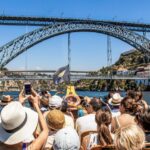
- Stop 14: Dom Luís I Bridge—metal engineering and a long visual draw
- Stop 15: Miradouro Serra do Pilar—circular monastery on the UNESCO list
- Stop 16: Jardins do Palácio de Cristal—garden traces of a vanished Crystal Palace
- Stop 17: Reserva Natural Estuário do Douro—birds along the migratory corridor
- Stop 18: Jardim do Passeio Alegre—turtle fountain and terrace-to-ocean views
- Safety, getting wet, and what to wear for comfort
- Group size, boats, and how to get the best views
- Value at about $54: what you’re really paying for
- Who this tour is best for (and who should skip it)
- Should you book Porto 6 bridges Speedboat Tour on the Douro?
- FAQ
- How long is the Porto 6 bridges speedboat tour?
- Where do I meet for the tour?
- Is the ticket mobile?
- Do you offer the tour in English?
- What is the minimum age to join?
- What if weather conditions are poor?
- Is it free to cancel?
Key things that make this Douro speedboat work
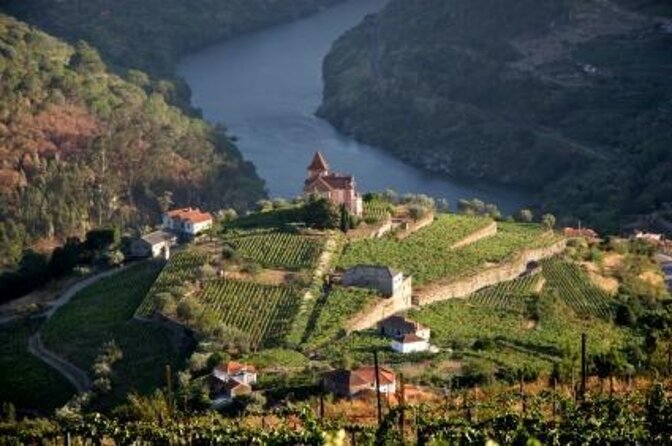
- A compact route built for big views: multiple famous bridges and waterfront sights in about 45 minutes
- Three boats, small feeling capacity: 10 people per boat, with a total maximum of 38 on the water
- Safety that doesn’t kill the fun: life vest provided, plus a steady, confident captain
- English narration for the key landmarks: from wine caves and rabelo boats to major Porto/Gaia landmarks
- A weather-flex mindset: if wind or conditions aren’t right, they’ll adjust plans or offer refunds/rebooking options
Porto 6 Bridges on a speedboat: why the timing feels perfect
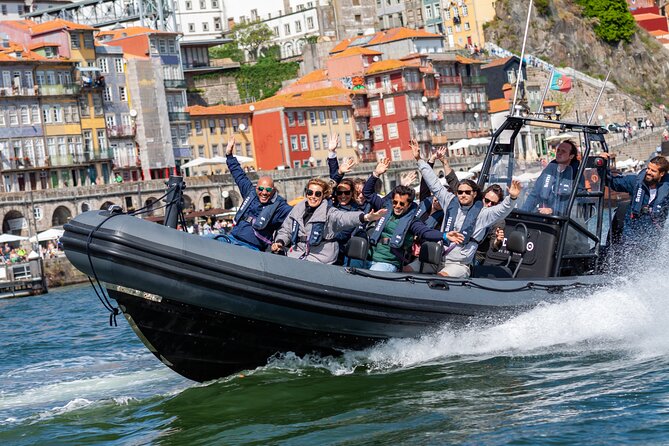
If you only have a half-day in Porto, you’ll run into the same problem most people do: the city looks gorgeous from land, but the riverfront connection is what really makes it click. This tour solves that with a direct “from-the-water” view. Instead of walking a long loop, you’re cruising along the Douro and hitting the key visual anchors that define Porto’s skyline and its twin city, Vila Nova de Gaia.
The pacing is also realistic. At this duration, you’re not touring museums. You’re getting what I’d call a highlight circuit: brief looks, smart commentary, and the kind of angles that are hard to reproduce any other way—especially the bridge crossings and that dramatic Porto-to-Gaia view.
And yes, the speed matters. The “speedboat” style makes the ride feel like an event, not a slow ferry. But you’re not just holding on and hoping for the best—you’re in a controlled setup with safety gear, so you can enjoy the motion without turning it into a stressful experience.
You can also read our reviews of more tours and experiences in Porto.

Your 45-minute route: what you see at each stop
Here’s how the tour’s stops translate into what you’ll actually notice from the boat. Many points are short passes (often about a minute), so think of this as guided “spotting,” not a long walk-through.
Stop 1: Douro River—wine trade scenes and the river-to-sea moment
Early on, you’re set in the river itself. The tour’s focus is on the most emblematic areas viewed from the water, with themes that connect Porto’s past to the present. You’ll pick up iconic reference points such as wine caves, Rua (Ouro Street), Igreja dos Clérigos, and the Rabelo boats that historically moved wine barrels from upstream down to Gaia.
If conditions are right, the itinerary mentions cruising out to sea. That’s the one “extra” that can turn the ride from simply scenic into memorable—because it changes the feel of the water from urban river edges to something more open and breezy.
What to expect: strong views, moving perspectives, and a quick context map so the landmarks don’t feel random.
Stop 2: Douro Marina—modern port energy in one look
Next is Douro Marina, which opened to the public in February 2012 after an 8.5 million euro investment. It has floating equipment and space for up to 300 vessels (up to 20 meters). On the water, it reads like a working waterfront: repair and maintenance areas, shops, restaurants, and water-sports activity.
Why it matters: this is where the Porto boating world shifts from historic trading to today’s recreation and marine infrastructure. You’ll notice how the river supports both commerce and leisure.
Possible drawback: if you’re only looking for old-town views, this part can feel more functional than dramatic.
Stop 3: Centro Interpretativo do Patrimonio da Afurada—fishing village at the river’s edge
You also swing toward Afurada, described as a fishing-focused area near the mouth of the Douro with about 6,500 inhabitants. The tour frames it as the kind of place where fishing was the main economic activity for early residents.
Why this helps your trip: it keeps the “Douro story” grounded. Porto isn’t just bridges and wine cellars. The river supports local communities at its edges too.
Stop 4: Ponte da Arrábida—Porto-to-Gaia connection that solved traffic
This section is all about the bridge between Porto and Vila Nova de Gaia: Ponte da Arrábida. The details are specific for a reason—this arch bridge was built to address increasing traffic needs after the earlier bridges (D. Maria Pia and Luís I) were no longer enough.
You’ll also hear the engineering flex from the 1960s: when it opened in 1963, it had the largest reinforced concrete arch of its kind in the world. The tour also notes that pedestrians could use lifts (built to cross the distance of about seventy meters) but that those lifts stopped working in the mid-1990s.
From the boat, the big benefit is scale. You get a sense of how the Douro forces the city to build up—and across.
Stop 5: Museu do Carro Electrico (Tram Museum area)—how Porto powered its rail past
From the water, the name alone doesn’t tell you why it belongs on a bridge tour, but the museum’s story does. Founded in 1992 to preserve electric vehicles and public transport history, it sits in a building that used to be the Massarelos Thermoelectric Plant (built in 1915 to produce energy for electric vehicles).
The idea here is connection: bridges, river traffic, and transit all share the same city problem—moving people and goods. If you like transportation history, you’ll appreciate that the tour points out where the electricity came from for the tram era.
Stop 6: Igreja da Confraria das Almas do Corpo Santo de Massarelos—tiles, pilasters, and structure
This stop is a neat architectural checkpoint. The church was built in 1776 and is described as being divided into three parts by pilasters. The tour highlights the central gate with a broken pediment, a niche with the patron saint image (S. Pedro Gonçalves Telmo), Corinthian capitals, and a facade covered with tiles.
Even if you don’t step inside, you’ll get the quick “what to look for” so it’s not just a wall while you pass.
Stop 7: Alfândega Porto Congress Centre—iron-and-stone mercantile architecture
Alfândega Porto’s New Customs building is from the second half of the 19th century, designed by French architect Jean Colson. The tour points out a contrast: it was built with iron but also other materials—stone, small bricks, and wood—and it mixes structural elements across floors.
You’re also told it’s one of the largest and most awarded congress centers in Portugal. On a speedboat, that doesn’t matter as a credential as much as a clue: this is a big, solid building that anchors the waterfront’s modern waterfront identity.
Stop 8: Passeio das Virtudes—vertical gardens with terrace views
Then you hit one of the “I’d like to come back and walk this” spots: Virtudes Municipal Park. The tour calls it vertical (terraces down a slope), and the pay-off is that many points give a view over the Alfândega, the Douro River, and Gaia.
If you like having a photo-ready viewpoint you can later check on foot, this is a smart highlight. From the boat, you mostly see the park as a slope-and-terrace pattern. From land, you’d probably see why people love it.
Stop 9: Torre dos Clérigos—bell tower turned landmark and navigator
The Clérigos Tower is described as designed by Italian architect Nicolau Nasoni, completed in 1763, and over 75 meters tall. The tour explains that the tower began as a bell tower but later also functioned as an orientation point for boats and even a strategic military viewpoint.
This stop connects your river experience to the city’s identity. If you want to remember Porto’s silhouette, this is part of it. The tower visit includes a climb of 225 steps for panoramic views (not something the boat gives you, but it’s useful to know if you want to add a walking visit later).
Stop 10: Cais de Gaia—port-wine waterfront built for unloading barrels
Here’s where the wine story gets real. The Gaia waterfront has been important since the 18th century. It’s tied to port wine because barrels were unloaded here and aged in the cellars of more than 50 wine companies in Gaia. The rabelo boats would anchor here.
After a refurbishment completed in 2003, the quay became more leisure-and-tourism friendly, and it even won a Tourism Award for enhancement of public space. On the water, you’ll understand why: it’s a built-to-stay area.
Stop 11: Barcos rabelos—traditional boats and a treacherous river
The tour gives you the rabelo boats’ backstory: they transported Port Wine between the Douro wine region and Gaia’s cellars. Because there were no roads or railways, the river was the only route. It also explains that dams hadn’t been built then, so the Douro was treacherous, with fast currents in narrows and gorges—meaning the sailing needed experienced sailors.
A helpful timeline detail: the tour notes that after the railway line, the last voyage for transportation is believed to have happened in 1964.
On the boat, this segment keeps your ride from feeling like just sightseeing. It turns it into a living trade story.
Stop 12: Ribeira—UNESCO waterfront energy and a named local legend
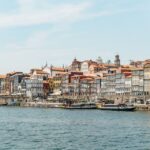
The tour calls Ribeira one of the oldest and most typical places in Porto, part of the UNESCO World Heritage Historical Center of Porto. It highlights the medieval commerce and movement caused by proximity to the river.
It also mentions a local character: the Ribeira’s Duque, known for saving people from drowning. After his death, a tribute was paid, and the square near Luís I Bridge was named after him with a memorial stone.
Even from the water, you’ll notice Ribeira as dense, active, and tightly packed along the river bend.
Stop 13: Paço Episcopal—bishop residence with commanding position
You’ll pass by the Paço Episcopal, described as the former bishop’s residence adjacent to Porto Cathedral. The tour notes it dominates the landscape due to its elevated position and that it’s classified as a National Monument since 1910.
Think of this as a “high ground” counterpoint: the river moves, but this is still sitting above it, marking the city’s hierarchy.
Stop 14: Dom Luís I Bridge—metal engineering and a long visual draw
The main crossing between Porto and Gaia is Dom Luís I Bridge, made of metal, about 395 meters long and 8 meters wide. It’s divided into two decks: upper and lower connections between Porto and Gaia.
The tour credits Théophile Seyrig (working on King Louis I’s orders) and ties it to his work with Gustave Eiffel on D. Maria Pia. Completed in 1888, the bridge remains one of Porto’s most emblematic points. The itinerary lists about 10 minutes for this segment, so expect more time to see it from multiple angles.
If you want one bridge moment to anchor your photos, make this your focus.
Stop 15: Miradouro Serra do Pilar—circular monastery on the UNESCO list
Next is Serra do Pilar monastery, an austere 17th-century church with UNESCO World Heritage status since 1996. The description is vivid and practical: the church has a circular floor plan, an imposing hemispherical vault, balcony, and lantern. The tour also mentions gilded and white carved woodwork and a cloister with a circular vault supported by 36 Ionic columns.
It’s also noted that the location mattered during Napoleonic invasions and later as a military base in the liberal struggles, and it was elevated to fortress status before later conversion into an artillery barracks.
Even if you don’t go inside, the circular geometry tends to pop from the river. This stop helps you see Porto and Gaia not just as cities, but as places shaped by defense and trade.
Stop 16: Jardins do Palácio de Cristal—garden traces of a vanished Crystal Palace
You’ll come by the Palácio de Cristal gardens area. Construction began in 1861 and it was inaugurated in 1865. The original Crystal Palace was demolished in 1951 to make way for what’s now the Super Bock Arena.
The tour frames the gardens as part of the original Crystal Palace project by Emil David (who designed the garden areas). What remains now includes the Emil David Garden, Avenida das Tílias, Avenida dos Plátanos, plus forest areas and balconies over the Douro.
This is another “you should walk here later” point, especially if you want a calmer view away from the waterline.
Stop 17: Reserva Natural Estuário do Douro—birds along the migratory corridor
This part is nature-focused: the Douro Estuary Natural Reserve covers 66.35 hectares on the south bank near Afurada and includes Cabedelo and São Paio Bay. The highlight is birds—resident and migratory—supported by the “East Atlantic Route.” The tour notes you can visit freely via a suspended walkway.
From the boat, the value is that you get a sense of how close wildlife is to the city’s infrastructure. For bird lovers, this is a bonus. For everyone else, it’s a reminder that the Douro isn’t just buildings and bridges.
Stop 18: Jardim do Passeio Alegre—turtle fountain and terrace-to-ocean views
The tour ends at Passeio Alegre Garden, designed in the late 19th century and classified as a Public Interest Property. It’s designed by Émile David, who is also credited for the Crystal Palace gardens.
You’ll hear about the shade, the flora, and centuries-old trees. It also points out the meeting of waters—where the Douro river waters merge with the Atlantic Ocean. The tour includes a fun detail: a granite fountain called the “turtle fountain,” designed by Nicolau Nasoni, originally built in the 18th century for Quinta da Prelada, later transferred to Passeio Alegre in the 20th century. Two Nasoni-designed obelisks mark an entrance.
This is a strong way to cap a speedboat ride: you end with the feeling of sea-adjacent Porto, not just urban riverbanks.
Safety, getting wet, and what to wear for comfort
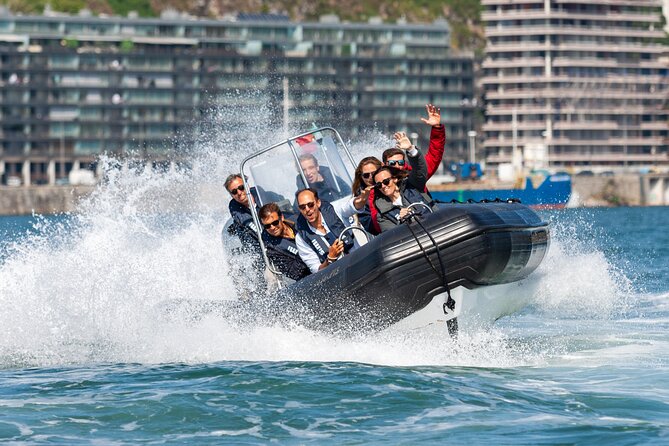
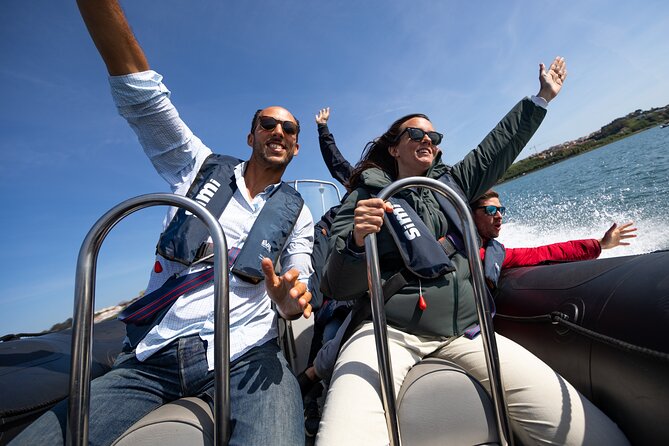
You’ll wear a life vest, and that’s a big part of feeling at ease. The ride style can get you wet—one of the common review themes is that people got splashed but didn’t mind. A nice practical touch: the crew may offer jackets if you want extra protection, which helps if it’s breezy or you’re sensitive to cold spray.
What I’d do: wear something quick-dry. If you’re wearing a light jacket, you’ll probably be fine. If you have a fragile camera bag, keep it sealed or plan to store it while moving fast between angles.
Also, expect wind at the water. Even if the city feels warm, river air can cool things down, especially during the portion that aims toward the sea.
Group size, boats, and how to get the best views
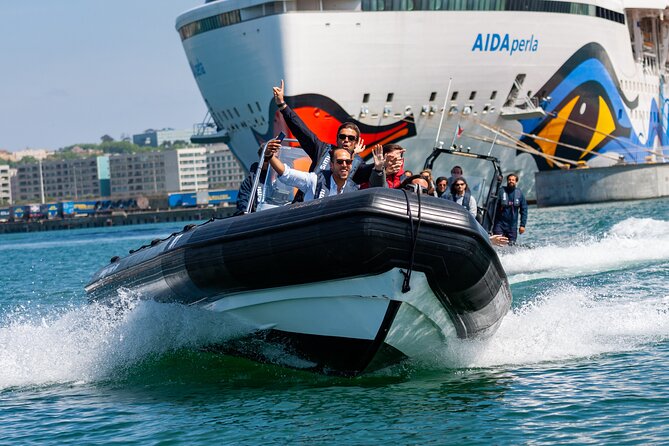
There are three boats, with a note that up to 10 people per boat can participate, and a maximum of 38 travelers for the whole activity. That setup usually means you’re not packed shoulder-to-shoulder. You’ll still want to position yourself for sightlines early, because the best views come from being set before the captain turns for bridge angles.
Timing matters too. This tour is short. If you want sunrise or sunset energy, you’ll likely care more about sky color than you think. The route itself is busy with famous structures, but the light changes how those structures look from water.
If you’re doing this on a busy day, I’d plan around it like a “bridge photo session” rather than a long sightseeing block. That mental shift helps you enjoy the fast pace instead of feeling rushed.
Value at about $54: what you’re really paying for
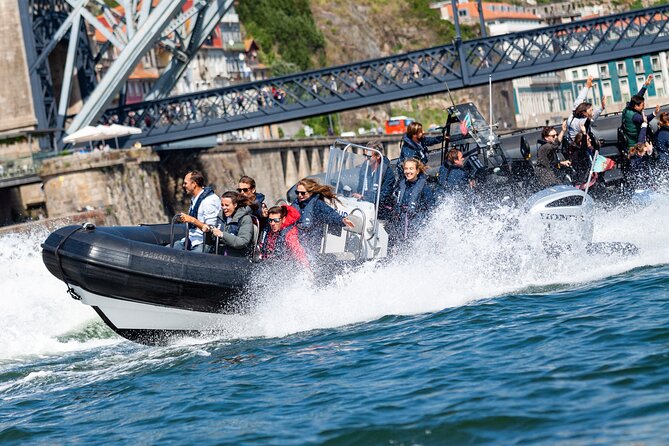
At $54.22 per person, you’re buying speed, access to water-level viewpoints, and a narrated connection between Porto and Gaia’s most recognizable sights. You’re not paying for museum entry time or long land walks. This is more like guided “river time” that compresses what would take hours of walking and transit into a single ride.
So the value question becomes: do you want the best angles fast? If yes, this price lands in a sweet spot because you’re seeing the major bridge identity moments (including Dom Luís I and Arrábida), plus wine and waterfront context, plus that Porto-to-Gaia storytelling arc—without spending the whole day switching neighborhoods.
If you’d rather spend your time doing slow, detailed indoor visits, you might find better value in land-based sightseeing. But if you want the Douro to do the heavy lifting for your photos and impressions, the speedboat approach is a smart match.
Who this tour is best for (and who should skip it)
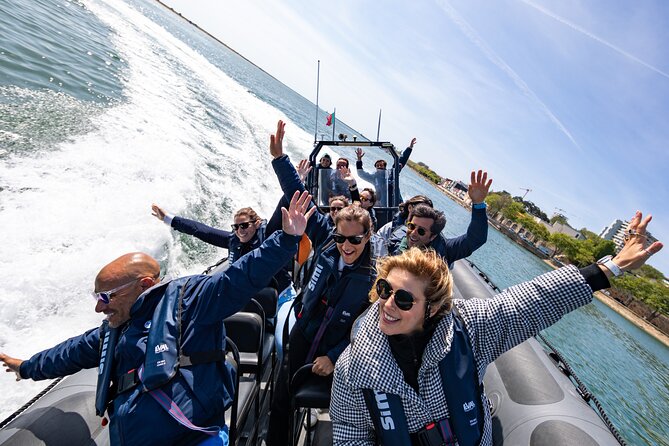
This is a strong pick if you:
- want a short, high-impact Porto activity
- like bridge views and river scenery more than museum time
- enjoy motion and want a fun outing with clear safety standards
- want English narration so the landmarks make sense as you see them
I’d skip it if you:
- hate speedboat motion or get seasick easily
- want long stops to explore on foot during the ride
- prefer quiet, slow sightseeing without frequent passing of major spots
The minimum age listed is 10, and the note says most people can participate—so it can work for families with older kids who are comfortable on the water.
Should you book Porto 6 bridges Speedboat Tour on the Douro?
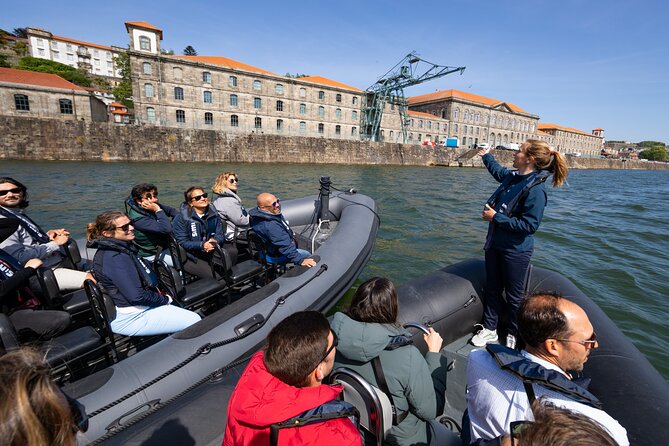
I’d book it if your goal is to experience Porto’s signature bridge-and-river identity in one compact outing. The combination of fast water angles, a knowledgeable-style guide delivery in English, and the safety-plus-fun approach is exactly what makes this kind of tour worth your time.
One last practical tip: bring a plan for photos (and water). Even if you’re not trying to capture everything, you’ll want a device that’s protected and ready, because bridge views like Dom Luís I and the river-to-Atlantic moments tend to be quick.
FAQ
How long is the Porto 6 bridges speedboat tour?
It lasts about 45 minutes.
Where do I meet for the tour?
Meet at BBDouro / Douro Marina, R. da Praia, 4400-554 Vila Nova de Gaia, Portugal.
Is the ticket mobile?
Yes, you receive a mobile ticket.
Do you offer the tour in English?
Yes, it’s offered in English.
What is the minimum age to join?
The minimum age is 10 years old.
What if weather conditions are poor?
The experience requires good weather. If it’s canceled due to poor weather, you’ll be offered a different date or a full refund.
Is it free to cancel?
Cancellation is free. You can cancel up to 24 hours in advance for a full refund.