REVIEW · PORTO
Port : Douro Cruise, 6 Bridges & 4 Port Wines (Max 7)
Book on Viator →Operated by Alma Douro · Bookable on Viator
Port wine on the river beats a tasting room. This Douro 6 bridges experience strings together Porto and Gaia sights with four port wines served as you go, guided by Nadia and Paulo.
I like the small-group feel too: maximum 7 people, so the tour stays personal and the stories don’t turn into a lecture.
You’ll also like the built-in “greatest hits” route. The Torre dos Clérigos climb, the UNESCO-listed Serra do Pilar church and cloister, and the bridges over the Douro make sure you see Porto from land and water.
The one thing to plan around is physical effort: the Clérigos visit includes 225 steps, so it’s not a great match if stairs are an issue.
In This Review
- Key highlights you’ll feel right away
- How this 2-hour Douro cruise packs Porto and Gaia
- Marina da Afurada and Villa Afurada: start where the river life begins
- Torre dos Clérigos: 225 steps for Porto and Gaia views
- Dom Luís I Bridge: the iconic two-deck connection
- Ribeira and the street-level Porto feeling
- Serra do Pilar Monastery: UNESCO design with a defense story
- D. Maria Pia Bridge: the Eiffel masterpiece over the Douro
- Douro Estuary nature reserve: birds and salt marshes before the sea
- Four port wines with paired bites: what you’re actually tasting
- Small-boat comfort: rail views, blankets, and a relaxed pace
- Price and timing: is $72.41 good value?
- Who should book this, and who should skip it
- Should you book this Douro 6 bridges cruise with port tasting?
- FAQ
- What is the duration of the Douro Cruise, 6 Bridges & 4 Port Wines experience?
- How many people are in the group?
- Where is the meeting point?
- What language is the tour offered in?
- Is a mobile ticket used?
- Does it include port wine tasting?
- Is it suitable for reduced mobility?
- What major sights are included on the route?
- What happens if weather is poor?
Key highlights you’ll feel right away
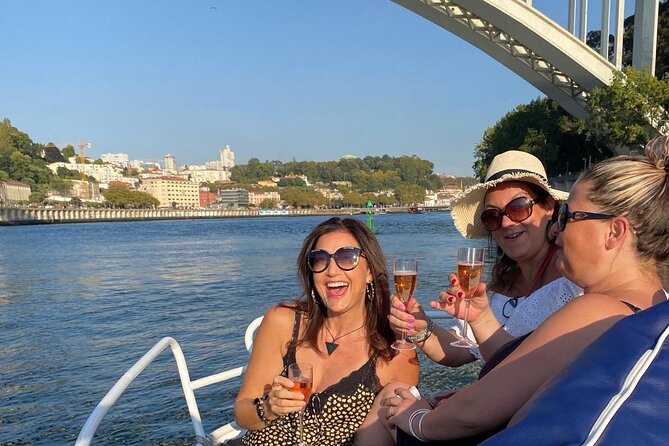
- Max 7 travelers for a calmer boat experience and more back-and-forth with Nadia and Paulo
- Four port wines plus food pairings that focus on flavor, not speeches
- Torre dos Clérigos (225 steps) with wide Porto and Gaia views at the top
- Dom Luís I Bridge and D. Maria Pia Bridge on the Douro for real “bridge-spotting” time
- Serra do Pilar’s circular UNESCO design, with a cloister supported by 36 Ionic columns
- Douro Estuary nature reserve + Atlantic finish, with birdlife along the migration route
How this 2-hour Douro cruise packs Porto and Gaia
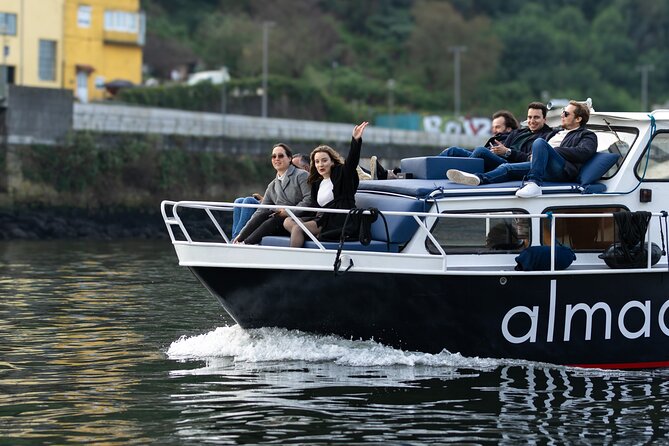
This is a short tour with a full agenda. In about 2 hours, you’ll cover the Porto-to-Gaia highlights that usually take a full day of wandering (plus you’ll get the river angle that photos just can’t replace).
The smart part is pacing. You’re not only staring at bridges from one spot. You move through viewpoints on shore, then you transition to the water so you can understand how the river and the city fit together. If you’re in Porto for a long weekend, it’s the kind of plan that keeps your itinerary from turning into “arrive, eat, sleep, repeat.”
Also, this is offered in English, with a mobile ticket. That matters because you’ll spend less time sorting logistics and more time actually seeing things.
You can also read our reviews of more boat tours in Porto

Marina da Afurada and Villa Afurada: start where the river life begins
Your meeting point is at Marina da Afurada in Vila Nova de Gaia (R. da Praia, 430). From there, the vibe is local. Afurada is tied to the river, and the experience begins in the traditional Villa Afurada setting instead of a generic tourist pier.
Even if you just arrived in Porto that day, this start helps you get oriented fast. You’re standing near the action: the Douro mouth and the channel leading out toward the Atlantic. It’s an easy mental shift from city streets to working-water views.
And because you’re near public transportation, you’re not locked into a car or taxi just to begin. That’s a real convenience in Porto, where getting “just a little across town” can take longer than it should.
Torre dos Clérigos: 225 steps for Porto and Gaia views
One of the most memorable parts is the stop at Torre dos Clérigos, designed by Italian architect Nicolau Nasoni and completed in 1763. The tower started as a bell tower, but over the years it also served as a landmark for vessels and a strategic point for military defense.
Here’s why I think this stop is worth your time: it’s not only a pretty viewpoint. The climb gives you a sense of how the city used that height—navigation, visibility, and defense all in one structure.
You’ll face 225 steps to reach the top. That can be the only true “workout” in the itinerary, but the reward is the panorama over Porto and Gaia. If you’re visiting in warm weather, wear light layers. If you’re visiting in winter, bring something that blocks wind, since the top can feel exposed.
Dom Luís I Bridge: the iconic two-deck connection
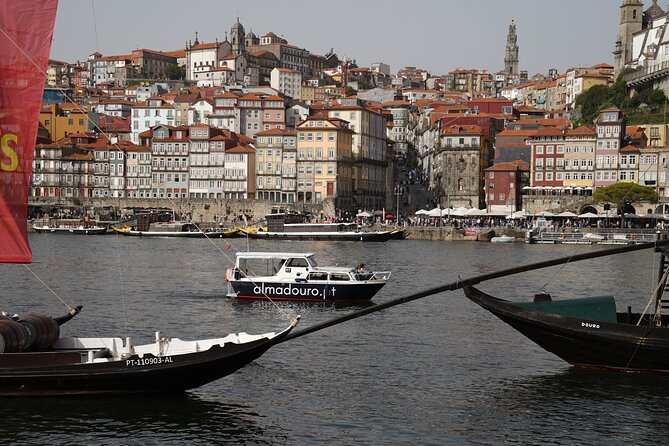
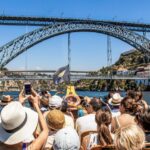
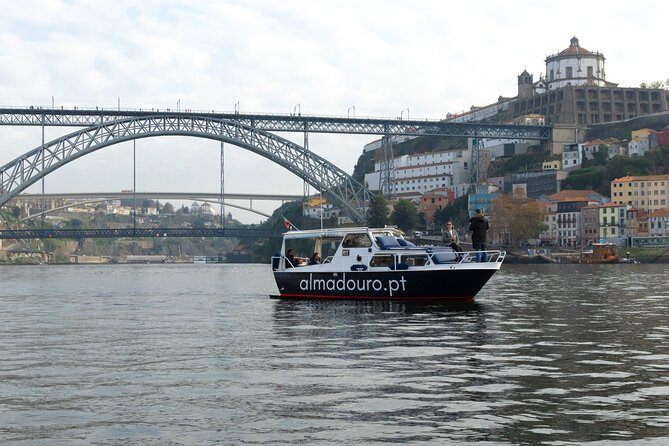
Next comes the star bridge: Dom Luís I Bridge. This is a metal bridge with two decks, built between 1881 and 1886, connecting Porto with Vila Nova de Gaia across the Douro River.
What makes this bridge more than a postcard is the design. Two decks means multiple ways of “reading” the river. From the right angle, you can see how the city grew on both banks while the river acted like a divider and a link at the same time.
There’s also a neat practical note: you get around 30 minutes at this segment, so you’re not rushed. It’s long enough to get a couple of angles and photos without turning it into a sprint.
Ribeira and the street-level Porto feeling
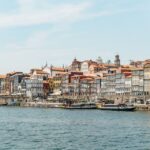
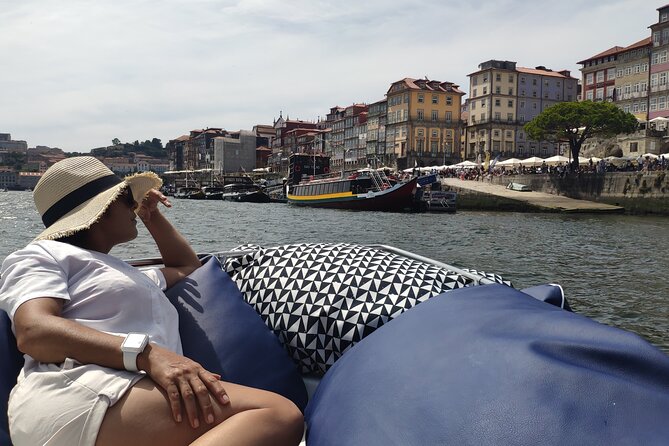
A visit to Ribeira is included, and it’s the classic “colors, life, and history” stretch along the riverfront. This is the part where you switch modes: from river views and bridges to human-scale streets—buildings packed close, terraces, and that lived-in feeling you can’t fake with museum time.
You don’t need a long wandering block to enjoy Ribeira. Even short windows can help you connect what you saw on the water with what you’re looking at on shore. If you’re the type who likes to photograph buildings and doorways, Ribeira is where you’ll want to slow down for a few minutes.
You can also read our reviews of more wine tours in Porto
Serra do Pilar Monastery: UNESCO design with a defense story

The Serra do Pilar Monastery is a 17th-century church that’s classified by UNESCO as a World Heritage Site (since 1996). It’s described as austere, but don’t skip it. The austerity makes the geometry stand out.
This building uses a circular plan and a hemispherical vault, surrounded by a balcony and crowned by a lantern. Inside, you’ll notice carved work in gilded and white tones. The cloister is especially distinctive: it’s a circular vault supported by 36 Ionic columns.
Here’s the part that adds real meaning: the location mattered during conflict. In 1809, it was crucial during the Napoleonic invasions. Later, in 1832–33, it served as a military base during the liberal struggles. At some point it was upgraded to fortress status, and today it’s been converted into military barracks.
So while it looks like a place for calm church viewing, it also carries the weight of strategy. That mix—design plus survival—makes it one of the stops that feels “explained,” not just “seen.”
D. Maria Pia Bridge: the Eiffel masterpiece over the Douro
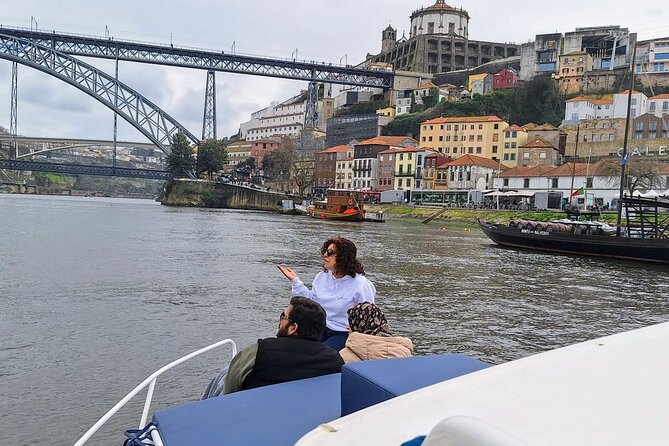
Then you get to D. Maria Pia Bridge, a railway infrastructure that carried the Northern Line over the Douro between Porto and Gaia. It was inaugurated on November 4, 1877, and it closed on June 24, 1991, later replaced by Ponte de São João.
This bridge has the kind of engineering bragging rights I like: it’s considered, along with the Garabit Viaduct, one of engineer Gustave Eiffel’s great masterpieces. At the time it opened, it was the bridge with the largest iron arch in the world. It’s been classified as a National Monument since 1982.
If you enjoy structures with personality, this is a good match. And because the tour includes it as a named stop, you’ll know what you’re looking at instead of just realizing you saw another bridge.
Douro Estuary nature reserve: birds and salt marshes before the sea
The itinerary also includes a nature stop tied to the river’s mouth: the Douro Estuary Local Nature Reserve, covering 66.35 hectares. It sits on the south bank near the fishing village of Afurada, and includes Cabedelo and São Paio bay, where a salt marsh exists.
The key natural detail here is the birds. This area lies on the migratory corridor known as the East Atlantic Route, so birdlife can be easier to spot (depending on the day and season).
You’re not going to turn this into a full birdwatching outing. But it’s a smart “breathing space” between Porto architecture and the river’s final push toward the Atlantic. It helps the story end in nature instead of ending mid-city.
Four port wines with paired bites: what you’re actually tasting
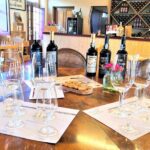
The biggest reason people book this tour is the port wine tasting. You’re tasting 4 port wines, and the experience is set up for flavor pairing, not just sipping and moving on.
The pairing approach is where it gets interesting. The host-style includes matching ports with foods in a way that enhances what you taste in each glass. That keeps the tasting from becoming repetitive. You’re learning what each style brings to the table, then you get to notice the difference with actual bites.
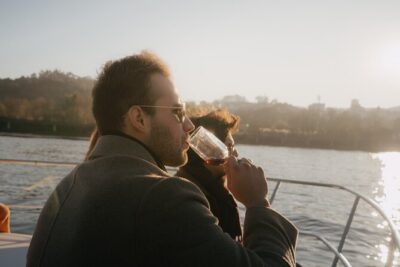
This is also where the vibe of the hosts shows up. Nadia and Paulo run the show as a team: warm, attentive, and focused on making the experience feel like a conversation rather than a script. On many departures, you may also find drinks and snack platters as part of the experience, and they’ve been known to offer blankets when it gets cooler.
If you’re a port fan, this setup makes the tasting feel connected to the scenery. You’re not paying for a generic winery-style lineup. You’re tasting in the setting that makes Porto’s wine culture make sense.
Small-boat comfort: rail views, blankets, and a relaxed pace
A lot of Porto river cruises feel like cattle—big boats, lots of people, the same photo angle for everyone. This experience is different because the boat group is capped at 7.
That smaller scale shows up in comfort and attention. You can get into a viewing position and actually enjoy the changing angles of Porto and Gaia instead of fighting for a spot. And because you’re on the river, weather matters. The good news: the hosts have a habit of offering blankets when conditions turn chilly, which is a simple detail that makes a huge difference on an afternoon that starts windy.
Expect the ride to feel calm and practical. Paulo is the captain, and the pacing is meant to keep you comfortable while you take in bridges, riverbanks, and the shift from city air to ocean air.
Price and timing: is $72.41 good value?
At $72.41 per person for roughly 2 hours, the price can seem “small” or “medium” depending on what you compare it to. Here’s the value logic I’d use:
- You’re paying for a small group (max 7), which usually costs more than big-boat crowd tours.
- You’re getting a full sight sequence (tower climb, monastery stop, multiple bridge moments, Ribeira) plus a 4-wine tasting.
- You’re also getting a local host-led approach. Nadia and Paulo provide the history and the context, and they keep it from becoming dry.
If you’re comparing only time on the water, big boats might look cheaper. But this tour is built to do more than float. It’s designed to help you understand the city layout and port culture while you actually move through the geography.
Also, it’s commonly booked about 23 days in advance, which suggests demand stays steady. If you’re traveling in peak season or on a day you really want (like a last afternoon in Porto), booking early is smart.
Who should book this, and who should skip it
This tour is a strong fit if you:
- want Porto + Gaia highlights in a short time
- care about port wine, but also want the scenery to match the tasting
- prefer small groups where you can ask questions
- like a guided experience that feels friendly and personal, led by Nadia and Paulo
You should think twice if:
- you have difficulty with stairs or longer walks (it’s not recommended for reduced mobility, and the Torre climb includes 225 steps)
- you’re very sensitive to cold or wind. You can get blankets, but the river still changes with weather.
And one last planning reality: the experience depends on decent weather. If conditions aren’t right, you’ll likely be offered an alternative date or a full refund.
Should you book this Douro 6 bridges cruise with port tasting?
Yes, if your goal is a Porto experience that mixes “wow views” with actual culture and taste. The combination of four port wines, plus a route that hits key Porto and Gaia landmarks, makes it easy to feel like you got your money’s worth.
Book it especially if you’re the kind of traveler who gets tired of oversized tours and wants the city explained in a human way. With a max of 7 people, you’re much more likely to feel like you’re with a couple of hosts who care about the details.
Pass if stairs are a hard no. Otherwise, plan your day around comfortable layers, bring an open mind for both engineering and church design, and go ready to taste the Douro in a way that actually feels connected to where you’re standing.
FAQ
What is the duration of the Douro Cruise, 6 Bridges & 4 Port Wines experience?
It lasts about 2 hours (approx.).
How many people are in the group?
The experience has a maximum of 7 travelers.
Where is the meeting point?
You meet at Marina da Afurada, R. da Praia 430, 4400-554 Vila Nova de Gaia, Portugal.
What language is the tour offered in?
It’s offered in English.
Is a mobile ticket used?
Yes, the experience includes a mobile ticket.
Does it include port wine tasting?
Yes. The experience includes 4 port wines.
Is it suitable for reduced mobility?
It is not recommended for reduced mobility.
What major sights are included on the route?
It includes Torre dos Clérigos, Dom Luís I Bridge, Ribeira, Serra do Pilar Monastery, D. Maria Pia Bridge, the Douro Estuary Local Nature Reserve, and the end point near the mouth of the Douro by the Atlantic Ocean.
What happens if weather is poor?
The experience requires good weather. If it’s canceled due to poor weather, you’ll be offered a different date or a full refund.