REVIEW · LISBON
Lisbon: Entry Tickets to Mosteiro de São Vicente de Fora
Book on GetYourGuide →Operated by Mosteiro de São Vicente de Fora · Bookable on GetYourGuide
This place is an azulejo lover’s shortcut to Lisbon. With entry tickets to Mosteiro de São Vicente de Fora, you get right into a monument shaped by centuries of Portuguese power—and covered in blue tiles that are still in their original spot.
What I love most is how calm the visit can feel and how the monastery packs big visuals into a self-paced route: the baroque glazed tile collection in situ and the panoramic view over the city and river.
The one thing to consider is that this is not a guided tour. You’ll rely on informative panels and your own reading, and there’s no audio guide, so history buffs who want spoken commentary may feel a little shortchanged.
In This Review
- Key highlights you’ll actually care about
- Where the visit starts: Church ticket office to self-guided route
- Why this monastery feels so “Lisbon” even when you’re not chasing churches
- The church and exterior energy: start with the setting, then go inside
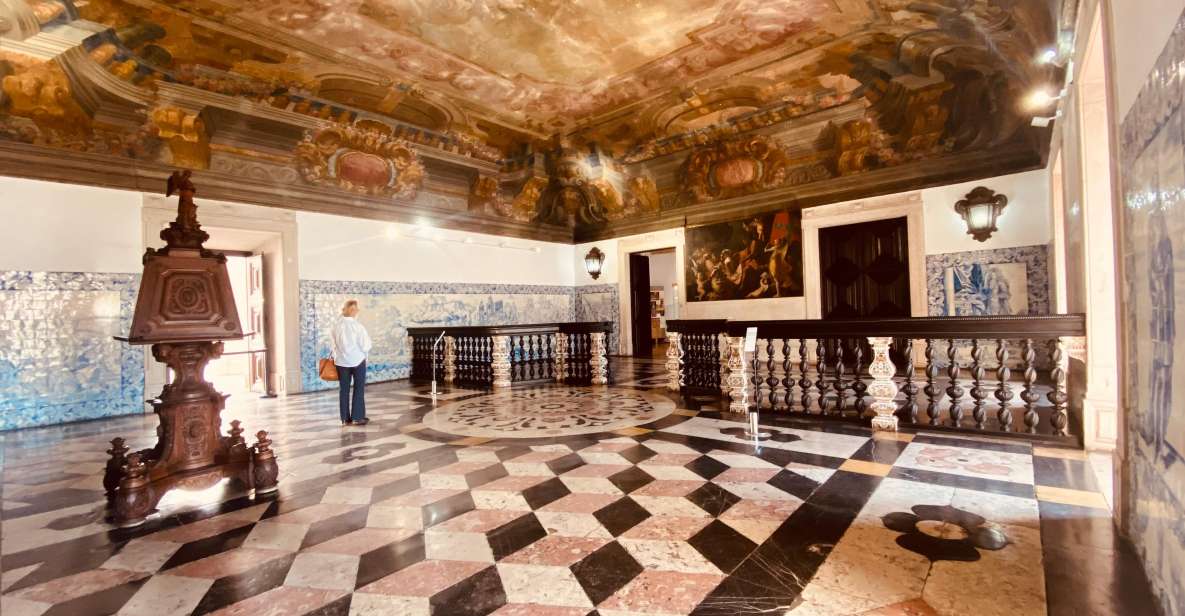
- The azulejos: baroque glazed tiles kept where they belong
- The cistern that still works: the 12th-century practical surprise
- Sacristy with inlaid marbles: high-detail devotional design
- Royal Pantheon of the Bragança Dynasty: where Portugal’s royal line rests
- La Fontaine fables on glazed tile panels: the story panel you’ll remember
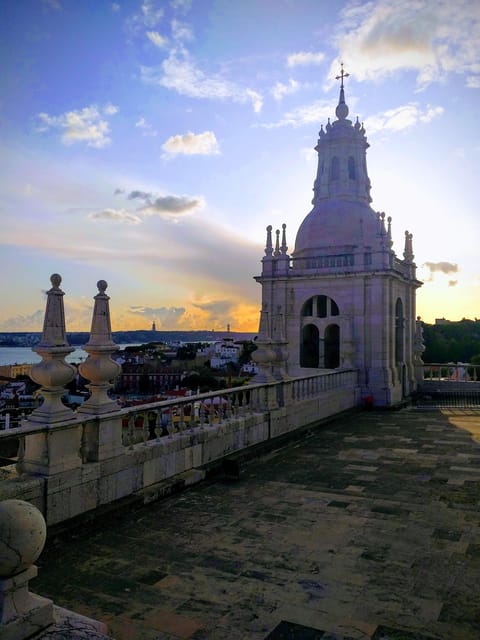
- The panoramic view over the city and river: the payoff after the art
- What’s included in your ticket (and how to use it well)
- Timing and pacing: how to fit it into a Lisbon day
- Rules that affect your comfort: what you can’t bring
- Value for money: why a low ticket price works here
- Who should book this ticket?
- Should you book this entry ticket for Mosteiro de São Vicente de Fora?
- FAQ
- Do I need a guided tour for this visit?
- Where do I pick up my ticket access?
- Is an audio guide included?
- What does the ticket include?
- What is the duration and validity of the ticket?
- What languages are available?
- What items are not allowed inside?
- Is free cancellation available?
Key highlights you’ll actually care about
- The azulejos are in situ: a huge baroque glazed tile collection kept in its original locations
- Tiles with a world-class claim: described as the 2nd monument in the world with the most tiles in their original place
- A medieval cistern that still works: a 12th-century cistern you can see functioning
- Sacristy with inlaid marbles: walls fully decorated in a very polished, high-detail style
- Royal Pantheon of the Bragança Dynasty: the last Portuguese royal family is entombed here
- La Fontaine fables in glazed tile panels: 38 fables shown through ceramic artwork
Where the visit starts: Church ticket office to self-guided route
Mosteiro de São Vicente de Fora is one of those Lisbon stops where the building itself sets the mood fast. Your tickets are for entry into the monastery complex, and the meeting point is simple: the ticket office inside the Church of São Vicente de Fora.
From there, you’re on a self-guided visit. That matters, because you’re not being shepherded from room to room by a guide. Instead, you move through the areas included on your ticket while leaning on:
- informative and explanatory panels throughout
- a flyer with a map and brief description
- access to all exhibitions and areas within the circuit
If you’re the type who likes to pause, look closely, and read what you want at your own speed, this format works well. If you prefer someone explaining connections between rooms and dynasties out loud, you may miss that structure—but you still get enough visual drama that it won’t feel like homework.
A few more Lisbon tours and experiences worth a look



Why this monastery feels so “Lisbon” even when you’re not chasing churches
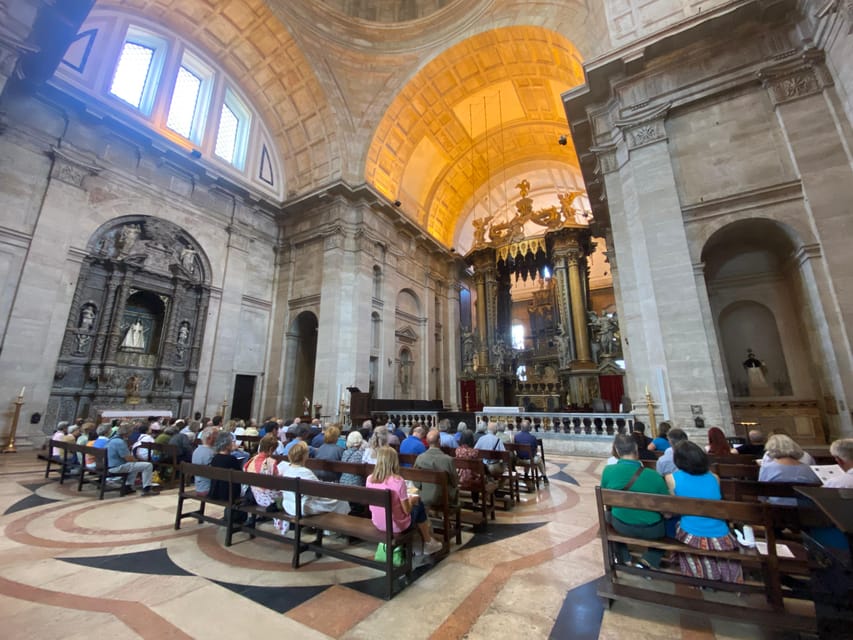
São Vicente de Fora is more than a pretty complex. It’s described as an icon of Lisbon’s landscape and a symbol of royal power across different ruling dynasties in Portugal. The story you’ll see in the spaces isn’t just decorative—it’s historical layering.
Here’s the timeline to keep in mind as you walk:
- Founded by D. Afonso Henriques in the 12th century
- Rebuilt by D. Filipe I (II of Spain) in the 16th century
- Today it’s one of Portugal’s strong examples of Mannerism
- Later reappropriated by the Bragança Dynasty, leaving behind a major heritage of royal art and burial space
That layering is why the monastery doesn’t feel like a single-style museum. You’ll move between architecture, devotional rooms, royal tomb context, and ceramic artwork—so the visit reads like a timeline you can walk through.
And if you’re there for the visuals, you’re in the right place: the monastery is famous for its largest collection of baroque glazed tiles in their original place (in situ), plus a reputation tied to the sheer number of tiles kept where they belong.
The church and exterior energy: start with the setting, then go inside

Even before you reach the rooms that do the real talking, the church context matters. Your ticket experience begins at the Church of São Vicente de Fora ticket office, and the entire complex is arranged so you feel like you’re entering a long-lived institution, not an isolated attraction.
Practical note: this is not a stop where you can bring a lot with you. The monument rules say no luggage or large bags, and you also can’t bring food and drinks (and of course no smoking, alcohol, or drugs). That’s pretty standard, but it’s worth knowing so you don’t arrive mentally planning snacks and big tote-carrier logistics.
When the entry process is clear and the rules are straightforward, the visit flows better—and with the reviews emphasizing that it’s not crowded, you’re more likely to enjoy the quieter, slower pace that makes religious architecture worth your time.
The azulejos: baroque glazed tiles kept where they belong
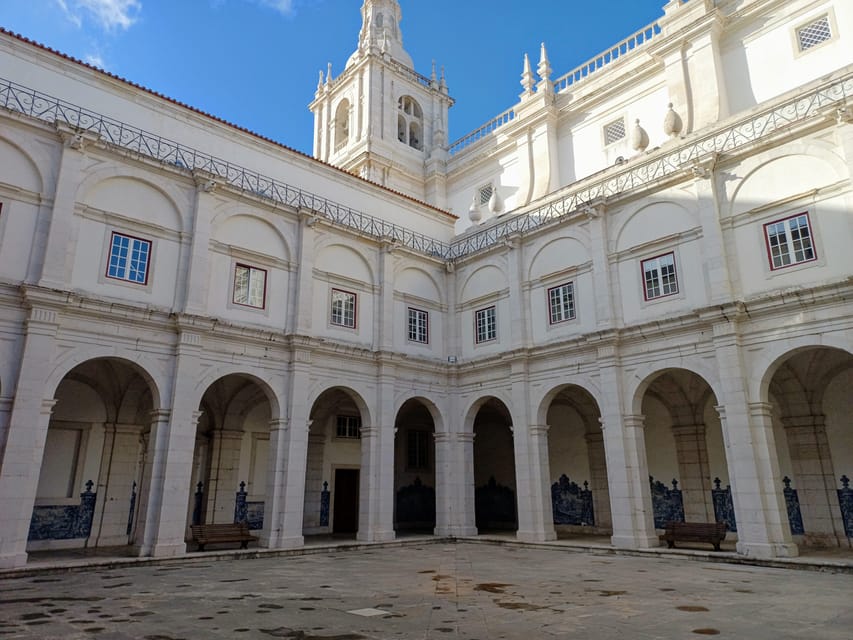
If you only remember one part of Mosteiro de São Vicente de Fora, make it the tiles. This is where the monastery wins for most people.
The standout claim you should take seriously: it’s home to the largest collection of baroque glazed tiles in their original place (in situ). In plain terms, that means the tiles aren’t moved into display cases. You’re seeing them integrated into the rooms they were made to decorate.
The experience highlights also frame this as the 2nd monument in the world with the most tiles in their original place. Even if you don’t care about rankings, it points you toward what you’ll notice immediately: the scale and how much ceramic detail you’ll keep encountering from room to room.
A practical way to enjoy this area:
- Spend extra time in the rooms where the panels help you orient yourself—those explanatory signs are there for a reason.
- Don’t race through just because you’ve seen photos online.
- Let your eyes adjust: tile art rewards slow looking.
From the review takeaways, you can expect people to treat the tiles as the main event—especially since one review specifically highlighted that the monastery offers a huge amount of blue azulejos.
The cistern that still works: the 12th-century practical surprise
A working medieval cistern is not what most people expect from a monastery ticket, which is exactly why it lands so well. One of the included stops is a medieval cistern that still works, dating to the 12th century.
This is the kind of detail that changes your mental picture of the site. You’re not just seeing “beautiful old rooms.” You’re seeing how the monastery functioned and how useful parts of the architecture survived long enough to remain relevant.
If you like when history shows up in everyday engineering terms, this is your pause moment. Read what the panels say, then look for how the space is arranged and why it would have mattered back when the monastery was built and maintained.
It’s also a good counterbalance to the visual intensity of the tiles—this is more about structure and function.




Sacristy with inlaid marbles: high-detail devotional design

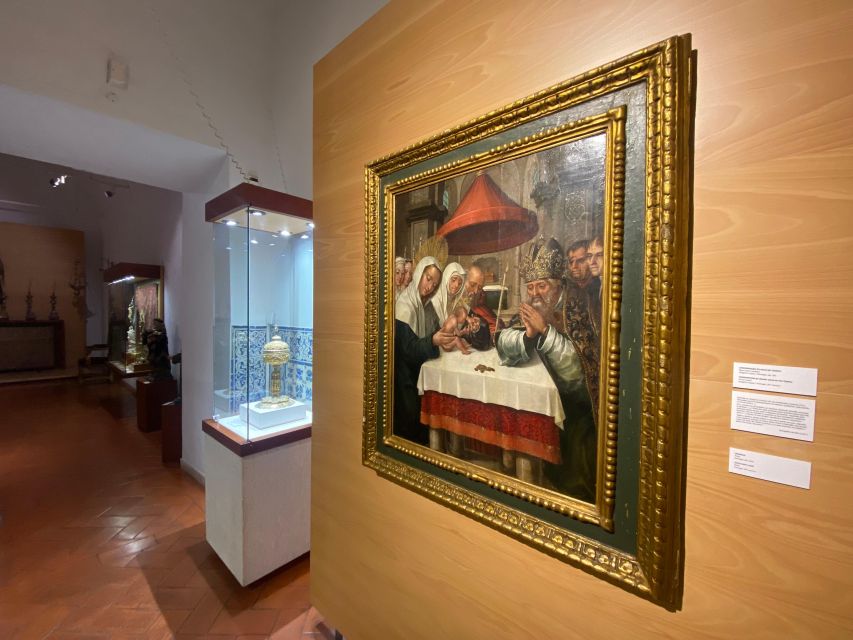
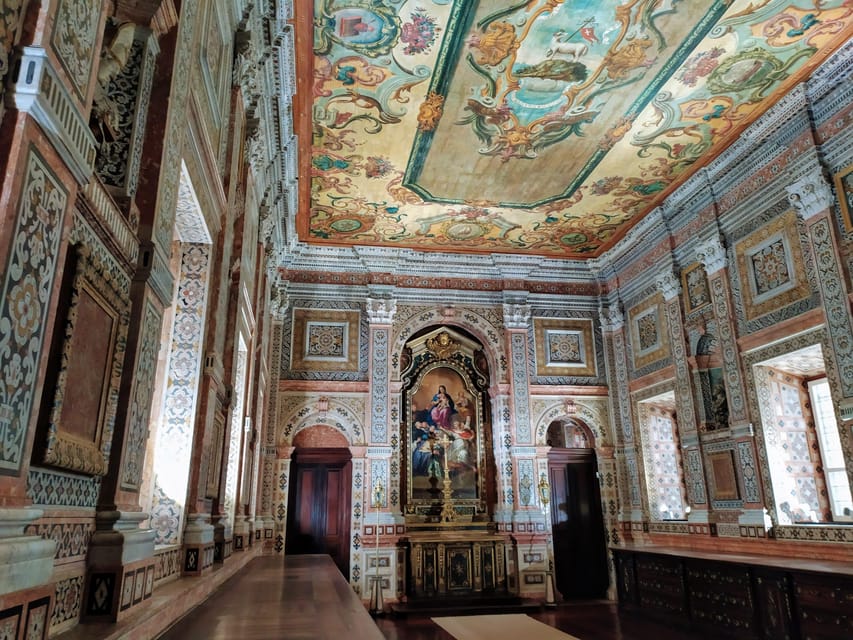
Another highly recommended stop is the sacristy, described as having walls fully decorated with inlaid marbles.
This room shifts the “theme” of your visit. After long tile corridors, you move to a surface treatment that feels different—more like a sculpted, polished wall concept than ceramic decoration.
What makes this worth your time is the contrast. You get to compare:
- the ceramic storytelling of azulejos
- with the prestige and craftsmanship of inlaid marble decoration
In other words, the monastery isn’t just one style on repeat. It layers materials, textures, and artistic intentions.
Royal Pantheon of the Bragança Dynasty: where Portugal’s royal line rests
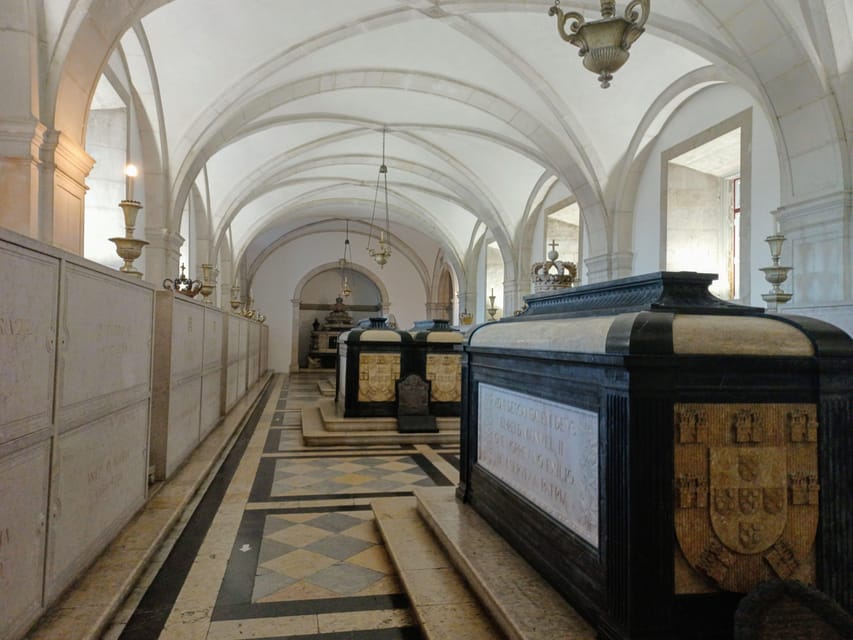
Then you reach the part that makes this more than an art stop: the Royal Pantheon of the Bragança Dynasty, where the last Portuguese royal family is entombed.
If you’re the type who thinks of monuments as “history behind glass,” this kind of space changes things. It’s not just visual. It’s commemorative and heavy with context. The monastery functions as a reminder of how ruling families used sacred spaces to claim legitimacy, memory, and continuity.
Because this is self-guided, I suggest you slow down here and actually read. The informational panels can help you connect what you’re looking at with the names and dynasties that the monument’s timeline introduces early on.
This section is also a good moment to decide how you want to interpret the site: as architecture, as art history, or as a physical record of Portuguese royal power changing hands over centuries.
La Fontaine fables on glazed tile panels: the story panel you’ll remember
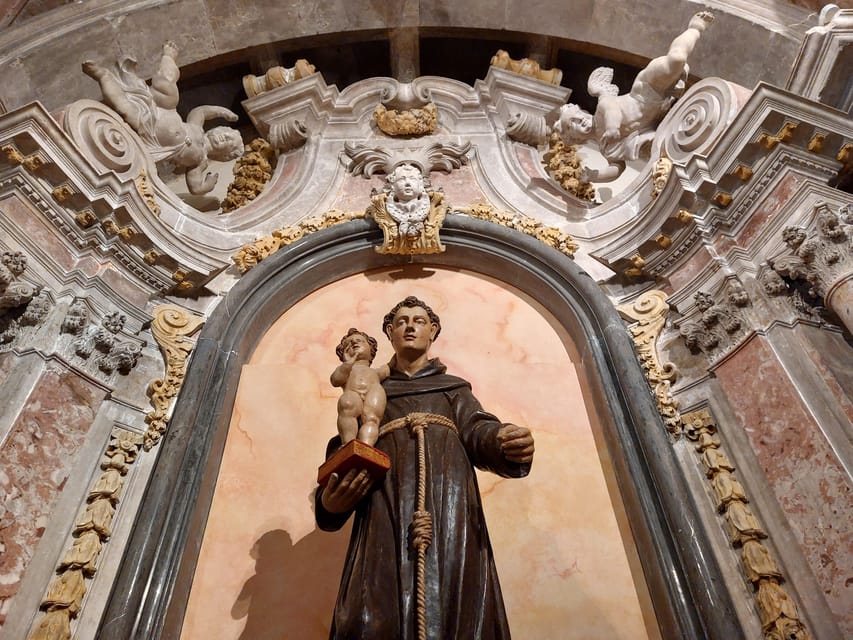
One of the most specific—and fun—features included in your ticket is an exhibition of 38 fables by Jean de La Fontaine, depicted in glazed tile panels.
This is where the monastery becomes playful without becoming childish. The tiles aren’t just decorations here. They’re used to tell a narrative through ceramic artwork.
If you’re visiting with family or friends who don’t always love reading museum captions, this is the part that usually bridges the gap. You can scan for familiar themes, then stop for the images that grab you.
Also, since this ticket includes access to all exhibitions, this is the reason the entry price feels more like a cultural pass than a narrow “walk-in church” ticket.
The panoramic view over the city and river: the payoff after the art
You’ll also want to save energy for the magnificent panoramic view over the city and the river included in the route.
From a planning perspective, it’s smart to hit the view after you’ve built up visual context inside. After rooms full of art and ornament, the city view gives your brain a reset. You can step back, orient yourself, and see Lisbon from a higher vantage point.
The reviews highlight this as a major reason people recommend the site, with more than one comment pointing to both the view and the azulejos as top reasons to go.
If the day is windy or too bright, give yourself a minute to pick where you stand for the best angle. No one wants to rush the view and then spend ten minutes trying to get photos that don’t look right.
What’s included in your ticket (and how to use it well)
Your ticket includes exactly what you need for a smooth self-guided visit:
- Entry to the monastery
- Access to all exhibitions and areas within the circuit
- Informative and explanatory panels throughout
- A flyer with a map and brief description
- Bathroom
- A visit experience offered with English, Spanish, French, Portuguese, and Italian support by the host/greeter
What’s not included:
- A guided tour
- Audio guide
- Access to areas out of the circuit
Here’s how I recommend using this format:
- Start with the flyer map early, so you don’t wander.
- Pick one “deep focus” theme: tiles, royal spaces, or the fable exhibition.
- Read the panels where names and dates matter (especially around royal context).
- Give yourself time to circle back if you realize you missed a room.
This is the kind of ticket that works best when you treat it as a curated walk—not a photo sprint.
Timing and pacing: how to fit it into a Lisbon day
You’re buying an entry ticket with a visit window described as valid 1 day with starting times checked by availability. Since you’re not given a guided group schedule, your main timing pressure is personal: how long you like to linger over tiles and exhibitions.
I’d plan this as:
- a main stop if you’re tile- or architecture-curious, or
- a strong supporting stop if you’re doing a broader Lisbon loop
If you’re hoping to get the most out of the monument, aim for a time when you’re not rushed. The reviews emphasize it can feel not crowded, and that’s when self-guided sites shine.
Rules that affect your comfort: what you can’t bring
This visit comes with clear restrictions. The monument does not allow:
- Smoking
- Food and drinks
- Luggage or large bags
- Alcohol and drugs
That affects your planning more than you might think. You’ll want minimal day-bag carry. If you’re traveling with kids, it’s better to plan meals elsewhere because you won’t be able to snack inside or bring refreshments.
Also keep in mind that you’re dealing with indoor rooms and exhibitions, so having your essentials ready makes your movement easier.
Value for money: why a low ticket price works here
At about $9 per person, this ticket feels unusually good value—especially for what you get. The experience includes:
- major architecture and major decorative art (not just a single room)
- exhibitions (including the La Fontaine series)
- the royal pantheon context
- a medieval cistern element
- a panoramic view payoff
Many Lisbon attractions charge more for a narrower experience. Here, the entry ticket acts like a compact museum pass. You don’t need a paid guide to access the core rooms; you have panels and a map to orient you.
So the value is not just the price tag. It’s the range packed into one entry.
Who should book this ticket?
Book it if you:
- love azulejos and want the tiles where they were meant to be
- want a quieter-feeling visit to a landmark
- enjoy royal-history spaces, especially the Bragança Dynasty pantheon
- like exhibitions that combine art and story, like La Fontaine in glazed tile form
- prefer self-guided pacing with explanatory panels instead of a scripted tour
Skip or rethink it if you:
- need a spoken guide to connect all the historical dots
- hate reading panels and want everything explained out loud
- are traveling with large luggage you can’t leave behind
Should you book this entry ticket for Mosteiro de São Vicente de Fora?
Yes, I’d book it if you want a strong mix of art, architecture, and royal context without paying for a guided package. The price is low relative to the number of meaningful stops, and the included view and cistern make it more than a tile-only visit.
The only real decision factor is your learning style. If you’re comfortable exploring at your own pace with panels, you’ll likely leave happy and full of concrete details—tiles in situ, a working cistern, marbled sacristy walls, and a royal pantheon you can actually stand inside. If you want narration, consider pairing your visit with other guided history experiences during the rest of your day.
FAQ
Do I need a guided tour for this visit?
No. This ticket is for entry and self-guided access to the monastery’s included areas and exhibitions.
Where do I pick up my ticket access?
The ticket office is inside the Church of São Vicente de Fora.
Is an audio guide included?
No audio guide is included with this experience.
What does the ticket include?
It includes entry to the monastery, access to all exhibitions and areas in the route, bathroom access, informative panels, and a flyer with a map and brief description.
What is the duration and validity of the ticket?
The duration is listed as 1 day, and the ticket is valid for 1 day with starting times based on availability.
What languages are available?
English, Spanish, French, Portuguese, and Italian.
What items are not allowed inside?
Smoking, food and drinks, luggage or large bags, and alcohol or drugs are not allowed.
Is free cancellation available?
Yes. You can cancel up to 24 hours in advance for a full refund.