REVIEW · LISBON
Lisbon: City Highlights Segway Tour
Book on GetYourGuide →Operated by Euro Segway Lisbon · Bookable on GetYourGuide
Segways turn Lisbon into a quick win. I like how the tour starts with hands-on practice so you can actually ride, not just stand around, and then quickly gets you to payoff views and viewpoints. I also appreciate the route choices that mix the big sights with the small street feel, from Terreiro do Paço to the hilltop squares.
One watch-out: Lisbon is hilly, and this ride is not for everyone. It is not suitable for pregnant women, people with mobility impairments, or anyone over 264 lbs / 120 kg, and you’ll want comfortable shoes for the time spent on and near the Segway.
In This Review
- Key highlights to look forward to
- Getting comfortable on Lisbon’s Segways (before you hit the hills)
- Terreiro do Paço and the Age of Discoveries
- Chiado’s shopping streets and vintage-store vibe
- Largo do Carmo and the Lisbon earthquake story
- Downtown Lisbon: calçada portuguesa, trams, and 18th-century street drama
- Guide energy makes or breaks a Segway tour
- Price and value: what $34 really covers
- Who should book this Lisbon Segway tour
- Booking tips that make the day smoother
- Should you book it or skip it?
Key highlights to look forward to
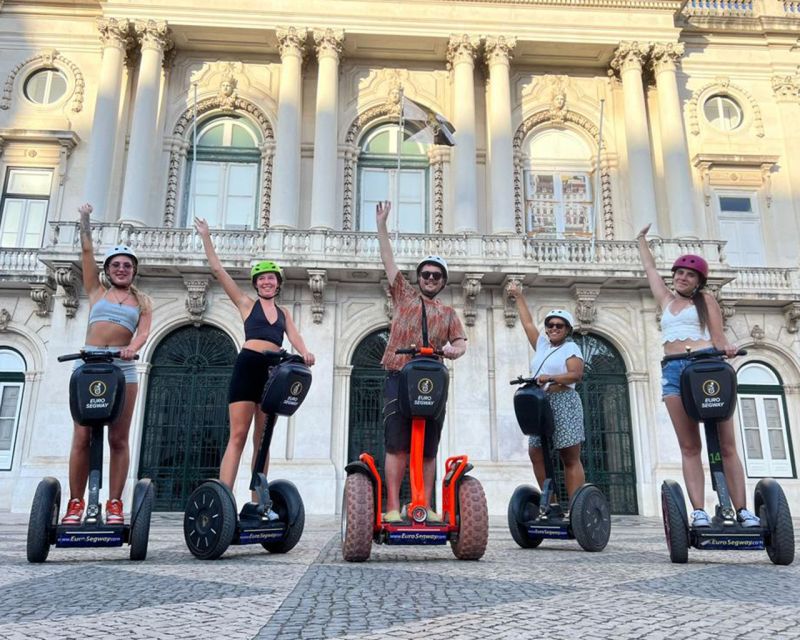
- Training first, confidence fast: a hands-on driving lesson plus a supervised test-drive before you roll out
- Iconic squares without the slog: Terreiro do Paço, then Chiado, then Largo do Carmo with its earthquake-era story
- Hilltop views and calçada portuguesa: you get a perspective on Lisbon’s slopes and its signature stone patterns
- Old downtown flavor: pass 18th-century “Manhattan style” architecture and the classic yellow electric trams
- Great guides who manage first-timers well: named guides like Gui, David, and Cristiano are called out for care and clarity
Getting comfortable on Lisbon’s Segways (before you hit the hills)
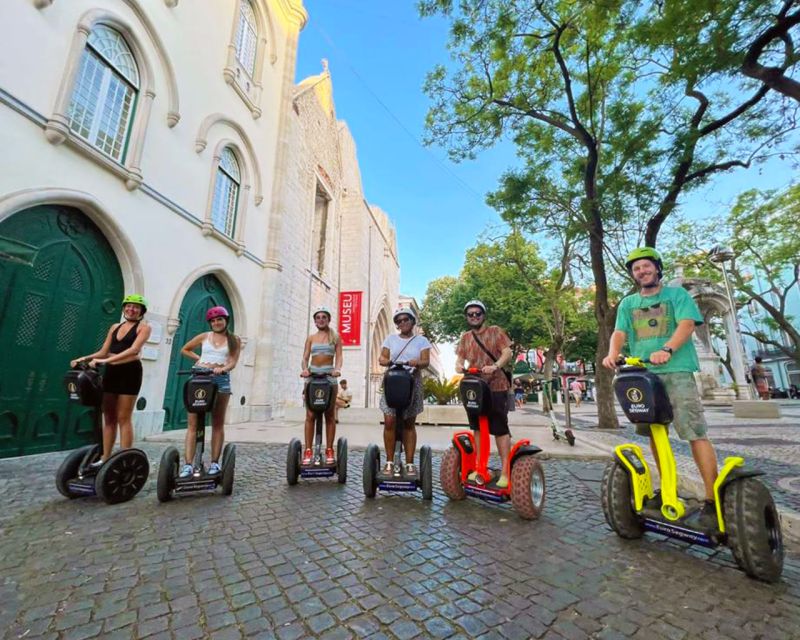
This tour has a simple goal: get you rolling safely and feeling in control quickly. You meet your guide at the shop, check in, and strap on your helmet. Then comes the part that makes or breaks Segway tours: the practice session.
You start with a hands-on driving lesson, and the guide’s job is to get you confident before you’re turned loose on the streets. That matters in Lisbon, where sidewalks, slopes, and street turns can feel intimidating if you’re learning on the fly. The tour design is built around that reality: you get training up front and ongoing staff support as you begin climbing through Lisbon’s charming little streets.
And yes, the Segway itself makes a big difference. On foot, Lisbon can feel like a never-ending staircase. On a Segway, you still work your legs a bit with posture and balance, but you cover distance with a lot less fatigue. That’s why this is a smart choice when you want an overview in a short window (the tour runs 1–3 hours, depending on start time and group pace).
Practical tip: wear comfortable shoes. You do not need hiking boots, but you want grip and comfort because you’ll be stopping, starting, and stepping off the Segway at points.
You can also read our reviews of more city tours in Lisbon



Terreiro do Paço and the Age of Discoveries

One of the first big targets is Terreiro do Paço, one of Portugal’s most famous squares. The timing is good, too. You reach it after you’ve had that initial practice, so you can enjoy the place instead of worrying about your steering.
This stop is about context. Lisbon’s identity is tied to the Age of Discoveries—ships sailing out into the world, Portugal’s role in ocean exploration, and the sense that this city has always been looking outward. Even if you only know the basics, standing in a landmark square like this gives the stories a real setting. You’re not just hearing facts; you’re seeing the kind of place where power, trade, and arrivals would have felt very present.
What I like here is that you get both the visual and the narrative in one stop. Squares in Lisbon tend to be more than just open space. They’re built for social life—meeting points, ceremony spaces, and traffic hubs. On a Segway, it’s easy to move through the area without losing your momentum.
Possible drawback: if you’re prone to motion sensitivity, remember you’re still getting up to speed and doing turns in an urban environment. The training helps, but it’s still a moving ride through a lively square zone.
Chiado’s shopping streets and vintage-store vibe

After Terreiro do Paço, the route swings toward Chiado, a luxury area known for shopping and vintage stores. This part of the tour is where the experience shifts from landmark history to everyday Lisbon texture.
Chiado has a “walkable but not slow” feel: shops, small lanes, and that classic city mix of old and new tastes. On a Segway, you can glide through the area without turning it into an endurance test. You also get to see how Lisbon’s layout works—how one neighborhood feeds into another, with the hills shaping where people go and how they move.
This stop is particularly useful if you’re short on time and want a feel for where locals and visitors blend. If you come to Lisbon mainly for food, views, and culture, Chiado offers a change of pace: it’s not just monuments; it’s the mood of the city.
Small caution: if you’re hoping for a deep “shopping mission” where you have time to browse a lot, this tour is not that. It’s a highlights-and-overview format. You’ll get the neighborhood feel, not a full-on retail spree.
Largo do Carmo and the Lisbon earthquake story
Next you reach Largo do Carmo, in front of the old monastery that did not survive the Lisbon earthquake of 1755. This is a powerful stop because it anchors the city’s past in a physical place you can stand in front of.
Lisbon’s history isn’t abstract. The earthquake shaped buildings, urban planning, and how the city rebuilds itself. So when your guide points out this location, it’s not just “sad history”—it’s a reason Lisbon looks the way it does today in certain areas, and why certain architectural choices and ruins feel so present.
I like how the tour uses a big narrative event and then ties it to an actual square. It makes the story easier to remember later, especially once you’ve seen multiple neighborhoods close together.
Possible drawback: if you’re very sensitive to weather or uneven footing, plan for short steps and stopping points. This is still an active ride; you’ll be moving in and out of stops.
Downtown Lisbon: calçada portuguesa, trams, and 18th-century street drama
As you move down the hill, you roll into the busy downtown area—more commerce, more cafés, and plenty of that Lisbon street energy. One of the most “Lisbon” things you can see here is calçada portuguesa, the patterned Portuguese stone pavement that covers the ground like a built-in art gallery.
On a Segway, you notice these textures in a different way than walking. You can glide along the patterns without breaking your rhythm, and it’s easier to compare where styles change from block to block. That helps you understand Lisbon’s street design as part of daily life, not just a postcard detail.
Your ride also passes the kind of streetscape that makes Lisbon feel cinematic: the old yellow electric trams and 18th-century “Manhattan style” architecture. The trams are a simple thrill. They’re slow, loud-ish, and extremely Lisbon. The architecture reference adds a layer, too—you start to see how Lisbon’s urban planning carries influences and echoes across time.
Another plus: the ride back to the office keeps you moving through the city instead of ending abruptly. That means you leave with a smoother sense of “how the neighborhoods connect,” especially the hill-to-downtown flow.
Tip for photos: if you’re into pictures, stop-and-snap at the squares rather than while rolling. You’ll get cleaner framing and you won’t feel rushed.





Guide energy makes or breaks a Segway tour
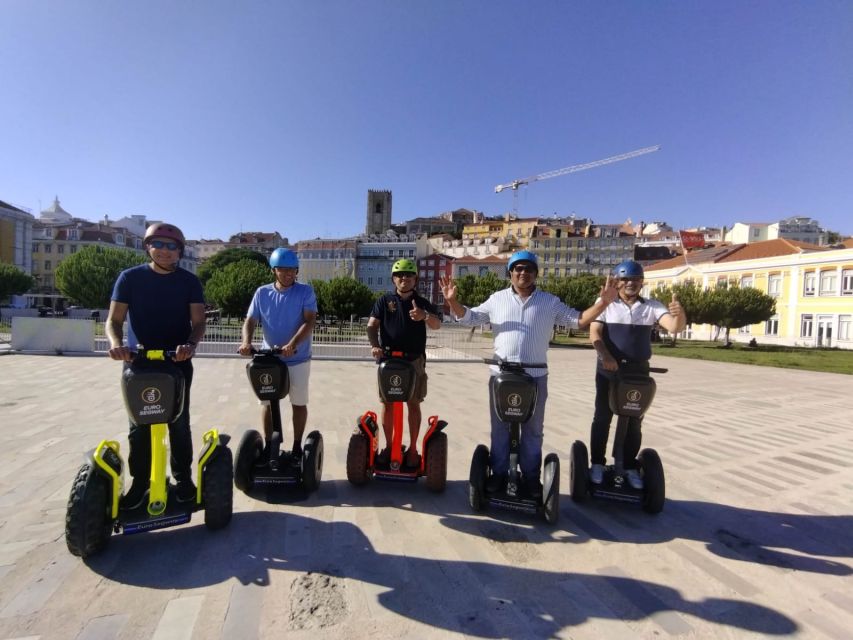
This is the part I pay attention to most. When a Segway tour works, it’s because the guide treats it like a skill-building experience, not a roller-coaster.
The tour’s staff emphasis is clear: training, helmet use, and supervision. In the guide lineup you’ll see names like Gui and David, who are highlighted for care and strong instruction. Other guides—like Cristiano and Christian—are praised for safety management, city facts, and keeping groups moving efficiently.
There’s also a nice human element in how different guides run the pace. Some keep it fun and light for first-timers, which matters a lot if you’re riding with kids or teenagers. One guide experience was described as especially engaging for a group of girls new to Segways, where the training and confidence-building made the whole thing feel safe and enjoyable.
Weather can also shape the vibe. One of the practical comforts you might appreciate is that on a hot day, moving on a Segway can feel better than standing in the sun. Breeze plus motion adds up. Just still bring sunscreen if you burn easily.
Price and value: what $34 really covers
At about $34 per person, this sits in the “worth it for the time it saves” category. Here’s what you’re getting that’s usually extra on other tours: Segway use, a tour guide, helmets, safety training, and a supervised test-drive. You also get bottled water and a rain poncho if needed.
That bundle matters. A Segway tour without real training can turn into a shaky, stressful experience. This one builds in the instruction so you spend your money on the city views rather than worrying whether you can handle the machine.
Also, the tour duration (1–3 hours) is a sweet spot. Lisbon’s attractions are packed into zones, but walking the hills can eat your afternoon. This format is ideal if you want an efficient overview plus a few “can’t-miss” squares.
One value consideration: if you’re already very confident cycling or using similar devices, you may feel the training is shorter than you expected. But if you’re new—this is the whole point—training is what turns the Segway into a safe, fun tool instead of a white-knuckle experiment.
Who should book this Lisbon Segway tour
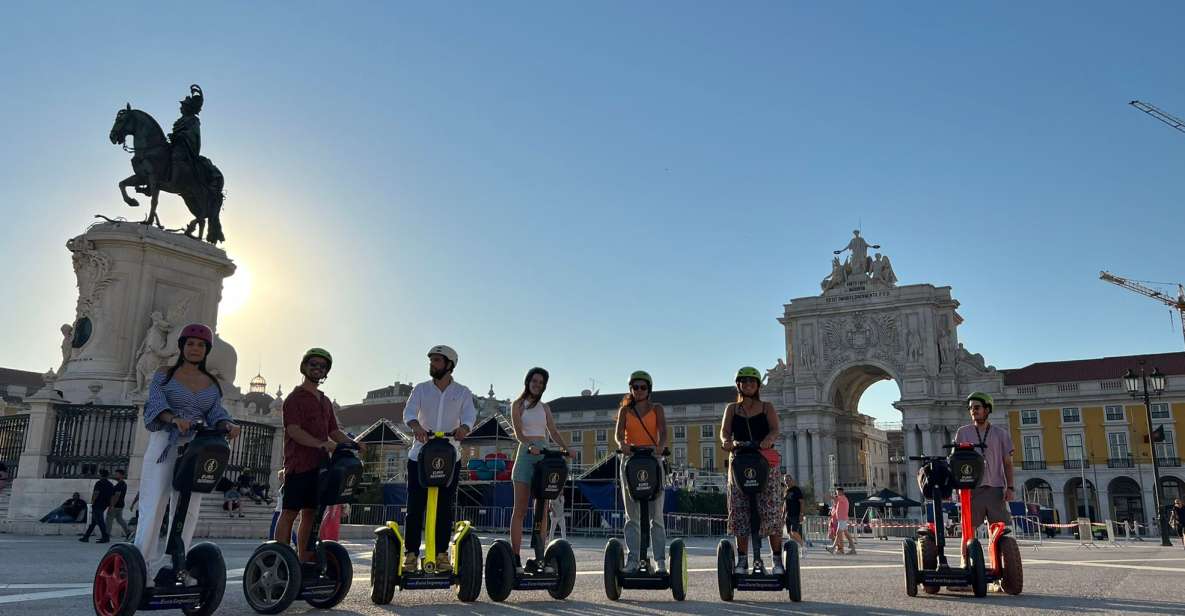
This tour is a strong fit if you:
- want a fast way to see key Lisbon neighborhoods without marathon walking
- are okay with hills and short stop-and-go moments
- like getting city context from a live guide while you move
- are traveling with teens who are curious but not thrilled by long museum time
It’s not a fit if you:
- are pregnant
- have mobility impairments that make it hard to balance or step off safely
- weigh over 264 lbs / 120 kg
- want a quiet, low-movement experience
If you’re the type who likes outdoor city culture—squares, streets, trams, and pavement details—this is built for you.
Booking tips that make the day smoother
A few small choices can improve your experience a lot:
- Bring comfortable shoes. You’ll feel better during stops.
- Bring your passport or ID card. A copy is accepted.
- Skip alcohol and drugs. They’re not allowed.
- If rain is in the forecast, use the rain poncho included. Lisbon weather can change fast.
Also, check start times. The tour can run from 1 to 3 hours, so pick the window that matches your energy level and the rest of your day plan.
Should you book it or skip it?
Book this Lisbon Segway tour if you want a practical overview that balances big squares with real street texture—especially if you like hilltop views, the story behind Terreiro do Paço, and the look of calçada portuguesa as you roll through downtown.
Skip it if hills and active movement would be uncomfortable for you, or if you need a fully accessible, low-balance format. And if you’re hoping for long sit-down time at each attraction, you’ll likely want a different kind of tour that slows down more.
If you fall somewhere in the middle—curious, limited on time, and open to learning—this is the kind of guided experience that helps Lisbon click fast.