REVIEW · PORTO
Jewish Walking Tour of Porto
Book on Viator →Operated by Pxt, Lda · Bookable on Viator
Porto has a second Jewish map. This Jewish walking tour links Porto’s top sights to the neighborhoods, trade streets, and community life that shaped centuries of the city. With a small-group format and a local guide, you get a focused route (not just random sightseeing).
I like two things a lot: first, the pacing is made for real questions, and guides such as Pedro and Daniel are known for turning serious history into clear stories. Second, many of the key stops are essentially “walk-up” moments, with free admission at the sites on the route, so you spend time looking instead of buying tickets.
My only real caution is the weather. The tour depends on good conditions, and a few participants have shared that heavy rain can make the experience harder if the group can’t get under cover quickly. Bring a light rain layer and expect a true walking pace for roughly 2 hours 18 minutes to 3 hours.
In This Review
- Key highlights I’d plan around
- Price and logistics: is $42.05 a good deal?
- Terreiro da Sé: where Porto’s Jewish story starts to take shape
- Praca da Ribeira: trade streets, merchants, and a maze of narrow lanes
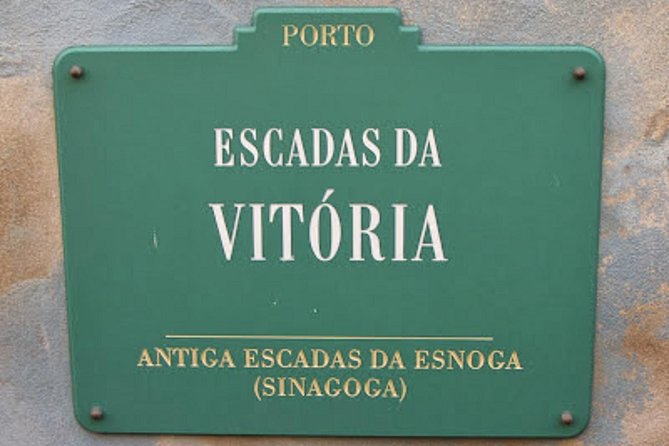
- Miradouro da Vitória: a Jewish quarter tied to 1386
- Horto das Virtudes: cemetery clues without the full artifact trail
- What makes the guides so highly praised: storytelling, pace, and Q&A
- How the route feels on the ground: walking time, momentum, and comfort
- The kind of Jewish history you’ll hear: from medieval quarters to later chapters
- A quick word on weather and refunds: don’t let it spoil your day
- Who this Jewish walking tour in Porto is best for
- Should you book it? My take
- FAQ
- How long is the Jewish Walking Tour of Porto?
- What does the tour cost?
- Is the tour offered in English?
- Where do we meet and where does the tour end?
- How big is the group?
- Is food or drinks included?
- Are the stops requiring paid admission?
- What happens if the weather is poor?
Key highlights I’d plan around
- Small group size (up to 15) for questions and personalized attention
- English-led with a mobile ticket, so it’s easy to start on time
- Central meeting and finish (Terreiro da Sé to Avenida dos Aliados)
- Four history-linked stops tied to Porto’s early Jewish community areas
- Guide storytelling that handles tough chapters with humor and clarity (Pedro, Daniel, Ricardo, and others)
- Some tours may include extra glimpses, like remains tied to an Aron Kodesh hidden for over 100 years (when arranged by your guide)
Price and logistics: is $42.05 a good deal?
At $42.05 per person for about 2 hours 18 minutes to 3 hours, this tour sits in the “few hours, big payoff” category. You’re paying for three things that matter in a walking tour: a guide who can connect modern streets to vanished communities, a tight route between central neighborhoods, and time savings (you don’t have to piece this history together yourself from scattered plaques).
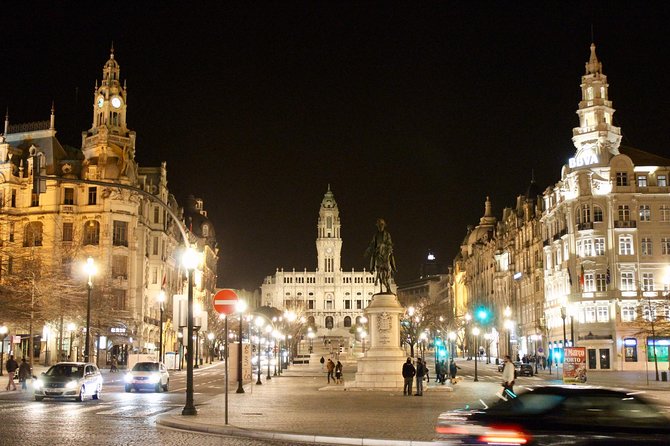
The format also helps. The group is capped at 15, which usually means you can keep up without constantly waiting for people. You’ll use a mobile ticket, and the tour is offered in English. It starts at Terreiro da Sé (4000 Porto) and ends at Avenida dos Aliados (Av. dos Aliados, 4000 Porto)—both very walkable and well connected by public transport.
One more practical point: food and drinks aren’t included. That’s fine, but plan to either grab a snack before you start or tack on a stop for something after. Porto’s neighborhoods reward lingering, and you’ll probably want time to follow up on what you learned.
You can also read our reviews of more walking tours in Porto

Terreiro da Sé: where Porto’s Jewish story starts to take shape
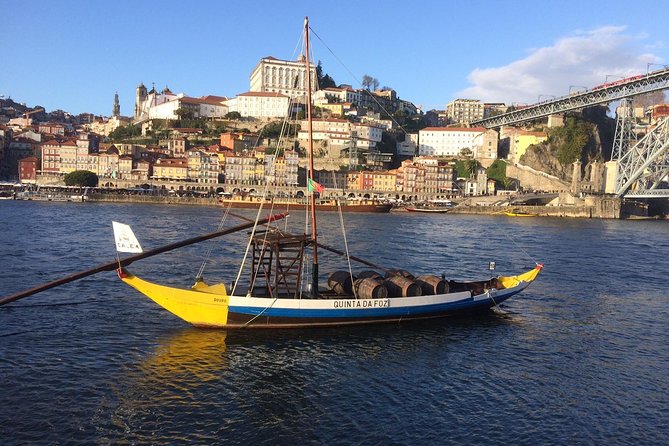
The tour’s first stop is Terreiro da Sé, in Porto’s old historical area. This is where guides help you connect the physical city—especially the Cathedral area and the earliest layout of the neighborhood—to the first residents and the earliest Jewish community presence.
What I like about starting here is the way it gives you context fast. Before you move into smaller streets, you need a mental map: where the city’s oldest core sits, how the area likely functioned, and why nearby community life mattered. Even if you don’t see dramatic artifacts in every direction, the guide’s job is to show you how to read the streets.
Also, because the stop notes free admission, you’re not forced into a “museum mindset.” It’s more of a “look, notice, listen, understand” moment. Expect a blend of geography and history: where people lived, what the area meant, and how this part of Porto ties into broader Portuguese Jewish history.
Praca da Ribeira: trade streets, merchants, and a maze of narrow lanes
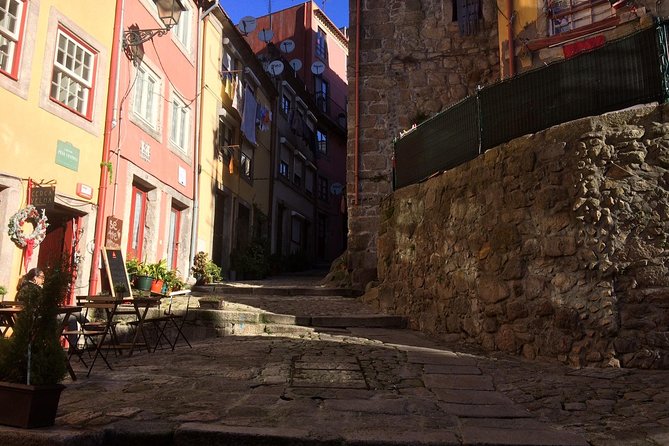
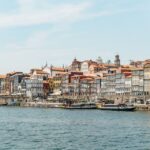
Next comes Praca da Ribeira, the riverside area where Porto developed through trade and business. This is where the tour shifts from first foundations to daily life—merchants, stores, houses, and the kind of dense street pattern that makes cities feel lived-in.
If you’ve walked Ribeira before, you might think you already “know” it. The tour’s value is that it reframes what you’re seeing. A guide helps you imagine how commerce shaped neighborhood rhythms, where people built networks, and how the city’s commercial pull influenced community life.
The stop is also described as having free admission, so it stays light on logistics. You’re out in the neighborhood, and the main task is to follow your guide through the street layout—especially the narrow lanes that make Porto feel like it’s always turning a corner.
A good sign here is how the guides handle questions. Some guides, like Ricardo, are praised for pacing and answering patiently, which is exactly what you want when you’re looking at a place that can feel confusing at first. You shouldn’t have to guess what you’re looking for.
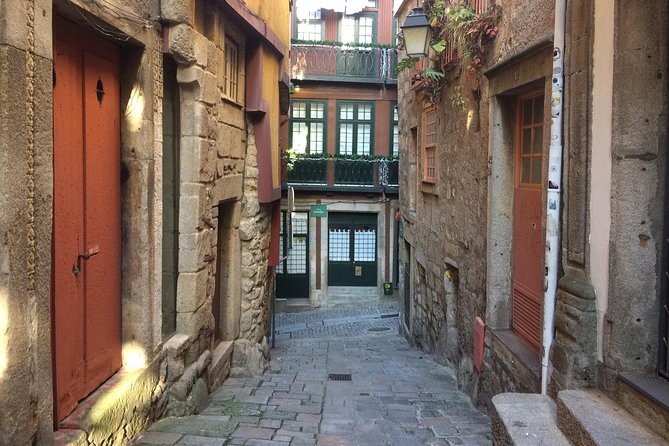
Miradouro da Vitória: a Jewish quarter tied to 1386
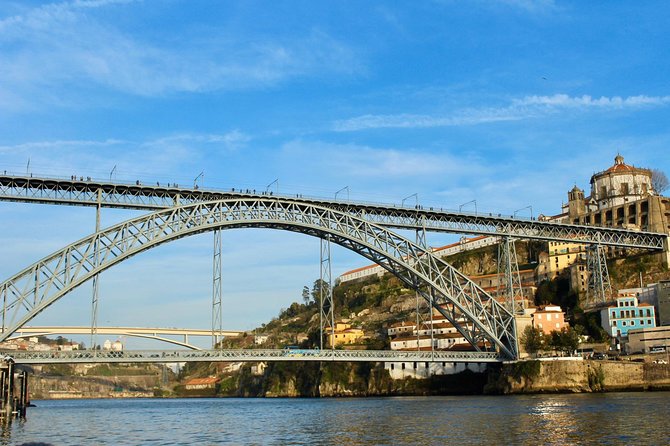
At Miradouro da Vitoria, you’re in the Vitória neighborhood, identified as one of Porto’s Jewish quarters. The tour highlights that this community was established in 1386 during the reign of King João I, and it was described as one of the city’s largest Jewish communities.
This is one of the stops where the landscape matters. Miradouro viewpoints give you scale. Even when you’re standing at a modern lookout, your guide can connect the view to how a quarter functioned—where streets lead, how daily routines might have moved through the area, and why this location became important.
Just as important: this stop is where history starts to feel less abstract. You’re not just hearing names and dates; you’re standing in a place tied to community establishment, size, and identity.
Horto das Virtudes: cemetery clues without the full artifact trail
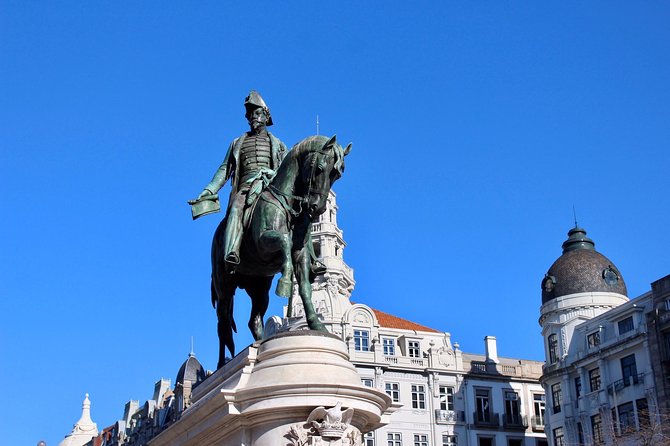
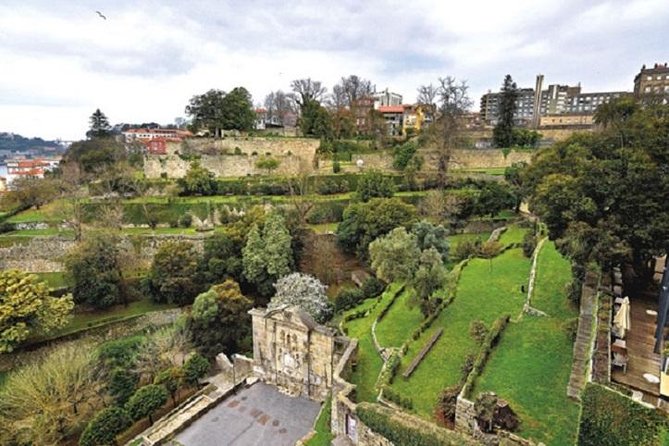
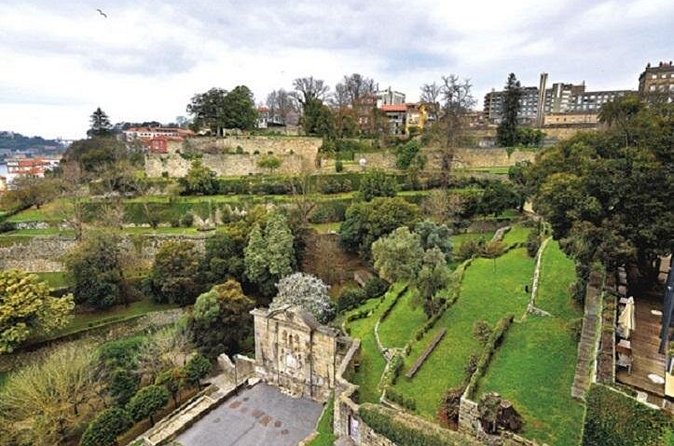
The final named stop is Jardim Municipal do Horto das Virtudes, in the area associated with Olival. Here, historical documents are referenced as showing that a Jewish cemetery was nearby, and that the Virtudes Garden connects to that earlier cemetery presence.
This is a quieter stop, and it’s also one of the more moving ideas in the route. When your guide explains that the cemetery sits in the broader memory of the area, you start noticing how Porto changes over time: how some sites are obvious and others survive more indirectly—through documents, location references, and hidden traces.
Admission here is also listed as free, so you’ll be walking, looking, and absorbing. Don’t rush this one. If you only take one thing from the tour’s end, make it this: Porto’s Jewish story doesn’t rely only on what’s visible today. It also relies on how you learn to interpret what’s missing.



What makes the guides so highly praised: storytelling, pace, and Q&A
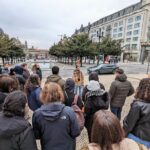
The biggest theme across guide feedback is simple: the guides are able to teach hard history clearly. People repeatedly highlight that the guide doesn’t just list facts. They tell the story in a way that helps you follow the threads across centuries.
You’ll hear how different guides bring different strengths:
- Pedro is singled out for broad, detailed Jewish history of Porto, plus strong communication and storytelling.
- Daniel is praised for being very educated and for answering questions, including questions tied to current events and Portuguese political views. One note also mentions visual materials he prepared.
- Ricardo is repeatedly described as passionate, warm, funny at times even when discussing serious chapters, and especially good at making Porto feel alive.
- Other names also come up—Vanessa, Ana/Anna—with consistent emphasis on clarity and how the tour ties Jewish life in Portugal to what you can recognize on the ground.
If you like tours where you can ask follow-ups, this kind of guide pairing with a max 15-person group is a good match. With smaller groups, you’re more likely to get direct answers rather than generic wrap-ups.
How the route feels on the ground: walking time, momentum, and comfort
This is a walking tour, not a bus ride with a few stops. Plan for sustained strolling between central points. With a duration around 2h18 to 3h, you’ll be moving enough to stay engaged, but not so long that you’ll feel trapped.
Because the tour requires good weather, I strongly recommend packing like you expect to be outside the whole time. Bring:
- Comfortable shoes (Porto streets can be uneven)
- A light rain layer just in case
- A small water bottle (since food and drinks aren’t included)
One practical note from the experience style: the route is built to start and finish in places that make it easy to keep exploring afterward. The end at Avenida dos Aliados is a useful “return to the center” landing point for restaurants, coffee, and linking to other sights.
The kind of Jewish history you’ll hear: from medieval quarters to later chapters
This walking route is presented as a through-line of Jewish life across major periods in Porto. The stops are tied to early community areas, later neighborhood scale, and then cemetery memory and continuity.
Some guides go a step further in what they point you toward. For example, one account describes a look at remains connected to an Aron Kodesh, hidden inside a wall for more than 100 years after the Portuguese Inquisition. That kind of detail isn’t guaranteed for every group (since it depends on the guide’s arrangements and access), but it fits the tour’s overall goal: connecting visible Porto to the deeper story beneath it.
You can also expect guides to explain how Jewish community life interacted with Portuguese culture and society. One account specifically mentions tying religious and cultural traditions back to Portuguese life, including how Jewish heritage can show up in unexpected ways.
A quick word on weather and refunds: don’t let it spoil your day
Porto weather can change fast. Still, the tour explicitly requires good weather. If conditions are poor, you should expect the operator to either offer a different date or a full refund.
Here’s the practical caution: in one shared experience, a participant left during severe conditions and later reported the refund didn’t go through. The safest strategy is to make your needs clear on the spot, but also to consider staying with the group if you can—because the tour is built around the route and timing.
If you’re the type who hates being soaked (fair), plan your day so you’re not too tight on schedules afterward. Then even if you do get some weather, you can still recover with a café stop.
Who this Jewish walking tour in Porto is best for
Book this if:
- You want Porto Jewish history tied directly to real streets and neighborhoods
- You’re a first-timer who wants the big story without doing a lot of solo research
- You’re returning to Porto and want to see the city through a different lens
- You care about guides who can answer questions and keep the pace moving (Pedro, Daniel, Ricardo repeatedly come up for this)
You might skip it if:
- You strongly dislike walking in rain and don’t want to carry a rain layer
- You want only “major monuments” and don’t care about quieter, document-based history like cemetery memory
- You prefer a self-guided tour where you can stop exactly when you feel like it
Should you book it? My take
Yes, I think you should book this Jewish Walking Tour of Porto if you want history you can walk through. The mix of central locations, a capped group size, and guides praised for storytelling makes it one of the more efficient ways to understand how Jewish life shaped Porto—and how that story still echoes in places that look ordinary at first glance.
Go prepared for a real walk, not a museum visit. If you can handle weather with the right layer and keep a flexible mindset, this is the kind of tour that makes the city feel bigger, older, and more personal.
FAQ
How long is the Jewish Walking Tour of Porto?
The tour runs about 2 hours 18 minutes to 3 hours (approx.).
What does the tour cost?
It costs $42.05 per person.
Is the tour offered in English?
Yes, the tour is offered in English.
Where do we meet and where does the tour end?
You meet at Terreiro da Sé, 4000 Porto, Portugal, and the tour ends at Avenida dos Aliados, Av. dos Aliados, 4000 Porto.
How big is the group?
The tour has a maximum of 15 travelers.
Is food or drinks included?
No. Food and drinks are not included.
Are the stops requiring paid admission?
The stops listed on the route show admission tickets as free.
What happens if the weather is poor?
The experience requires good weather. If it’s canceled due to poor weather, you’ll be offered a different date or a full refund.
If you tell me your travel dates and whether you prefer a morning or afternoon slot, I can help you plan the rest of your Porto day around this walk.