REVIEW · SAO MIGUEL ISLAND
Vila Franca Do Campo: Introduction to Scuba Diving Tour
Book on GetYourGuide →Operated by Azores Sub Dive Center · Bookable on GetYourGuide
Clear water and calm coaching make it click. In Vila Franca do Campo, your first-at-sea intro scuba session happens near crystal-clear conditions and the underwater story of 16th-century wrecked cannons. I especially like the combination of hands-on guidance (you’re not just handed gear and sent in) and the chance to enjoy the Azores from above and below the surface.
The crew approach feels extra reassuring, with instructors who slow things down and teach you how to use the equipment before you’re far from the boat. A key consideration: this is not for everyone, since the activity lists limits around health, fitness, and anxiety (including claustrophobia).
In This Review
- Key highlights to know before you go
- Where this intro scuba session fits in the Azores (and why it works)
- Meeting at the Marina de Vila Franca do Campo: start time and vibe
- The 30-minute safety briefing: how you’re taught to stay calm
- The short speedboat ride: quick, not chaotic
- At the islet: snorkeling setup and your supervised first scuba session
- If visibility is perfect, you’ll notice it
- The 16th-century cannon wreck and volcanic crater setting
- Water temperature and comfort: what you should plan for
- Who the guides are and what they do right
- After you’re done: rinse, regroup, and get your questions answered
- Price and value: what you’re paying for at $154
- Who should book (and who should skip) this intro scuba session
- Booking checklist: what to bring and what to plan
- Should you book this intro scuba session in Vila Franca do Campo?
- FAQ
- What’s the duration of the intro scuba session?
- Where does the tour start and end?
- What’s included in the price?
- What should I bring with me?
- What languages do the instructors speak?
- Is the tour suitable for non-swimmers or children?
- When should I schedule this if I have a flight?
Key highlights to know before you go
- Safety briefing first so you know what matters before you head out
- Natural Reserve setting with clear water and lots of local marine life
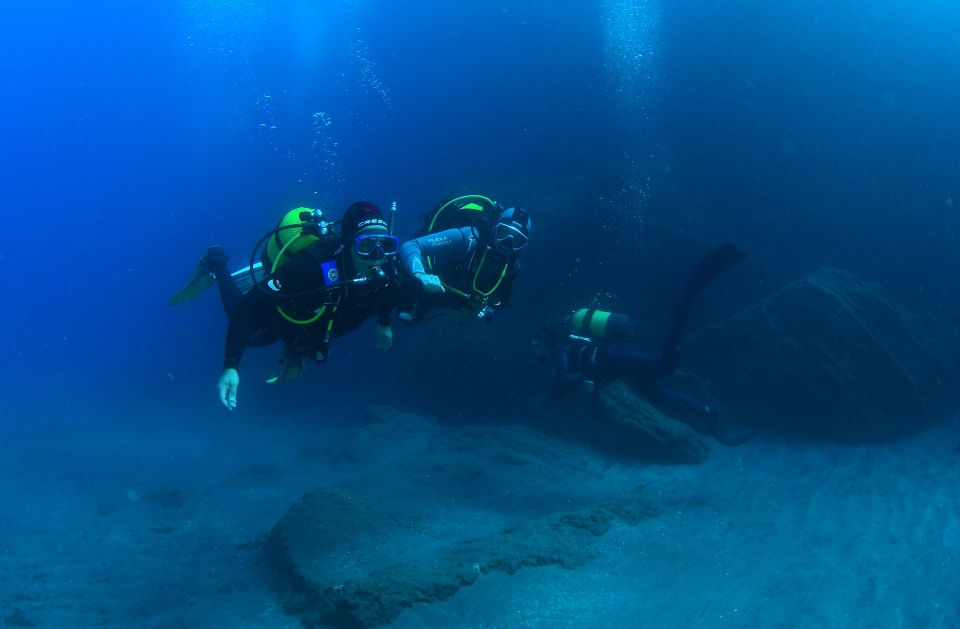
- Wrecked cannons from the 16th century near a volcanic crater area
- Short, controlled time in the water paired with patient instructor attention
- Comfort focus with pleasant water temps and buddy-style support during your session
Where this intro scuba session fits in the Azores (and why it works)
Vila Franca do Campo is one of those Azores basepoints where the sea does the heavy lifting for you. The tour is built around a quick boat hop to the Natural Reserve near the island, then a relaxed, supervised underwater experience designed for people trying scuba for the first time. If you’re the type who wants a structured start without getting overwhelmed, this format helps.
What you’ll feel most is the calm pacing. You start with a focused safety talk, you get your gear explained, and the instructors stay close as you practice the basics. Several first-timers credit this kind of structure with reducing nerves fast, because you’re never guessing what comes next underwater.
And the view angle matters too. You get the Azores from above during the speedboat ride and then immediately transition to seeing marine life below. That “land-to-sea contrast” is part of the fun, especially in good visibility.
You can also read our reviews of more scuba diving tours in Sao Miguel Island
Meeting at the Marina de Vila Franca do Campo: start time and vibe
The experience begins at the Marina de Vila Franca do Campo. Even before you’re on the water, the tone is set: it’s not a long, stressful assembly. Expect a straightforward start, then a 30-minute safety briefing before anyone goes in.
From what the crew is praised for, the best moments usually come from this early organization. People mention feeling safe because the instructors explain what to do and what to watch, rather than rushing through gear and hoping you figure it out on the spot.
Bring the basics (swimwear, a change of clothes, and a towel). Sunscreen helps too, because you’ll likely be in the sun during the boat time.
The 30-minute safety briefing: how you’re taught to stay calm
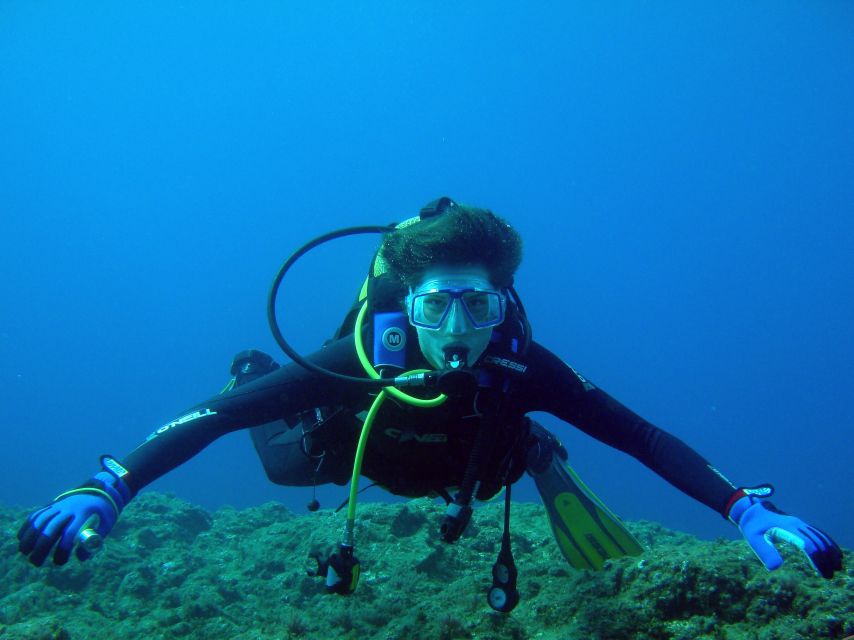
This tour is very explicit about safety steps. You get a briefing focused on how to handle equipment and how to behave in the water, plus instructions on safety procedures. It’s also where the crew covers breathing concepts that are tied to comfort underwater.
The lesson includes:
- Apnea basics (breathing control concepts)
- Equipment explanation (what each piece does and how it fits your body)
- Swimming techniques (how to move efficiently and calmly)
Why that matters for you: first-time scuba is often less about bravery and more about coordination. If your breathing feels controlled and your movement feels simple, the equipment feels less intimidating.
You’ll also learn about underwater communication. Instructors emphasize clear signals so you’re not relying on guesswork once you’re below the surface. That’s a big reason many people feel more relaxed by the time they actually enter the water.
The short speedboat ride: quick, not chaotic
After the briefing, you head out by speedboat for about 10 minutes. This is long enough to feel the change of scenery but short enough that you’re not sitting around while the group drifts into impatience.
This ride matters for two reasons:
- It gets you to the right marine reserve area without burning your whole morning or afternoon.
- It gives you that immediate Azores “sea air” feeling before you start.
If you’re prone to motion discomfort, plan ahead. The tour doesn’t mention special accommodations for seasickness, so it’s smart to bring whatever helps you personally.
At the islet: snorkeling setup and your supervised first scuba session
Once you reach the islet area near Vila Franca do Campo, your time splits into a relaxed marine-life viewing phase and then your short training session. Expect snorkeling alongside the marine life, with an emphasis on supervised comfort.
Your underwater portion is around 30 minutes. That’s a sweet spot for a first attempt: long enough to feel real and memorable, not so long that you get exhausted or mentally overloaded.
Here’s how it usually feels in practice:
- You get in with a guide who stays close.
- You practice and learn while keeping it controlled.
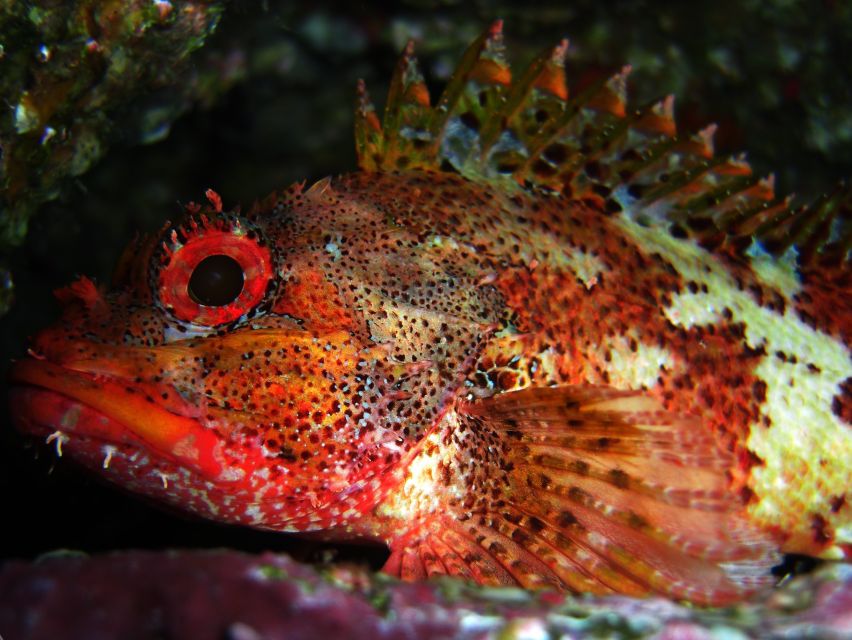
- You focus on the basics first, then you’re free to enjoy the scenery (fish, and other sea creatures in the area).
Many first-timers say the instructors keep checking in on comfort and confidence. It’s not just a “follow me” approach; it’s more like a buddy system where you’re guided hand-in-hand with calm explanations.
Named guides you may encounter include Ivo, Ricardo, Rodrigo, Emmy, Yanni, Veronika, Benardo, Tiago, and Paulo. Different instructors, same idea: patient teaching and safety-first attention.



If visibility is perfect, you’ll notice it
This area is known for great water visibility, and that’s one of the tour’s biggest selling points. In clear conditions, you can really see the underwater action without straining.
But visibility can shift with the day. If conditions aren’t at peak clarity, you’ll still get plenty of value from the structured intro session and the chance to see marine life at close range.
The 16th-century cannon wreck and volcanic crater setting
One of the most unique elements here is the underwater setting near wrecked cannons from the 16th century, located around a volcano crater area. That combination gives you more than “pretty fish.”
You’re seeing a place with a physical story. Instead of only looking at animals drifting by, you’ll also take in the remnants of the wreck environment, which helps the whole experience feel grounded and interesting.
Why that matters for first-timers: if you’re new underwater, it’s easy for everything to feel the same. A destination with distinct landmarks gives your brain something to latch onto, which reduces stress and makes the session feel purposeful.
Water temperature and comfort: what you should plan for
The tour highlights pleasant water temperature, and that matters more than people think. Comfortable water helps you keep relaxed breathing and steady movement.
Still, bring a change of clothes no matter what. You’ll get out of the water and want to warm up quickly. Even if the water feels good, wind and spray during the return can chill you.
Also think about your gear comfort. If anything feels off (mask fit, regulator comfort, hand position), tell your instructor right away. This is exactly what the crew’s patient reputation is built on: adjust early, fix small issues, and keep your experience enjoyable.
Who the guides are and what they do right
The standout theme across the experience is instructor quality, especially for first-timers. People repeatedly mention:
- Clear explanations before going in
- Patience with nerves and learning curves
- Personal buddy-style attention so you don’t feel left alone
The tour also runs in a way that keeps the group manageable. You don’t disappear into a crowd. Instead, you’re assigned a personal guide/buddy during the water time. Guides stay attentive to your comfort and use underwater communication so you understand what’s happening.
That style is a big deal if you’re anxious. One reason some people find this experience life-changing is that they go from scared to comfortable through repetition and supportive coaching, not through pressure.
After you’re done: rinse, regroup, and get your questions answered
When the session ends, you head back by speedboat to the marina. Back on shore, the crew provides a way to rinse your gear in spacious, clean areas.
This might sound like a small detail, but it affects how your day feels. If you’re handling wet equipment in cramped conditions, you spend your final energy dealing with mess. Here, you can rinse, reset, and ask questions calmly.
Some people also note the crew stays available for product advice and follow-ups. If you want to keep momentum toward learning more scuba, that post-session guidance can be genuinely helpful.
Price and value: what you’re paying for at $154
At about $154 per person for roughly 3 hours, the value is strongest when you look at what’s included. You’re not just buying a boat ride. The price includes:
- instructor guidance
- all diving equipment
- briefing
- boat trip
- insurance
For many people, the biggest hidden cost of scuba basics is gear and coaching time. Having equipment provided, plus safety-first instruction, makes this a practical entry point compared with piecemeal arrangements.
Also, the tour is short enough to fit into a tight day schedule, but long enough to feel like a real experience, not a quick taste. A first scuba session is about learning how to stay comfortable underwater, and the tour’s pacing supports that.
One more value angle: several people mention they left with motivation to pursue formal certification later. You shouldn’t assume certification is part of the package, but a well-taught intro can absolutely change how you think about continuing.
Who should book (and who should skip) this intro scuba session
This tour is especially suited to:
- first-timers who want structure and close guidance
- people who like animals and want to see marine life in a controlled setting
- visitors who want a quick, high-reward activity without a full-day commitment
But skip this if any of the listed restrictions apply. The tour notes it’s not suitable for:
- children under 10
- pregnant women
- people with back problems
- people with claustrophobia
- people with heart problems
- wheelchair users
- non-swimmers
- people with respiratory issues
- people with epilepsy
- people with diabetes
- people with kidney problems
- people with high blood pressure
- people with recent surgeries
- people with low fitness
- people over 95
- people over 70
One odd detail to flag: it’s listed as wheelchair accessible, yet it also says it’s not suitable for wheelchair users. If you’re using a wheelchair, you’ll want to confirm what that means in practice with the provider before you book.
If you have any medical conditions, the tour requires you to inform them in advance and complete a medical form on the day of the activity.
Booking checklist: what to bring and what to plan
Bring:
- swimwear
- change of clothes
- towel
- sunscreen
Plan ahead for:
- the day’s safety paperwork (medical form completion on-site)
- any medical considerations you have (tell them in advance)
- timing relative to flying: there’s a note that booking should be between 18 and 24 hours before your flight
That flying window is important. If you have an upcoming flight soon, schedule this so you’re not forced into an awkward gap.
Should you book this intro scuba session in Vila Franca do Campo?
I’d book it if you want a first scuba experience with a safety-first tone, close instructor attention, and a real sense of place underwater. The 16th-century cannon wreck setting near a volcanic crater area adds meaning beyond “just seeing fish,” and the structured briefing plus buddy support makes it feel built for beginners.
You should think twice if you’re in any of the listed non-suitable categories, if you’re very uncomfortable with the equipment, or if you can’t meet the basic physical and health requirements.
If you’re open to that structured start, this is the kind of tour that often turns curiosity into a real next step.
FAQ
What’s the duration of the intro scuba session?
The experience lasts about 3 hours total.
Where does the tour start and end?
It starts and ends at the Marina de Vila Franca do Campo in the Azores.
What’s included in the price?
Included are the diving instructor, all diving equipment, briefing, boat trip, and insurance.
What should I bring with me?
Bring swimwear, a change of clothes, a towel, and sunscreen.
What languages do the instructors speak?
The instructor team works in Portuguese, English, and Spanish.
Is the tour suitable for non-swimmers or children?
It is not suitable for non-swimmers, and children under 10 are not suitable.
When should I schedule this if I have a flight?
The activity notes that you should be between 18 and 24 hours before your flight, so plan your day around that window.