REVIEW · LISBON
Tour of the Knights Templar’s of Tomar in Private Tour
Book on Viator →Operated by Kitzel Tours Portugal · Bookable on Viator
Templar symbols show up everywhere. This private day trip turns Lisbon into a Templar trail, with guided stops that let you spot details instead of just looking at stones. You’ll move from a river fortress to Tomar’s sacred buildings and come away with a clearer sense of why this area still matters.
I especially love the way the route is built around monuments, not random photo stops. You’ll get guided time at each site—Castelo de Almourol, Santa Maria dos Olivais, Tomar’s old-world core, and the big highlight, Convento de Cristo—so you know what you’re seeing as you’re seeing it.
One thing to plan for: museum and monument entrance fees are not included (budget about €19 per person), and it’s a long day at around 9 hours including transfers.
In This Review
- Key highlights and what makes them worth your time
- Why this Tomar Templar route is a strong Lisbon day plan
- The private 9-hour rhythm: pickup, drives, and site timing
- Stop 1: Castelo de Almourol and the river-island fortress feeling
- Stop 2: Igreja de Santa Maria dos Olivais and the Signum Salomonis rosette
- Stop 3: Tomar’s Templar marks and the Mata dos Sete Montes tradition
- Stop 4: The Synagogue of Tomar and peaceful cohabitation as a living theme
- Stop 5 and 6: Convento de Cristo and Tomar Castle, the day’s core experience
- Stop 7: Aqueduto dos Pegões and why water systems matter
- Price and value: is $157.28 per person fair for a private day?
- Practical tips so the day feels smooth, not tiring
- Should you book the Private Tour of the Knights Templar’s of Tomar?
Key highlights and what makes them worth your time
- Hotel pickup + private transport so you’re not wrangling buses between scattered sites
- Castelo de Almourol on the Tagus: a small island fortress with Roman-era roots and Templar protection vibes
- Santa Maria dos Olivais facade symbols like the rosette marked Signum Salomonis, plus the church that sits low in the ground
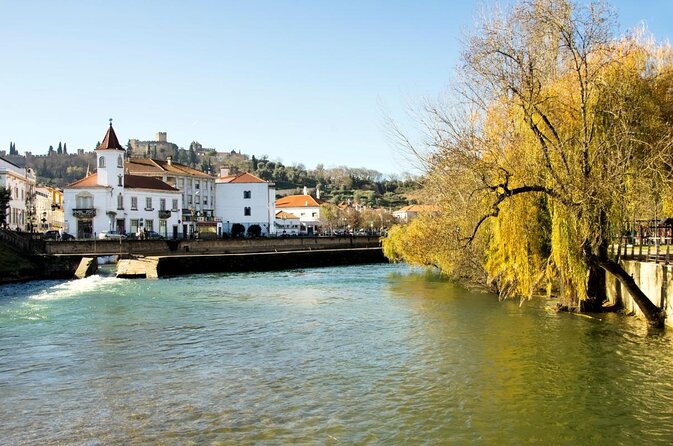
- Tomar as the Templar city with ritual tradition tied to Mata dos Sete Montes and Templar marks you can hunt for on your walk
- Convento de Cristo (Templar to Order of Christ): the core stop, with architecture described as Romanesque and shaped by outside influence
- Pegões Aqueduct: a 16th-century water system, including time to see the structure up close
Why this Tomar Templar route is a strong Lisbon day plan
Lisbon is great, but it can make you forget that Portugal’s big stories spread well beyond the coast. This tour does the opposite. It sends you into the Tomar region with a tight theme: the Knights Templar, their marks, and how those ideas stayed visible long after the Order’s era described on-site.
I like that the day isn’t a vague history lecture. It’s a sequence of real places with real details to notice. That matters because Templar history is often mixed with myth, symbols, and symbolism-heavy architecture. Here, you get guided help connecting the dots to what you can actually see.
Also, the setting is a bonus. You’re not stuck staring at one museum. You’re moving through river scenery, churches, town streets, fortress walls, and a water-supply structure. Your brain stays awake because the sights keep changing, but the topic stays consistent.
You can also read our reviews of more private tours in Lisbon



The private 9-hour rhythm: pickup, drives, and site timing
This is built as a private experience for your group, with English offered. Practically, that means the guide can set a comfortable pace rather than rushing everyone through on a timetable that fits a large group.
Start time is 8:30am, and the total day is about 9 hours, including transfers. Most of the monument stops are around 20–60 minutes each, which is enough time to see the main features and still ask questions. You’re also not doing this solo—private transportation plus a guide’s navigation turns a “far away” day trip into something that feels manageable.
One small but real advantage of private transport: when you reach a site, you’re not sprinting to catch the next bus. You can slow down, take photos, and read what the guide points out. If you tend to travel fast, you can keep that energy. If you’re the slow-and-steady type, this format is forgiving.
Stop 1: Castelo de Almourol and the river-island fortress feeling

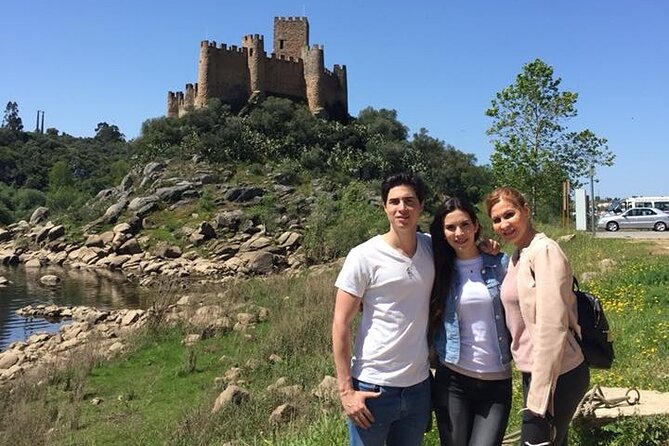
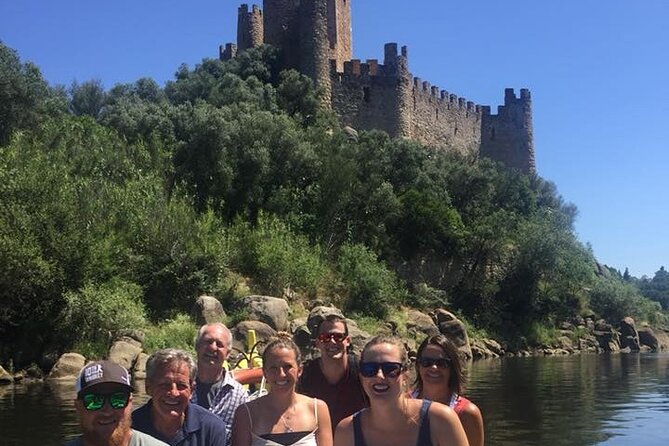
Your day starts at Castelo de Almourol, a castle on a small island in the Tagus River. The site is described as already inhabited during Roman occupation of the peninsula, and later used by the Templars for protection.
That single line changes how you view the place. You’re not just looking at a fortress. You’re standing in a strategic spot where people kept returning because the location solved a basic problem: control of movement on the river. The tour’s timing at about 45 minutes gives you room to take in the setting and the defense logic without feeling trapped in a 10-minute photo window.
Practical note: since it’s an island castle, you might face a boat crossing to reach it depending on how the site is accessed. One past guest reported a small boat crossing around €4 per person, cash only. Even if the exact setup varies, plan on a short added step between vehicle and castle.
Admission isn’t included for this stop, so factor that into your budget day-one. The upside is that the castle’s location does most of the work for you visually—water, walls, and the sense of isolation.
Stop 2: Igreja de Santa Maria dos Olivais and the Signum Salomonis rosette
Next is Igreja de Santa Maria dos Olivais, where the story shifts from fortress protection to spiritual space and visible symbols.
This church is described as a transition from Romanesque to Gothic style. That’s the kind of architectural detail you can actually spot when someone points it out: changes in form, how the facade reads, and how the church’s design changes over time. The facade includes a large rosette bearing the Signum Salomonis, marked as a Knights Templar sign. That’s a big reason this stop works—your guide helps you identify the symbolic “why” behind what you see.
Then comes a fun, slightly eerie detail: the church seems smaller than it is because it’s buried about two meters below the ground. Even if you don’t measure it, you’ll feel the effect. The tour gives you about 30 minutes here, so you’ll have time to notice how the space behaves in person, not just in a quick glance.
This stop’s admission is free. It’s also a great mental reset between the longer drive moments—churches tend to slow time down, and that’s useful in a day trip like this.
Stop 3: Tomar’s Templar marks and the Mata dos Sete Montes tradition
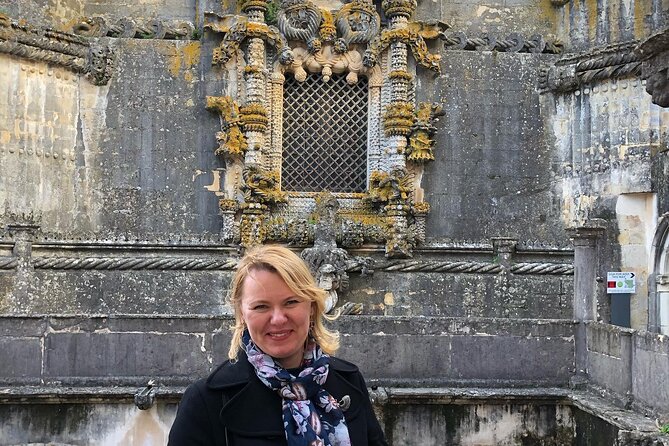
Once you reach Tomar, you’re in the city that’s internationally known as the city of the Templars. The tour time here is about 30 minutes, and it’s set up to help you read the city like a map.
Two things stand out in how you’re guided:
1) Templar influence shown through marks found around town
2) A tradition tied to Mata dos Sete Montes, described as rituals initiated there
That’s an important distinction. If you only focus on buildings, you miss how the idea of the Templars becomes part of everyday place. Street-level marks, signs, and references make the history feel less like a distant topic and more like something woven into the city’s identity.
At the same time, keep your expectations realistic for timing. 30 minutes isn’t a full walking tour of Tomar. It’s enough to get your bearings and spot the biggest themed threads, especially if your guide is pointing things out as you move.
Admission for Tomar’s town stop is free, which helps keep your day easy on the wallet while still being meaningful.





Stop 4: The Synagogue of Tomar and peaceful cohabitation as a living theme
This stop is short—about 20 minutes—but it adds a valuable layer to the overall day theme. The Synagogue of Tomar is described as founded in the mid-19th century, in the center of the city, and as a prompt for discussing centuries of peaceful cohabitation between Christians, Muslims, and Jews in Portugal.
This matters because Templar stories often get presented as isolated, military, and secretive. Adding the synagogue into the mix reminds you that Portugal’s religious history wasn’t only about conflict and conquest. Even if the Templars are your main focus, you’ll get a broader view of how different faith communities existed in the same place over time.
Because this is a guided stop, you’ll want to treat it like a context stop, not a long museum visit. The tour gives it enough time to understand why it’s included and what connection you should be watching for in your own head as the day moves toward Convento de Cristo.
Admission here is free. It’s also a nice change of pace before the big monuments.
Stop 5 and 6: Convento de Cristo and Tomar Castle, the day’s core experience
If you’re deciding whether the long day is worth it, this is where the answer is hiding.
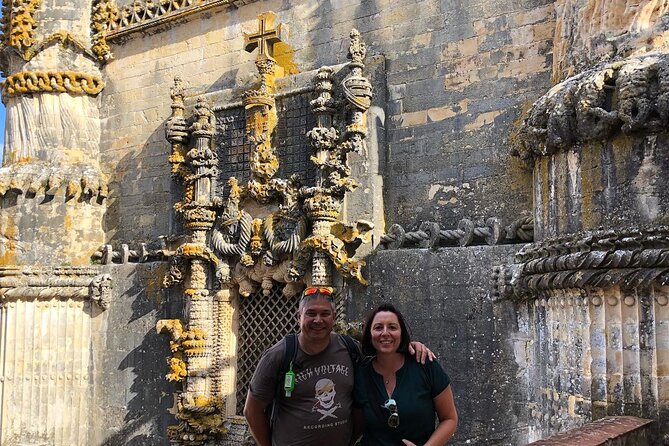
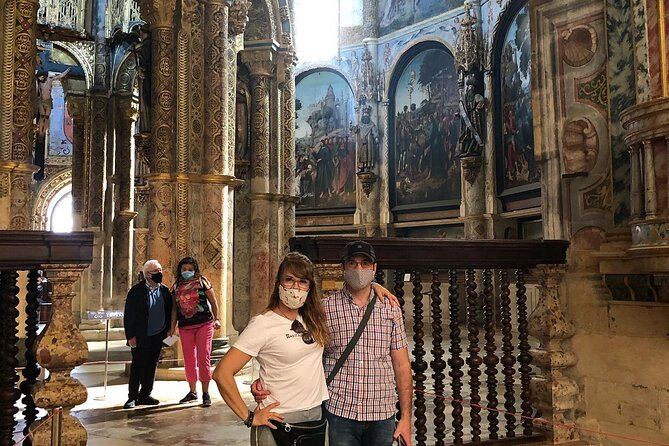
The tour heads to Convento de Cristo, described as the seat of the Order of the Temple until 1314, and then the Order of Christ from 1357. That specific timeline is the kind of clue that makes architecture feel more than decoration. You’re not just seeing grand stonework—you’re seeing a place that changed hands and purpose, while keeping its importance.
The castle part dates to 1160, and the site includes an octagonal tray described as late 12th century. The sanctuary is described as Romanesque with oriental influence. That’s another big reason to have a guide: without prompts, “influence” stays vague. With a guide, you can connect style to what’s in front of you.
Expect about 1 hour at Convento de Cristo. In practice, that time is what turns this from a quick stop into a real visit. You’ll have time to absorb the setting, notice structure and style transitions, and follow the guide’s explanation through the key highlights of the complex.
Right after that, the tour includes Tomar Castle for about 30 minutes. This is the defensive-side complement to the religious architecture you just saw. It helps you complete the Templar picture: protection and power weren’t only about walls. They were also about where ceremonies, faith, and authority played out.
For these two stops, admission tickets are not included. You should budget for museum/monument entries—about €19 per person as noted for tickets for museums. If you want a smoother day, you can mentally earmark this cost so you’re not surprised mid-trip.
Stop 7: Aqueduto dos Pegões and why water systems matter
Before you head back to Lisbon, the day includes Aqueduto dos Pegões, described as a 16th-century aqueduct that supplied water to the Castle/Convent of Christ, located about 6 km from Tomar.
This is one of those stops that travel days sometimes skip, but this tour doesn’t. And that’s smart. A fortress and a major religious complex need water to function, to host people, and to stay alive. When you see the infrastructure, the big monuments feel less like isolated achievements and more like part of a working system.
The stop is about 20 minutes. That’s short, but usually enough to understand the structure and how it supported the site it fed. If you enjoy practical architecture—things built to solve problems—you’ll likely appreciate this more than you expect.
Again, admission is free here, which is a nice bonus late in the day. One past guest also reported stairs and a chance to walk on top during the visit. You may find similar access depending on conditions, so wear shoes that handle stairs comfortably.
Price and value: is $157.28 per person fair for a private day?
At $157.28 per person, you’re paying for a private setup that includes:
- private guide and accompaniment to all monuments
- private transportation
- pick up and drop off at your accommodation
- air-conditioned vehicle
- WiFi on board
- compulsory insurance
- mobile tickets
- English offered
The value question really comes down to two trade-offs: convenience vs added costs.
Convenience: you’re not just buying entry to buildings. You’re buying the “how” of the day—getting out of Lisbon smoothly, arriving at multiple spaced-out sites, and having a guide translate symbols and architecture for you on-site.
Added costs: lunch is not included, and museum tickets are about €19 per person. That means your final out-of-pocket might land higher than the headline price, depending on exactly how admissions are handled for the ticketed monuments.
Still, this is usually good value if:
- you want the private format (not sharing a guide with strangers)
- you care about Templar symbols and want them explained where you can see them
- you’d rather pay for a guided day than spend your own time figuring out transportation and timing across Tomar and beyond
If you’re the type who just wants to wander and read at your own speed, you might find cheaper options. But if you want to understand the rosette symbol, the buried church space, and how the Convento de Cristo timeline connects to the Templars, the guided piece is the main value engine.
Practical tips so the day feels smooth, not tiring
Here are a few things that make a difference on a full-day monument route like this:
- Plan for walking and uneven stone. Castles, church interiors, and aqueduct areas often mean steps and surfaces that don’t feel like a sidewalk.
- Bring a light lunch plan. Lunch isn’t included. If you want to eat well, consider asking your guide for a place in Tomar that fits your taste and pace. One guest said the lunch they had during the day was a highlight, and another suggested it was better when the guide handled the choice.
- Have your photo expectations set. You’ll have multiple short site windows. That’s good, but it means photos work best when you take them while the guide is pointing out what to capture, not just after the explanation is done.
- Comfort matters. You’re in an air-conditioned vehicle with WiFi on board, so you can stay relaxed between stops. It’s a long day, and that comfort helps.
- Budget for tickets. Since tickets for museums are not included (about €19 per person), don’t leave it to the last minute. Knowing this early prevents any surprise when you arrive at the main monuments.
Should you book the Private Tour of the Knights Templar’s of Tomar?
I’d recommend this tour if you want a guided, symbol-focused day with minimal logistics stress. The strongest reason to book is the way the day connects multiple types of Templar-related places—fortress setting, church symbolism, city marks, and the Convento de Cristo timeline—into one coherent storyline.
I’d hesitate if you hate long days, dislike paying separate entrance fees, or only want free stops. In that case, you could spend less on a more casual, independent Tomar visit.
If you like history that you can actually see—rosettes, buried churches, fortress structures, and the water system that supported major sites—this private format is a comfortable way to do it in one shot from Lisbon.