REVIEW · PORTO
Porto: 6 Bridges Cruise on a Traditional Rabelo Boat
Book on GetYourGuide →Operated by Douro Acima · Bookable on GetYourGuide
Porto’s bridges look different from the river. This short 50-minute Rabelo cruise is a simple way to see the Douro’s skyline and learn how each bridge shaped the city. I especially like the QR-code audioguide, because you can choose your language and listen through your own headphones. One thing to keep in mind: there are no assigned seats, and if the boat is full you’ll wait for the next departure.
You’ll cruise out of the historic Cais da Ribeira area and glide past a steady stream of major waterfront sights—churches, palaces, wine landmarks, and both Porto and Vila Nova de Gaia scenery. The pacing is calm and easy, and the frequent departures make it feel low-stress compared with longer tours.
Key things that make this cruise worth your time
- Six-bridge route in under an hour so you get maximum views with minimal schedule pressure
- Audioguide by QR code in Portuguese, English, Spanish, French, German, and Italian
- Traditional Rabelo boat feel without the “tour bus” vibe
- Porto and Gaia waterfront landmarks visible along one continuous river stretch
- Regular departures by season (every 30 minutes in Apr–Oct; every hour in Nov–Mar)
In This Review
- Rabelo Boat Departures from Cais da Ribeira: Fast Access, Big Views
- Why This Cruise Feels Like Value at About $21
- The Audioguide Setup You’ll Use (QR Code + Your Own Headphones)
- Bridge-by-Bridge: How the Douro Changes as You Pass Porto and Gaia
- Dom Luís Bridge: The Porto-to-Gaia Centerpiece
- Ponte do Infante: Moving Past the Old Riverfront to Newer Urban Lines
- Ponte Maria Pia: The Bridge That Feels Like a Landmark Even at Speed
- Ponte de São João: Where the River Looks Wider and the Views Open Up
- Arrábida Bridge: A Look Toward the Outer Waterfront
- Freixo Bridge: Closing the Loop with Gaia Pier and Wine Country Signals
- What You’ll Notice Along the River Bank (Even Without Getting Off)
- Timing That Works: 30 Minutes or an Hour Depends on the Season
- Comfort Tips That Matter for a Short Cruise
- Who This Cruise Suits Best (and Who Might Skip It)
- Should You Book Porto’s 6 Bridges Cruise on a Rabelo Boat?
- FAQ
- FAQ
- How long is the Porto 6 Bridges Cruise?
- Where does the cruise depart from?
- How often do cruises depart?
- What’s included in the price?
- Which languages are available for the audioguide?
- Do I need headphones for the audioguide?
- Are there assigned seats?
- What should I do before boarding?
- Is food and drinks included?
- Can I cancel and get a refund?
Rabelo Boat Departures from Cais da Ribeira: Fast Access, Big Views
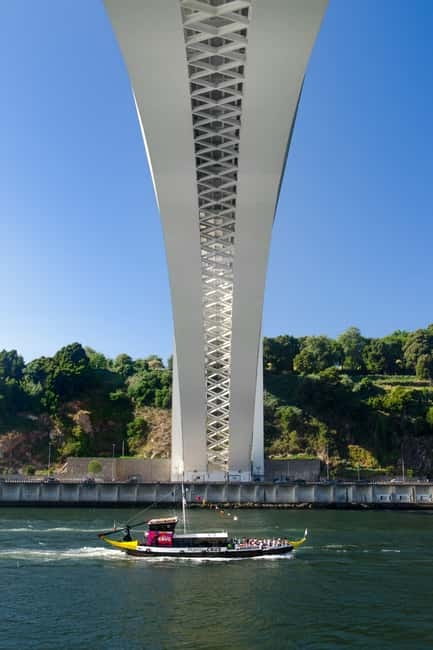
The cruise starts at Cais da Ribeira, the classic riverside zone where Porto feels most Portuguese. The meeting point is the Douro Acima Pier, near Pestana Vintage Hotel at Ribeira Square, and that location is handy because you can build this into a day of walking around Ribeira.
A small but important detail: you need to validate your voucher and check in at the pier. I recommend arriving about 15 minutes early because the boat runs on a set schedule, and if the ship fills up you’ll wait for the next one.
Once you’re on board, the whole experience is built around a simple goal: see Porto from the water without rushing. That matters because Porto’s best river views are hard to reproduce from the streets. From the Douro, the city opens up like a map—bridges, hills, and waterfront buildings all line up in one direction.
Why This Cruise Feels Like Value at About $21
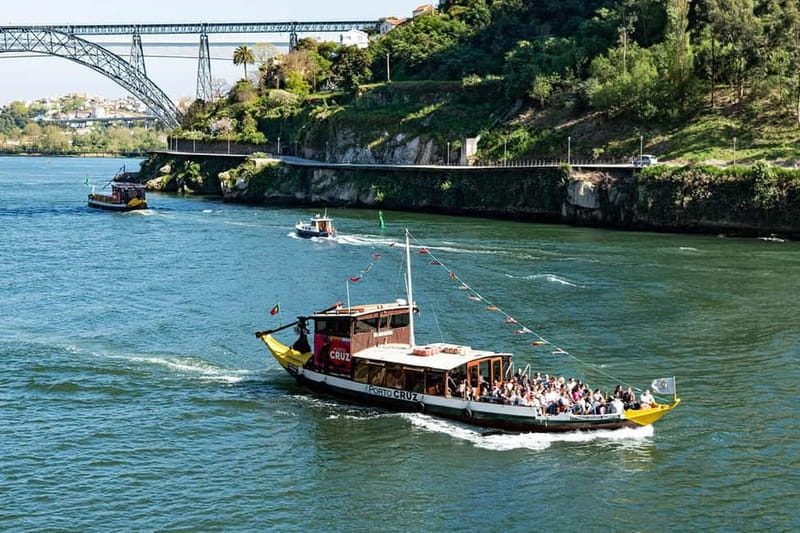
For roughly $21 per person, you’re buying three things that normally cost more separately: a short boat ride, an organized route, and an included multilingual audioguide.
At 50 minutes, you’re not committing half a day, which is great if you’re traveling with mixed energy levels or you already plan to cover the Ribeira area on foot. And because departures run frequently—every 30 minutes from April to October and every hour from November to March—you can fit this around lunch or a museum visit.
Also, this isn’t just “look at the scenery” time. The audioguide is there to connect what you’re seeing—especially the bridges—with the city’s growth. That turns the river from background scenery into something you can actually read while you’re moving.
You can also read our reviews of more boat tours in Porto

The Audioguide Setup You’ll Use (QR Code + Your Own Headphones)
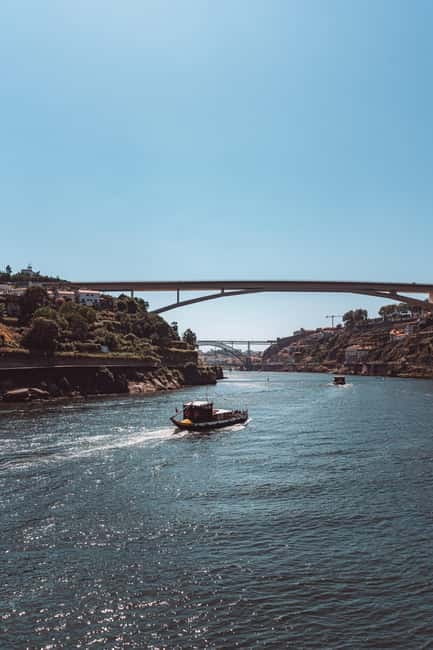
The cruise includes an audioguide accessible through a QR code inside the ships. Languages listed include Portuguese, English, Spanish, French, German, Italian.
Two practical notes that make a real difference:
- Headphones aren’t included, so bring a pair you’re comfortable using (or use any earbuds you already carry).
- Because it’s QR-based, you control the experience with your phone—use whichever language you want without waiting for a group announcement.
In practice, this means you can pay attention to the view instead of scanning for explanations. You’re not stuck hearing one language only; you can switch to what you understand best.
Bridge-by-Bridge: How the Douro Changes as You Pass Porto and Gaia
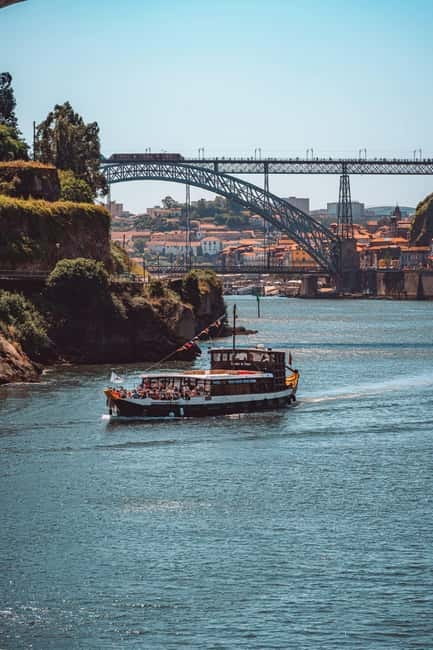
The route loops from the pier at Cais da Ribeira, then runs across a sequence of major river crossings before returning. Each bridge frames the river differently, so the scenery is varied even though the total time is short.
Below is how to “read” the trip as you go.
Dom Luís Bridge: The Porto-to-Gaia Centerpiece
You start by passing beneath Dom Luís Bridge, one of the most recognizable crossings in Porto. From the water, you get a clean sense of how Porto and Vila Nova de Gaia face each other across the Douro—dense riverfront buildings on one side, long waterfront stretches on the other.
This is also a good moment to reorient yourself for the whole trip. Once you see this main bridge from below, the next crossings make more sense because you understand the river’s layout like a line on a map.
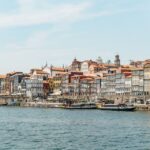
You’ll also glide past the Historic Area of the Ribeira, which is the kind of neighborhood you can appreciate quickly—especially when the river gives you a long view instead of a side street angle.
Ponte do Infante: Moving Past the Old Riverfront to Newer Urban Lines
Next up is Ponte do Infante. This section is where the city starts to feel more layered: different building styles, different waterfront uses, and different “moods” along the river.
As you move along, expect the cruise to show major waterfront landmarks such as the Palace of the Stock Exchange, Porto Customs, and the Port Wine Museum from the waterline. Even if you don’t get out to tour them, it’s useful to see how these institutions sit right on the river, because that’s the real reason Porto’s wine trade and port life mattered.

Ponte Maria Pia: The Bridge That Feels Like a Landmark Even at Speed
Then comes Ponte Maria Pia, another highlight crossing. It’s the kind of bridge you can spot quickly and keep in frame, and that helps the audioguide really land. Instead of hearing bridge facts in a vacuum, you can connect the explanation to the physical structure as you pass under it.
This part of the river also pairs well with noticing churches and institutional buildings along the bank—things like Church of S. Francisco and the general waterfront sweep that makes Porto feel compact but dramatic.
Ponte de São João: Where the River Looks Wider and the Views Open Up
As you reach Ponte de São João, the river section starts to feel more expansive. The water gives you a different scale for the city—buildings look less like isolated sights and more like pieces of a continuous shoreline.
You’ll likely catch the view of Church of Massarelos along this stretch. It’s a good stop for your “photo brain,” but it’s also a good stop for your “context brain.” The bridge-to-bridge sequence is basically a story about how the city keeps reconnecting itself as it grows.
Arrábida Bridge: A Look Toward the Outer Waterfront
Next is Arrábida Bridge, which changes the feeling again. This crossing moves you toward a more outward-looking section of Porto’s river edges.
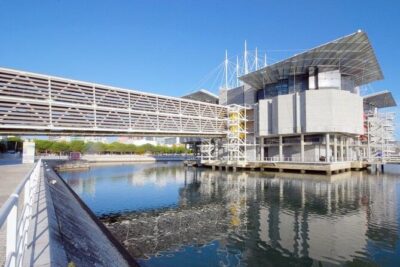
From the cruise route, you’ll see the kind of waterfront contrast that makes Porto interesting: not just monumental landmarks, but also working-river vibes. The river views include areas associated with Foz do Douro and Afurada (the fishing zone), plus distant points of interest like Crystal Palace and the Electric Car Museum (from the river, where you’re mostly observing their position rather than entering them).
Freixo Bridge: Closing the Loop with Gaia Pier and Wine Country Signals
Finally, you pass under Freixo Bridge and head back toward Cais da Ribeira.
This part is where the Gaia side of the story starts to register. As you cruise, you’ll be able to look toward Gaia Pier, see riverfront wine-related landmarks like Port Wine Pools, and get the view of Monastery of the Sierra do Pilar across the water.
It helps to think of this last segment as the “why Porto matters” section. Wine, transport, and the city’s physical geography all show up again and again along this coastline.
What You’ll Notice Along the River Bank (Even Without Getting Off)
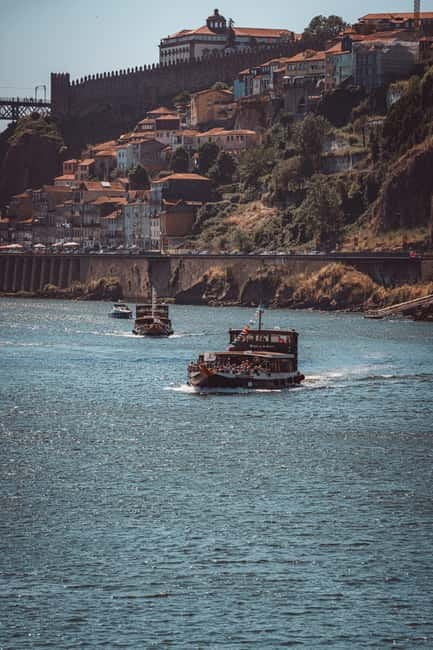
Even though this is a boat ride, the cruise route is designed to make the waterfront feel like a guided walk, just from the water.
Along the way, you should expect views of major spots such as:
- Historic Area of Ribeira
- Church of S. Francisco
- Palace of the Stock Exchange
- Porto Customs
- Port Wine Museum
- Church of Massarelos
- Crystal Palace
- Electric Car Museum
- Gaia Pier
- Port Wine Pools
- Monastery of Sierra do Pilar
You won’t have time to do inside visits during a 50-minute ride, so go in with a useful mindset: treat the cruise like a visual orientation tool. You can leave with a short list of what you want to walk to afterward.
Timing That Works: 30 Minutes or an Hour Depends on the Season
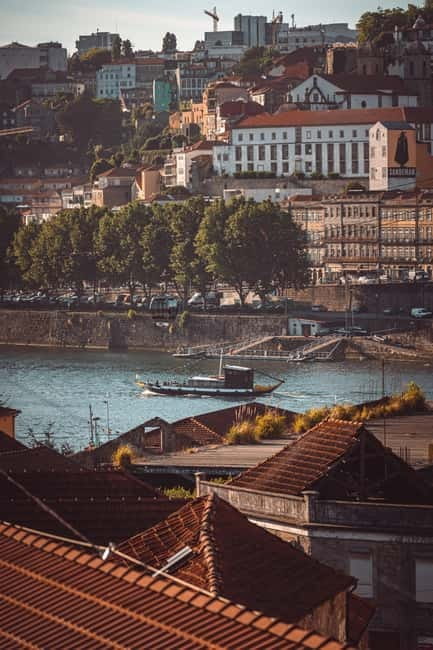
Departures are scheduled by season:
- Every 30 minutes from April to October
- Every 1H from November to March
That affects how you plan your day. In the high season, you’ll have more flexibility if you’re running behind or you want to time it around light and crowds. In winter months, you’ll want to check the current schedule a bit more closely and plan your arrival at the pier earlier so you don’t lose your spot to the next departure.
The good news: because this is only 50 minutes, the timing pressure is manageable. You can still keep a full day of sightseeing without the “one missed bus ruins the itinerary” feeling.
Comfort Tips That Matter for a Short Cruise
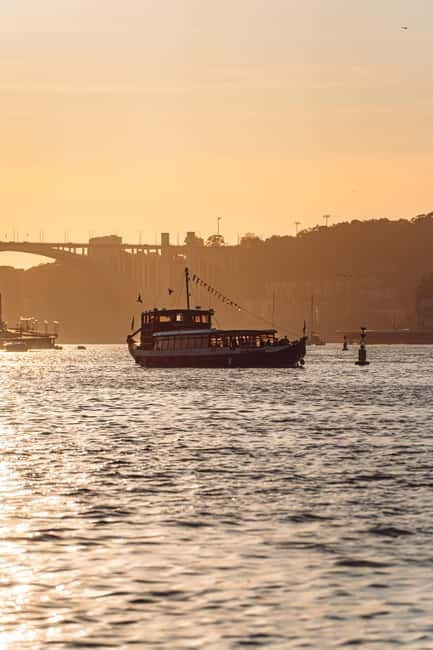
The cruise is designed to be easygoing, but your comfort still depends on a few basics:
- No assigned seats means you’ll want to be efficient once you board. If you care about getting the best sightlines, arrive early rather than hoping you’ll end up near an ideal position.
- Bring headphones for the audioguide. Without them, you’ll miss the main added value of the cruise.
- Dress for the river air. Even in mild weather, the water can feel cooler and breezier than the streets.
If you’re sensitive to waiting, remember the note that if the boat is full you may have to wait for the next ship. Arriving early is the simplest fix.
Who This Cruise Suits Best (and Who Might Skip It)
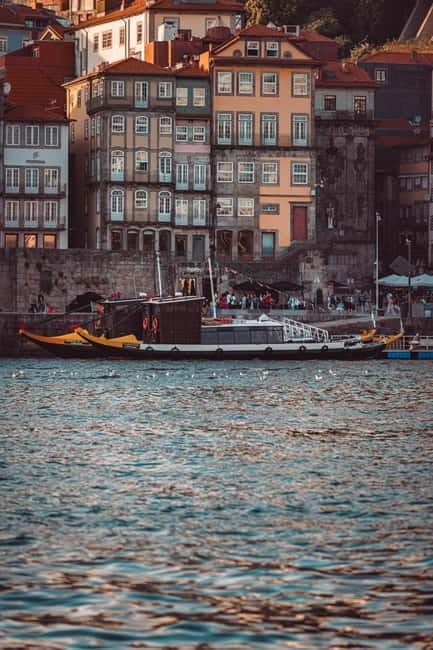
This is a strong choice if you want:
- An easy first taste of Porto from a new angle
- A bridge-focused sightseeing experience without museum time
- A river ride that still includes meaningful narration (not just a “watch and wave” style)
It also fits well when your schedule is tight or you’re mixing older-city walking with something less strenuous.
I’d suggest skipping (or at least reconsidering) if you’re hoping for a longer sailing experience with stops to explore on foot. This one is purposely short, so it’s about views and context, not extended sightseeing.
Should You Book Porto’s 6 Bridges Cruise on a Rabelo Boat?
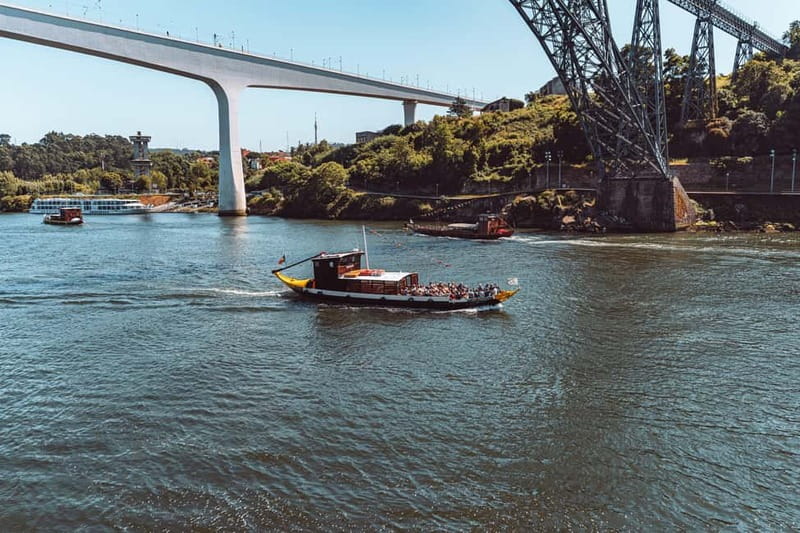
I think you should book it if you like efficient sightseeing and you want the Douro to be part of your Porto story. For about $21, you’re getting a full six-bridge circuit with an included multilingual QR audioguide, plus views of major waterfront landmarks on both Porto and Vila Nova de Gaia sides.
Book it especially if you’re visiting for the first time and want to orient yourself fast. After this cruise, you’ll know which riverfront sights you want to return to on foot.
If you already feel very confident with Porto’s bridge area and you only care about a single monument, you might not gain enough to justify the cost. But for most people, the combo of short duration, frequency, and bridge-focused narration makes this a smart use of time.
FAQ
FAQ
How long is the Porto 6 Bridges Cruise?
It lasts 50 minutes.
Where does the cruise depart from?
Board at the Douro Acima Pier located at Ribeira do Porto near Pestana Vintage Hotel (at Ribeira Square).
How often do cruises depart?
From April to October, cruises depart every 30 minutes. From November to March, they depart every 1 hour.
What’s included in the price?
Included are the 50-minute boat cruise and an audioguide accessible via QR code in multiple languages.
Which languages are available for the audioguide?
The audioguide is available in Portuguese, English, Spanish, French, German, and Italian.
Do I need headphones for the audioguide?
Yes, headphones are not included, so you’ll need your own.
Are there assigned seats?
No. There are no assigned seats.
What should I do before boarding?
Go to the pier to validate your voucher and check in. Arriving about 15 minutes early is recommended.
Is food and drinks included?
No. Food and drinks are not included.
Can I cancel and get a refund?
Yes. Free cancellation is available if you cancel up to 1 hour in advance for a full refund.